

Homogenizer is a mechanical instrument used in laboratory and industry. It is used for mixing, dispersing and breaking down materials. It makes the mixture uniform and homogeneous.
Homogenizer works by applying strong mechanical force. These forces include shear, cavitation and turbulence. By these forces, particles or droplets become smaller in size.
It is used for making stable emulsions. It is also used for breaking cell walls and destroying pathogens. This helps to get same quality of product in food, biotechnology and pharmaceutical industries.
The history of homogenizer is related with Auguste Gaulin. In early 1900s, he made the first mechanical homogenizer. It was mainly developed for treating milk.
The purpose was to disperse milk fat globules evenly. This prevents cream from separating and rising to the surface. The word homogenized was first used for milk treated by this machine.
Gaulin showed his invention in 1900 World’s Fair in Paris. His original machine had positive displacement three-piston pump. It also had capillary tubes at the discharge end.
Later the homogenizer developed more. Simple mechanical pump changed into high pressure and microfluidic systems. Now it is used for many industrial and scientific works.
Principle of Homogenizer
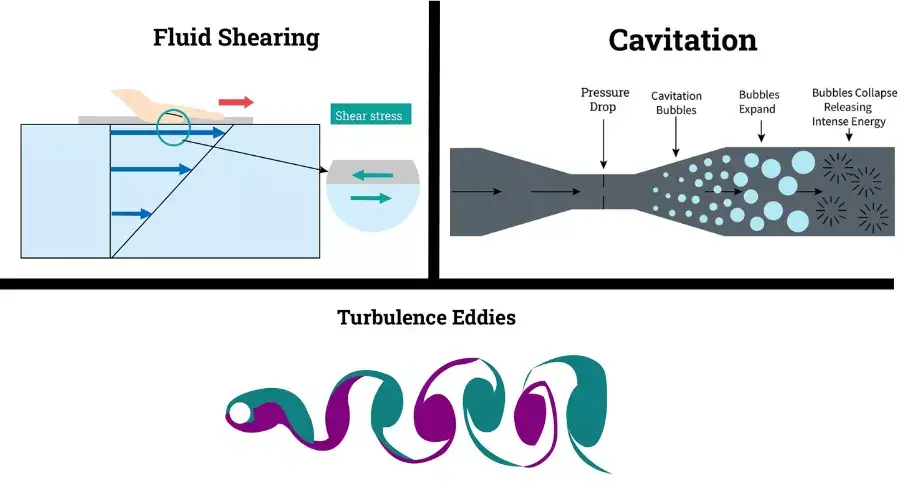
Principle of Homogenizer is based on reducing the size of particles or droplets. The large particles are broken into small particles. Then these particles are distributed uniformly in the liquid.
In homogenizer, high pressure or mechanical energy is applied to the mixture. This energy changes into strong local forces. These forces break the unstable mixture and make it more uniform.
The main forces are shearing, cavitation, turbulence and impact. These forces work together during homogenization.
In shearing, the liquid layers move at different speed. This pulls and stretches the droplets. Large droplets are then torn into smaller droplets.
In cavitation, pressure suddenly decreases. Small vapour bubbles are formed and then collapse strongly. This produces shock waves and breaks the particles.
In turbulence, the liquid moves very fast and irregularly. Swirling eddies are formed in the liquid. These eddies pull the particles apart.
In impact, particles collide with each other or with fixed surface of the instrument. This collision breaks the particles into smaller size. As a result, immiscible liquids are mixed and solid clumps are broken into microscopic or nanometre size.
Parts of Homogenizer
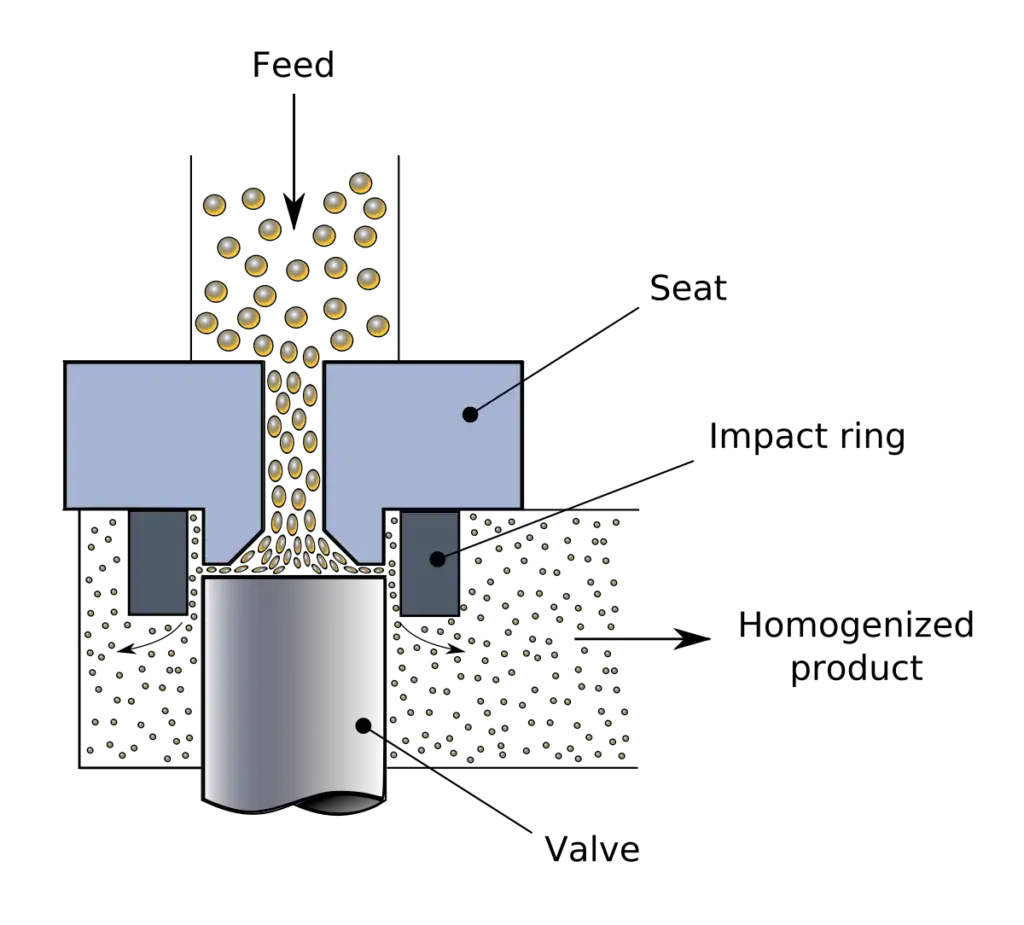
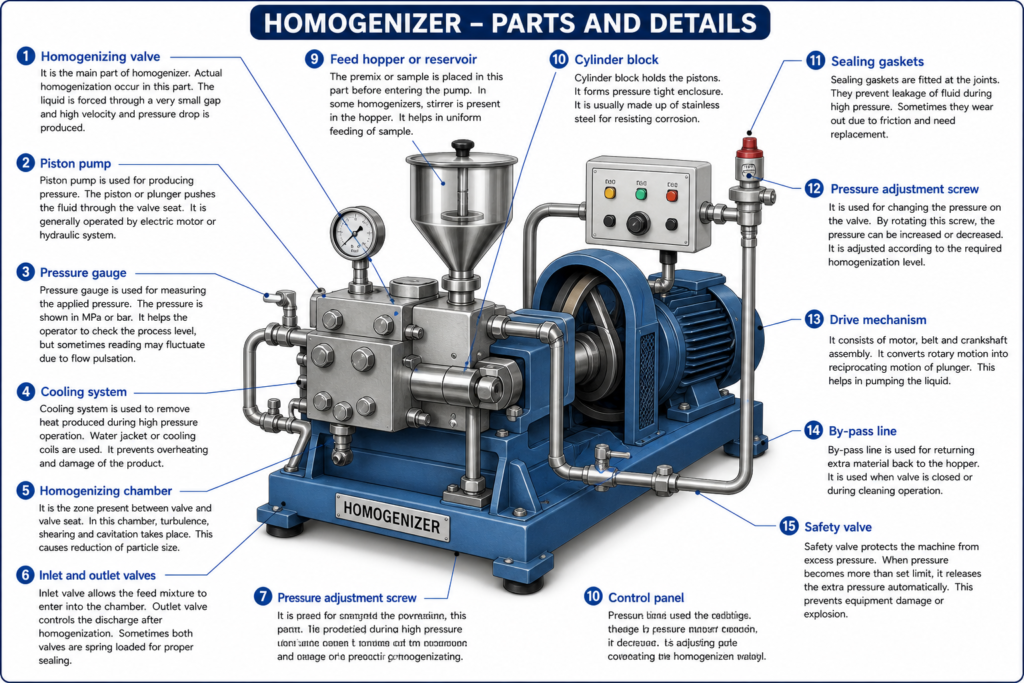
The main parts of homogenizer are as follows-
- Homogenizing valve
It is the main part of homogenizer. Actual homogenization occur in this part. The liquid is forced through a very small gap and high velocity and pressure drop is produced. - Piston pump
Piston pump is used for producing pressure. The piston or plunger pushes the fluid through the valve seat. It is generally operated by electric motor or hydraulic system. - Pressure gauge
Pressure gauge is used for measuring the applied pressure. The pressure is shown in MPa or bar. It helps the operator to check the process level, but sometimes reading may fluctuate due to flow pulsation. - Cooling system
Cooling system is used to remove heat produced during high pressure operation. Water jacket or cooling coils are used. It prevents overheating and damage of the product. - Homogenizing chamber
It is the zone present between valve and valve seat. In this chamber, turbulence, shearing and cavitation takes place. This causes reduction of particle size. - Inlet and outlet valves
Inlet valve allows the feed mixture to enter into the chamber. Outlet valve controls the discharge after homogenization. Sometimes both valves are spring loaded for proper sealing. - Pressure adjustment screw
It is used for changing the pressure on the valve. By rotating this screw, the pressure can be increased or decreased. It is adjusted according to the required homogenization level. - Drive mechanism
It consists of motor, belt and crankshaft assembly. It converts rotary motion into reciprocating motion of plunger. This helps in pumping the liquid. - Feed hopper or reservoir
The premix or sample is placed in this part before entering the pump. In some homogenizers, stirrer is present in the hopper. It helps in uniform feeding of sample. - Cylinder block
Cylinder block holds the pistons. It forms pressure tight enclosure. It is usually made up of stainless steel for resisting corrosion. - Sealing gaskets
Sealing gaskets are fitted at the joints. They prevent leakage of fluid during high pressure. Sometimes they wear out due to friction and need replacement. - By-pass line
By-pass line is used for returning extra material back to the hopper. It is used when valve is closed or during cleaning operation. - Base frame
Base frame supports the whole assembly. It gives balance to the machine. It also reduces vibration during operation. - Control panel
Control panel contains switches, indicators and pressure controls. It is used for operating and monitoring the homogenizer safely. - Safety valve
Safety valve protects the machine from excess pressure. When pressure becomes more than set limit, it releases the extra pressure automatically. This prevents equipment damage or explosion.
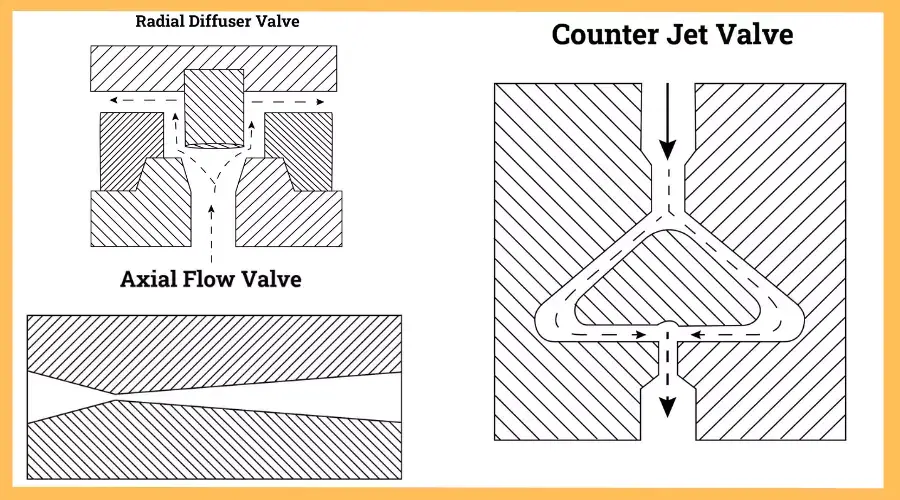
Operating Procedure of Homogenizer
A. Industrial High-Pressure Homogenizer
- First the pressure controls are checked. They should remain in idle position. Cooling water and lubrication water are started for the pistons.
- The machine should not run dry. Water or liquid should be present in the system before starting. The handles of homogenizing valves are released.
- The motor is switched on. The machine is first run with water for about 5 minutes. This helps to stabilize the system and remove air from pump block.
- The water is then drained out. The machine is checked for leakage. Pressure gauge is also checked whether it gives proper response or not.
- The 3-way valve is adjusted for supplying the sample into homogenizer. The sample is then allowed to enter the machine.
- The pressure is increased slowly. Sudden high pressure should not be given. This protects the machine and gives proper homogenization.
- In two-stage homogenizer, the second-stage pressure is set first. This gives back pressure. After that first-stage pressure is adjusted to get required homogenization level.
- The product discharge is first diverted. When the required pressure is reached, the by-pass valve is turned. Then the product flow is sent into the processing system.
- After the run is completed, the product flow is diverted again. Water or cleaning solution is immediately added into the hopper. This flushes the remaining sample from the system.
- The pressure is released in reverse order. First the first-stage valve is released and then the second-stage valve. Cleaning is then continued and the machine is switched off.
B. Laboratory Rotor-Stator Homogenizer
- The sample is first taken in beaker or test tube. The container should have enough space for movement of liquid.
- The dispersing head is placed inside the liquid. It is kept about 2/3 below the liquid surface and 1/3 above the bottom of container.
- The speed dial is kept at lowest setting before starting. This prevents sudden splashing of sample.
- The machine is switched on. Speed is then increased slowly. This avoids air entry into the sample.
- The container is moved slowly during operation. This helps in better dispersion of sample.
- After homogenization is finished, the homogenizer is lifted carefully. Then the container is removed safely.
C. Ultrasonic Homogenizer or Sonicator
- The sample container is filled up to recommended level. It is commonly filled about 2/3 full. This helps in proper cavitation.
- The probe is suspended in the liquid. Basket or wire may be used for holding it.
- The probe should not touch the bottom or side of container. If it touches, the probe or transducer may get damaged.
D. Bead Mill Homogenizer
- Grinding beads are first added into the tube. Then the sample is added into the same tube.
- The tube is filled about 30% to 50% with beads. More beads should not be added than required.
- The tube should not be overloaded. If bead movement is restricted, homogenization becomes less efficient.
Types of Homogenizer
The types of homogenizer are as follows-
- High-pressure homogenizer
High-pressure homogenizer uses mechanical force and high pressure. The liquid mixture is pushed through a narrow gap or valve. Particles are broken by shearing, turbulence and cavitation. - Electric high-pressure homogenizer
This type works by electric power. The motor runs the pump and produces high pressure. It is used in laboratory and industrial processing. - Hand-driven homogenizer
Hand-driven homogenizer is operated manually. Pressure is produced by hand movement. It is used for small scale and simple homogenization work. - Air-driven homogenizer
Air-driven homogenizer works by compressed air. It is useful where electric spark should be avoided. It is used in some special laboratory or industrial condition. - Microfluidizer homogenizer
Microfluidizer is a special high-pressure homogenizer. The sample passes through very small channels at high pressure. This gives very fine particle size reduction. - Ultrasonic homogenizer or sonicator
Ultrasonic homogenizer uses high frequency sound waves. The vibrating probe produces cavitation bubbles in liquid. These bubbles collapse and produce shock wave which breaks the sample. - Mechanical homogenizer
Mechanical homogenizer works by physical movement. It breaks and mixes the sample by mechanical force. It includes rotor-stator, bead mill, blade type and other types. - Rotor-stator homogenizer
Rotor-stator homogenizer has high speed rotating rotor and fixed stator. The sample is pulled between them. Strong shearing force breaks the particles. - Bead mill homogenizer
Bead mill homogenizer uses small hard beads. These beads may be glass, ceramic or steel. The beads move fast and grind the sample by collision. - Colloid mill homogenizer
Colloid mill homogenizer forces the product through small gap between rotor and stator. It works mainly by friction and strong shearing. It reduces particle size of product. - Blade-type homogenizer
Blade-type homogenizer has blade shaped rotor. The blade rotates at high speed. It produces strong shearing effect and breaks the sample. - Stomacher homogenizer or paddle blender
Stomacher homogenizer uses mechanical paddles. The sample is kept inside sealed plastic bag. The paddles press and squeeze the sample again and again. - Mortar and pestle homogenizer
Mortar and pestle is a simple homogenization method. The sample is placed in mortar and pressed by pestle. It grinds the sample by rubbing and pressure. - Motorized mortar and pestle homogenizer
This is a powered form of mortar and pestle. It uses low power motor for grinding. It is useful when manual grinding is not sufficient.
Applications of Homogenizer
- In food and dairy industry, homogenizer is used for milk, cream, yogurt, ice cream, butter and cheese. It breaks the fat globules into small size. So cream layer does not separate easily.
- It is used for preparation of sauces and dressings. Mayonnaise, fruit juices, ketchup, honey and baby foods are also made by it. It gives uniform mixture.
- In pharmaceutical industry, homogenizer is used for liposomes and nanoemulsions. It is also used in vaccines, syrups, antibiotics, ointments and antacids. It helps in making stable preparation.
- It is used in tablet coating. The coating material is mixed properly. Drug stability and availability become improved.
- In biotechnology and life science, homogenizer is used for cell disruption. Bacteria, yeast and mammalian cells are broken. This helps to release cell contents.
- It is used for extraction of DNA and RNA. It is also used for protein isolation. Biological samples are prepared by using homogenizer.
- In cosmetic industry, homogenizer is used for lotions, creams, shampoos and conditioners. It helps to make smooth and even product.
- It is used in lipstick, nail varnish and anti-aging serum preparation. The ingredients are dispersed uniformly. So the product becomes stable.
- In chemical industry, homogenizer is used for paints, inks, resins and lubricants. It is also used for latex, agrochemicals, fertilizers and dyes.
- In nanotechnology, it is used for nanomaterials. Nanoparticles, graphene, carbon nanotubes and nano-oxides are dispersed by it.
- In cannabis industry, homogenizer is used for cannabis leaves and edible products. Gummies and other samples are treated by it. These are then used for potency test and microbial contamination test.
Advantages of Homogenizer
- Homogenizer gives uniform mixing of materials. The product becomes same in all parts. Texture, taste, colour and appearance are improved.
- It makes the product more stable. Large particles and droplets are broken into small size. So separation does not occur easily.
- It prevents cream formation and sedimentation. In milk, cream layer does not rise quickly. In suspensions also particles remain distributed.
- It reduces particle size very effectively. Droplets, particles and solid clumps are broken into microscopic or nanometre size.
- It can be used for different types of materials. Thin liquids, viscous fluids, plant tissues and animal tissues can be processed by suitable homogenizer.
- It reduces manual mixing work. The processing becomes faster. So time is saved during laboratory and industrial work.
- Some homogenizers can process many samples together. Bead mill can process up to 96 samples at a time. This is useful for high number of samples.
- In biotechnology, it is useful for cell disruption. Bacteria and yeast cells are broken by it. DNA, RNA, proteins and enzymes are released from the cells.
- In pharmaceutical industry, it improves drug bioavailability. Poorly soluble drugs are broken into small particles. More surface area gives faster dissolution and better absorption.
- Some homogenizers reduce cross contamination. Bead mill uses sealed disposable tubes. Stomacher uses sterile bags.
- It also reduces aerosol formation in some methods. The sample remains closed during processing. So handling becomes safer.
Limitations of Homogenizer
- High-pressure homogenizer is large in size. It is also costly. So it is not suitable for all small laboratories.
- It can process only liquid samples. Solid samples cannot be used directly. Grinding or pre-disruption is needed before using it.
- High concentration and viscous samples may block the flow. Clogging can occur in the valve or narrow passage. This affects the process.
- In some old impact type homogenizers, contamination may occur. Metallic particles may come into the final product due to internal friction and collision.
- Ultrasonic homogenizer produces heat very quickly. Heat sensitive biological samples may get damaged. Ice bath or cooling system is needed.
- The titanium probe may wear slowly during sonication. Small amount of titanium may enter into the sample. This may contaminate the sample.
- Sonicator cannot process dry solid samples. Highly viscous samples are also not suitable. It mainly works with liquid samples.
- It usually processes one sample at one time. So it is slow for many samples. The probe also needs proper cleaning between samples.
- Sonicator produces more noise during working. So it may need sound box or ear protection in some cases.
- Rotor-stator homogenizer is not good for tough cells. Bacteria, yeast and fungi with thick wall may not break properly.
- Solid samples cannot be used directly in rotor-stator homogenizer. Pre-processing is needed. Otherwise the sample may not homogenize well.
- The probe must be cleaned after every sample. If cleaning is not proper, cross contamination may occur. This makes high sample work difficult.
- Rotor-stator homogenizer produces heat by friction. Temperature sensitive samples may be affected by this heat.
- Bead mill homogenizer has volume limitation. It usually handles small volumes from about 1 μL to 20 mL. Large samples cannot be processed easily.
- Beads may also contaminate the sample. Glass, steel or ceramic beads may slowly wear during grinding. Small particles may mix with the sample.
- Bead mill instrument is costly. Disposable tubes and beads also increase the running cost. This may be difficult for small laboratories.
- Stomacher homogenizer has limited use. It does not make molecular level uniform mixture. It is mostly used for soft tissues and food samples.
- It cannot process very large sample volume. Special stomacher bags are needed. These bags need storage and also increase consumable cost.
- Mortar and pestle method depends on hand work. Result may change from person to person. So reproducibility is less.
- It takes more time. Only small sample can be processed at one time. So it is not useful for large scale homogenization.
Precautions of Homogenizer
- Homogenizer should not run dry. Liquid medium should present inside before starting. Dry running may damage seals, bearings and generator.
- Pressure should be increased slowly. Sudden high pressure should not be given. The handles on homogenizing valves are kept released during starting.
- Proper feed should be maintained during operation. The machine should not starve for sample. Less feed may damage the machine.
- 3-way valve on delivery line should not be closed during running condition. It may produce high back pressure. This can damage the unit seriously.
- Moving parts should not be touched during operation. The lower end of generator or rotating part should not be held by hand. It may cause injury.
- Rotor knife should not be tightened too much on the shaft. Over tightening may break the part. It should be fitted only as required.
- In rotor-stator homogenizer, speed is kept at lowest before starting. Then speed is increased slowly. This prevents splashing of sample.
- The dispersing head should be placed properly in the liquid. It is kept about 2/3 below the liquid surface and 1/3 above the bottom of container.
- In ultrasonic homogenizer, the probe or container should not touch the bottom of ultrasonic tank. Basket, tray or wire is used for holding it. This protects the transducer.
- Flammable liquids should not be used in ultrasonic cleaner. Alcohol, gasoline, mineral acids and chlorine bleach are avoided. These may cause fire, explosion or damage of equipment.
- Hands or fingers should not be placed inside active ultrasonic bath. The liquid and cavitation may irritate or damage the skin.
- Electrical safety should be maintained. The motor is disconnected before servicing, changing probe or filling and emptying the machine. The instrument should be properly grounded.
- Proper PPE should be worn during work. Gloves, goggles and lab coat are used. This is more important when hazardous materials or pathogens are handled.
- Pathogenic materials should not be processed in open container. Aerosols may form during homogenization. These aerosols may be inhaled and cause infection.
- Sonicator and high-pressure homogenizer may produce loud sound. Ear protection should be used when needed. Hot surfaces and hot samples should also be handled carefully.
- In bead mill, grinding beads are added before adding the sample. The tube is filled only about 30% to 50% with beads. Overloading reduces movement of beads.
- Before starting, wrenches and tools should be removed from generator probe. The inflow chamber strainer should be cleaned and fitted again before use.
References
- Anderson, M. (2023, December 28). Here’s a general guide on how to use an ultrasonic cleaner. Creworks Equipment. https://www.creworksequipment.com/blogs/ultrasonic-cleaner/heres-a-general-guide-on-how-to-use-an-ultrasonic-cleaner
- BOS Homogenisers. (n.d.). Homogenizer working principle in industrial processing. https://boshomogenisers.com/homogenizer-working-principle/
- Branson Ultrasonics Corp. (n.d.). Ultrasonic cleaners operator’s manual. https://www.nist.gov/system/files/documents/ncnr/Branson-1510-DTH-Ultrasonic-Cleaner-Manual.pdf
- Coldwell, E. (2023, March 16). Homogenizer types, properties & applications in various industries. Nanografi Advanced Materials. https://shop.nanografi.com/blog/homogenizer-types-properties-applications-in-various-industries-nanografi/
- Cole-Parmer Instrument Company. (2012). LabGEN 700 general laboratory homogenizer owner’s manual. https://pim-resources.coleparmer.com/instruction-manual/04727-04.pdf
- Comprehensive analysis of industrial and laboratory homogenization systems: Principles, architectures, and applications. (n.d.). [Markdown document].
- Constant Systems. (n.d.). Homogenisers and cell disruptors. https://constantsystems.com/better-through-design/homogenisers-and-cell-disruptors/
- Davis, O. (2025, November 25). What maintenance does a bead mill need?. Shanghai ELE. https://www.ele-mix.com/blog/what-maintenance-does-a-bead-mill-need-1879510.html
- Four E’s Scientific. (n.d.). Rotor-stator homogenizer operation tutorial [Video]. YouTube. https://www.youtube.com/watch?v=s9BcRCO_sbg
- GEA Group. (n.d.). GEA high pressure homogenizers. https://www.gea.com/en/products/homogenizers/
- Genemco. (2024, June 13). Exploring different types of homogenizers in the industrial food processing industry. https://www.genemco.com/blogs/news/exploring-different-types-of-homogenizers-in-the-industrial-food-processing-industry
- Genizer LLC. (2026, May 1). Types of homogenizers explained. AZoM. https://www.azom.com/article.aspx?ArticleID=25192
- Genizer LLC. (n.d.). A deep dive into types of homogenizers. https://www.genizer.com/info/a-deep-dive-into-types-of-homogenizers_i0035.html
- Genizer LLC. (n.d.). High pressure homogenizer: Working principle, types, and applications. https://www.genizer.com/art/high-pressure-homogenizer-technology-and-application-guide_a0049.html
- Gudigenavar, A. S., Walikar, A. B., & Marapur, S. C. (2022, February 25). Standard operating procedure of ultrasonic sonicator. BLDEA’s Shri Sanganabasava Mahaswamiji College of Pharmacy & Research Centre. https://www.bldeapharmacy.ac.in/assets/uploads/SOP-SONICATOR.pdf
- Karki, P. (2022, October 21). Homogenizer- Principle, procedure, parts, types, uses, examples. Microbe Notes. https://microbenotes.com/homogenizer-principle-procedure-parts-types-uses-examples/
- Kohn, R. (n.d.). Ultrasonic cleaning best practices: 7 steps to satisfactory results. iUltrasonic. https://www.iultrasonic.com/blog/ultrasonic-cleaning-best-practices-7-steps-to-satisfactory-results-/
- Microfluid Process Equipment. (n.d.). Homogenizer spares parts catalogues. https://5.imimg.com/data5/SELLER/Doc/2023/3/YP/TS/SB/109191518/homogenizer-spare-parts.pdf
- Miller, J. (n.d.). How does a homogenizer improve the stability of products?. Scientz Biotechnology. https://www.scientzbio.com/blog/how-does-a-homogenizer-improve-the-stability-of-products-2028201.html
- O’Driscoll, A. (2018, July 13). Choosing a homogenizer technology for your application. Laboratory Supply Network. https://labsup.net/blogs/blog/choosing-a-homogenizer-technology
- O’Driscoll, A. (2018, November 16). Cleaning and maintaining a rotor-stator homogenizer. Laboratory Supply Network. https://labsup.net/blogs/blog/cleaning-and-maintaining-a-rotor-stator-homogenizer
- O’Driscoll, A. (2019, August 16). The forces involved in homogenization explained. Laboratory Supply Network. https://labsup.net/blogs/blog/forces-involved-in-homogenization
- O’Driscoll, A. (2020, March 21). Rotor stator homogenizers versus ultrasonic homogenizers (sonicators). Laboratory Supply Network. https://labsup.net/blogs/blog/rotor-stator-homogenizers-versus-ultrasonic-homogenizers-sonicators
- O’Driscoll, A. (2021, May 11). Best practices for using an ultrasonic bath. Laboratory Supply Network. https://labsup.net/blogs/blog/best-practices-for-using-an-ultrasonic-bath
- PRO Scientific Inc. (n.d.). PRO homogenizer maintenance and safety information. https://proscientific.com/homogenizer-maintenance-page
- Revvity. (2026, February 9). Choosing the right bead mill homogenization technology for your laboratory. https://www.revvity.com/blog/choosing-right-bead-mill-homogenization-technology-your-laboratory
- Scientz Biotechnology. (2026, January 23). Advantages and disadvantages of laboratory homogenizers. https://www.scientzbio.com/info/advantages-and-disadvantages-of-laboratory-hom-103354726.html
- seferbas. (2025, January 2). Homogenizer types, properties & applications in various industries. Nanomaterial Powder. https://nanomaterialpowder.com/homogenizer-types-properties-applications-in-various-industries-nanomaterialpowder/
- SPX Flow, Inc. (2016). Homogenizer handbook: Processing of emulsions and dispersions. https://www.spxflow.com/assets/pdf/apv-homogenizers-handbook-3005-01-06-2008-us.pdf
- Vancrey, J. (2020). Homogenizer theory and basics. SPX FLOW. https://foodsci.wisc.edu/wp-content/uploads/2023/07/Vancrey-John-Homogenization-Theory-and-Basics.pdf
- Wei, L. (n.d.). 5 key differences among ultrasonic, high-pressure, and sterile slap homogenizers. Drawell Analytical. https://www.drawellanalytical.com/5-key-differences-among-ultrasonic-high-pressure-and-sterile-slap-homogenizers
- Wilkinson, B. S., & Bristol, J. M. (1988, September 27). U.S. Patent No. 4,773,833: High pressure homogenizer pump. U.S. Patent and Trademark Office. https://patents.google.com/patent/US4773833A/en
- Z-mixer. (n.d.). Bead mill homogenization applications: Advanced techniques for lab innovation. https://z-mixer.com/bead-mill-homogenization-applications-advanced-techniques-for-lab-innovation/