Biochemical test notes covering principles, procedures, reactions, interpretation, and uses of common microbiological identification tests such as catalase, oxidase, indole, urease, and carbohydrate tests.
ONPG test is a rapid biochemical test used in microbiology to detect the presence of β-galactosidase enzyme in bacteria. It is used to identify organisms which can produce β-galactosidase but may not ferment lactose in routine lactose tests. Normally lactose fermentation needs two enzymes. One is lactose permease which transports lactose inside the cell. Another
Growth at 42°C Test is a physiological laboratory test used to identify and differentiate bacteria based on their ability to grow at 42°C temperature. It is done because 42°C is higher than the normal incubation temperature (35–37°C) and many bacteria cannot tolerate this heat. Bacteria that can grow at this temperature are considered to have
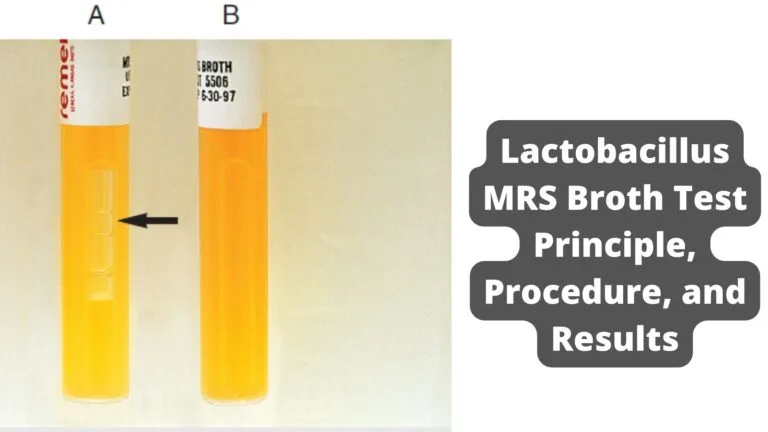
The MRS formulation was made by de Man, Rogosa, and Sharpe to replace a variable product (tomato juice) and give lactobacilli in general a good place to grow.
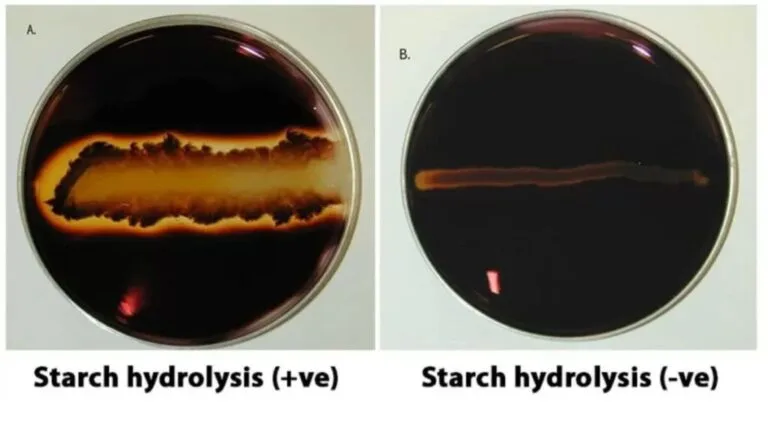
Starch Hydrolysis Test is a simple biochemical test used to determine whether a microorganism can hydrolyze starch into smaller sugars. It is done because starch is a large polysaccharide and cannot pass through the bacterial cell membrane, so some bacteria secrete extracellular amylase to break it down. In this test, the organism is inoculated on
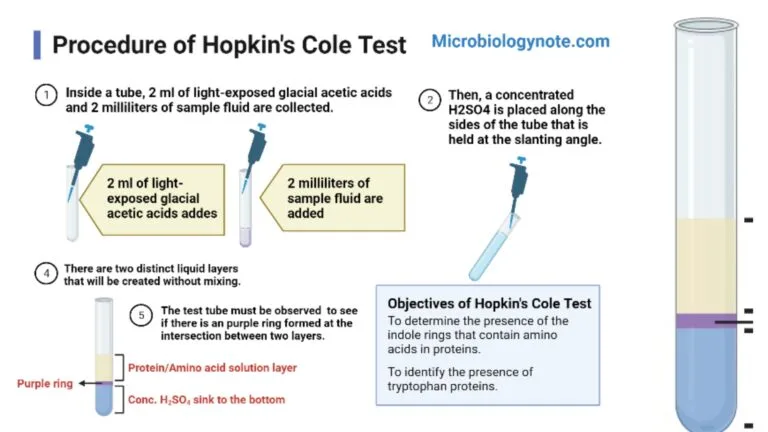
Hopkins-Cole test is a biochemical test used to detect tryptophan amino acid in proteins. It is also known as glyoxylic acid reaction. This test was discovered in 1901 by Hopkins and Cole. It is based on the reaction of glyoxylic acid with the indole ring of tryptophan. In this test the protein solution is mixed
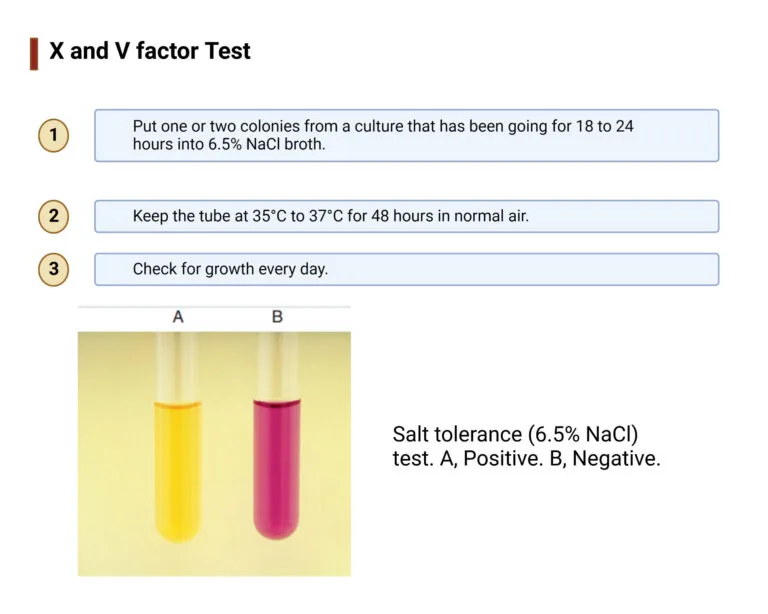
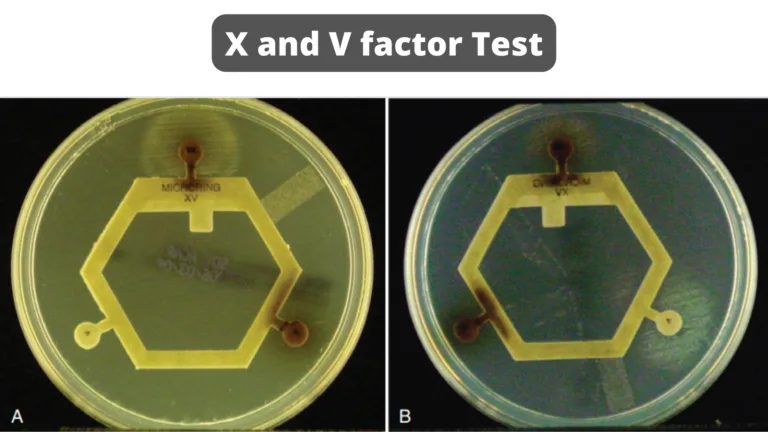
Some bacteria make substances that other bacteria need to grow. The X factor and the V factor are two such substances. The heat-stable X-factor can be protoporphyrin IX, hemin, or other iron-containing porphyrins. It can be found in red blood cells and outside of them in the blood. The heat-sensitive V-factor may be nicotinamide adenine dinucleotide (NAD) or nicotinamide adenine dinucleotide phosphate (NADP), and it is mostly found inside red blood cells. The X and V factor test or a disc test can be used to find out if a bacterium depends on its X factor or its V factor. The results can help identify the bacteria.
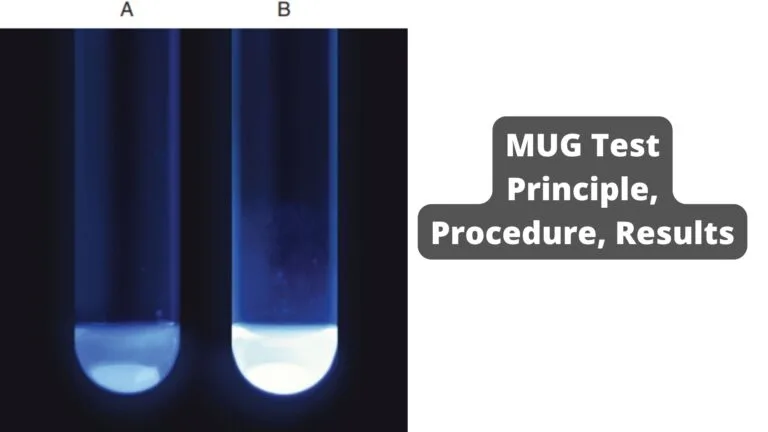
MUG test is a rapid biochemical assay used in microbiology. It is used to detect Escherichia coli (E. coli) mainly in food, water and environmental samples. It uses 4-methylumbelliferyl-β-D-glucuronide (MUG) as the substrate. The test is used to detect β-glucuronidase enzyme activity. About 96% to 97% of E. coli strains produce this enzyme. When MUG