

Major Histocompatibility Complex (MHC) molecules are glycoproteins present on the surface of cells. These are encoded by a large group of genes. In human, these genes are present on chromosome 6 and are called Human Leukocyte Antigens (HLA).
The main function of MHC molecules is to bind short peptide fragments and present them on the cell surface. These peptides may come from pathogens, virus infected cells or abnormal cells. Then they are recognized by T cells.
MHC molecules act as a transport and presentation system of the immune system. It helps the body to identify self and non-self materials. Self means body’s own normal cells and non-self means foreign antigen or changed body cells.
This antigen presentation is necessary for adaptive immune response. It helps in killing virus infected cells. It also helps in activation of B cells for antibody production by the help of helper T cells.
MHC genes are highly polygenic and polymorphic. Polygenic means many MHC genes are present in one individual. Polymorphic means many different alleles of these genes are found in the population.
This large variation forms different types of peptide-binding clefts. Due to this, different peptides can be presented to T cells. It makes difficult for pathogens to completely escape from immune detection.
The following are the two main classes of MHC molecules–
1. MHC Class I molecules
MHC Class I molecules are present on almost all nucleated cells and platelets. It presents intracellular or endogenous antigens. These antigens are usually viral proteins or tumour antigens. These are presented to CD8⁺ cytotoxic T cells.
2. MHC Class II molecules
MHC Class II molecules are mainly present on professional antigen presenting cells. These include dendritic cells, macrophages and B cells. It presents extracellular or exogenous antigens to CD4⁺ helper T cells.
CD4⁺ helper T cells then produce cytokines and activate other immune cells. In this way MHC Class II molecules help in broad immune response against outside pathogens.
Properties of MHC Molecules
The following are the important characteristics of MHC molecules–
1. Highly polymorphic – MHC genes are highly polymorphic genes. It means many different alleles of these genes are present in the population. Due to this variation, different types of peptide fragments can be presented to T cells.
2. Polygenic nature – MHC is also polygenic. It means several different MHC genes are present for each class. This helps in formation of many different MHC molecules in one individual.
3. Codominant expression – MHC alleles are inherited from both mother and father. Both maternal and paternal alleles are expressed at the same time. So, one person can express many types of MHC molecules on the cell surface.
4. Self and non-self recognition – MHC molecules bind peptide fragments and show them on the surface of the cell. This helps T cells to check whether the antigen is body’s own or foreign. This is important for immune recognition.
5. Antigen presentation – The main function of MHC molecules is antigen presentation. It presents antigenic peptides to T lymphocytes. Without this presentation, T cells cannot recognize most antigens properly.
Properties of MHC Class I Molecules
1. Distribution – MHC Class I molecules are present on almost all nucleated cells and platelets. It is not present on mature red blood cells.
2. Structure – MHC Class I is made up of one heavy α-chain and one small β2-microglobulin molecule. The α-chain has α1, α2 and α3 domains.
3. Antigen source – It presents endogenous antigen. These antigens are formed inside the cell. Example viral proteins and tumour antigens.
4. Target T cells – MHC Class I molecules present antigen to CD8⁺ cytotoxic T cells. These cells kill infected or abnormal body cells.
5. Peptide binding groove – The peptide binding groove of MHC Class I is closed at both ends. So, it binds short peptides of about 8-11 amino acids.
Properties of MHC Class II Molecules
1. Distribution – MHC Class II molecules are mainly present on professional antigen presenting cells. These cells are dendritic cells, macrophages, B lymphocytes and thymic epithelial cells.
2. Structure – MHC Class II is formed by two polypeptide chains. These are α-chain and β-chain. Both chains are almost similar in size.
3. Antigen source – It presents exogenous antigen. These antigens come from outside the cell. Example bacteria, parasite and other extracellular pathogens.
4. Target T cells – MHC Class II molecules present antigen to CD4⁺ helper T cells. These cells help in activation of other immune cells.
5. Peptide binding groove – The peptide binding groove of MHC Class II is open at both ends. So, it can bind longer peptides, usually 13-25 amino acids.
Properties of MHC Class III Molecules
1. Function – MHC Class III genes do not present antigen to T cells. These genes do not form antigen presenting surface receptors like Class I and Class II.
2. Components – MHC Class III region encodes different immune and inflammatory molecules. These include complement proteins like C2, C4, Factor B, TNF-α, TNF-β and heat shock protein 70 (Hsp70).
3. Role in immunity – These molecules are used in immune regulation and inflammation. It helps in complement activation and inflammatory response of the body.
Distribution of MHC Molecules
The distribution of MHC molecules is different in different classes. MHC Class I is widely distributed. MHC Class II is restricted mainly to antigen presenting cells. MHC Class III products are not present as antigen presenting surface receptors.
MHC Class I Distribution
1. Wide distribution – MHC Class I molecules are present on almost all nucleated cells of the body. So, most body cells can show internal antigen through MHC Class I.
2. Presence on platelets – MHC Class I molecules are also present on platelets. Platelets do not have nucleus but they express MHC Class I molecules.
3. Highest expression – MHC Class I is highly expressed on hematopoietic cells. These are blood forming cells and immune cells.
4. Absent on RBC – Mature mammalian red blood cells (RBCs) do not express MHC Class I because they are non-nucleated cells.
5. Low expression – Some cells may have very low expression of MHC Class I. But generally it is present in most nucleated cells.
MHC Class II Distribution
1. Restricted distribution – MHC Class II molecules are not present on all body cells. They are mainly restricted to professional antigen presenting cells.
2. Dendritic cells – Dendritic cells express MHC Class II. These are very important antigen presenting cells.
3. Macrophages – Macrophages also express MHC Class II molecules. They engulf antigen and present peptide to CD4⁺ helper T cells.
4. B lymphocytes – B cells or B lymphocytes express MHC Class II. They present antigen mainly to helper T cells.
5. Thymic epithelial cells – MHC Class II molecules are also present on thymic epithelial or stromal cells. These are important in T cell development.
6. Induced expression – Some other cells can express MHC Class II during immune response. Example endothelial cells, fibroblasts and enteric glial cells.
7. Role of IFN-γ – Interferon-gamma (IFN-γ) can induce MHC Class II expression on some cells. This occurs mainly during inflammation and immune activation.
MHC Class III Distribution
1. Not surface receptor – MHC Class III products are not like MHC Class I and MHC Class II. They do not form antigen presenting cell surface molecules.
2. Secreted proteins – Some MHC Class III products are secreted proteins. They circulate in blood and extracellular fluid. Example complement proteins and tumor necrosis factors (TNF).
3. Intracellular proteins – Some MHC Class III products remain inside the cell. Example heat shock proteins (Hsp70) and some metabolic enzymes.
4. Main distribution – So, MHC Class III molecules are distributed as secreted or intracellular proteins. They are not distributed as peptide presenting receptors on cell surface.
What is HLA Complex?
HLA Complex is the human form of Major Histocompatibility Complex (MHC). It is a group of closely linked genes which encode antigen presenting proteins. These proteins are present on the cell surface.
HLA means Human Leukocyte Antigen. It is mainly involved in presentation of peptide antigens to T cells. This helps the immune system to identify self and non-self materials.
The HLA complex is located on the short arm of chromosome 6. It contains a dense cluster of more than 200 genes. These genes are very important in immune response.
The main function of HLA molecules is to bind small peptide fragments and show them on the cell surface. Then these peptides are recognized by T lymphocytes. In this way infected cells, foreign cells and abnormal cells can be detected.
The HLA complex is highly polymorphic. It means many different forms of HLA genes are present in human population. So, two individuals usually do not have exactly same HLA profile.
HLA genes are expressed codominantly. It means genes inherited from both father and mother are expressed at the same time. This increases the number of different antigen presenting molecules in one individual.
Classification of HLA Complex
The HLA gene complex is divided into three main regions-
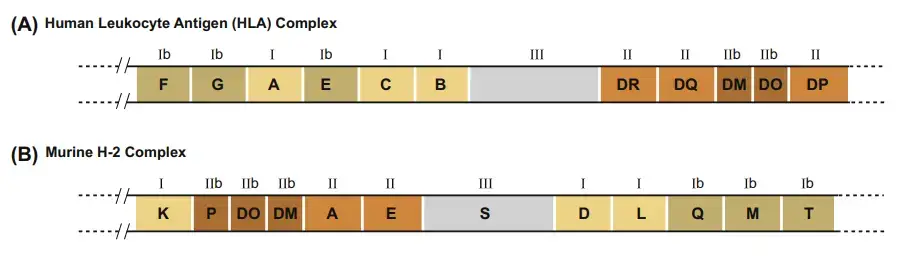
1. HLA Class I – It includes HLA-A, HLA-B and HLA-C. These molecules are present on almost all nucleated cells and platelets. They present endogenous antigens to CD8⁺ cytotoxic T cells.
2. HLA Class II – It includes HLA-DR, HLA-DQ and HLA-DP. These molecules are mainly present on professional antigen presenting cells. They present exogenous antigens to CD4⁺ helper T cells.
3. HLA Class III – This region does not encode antigen presenting receptors. It encodes immune regulatory molecules like complement proteins, heat shock proteins and tumor necrosis factors (TNF).
HLA complex is very important in organ and tissue transplantation. If HLA matching is poor, then graft rejection may occur.
It is also related with some autoimmune diseases. Example HLA-B27 is associated with ankylosing spondylitis. Some HLA variants may increase or decrease disease susceptibility.
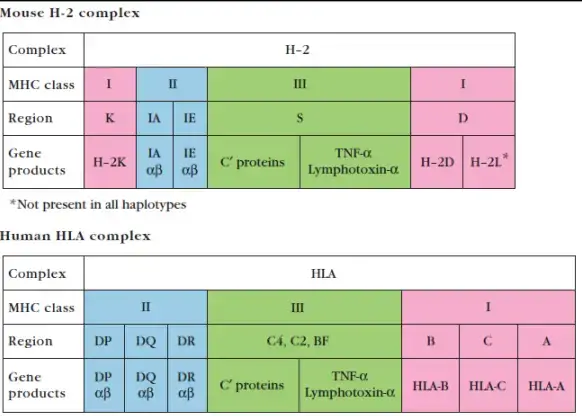
Gene Products of HLA Complex
The gene products of HLA complex are divided according to its three main regions. These are HLA Class I, HLA Class II and HLA Class III gene products.
HLA Class I Gene Products
1. Classical HLA Class I molecules – These include HLA-A, HLA-B and HLA-C. These genes encode highly polymorphic heavy α-polypeptide chains. These chains combine with β2-microglobulin and form the classical Class I antigen presenting molecules.
2. Non-classical HLA Class I molecules – These include HLA-E, HLA-F and HLA-G. These genes encode Class IB heavy chains. They show limited polymorphism. These molecules are mainly involved in special innate immune and immune regulatory functions.
HLA Class II Gene Products
1. Classical HLA Class II molecules – These include HLA-DR, HLA-DQ and HLA-DP. These genes encode α-chain and β-chain polypeptides. These two chains combine and form heterodimeric Class II molecules.
These molecules present exogenous antigen to CD4⁺ helper T cells. They are mainly present on antigen presenting cells.
2. Non-classical HLA Class II molecules – These include HLA-DM and HLA-DO. These genes encode intracellular chaperone molecules. They help in loading and exchange of peptide on classical MHC Class II molecules.
HLA-DM acts as peptide editor. HLA-DO helps in regulation of HLA-DM activity.
HLA Class III Gene Products
HLA Class III region does not encode antigen presenting surface receptor. It produces many immune regulatory and inflammatory molecules.
The following are the important gene products of HLA Class III region-
1. Complement proteins – These include C2, C4A, C4B and Factor B. These are used in complement activation and humoral immune response.
2. Tumor necrosis factors – These include TNF-α and TNF-β. TNF-β is also known as lymphotoxin. These molecules are involved in inflammation and immune regulation.
3. Molecular chaperones – These include heat shock proteins (Hsp70 family). These proteins help in protein folding and cellular stress response.
4. Metabolic enzymes – These include steroid 21-hydroxylase (CYP21). It is an enzyme encoded in the HLA Class III region and related with steroid metabolism.
Types of Major Histocompatibility Complex (MHC)
The Major Histocompatibility Complex (MHC) is divided into three main types. In human, it is called Human Leukocyte Antigen (HLA) system. These types are based on their structure, distribution and function.
The following are the major types of MHC molecules–
1. MHC Class I Molecules
MHC Class I molecules are present on almost all nucleated cells and platelets. These are not present on mature red blood cells.
These molecules mainly present intracellular or endogenous antigens. These antigens are formed inside the cell. Example viral proteins and tumour antigens.
MHC Class I presents antigen to CD8⁺ cytotoxic T cells. These T cells then destroy virus infected cells and abnormal cells.
In human, MHC Class I molecules are divided into two groups-
- Classical MHC Class I molecules – These include HLA-A, HLA-B and HLA-C. These are highly polymorphic and important in antigen presentation.
- Non-classical MHC Class I molecules – These include HLA-E, HLA-F and HLA-G. These molecules have limited polymorphism. They are involved in special immune regulatory functions.
2. MHC Class II Molecules
MHC Class II molecules are mainly present on professional antigen presenting cells. These cells include dendritic cells, macrophages, B cells and thymic epithelial cells.
These molecules present extracellular or exogenous antigens. These antigens come from outside the cell. Example bacteria, parasite and other foreign particles.
MHC Class II presents antigen to CD4⁺ helper T cells. These helper cells produce cytokines and activate other immune cells. So, it helps in broad immune response.
In human, MHC Class II molecules are also divided into two groups-
- Classical MHC Class II molecules – These include HLA-DR, HLA-DQ and HLA-DP. These molecules present processed exogenous antigen to CD4⁺ T cells.
- Non-classical MHC Class II molecules – These include HLA-DM and HLA-DO. These molecules do not directly present antigen on cell surface. They act as intracellular chaperones and regulate peptide loading.
3. MHC Class III Molecules
MHC Class III molecules are different from MHC Class I and MHC Class II. They do not encode antigen presenting cell surface receptors.
This region encodes immune regulatory and inflammatory molecules. These molecules help in immune response but not by direct antigen presentation.
The important products of MHC Class III are complement proteins, tumor necrosis factors, metabolic enzymes and molecular chaperones.
Complement proteins include C2, C4 and Factor B. Tumor necrosis factors include TNF-α and TNF-β. Molecular chaperones include heat shock proteins (Hsp70).
MHC Class I
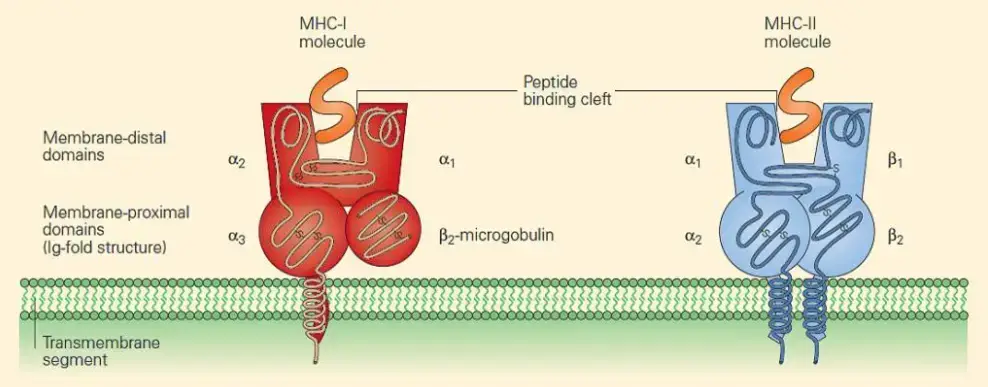
MHC Class I molecules are antigen presenting molecules present on almost all nucleated cells and platelets. It is not present on mature RBC.
The main function of MHC Class I is to bind endogenous antigen. These antigens are formed inside the cell. Example viral proteins and tumour proteins.
These antigenic peptides are presented to CD8⁺ cytotoxic T cells. Then these T cells identify the infected or abnormal cell and destroy them.
In human, classical MHC Class I molecules are encoded by HLA-A, HLA-B and HLA-C genes. These genes are present on chromosome 6.
Non-classical MHC Class I molecules include HLA-E, HLA-F and HLA-G. These are less polymorphic and are used in special immune regulatory functions.
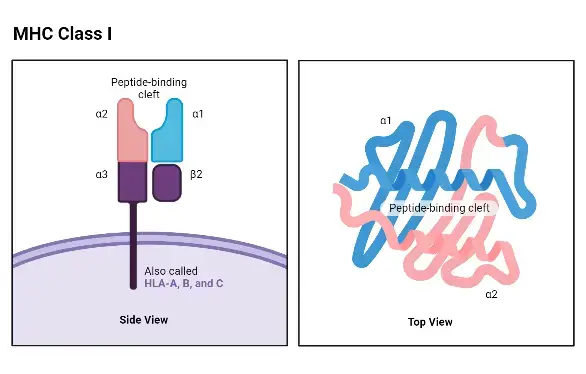
Detail Structure of MHC Class I
The following are the important structural features of MHC Class I–
- Two polypeptide chains – MHC Class I molecule is made up of two chains. One is large heavy α-chain and another is small light chain called β₂-microglobulin.
- Heavy α-chain – The heavy α-chain is highly polymorphic. It has molecular weight about 44-47 kDa. This chain is attached with the cell membrane.
- Domains of α-chain – The heavy α-chain has three extracellular domains. These are α1, α2 and α3 domains. It also has one transmembrane part and short cytoplasmic tail.
- β₂-microglobulin – β₂-microglobulin is a small non-polymorphic protein. It has molecular weight about 12 kDa. It is non-covalently attached with the heavy α-chain.
- Position of β₂-microglobulin – β₂-microglobulin helps to stabilize the whole MHC Class I molecule. But it does not pass through the cell membrane. It is encoded by gene present on chromosome 15.
- Peptide binding cleft – The α1 and α2 domains fold together and form the peptide binding groove. This groove binds the antigenic peptide.
- Closed groove – The peptide binding cleft of MHC Class I is closed at both ends. Due to this, it can bind only short peptide fragments.
- Peptide size – The peptide present in MHC Class I groove is usually 8-11 amino acids long. This is because larger peptide cannot fit properly in closed groove.
- α3 domain – The α3 domain is near to the cell membrane. It is similar to immunoglobulin constant region.
- CD8 binding site – The α3 domain provides binding site for CD8 co-receptor. This CD8 is present on cytotoxic T cells. So, MHC Class I mainly interact with CD8⁺ T cells.
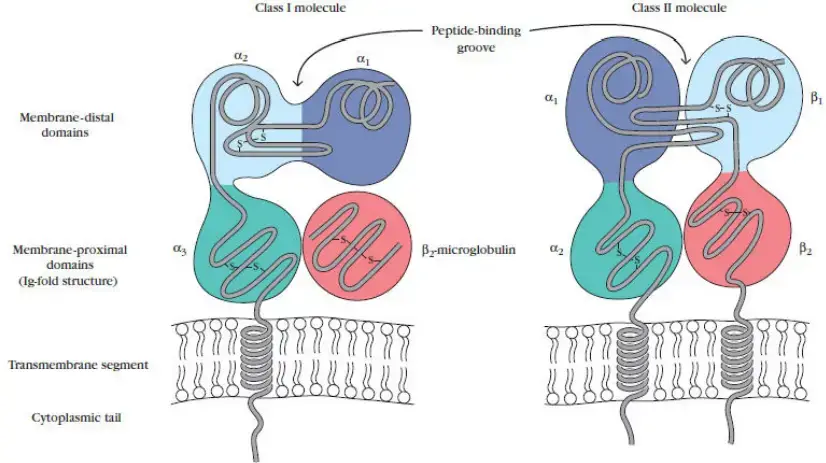
MHC Class II
MHC Class II molecules are antigen presenting molecules which mainly present extracellular antigen. These antigens are taken from outside the cell. Example bacterial antigen and parasitic antigen.
These antigens are first engulfed and degraded by antigen presenting cells. Then the small peptide fragments are attached with MHC Class II molecules.
MHC Class II presents these peptides to CD4⁺ helper T cells. These helper T cells then activate other immune cells by cytokines.
MHC Class II molecules are not present on all body cells. These are mainly present on professional antigen presenting cells. These cells include dendritic cells, macrophages, B cells and thymic epithelial cells.
In human, classical MHC Class II molecules are encoded by HLA-DR, HLA-DQ and HLA-DP genes. These genes are present in the MHC region on chromosome 6.
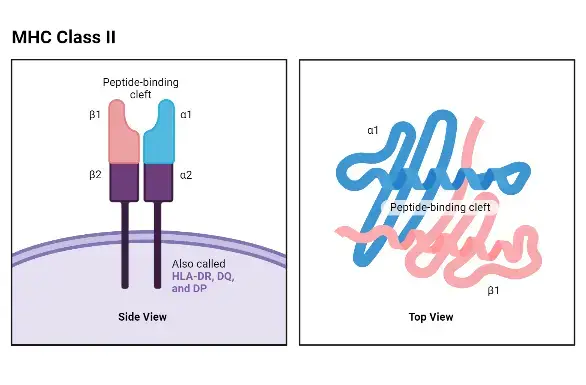
Detail Structure of MHC Class II
The following are the important structural features of MHC Class II–
- Heterodimeric protein – MHC Class II molecule is a heterodimeric protein. It is formed by two different polypeptide chains. These are α-chain and β-chain.
- α-chain – The α-chain has molecular weight about 32-34 kDa. It is attached with the cell membrane. It contains two extracellular domains.
- β-chain – The β-chain has molecular weight about 29-32 kDa. It is also attached with the cell membrane. It also contains two extracellular domains.
- Domains of α-chain – The α-chain has α1 and α2 domains. It also has one hydrophobic transmembrane region and a cytoplasmic tail.
- Domains of β-chain – The β-chain has β1 and β2 domains. It also has one transmembrane region and a cytoplasmic tail.
- Peptide binding cleft – The peptide binding cleft is formed by α1 and β1 domains. These two domains are present away from the cell membrane. They fold together and make antigen binding groove.
- Open groove – The binding groove of MHC Class II is open at both ends. So, peptide ends can extend outside the groove.
- Peptide size – Due to open groove, MHC Class II can bind longer peptides. These peptides are usually 12-25 amino acids long.
- Anchor pockets – The antigenic peptide is held inside the groove by hydrogen bonds and anchor pockets. The important anchor positions are P1, P4, P6 and P9.
- α2 and β2 domains – The α2 and β2 domains are present close to the cell membrane. These domains show similarity with immunoglobulin constant region.
- CD4 binding site – The β2 domain provides binding site for CD4 co-receptor. This CD4 is present on helper T cells. So, MHC Class II mainly interact with CD4⁺ T cells.
MHC Class III
MHC Class III is one of the main region of MHC complex. It is different from MHC Class I and MHC Class II.
MHC Class III molecules do not present antigen. They do not bind peptide and do not show peptide to T cells.
These genes encode many immune related proteins. These proteins are mainly involved in inflammation, complement activation and immune regulation.
In human, MHC Class III genes are present on short arm of chromosome 6. The location is 6p21.3.
This region is present between MHC Class I and MHC Class II gene clusters. So, it lies in middle part of the HLA complex.
Detail Structure and Composition of MHC Class III
The following are the important structural and compositional features of MHC Class III–
- Not true antigen presenting receptor – MHC Class III does not form typical cell surface antigen presenting molecule. So, it has no peptide binding groove like Class I and Class II.
- Poorly defined structure – The structure of MHC Class III is not clearly defined as one receptor. It is a group of different proteins. These proteins have different structure and different function.
- Gene dense region – MHC Class III region is very gene dense region of human genome. It contains many genes in a small part of chromosome.
- Size of region – This region is about 700 kilobases long. It contains more than 60 genes.
- Position in chromosome – The genes of MHC Class III are present on chromosome 6p21.3. It is located between Class I and Class II regions.
- Complement proteins – This region encodes complement cascade proteins. These include C2, C4A, C4B and Factor B. These proteins help in innate immune response and destruction of microbes.
- Tumor necrosis factors – MHC Class III also encodes TNF-α and TNF-β. These are inflammatory signaling molecules. They help in inflammation and immune cell communication.
- Molecular chaperones – This region encodes heat shock proteins (Hsp70 family). These proteins help in folding and stabilization of proteins during cellular stress.
- Metabolic enzymes – MHC Class III also encodes some metabolic enzymes. Example steroid 21-hydroxylase (CYP21). It is related with steroid metabolism.
- Main role – The main role of MHC Class III products is not antigen presentation. It is mainly used in complement pathway, inflammation, cellular stress response and immune regulation.
Antigen Processing and Presentation
Antigen processing and presentation is the mechanism by which protein antigen is broken into small peptide fragments. These peptide fragments are then presented on the cell surface by MHC molecules.
This process helps T cells to check antigen present in the body. It helps to identify foreign antigen, virus infected cell and abnormal cell.
There are mainly two pathways of antigen processing and presentation. These are endogenous pathway and exogenous pathway.
Endogenous pathway presents intracellular antigen by MHC Class I molecules. It presents antigen to CD8⁺ cytotoxic T cells.
Exogenous pathway presents extracellular antigen by MHC Class II molecules. It presents antigen to CD4⁺ helper T cells.
Sometimes extracellular antigen can also be presented by MHC Class I molecules. This is called cross-presentation. It is mainly done by some antigen presenting cells.
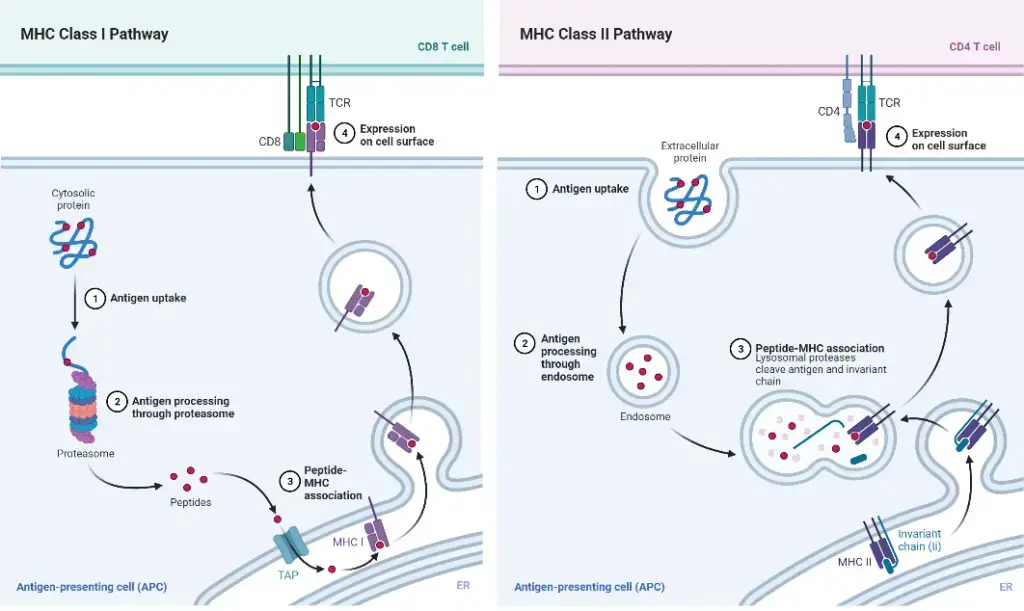
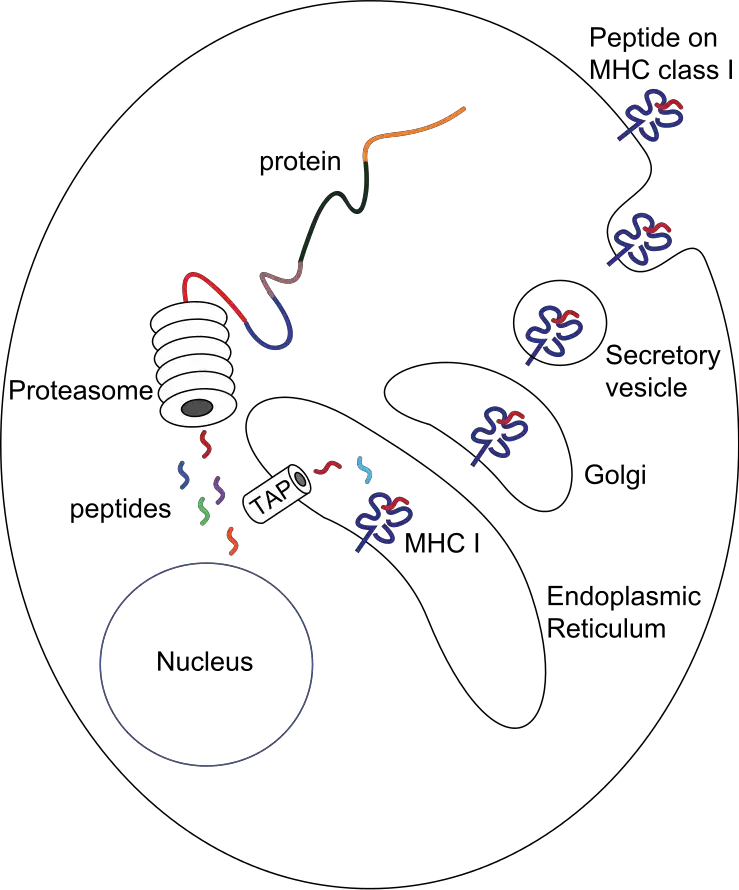
Endogenous Pathway (MHC Class I Pathway)
1. Formation of intracellular antigen – In this pathway antigen is produced inside the cell. These may be viral protein, tumour protein or abnormal intracellular protein.
2. Ubiquitin tagging – The intracellular protein is first marked by a small protein called ubiquitin. This tagging shows that the protein should be degraded.
3. Proteasomal degradation – The tagged protein enters into proteasome. Proteasome is a multi-catalytic protease complex. It cuts the protein into small peptide fragments.
4. Transport into ER – The small peptides are transported from cytosol into rough endoplasmic reticulum (ER). This transport is done by TAP. TAP means Transporter Associated with Antigen Processing.
5. Peptide trimming – Some peptides are longer in size. These are trimmed inside the ER by enzymes like ERAP. Then peptides become suitable for MHC Class I binding.
6. Formation of MHC Class I molecule – In the ER, new MHC Class I heavy α-chain is formed. It combines with β₂-microglobulin. This forms the basic MHC Class I molecule.
7. Help of chaperones – The empty MHC Class I molecule is stabilized by chaperone proteins. These include calnexin, calreticulin, ERp57 and tapasin.
8. Peptide loading – Tapasin connects empty MHC Class I molecule with TAP. Then suitable peptide enters into the binding groove of MHC Class I.
9. Movement through Golgi – After peptide binding, the MHC Class I-peptide complex becomes stable. It leaves the chaperones and moves through Golgi apparatus.
10. Surface presentation – Finally the complex reaches the cell surface. The antigenic peptide is presented to CD8⁺ cytotoxic T cells. Then infected or abnormal cells may be killed.
Exogenous Pathway (MHC Class II Pathway)
1. Entry of extracellular antigen – In this pathway antigen comes from outside the cell. These may be bacterial antigen, parasitic antigen or soluble foreign protein.
2. Antigen uptake – Professional antigen presenting cells take up the antigen by phagocytosis or endocytosis. These cells include dendritic cells, macrophages and B cells.
3. Formation of vesicle – After uptake, antigen remains inside a vesicle. This vesicle is called phagosome or endosome.
4. Fusion with lysosome – The phagosome fuses with lysosome. It forms phagolysosome. Inside this vesicle the medium becomes acidic.
5. Degradation of antigen – Acidic condition activates lysosomal proteases. Example cathepsins. These enzymes break the antigen into small peptide fragments.
6. Synthesis of MHC Class II – At the same time, MHC Class II α-chain and β-chain are synthesized in the ER.
7. Binding of invariant chain – The newly formed MHC Class II molecule binds with invariant chain (Ii). This chain blocks the peptide binding groove.
8. Prevention of wrong peptide binding – Invariant chain prevents binding of self peptide inside the ER. So, the groove remains protected until it reaches endosomal compartment.
9. Transport through Golgi – The MHC Class II-invariant chain complex moves from ER through Golgi apparatus. Then it enters into the endosomal pathway.
10. Cleavage of invariant chain – In acidic endosome, proteases cut the invariant chain. A small part remains in the groove. This part is called CLIP.
11. Removal of CLIP – HLA-DM binds with MHC Class II molecule. It removes CLIP from the peptide binding groove.
12. Peptide loading – After removal of CLIP, the processed exogenous peptide binds in the groove of MHC Class II molecule.
13. Surface presentation – The loaded MHC Class II-peptide complex moves to the plasma membrane. It presents antigen to CD4⁺ helper T cells.
14. Activation of helper T cells – CD4⁺ helper T cells recognize the antigen. Then they release cytokines and activate other immune cells. This helps in broad immune response.
Importance of MHC
- Self and non-self recognition – MHC molecules are used to present peptide fragments on the surface of cells. These peptides are checked by T cells. It helps the immune system to identify body’s own healthy cells and foreign or changed cells.
- Antigen presentation – The main importance of MHC is antigen presentation. It binds small peptide antigen and present them to T lymphocytes. Most of the T cells cannot recognize antigen directly without MHC molecules.
- Activation of adaptive immunity – MHC molecules are required for starting adaptive immune response. MHC Class I present antigen to CD8⁺ cytotoxic T cells. MHC Class II present antigen to CD4⁺ helper T cells.
- Destruction of infected cells – MHC Class I presents endogenous antigen. These antigens are formed inside the cell, such as viral protein and tumour antigen. After recognition, CD8⁺ T cells kill the infected or abnormal cells.
- Activation of helper T cells – MHC Class II presents exogenous antigen to CD4⁺ helper T cells. These antigens are taken from outside the cell. The activated helper cells release cytokines and activate other immune cells.
- Antibody production – MHC Class II also helps in antibody production. It activates helper T cells. These helper cells then stimulate B lymphocytes to form antibodies.
- Prevention of pathogen escape – MHC genes are highly polygenic and polymorphic. So many different types of peptide binding clefts are formed. This makes difficult for pathogens to escape completely from immune detection.
- Role in T cell development – MHC molecules are important during T cell development in the thymus. They present self peptide to immature T cells. This helps in selection of proper T cells.
- Maintenance of self tolerance – Some immature T cells react strongly with self antigen. These cells are removed in thymus by negative selection. This helps to prevent immune reaction against own body tissues.
- Transplant rejection – MHC molecules are very important in tissue and organ transplantation. If donor and recipient HLA are not matched, the graft is recognized as foreign. This may lead to graft rejection.
- Association with diseases – Some HLA variants are associated with autoimmune diseases. HLA-B27 is linked with ankylosing spondylitis. HLA-DQ2 and HLA-DQ8 are linked with celiac disease and Type 1 diabetes.
- Role in innate immunity – MHC Class III region encodes immune regulatory and inflammatory molecules. These include complement proteins and tumor necrosis factors (TNFs). These molecules help in inflammation and innate immune response.
References
- Animated biology With arpan. (n.d.). Cross-presentation of exogenous antigen (MHC cross-presentation by dendritic cells) [Video]. YouTube.
- Becar, M., & Kasi, A. (2022, September 26). Physiology, MHC class I. In StatPearls. StatPearls Publishing.
- Biology Goal. (n.d.). Antigen presentation | Endogenous pathway | Immune system | MHC-Class-1 | Basic Science Series [Video]. YouTube.
- Chen, B., Li, J., He, C., Li, D., Tong, W., Zou, Y., & Xu, W. (2017). Role of HLA-B27 in the pathogenesis of ankylosing spondylitis (Review). Molecular Medicine Reports, 15(4), 1943-1951. https://doi.org/10.3892/mmr.2017.6248
- Cruz-Tapias, P., Castiblanco, J., & Anaya, J. M. (2013). Major histocompatibility complex: Antigen processing and presentation. In J. M. Anaya, Y. Shoenfeld, A. Rojas-Villarraga, et al. (Eds.), Autoimmunity: From bench to bedside. El Rosario University Press.
- Graff, J. (2024, February 28). MHC I and MHC II: Summary of antigen processing and presentation. Life and Biology.
- Gutiérrez-Martínez, E., Planès, R., Anselmi, G., Reynolds, M., Menezes, S., Adiko, A. C., Saveanu, L., & Guermonprez, P. (2015). Cross-presentation of cell-associated antigens by MHC class I in dendritic cell subsets. Frontiers in Immunology, 6, Article 363. https://doi.org/10.3389/fimmu.2015.00363
- Hamid, S. M., & Jarrah, R. H. (2026). The link between HLA genes and autoimmune disease: A comprehensive review. International Journal of Science and Research Archive, 19(2), 99-105. https://doi.org/10.30574/ijsra.2026.19.2.0980
- Hussain Biology. (n.d.). Exogenous pathway of antigen presentation | MHC II processing [Video]. YouTube.
- Hussain Biology. (n.d.). MHC-I processing | Antigen processing and presentation [Video]. YouTube.
- Immunopaedia. (n.d.). 4. MHC & antigen presentation.
- Janeway, C. A. Jr., Travers, P., Walport, M., et al. (2001). The major histocompatibility complex and its functions. In Immunobiology: The immune system in health and disease (5th ed.). Garland Science.
- Kamal, S., & Lappin, S. L. (2023, August 14). Genetics, histocompatibility antigen. In StatPearls. StatPearls Publishing.
- Marino, J., Paster, J., & Benichou, G. (2016). Allorecognition by T lymphocytes and allograft rejection. Frontiers in Immunology, 7, Article 582. https://doi.org/10.3389/fimmu.2016.00582
- National Center for Biotechnology Information. (n.d.). Calreticulin in the immune system: Ins and outs. PubMed Central (PMC).
- National Center for Biotechnology Information. (n.d.). Current concepts of antigen cross-presentation. PubMed Central (PMC).
- National Center for Biotechnology Information. (n.d.). Direct and indirect allograft recognition: Pathways dictating graft rejection mechanisms. PubMed Central (PMC).
- National Center for Biotechnology Information. (n.d.). Influence of direct and indirect allorecognition pathways on CD4+CD25+ regulatory T-cell function in transplantation. PubMed Central (PMC).
- National Center for Biotechnology Information. (n.d.). MHC class II presentation in autoimmunity. PubMed Central (PMC).
- National Center for Biotechnology Information. (n.d.). MHC structure and function – antigen presentation. Part 1. PubMed Central (PMC).
- National Center for Biotechnology Information. (n.d.). Molecular mimicry of an HLA-B27-derived ligand of arthritis-linked subtypes with chlamydial proteins. PubMed.
- National Center for Biotechnology Information. (n.d.). Pathways of MHC I cross-presentation of exogenous antigens. PubMed Central (PMC).
- National Center for Biotechnology Information. (n.d.). Present yourself! By MHC class I and MHC class II molecules. PubMed Central (PMC).
- National Center for Biotechnology Information. (n.d.). Productive association between MHC class I and tapasin requires the tapasin transmembrane/cytosolic region and the tapasin C-terminal Ig-like domain. PubMed Central (PMC).
- National Center for Biotechnology Information. (n.d.). Recognition of self-peptide–MHC complexes by autoimmune T-cell receptors. PubMed Central (PMC).
- National Center for Biotechnology Information. (n.d.). Structural comparison between MHC classes I and II; In evolution, a class-II-like molecule probably came first. PubMed Central (PMC).
- National Center for Biotechnology Information. (n.d.). The HLA region and autoimmune disease: Associations and … PubMed Central (PMC).
- National Center for Biotechnology Information. (n.d.). The major histocompatibility complex in transplantation. PubMed Central (PMC).
- Nesmiyanov, P. (n.d.). Antigen processing and presentation. British Society for Immunology.
- Nordquist, H., & Jamil, R. T. (2023, April 24). Biochemistry, HLA antigens. In StatPearls. StatPearls Publishing.
- Peptides & Elephants. (n.d.). MHC I vs II peptide binding – Understanding T cell presentation.
- reCAPTCHA. (n.d.). Checking your browser.
- ResearchGate. (n.d.). The link between HLA genes and autoimmune disease: A comprehensive review.
- Singh, M. K., Han, S., Ju, S., Ranbhise, J. S., Ha, J., Yeo, S. G., Kim, S. S., & Kang, I. (2025). Hsp70: A multifunctional chaperone in maintaining proteostasis and its implications in human disease. Cells, 14(7), Article 509. https://doi.org/10.3390/cells14070509
- Stanford Blood Center. (2026). HLA disease association (DA) panels [PDF].
- Stoakes, S. F. (2023, July 19). Functions of MHC in the immune system. News-Medical.Net.
- Tsai, S., & Santamaria, P. (2013). MHC class II polymorphisms, autoreactive T-cells, and autoimmunity. Frontiers in Immunology, 4, Article 321. https://doi.org/10.3389/fimmu.2013.00321
- UC Davis. (n.d.). The science behind ankylosing spondylitis: Current mechanisms …
- Unknown Author. (n.d.). MHC class I antigens consist of a transmembrane heavy chain (α chain) that [PDF].
- Unknown Author. (n.d.). Major histocompatibility complex: Genomic architecture, biophysical properties, processing pathways, and immunological significance.
- Wieczorek, M., Abualrous, E. T., Sticht, J., Álvaro-Benito, M., Stolzenberg, S., Noé, F., & Freund, C. (2017). Major histocompatibility complex (MHC) class I and MHC class II proteins: Conformational plasticity in antigen presentation. Frontiers in Immunology, 8, Article 292. https://doi.org/10.3389/fimmu.2017.00292
- Wikipedia. (2026, January 20). Cross-presentation.
- Wikipedia. (2026, May 25). HLA-B27.
- Wikipedia. (2025, March 6). MHC class II.
- Wikipedia. (2025, December 17). MHC class III.
- Yu, D. T. Y., Choo, S. Y., & Schaack, T. (1989). Molecular mimicry in HLA-B27-related arthritis. Annals of Internal Medicine, 111(7), 581-591. https://doi.org/10.7326/0003-4819-111-7-581
- Yun, I. H., & Yang, J. (2024). Mechanisms of allorecognition and xenorecognition in transplantation. Clinical Transplantation and Research, 38(4), 273-293. https://doi.org/10.4285/ctr.24.0056