

Major Histocompatibility Complex (MHC) genes are a group of closely linked genes present in vertebrate DNA. These genes are highly diverse and they play important role in adaptive immune system. In human, this region is known as Human Leukocyte Antigen (HLA) complex.
The HLA complex is present on chromosome 6. It contains more than 200 genes. It is one of the most gene dense region of human genome.
MHC genes are mainly involved in immune response. It helps the body to recognize own cells and foreign cells. Foreign substances may be virus, bacteria, cancer cell or transplanted tissue.
The MHC genes are divided into three main classes. These are MHC class I, MHC class II and MHC class III.
MHC class I genes form cell surface proteins. These proteins are present on almost all nucleated cells. They bind small antigen fragments from inside the cell and present them on cell surface. Then T cells detect these antigens and infected cell may be destroyed.
MHC class II genes also form antigen presenting proteins. These proteins are mainly present on antigen presenting cells. They present antigen fragments which come from outside the cell. This helps in activation of helper T cells and immune response is started.
MHC class III genes do not present antigen. They encode other immune proteins. These include complement proteins and some inflammatory molecules. These proteins help in defense reaction and inflammation.
The main work of MHC molecules is antigen presentation. In this process, antigen fragment is attached with MHC molecule. Then it is shown on the surface of the cell. This antigen is checked by T cells.
One important feature of MHC genes is polymorphism. It means many different forms or alleles of these genes are present in human population. Due to this, different persons have different MHC molecules.
This variation is useful for survival of population. Because one pathogen cannot easily affect all individuals in same way. Some persons can recognize the antigen better and produce effective immune defense.
Historical Background and Discovery of MHC Genes
Major Histocompatibility Complex (MHC) genes are very ancient genes. The origin of MHC gene locus is considered in jawed vertebrates. It is estimated that it appeared about 450 million years ago.
The discovery of MHC genes started from transplantation studies. Clarence Little studied inbred mice. He observed that transplanted tumors were rejected depending on the genetic strain of donor and host.
In 1936, Peter Gorer, a British immunologist, gave the first formal description of MHC. He studied tissue antigens in mice. These antigens were related with rejection of transplanted tissue.
Later George Snell worked on mouse strains. He selectively bred mice to study tissue compatibility. From this work, he identified the histocompatibility locus which later became known as MHC locus.
In human, the equivalent of MHC was discovered in 1954. Jean Dausset and Jan van Rood identified the human system. This system was named as Human Leukocyte Antigen (HLA) system.
Jean Dausset described the first human leukocyte antigen. It is now known as HLA-A2. He observed antibodies in patients who received many blood transfusions. These antibodies reacted with leukocyte antigens.
After this, the function of MHC genes became more clear. Baruj Benacerraf showed that these genes are not only involved in tissue compatibility. They also regulate interactions between different immune cells.
In 1980, George Snell, Jean Dausset and Baruj Benacerraf received the Nobel Prize in Physiology or Medicine. They got this award for discovery of genetically determined cell surface structures which regulate immunological reactions.
In 1995, Claus Wedekind studied another role of MHC genes. He performed the famous sweaty T-shirt experiment. It showed that MHC genes may also influence mate selection. Persons tend to prefer smell of partners having different MHC genes.
In 1999, the first complete sequenced and annotated human MHC locus was published in Nature. It was done by sequencing centres from UK, USA and Japan. This helped to understand the structure and arrangement of HLA genes in more detail.
Location and Organization of MHC Genes
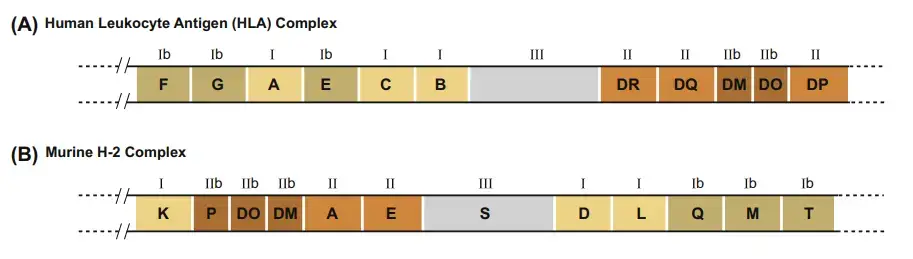
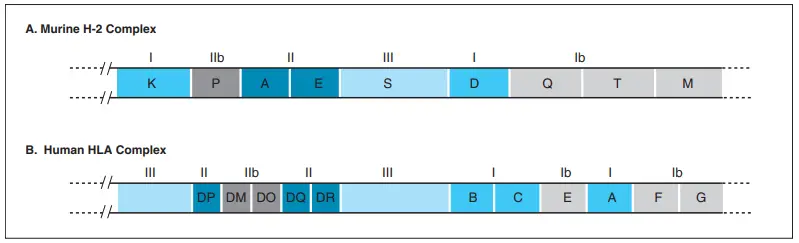
Major Histocompatibility Complex (MHC) genes in human are present on short arm of chromosome 6. This region is called Human Leukocyte Antigen (HLA) complex. It is located at 6p21.3 band of chromosome 6.
In mouse, the same type of region is called H-2 complex. It is present on chromosome 17. Thus, the position is different in human and mouse, but the immune function is same type.
The human MHC region is about 3.6 million base pairs (3.6 Mb) long. It contains more than 200 genes. It is one of the most gene dense region present in human genome.
The MHC gene locus is arranged into three main regions. These are MHC class I, MHC class II and MHC class III. These regions are arranged in fixed order on chromosome.
From centromere side to telomere side, the arrangement is like this-
Class II region is present near the centromere. It is about 1 Mb long. This region contains HLA-DP, HLA-DQ and HLA-DR genes. These genes encode α-chain and β-chain of class II antigen presenting molecules.
Class III region is present in the middle between class I and class II region. This region does not encode classical antigen presenting molecules. It contains genes for complement proteins such as C2, C4 and factor B. It also contains genes for heat shock proteins and inflammatory molecules like tumor necrosis factor-alpha (TNF-α).
Class I region is present near the telomere. It contains classical HLA-A, HLA-B and HLA-C genes. This region is spread about 1.5 Mb. It also contains non-classical genes such as HLA-E, HLA-F and HLA-G.
The MHC class I molecule has heavy α-chain and light chain called β₂-microglobulin. The heavy chain is encoded by genes present in MHC region on chromosome 6. But β₂-microglobulin gene is not present in MHC region. It is present on chromosome 15.
The HLA genes are very close to each other on chromosome. So they are usually inherited together. This group of closely linked genes inherited from one parent is called HLA haplotype.
A person receives one HLA haplotype from mother and one from father. Due to this arrangement, many combinations of HLA genes are formed in human population. This is important in immune response and tissue transplantation.
Classification of MHC Genes
The MHC genes are classified into three main classes. These are MHC class I genes, MHC class II genes and MHC class III genes.
1. MHC Class I Genes
MHC class I genes are present in class I region of HLA complex. These genes encode class I antigen presenting molecules. They mainly present intracellular or endogenous antigen to CD8+ cytotoxic T cells.
The MHC class I genes are of following types-
- Classical class I genes – These include HLA-A, HLA-B and HLA-C. These genes are highly polymorphic. They present antigen fragments from virus infected cell, tumor cell and other abnormal host cells to CD8+ T cells.
- Non-classical class I genes – These include HLA-E, HLA-F and HLA-G. These genes show limited polymorphism. They are mainly involved in immune regulation. They help in control of Natural Killer (NK) cells and maintenance of maternal-fetal tolerance during pregnancy.
- Stress induced class I related genes – These include MICA and MICB. These molecules are expressed during cellular stress. They are recognized by immune cells and help in detection of stressed or damaged cell.
2. MHC Class II Genes
MHC class II genes are present in class II region of HLA complex. These genes encode class II antigen presenting molecules. They mainly present extracellular or exogenous antigen to CD4+ helper T cells.
The MHC class II genes are of following types-
- Classical class II genes – These include HLA-DR, HLA-DQ and HLA-DP. These are expressed mainly on professional antigen presenting cells like dendritic cells, macrophages and B cells. They present antigen from bacteria, toxins and other outside materials to CD4+ T cells.
- Non-classical class II genes – These include HLA-DM and HLA-DO. These molecules are not mainly exposed on the cell surface. They remain in endosomal compartment. They help in loading antigenic peptide on classical MHC class II molecules.
3. MHC Class III Genes
MHC class III genes are present between class I and class II regions. These genes do not encode classical antigen presenting molecules. They encode other immune and regulatory proteins.
The important MHC class III genes encode complement components such as C2, C4, C5 and factor B. These proteins take part in complement system and help in immune defense.
Some MHC class III genes encode heat shock proteins. These proteins help the cell during stress condition. They are also related with immune regulation.
This region also contains genes for inflammatory cytokines. These include tumor necrosis factor-alpha (TNF-α) and lymphotoxins. These molecules help in inflammation and regulation of immune response.
Structure and Gene Products of MHC
The MHC gene products are membrane glycoproteins and some secreted immune proteins. These molecules are mainly involved in antigen presentation and immune regulation. The structure and gene products are different in MHC class I, MHC class II and MHC class III.
1. MHC Class I
MHC class I genes encode classical antigen presenting molecules. These include HLA-A, HLA-B and HLA-C. They also encode non-classical immune regulatory molecules such as HLA-E, HLA-F and HLA-G.
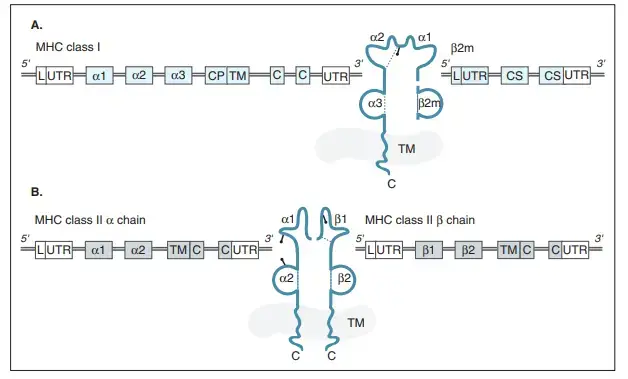
The MHC class I molecule is a heterodimer. It is made up of one heavy α-chain and one small light chain called β₂-microglobulin. The heavy α-chain is attached to the cell membrane.
The heavy α-chain has three globular domains. These are α₁, α₂ and α₃ domains. The β₂-microglobulin is non-polymorphic and it is attached with heavy chain by non-covalent bond.
The peptide binding groove of MHC class I is formed by α₁ and α₂ domains. This groove has closed ends. Due to this, it can bind only short peptides.
The peptides presented by MHC class I molecules are usually 8 to 10 amino acids long. These peptides are mainly endogenous antigen. They are presented to CD8+ cytotoxic T cells.
2. MHC Class II
MHC class II genes encode classical antigen presenting molecules. These include HLA-DR, HLA-DP and HLA-DQ. These molecules are mainly present on professional antigen presenting cells.
The MHC class II molecule is also a heterodimer. It is made up of two polymorphic transmembrane glycoprotein chains. These are α-chain and β-chain.
The α-chain is about 33 kDa and β-chain is about 28 kDa. Both chains pass through the cell membrane. Each chain has two extracellular domains.
The α-chain has α₁ and α₂ domains. The β-chain has β₁ and β₂ domains. These domains together maintain the structure of class II molecule.
The peptide binding groove of MHC class II is formed by α₁ and β₁ domains. This groove has open ends. So it can bind longer peptides.
The peptides presented by MHC class II molecules are usually 13 to 25 amino acids long. These peptides are mainly exogenous antigen. They are presented to CD4+ helper T cells.
3. MHC Class III
MHC class III genes do not encode classical antigen presenting molecules. They do not form antigen presenting heterodimer like class I and class II. Their products are mainly secreted immune proteins.
The MHC class III region encodes many immune and regulatory proteins. These proteins have different role in immune response. They are not present as peptide presenting molecule on cell surface.
The important products of MHC class III genes include complement proteins. These are C2, C4, C5 and factor B. These proteins take part in complement pathway and help in destruction of microbes.
This region also encodes heat shock proteins. These proteins are formed during stress condition of the cell. They help in protection of cell and immune regulation.
Some genes of MHC class III encode inflammatory cytokines. These include tumor necrosis factor-alpha (TNF-α) and lymphotoxins. These molecules are involved in inflammation and activation of immune response.
Inheritance and Polymorphism of MHC Genes
The MHC genes are inherited in special pattern because these genes are closely placed on chromosome. They show high variation in population. This variation is called polymorphism.
1. Inheritance of MHC Genes
MHC genes are present very close to each other in HLA region. So these genes are usually inherited together. This inherited block of HLA genes is called HLA haplotype.
Each person receives one HLA haplotype from mother and one HLA haplotype from father. These two haplotypes are present in the individual and both are expressed.
The expression of MHC genes is co-dominant. It means maternal and paternal alleles are expressed equally on the surface of cell. So the cell can show MHC molecules from both parents.
In a family, two siblings may inherit same or different HLA haplotypes. There is 25% chance that siblings are completely HLA-identical. There is 50% chance that they share one haplotype. There is 25% chance that they share no HLA haplotype.
Crossing over is rare in the MHC region. So some alleles remain inherited together more commonly. This condition is called linkage disequilibrium.
2. Polymorphism of MHC Genes
MHC genes are highly polymorphic genes. It means many different alleles are present in the population. The MHC region is one of the most polymorphic genetic region in vertebrates.
In human, many alleles are present for single HLA locus. HLA-B is one of the most polymorphic human gene. Due to this, different persons have different antigen presenting ability.
The variation is mainly present in the peptide binding groove of MHC molecules. This groove binds antigen peptide. Change in this region changes the shape and chemical nature of groove.
Because of this variation, different MHC molecules bind different peptides. One person may present one type of antigen better, while another person may present other antigen better. This is important for immune defense.
The polymorphism of MHC genes gives survival advantage. It is maintained by pathogen selection. If one pathogen escape one type of MHC molecule, it may still be recognized by other persons having different MHC molecules.
This prevents whole population from being affected by same disease. So MHC diversity is important for long term survival of species.
The diversity of MHC genes is inherited. It is not formed newly in every person like antigen receptor rearrangement. New MHC alleles are formed slowly during evolution.
The important causes of MHC polymorphism are point mutation, genetic recombination and gene conversion. In gene conversion, part of one gene sequence is copied and replaces part of another gene. This creates new allelic forms.
Expression of MHC Molecules on Cells
The expression of MHC molecules on cells takes place by two main pathways. These are MHC class I pathway and MHC class II pathway. MHC class I presents endogenous antigen and MHC class II presents exogenous antigen.
A. Expression of MHC Class I Molecules
The MHC class I pathway is also called endogenous pathway. In this pathway, antigen is produced inside the cell. It may be viral protein, tumor protein or normal self protein.
Step 1- Protein degradation
In this step, intracellular proteins are broken down in the cytosol or nucleus. These proteins are degraded by enzyme complex called proteasome. It forms short peptide fragments.
Step 2- Transport of peptide into ER
The short peptides are then transported into Endoplasmic Reticulum (ER). This transport is done by TAP protein. TAP means transporter associated with antigen processing.
Step 3- Formation of MHC class I molecule
Inside the ER, the heavy α-chain of MHC class I is synthesized. The light chain β₂-microglobulin also joins with it. These chains are not stable alone, so chaperone proteins help in folding.
Step 4- Role of chaperone proteins
The important chaperone proteins are calnexin, calreticulin, ERp57 and tapasin. These proteins keep the MHC class I molecule in proper shape. Together they form peptide loading complex.
Step 5- Peptide trimming
The peptides which enter into ER may be longer. So they are trimmed by ER aminopeptidases (ERAPs). After trimming, the peptide becomes about 8 to 10 amino acids long.
Step 6- Peptide loading
The processed peptide is loaded into the peptide binding groove of MHC class I molecule. When a suitable peptide binds, the molecule becomes stable. The chaperone proteins are released.
Step 7- Transport to cell surface
The stable peptide-MHC class I complex moves from ER to Golgi apparatus. From Golgi, it is transported to the plasma membrane. It is then expressed on the cell surface.
Step 8- Recognition by T cells
On the cell surface, MHC class I molecule presents antigen to CD8+ cytotoxic T cells. If the antigen is foreign or abnormal, the infected cell may be killed by cytotoxic T cells.
B. Expression of MHC Class II Molecules
The MHC class II pathway is also called exogenous pathway. In this pathway, antigen comes from outside the cell. It occurs mainly in professional antigen presenting cells.
Step 1- Uptake of antigen
Professional antigen presenting cells such as dendritic cells, macrophages and B cells take up extracellular proteins. This uptake occurs by endocytosis or phagocytosis.
Step 2- Degradation of antigen
The antigen is carried into endosomal or lysosomal vesicles. These vesicles are acidic. Protease enzymes like cathepsins break the antigen into longer peptide fragments.
Step 3- Formation of MHC class II molecule
At the same time, MHC class II α-chain and β-chain are synthesized in ER. Both chains join together to form MHC class II molecule.
Step 4- Binding of invariant chain
A protein called invariant chain (Ii) binds with newly formed MHC class II molecule. It blocks the peptide binding groove. This prevents binding of unwanted intracellular peptides.
Step 5- Transport to MIIC
The MHC class II-invariant chain complex passes through the Golgi apparatus. Then it moves into special acidic vesicle called MHC class II compartment (MIIC).
Step 6- Formation of CLIP
Inside the MIIC, enzymes digest most part of invariant chain. Only a small peptide remains in the groove. This remaining peptide is called CLIP.
Step 7- Removal of CLIP
A non-classical molecule called HLA-DM binds with MHC class II molecule. It helps to remove CLIP from the peptide binding groove.
Step 8- Peptide loading
After removal of CLIP, the processed exogenous peptide binds into the groove of MHC class II molecule. The peptide may be longer because class II groove has open ends.
Step 9- Transport to cell surface
The loaded peptide-MHC class II complex is transported to the plasma membrane. It is then expressed on the surface of antigen presenting cell.
Step 10- Recognition by T cells
On the cell surface, MHC class II molecule presents antigen to CD4+ helper T cells. Then helper T cells become activated and regulate the immune response.
Role of MHC Genes in Antigen Presentation
The role of MHC genes in antigen presentation are as follows-
- Primary immune function – MHC genes encode special cell surface proteins that bind small antigen fragments and present them to T lymphocytes. This process is called antigen presentation. It helps the immune system to recognize foreign antigen.
- MHC class I pathway – MHC class I molecules are present on almost all nucleated cells and present endogenous antigen. These antigens are formed inside the cell, such as viral protein, tumour protein or abnormal self protein. They are degraded by proteasome in cytosol and the small peptides are carried into Endoplasmic Reticulum (ER). Then they bind with MHC class I molecules and the complex is expressed on cell surface. It is recognized by CD8+ cytotoxic T cells and infected or malignant cell may be destroyed.
- MHC class II pathway – MHC class II molecules are present mainly on professional antigen presenting cells such as dendritic cells, macrophages and B cells. They present exogenous antigen which comes from outside the cell, such as bacterial protein, toxin or other foreign material. The antigen is taken by endocytosis or phagocytosis and degraded in acidic endosome or lysosome. Then peptide binds with MHC class II molecule and the complex is shown on cell surface to CD4+ helper T cells. These cells help in antibody production, macrophage activation and regulation of immune response.
- Cross-presentation – In some special antigen presenting cells, exogenous antigen is processed and presented by MHC class I molecules. This process is called cross-presentation. It helps in activation of CD8+ T cells against virus infected cell and tumour cell.
- MHC restriction – MHC restriction means T cells recognize antigen only when it is bound with self MHC molecule. So antigen alone is not enough for activation of T cell. The antigen must be properly presented by compatible MHC molecule.
- Presentation of non-protein antigen – Classical MHC molecules mainly present protein peptides. But some related MHC class I-like molecules, such as CD1 family, present lipid and glycolipid antigens. These antigens are often derived from mycobacterial membrane and are recognized by specialized immune cells.
MHC Restriction and T Cell Recognition Process
MHC Restriction
MHC restriction is the rule that T cell can recognize a foreign antigen only when it is bound with self MHC molecule. The antigen alone cannot activate the T cell. It must be presented as peptide-MHC complex.
This is important for immune system. It helps the body to recognize antigen in proper way. It also prevents reaction against own healthy cells and removes useless T cells which cannot recognize self MHC.
MHC restriction develops in thymus during maturation of T cells. Immature T cells are tested there. Only selected T cells are allowed to survive and enter blood.
In positive selection, immature T cells which bind self MHC molecule with weak or moderate affinity survive. This step makes sure that T cells can recognize self MHC molecule.
In negative selection, immature T cells which bind very strongly with self peptide and self MHC molecule are destroyed. This destruction takes place by apoptosis. This prevents autoimmune reaction.
There are two models for MHC restriction. In germline model, the ability of T cell receptor (TCR) to bind MHC molecule is already coded in genes. In selection model, many types of TCR are first formed and thymus selects only those T cells which can bind self MHC.
T Cell Recognition Process
The T cell recognition process occurs when mature T cell meets antigen presenting cell. The antigen must be present on MHC molecule. Then T cell receptor (TCR) checks the peptide-MHC complex.
In signal 1, TCR binds with specific peptide present on MHC molecule. The CD4 or CD8 co-receptor helps this binding. CD4 binds with MHC class II and CD8 binds with MHC class I.
In signal 2, co-stimulatory signal is given. The CD80 or CD86 molecule present on antigen presenting cell binds with CD28 receptor on T cell. This is needed for proper activation of T cell.
In signal 3, cytokines are released by antigen presenting cell. These cytokines fully activate the T cell. They also decide the type of immune response which will be produced.
Thus MHC restriction is developed first in thymus. After that mature T cells use this rule during antigen recognition. So T cells respond only to antigen which is presented by proper self MHC molecule.
MHC Genes and Self vs Non-Self Recognition
MHC genes help in self and non-self recognition. The main work of MHC molecules is to present peptide fragments on the surface of cell. These peptides are checked by T cells.
In normal condition, body cells present self peptides. These peptides come from own healthy proteins of the body. They are attached with MHC molecules and shown on cell surface.
The T cells usually tolerate these self peptide-MHC complexes. So immune system does not attack own healthy tissues. This condition is called self-tolerance.
When a cell is infected by virus, bacteria or become cancerous, different peptides are formed. These peptides are foreign or abnormal peptides. They are presented by MHC molecules on the surface of cell.
The T cells recognize these foreign peptide-MHC complexes as non-self. Then immune response is started. The infected or abnormal cell may be destroyed.
The ability to separate self from non-self is developed in thymus. In thymus, immature T cells are tested. Those T cells which react very strongly with self peptide-MHC complex are removed.
This removal is called negative selection. It occurs by apoptosis. It helps to prevent the formation of autoreactive T cells.
If self-tolerance is broken, immune system may attack own tissue. This causes autoimmune disease. Sometimes this happens due to molecular mimicry, where pathogen peptide looks similar to self peptide.
MHC genes are also important in transplant rejection. Because MHC genes are highly polymorphic, every person has different shaped MHC molecules. So donor MHC molecules may be recognized as non-self by recipient T cells.
In organ transplantation, recipient T cells were not trained to tolerate donor MHC molecules. So they attack the transplanted tissue. This reaction is called allorecognition and it may result in transplant rejection.
Role of MHC Genes in Transplantation and Tissue Compatibility
The role of MHC genes in transplantation and tissue compatibility are as follows-
- Primary factor for tissue compatibility – MHC genes are the main genetic factors which decide donor and recipient matching in transplantation. In human these genes are called Human Leukocyte Antigen (HLA) genes. They are important in organ transplantation and stem cell transplantation. These genes were first understood during studies on rejection of transplanted tumour in different mouse strains.
- Tissue allorecognition – MHC genes are highly polymorphic. So each individual has different type of MHC molecules on the cell surface. When transplanted tissue has different HLA molecules, the recipient T cells recognize it as non-self or allogeneic tissue. Then immune attack is started and graft rejection may occur.
- Hyperacute rejection – Hyperacute rejection occurs very rapidly after transplantation. It occurs when recipient already has preformed anti-HLA antibodies. These antibodies may be formed due to previous blood transfusion, pregnancy or earlier transplant. The antibodies attack donor tissue and graft may fail immediately.
- Acute cellular rejection – Acute cellular rejection occurs due to activation of recipient T lymphocytes. The donor HLA molecules are recognized by recipient T cells. Then CD8+ cytotoxic T cells and other immune cells damage the transplanted tissue.
- Acute humoral rejection – Acute humoral rejection occurs when new anti-HLA antibodies are formed in the recipient after transplantation. These antibodies mainly attack endothelial cells of transplanted organ. This causes inflammation, vascular injury and graft damage.
- Graft-versus-host disease (GVHD) – In hematopoietic stem cell transplantation (HSCT), the reaction may occur in opposite direction. The mature donor T cells present in graft recognize recipient HLA molecules as foreign. Then they attack host tissues such as skin, liver and gastrointestinal tract. This condition is called graft-versus-host disease (GVHD).
- Importance of HLA matching – HLA-DR, HLA-B and HLA-A are very important in graft survival. Proper matching of these antigens reduces graft rejection. Mismatch in HLA-A, HLA-B and HLA-C is related with chronic rejection in solid organ transplant and acute GVHD in stem cell transplant.
- Role of HLA-DRB1 – HLA-DRB1 is a class II gene and it is very important in unrelated donor transplantation. Mismatch in this locus increases the risk of acute GVHD. So matching of HLA-DRB1 is needed during donor selection.
- Pre-transplant screening – Before transplantation, HLA typing and cross-match test are done. Cross reaction test detects preformed anti-HLA antibodies in the recipient. This helps to prevent hyperacute rejection. A genotypically HLA-identical sibling is considered as the best donor.
- Role of non-classical HLA genes – Some non-classical HLA genes such as HLA-E and HLA-G have immune suppressive role. They can inhibit Natural Killer (NK) cells and T cells. These molecules may be useful in future for making transplant tissue more tolerated by immune system.
Association of MHC Genes with Disease Susceptibility
Autoimmune diseases
MHC genes are closely related with many autoimmune diseases. These genes control antigen presentation to T cells. When the antigen presentation becomes abnormal, the immune system may react against own tissue.
In Rheumatoid Arthritis (RA), the main relation is with HLA-DRB1 alleles. These include HLA-DRB1*04:01, HLA-DRB1*04:04 and HLA-DRB1*04:05. These alleles contain a shared epitope in the peptide binding groove. Due to this, antigen presentation is changed and chance of RA is increased. Some alleles having DERAA sequence gives protection.
In Type 1 Diabetes (T1D), the important alleles are HLA-DQB1*03:02 (DQ8) and HLA-DQB1*02:01 (DQ2). These are commonly inherited with DR3 and DR4 haplotypes. The allele HLA-DQB1*06:02 is protective and it decreases the risk of disease.
In Celiac disease, HLA-DQ2 and HLA-DQ8 are very important. These molecules bind deamidated gluten peptide or gliadin peptide. Then wrong T cell response takes place in intestinal lining.
In Multiple Sclerosis (MS), the main risk alleles are HLA-DRB1*15:01 and HLA-DQB1*06:02. These alleles are associated with immune reaction in nervous tissue. So they increase the genetic risk of MS.
In Systemic Lupus Erythematosus (SLE), the association is with HLA-DR2, HLA-DR3 and ancestral 8.1 haplotype. These are involved in loss of immune tolerance. So systemic autoimmune reaction is produced.
In Ankylosing Spondylitis, the important allele is HLA-B27. It is a MHC class I allele. Most of the patients have this allele. So it is used as important marker of disease.
In Psoriasis, early onset form is associated with HLA-Cw6. In Psoriatic Arthritis, the association is more with HLA-B27. Thus different disease form has different HLA relation.
Neurological and ocular diseases
In Narcolepsy type 1, most patients carry HLA-DQB1*06:02. This disease may be started after environmental trigger like H1N1 influenza virus. By molecular mimicry, immune system may attack hypocretin producing neurons.
Some eye diseases are also associated with MHC class I alleles. HLA-B27 is associated with acute anterior uveitis. HLA-B51 is associated with Behçet’s disease. HLA-A29 is associated with birdshot chorioretinopathy.
Pediatric Acute-onset Neuropsychiatric Syndrome (PANS) is associated with some HLA-B antigens. These are HLA-B38, HLA-B5, HLA-B51, HLA-B52 and HLA-B27. These antigens have Bw4 epitope and symptoms may appear suddenly after infection.
Adverse drug reactions
MHC genes also take part in drug hypersensitivity. Some HLA molecules bind drug related peptide. Then it is presented to T cells and severe immune reaction may occur.
In Abacavir hypersensitivity, the allele HLA-B*57:01 is important. Persons having this allele may produce severe hypersensitivity to abacavir. So testing is done before giving this drug.
In Allopurinol hypersensitivity, the allele HLA-B*58:01 is strongly related. It may cause severe cutaneous adverse reactions. These include Stevens-Johnson syndrome.
In Carbamazepine hypersensitivity, HLA-B*15:02 and HLA-A*31:01 increase risk. Severe skin reactions may occur. Toxic epidermal necrolysis may also develop.
In Lumiracoxib toxicity, HLA-DQB1*06:02 increases the risk of toxic liver disease. But the same allele may protect against nevirapine induced hypersensitivity.
Delayed hypersensitivity to IL-1 and IL-6 inhibitors is associated with HLA-DRB1*15 and HLA-DRB5*01 haplotypes. This may produce DRESS syndrome.
Mechanism of disease susceptibility
The main cause is difference in peptide binding groove of HLA molecules. Different HLA alleles bind different peptides. So some peptides are presented in a way that activate harmful T cells.
Some ancestral haplotypes like DR2-DQ6, DR3-DQ2 and DR4-DQ8 can produce strong immune response. Earlier this was useful against infections. But now this same strong response may cause chronic inflammation and autoimmune disease.
Molecular mimicry is another mechanism. In this, pathogen peptide is similar to self peptide. The HLA molecule presents it. Then T cells become confused and attack own tissue.
Clinical and Immunological Significance of MHC Genes
Immunological Significance
- Antigen presentation and pathogen defense – MHC molecules bind small degraded protein fragments and present them on cell surface. These fragments may come from inside or outside the cell. Then T cells scan the peptide-MHC complex. This helps in immune response against virus, intracellular bacteria and tumour cells.
- T cell education in thymus – MHC genes are needed for development of T cells in thymus. In positive selection, T cells which recognize self MHC molecules are allowed to survive. In negative selection, T cells which bind strongly with self peptide-MHC complex are destroyed. This forms MHC restriction and self tolerance.
- Maternal-fetal immune tolerance – Non-classical MHC genes such as HLA-G, HLA-E and HLA-F are expressed in trophoblast cells of placenta. These molecules inhibit maternal uterine Natural Killer (NK) cells and T cells. So fetal tissue is protected from immune attack and blood vessel formation is also supported.
- Mate choice and genetic diversity – MHC genes may influence body odour and mate choice. Persons usually prefer smell of partner having different MHC genes. This helps in increasing immune diversity in offspring and reduces inbreeding.
Clinical Significance
- Transplantation and tissue matching – In human, MHC genes are called HLA genes. These genes are highly polymorphic and they are main cause of tissue incompatibility. If donor HLA molecules are mismatched, recipient immune system recognize graft as foreign. This causes organ transplant rejection or Graft-Versus-Host Disease (GVHD) in stem cell transplantation. So HLA matching is very important.
- Autoimmune disease susceptibility – Some HLA variants increase the risk of autoimmune diseases. HLA-DQ2 and HLA-DQ8 are linked with Type 1 Diabetes and Celiac disease. HLA-DRB1 alleles having shared epitope are linked with Rheumatoid Arthritis. HLA-B27 is strongly linked with Ankylosing Spondylitis. HLA-DRB1*15:01 is linked with Multiple Sclerosis and HLA-DQB1*06:02 is linked with Narcolepsy type 1.
- Pharmacogenetics and adverse drug reaction – Some HLA alleles are related with severe drug hypersensitivity. HLA-B*57:01 is associated with abacavir hypersensitivity. HLA-B*58:01 is associated with allopurinol toxicity. HLA-B*15:02 is associated with Stevens-Johnson syndrome caused by carbamazepine. So these alleles are useful in drug screening.
- IVF outcome and pathological reproduction – HLA-G is important in pregnancy. Soluble HLA-G (sHLA-G) secreted by embryo may be used as marker for embryo viability in in vitro fertilization (IVF). Abnormal HLA-G expression or mutation is related with preeclampsia, recurrent spontaneous abortion and repeated implantation failure.
- Infection control and viral evasion – HLA profile affects the capacity to control infections. Some haplotypes such as DR2-DQ6 produce strong immune response against Hepatitis B, Hepatitis C, Tuberculosis and Epstein-Barr virus (EBV). In HIV/AIDS, HLA-A heterozygous persons progress slowly than homozygous persons. HIV Nef protein can reduce HLA-A and HLA-B expression to escape immune detection.
- Vaccine and immunotherapy reaction – Some ancestral HLA class II haplotypes such as DR2-DQ6, DR3-DQ2 and DR4-DQ8 are highly reactive. These may increase hyperinflammatory or autoimmune side effects. This is seen in immune checkpoint inhibitor cancer therapy and also linked with narcolepsy after Pandemrix H1N1 influenza vaccine in some persons.
References
- (PDF) The major histocompatibility complex: A review. (n.d.). ResearchGate.
- Yang, Y., Wang, W., Weng, J., Li, H., Ma, Y., Liu, L., & Ma, W. (2022). Advances in the study of HLA class Ib in maternal-fetal immune tolerance. Frontiers in Immunology, 13, 976289. https://doi.org/10.3389/fimmu.2022.976289
- Nesmiyanov, P. (n.d.). Antigen processing and presentation. BiteSized Immunology, British Society for Immunology.
- Wearsch, P., & Cresswell, P. (2018). Antigen processing and presentation [PDF]. Nature Reviews Immunology, STEMCELL Technologies.
- Body odour preferences in men and women: do they aim for specific… (n.d.). PubMed Central (PMC).
- Claus Wedekind. (n.d.). Wikipedia.
- Chaaithanya, I. K., & Rajalingam, R. (2025). Emerging roles of natural killer cell ligands—HLA-E, HLA-F, HLA-G, MICA, and MICB—in in vitro fertilization outcomes. Frontiers in Genetics, 16, 1661511. https://doi.org/10.3389/fgene.2025.1661511
- Sweaty T-shirts and human mate choice. (2001). Evolution: Why Sex? WGBH Educational Foundation and Clear Blue Sky Productions; PBS.
- Genomic architecture and immunological mechanics of the major histocompatibility complex. (n.d.).
- Cruz-Tapias, P., Castiblanco, J., & Anaya, J. M. (2013). HLA association with autoimmune diseases. In J. M. Anaya, Y. Shoenfeld, & A. Rojas-Villarraga (Eds.), Autoimmunity: From Bench to Bedside. El Rosario University Press.
- HLA disease association (DA) panels. (2026). Stanford Blood Center Histocompatibility & Immunogenetics Laboratory.
- Pavlos, R., Mallal, S., & Phillips, E. (2012). HLA and pharmacogenetics of drug hypersensitivity. Pharmacogenomics, 13(11), 1285-1306. https://doi.org/10.2217/pgs.12.108
- HLA-A. (n.d.). Wikipedia.
- HLA-DQB1 gene. (2013). MedlinePlus Genetics, National Library of Medicine.
- MolDX: HLA-DQB106:02 testing for narcolepsy (L36544)*. (2025). Centers for Medicare & Medicaid Services (CMS).
- HLA-DR. (n.d.). Wikipedia.
- Köse, A. (n.d.). How to understand positive and negative selection in T cells. Liv Hospital.
- Riaz, S. (2024). MHC class I vs class II: Key differences & functions [Guide]. Assay Genie.
- MHC restriction. (n.d.). Wikipedia.
- MHC-independent αβT cells: Lessons learned about thymic selection and MHC-restriction. (n.d.). PubMed Central (PMC).
- Major histocompatibility complex. (n.d.). Wikipedia.
- Cruz-Tapias, P., Castiblanco, J., & Anaya, J. M. (2013). Major histocompatibility complex: Antigen processing and presentation. In J. M. Anaya, Y. Shoenfeld, & A. Rojas-Villarraga (Eds.), Autoimmunity: From Bench to Bedside. El Rosario University Press.
- Cruz-Tapias, P., Castiblanco, J., & Anaya, J. M. (2013). Major histocompatibility complex: Antigen processing and presentation. In J. M. Anaya, Y. Shoenfeld, & A. Rojas-Villarraga (Eds.), Autoimmunity: From Bench to Bedside. El Rosario University Press.
- Narcolepsy genotyping (HLA-DQB106:02)*. (2016). University of Iowa Health Care, Department of Pathology.
- Narcolepsy HLA-DQ genotyping (HLA-DQB106:02)*. (n.d.). ARUP Laboratories Test Directory.
- Pathways of antigen processing. (n.d.). PubMed Central (PMC).
- Pathways of antigen processing. (2016). Achievable USMLE/1.
- Hagel, K. (2018, August 20). Positive and negative selection of T cells. ImmunoBites.
- Sweaty T-shirts and human mate choice. (n.d.). PBS LearningMedia.
- Sweaty T-shirts | Evolution | Biology. (n.d.). FuseSchool. YouTube.
- The core gene family underlying HLA matching: Structure, function and significance. (n.d.). CD Genomics.
- Gough, S. C. L., & Simmonds, M. J. (2007). The HLA region and autoimmune disease: Associations and mechanisms of action. Current Genomics, 8(7), 453–465. https://doi.org/10.2174/138920207783591690
- The HLA system: Genetics, immunology, clinical testing, and… (n.d.). PubMed Central (PMC).
- Mao, J., Feng, Y., Zhu, X., & Ma, F. (2023). The molecular mechanisms of HLA-G regulatory function on immune cells during early pregnancy. Biomolecules, 13(8), 1213. https://doi.org/10.3390/biom13081213
- The convergent roles of tapasin and HLA-DM in antigen… (n.d.). PubMed Central (PMC).
- Janeway, C. A., Jr., Travers, P., Walport, M., & Shlomchik, M. J. (2001). The major histocompatibility complex and its functions. In Immunobiology: The Immune System in Health and Disease (5th ed.). Garland Science.
- Ruiz-Pablos, M., Paiva, B., & Zabaleta, A. (2025). The origin of autoimmune diseases: is there a role for ancestral HLA-II haplotypes in immune hyperactivity. Frontiers in Immunology, 16, 1710571. https://doi.org/10.3389/fimmu.2025.1710571
- Variant annotations – HLA-DQB106:02*. (n.d.). ClinPGx.