

Natural killer (NK) cells are highly specialised lymphocytes of the innate immune system. They are large granular lymphocytes and arise from common lymphoid progenitor, from which T cells and B cells also develop. They are called natural killer cells because they can kill abnormal cells without previous sensitization.
NK cells act as first line defence against virus infected cells and tumour cells. They have ready to kill activity and can directly recognize physiologically stressed cells. In humans, these cells are mainly identified by the presence of CD56 and CD16 surface markers and absence of CD3 marker.
They form about 5-15% of circulating lymphocytes in peripheral blood. They are also present in different tissues like liver, gut, and secondary lymphoid organs. So NK cells are important both in blood circulation and tissue level immunity.
The function of NK cells is controlled by a balance between activating receptors and inhibitory receptors present on their surface. Normal healthy cells express MHC class I molecules, which bind with inhibitory receptors of NK cells and give self signal. So these cells are not destroyed by NK cells.
In virus infected cells and cancer cells, MHC class I expression is often reduced. At the same time, stress induced ligands are increased on the cell surface. Due to loss of inhibitory signal and increase of activating signal, NK cell becomes active. This is referred to as missing-self recognition.
After activation, NK cells kill target cells by release of cytolytic granules. These granules contain perforin and granzymes. Perforin forms pores in the target cell membrane and granzymes enter into the cell and cause cell death by apoptosis or necrosis like process.
Another mechanism of killing is through death receptor pathway. In this process Fas ligand (FasL) and TRAIL present on NK cells bind with death receptors of target cell. This binding starts the internal death pathway and target cell is destroyed.
On the basis of CD56 expression, NK cells are mainly of two types, CD56dim NK cells and CD56bright NK cells. CD56dim NK cells are mostly present in blood and show strong cytotoxic activity. CD56bright NK cells are mostly tissue resident and regulatory in function.
CD56bright NK cells produce cytokines and chemokines such as interferon-γ (IFN-γ) and tumour necrosis factor-α (TNF-α). These cytokines help in activation and recruitment of other immune cells like macrophages and dendritic cells. Thus NK cells perform direct killing as well as regulation of immune response.
Properties of Natural killer (NK) cells
- Classification and origin– Natural killer (NK) cells are innate lymphoid cells and belong to group 1 ILCs. They are large granular lymphocytes which mainly develop in the bone marrow from common lymphoid progenitor. This progenitor also gives rise to T cells and B cells.
- Maturation site– NK cells mature mainly in bone marrow but their maturation also occur in secondary lymphoid tissues. They are also found to mature in liver and uterus. This makes them important in both blood and tissue immunity.
- Surface markers– In humans, NK cells are identified by the presence of CD56 and CD16 markers. They do not express CD3, which is a marker of T cells. So CD56⁺ CD16⁺ CD3⁻ pattern is generally used for their identification.
- Percentage in blood– NK cells form about 5-15% of circulating mononuclear cells in peripheral blood. They are not very high in number, but they have strong cytotoxic function. They act early before the adaptive immune response develops.
- Subsets of NK cells– On the basis of CD56 expression, NK cells are mainly divided into CD56dim NK cells and CD56bright NK cells. CD56dim NK cells are about 90% of blood NK cells and are highly cytotoxic, while CD56bright NK cells are more common in tissues and secondary lymphoid organs and act mainly as immunoregulatory cells.
- Target recognition– The activity of NK cells is controlled by balance between inhibitory receptors and activating receptors. Inhibitory receptors recognize MHC class I molecules on normal body cells and prevent their killing. Activating receptors recognize stress induced molecules on virus infected cells and tumour cells.
- Natural killing property– NK cells have ready to kill property. They can kill abnormal cells without previous sensitization or priming. This property is called spontaneous cytotoxicity or natural killing.
- Missing-self recognition– Normal cells express MHC class I and give inhibitory signal to NK cells. In infected or tumour cells, MHC class I expression is reduced and stress ligands are increased. Due to this loss of self signal, NK cells become activated and kill the target cell.
- Killing mechanism– Activated NK cells kill target cells mainly by granule exocytosis. In this process, perforin and granzymes are released from cytotoxic granules. Perforin forms pores and granzymes enter the target cell and induce apoptosis.
- Death receptor pathway– NK cells also kill target cells by death receptor mediated pathway. In this process, Fas ligand (FasL) and TRAIL bind with death receptors on target cells. This binding starts death signal inside the target cell and cell is destroyed.
- Cytokine secretion– NK cells secrete cytokines and chemokines which help in regulation of immune response. The important cytokines are interferon-γ (IFN-γ) and tumour necrosis factor-α (TNF-α). These cytokines activate and recruit other immune cells like macrophages and dendritic cells.
- Immunological memory– Although NK cells are innate immune cells, they can show memory like property. After exposure to some viral infections such as cytomegalovirus, some NK cells can expand and persist. They give stronger response during second exposure.
- NK cell education– Developing NK cells undergo functional calibration process called education, licensing, or tuning. During this process, they interact with self MHC class I molecules. This helps them to develop self tolerance and set their activation level for future immune response.
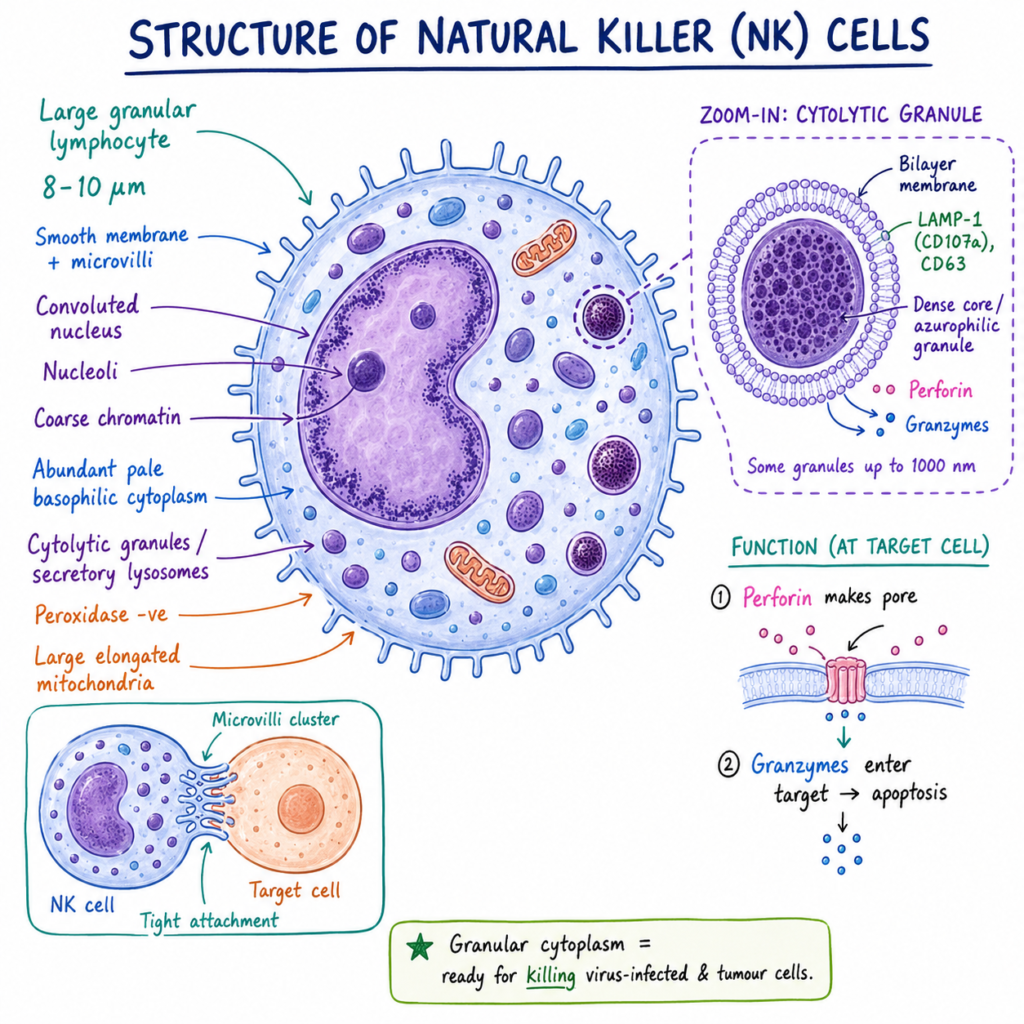
Structure of Natural Killer (NK) Cells
- Natural Killer (NK) cells are morphologically large granular lymphocytes. They are usually 8-10 µm in diameter and have high nuclear to cytoplasmic ratio.
- They are round lymphoid cells in general appearance. But they are different from small lymphocytes because their cytoplasm contain visible granules.
- The surface of resting NK cell is mostly smooth. It also shows many small projections called microvilli on the plasma membrane.
- When NK cell comes in contact with a target cell, the microvilli collect at the contact region. They protrude and interdigitate with target cell surface and help in tight attachment.
- The cytoplasm is abundant and pale basophilic. It contains special granules which are responsible for killing of abnormal cells.
- These granules are called cytolytic granules or secretory lysosomes. They are bilayer membrane enclosed granules and are azurophilic in nature.
- The cytolytic granules are peroxidase-negative. Their size and shape may vary from small round or oval granules to large dense granules.
- Some large granules may be up to 1000 nm in size. They contain dense deposits and important cytotoxic substances.
- The main contents of these granules are perforin and granzymes. Perforin forms pore in target cell membrane and granzymes enter into the target cell.
- After entry of granzymes, the target cell undergo cell death mainly by apoptosis. This is the main structural basis of cytotoxic action of NK cells.
- The membrane of cytolytic granules contains lysosomal proteins like LAMP-1 (CD107a) and CD63. These are also used as marker for degranulation of NK cells.
- The nucleus of NK cell is convoluted or slightly irregular. It has prominent nucleoli and coarse chromatin which is more dense towards the peripheral side.
- The cytoplasm also contains many large and elongated mitochondria. They provide energy for movement, binding with target cell and release of cytolytic granules.
- So the important structural character of NK cells is presence of large granular cytoplasm with cytotoxic granules. These granules make NK cells ready for killing of virus infected cells and tumour cells.
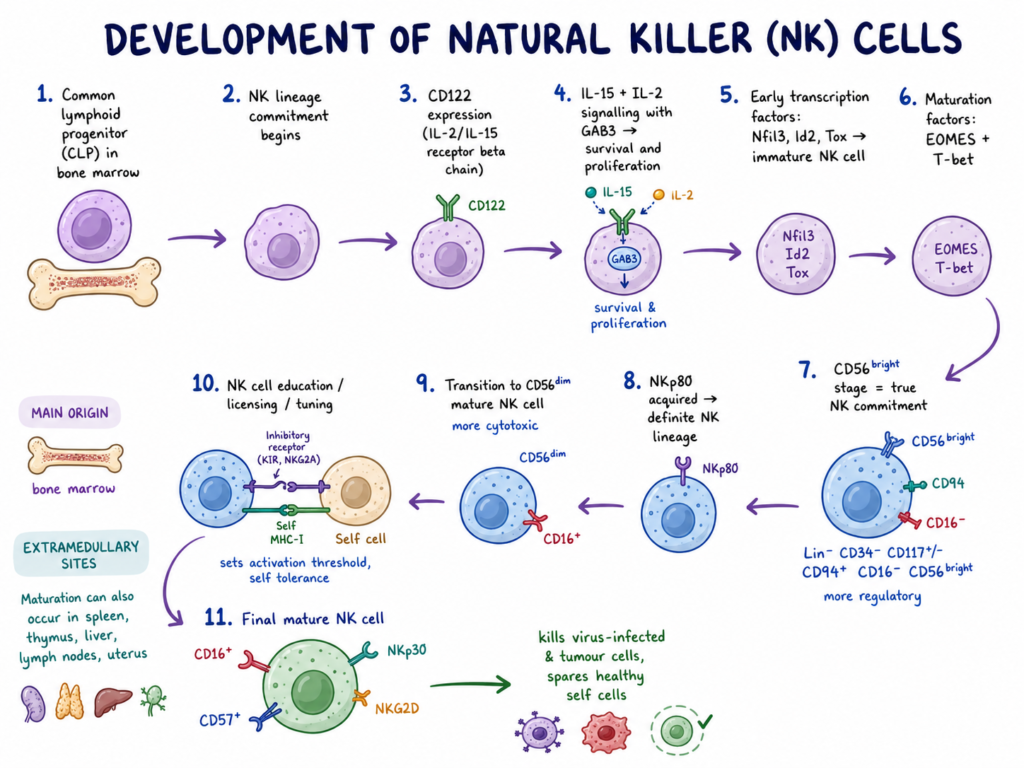
Development process of Natural Killer (NK) Cells
- The development of Natural Killer (NK) cells starts from common lymphoid progenitor (CLP) present in the bone marrow. This same progenitor also gives rise to T cells and B cells. So NK cells have lymphoid origin but they belong to innate immune system.
- The bone marrow is the main site of origin of NK cells. But their maturation may also occur in other sites like spleen, thymus, liver, lymph nodes, and uterus. These are called extramedullary microenvironments.
- In the early stage, the progenitor cell begins to commit toward NK cell lineage. This stage is marked by expression of CD122, which is the IL-2/IL-15 receptor beta chain.
- After CD122 expression, the progenitor cells become sensitive to interleukin-15 (IL-15) and interleukin-2 (IL-2). These cytokines are very important for survival and proliferation of developing NK cells.
- The signal of IL-15 and IL-2 works inside the cell with help of GAB3. GAB3 means GRB2-associated binding protein 3. It helps in cytokine signalling which is needed for expansion of NK cell pool.
- The early development of NK cells is controlled by some transcription factors. The important factors are Nfil3, Id2, and Tox. These factors push the progenitor cells toward immature NK cell stage.
- After this, further maturation is controlled by EOMES and T-bet. These transcription factors help in development of functional characters of NK cells, such as cytotoxic activity and cytokine production.
- In the late stage, Zeb2 acts as an important transcription factor. It is needed for terminal maturation of NK cells. Without proper Zeb2 activity, full mature NK cell formation is affected.
- True commitment of the cell toward mature NK cell lineage occurs at the CD56bright stage. This stage separates NK cells from other innate lymphoid cells.
- At this stage, the precursor cell shows a special surface phenotype. It is Lin−, CD34−, CD117+/−, CD94+, CD16−, CD56bright. This phenotype indicates that the cell is now moving toward mature NK cell form.
- The acquisition of NKp80 is an important event in this stage. NKp80 is a C-type lectin-like activating receptor. Its expression marks definite specification of NK cell lineage.
- The immature CD56bright NK cells then usually change into mature CD56dim NK cells. This is the general pathway of terminal differentiation. CD56bright NK cells are more regulatory, while CD56dim NK cells become more cytotoxic.
- The CD56 molecule is not only a marker. It also has functional role in terminal differentiation of NK cells. It helps in proper transition from CD56bright stage to CD56dim mature stage.
- The usual model says that CD56bright NK cells give rise to CD56dim NK cells. But in human, this pathway may not be completely simple. Some genetic studies show that CD56dim NK cells may remain even when CD56bright NK cells are absent, such as in GATA2 mutation.
- During maturation, developing NK cells also undergo functional training. This is called NK cell education, licensing, or tuning. It is needed so that NK cells do not attack normal self cells.
- In this education process, inhibitory receptors of NK cells interact with self MHC class I molecules. This interaction sets the activation threshold of NK cells. It also develops self tolerance.
- After education, mature NK cells become fully armed but controlled. They can kill virus infected cells and tumour cells, but they normally ignore healthy host cells. So structural maturation and functional calibration both are needed for complete NK cell development.
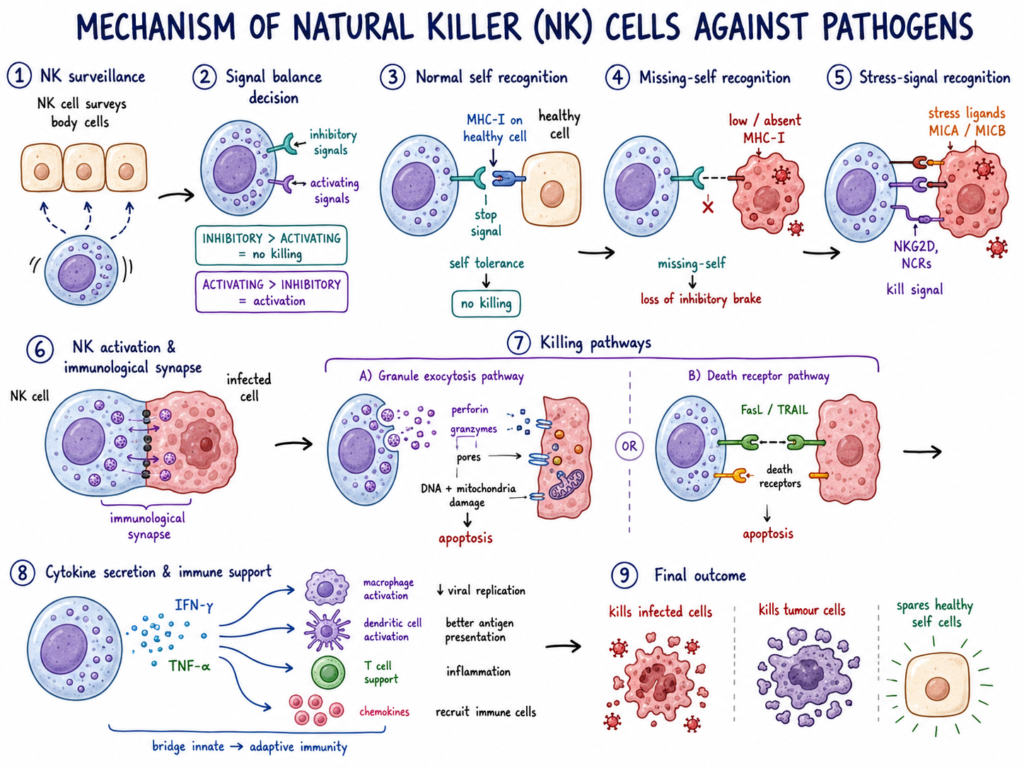
Mechanism of Natural Killer (NK) Cells against pathogens
- Natural Killer (NK) cells first move through blood and tissues and check different body cells. They make direct contact with cells one by one. In this contact, NK cell decide whether the cell is normal or infected.
- The decision is mainly based on balance between activating receptors and inhibitory receptors present on the surface of NK cells. If inhibitory signal is more, NK cell does not kill the cell. If activating signal is more, the NK cell become active.
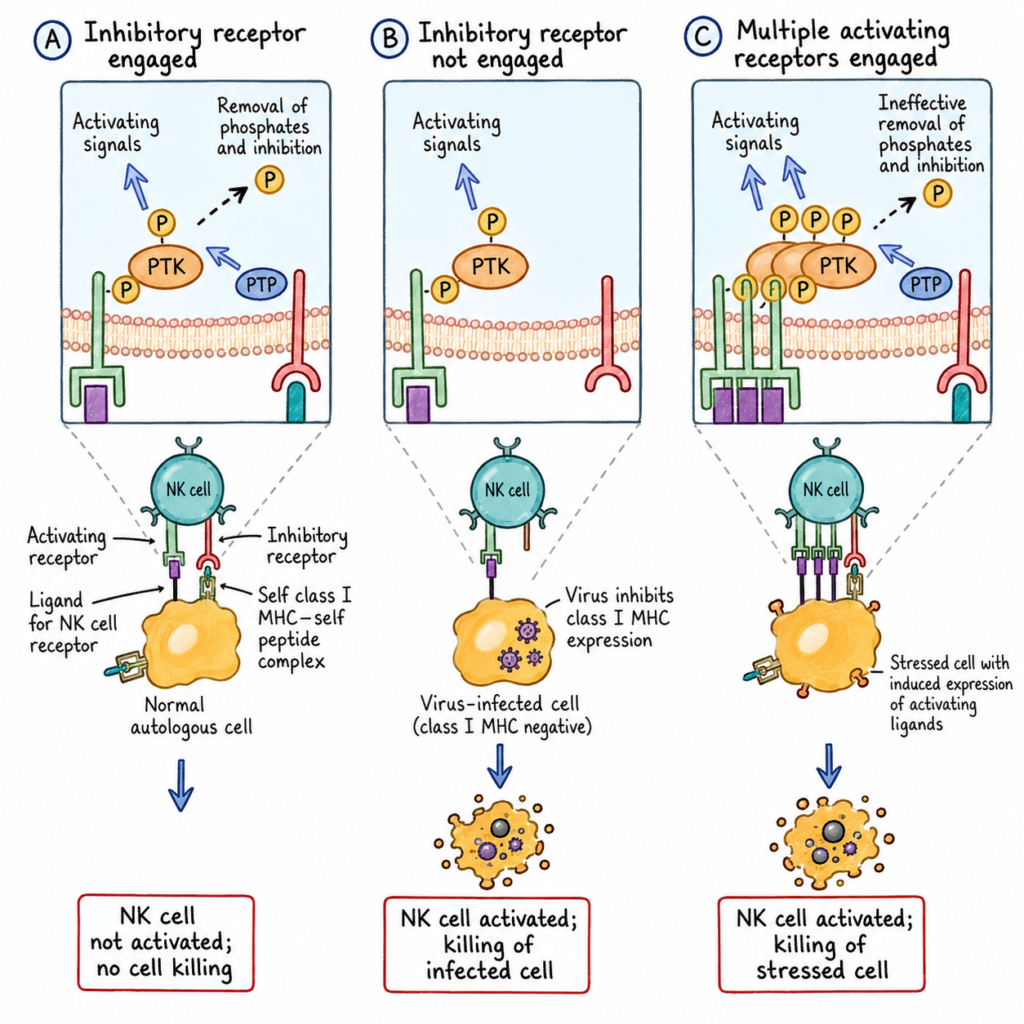
- Normal healthy cells express MHC class I molecules on their surface. These molecules act like self marker. When MHC class I bind with inhibitory receptors of NK cells, a stop signal is produced.
- Due to this stop signal, NK cells do not attack normal body cells. This is important for self tolerance. It prevents killing of healthy host tissue.
- Many virus infected cells reduce or hide their MHC class I molecules. This is done by virus to escape from T cell response. But this absence of MHC class I is detected by NK cells.
- When MHC class I is absent or very low, inhibitory signal is lost. This condition is called missing-self recognition. In this step, the brake on NK cell killing activity is removed.
- At the same time, infected cells show stress molecules on their surface. These include molecules like MICA and MICB, or sometimes viral proteins. These are abnormal signals present on the infected cell.
- The activating receptors of NK cells, such as NKG2D and natural cytotoxicity receptors, bind with these stress molecules. This gives kill signal to NK cells. So activating signal becomes stronger than inhibitory signal.
- When kill signal becomes dominant, NK cell becomes fully activated. It attaches tightly with the infected target cell. A special contact area is formed between NK cell and target cell.
- This contact area is called immunological synapse. In this region, the cytolytic granules of NK cells move toward the target cell side. This helps in direct delivery of killing substances.
- In the first killing method, NK cell releases cytolytic granules into the immunological synapse. This is called granule exocytosis pathway. The granules contain perforin and granzymes.
- Perforin makes small pores in the membrane of infected target cell. Through these pores, granzymes enter inside the target cell. Mainly granzyme A and granzyme B are important in this process.
- After entry, granzymes damage important cell components like DNA and mitochondria. This starts programmed cell death. The infected cell is killed mainly by apoptosis, and sometimes inflammatory death like pyroptosis may occur.
- In the second killing method, NK cells use death receptor pathway. In this process, Fas ligand (FasL) and TRAIL present on NK cells bind with death receptors on target cell.
- The important death receptors are Fas receptor and TRAIL receptor. Their binding starts internal death signal in the infected cell. This also results in apoptosis of the target cell.
- Along with killing, activated NK cells also secrete cytokines. The important cytokines are interferon-γ (IFN-γ) and tumour necrosis factor-α (TNF-α). These cytokines help in controlling pathogen infection.
- IFN-γ helps to stop viral replication and activates other immune cells. It increases the activity of macrophages and also supports antigen presentation. So infected area becomes more active immunologically.
- TNF-α helps in inflammation and destruction of infected cells. It also supports recruitment of immune cells at the infection site. So other cells of immunity come to the place of infection.
- NK cells also help in activation of dendritic cells, macrophages, and later T cells. Thus they connect innate immunity with adaptive immunity. This makes the immune response more strong against pathogen.
- Therefore, NK cells work against pathogens by recognizing missing MHC class I, detecting stress signals, forming immunological synapse, releasing perforin and granzymes, using death receptor pathway, and secreting cytokines for further immune response.
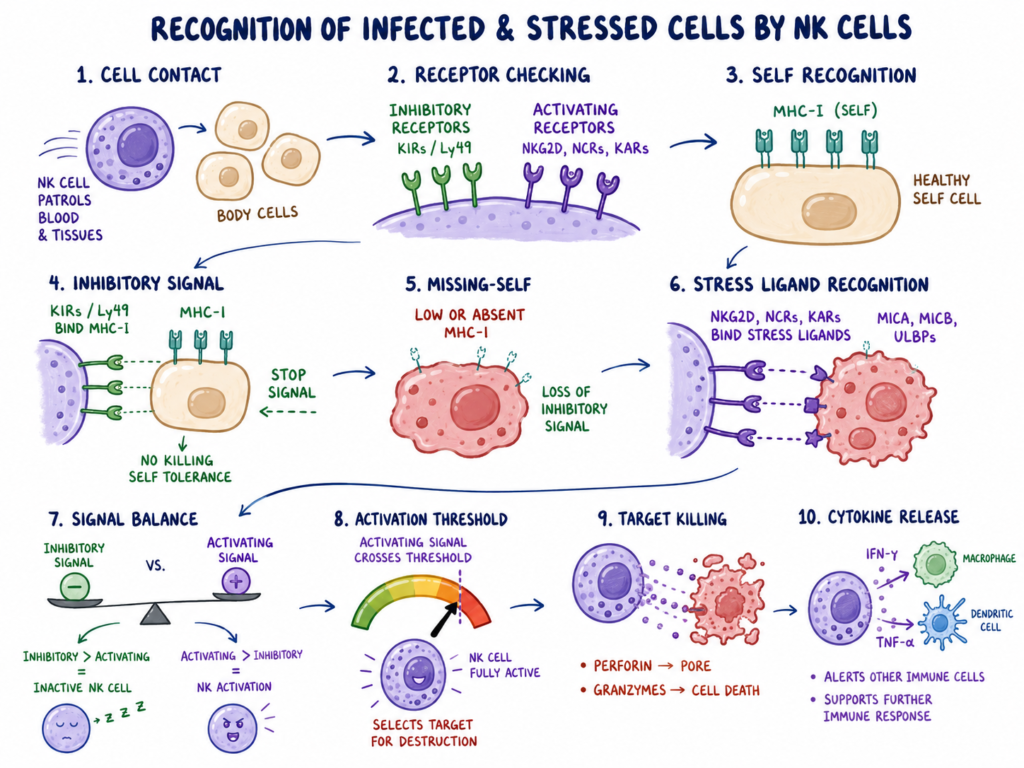
Recognition of Infected and Stressed Cells by NK Cells
The following are the steps of recognition of infected and stressed cells by Natural Killer (NK) cells–
- Cell contact– NK cells move in blood and tissues and come in contact with different body cells. They use many surface receptors which are already present on their membrane.
- Receptor checking– The decision of killing or not killing depends on two types of receptor signals. These are activating receptors and inhibitory receptors.
- Self recognition– Normal healthy cells show MHC class I molecules on their surface. These molecules act as self marker for the body cell.
- Inhibitory signal– NK cells have inhibitory receptors like KIRs in humans and Ly49 in rodents. These receptors bind with MHC class I molecules and produce stop signal, so the normal cell is not killed.
- Missing-self detection– Virus infected cells and tumour cells often reduce MHC class I molecules from their surface. Due to this, inhibitory signal becomes weak or absent. This is called missing-self recognition.
- Stress ligand recognition– Infected or stressed cells also show stress molecules like MICA, MICB and ULBPs. These are abnormal surface signals and indicate that the cell is under stress.
- Activating signal– Activating receptors of NK cells like NKG2D, Natural Cytotoxicity Receptors (NCRs) and Killer Activation Receptors (KARs) bind with these stress ligands. This gives kill signal to NK cell.
- Signal balance– The final response depends on balance between inhibitory signal and activating signal. If MHC class I signal is strong, NK cell remains inactive. If stress signal is strong and inhibitory signal is low, NK cell becomes active.
- Activation threshold– When activating signals cross the required level, NK cell is fully activated. This activation means the target cell is now selected for destruction.
- Target killing– Activated NK cells kill the infected or stressed cell by releasing perforin and granzymes. Perforin forms pore and granzymes enter into target cell and causes cell death.
- Cytokine release– Activated NK cells also release cytokines like interferon-γ (IFN-γ) and tumour necrosis factor-α (TNF-α). These cytokines alert other immune cells and helps in further immune response.
How NK Cells kill infected cells and phagocytosed microbes
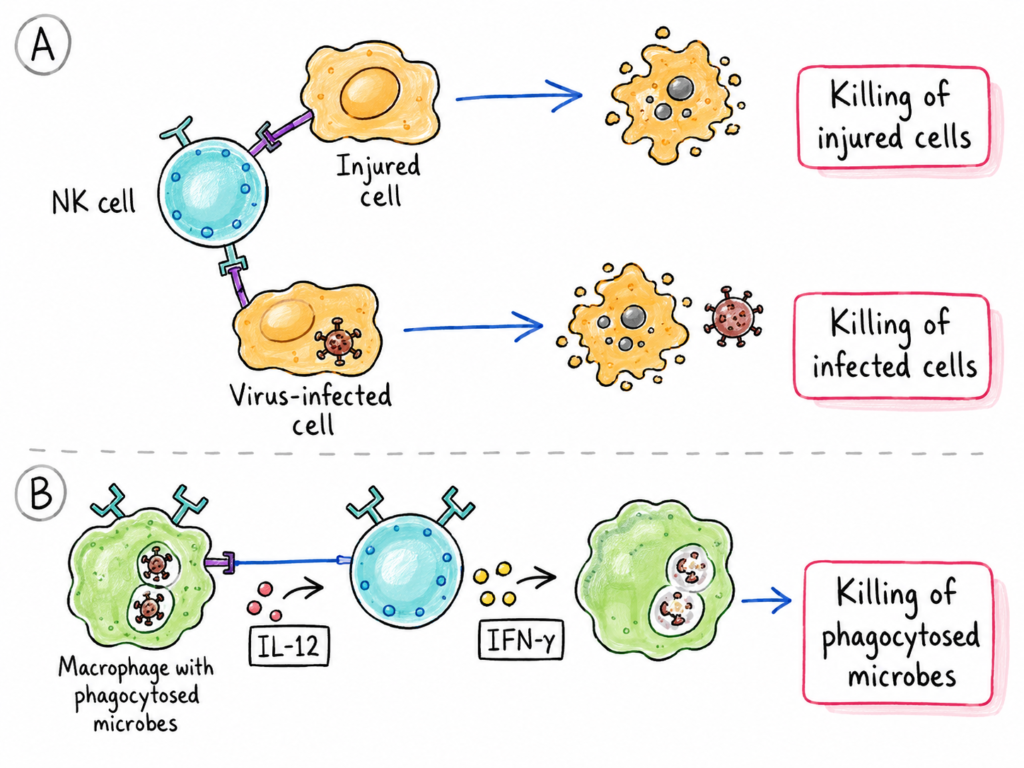
A. Killing of infected cells by NK Cells
The following are the steps by which NK cells kill infected body cells-
- Target recognition– NK cells first recognize the virus infected cell or stressed cell by surface receptors. Low MHC class I and high stress signal makes the target cell suitable for killing.
- Cell attachment– Activated NK cell attaches with the infected target cell. A close contact area is formed between two cells called immunological synapse.
- Granule polarization– The cytolytic granules of NK cell move towards the side of target cell. This step brings the killing granules near the contact area.
- Granule release– NK cell releases lytic granules into the synaptic cleft. This process is called granule mediated cytotoxicity.
- Perforin action– Perforin forms ring shaped pores in the target cell membrane. These pores help the entry of granzymes into the infected cell.
- Granzyme B action– Granzyme B activates caspases and also damages mitochondria by cleaving Bid protein. This causes apoptosis of the infected cell.
- Granzyme A action– Granzyme A causes caspase independent cell death. It damages mitochondrial electron transport and produces reactive oxygen species (ROS), which causes DNA damage.
- Pyroptosis– Granzyme A and Granzyme B may cleave gasdermin proteins. This can cause pyroptosis, which is inflammatory programmed cell death.
- Death receptor pathway– NK cells also kill infected cells by Fas ligand (FasL) and TRAIL. These bind with Fas or DR4/DR5 receptors and start death signal inside target cell.
- TNF mediated killing– NK cells secrete tumour necrosis factor (TNF). TNF binds with TNF-R1 receptor and may cause apoptosis or necroptosis of target cell.
B. Killing of phagocytosed or intracellular microbes by help of NK Cells
The following are the steps by which NK cells help in killing of phagocytosed or intracellular microbes-
- Basic role– NK cells generally do not phagocytose microbes by themselves. They mainly help other phagocytic cells like macrophages to kill the engulfed microbes.
- Cytokine release– Activated NK cells secrete interferon-γ (IFN-γ) and tumour necrosis factor-α (TNF-α). These cytokines are important for activation of macrophages.
- Macrophage activation– IFN-γ strongly activates macrophages. After activation, macrophages digest the phagocytosed microbes more effectively inside the phagolysosome.
- TNF support– TNF-α supports inflammation and recruitment of more immune cells. It also helps macrophages in better microbial killing.
- Intracellular bacteria– Some microbes like Shigella flexneri may remain inside host cells. In this case NK cells can deliver granzyme A into the infected host cell.
- Gasdermin B cleavage– Granzyme A cleaves host protein gasdermin B. The cleaved gasdermin B becomes active against intracellular bacteria.
- Bacterial pore formation– Active gasdermin B forms pores directly in bacterial membrane. Due to this, the bacterial membrane is damaged and the intracellular microbe is killed.
- Final effect– So NK cells kill infected host cells directly by perforin, granzymes, death receptor pathway and TNF. But for phagocytosed microbes, NK cells mainly help by activating macrophages and by granzyme A-gasdermin B mediated bacterial killing.
Natural Killer (NK) cell receptors
NK cell receptors are present on the surface of Natural Killer (NK) cells. These receptors control the killing activity of NK cells. They are mainly of two types-
A. Inhibitory receptors
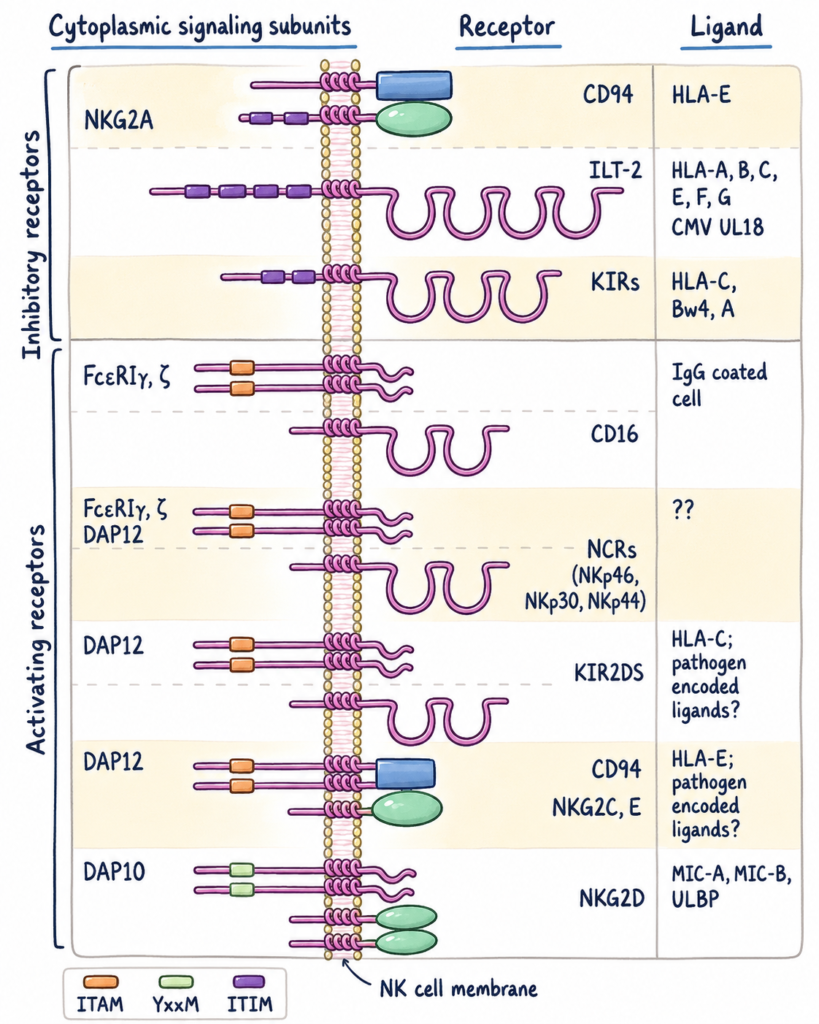
- KIRs– Killer cell immunoglobulin-like receptors (KIRs) are inhibitory receptors of human NK cells. KIR2DL1, KIR2DL2/3 and KIR3DL1 recognize HLA-A, HLA-B and HLA-C molecules and helps in self tolerance.
- CD94/NKG2A– CD94/NKG2A is an inhibitory receptor present as heterodimer. It recognizes non-classical MHC class I molecule HLA-E in humans and Qa-1b in mice.
- Ly49– Ly49 family is the main inhibitory receptor family in rodents. Ly49A, Ly49C and Ly49I recognize H-2 MHC class I molecules and prevent killing of normal self cells.
- LILRs– Leukocyte immunoglobulin-like receptors (LILRs) are inhibitory receptors which bind with classical and non-classical MHC class I molecules. ILT2 (CD85j) is an important example.
- LAIR-1– LAIR-1 is an inhibitory receptor which recognizes collagen. It helps in preventing unwanted damage of normal tissues.
- KLRG1– KLRG1 is another inhibitory receptor which recognizes E-cadherin, N-cadherin and R-cadherin. It helps NK cells to avoid attack on healthy epithelial cells.
B. Activating receptors
- NCRs– Natural cytotoxicity receptors (NCRs) are activating receptors of NK cells. NKp30, NKp44 and NKp46 recognize viral ligands and tumour associated molecules like B7-H6 and BAT3.
- NKG2D– NKG2D is an important activating receptor for stressed and tumour cells. It recognizes MICA, MICB and ULBPs in humans and Rae-1 and MULT-1 in mice.
- CD16– CD16 (FcγRIIIA) is Fc receptor of NK cells. It binds with IgG coated target cell and starts antibody-dependent cell-mediated cytotoxicity (ADCC).
- DNAM-1– DNAM-1 (CD226) is an activating receptor which recognizes CD112 (Nectin-2) and CD155 (PVR). These ligands may be present on infected or tumour cells.
- 2B4– 2B4 (CD244) recognizes CD48. In human NK cells it mostly acts as activating receptor and helps in cytotoxicity and cytokine production.
- CD94/NKG2C– CD94/NKG2C is an activating receptor related with CD94/NKG2A group. It recognizes HLA-E and helps in activation of NK cells.
- NKG2E– NKG2E forms activating receptor with CD94. It also recognizes non-classical MHC molecule and gives activating signal.
- Activating KIRs– KIR2DS1, KIR2DS2, KIR2DS4 and KIR3DS1 are short tail activating KIRs. They recognize some HLA allotypes like HLA-C1, HLA-C2 and HLA-A11.
- NKR-P1– NKR-P1 family contains activating co-stimulatory receptors. NKR-P1C is associated with NK1.1 antigen in mice and supports NK cell activation.
Diseases related to Natural Killer (NK) Cells
The following are some of the diseases related to Natural Killer (NK) cells–
- NK cell deficiencies– Classical natural killer cell deficiency (CNKD) and functional natural killer cell deficiency (FNKD) are the main deficiency diseases of NK cells. In CNKD, the number of NK cells is absent or very low. In FNKD, the number may be present but the killing activity is defective.
- Leukemias and cancers– NK-cell large granular lymphocytic leukemia (NK-LGLL) and aggressive NK-cell leukemia (ANKL) are directly related with abnormal NK cells. Acute lymphoblastic leukemia (ALL), acute myeloid leukemia (AML) and solid tumours like melanoma, lung cancer, colon cancer and breast cancer are also associated with altered NK cell response.
- Autoimmune diseases– Systemic lupus erythematosus (SLE), rheumatoid arthritis, type I diabetes mellitus, autoimmune liver disease, inflammatory bowel disease, juvenile idiopathic arthritis and asthma are related with abnormal activity of NK cells. In these diseases, NK cells may take part in inflammation and immune imbalance.
- Genetic syndromes– Familial hemophagocytic lymphohistiocytosis (FHL), Papillon-Lefevre syndrome and X-linked lymphoproliferative disease 1 (XLP1) are genetic disorders linked with defective NK cell function. In FHL, defect of perforin gene causes poor killing of target cells.
- Viral infections– Human immunodeficiency virus (HIV-1), cytomegalovirus (CMV), SARS-CoV-2, influenza virus, dengue virus, hepatitis C virus (HCV), Lassa virus (LASV), Chikungunya virus (CHIKV), human papillomavirus, herpes simplex virus, Epstein-Barr virus and varicella-zoster virus are important viral diseases related with NK cells. Defective NK cells causes weak control of viral infection.
- Bacterial infections– Sepsis and gram-negative bacterial infections are also related with NK cell response. Infection caused by Shigella flexneri may involve NK cell activation and cytokine production.
- Other conditions– Autism spectrum disorder, chronic obstructive pulmonary disease (COPD) and atherosclerosis are also associated with altered NK cell activity. These conditions may show immune dysregulation, chronic inflammation or tissue damage related with NK cells.
Functions of Natural Killer (NK) Cells
The following are the important functions of Natural Killer (NK) cells–
- Direct cytotoxicity– NK cells kill virus infected cells, stressed cells and tumour cells directly. They release cytolytic granules containing perforin and granzymes, where perforin makes pore and granzymes enter into the target cell and causes apoptosis.
- Death receptor pathway– NK cells can also kill by surface death molecules. Fas ligand (FasL) and TRAIL of NK cells bind with death receptors of target cell and the cell death process is started.
- ADCC– Antibody-dependent cell-mediated cytotoxicity (ADCC) is done by NK cells with the help of CD16 receptor. CD16 binds with antibody coated target cell and then NK cell destroy that cell.
- Cytokine production– Activated NK cells produce cytokines like interferon-γ (IFN-γ) and tumour necrosis factor-α (TNF-α). These cytokines help in inflammation, macrophage activation and control of infection.
- Chemokine production– NK cells also secrete chemokines like CCL3, CCL4 and XCL1. These chemokines are used to call other immune cells towards infected tissue.
- Antiviral defence– NK cells are important in early defence against viral infection. They kill infected cells before the complete T cell response is formed.
- Tumour surveillance– NK cells continuously check abnormal cells in body. They recognize and destroy newly formed malignant cells and helps in preventing tumour growth and spread.
- Immune regulation– NK cells regulate immune response by acting on dendritic cells, macrophages and T cells. They help in joining innate immunity with adaptive immunity.
- Immunological memory– Some NK cells show memory like character. After infection like cytomegalovirus (CMV), they may give faster and stronger response during second exposure.
- Pregnancy support– Uterine NK cells or decidual NK cells are present in uterus during pregnancy. They help in placentation, trophoblast invasion and spiral artery remodelling for fetal support.
- Tumour differentiation– NK cells can produce IFN-γ and TNF-α which may make some cancer stem cells differentiate. Then these tumour cells become more sensitive to chemotherapy drugs.
Clinical applications of Natural Killer (NK) Cells
The following are the clinical applications of Natural Killer (NK) cells–
- Adoptive NK therapy– Adoptive NK cell therapy is used for cancer treatment. In this method NK cells are isolated, activated in ex vivo condition and then infused into patient to kill tumour cells.
- Autologous NK cells– Autologous NK cells are patient’s own NK cells used for treatment. These cells are activated outside the body and again given to same patient.
- Allogeneic NK cells– Allogeneic NK cells are donor derived NK cells. These cells are used because they can show strong killing of cancer cells, especially in blood cancers.
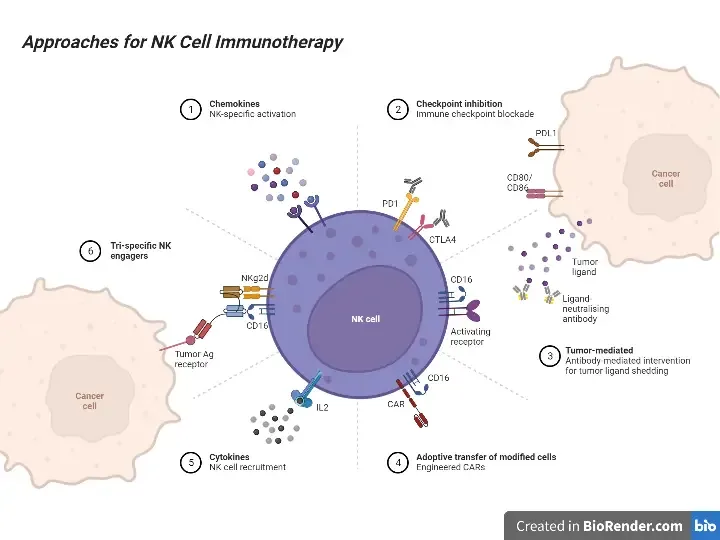
- CAR-NK therapy– CAR-NK cell therapy is made by genetic modification of NK cells. These cells express chimeric antigen receptor (CAR) against tumour antigen and then kill selected tumour cells.
- CD19 CAR-NK– CD19 CAR-NK cells are used mainly against B-cell leukemia and lymphoma. Here NK cells recognize CD19 antigen on malignant B cells.
- CD33 CAR-NK– CD33 CAR-NK cells are used against acute myeloid leukemia (AML). These cells target CD33 antigen present on leukemic cells.
- EGFR CAR-NK– EGFR CAR-NK cells are used for some solid tumours like glioblastoma. They recognize EGFR expressing tumour cells and destroy them.
- HSCT– In allogeneic hematopoietic stem cell transplantation (HSCT), donor NK cells help in killing remaining leukemia cells. This is based on KIR-ligand mismatch and missing self recognition.
- GVHD reduction– Donor NK cells can give anti-leukemia effect without strong graft-versus-host disease (GVHD). So it is useful in transplantation treatment.
- Checkpoint blockade– NK cell checkpoint blockade is used to block inhibitory receptors of NK cells. Anti-KIR antibody and anti-NKG2A antibody are used to restore NK cell killing activity.
- Lirilumab– Lirilumab is an anti-KIR antibody. It blocks inhibitory signal and helps NK cells to kill tumour cells like in AML.
- ADCC therapy– NK cells help in antibody-dependent cell-mediated cytotoxicity (ADCC). Their CD16 receptor binds with antibody coated tumour cell and then NK cell kill that cell.
- Monoclonal antibody treatment– Rituximab and trastuzumab work partly through NK cell ADCC. Rituximab is used in lymphoma and trastuzumab is used in breast cancer.
- Co-stimulation– NK cell activity can be increased by stimulating receptors like CD137 (4-1BB), OX40 and CD27. This increases proliferation, cytokine release and tumour killing.
- Cytokine therapy– IL-2, IL-15, IL-12, IL-18 and IL-21 are used to activate and expand NK cells in in vivo condition. These cytokines make NK cells more active.
- IL-18 priming– IL-18 primed NK cells help in bringing dendritic cells into tumour site. This can support anti-PD-1 treatment.
- Memory-like NK cells– Memory-like NK cells are prepared by stimulation with IL-12, IL-15 and IL-18. These cells stay for longer time and give stronger response against cancer like AML.
- Cancer stem cells– Activated NK cells secrete IFN-γ and TNF-α. These cytokines can make cancer stem cells differentiate and after this they become more sensitive to chemotherapy.
- Bispecific antibodies– Bispecific antibodies are used to join NK cells and tumour cells together. They bind one side with NK cell activating receptor and other side with tumour antigen.
- Autoimmune disease– In some autoimmune diseases, blocking of NK cell activation may be used. This may help in reducing disease progression like in type I diabetes mellitus.
References
- All about (NK cell-mediated) death in two acts and an unexpected… (n.d.). PubMed Central (PMC).
- Boerman, G. H., van Ostaijen-ten Dam, M. M., Kraal, K. C. J. M., Santos, S. J., Ball, L. M., Lankester, A. C., Schilham, M. W., Egeler, R. M., & van Tol, M. J. D. (2015). Role of NKG2D, DNAM-1 and natural cytotoxicity receptors in cytotoxicity toward rhabdomyosarcoma cell lines mediated by resting and IL-15-activated human natural killer cells. Cancer Immunology, Immunotherapy, 64(5), 573–583. https://doi.org/10.1007/s00262-015-1657-9
- CD56bright natural killer (NK) cells: An important NK cell subset. (n.d.). PubMed.
- CD56bright natural killer (NK) cells: An important NK cell subset. (n.d.). PubMed Central (PMC).
- Chester, C., Fritsch, K., & Kohrt, H. E. (2015). Natural killer cell immunomodulation: Targeting activating, inhibitory, and co-stimulatory receptor signaling for cancer immunotherapy. Frontiers in Immunology, 6, 601. https://doi.org/10.3389/fimmu.2015.00601
- Chowdhury, D., & Lieberman, J. (2008). Death by a thousand cuts: Granzyme pathways of programmed cell death. Annual Review of Immunology, 26, 389–420. https://doi.org/10.1146/annurev.immunol.26.021607.090404
- Eissmann, P. (n.d.). Natural killer cells. British Society for Immunology.
- Granzymes: The molecular executors of immune-mediated cytotoxicity. (n.d.). PubMed Central (PMC).
- Education and re-education of NK cells. The figure depicts the… (n.d.). ResearchGate.
- Human natural killer cells: Form, function, and development. (n.d.). PubMed Central (PMC).
- Human NK cells: Surface receptors, inhibitory checkpoints, and translational applications. (n.d.). PubMed Central (PMC).
- IL-18-primed helper NK cells collaborate with dendritic cells to promote recruitment of effector CD8+ T cells to the tumor microenvironment. (n.d.). PubMed Central (PMC).
- Jaeger, B. N., & Vivier, E. (2012). When NK cells overcome their lack of education. Journal of Clinical Investigation, 122(9), 3053–3056. https://doi.org/10.1172/JCI63524
- Kaur, K., Celis, A. P., & Jewett, A. (2025). Natural killer cell-secreted IFN-γ and TNF-α mediated differentiation in lung stem-like tumors, leading to the susceptibility of the tumors to chemotherapeutic drugs. Cells, 14(2), 90. https://doi.org/10.3390/cells14020090
- Kawaguchi, Y., Kittaka, E., Tanaka, Y., Tanaka, T., & Usui, T. (1982). Ultrastructural study of human natural killer (NK) cell. Hiroshima Journal of Medical Sciences, 31(1), 31–35.
- Li, Y., & Mariuzza, R. A. (2014). Structural basis for recognition of cellular and viral ligands by NK cell receptors. Frontiers in Immunology, 5, 123. https://doi.org/10.3389/fimmu.2014.00123
- Lieberman, J. (2010). Granzyme A activates another way to die. Immunological Reviews, 235(1), 93–104. https://doi.org/10.1111/j.0105-2896.2010.00902.x
- Mechanisms of natural killer cell-mediated cellular cytotoxicity. (n.d.). PubMed.
- Melsen, J. E., Lugthart, G., Lankester, A. C., & Schilham, M. W. (2016). Human circulating and tissue-resident CD56bright natural killer cell populations. Frontiers in Immunology, 7, 262. https://doi.org/10.3389/fimmu.2016.00262
- Natural killer (NK) cell-mediated cytotoxicity: Differential use of TRAIL and Fas ligand by immature and mature primary human NK cells. (n.d.). PubMed.
- Natural killer cell activation by dendritic cells: Balancing inhibitory and activating signals. (n.d.). PubMed Central (PMC).
- Natural killer cell cytotoxicity and its regulation by inhibitory… (n.d.). PubMed Central (PMC).
- Natural killer cell education and the response to infection and… (n.d.). PubMed Central (PMC).
- Natural killer cells. (n.d.). Beckman Coulter.
- Natural killer cell signaling pathways. (n.d.). PubMed.
- Natural killer cells in cancer biology and therapy. (n.d.). PubMed Central (PMC).
- Natural Killer Cells: Ontogeny, Receptor-Mediated Activation, Cytolytic Mechanisms, and Pathophysiological Relevance. (n.d.).
- Newtonian cell interactions shape natural killer cell education. (n.d.). PubMed Central (PMC).
- NK cell and receptor antibodies. (n.d.). Bio-Rad.
- NK cell immunoregulatory functions. A. NK cells can directly interact… (n.d.). ResearchGate.
- NK-DC crosstalk in immunity to microbial infection. (n.d.). PubMed Central (PMC).
- Ohno, Y., Okamura, H., Yagita, H., & Tanaka, T. (2025). IL-18-primed NK cells recruit dendritic cells and potentiate tumor therapy mediated by PD-1 blockade. Frontiers in Oncology, 15, 1533808. https://doi.org/10.3389/fonc.2025.1533808
- Paul, S., & Lal, G. (2017). The molecular mechanism of natural killer cells function and its importance in cancer immunotherapy. Frontiers in Immunology, 8, 1124. https://doi.org/10.3389/fimmu.2017.01124
- Perforin: A key pore-forming protein for immune control of viruses – and cancer. (n.d.). Boston Children’s Hospital.
- Purkiss, D. W., Lee, I. E., Xu, D., & Wang, J. (2025). A new approach to differentiating large granular lymphocytic leukemias and their mimics in light of current updates in the 5th edition of the WHO classification. Journal of Clinical and Translational Pathology, 5(1), 9–19. https://doi.org/10.14218/JCTP.2024.00043
- Rahman, M., & Bordoni, B. (2023). Histology, natural killer cells. StatPearls Publishing.
- Rascle, P., Woolley, G., Jost, S., Manickam, C., & Reeves, R. K. (2023). NK cell education: Physiological and pathological influences. Frontiers in Immunology, 14, 1087155. https://doi.org/10.3389/fimmu.2023.1087155
- Role of natural killer and dendritic cell crosstalk in… (n.d.). PubMed Central (PMC).
- Schepis, D., Gunnarsson, I., Eloranta, M.-L., Lampa, J., Jacobson, S. H., Kärre, K., & Berg, L. (2008). Increased proportion of CD56bright natural killer cells in active and inactive systemic lupus erythematosus. Immunology.
- Schwane, V., Huynh-Tran, V. H., Vollmers, S., Yakup, V. M., Sauter, J., Schmidt, A. H., Peine, S., Altfeld, M., Richert, L., & Körner, C. (2020). Distinct signatures in the receptor repertoire discriminate CD56bright and CD56dim natural killer cells. Frontiers in Immunology, 11, 568927. https://doi.org/10.3389/fimmu.2020.568927
- Soelistyoningsih, D., Susianti, H., Kalim, H., & Handono, K. (2022). The phenotype of CD3–CD56bright and CD3–CD56dim natural killer cells in systemic lupus erythematosus patients and its relation to disease activity. Reumatologia, 60(4), 258–265. https://doi.org/10.5114/reum.2022.119042
- The structural basis of ligand recognition by natural killer cell receptors. (n.d.). PubMed Central (PMC).
- Thermo Fisher Scientific. (n.d.). Death receptor pathway.
- Thermo Fisher Scientific. (n.d.). Granzyme A and Granzyme B pathway.
- TRAIL and FasL functions in cancer and autoimmune diseases: Towards an increasing complexity. (n.d.). PubMed Central (PMC).
- Tuomela, K., Ambrose, A. R., & Davis, D. M. (2022). Escaping death: How cancer cells and infected cells resist cell-mediated cytotoxicity. Frontiers in Immunology, 13, 867098. https://doi.org/10.3389/fimmu.2022.867098
- Vivier, E., & Ugolini, S. (2011). Natural killer cells: From basic research to treatments. Frontiers in Immunology, 2, 18. https://doi.org/10.3389/fimmu.2011.00018
- Wikipedia contributors. (2025). Adaptive NK cell. In Wikipedia, The Free Encyclopedia. https://en.wikipedia.org/w/index.php?title=Adaptive_NK_cell&oldid=1315352609
- Wikipedia contributors. (2025). Killer activation receptor. In Wikipedia, The Free Encyclopedia. https://en.wikipedia.org/w/index.php?title=Killer_activation_receptor&oldid=1315916445
- Zhang, W., Tian, W., & Zhang, C. (2026). Granzyme B knockdown suppresses cell proliferation, migration and invasion of fibroblast-like synoviocytes in rheumatoid arthritis. Frontiers in Cell and Developmental Biology, 14, 1679672. https://doi.org/10.3389/fcell.2026.1679672