

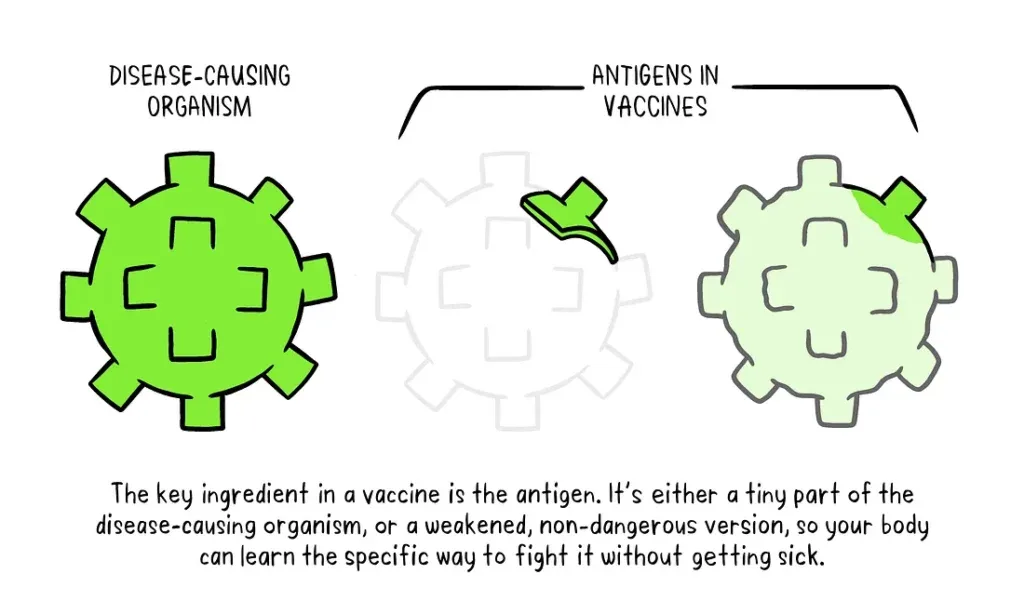
Vaccines are biological preparations used to give active immunity against a particular infectious disease. It contains an active substance called antigen. This antigen acts like disease causing organism but it does not produce severe disease.
The antigen may be prepared from weakened or killed virus or bacteria. It may be specific part of the germ like protein or sugar. It may also be inactivated bacterial toxin or genetic material like mRNA or DNA which helps the body cells to produce antigen.
Vaccines work by producing a safe type of infection in the body. This infection is not harmful like the original disease. During this process the immune system becomes activated and starts recognizing the antigen as foreign material.
When vaccine enters in the body, the immune system produce white blood cells and antibodies. These antibodies help to fight against the antigen. After this response, some memory cells are formed and remain in the body for long time.
These memory cells help the body to recognize the same pathogen very fast in future. If the real pathogen enters again, the immune system attack and destroy it quickly. In this way vaccine prevents disease or reduces the severity of disease.
Vaccines also help in herd immunity. When many persons are vaccinated, spread of disease becomes low in the population. It protects vaccinated person and also helps to protect other weak persons in community.
History of Vaccines
The following are the important history of vaccines–
- 10th century
Early form of inoculation was seen in China against smallpox. It was known as variolation. This knowledge was mainly passed by oral tradition. - 15th century
The oldest documented use of variolation was found in China. In this method powdered smallpox scabs were blown into the nostrils. It was used to protect against smallpox. - 1721
Lady Mary Wortley Montagu brought the practice of smallpox inoculation from Turkey to Britain. Later experimental variolation was done on prisoners in London. It was found successful. - 1796-1798
Edward Jenner, an English physician developed the first official vaccine. He used cowpox material to protect a young boy from smallpox. The word vaccine and vaccination came from his work with cowpox, called Variolae vaccinae. - 1840
England banned the old method of smallpox inoculation. It was replaced by safer cowpox vaccination method. - 1880s
Louis Pasteur developed the second generation of vaccines. He prepared vaccines for chicken cholera and anthrax. In 1881 he suggested the word vaccine for all protective inoculations, in honour of Jenner. - 1916-1930s
A contaminated typhoid vaccine in a multi-dose vial caused severe infections and deaths in 1916. After this, preservatives became required in most multi-dose vaccine vials by 1930s. - 1931-1945
Scientists discovered the method of growing viruses in embryonated chicken eggs. This helped in the development of yellow fever vaccine in 1935 and influenza vaccine in 1945. - 1940s
The first whole-cell pertussis vaccine was developed. It was used against whooping cough. - 1950s
Two effective vaccines were developed against polio. These vaccines helped to control a disease which paralysed many children and adults every year. - 1954-1963
The measles virus was isolated in 1954. It was attenuated for about 10 years. The first measles vaccine was introduced in 1963. - 1959
Growth media and cell culture started to replace chicken eggs. This became an important method for growing viruses for vaccine preparation. - 1960s-1980
A large global vaccination campaign was done against smallpox. Due to this, smallpox was completely eradicated. It was officially certified by World Health Organization (WHO) in 1980. - 1986
The National Childhood Vaccine Injury Act was passed in United States. It created a no-fault compensation system for vaccine injury. It also helped to stabilize vaccine supply. - 1990
Katalin Karikó first proposed the use of mRNA as an alternative to DNA based gene therapy. This became the base for future mRNA vaccines. - 1995
Havrix, an inactivated hepatitis A vaccine, was licensed in United States. It was developed by NIAID and its partners. - Late 1990s
Thimerosal, a mercury containing preservative, was removed from most routine childhood vaccines in United States. It was done as a precautionary measure. This increased the use of single-dose vaccine vials. - 2006
A new vaccine was introduced to protect elderly people from shingles. - 2020 August
The African continent was certified free from wild poliovirus. This was achieved after many years of mass vaccination programmes. - 2020-2021
Third generation mRNA vaccines were rapidly authorized and used during COVID-19 pandemic. These vaccines were developed after many decades of research. Katalin Karikó and Drew Weissman were later awarded for their work on mRNA vaccine technology.
How do Vaccines work in Immune System?
The following are the steps by which vaccines work in the immune system–
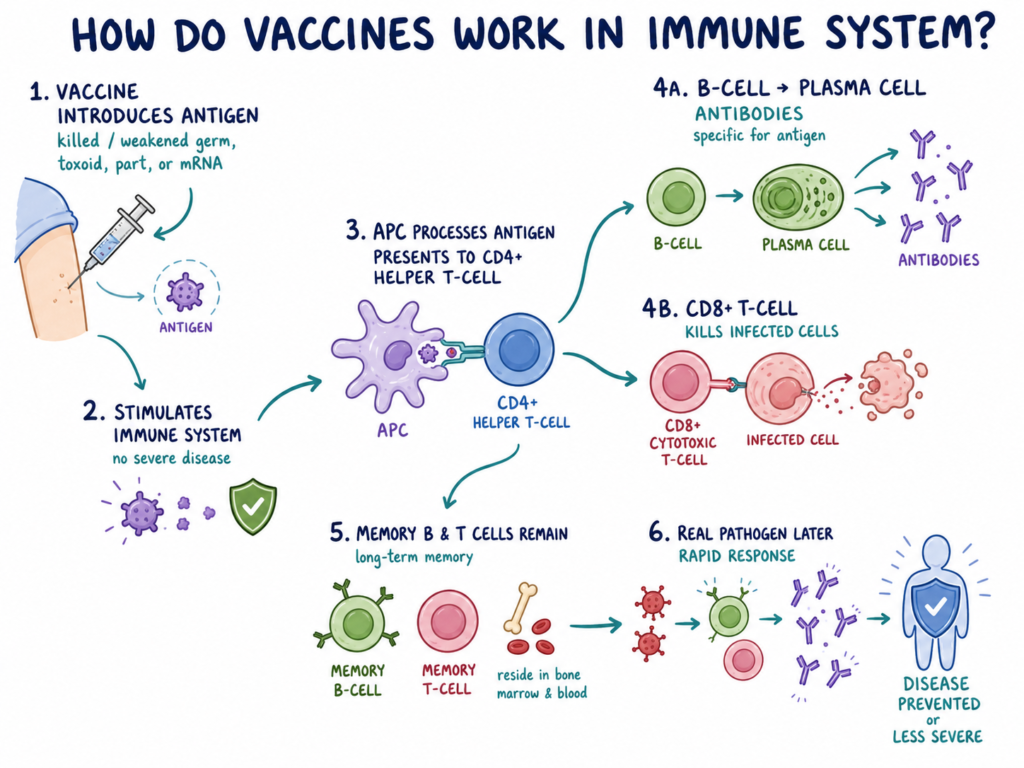
- In this step, vaccine introduces a harmless antigen into the body. This antigen may be killed or weakened virus or bacteria. It may be a small part of germ, deactivated toxin or genetic blueprint like mRNA.
- The antigen acts like a natural infection in the body. But it does not produce severe disease. It only helps to stimulate the defence system of body.
- The immune system detects the antigen as a foreign substance. The antigen-presenting cells take this antigen and process it. Then these cells show the special marker of antigen to CD4+ helper T-cells.
- The CD4+ helper T-cells become active after recognizing the antigen marker. These cells give signal to B-lymphocytes. The B-cells then change into plasma cells.
- The plasma cells start producing antibodies. These antibodies are specific for the antigen present in vaccine. They bind with the antigen and help to neutralize it.
- During this process, CD8+ cytotoxic T-cells are also activated. These cells help to find and destroy the infected cells. So the infected cells are removed from the body.
- After the antigen is cleared, the active immune response becomes less. But all immune cells are not removed. Some antigen specific B-cells and T-cells remain in the body.
- These remaining cells are called memory B-cells and memory T-cells. They remain in blood and also in bone marrow for many years. In some cases they may remain for whole life.
- When the same real pathogen enters the body again, these memory cells recognize it very fast. They start rapid immune response. Large amount of antibodies are produced in short time.
- The pathogen is attacked before it multiplies more in the body. So the disease is prevented or the severity of disease becomes reduced.
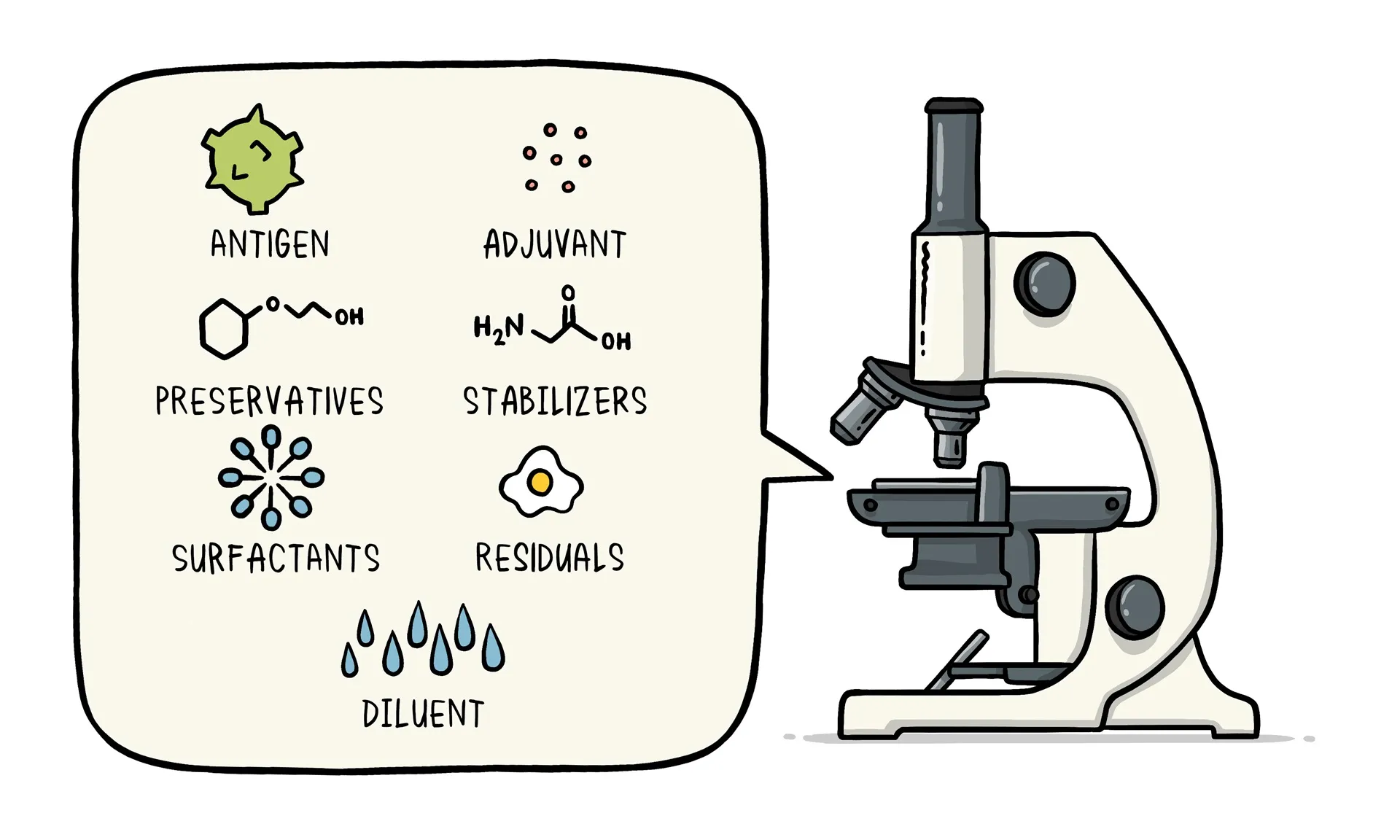
Types of Vaccines and Their Characteristics
The following are the important types of vaccines and their characteristics-
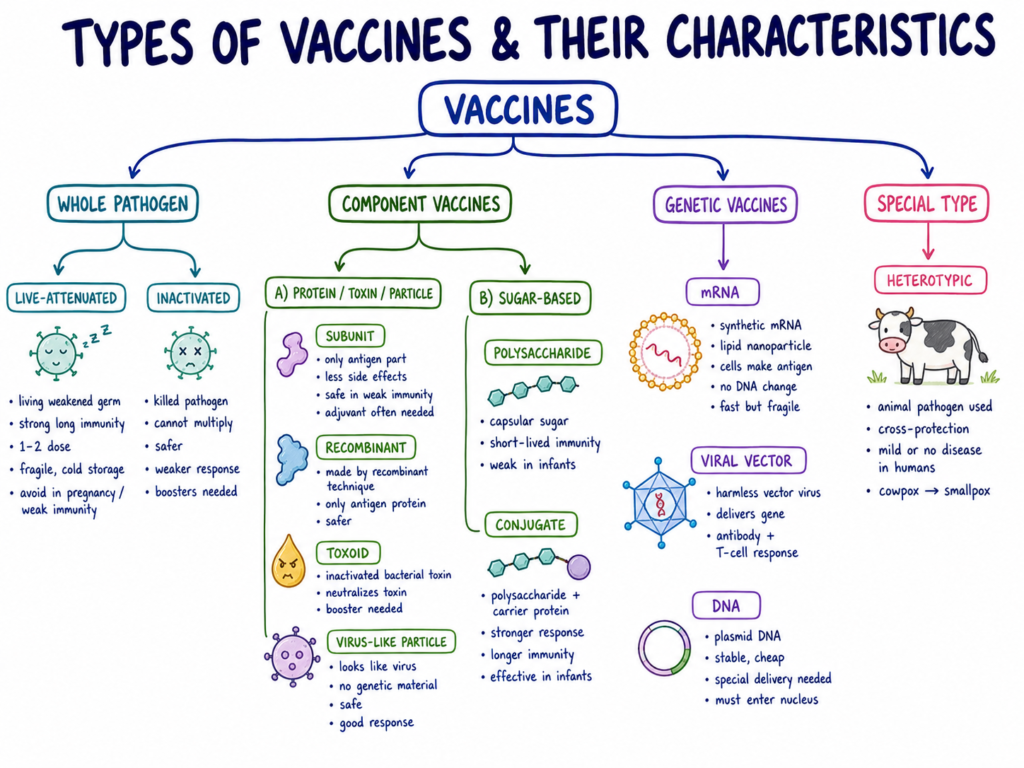
- Live-attenuated vaccines– These vaccines contain living but weakened form of virus or bacteria. It acts nearly like natural infection. So it produce strong and long lasting immune response. Usually one or two dose is enough in many cases. But it is fragile and need proper cold storage. It is generally not given to pregnant women and persons with weak immune system.
- Inactivated vaccines– These vaccines contain killed form of pathogen. The pathogen is killed by chemicals like formaldehyde, heat or radiation. It cannot multiply in the body and cannot cause disease. It is safer than live vaccine. But it produce weaker immune response, so repeated doses and booster dose are needed.
- Subunit vaccines– These vaccines contain only selected part of pathogen. It may be purified protein or antigenic part. The whole organism is not used. So it has less chance of side effects. It is safe for weak immune persons also, but often needs adjuvant for stronger response.
- Recombinant vaccines– These vaccines are prepared by recombinant technique. The gene of antigen is inserted into another cell or system. Then the antigen is produced and used in vaccine. It is a safer vaccine type because only antigenic protein is used, not the whole pathogen.
- Toxoid vaccines– These vaccines contain inactivated bacterial toxin. Some bacteria produce disease by secreting exotoxin. The toxin is chemically treated and made non-toxic, but its antigenic nature remains. It helps immune system to neutralize toxin. Booster dose is usually needed.
- Polysaccharide vaccines– These vaccines are prepared from complex sugar molecules present on bacterial capsule. It helps the body to recognize capsulated bacteria. But the immunity is short lived. It does not produce strong immune response in infants and children below 18 months.
- Conjugate vaccines– These vaccines contain bacterial polysaccharide joined with a carrier protein. This protein makes the immune response stronger. It gives long lasting immunity than simple polysaccharide vaccine. It is also effective in young infants.
- Virus-like particle vaccines– These vaccines contain viral surface proteins arranged like virus particle. It looks like virus to the immune system. But it has no genetic material, so it cannot multiply and cannot cause infection. It produce good immune response and is safe.
- Messenger RNA vaccines– These vaccines contain synthetic mRNA. The mRNA is usually packed inside lipid nanoparticles. It gives instruction to body cells to make specific antigenic protein. It does not contain live virus and does not change human DNA. It can be prepared fast, but it is fragile and may need very cold storage.
- Viral vector vaccines– These vaccines use modified harmless virus as a carrier. The carrier virus is called vector. It carries genetic instruction into the body cells. Then the cells produce antigen and stimulate both antibody and T-cell response.
- DNA vaccines– These vaccines contain circular plasmid DNA. This DNA code for specific antigen. It is stable and cheap to produce. But it usually need special delivery method like electroporation, because DNA has to enter the cell nucleus.
- Heterotypic vaccines– These vaccines use pathogen from other animals. It cause mild or no disease in humans. But it gives cross protection against related human disease. Example is use of cowpox to protect against smallpox.
Ingredients in a Vaccine
The following are the important ingredients present in a vaccine–
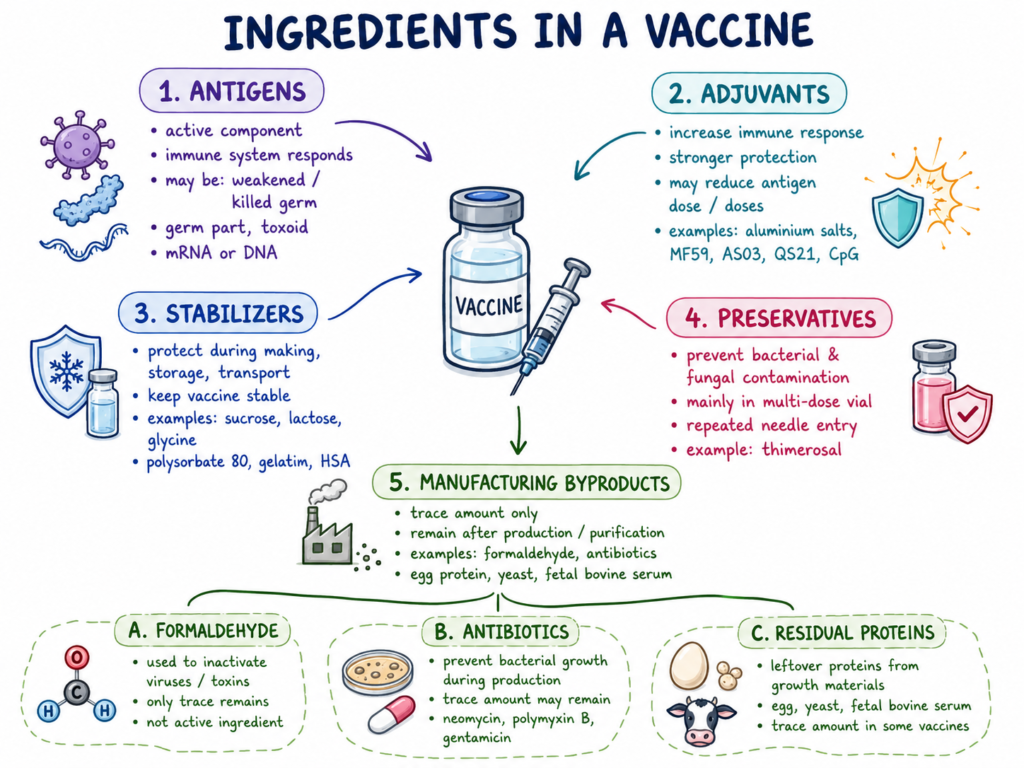
- Antigens– It is the active component of vaccine. The immune system gives response against this substance. It may be weakened or killed virus or bacteria, part of germ, bacterial toxin or nucleic acid like mRNA or DNA.
- Adjuvants– These are added to increase the immune response of vaccine. It helps to make the response strong. It also decrease the amount of antigen needed or number of doses required. Examples are aluminium salts, MF59, AS03, QS21 and CpG.
- Stabilizers– These are used to protect the vaccine during manufacturing, storage and transport. It keeps the vaccine active and stable. Common examples are sucrose, lactose, glycine, polysorbate 80, gelatin and human serum albumin.
- Preservatives– These are added to prevent bacterial and fungal contamination. It is mainly used in multi-dose vaccine vial because needle is inserted many times. Thimerosal is one example of preservative.
- Manufacturing byproducts– These are the substances which may remain in very small amount after vaccine production. It comes from manufacturing process and purification. These include formaldehyde, antibiotics, egg protein, yeast and fetal bovine serum.
- Formaldehyde– It is used to inactivate viruses and toxins during vaccine preparation. After purification, only trace amount may remain. It is not the main active ingredient of vaccine.
- Antibiotics– These are used during production to prevent growth of bacteria. Very small amount may remain in vaccine. Examples are neomycin, polymyxin B and gentamicin.
- Residual proteins– These are small leftover proteins from growing materials. It may be egg protein, yeast protein or fetal bovine serum. These are present only in trace amount in some vaccines.
How are Vaccines developed?
The following are the step by step process of vaccine development–
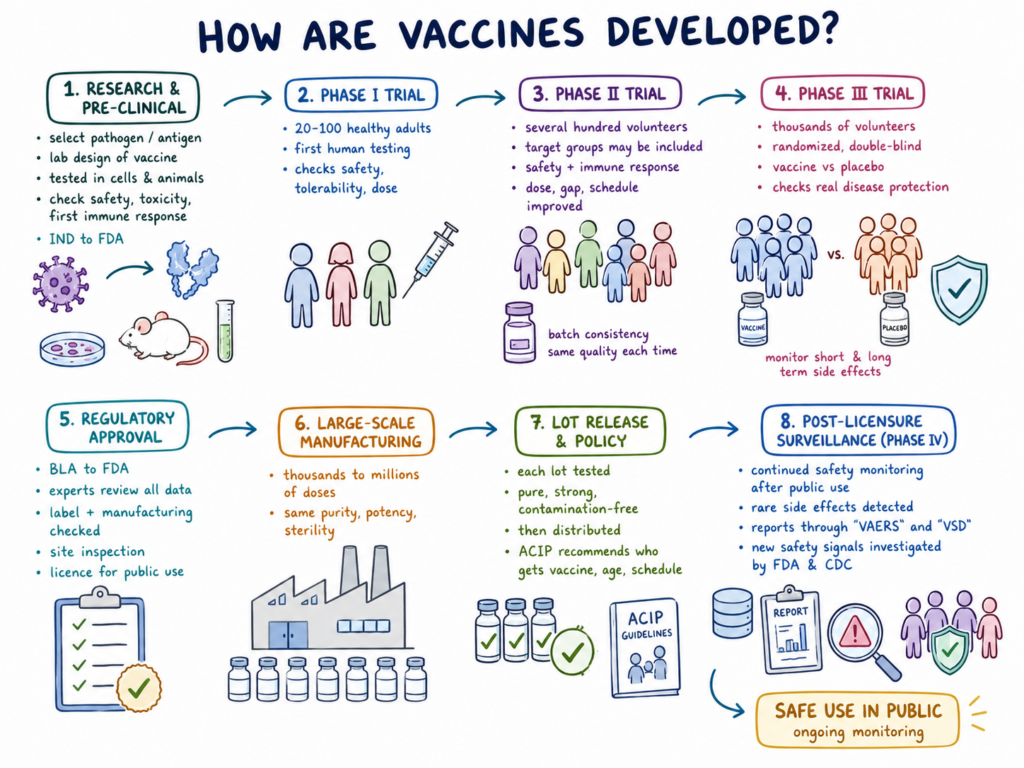
- Research and pre-clinical studies– In this step, scientists first select the disease causing organism or its important antigen. Then vaccine idea is prepared in laboratory. The vaccine is tested in cell culture and animals to see safety, toxicity and first type of immune response. If the result is suitable, the developer submit Investigational New Drug (IND) application to FDA for permission of human testing.
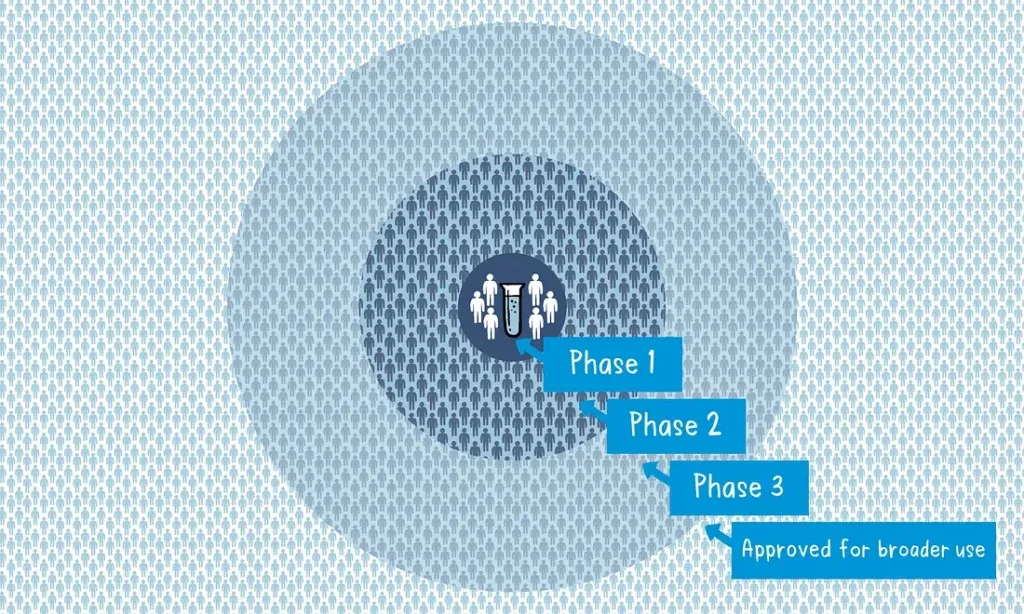
- Phase I clinical trial– In this step, the vaccine is first given to small number of healthy adult volunteers. Usually about 20 to 100 persons are selected. The main aim is to check whether the vaccine is safe or not. It also checks tolerability and proper dose of vaccine.
- Phase II clinical trial– In this step, the vaccine is given to several hundred volunteers. These volunteers may include the target group like children, older adult or other selected people. It again checks safety and also measures the immune response. The dose, dose gap and schedule are also improved in this stage.
- Manufacturing consistency testing– During Phase II, vaccine batches are also checked for same quality. The vaccine must be produced in same way again and again. It checks whether each prepared batch gives similar strength and similar immune response.
- Phase III clinical trial– In this step, vaccine is tested in thousands to tens of thousands of volunteers. The study is generally randomized, double-blind and placebo-controlled. One group gets vaccine and another group gets placebo. This step checks the actual ability of vaccine to prevent disease.
- Safety monitoring in Phase III– In this step, short term and long term adverse effects are observed. Common side effects and some less common reactions are recorded. This helps to know whether vaccine is safe for large population use.
- Regulatory approval– After successful Phase III trial, the manufacturer submits Biologics License Application (BLA) to FDA. The expert team checks all pre-clinical data, clinical trial data, label information and manufacturing process. The manufacturing site is also inspected. If all are acceptable, vaccine gets licence for public use.
- Large scale manufacturing– After approval, vaccine production is increased. The company prepares thousands or millions of doses. The vaccine must be produced under strict control. The aim is to make vaccine with same purity, potency and sterility in every batch.
- Lot release testing– Every vaccine batch is called a lot. Each lot is tested before distribution. The test checks whether the vaccine is pure, strong and free from contamination. The FDA reviews the result and then lot is released for use.
- Policy recommendation– After licensure, groups like Advisory Committee on Immunization Practices (ACIP) review the vaccine. They check safety, efficacy and disease condition in population. Then they recommend who should receive the vaccine, at what age and in which schedule.
- Post-licensure surveillance– This is also called Phase IV. After vaccine is used in public, its safety is continuously monitored. Very rare side effects may not be found in clinical trial, so monitoring is needed after wide use.
- Safety reporting system– In this step, systems like Vaccine Adverse Event Reporting System (VAERS) and Vaccine Safety Datalink (VSD) are used. These systems collect reports of adverse events after vaccination. If any new safety signal is found, it is investigated quickly by FDA and CDC.
Side Effects of Vaccines
The following are the common and rare side effects of vaccines–
Common and mild side effects
- Injection site pain– Pain, soreness, redness or swelling may occur at the site where vaccine is given. This is common after vaccination. It usually remain for short time.
- Fever– Mild fever may occur after vaccination. It shows that body is responding to the vaccine. It is usually temporary.
- Chills– Chills may occur in some persons after vaccine. It may occur with fever or body ache. It generally goes away in few days.
- Headache– Headache is one common mild side effect. It may occur after some vaccines. It is not long lasting in most cases.
- Fatigue– Tiredness or fatigue may occur after vaccination. The person may feel weak for short time. It is due to immune response of body.
- Muscle ache– Muscle pain or myalgia may occur. It is a mild reaction. It usually reduce without any serious problem.
- Dizziness– Dizziness may occur in some persons after vaccine. It is usually mild. The person should rest for sometime after vaccination.
- Irritability– Mild irritability or crying may occur in infants and small children. It may occur with loss of appetite or sleepiness.
Rare but serious adverse events
- Anaphylaxis– It is a severe allergic reaction. It is very rare but may be life threatening. It may cause hives, swelling of face or throat, breathing difficulty and low blood pressure.
- Myocarditis– It is inflammation of heart muscle. It has been rarely reported after mRNA COVID-19 vaccines. It is monitored as a serious adverse event.
- Pericarditis– It is inflammation of the outer covering of heart. It may rarely occur after mRNA COVID-19 vaccines. It is also monitored with myocarditis.
- Thrombosis with thrombocytopenia syndrome– It is also called TTS or VITT. In this condition abnormal blood clotting occur with low platelet count. It has been reported very rarely after some adenoviral vector COVID-19 vaccines like J&J/Janssen and AstraZeneca vaccines.
- Guillain-Barré syndrome– It is a rare neurological condition. It has been monitored after some vaccines and has been reported after J&J/Janssen COVID-19 vaccine. It affects nerves and may cause weakness.
- Intussusception– It is a rare intestinal condition. In this, one part of intestine folds into another part. It has been associated rarely with some rotavirus vaccines.
- Febrile seizures– These are seizures due to fever. There is a small increased risk after MMR and MMRV vaccines, mainly in young children. It is rare and related with fever after vaccination.
- Adverse event note– Adverse Event Following Immunization (AEFI) means any unexpected medical problem after vaccine. It does not always mean the vaccine caused it. Only investigation can show the actual cause.
Significance of Vaccines
The following are the important significance of vaccines–
- Life saving– Vaccines save millions of lives every year. Immunization prevents about 3.5 million to 5 million deaths each year from diseases like measles, tetanus, diphtheria and influenza.
- Disease prevention– Vaccines are used for prevention of infectious diseases. It protects the body before the actual disease occurs. So the chance of infection and severe illness becomes less.
- Disease eradication– Vaccines helped in complete eradication of smallpox from the world. They also reduced many common diseases like polio, mumps and rubella to a great level.
- Herd immunity– When many people in a community are vaccinated, the spreading chain of disease is broken. This is called herd immunity. It protects newborn babies, pregnant persons and immunocompromised patients who cannot take some vaccines safely.
- Protection of weak persons– Some persons have weak immune system. Some cannot receive live vaccines. Vaccination of other people around them gives indirect protection to these weak persons.
- Antibiotic resistance control– Vaccines prevent many bacterial infections before they occur. So the use of antibiotics becomes less. This helps to reduce development of drug resistant microbes. Example- prevention of pneumonia caused by Streptococcus pneumoniae.
- Disease severity reduction– Sometimes vaccinated person may still get infection. But the disease is usually mild. The chance of death, complication and spreading of disease also become lower than unvaccinated person.
- Healthcare burden reduction– Vaccines reduce hospital admission, doctor visit and costly treatment. It decreases pressure on hospital and healthcare system. It also reduces financial burden on family.
- Social well-being– Vaccines help children to remain healthy and attend school regularly. Adults also remain healthy and continue their work. So it helps in normal social and economic activity.
- Outbreak control– Vaccines are important during sudden infectious disease outbreak. It helps to control spread of disease in population. It is also important in prevention and control of pandemics.
Examples of Vaccines and Their Uses
The following are some important vaccines and their uses-
- DTaP vaccine– Used against diphtheria, tetanus and pertussis. Pertussis is also known as whooping cough.
- MMR vaccine– Used against measles, mumps and rubella. It is a combined vaccine.
- Chickenpox vaccine– Used against chickenpox. It gives protection from varicella virus.
- Hepatitis A vaccine– Used against Hepatitis A virus. Example- Havrix.
- Hepatitis B vaccine– Used against Hepatitis B virus infection. Example- Heplisav-B.
- HPV vaccine– Used against Human Papillomavirus (HPV). It helps to prevent cervical cancer and other HPV related cancers. Examples- Cervarix, Gardasil.
- Influenza vaccine– Used against seasonal flu. It is changed yearly according to circulating flu strain. Examples- Fluad, Flublok.
- COVID-19 vaccine– Used against SARS-CoV-2 virus. It helps to prevent severe COVID-19 and its complications. Examples- Pfizer-BioNTech, Moderna, Johnson & Johnson, AstraZeneca.
- Shingles vaccine– Used against shingles. Example- Shingrix.
- RSV vaccine– Used against Respiratory Syncytial Virus (RSV). It protects from lower respiratory tract disease. Example- Arexvy.
- Pneumococcal conjugate vaccine– Used against Streptococcus pneumoniae. It helps to prevent pneumonia and other pneumococcal infections.
- Meningococcal vaccine– Used against Neisseria meningitidis. It protects from meningitis.
- Hib vaccine– Used against Haemophilus influenzae type b. It prevents serious infection mainly in children.
- Rotavirus vaccine– Used against rotavirus infection. It prevents severe diarrhoeal disease in infants and children.
- Polio vaccine– Used against poliovirus. It prevents poliomyelitis and paralysis.
- Rabies vaccine– Used against rabies virus. It is used before or after animal bite exposure.
- Anthrax vaccine– Used against Bacillus anthracis exposure. It is used with antibacterial drugs for post exposure prophylaxis. Example- Cyfendus.
- BCG vaccine– Used against tuberculosis. It is also used in treatment of bladder cancer in United States.
References
- Adult Vaccine Access Coalition. (n.d.). CDC releases data showing safety of COVID vaccines. [URL].
- Biotage. (n.d.). Supplying lipids in the global response to COVID-19 and mRNA vaccine development. [URL].
- Block, J. P., Boehmer, T. K., Forrest, C. B., Carton, T. W., Lee, G. M., Ajani, U. A., … & Gundlapalli, A. V. (2022, April 8). Cardiac complications after SARS-CoV-2 infection and mRNA COVID-19 vaccination — PCORnet, United States, January 2021–January 2022. Morbidity and Mortality Weekly Report (MMWR), 71(14), 517-523. https://doi.org/10.15585/mmwr.mm7114e1.
- Center for Immunization Research and Education. (n.d.). NDHHS colors vaccine safety monitoring systems in the U.S. 6.14.236.8.23 6.1.23. North Dakota State University. [PDF].
- Centers for Disease Control and Prevention. (2024, August 10). Explaining how vaccines work. [URL].
- Centers for Disease Control and Prevention. (2025, May 12). About the clinical immunization safety assessment (CISA) project. [URL].
- Centers for Disease Control and Prevention. (2025, September 12). About the vaccine safety datalink (VSD). [URL].
- Centers for Disease Control and Prevention. (2026, April 17). About the vaccine adverse event reporting system (VAERS). [URL].
- Children’s Hospital of Philadelphia. (2026, May 19). Types of vaccine ingredients. [URL].
- Clinical and technical synthesis of vaccine immunology, development pathways, manufacturing bioprocesses, and active pharmacovigilance systems. (n.d.). [Markdown].
- Curia. (2025, February 13). Scale-up and production of key lipids used in mRNA delivery systems. Advancing RNA. [URL].
- Current and emerging cell culture manufacturing technologies for influenza vaccines. (n.d.). [URL].
- Cytiva. (2024, May 16). Accelerate flavivirus vaccine production. [URL].
- Duke Human Vaccine Institute. (n.d.). Vaccine testing in people. Duke University. [URL].
- Hamad, R., & Haque, S. (2021, August). What evidence is available regarding thrombosis and thrombocytopenia associated with adenoviral vector-based COVID-19 vaccines? Drug Information Group, University of Illinois Chicago. [URL].
- How is vaccine safety monitored in the US? (n.d.). [PDF].
- Innovations in cell culture-based influenza vaccine manufacturing – from static cultures to high cell density cultivations. (n.d.). [URL].
- Institute for Vaccine Safety. (2025, March 14). Components of vaccines. Johns Hopkins Bloomberg School of Public Health. [URL].
- Institute for Vaccine Safety. (2025, May 29). Monitoring vaccine safety. Johns Hopkins Bloomberg School of Public Health. [URL].
- Johns Hopkins Coronavirus Resource Center. (2023, March 10). Vaccine research & development. [URL].
- Kaneshiro, N. K. (2026, March 9). Vaccines – immunizations. In MedlinePlus Medical Encyclopedia. National Library of Medicine. [URL].
- Lloyd, P. C., Lufkin, B., Moll, K., Ogilvie, R. P., McMahill-Walraven, C. N., Beachler, D. C., … & Wong, H. L. (2024). Incidence rates of thrombosis with thrombocytopenia syndrome (TTS) among adults in United States commercial and Medicare claims databases, 2017-2020. Vaccine, 42(8), 2004-2010. https://doi.org/10.1016/j.vaccine.2024.02.017.
- Massachusetts General Hospital. (2021, May 24). Do adenovirus vaccines cause clotting? Advances in Motion. [URL].
- McMaster University. (2026, February 11). Study uncovers immune trigger behind vaccine-induced immune thrombocytopenia and thrombosis. News-Medical.Net. [URL].
- Merck KGaA. (n.d.). Formulation strategies for mRNA vaccines and therapeutics. Merck Millipore. [URL].
- Merck KGaA. (n.d.). mRNA manufacturing and formulation. Sigma-Aldrich. [URL].
- Merck KGaA. (n.d.). Vaccine bioprocessing handbook. Sigma-Aldrich. [PDF].
- Mettler-Toledo. (n.d.). PEG-lipid nanoparticles in the development of mRNA vaccines. [URL].
- Monitoring vaccine safety: United States vaccine safety … (n.d.). [URL].
- Myocarditis following COVID-19 vaccination: Incidence, mechanisms, and clinical considerations. (n.d.). [URL].
- Myocarditis with COVID-19 mRNA vaccines. (n.d.). Circulation – American Heart Association Journals. [URL].
- National Institute of Allergy and Infectious Diseases. (n.d.). Vaccine types. [URL].
- on behalf of the CISA Project Team. (2025). Clinical immunization safety assessment (CISA) project: COVID-19 vaccine consultations and case reviews. PubMed. [URL].
- on behalf of the CISA Project Team, Campbell, P. M., Ess, G. J., Lale, A., Talaat, K. R., Barnett, E. D., … & Edwards, K. M. (2025). Clinical immunization safety assessment (CISA) project: COVID-19 vaccine consultations and case reviews. Vaccine, 65, Article 127781. https://doi.org/10.1016/j.vaccine.2025.127781.
- Overview of the clinical consult case review of adverse events following immunization: Clinical Immunization Safety Assessment Network (CISA) 2004-2009. (n.d.). [URL].
- Rappuoli, R. (2006, September 1). Cell-culture-based vaccine production: Technological options. The Bridge, 36(3). National Academy of Engineering. [URL].
- Scott, J. (2026, March 3). CIDRAP op-ed: The COVID vaccine myocarditis signal was real but is now resolved. ACIP’s March agenda pretends otherwise. CIDRAP. [URL].
- TBVI. (2019). Production process. TB Vaccine Development Pathway. [URL].
- The vaccine safety datalink: Successes and challenges monitoring vaccine safety. (n.d.). [URL].
- UChicago Medicine. (2020). What are the different types of vaccines? [Video]. YouTube..
- U.S. Department of Health & Human Services. (2026, April 17). Vaccine types. [URL].
- U.S. Department of Health & Human Services. (n.d.). VAERS – Report an adverse event. [URL].
- U.S. Food and Drug Administration. (2011, January). Understanding the vaccine adverse event reporting system (VAERS). [PDF].
- U.S. Food and Drug Administration. (2025, June 25). FDA approves required updated warning in labeling of mRNA COVID-19 vaccines regarding myocarditis and pericarditis following vaccination. [URL].
- U.S. Food and Drug Administration. (2026, March 2). Common ingredients in FDA-approved vaccines. [URL].
- U.S. Food and Drug Administration. (n.d.). The path for vaccines: From research to FDA approval. [PDF].
- Wikipedia contributors. (2025, September 22). Vaccine safety datalink. In Wikipedia, The Free Encyclopedia. [URL].
- Wikipedia contributors. (2026, May 15). Vaccine. In Wikipedia, The Free Encyclopedia. [URL].
- Wodi, A. P., & Morelli, V. (2024, March 22). Chapter 1: Principles of vaccination. In Epidemiology and prevention of vaccine-preventable diseases (14th ed.). Centers for Disease Control and Prevention. [URL].
- World Health Organization. (2023). Executive summary. In Guidance for clinical case management of thrombosis with thrombocytopenia syndrome (TTS) following vaccination to prevent coronavirus disease (COVID-19). Geneva: World Health Organization. [URL].
- World Health Organization. (2025, February 25). How do vaccines work? [URL].
- World Health Organization. (n.d.). Clinical evaluation of vaccines. [URL].
- World Health Organization. (n.d.). Vaccines and immunization. [URL].
- Zoppi, L. (2023, February 20). What are the different types of vaccines? News-Medical.Net. [URL].
Best source to understand and learn about basics of Vaccinology