

Monoclonal Antibodies (mAbs) is laboratory produced antibody proteins. It is made against one specific antigen. These antibodies are produced from a single clone of B-lymphocyte, so all the antibody molecules are same and have same binding nature.
Monoclonal antibodies are homogeneous antibodies. It means they contain many identical copies of same antibody. They can recognize one particular target present on cell surface or in body fluid. This makes the reaction specific.
The antibody molecule is generally Y-shaped. It is large protein molecule and is made up of two heavy chains and two light chains. The upper part of the antibody helps in binding with antigen and lower part helps in immune reaction.
When monoclonal antibody binds with antigen, it may cause destruction of the target cell. It can block the protein which is needed for growth of cancer cell. It can also inhibit the inflammatory molecule, so inflammation is reduced.
The action of monoclonal antibodies may occur by different process. In Antibody Dependent Cellular Cytotoxicity (ADCC), natural killer cells kill the infected or malignant cell. In Antibody Dependent Cellular Phagocytosis (ADCP), macrophages engulf the target cell and digest it. In Complement Dependent Cytotoxicity (CDC), complement proteins are activated and pore is formed in the cell membrane.
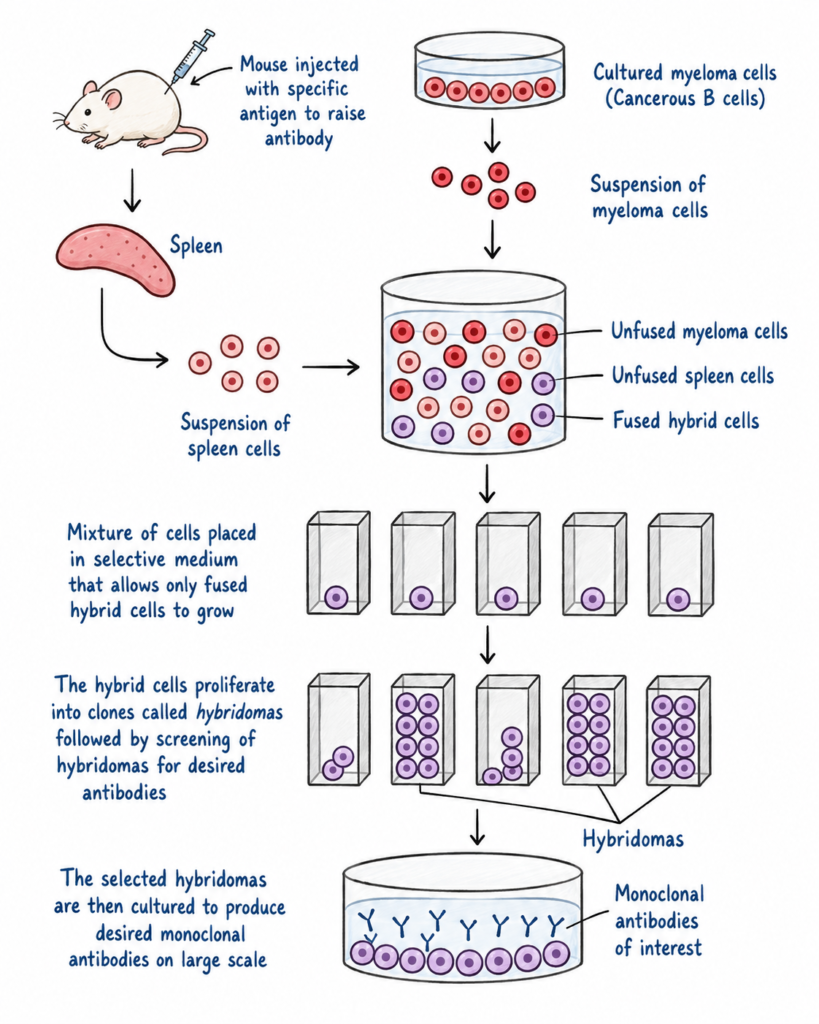
The mass production of monoclonal antibodies is mainly related with hybridoma technology. In this method, antibody producing B-cell is fused with myeloma cell. The fused cell is called hybridoma cell. It can live for long time and produce large amount of same antibody.
At present recombinant DNA technology and phage display technique are also used. These techniques are used to produce engineered antibody in laboratory. Chimeric antibody, humanized antibody, and fully human antibody are produced by these method. It reduces rejection of antibody inside the patient body.
Monoclonal antibodies are used in treatment and diagnosis. They are used in cancer, autoimmune disease, rheumatoid arthritis and some infectious disease like COVID-19, RSV, and Ebola. It is also used in ELISA, flow cytometry, and tissue staining for detection of disease marker.
Properties of Monoclonal Antibodies
The following are the important properties of Monoclonal Antibodies (mAbs)–
- Specificity– Monoclonal antibodies bind with one specific epitope of an antigen. It does not react with many other molecules. So the reaction is highly specific.
- Homogeneity– These antibodies are produced from a single clone of B-cell. So all the antibody molecules are same in structure and binding property. This is referred to as homogeneous nature.
- Structure– A normal monoclonal antibody is large Y-shaped protein molecule. It is about 150 kDa in size. It is made up of two heavy chains and two light chains joined by disulphide bonds.
- Fab region– The upper tips of the Y-shaped antibody is called Fab region. It binds with the specific antigen. This part mainly gives specificity to the antibody.
- Fc region– The lower tail part is called Fc region. It does not bind with antigen directly. It helps in activation of immune cells and other immune reactions.
- Effector function– After binding with target cell, monoclonal antibody can activate immune destruction. It may occur by ADCC, ADCP, or CDC. In this way the marked cell is killed or removed.
- Target action– Monoclonal antibodies act on selected diseased cells or selected molecules. They usually spare normal healthy cells. So toxicity is less than many traditional drugs like chemotherapy.
- Half-life– These antibodies remain in blood for long time. They are degraded slowly inside the body. So less frequent dose is needed in many treatment.
- Engineering– Monoclonal antibodies can be changed by genetic engineering. Chimeric antibody, humanized antibody, and fully human antibody are made by this method. It reduces rejection by human immune system.
- Bispecific form– Some antibodies are made as bispecific antibodies. They can bind with two different targets at a time. It is useful in some targeted treatment.
- Drug conjugate– Some antibodies are attached with drug or toxin. These are called antibody-drug conjugates (ADC). It carries the drug directly to the target cell.
- Nanobody– Some antibodies are very small single domain antibodies. These are called nanobodies. They are stable and can enter some dense tissue more easily.
- Administration– Monoclonal antibodies cannot be taken orally. They are protein molecules and may be degraded in stomach. So they are given by IV infusion or injection.
- Limitation– Production cost of monoclonal antibodies is high. Full sized antibodies may not enter deep tissue properly. Some immune side effects may occur like infusion reaction and cytokine release syndrome (CRS).
Types of Monoclonal Antibodies
The following are the main types of monoclonal antibodies–
A. Types based on source or human protein content
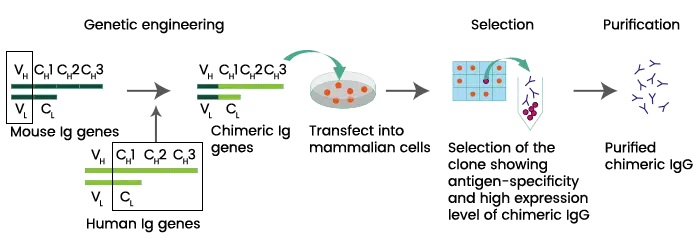
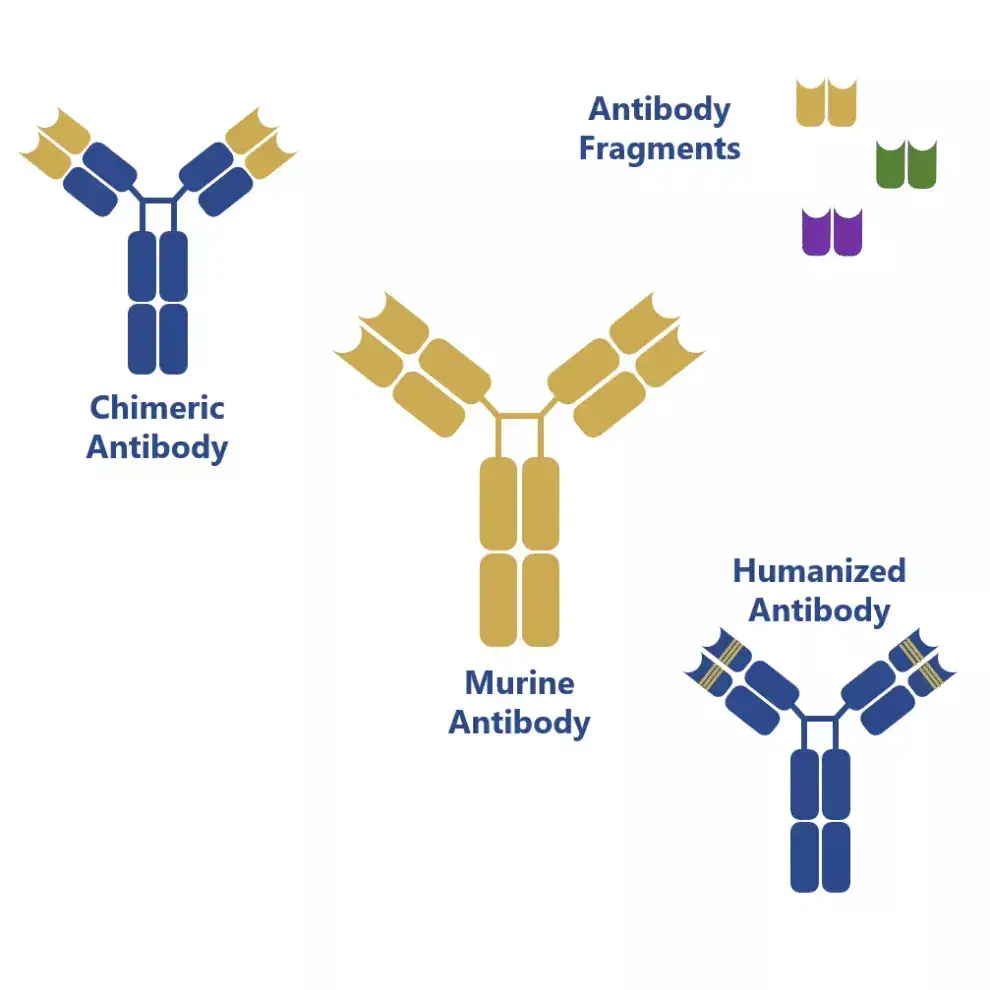
- Murine antibody– It is the earliest type of monoclonal antibody. It is made completely from mouse protein. It is used mainly in laboratory research and early testing. In human body it may cause strong immune reaction called HAMA response. The suffix is -omab.
- Chimeric antibody– It is made by joining mouse and human antibody parts. The variable region is from mouse and constant region is from human antibody. It is about 65% human. It reduces rejection than murine antibody. The suffix is -ximab.
- Humanized antibody– It is mostly human antibody. Only antigen binding loops or CDRs are taken from mouse antibody. It is about 90% human. It is more suitable for long term therapy. The suffix is -zumab.
- Fully human antibody– It is made completely from human antibody sequence. It is produced by phage display or humanized animal model. It has lowest chance of immune rejection. The suffix is -umab.
B. Types based on engineered format
- Bispecific antibody– It is an engineered monoclonal antibody which binds with two different antigens at same time. It can bring immune cell near the target cell. This helps in destruction of diseased cell.
- Multispecific antibody– It is antibody which can bind with more than two targets. It is made artificially by antibody engineering. It is used when more than one antigen or pathway is needed to be blocked.
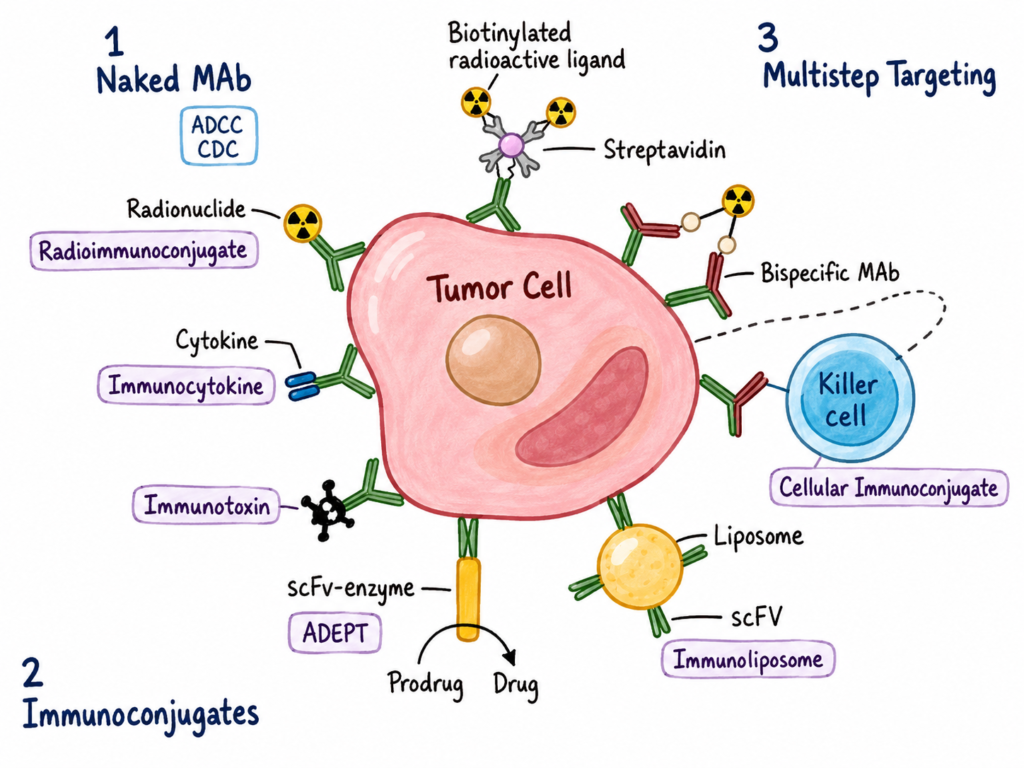
- Antibody-drug conjugate– It is a monoclonal antibody attached with drug, toxin or radioisotope. It works as carrier molecule. It carries cytotoxic agent directly to target cell, mainly cancer cell.
- Single-chain fragment– It is small antibody fragment. It contains variable region of heavy chain and light chain joined into one chain. It is also called single-chain variable fragment (scFv). Due to small size it can enter dense tumour tissue more easily.
- Nanobody– It is a single domain antibody. It is obtained from heavy chain only antibodies of camelids like llama and alpaca, and also from sharks. It is very small and stable. It can reach hidden target where large antibody cannot reach.
Production of Monoclonal Antibodies
The production of monoclonal antibodies is mainly done by hybridoma technology and recombinant antibody production.
A. Hybridoma Technology
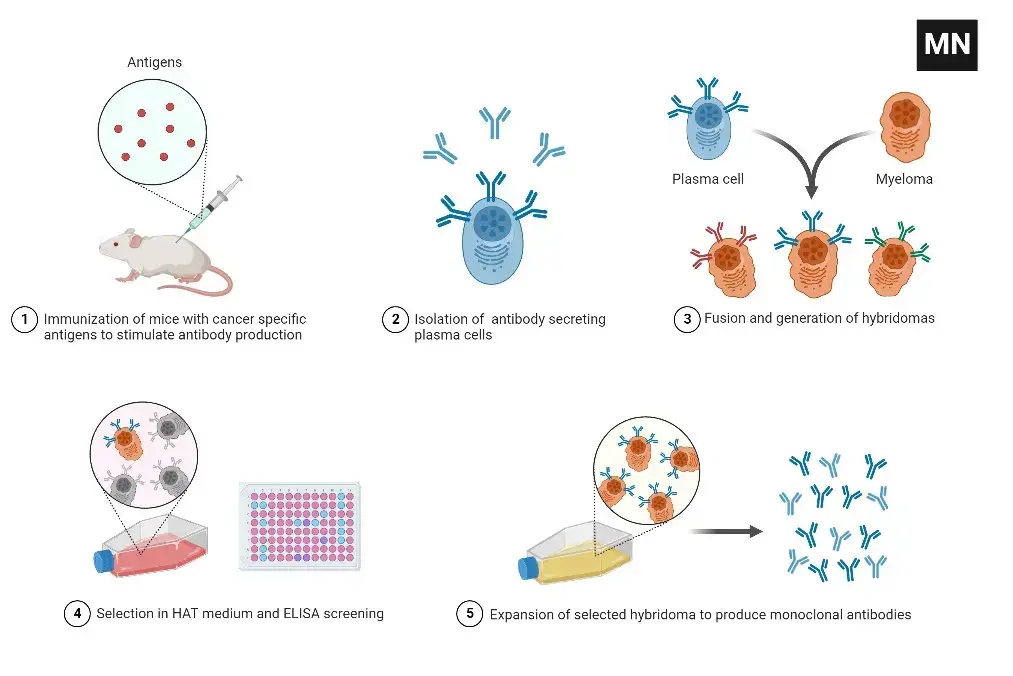
- The selected antigen is injected into a mouse. It stimulates the immune system of the animal. The B-lymphocytes are activated and start producing antibody against that antigen.
- After proper immune response, the spleen of the immunized mouse is removed. The spleen contains antibody producing B-cells. These cells are separated for further use.
- The myeloma cells are also prepared. These are cancer cells and can divide continuously. They do not produce antibody by themselves.
- The antibody producing B-cells are fused with myeloma cells. The fusion is done by using polyethylene glycol (PEG) or by electrofusion. The fused cells are called hybridoma cells.
- The mixture of fused and unfused cells is placed in HAT medium. In this medium, unfused myeloma cells die. Unfused B-cells also die after few days. Only hybridoma cells survive and multiply.
- The surviving hybridoma cells are tested for desired antibody production. This is usually done by ELISA. The cells which produce antibody against the selected antigen are selected.
- The positive hybridoma cells are cloned by limiting dilution method. This is done to get culture from a single cell. So all the antibodies produced are same type.
- The selected clone is grown in large amount. The cells multiply in culture medium and produce same monoclonal antibody continuously.
- The antibody is produced either in vitro in culture flask or bioreactor, or in vivo in mouse body as ascites fluid. The in vitro method is more controlled and mostly preferred.
- The antibody is separated from culture fluid or ascites fluid. It is purified by affinity chromatography. After purification, the monoclonal antibody is used for research, diagnosis or treatment.
B. Recombinant Antibody Production
- The antibody coding gene is collected from hybridoma cell, single B-cell, or synthetic antibody library. This gene carries the information for antibody production.
- In phage display technique, antibody fragments are expressed on the surface of bacteriophage. These phages are mixed with target antigen.
- The phages which bind with antigen are selected. The non-binding phages are washed away. The bound phages are collected and multiplied again.
- This selection process is repeated several times. It helps to get strong antigen binding antibody. This process is called biopanning.
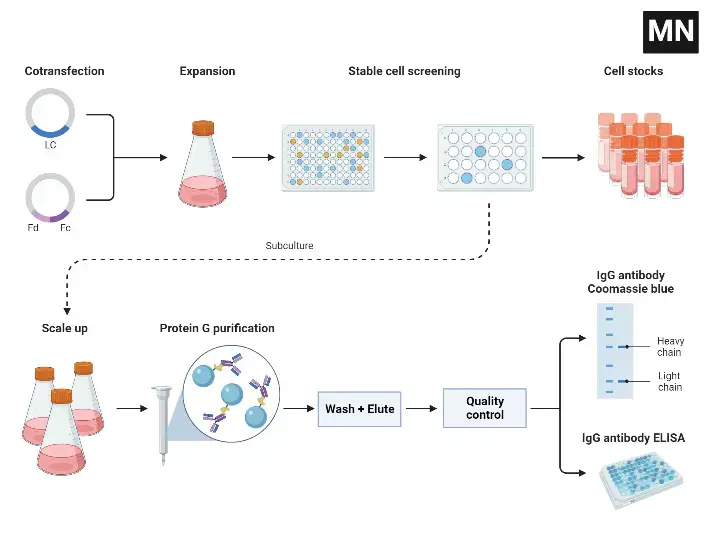
- The selected antibody gene is inserted into an expression vector. The vector carries the gene into host cell for antibody production.
- The vector is transferred into host cells such as CHO cells or E. coli. These cells are genetically changed to produce the required antibody.
- The cells which produce high amount of antibody are selected. These cells are maintained as productive cell line for large scale production.
- The selected cells are grown in large bioreactor. Proper nutrient, temperature and pH are maintained. The recombinant antibody is secreted into culture medium.
- The culture medium is collected. Cell debris and unwanted materials are removed. The crude antibody solution is obtained.
- The antibody is purified by Protein A or Protein G affinity chromatography. The purified antibody is checked for purity, structure and binding ability. Only proper quality antibody is used for final work.
How do Monoclonal Antibody Drugs work?
The working process of monoclonal antibody drugs can be divided into following steps-
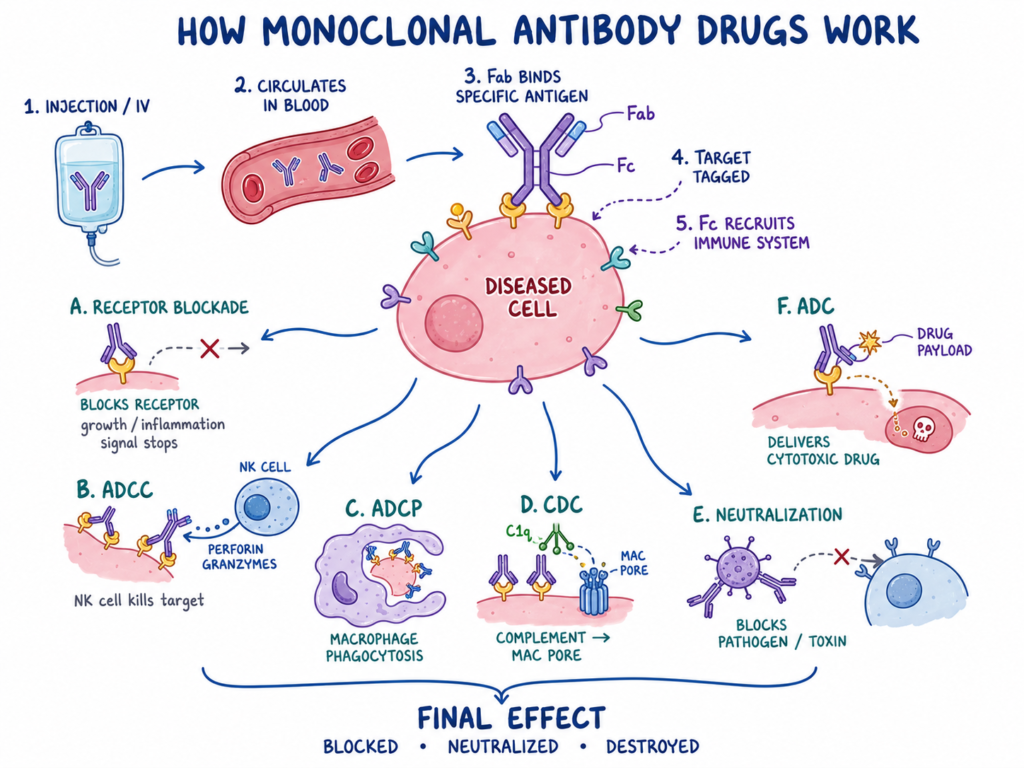
- The monoclonal antibody drug enters into the body by injection or IV infusion. It circulates in the blood and reaches different tissue. It searches for its specific target antigen.
- The Fab region of antibody recognize the specific antigen present on diseased cell. This antigen may be present on cancer cell, infected cell or pathogen. Then antibody bind with it.
- After binding, the target cell become marked by the antibody. This marking help the immune system to identify the harmful cell. The normal cells are mostly not affected because the antibody is specific.
- The lower part of antibody, called Fc region, now helps in immune activation. It bind with immune cells or complement proteins. In this way, immune system is brought near the target cell.
- In some cases, the antibody block the receptor present on cell surface. These receptors are needed for growth or inflammation signal. When receptor is blocked, the signal cannot pass inside the cell and the growth is inhibited.
- In Antibody Dependent Cellular Cytotoxicity (ADCC), the antibody attached with target cell bind with natural killer cell (NK cell). The NK cell releases toxic proteins like perforin and granzymes. Then target cell is killed.
- In Antibody Dependent Cellular Phagocytosis (ADCP), the antibody coated cell is recognized by macrophage. The macrophage engulf the whole target cell. Then it is digested inside the phagocyte.
- In Complement Dependent Cytotoxicity (CDC), antibody activate the complement system. Complement proteins are arranged on the target cell membrane. At last membrane attack complex (MAC) is formed and pore is produced in the membrane.
- Some monoclonal antibodies neutralize pathogen or toxin directly. They bind with virus, bacteria or toxin. So it cannot attach with host cell and cannot enter inside the cell.
- Some antibody drugs are attached with cytotoxic drug. These are called antibody-drug conjugates (ADC). The antibody carry the drug to the target cell and the drug is released there.
- Finally the diseased cell is blocked, neutralized or destroyed. The action depends on the type of monoclonal antibody drug and the target antigen present on the cell.
Functions of Monoclonal Antibodies
The following are the important functions of monoclonal antibodies–
- Monoclonal antibodies bind with the specific antigen present on the target cell. After binding the cell is marked. Then immune system recognize this marked cell and destroy it.
- In Antibody Dependent Cellular Cytotoxicity (ADCC), the antibody first attach with the antigen of infected cell or cancer cell. The Fc region of antibody then bind with natural killer cell (NK cell). The NK cell releases toxic granules and the target cell is killed.
- In Antibody Dependent Cellular Phagocytosis (ADCP), the antibody coat the surface of harmful cell. This coated cell is easily recognized by macrophage. Then macrophage engulf the cell and digest it inside the cell.
- In Complement Dependent Cytotoxicity (CDC), the antibody bound with antigen activate the complement system. Complement proteins are arranged on the membrane of target cell. At last membrane attack complex (MAC) is formed and pore is produced on the cell membrane.
- Some monoclonal antibodies cause apoptosis of the target cell. The antibody bind with receptor present on cancer cell or infected cell. After this binding, internal signal is produced and the cell undergo programmed cell death.
- Monoclonal antibodies block the receptors of cell surface. These receptors may be needed for growth of cancer cell. When antibody block the receptor, growth signal cannot pass inside the cell and the growth of cell is inhibited.
- Monoclonal antibodies neutralize the pathogen. They bind with virus, bacteria or toxin. So the pathogen cannot attach with host cell and cannot enter inside the cell.
- Some monoclonal antibodies block the immune checkpoint molecules. Example are PD-1 and CTLA-4. These molecules suppress immune reaction. When it is blocked, immune cell again attack the tumour cell.
- Monoclonal antibodies neutralize the inflammatory cytokines. Example, antibody against TNF-α bind with it and inhibit its action. This is useful in autoimmune disease like rheumatoid arthritis.
- Monoclonal antibodies also act as carrier for drug. In antibody drug conjugate (ADC), drug or toxin is attached with antibody. The antibody take the drug to the target cell and target cell is destroyed.
- Monoclonal antibodies are used in diagnostic purpose. They detect specific antigen, protein and cell marker. It is used in ELISA, flow cytometry, Western blotting, immunohistochemistry and rapid diagnostic test.
Clinical applications of Monoclonal Antibodies
The following are the clinical applications of monoclonal antibodies–
- Cancer therapy– Monoclonal antibodies are used in treatment of many cancers. It bind with specific molecule present on cancer cell. The growth signal of tumour cell is blocked. In some cases the cancer cell is marked and immune system destroy it.
- Breast cancer– In breast cancer, some monoclonal antibodies are used against growth receptor of cancer cell. It stop the abnormal cell division. It also make the cancer cell more sensitive to immune attack.
- Blood cancer– Monoclonal antibodies are used in leukemia, lymphoma and multiple myeloma. It bind with marker present on abnormal blood cells. After this, the abnormal cells are destroyed by immune mechanism.
- Immunotherapy– Some monoclonal antibodies are used to increase anti-tumour immunity. It block PD-1, PD-L1 or CTLA-4 molecules. These molecules normally suppress immune cells. After blocking, immune cells attack the tumour cell.
- Autoimmune disease– Monoclonal antibodies are used when immune system attack own body tissue. It block inflammatory molecules or remove some harmful immune cells. It is used in rheumatoid arthritis, Crohn’s disease, psoriasis and SLE.
- Inflammatory disease– In inflammatory disease, cytokines are produced in high amount. Monoclonal antibodies bind with cytokine and inhibit its action. Example, TNF-α is blocked in rheumatoid arthritis and Crohn’s disease.
- Infectious disease– Monoclonal antibodies are used against virus, bacteria and toxins. It bind with pathogen and neutralize it. So pathogen cannot enter into host cell. It is used in COVID-19, RSV, Ebola, rabies and anthrax.
- Eye disease– Monoclonal antibodies are used in retinal disease. It block VEGF-A which cause abnormal blood vessel formation. It is used in wet age related macular degeneration and diabetic retinopathy.
- Transplantation– Monoclonal antibodies are used to prevent organ transplant rejection. It suppress the immune reaction against transplanted organ. OKT3 was one early antibody used for this purpose.
- Asthma– Monoclonal antibodies are used in severe asthma. It block the immune pathway which produce airway inflammation. So breathing problem and allergic inflammation is reduced.
- Allergy– In allergic condition, some antibodies block IgE or other allergic pathway. This reduce mast cell activation. So allergic reaction become less.
- Neurological disease– Monoclonal antibodies are used in some nervous system diseases. It is used in multiple sclerosis, Alzheimer’s disease and migraine. It block specific protein or immune pathway involved in disease.
- Rare blood disease– Some monoclonal antibodies are used in rare blood and immune disorders. It is used in aTTP, HAE and HLH. These are serious conditions and need specific target therapy.
- Chronic disease– Monoclonal antibodies are also used in some chronic disease. It is used in osteoporosis and high cholesterol. It act on specific molecule which is responsible for the disease condition.
References
- ABclonal. (n.d.). Flow cytometry.
- Abcam. (n.d.). An introduction to antibody production.
- Abcam. (n.d.). Understanding antibody-dependent cellular cytotoxicity.
- Advances in recombinant antibody manufacturing. (n.d.). PubMed Central (PMC) – NIH.
- Alfaleh, M. A., Alsaab, H. O., Mahmoud, A. B., Alkayyal, A. A., Jones, M. L., Mahler, S. M., & Hashem, A. M. (2020). Phage display derived monoclonal antibodies: From bench to bedside. Frontiers in Immunology, 11, 1986. https://doi.org/10.3389/fimmu.2020.01986
- Application of single-domain antibodies (“nanobodies”) to laboratory diagnosis. (n.d.). PubMed Central (PMC).
- Ara, E., Leo, & Sal. (n.d.). HAT medium. Grokipedia.
- BC Cancer. (2026, June 1). BC cancer protocol for cytokine release syndrome management (Protocol Code SCCRS).
- Beijing Solarbio Science & Technology Co., Ltd. (2026, March 12). 4 types of monoclonal antibodies.
- BioAtla. (n.d.). Antibody drug nomenclature.
- Bispecific antibodies: Early side effects. (n.d.). International Myeloma Foundation.
- Boster Bio. (2026, February 27). Recombinant antibody production in CHO cells.
- A brief synopsis of monoclonal antibody for the treatment of various groups of diseases. (n.d.). PubMed Central (PMC).
- Cleveland Clinic. (2025, December 10). Monoclonal antibodies.
- Creative Bioarray. (n.d.). ADCC/CDC/ADCP assay.
- Creative Diagnostics. (n.d.). Hybridoma technology protocol.
- Cynthia. (n.d.). Nanobodies (single-domain antibodies): Structure & applications. AAA Biotech.
- Cytokine release syndrome in the immunotherapy of … (n.d.). PubMed Central (PMC) – NIH.
- De Greve, H., & Fioravanti, A. (2024). Single domain antibodies from camelids in the treatment of microbial infections. Frontiers in Immunology, 15, 1334829. https://doi.org/10.3389/fimmu.2024.1334829
- Demystified …: Monoclonal antibodies. (n.d.). PubMed Central (PMC).
- eviQ. (2025, May 30). 3500-Cytokine release syndrome (CRS). Cancer Institute NSW. https://www.eviq.org.au/p/3500
- Genext Genomics. (n.d.). Step-by-step process of hybridoma technology explained.
- Genomeditech. (2025, December 12). ADCC, ADCP, and CDC: Antibody structure and class considerations.
- GENEWIZ. (2025, February 19). Monoclonal antibody production: Hybridoma vs. recombinant.
- Herbrand, U. (2016). Antibody-dependent cellular phagocytosis: The mechanism of action that gets no respect – A discussion about improving bioassay reproducibility. BioProcessing Journal, 15(1).
- Immunostep. (2025, March 19). Monoclonal antibodies: Key tools in biomedical research and diagnostics.
- Managing CRS and ICANS in real-world practice: What to know about CAR T and bispecific toxicities. (n.d.). Pharmacy Times.
- McCulloch, R. (2025, January). Treatment guideline: Management of cytokine release syndrome. Gloucestershire Hospitals NHS Foundation Trust.
- Mechanisms of action and limitations of monoclonal antibodies and … (n.d.).
- Molecular Devices. (n.d.). Selecting hybridomas using the HAT method [Video]. YouTube.
- Overview of antibody drug delivery. (n.d.). PubMed Central (PMC) – NIH.
- Properties, production, and applications of camelid single-domain antibody fragments. (n.d.). PubMed Central (PMC).
- The benefits and safety of monoclonal antibodies: Implications for … (n.d.).
- The INNs and outs of antibody nonproprietary names. (n.d.). PubMed Central (PMC).
- Together by St. Jude. (2019, March). Cytokine release syndrome (CRS) after immunotherapy. St. Jude Children’s Research Hospital.
- Treatise on monoclonal antibodies: Molecular structure, evolutionary nomenclature, generation methodologies, immunopharmacological kinetics, and clinical paradigms. (n.d.).
- Van Wagoner, C. M., Pinney, J. J., Sovinski, H. M., Ransegnola, B. P., Jaimes-Delgadillo, N., Chu, C. C., Zent, C. S., & Elliott, M. R. (2026). Complement-mediated ADCP as a distinct and finite cytotoxic mechanism of monoclonal antibodies. Frontiers in Immunology, 17, 1788948. https://doi.org/10.3389/fimmu.2026.1788948
- VHA Oncology Field Advisory Board & VHA National Formulary Committee. (2024, February). Bispecific antibody (BsAb) cytokine release syndrome (CRS) and immune effector cell-associated neurotoxicity syndrome (ICANS)/neurotoxicity guidance. U.S. Department of Veterans Affairs.
- VWR, part of Avantor. (n.d.). Monoclonal antibodies: Understanding their production and clinical applications.
- Wesdorp, B. (n.d.). Guide on monoclonal antibody naming. TRACER.
- Wikipedia contributors. (2025, December 14). HAT medium. In Wikipedia, The Free Encyclopedia.
- Wikipedia contributors. (2026, February 5). Nomenclature of monoclonal antibodies. In Wikipedia, The Free Encyclopedia.
- Wikipedia contributors. (2026, April 9). Single-domain antibody. In Wikipedia, The Free Encyclopedia.