

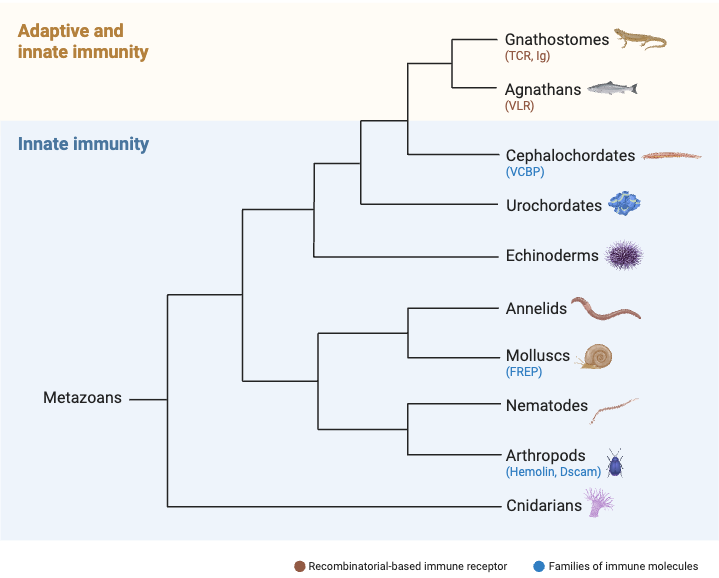
Adaptive immunity is the specific immunity which develops after exposure to an antigen.
Adaptive immunity is the immunity which is developed after exposure to specific antigen. It is also called acquired immunity. It is a specific defence system of the body.
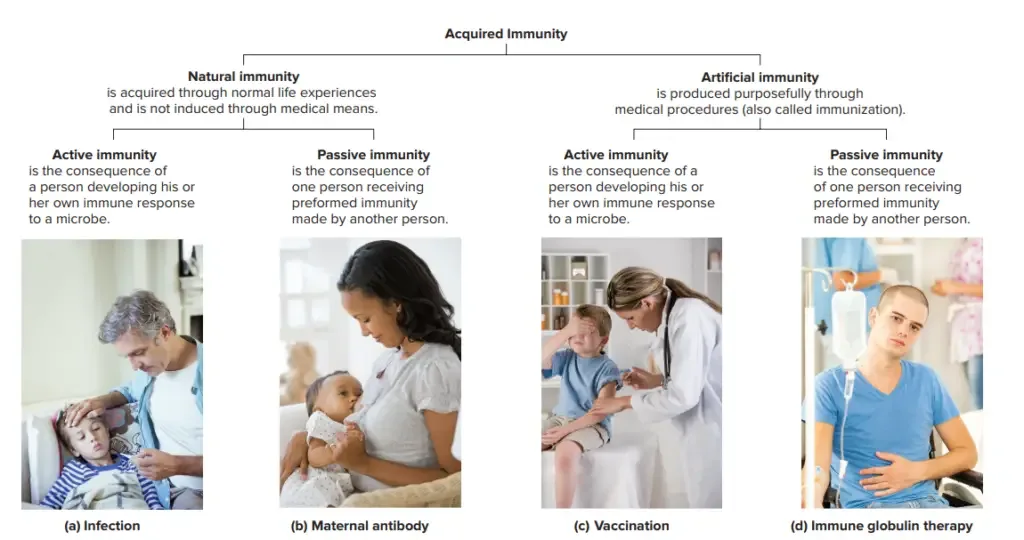
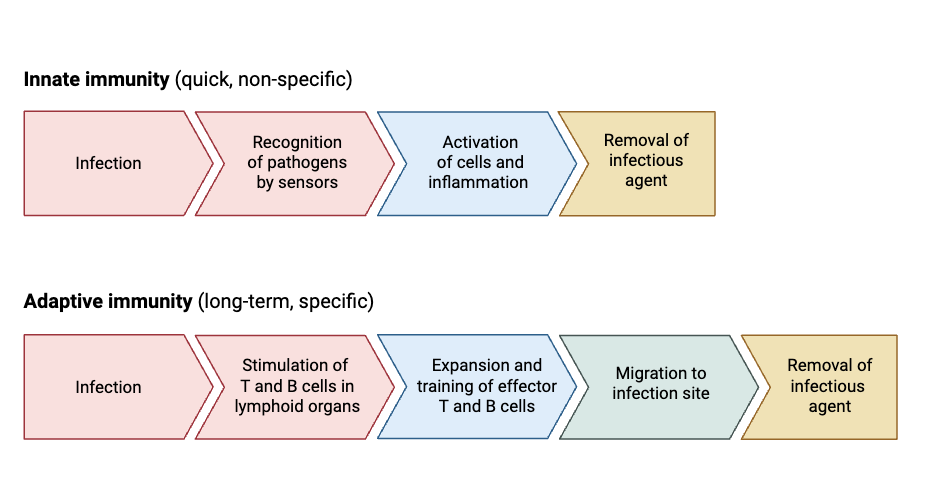
It does not act immediately. It takes some time after first exposure to antigen. Generally it requires about 4 to 7 days for proper immune response.
This immunity is mainly due to lymphocytes. The main cells are B lymphocytes and T lymphocytes. These cells recognize antigen and act against that antigen.
B cells produce humoral immunity. After activation, B cells change into plasma cells. Plasma cells secrete antibodies in blood and body fluids.
T cells produce cell mediated immunity. Helper T cells help in activation of other immune cells by secreting cytokines. Cytotoxic T cells destroy virus infected cells and tumour cells.
The specificity of adaptive immunity is due to clonal selection. Each lymphocyte has its own receptor for a particular antigen. When the same antigen enters, only matching lymphocytes are activated.
The activated lymphocytes divide and form large number of similar cells. These cells are called clone of cells. They remove the specific pathogen from the body.
Another important feature is immunological memory. After antigen is removed, most effector cells die. Some cells remain as memory B cells and memory T cells.
During second exposure, memory cells give quick response. The response is more rapid and more strong than first response. This is the basis of long term protection and vaccination.
Characteristics of Adaptive Immunity
- Adaptive immunity does not act immediately during first exposure. It needs some time for activation and multiplication of immune cells. Generally it takes about 4 to 7 days to become effective.
- It is highly specific immunity. It recognizes a particular antigen present on pathogen. It can also identify small difference between two antigens.
- It has large diversity. The body has many types of B lymphocytes and T lymphocytes with different antigen receptors. So it can recognize many different foreign antigens.
- It produces immunological memory. After infection is removed, some B cells and T cells remain in the body as memory cells. These cells help in rapid response during next exposure.
- It shows clonal selection. When a lymphocyte recognizes its matching antigen, only that lymphocyte is selected and activated. Then it divides many times and forms clone of similar cells.
- It is mainly mediated by lymphocytes. B cells produce humoral immunity by forming antibodies. T cells produce cell mediated immunity by killing infected cells or by helping other immune cells.
- It can distinguish self and non-self substances. Normally it attacks foreign antigens and does not attack the body’s own tissues. The self-reactive lymphocytes are removed or suppressed to prevent autoimmune diseases.
Types of Adaptive Immunity
- On the basis of immune response mechanism
- Humoral immunity – Humoral immunity is the type of adaptive immunity which is produced by B lymphocytes. In this immunity, B cells change into plasma cells and secrete specific antibodies. These antibodies are present in blood and body fluids and help to neutralize extracellular pathogens.
- Cell mediated immunity – Cell mediated immunity is the type of adaptive immunity which is produced by T lymphocytes. It mainly acts against virus infected cells, intracellular pathogens and tumour cells. Cytotoxic T cells destroy infected cells and helper T cells coordinate immune response by secreting cytokines.
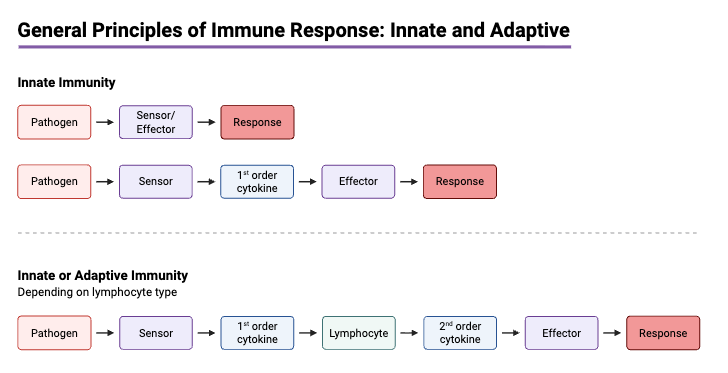
- On the basis of how immunity is acquired
- Active natural immunity – Active natural immunity is developed after natural infection by a live pathogen. In this type, the body itself fights the disease organism and produces antibodies and memory cells. Example is immunity after chickenpox infection.
- Active artificial immunity – Active artificial immunity is produced by vaccination. In this immunity, killed, weakened or harmless form of pathogen is introduced into the body. It stimulates the adaptive immune system and forms memory B cells and memory T cells without producing actual severe disease.
- Passive natural immunity – Passive natural immunity is obtained by natural transfer of ready-made antibodies from mother to baby. These antibodies pass through placenta during pregnancy or through breast milk after birth. It gives temporary protection to the baby.
- Passive artificial immunity – Passive artificial immunity is obtained by giving ready-made antibodies from outside source. It gives immediate but short lasting protection. Example is antivenom, which is given after snake bite to neutralize the venom.
Cells Involved in Adaptive Immunity
- B lymphocytes (B cells)– B lymphocytes are the main cells of humoral immunity. These cells are formed and mature in the bone marrow. They recognize specific antigen and produce antibody mediated immune response.
- Naive B cells – Naive B cells are mature B cells which have not yet met their specific antigen. They remain ready in the body and become active when the matching antigen is present.
- Plasma cells – Plasma cells are formed from activated B cells. These cells secrete large amount of specific antibodies into blood and body fluids.
- Memory B cells – Memory B cells remain in the body after infection is cleared. When the same pathogen enters again, they rapidly form plasma cells and produce stronger antibody response.
- T lymphocytes (T cells)– T lymphocytes are the main cells of cell mediated immunity. These cells are formed in bone marrow but mature in the thymus. They act against infected cells and also control other immune cells.
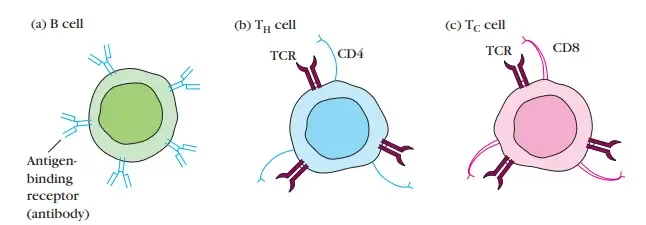
- Helper T cells (CD4+ T cells) – Helper T cells coordinate the immune response. They secrete cytokines and activate B cells, cytotoxic T cells and macrophages. They may form Th1 cells and Th2 cells.
- Cytotoxic T cells (CD8+ T cells) – Cytotoxic T cells directly destroy virus infected cells and tumour cells. They kill these cells by inducing apoptosis.
- Regulatory T cells (Tregs) – Regulatory T cells suppress over immune response. They control self reactive lymphocytes and prevent damage to body’s own tissues.
- Memory T cells – Memory T cells are long lived cells which remember previous antigen. They give rapid response during next exposure and may be central memory, effector memory, tissue resident memory and stem cell memory T cells.
- Professional antigen-presenting cells (APCs)– Professional APCs connect innate immunity with adaptive immunity. They process antigen and present it to naive T lymphocytes for starting adaptive immune response.
- Dendritic cells – Dendritic cells are the most powerful antigen-presenting cells. They capture antigen from infection site, move to lymph nodes and present antigen to naive T cells.
- Macrophages – Macrophages engulf microbes and present antigen to T cells. They are also activated by helper T cells and then destroy engulfed microbes more effectively.
Antigen Recognition in Adaptive Immunity
- Antigen capture – In this step pathogen is first captured by antigen-presenting cells (APCs). Mainly dendritic cells move in tissues and take the pathogen by phagocytosis.
- Antigen processing – After engulfing, the pathogen is broken into small peptide pieces. These pieces are called antigens and they are used for recognition by immune cells.
- Antigen presentation – The antigen pieces are joined with MHC molecules. Then this MHC-antigen complex comes on the surface of APC.
- Movement to lymph node – The APC moves to nearby lymph node. In lymph node, many naive T cells are present and they check the antigen.
- Recognition by T cell – Naive T cell recognizes the antigen by its T-cell receptor (TCR). If the receptor matches with the MHC-antigen complex, then T cell binds with it.
- Co-receptor help – CD4 present on helper T cell helps in binding with MHC II. CD8 present on cytotoxic T cell helps in binding with MHC I.
- Direct antigen recognition by B cell – B cells do not need already processed antigen. They directly bind with intact antigen by B-cell receptor (BCR) present on their surface.
- Processing by B cell – After binding, B cell takes antigen inside. Then antigen is broken and displayed on MHC II molecule on the B cell surface.
- Linked recognition – Activated helper T cell recognizes the antigen shown by B cell. This happens when both cells are acting against antigen from same pathogen.
- Activation of B cell – Helper T cell gives signal to B cell. These signals include CD40L and cytokines. Then B cell becomes fully activated.
- Antibody formation – Activated B cell divides and changes into plasma cell. Plasma cell produces specific antibodies against that antigen.
- T-independent antigen recognition – Some antigens activate B cells without helper T cell. These are mostly repeated bacterial polysaccharides and lipopolysaccharides which strongly bind many BCRs.
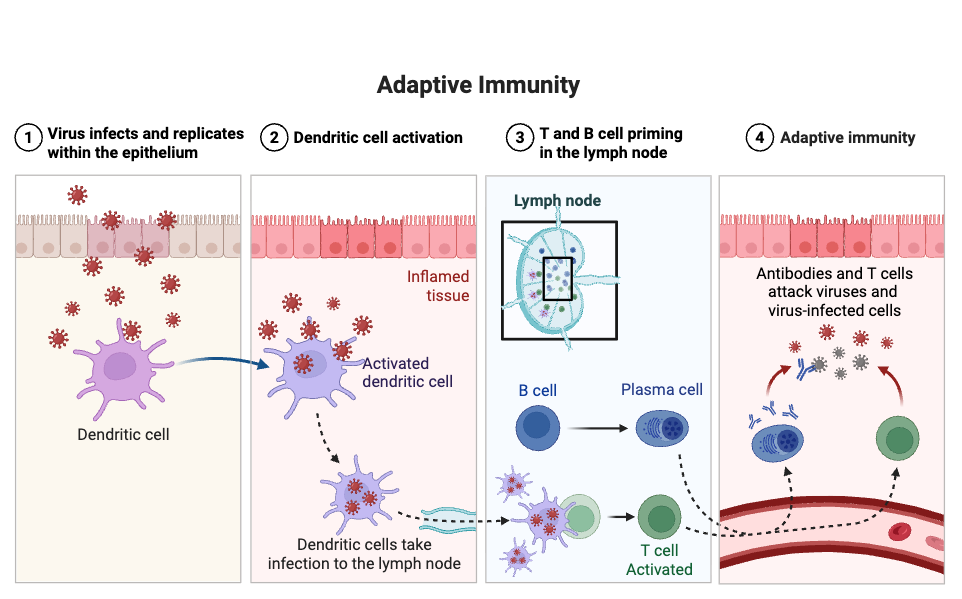
Activation of Adaptive Immune Response
- Entry of antigen – The foreign antigen enters into the body. It may be bacteria, virus, parasite, toxin or vaccine antigen. This antigen acts as the starting factor of adaptive immune response.
- Capture of antigen – The antigen is taken up by antigen-presenting cells (APCs). Mainly dendritic cells and macrophages engulf the antigen by phagocytosis. These cells act as the first important cells in this process.
- Processing of antigen – After engulfment, the antigen is broken down inside the APC. It forms small peptide fragments. These fragments are later used for antigen presentation.
- Presentation of antigen – The peptide fragments are joined with MHC molecules. The complex is then present on the surface of APC. This is called MHC-antigen complex.
- Migration of APC – The APC moves towards the secondary lymphoid organ. It generally moves to lymph node or spleen. These organs contain many naive T cells and B cells.
- Recognition by T cell – The naive CD4+ helper T cell recognizes the antigen. Its T-cell receptor (TCR) binds with MHC II-antigen complex. This binding is the first signal for T cell activation.
- Co-stimulation – Only first signal is not sufficient. A second signal is also required. B7 on APC binds with CD28 on T cell and then proper activation occurs.
- Activation of helper T cell – After getting both signals, helper T cell becomes active. It starts rapid division. Many similar helper T cells are produced from one activated cell.
- Release of cytokines – Activated helper T cells secrete cytokines. These are chemical messengers. They stimulate B cells, cytotoxic T cells, macrophages and other immune cells.
- Differentiation of helper T cell – Helper T cells change into different functional types. Th1 cells help in cell mediated immunity. Th2 cells help in antibody mediated immunity.
- Activation of cytotoxic T cell – CD8+ cytotoxic T cells recognize antigen presented with MHC I on infected cells. After activation, they kill virus infected cells and tumour cells. The killing is mainly by apoptosis.
- Recognition by B cell – B cells recognize the antigen directly. The antigen binds with B-cell receptor (BCR) present on B cell surface. Here antigen need not be processed before first recognition.
- Presentation by B cell – After binding, B cell takes the antigen inside. It breaks the antigen and presents the peptide with MHC II on its surface. Then helper T cell can recognize this B cell.
- Activation of B cell – Activated helper T cell binds with antigen presenting B cell. It gives signal through CD40L and also gives cytokines. By this, B cell becomes fully activated.
- Formation of plasma cell – Activated B cells divide many times. Some cells change into plasma cells. Plasma cells are the cells which produce antibodies.
- Production of antibodies – Plasma cells secrete large amount of specific antibodies. These antibodies bind with antigen, neutralize toxins, block virus entry and mark pathogen for phagocytosis.
- Formation of memory cells – Some activated B cells and T cells do not die after the response. They remain in the body as memory B cells and memory T cells. These cells are responsible for future protection.
- Secondary response – When the same antigen enters again, memory cells act quickly. The immune response becomes rapid and stronger. This is referred to as immunological memory.
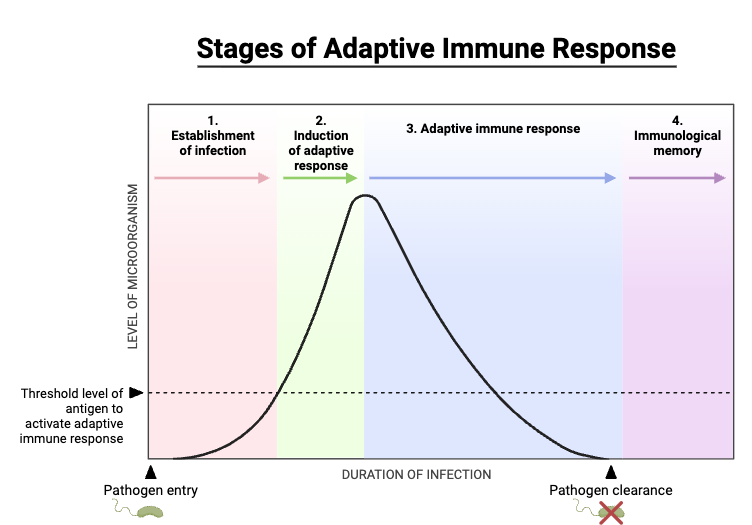
Humoral Immune Response (Antibody-Mediated Immunity)
- Antigen recognition – Humoral immune response starts when the B cell recognizes an extracellular antigen. The antigen may be present on bacteria, toxin, virus particle or any foreign molecule. Naive B cell binds the intact antigen by its B-cell receptor (BCR).
- Binding of antigen with BCR – The BCR is surface immunoglobulin present on B cell. It binds only with its specific antigen. This binding gives first signal to the B cell.
- Antigen internalization – After binding, the B cell takes the antigen inside the cell. This is important mainly for protein antigens which need helper T cell support.
- Antigen processing – Inside the B cell, the antigen is broken down into small peptide fragments. These peptide fragments are then attached with MHC class II molecules.
- Antigen presentation by B cell – The peptide-MHC II complex is shown on the surface of the B cell. Now this B cell acts like an antigen-presenting cell for helper T cell.
- Recognition by helper T cell – The activated helper T cell recognizes the antigen shown by B cell. Its T-cell receptor (TCR) binds with the peptide-MHC II complex present on B cell surface.
- Co-stimulation of B cell – Helper T cell gives second activation signal to B cell. CD40 ligand (CD40L) on helper T cell binds with CD40 receptor on B cell. This signal is very important for full activation of B cell.
- Cytokine action – Helper T cell also secretes cytokines near the B cell. These cytokines stimulate B cell division, antibody class switching and differentiation.
- Clonal expansion – After receiving signals, the activated B cell divides rapidly. It forms many similar B cells. This is called clonal expansion.
- Germinal center formation – Many dividing B cells move into lymphoid follicles and form germinal centres. Here further maturation of B cells takes place.
- Somatic hypermutation – In the germinal centre, B cells undergo mutation in the antibody binding region. This produces B cells with slightly different antigen binding ability.
- Affinity maturation – The B cells which bind antigen strongly are selected to survive. The weak binding or defective B cells are removed by apoptosis. This makes the antibody response more specific and strong.
- Isotype class switching – Under the effect of helper T cell cytokines, B cells change the class of antibody. Early antibody is mainly IgM, later it may change into IgG, IgA or IgE according to the type of infection.
- Formation of plasma cells – Some selected B cells change into plasma cells. Plasma cells are antibody secreting cells. They produce large amount of specific and high affinity antibodies.
- Formation of memory B cells – Some selected B cells become memory B cells. These cells remain in the body for long time. They give rapid and stronger antibody response when the same antigen enters again.
- Antibody secretion – The plasma cells secrete antibodies into blood, lymph and other body fluids. These antibodies move through extracellular spaces and bind with the same antigen.
- Neutralization – Antibodies neutralize toxins and block the attachment of viruses or bacteria to host cells. By this, the pathogen cannot enter or damage the body cells.
- Opsonization – Antibodies coat the pathogen surface. This makes the pathogen easy to recognize and engulf by phagocytes such as macrophages and neutrophils.
- Complement activation – Antibody bound pathogen can activate the complement system. Complement proteins help in inflammation, opsonization and sometimes direct lysis of microbes.
- T-independent response – Some antigens such as bacterial polysaccharides and lipopolysaccharides can activate B cells without helper T cell. This response is rapid, but it is usually less strong, less specific and produces poor memory response.
Cell-Mediated Immune Response
- Cell-mediated immune response is the immune response mainly against intracellular pathogens. It acts against viruses, some intracellular bacteria and tumour cells. These pathogens live inside body cells, so circulating antibodies cannot remove them properly.
- This response is mainly produced by T lymphocytes. T cells do not recognize intact antigen directly like B cells. They recognize only small peptide fragments which are presented with MHC molecules on the cell surface.
- The response starts in peripheral lymphoid organs like lymph nodes and spleen. Here naive T cells are activated by professional antigen-presenting cells (APCs). Mainly mature dendritic cells present the antigen with co-stimulatory signals.
- CD8+ cytotoxic T cells recognize infected cells which show foreign peptide with MHC class I molecules. MHC I molecules are present on almost all nucleated cells of the body. So virus infected cells can show antigen to cytotoxic T cells.
- After recognition, cytotoxic T cells bind with the infected target cell. Then they release perforin and granzymes. Perforin forms pores in the target cell membrane and granzymes enter into the cell and cause apoptosis.
- Cytotoxic T cells can also kill by Fas-Fas ligand pathway. In this process, Fas ligand present on cytotoxic T cell binds with Fas receptor on target cell. This also starts programmed cell death.
- CD4+ helper T cells recognize antigen presented with MHC class II molecules. MHC II is mainly present on professional APCs like macrophages, dendritic cells and B cells.
- Th1 helper cells are important in cell-mediated immunity. They secrete cytokines and activate macrophages. Activated macrophages can destroy microbes which are surviving inside their own vesicles.
- Helper T cells also help in activation of CD8+ cytotoxic T cells. They release cytokines which support multiplication and working of cytotoxic T cells.
- This response is very specific. Cytotoxic T cells kill only those cells which show the specific antigen with MHC I. Healthy neighbouring cells are not destroyed.
- Cytotoxic T cells act one cell at a time. Their toxic granules are released only at the contact point with target cell. So the infected cell is killed, but nearby normal cells remain protected.
- After the pathogen is removed, many active T cells die. Some cells remain as memory T cells. These cells give faster and stronger cell-mediated response when the same pathogen enters again.
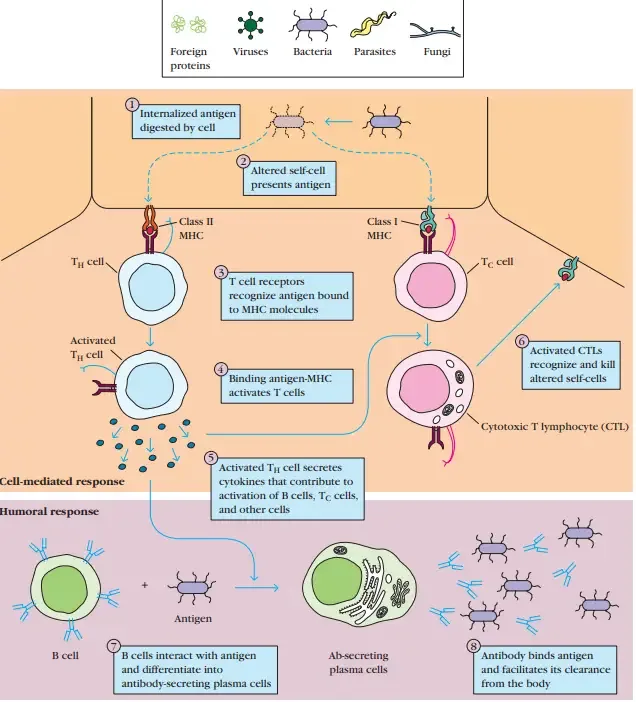
Primary and Secondary Immune Response
Primary Immune Response
Primary immune response is the immune response which occurs when the body meets a specific antigen for first time. In this response, the immune system has no previous memory of that antigen. So the response starts slowly.
It has a lag phase of several days. During this period, naive B cells and T cells are activated. They multiply and change into effector cells.
In the early stage, mainly IgM antibodies are produced. Later IgG antibodies may also be formed. The antibodies formed in primary response usually have low affinity for antigen.
After the antigen is removed, most effector cells die. Some activated lymphocytes remain as memory B cells and memory T cells. This is the important result of primary immune response.
Secondary Immune Response
Secondary immune response is the immune response which occurs when the same antigen enters the body again. It may be second exposure or later exposure. This response is due to already formed memory cells.
It starts very quickly. The lag phase is very short because memory B cells and memory T cells already recognize the antigen. These cells rapidly form active effector cells.
In this response, antibody production is very high. The main antibody is IgG. In some conditions IgA or IgE may also be formed.
The antibodies formed in secondary response have high affinity for antigen. This is because memory B cells have already undergone somatic hypermutation and selection during primary response.
Some antibodies from the first response may already be present in the body. These antibodies bind antigen quickly and remove it before disease becomes severe.
Thus, primary immune response is slow and produces memory cells. Secondary immune response is rapid, strong and more specific. It is the basis of long term protection and vaccination.
Examples of Adaptive (Acquired) Immunity
- Active natural immunity
- Recovery from chickenpox infection – This is an example of active natural immunity. When a person gets infection by varicella-zoster virus, the immune system fights the virus and produces antibodies and memory cells. These memory cells may give long lasting or life long protection against the same virus.
- Active artificial immunity
- Vaccination – This is an example of active artificial immunity. In this process, harmless, killed or weakened form of pathogen is introduced into the body. Measles vaccine, polio vaccine and COVID-19 vaccine stimulate the adaptive immune system to produce antibodies and memory cells without causing actual disease.
- Passive natural immunity
- Maternal antibody transfer – This is an example of passive natural immunity. In this type, ready-made antibodies are transferred from mother to baby. These antibodies pass through placenta during pregnancy and also through breast milk, especially colostrum, after birth. It gives temporary protection to the baby.
- Passive artificial immunity
- Antibody injection – This is an example of passive artificial immunity. In this type, ready-made antibodies are injected into the body from outside source. Antivenom given after snake bite and tetanus antitoxin are common examples. It gives immediate protection but remains for short time only.
Immunological Memory in Adaptive Immunity
- Immunological memory is the ability of adaptive immune system to remember a specific foreign antigen. When the same pathogen enters again, the immune system gives rapid and more effective response.
- This memory is maintained by long lived memory B cells and memory T cells. After first infection is removed, most effector cells die, but some cells remain in the body for many years or sometimes for whole life.
- Memory B cells are formed after activation of B lymphocytes during primary immune response. These cells have more refined antigen receptors because they have undergone somatic hypermutation and isotype switching.
- When the same antigen enters again, memory B cells respond quickly even to small amount of antigen. They change into plasma cells and produce large amount of high affinity antibodies such as IgG, IgA or IgE.
- Memory T cells are long lived T lymphocytes which remain after first immune response. These cells are present in higher number than naive cells and they need less stimulation for activation.
- Types of memory T cells
- Central memory T cells – These cells are mainly present in lymph nodes. They multiply rapidly when the same antigen enters again.
- Effector memory T cells – These cells circulate in blood and inflamed tissues. They give quick cytokine response and toxic action.
- Tissue resident memory T cells – These cells remain in barrier tissues like skin, gut and mucosa. They act as first defence when the same pathogen enters through that tissue.
- During second exposure, memory cells start the immune response quickly. This response is faster, stronger and more specific than primary immune response.
- The secondary response may remove the pathogen before disease is produced. So the person may not become sick or the disease remains very mild.
- Pre-existing memory cells and circulating antibodies can reduce the activation of new naive lymphocytes. By this, the body mainly uses already trained memory cells for quick response.
- Immunological memory is the main principle of vaccination. Vaccine gives harmless antigen to the body and produces memory B cells and memory T cells without causing actual severe disease.
- Due to memory cells and long lived plasma cells, adaptive immunity gives long term protection. This is the reason why some infections occur only once in life and why booster vaccines increase protection again.
Difference Between Innate and Adaptive Immunity
| Basis | Innate Immunity | Adaptive Immunity |
|---|---|---|
| Speed of response | Innate immunity acts immediately after infection. It starts within minutes to hours and forms the first line defence of body. | Adaptive immunity acts slowly during first exposure. It usually needs 4 to 7 days or sometimes 1 to 2 weeks for full response. |
| Specificity | It is non-specific type of immunity. It recognizes common molecular patterns which are present on many pathogens. | It is highly specific type of immunity. It recognizes exact antigen of a pathogen and acts against that antigen. |
| Memory | It does not produce immunological memory. The response remains almost same whenever the same pathogen enters again. | It produces memory B cells and memory T cells. So second response becomes faster, stronger and more specific. |
| Receptors | The receptors of innate immunity are already encoded in the genes of host. These are called germline encoded receptors. | The receptors of adaptive immunity are formed by rearrangement of gene segments during lymphocyte development. So many different receptors are produced. |
| Main components | It includes skin, mucous membrane, macrophages, neutrophils, natural killer cells and complement system. | It mainly includes B lymphocytes, T lymphocytes and specific antibodies produced by plasma cells. |
| Role in defence | It gives immediate protection and tries to contain the infection in early stage. It also helps to activate adaptive immunity. | It gives specific secondary defence after antigen recognition. It clears the pathogen and gives long term or life long protection. |
| Response on repeated exposure | The response is not much improved on repeated exposure. It acts in similar way each time. | The response becomes much improved on repeated exposure due to memory cells. This is called secondary immune response. |
| Example | Inflammation, phagocytosis by macrophages and neutrophils, action of NK cells and complement activation. | Antibody production after vaccination, T cell killing of infected cells and immunity after natural infection. |
Role of Adaptive Immunity in Protection Against Infection
- Neutralization – Antibodies produced by B cells bind with viruses, bacteria and toxins. By this binding, pathogen cannot attach with host cell. Entry of pathogen is blocked.
- Opsonization – In this process antibodies coat the surface of extracellular pathogen. The coated pathogen is easily recognized by macrophages and neutrophils. Then phagocytosis occurs more easily.
- Complement activation – Antibody bound antigen activates the complement system. Complement proteins help in inflammation and opsonization. Some microbes are also lysed by pore formation in their membrane.
- Mucosal protection – Secretory IgA is important in mucosal surfaces. It is present in respiratory tract, gut and other mucosal areas. It prevents attachment and entry of pathogen through these surfaces.
- Defence against parasites – IgE antibodies act mainly against helminth parasites. Th2 cells and eosinophils also take part in this response. This produces inflammation and helps to expel worms from body.
- Killing of infected cells – Some pathogens live inside the host cells. In this condition antibodies cannot act properly. CD8+ cytotoxic T cells recognize the infected cell and destroy it.
- Macrophage activation – Th1 helper T cells release interferon-gamma (IFN-γ). This activates macrophages. Activated macrophages kill intracellular bacteria and protozoa more effectively.
- Non-cytolytic control – In some tissues, killing of cell may cause more damage. Example is brain tissue. Some T cells can stop viral replication without killing the host cell directly.
- Immunological memory – After infection is removed, some lymphocytes remain as memory B cells and memory T cells. When same pathogen enters again, response is rapid and stronger. This gives long term protection against infection.
Clinical Significance of Adaptive Immunity
- Vaccination and immunization – The major clinical importance of adaptive immunity is in vaccination. Vaccine contains harmless antigen or weak form of pathogen. After entering in body it stimulates B lymphocytes and T lymphocytes. Then memory cells are formed and protection is produced without actual disease.
- Long lasting protection – Adaptive immunity gives long term protection due to immunological memory. During second entry of same pathogen, memory cells act rapidly. This is why many vaccines can protect the person for many years.
- Autoimmune diseases – Sometimes adaptive immune system fails to recognize self and non-self properly. Then immune cells attack own body tissue. This condition produces autoimmune diseases such as type 1 diabetes, systemic lupus erythematosus (SLE) and multiple sclerosis.
- Immunodeficiency disorders – Defect in B cells or T cells causes poor defence against infection. Severe Combined Immunodeficiency (SCID) affects both cellular and humoral immunity. X-linked agammaglobulinemia mainly affects antibody production.
- HIV/AIDS – HIV infection is clinically important because it destroys CD4 helper T cells. These cells are needed for activation of other immune cells. So the patient becomes weak against many opportunistic infections.
- Hypersensitivity and allergy – Adaptive immune response may become excessive against harmless substances. These may be pollen, food antigen, pet dander or dust. It produces conditions like asthma, contact dermatitis and sometimes severe anaphylaxis.
- Organ transplant rejection – In transplantation, donor organ may be taken as foreign tissue by the immune system. T cells and antibodies attack the graft cells. Therefore tissue matching and immunosuppressive drugs are used.
- Cancer immunotherapy – Adaptive immunity is also used in treatment of cancer. T cells can recognize tumour antigen and destroy malignant cells. Immune checkpoint inhibitors and adoptive cell therapy are based on this property.
- Passive immunization – Ready-made antibodies are given when immediate protection is required. It is used in snake bite antivenom, tetanus antitoxin and in some immunocompromised patients. This protection is rapid but temporary.
Advantages of Adaptive Immunity
- Specific response – Adaptive immunity acts against the particular antigen. It does not act in general way like innate immunity. So the response becomes more accurate.
- Immunological memory – This immunity can remember the same pathogen. Memory B cells and memory T cells are formed after first exposure. During second exposure, these cells act rapidly.
- Long lasting protection – Due to memory cells, protection remains for long time. In some diseases it may remain for whole life. The second infection may be cleared before symptoms are produced.
- Large diversity – Adaptive immune system can recognize many types of foreign antigens. This is due to different antigen receptors present on B cells and T cells. These receptors are formed by gene rearrangement.
- Protection against intracellular pathogen – Cytotoxic T cells can act against pathogens present inside host cells. They recognize virus infected cells and destroy them. So hidden intracellular infection can also be controlled.
- Different effector functions – Adaptive immunity uses many mechanisms for protection. Antibodies neutralize toxins, coat pathogens for phagocytosis and activate the complement system.
- Tissue sparing action – Cytotoxic T cells kill only the infected cells. They release their toxic granules at the contact site. So nearby healthy cells are generally not damaged.
Limitations of Adaptive Immunity
- Delayed response – Adaptive immunity does not give immediate protection during first entry of new pathogen. It requires lag phase of about 4 to 7 days. During this time lymphocytes are activated, multiplied and changed into effector cells.
- Dependence on innate immunity – Adaptive response cannot start alone in proper way. It needs innate immune cells, mainly dendritic cells and other antigen-presenting cells. These cells capture antigen, process it and present it to T cells.
- Autoimmune disease – Sometimes self tolerance mechanism fails. Then adaptive immune system recognizes own body tissue as foreign. It attacks self cells and produces diseases like type 1 diabetes, systemic lupus erythematosus (SLE) and multiple sclerosis.
- Hypersensitivity – Adaptive immunity may produce excessive response against harmless antigen. These antigens may be pollen, food antigen, dust mite or other allergens. It may cause allergic rhinitis, asthma and severe anaphylaxis.
- Transplant rejection – Adaptive immune system can recognize donor organ as foreign tissue. T cells and antibodies attack the transplanted organ. So immunosuppressive drugs are required for long time.
- Pathogen evasion – Some pathogens escape from adaptive immunity. They may change their surface antigen by mutation. Some live inside host cells where antibodies cannot reach properly, and HIV destroys CD4 helper T cells which are needed for immune coordination.
- Immunodeficiency – Defect in B cells or T cells makes adaptive immunity very weak. In Severe Combined Immunodeficiency (SCID), both humoral and cell mediated immunity are affected. In HIV/AIDS, patient becomes susceptible to opportunistic infections.
- Needs proper lymphocyte function – Adaptive immunity depends on proper working of B lymphocytes and T lymphocytes. If these cells are absent or defective, specific antibody response and cell mediated response are not produced properly.
References
- Alberts, B., Johnson, A., Lewis, J., Raff, M., Roberts, K., & Walter, P. (2002). T cells and MHC proteins. In Molecular biology of the cell (4th ed.). Garland Science.
- Alberts, B., Johnson, A., Lewis, J., Raff, M., Roberts, K., & Walter, P. (2002). The adaptive immune system. In Molecular biology of the cell (4th ed.). Garland Science.
- An overview of the vaccine platforms to combat COVID-19 with a focus on the subunit vaccines. (n.d.). PubMed Central.
- Autoimmunity in immunodeficiency. (n.d.). PubMed Central.
- B cell proliferation, somatic hypermutation, class switch recombination, and autoantibody production in ectopic lymphoid tissue in murine lupus. (n.d.). PubMed Central.
- Breakdown of T cell tolerance and autoimmunity in primary immunodeficiency. (n.d.). PubMed Central.
- CD4 and CD8 binding to MHC molecules primarily acts to enhance Lck delivery. (n.d.). PubMed Central.
- Cell cooperation in the antibody response. (2016). Oncohema Key.
- Children’s Hospital of Philadelphia. (2026). Types of immunity.
- Cleveland Clinic. (2024, August 15). Natural immunity: What it is.
- Control of central and peripheral tolerance by Aire. (n.d.). PubMed Central.
- Dembic, Z. (2013). The function of Toll-like receptors. In Madame Curie Bioscience Database. Landes Bioscience.
- Grokipedia. (2024). T independent antigen (TI).
- Grubbs, H., & Kahwaji, C. I. (2023, August 14). Physiology, active immunity. In StatPearls. StatPearls Publishing.
- Heterogeneity and characteristics of memory T cell subsets. (n.d.). ResearchGate.
- Hwang, J. K., Alt, F. W., & Yeap, L. S. (2015). Related mechanisms of antibody somatic hypermutation and class switch recombination. Microbiology Spectrum, 3(1).
- Immunological memory cells. (n.d.). PubMed Central.
- Institute for Quality and Efficiency in Health Care (IQWiG). (2023, August 14). In brief: The innate and adaptive immune systems. InformedHealth.org.
- Institute of Medicine (US) Immunization Safety Review Committee. (2002). Immunization safety review: Multiple immunizations and immune dysfunction (K. Stratton, C. B. Wilson, & M. C. McCormick, Eds.). National Academies Press.
- Janeway, C. A., Jr., Travers, P., Walport, M., & Shlomchik, M. J. (2001). B-cell activation by armed helper T cells. In Immunobiology: The immune system in health and disease (5th ed.). Garland Science.
- Janeway, C. A., Jr., Travers, P., Walport, M., & Shlomchik, M. J. (2001). Immunological memory. In Immunobiology: The immune system in health and disease (5th ed.). Garland Science.
- Janeway, C. A., Jr., Travers, P., Walport, M., & Shlomchik, M. J. (2001). Innate immunity. In Immunobiology: The immune system in health and disease (5th ed.). Garland Science.
- Janeway, C. A., Jr., Travers, P., Walport, M., & Shlomchik, M. J. (2001). Principles of innate and adaptive immunity. In Immunobiology: The immune system in health and disease (5th ed.). Garland Science.
- Janeway, C. A., Jr., Travers, P., Walport, M., & Shlomchik, M. J. (2001). T cell-mediated cytotoxicity. In Immunobiology: The immune system in health and disease (5th ed.). Garland Science.
- Janeway, C. A., Jr., Travers, P., Walport, M., & Shlomchik, M. J. (2001). T cell-mediated immunity. In Immunobiology: The immune system in health and disease (5th ed.). Garland Science.
- Janeway, C. A., Jr., Travers, P., Walport, M., & Shlomchik, M. J. (2001). The humoral immune response. In Immunobiology: The immune system in health and disease (5th ed.). Garland Science.
- Kimber, S. (2026, March 5). Vaccine platforms 101. Charles River Laboratories.
- Liu, J.-C., Zhang, K., Zhang, X., Guan, F., Zeng, H., Kubo, M., Lee, P., Candotti, F., James, L. K., Camara, N. O. S., Benlagha, K., Lei, J.-H., Forsman, H., Yang, L., Xiao, W., Liu, Z., & Liu, C.-H. (2024). Immunoglobulin class-switch recombination: Mechanism, regulation, and related diseases. MedComm, 5(8), e662.
- Location, location, location: Tissue resident memory T cells in mice and humans. (n.d.). PubMed Central.
- Memory cells in infection and autoimmunity: Mechanisms, functions, and therapeutic implications. (n.d.). PubMed Central.
- Memory T-cell heterogeneity and terminology. (n.d.). PubMed Central.
- Monash University. (2025). Active and passive immunity. Student Academic Success.
- Passive immunization: Toward magic bullets. (n.d.). PubMed Central.
- Pfizer. (n.d.). Understanding six types of vaccine technologies.
- Redefining memory T cell subsets. (n.d.). PubMed Central.
- Sabir, S., & Jan, A. (2025, December 1). Physiology, immune response. In StatPearls. StatPearls Publishing.
- Specificity, restriction and effector mechanisms of immunoregulatory CD8 T cells. (n.d.). PubMed Central.
- T lymphocyte dependence of the antibody response to ‘T lymphocyte independent type 2’ antigens. (n.d.). PubMed Central.
- The architecture of adaptive immunity: Molecular ontogeny, effector paradigms, and the landscape of immunological memory. (n.d.).
- The College of Physicians of Philadelphia. (2025). Different types of vaccines. History of Vaccines.
- The emerging role of the innate immune response in idiosyncratic drug reactions. (n.d.). ResearchGate.
- The roles of resident, central and effector memory CD4 T-cells in protective immunity following infection or vaccination. (n.d.). PubMed Central.
- Tissue-resident memory T cells. (n.d.). PubMed Central.
- Vaccination and autoimmune diseases: Is prevention of adverse health effects on the horizon? (n.d.). PubMed Central.
- Vaccinations and autoimmune diseases. (n.d.). PubMed Central.
- Vaccine technologies and platforms for infectious diseases: Current progress, challenges, and opportunities. (n.d.). PubMed Central.
- Vaccines for immune tolerance against autoimmune disease. (n.d.). PubMed Central.
- Vaccines, adjuvants and autoimmunity. (n.d.). PubMed Central.
- Wikipedia. (2025, March 5). T independent antigen (TI).