

Complement system is an important part of innate immune system. It acts as first line defense against invading pathogens, foreign materials and damaged cells. It helps the body to remove microbes and abnormal cells.
It is made up of more than 40 proteins. Most of these proteins circulate in blood in inactive form. When danger signal comes, these proteins become activated one after another. This reaction occurs in a cascade manner and the response becomes amplified.
The name complement is given because it complements the action of antibodies and phagocytic cells. It increases their ability to clear microorganisms and damaged tissues from the body. So it works with both innate and adaptive immune response.
The complement system is activated by three main pathways. These are classical pathway, lectin pathway and alternative pathway. These pathways start by different triggers, but finally all of them produce important effector molecules.
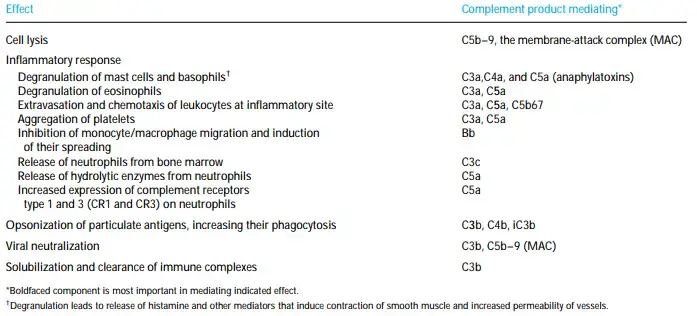
After activation, complement system performs three major functions. These are opsonization, inflammation and membrane attack. In opsonization, the pathogen is tagged by complement proteins and becomes easy for phagocytes to recognize and engulf.
In inflammation, complement fragments attract immune cells like macrophages and neutrophils at the site of infection. They also increase local inflammatory reaction. In membrane attack, membrane attack complex (MAC) is formed on the target membrane.
MAC forms pore on the pathogen surface. Due to this pore, the membrane balance is disturbed. Water and solutes enter into the cell and finally the pathogen cell rupture and die.
Overview of Complement Activation
Complement activation is the process by which inactive complement proteins become active in the body. These proteins then react one after another in enzymatic cascade. This process helps in removal of pathogens and damaged cells.
The complement activation occurs by three main pathways. These are classical pathway, lectin pathway and alternative pathway. These pathways start by different triggers but finally they meet at the cleavage of C3 protein.
Classical pathway usually starts when C1 complex binds with antibody attached to antigen or pathogen surface. The antibodies mainly involved are IgG and IgM. It can also start by direct binding with pathogen surface or dying cells.
Lectin pathway starts when pattern recognition proteins bind with microbial carbohydrate. These proteins include mannose-binding lectin (MBL) and ficolins. They recognize sugar pattern present on the outer surface of microbes.
Alternative pathway does not need antibody or special recognition molecule. It remains active at low level by spontaneous hydrolysis of C3 in blood. When this activated C3 meets foreign unprotected surface, it rapidly amplifies the complement reaction.
All the three pathways finally cleave C3 into C3a and C3b. C3a acts as inflammatory signal or anaphylatoxin. C3b binds with pathogen surface and acts as opsonin.
After this, further reactions lead to formation of membrane attack complex (MAC). MAC makes pore in the target cell membrane. Due to this pore, the target cell loses membrane balance and finally rupture and die.
Biological Consequences of Complement Activation
Biological consequences of complement activation are the effects produced after complement proteins become active in the body. These effects mainly help in defense against infection. It also helps in removal of dead cells and immune complexes.
The first important effect is opsonization and phagocytosis. In this process, complement fragment C3b binds on the surface of pathogen. This acts like a tag on the microbe. Due to this tagging, macrophages and neutrophils can easily recognize, engulf and destroy the pathogen.
The second effect is inflammatory response and chemotaxis. During complement activation, small fragments like C3a and C5a are produced. These are called anaphylatoxins. They attract immune cells at the site of infection and increase blood vessel permeability.
C3a and C5a also stimulate mast cells. Mast cells release inflammatory substances like histamine. Due to this, inflammation becomes more strong at the affected area.
The third effect is direct cell lysis. This is done by formation of membrane attack complex (MAC). The MAC is formed by terminal complement proteins from C5b to C9. It enters into the lipid membrane of target pathogen.
The MAC forms pore in the membrane. Due to this pore, water and solutes move inside the cell. The internal balance of the cell is disturbed and the pathogen dies by osmotic shock.
Complement activation also helps in clearance of apoptotic cells and immune complexes from blood. This prevents their harmful accumulation in tissues. It also helps adaptive immune system to develop better and long term immune response.
Activation of Complement Cascade and Formation of Active Fragments
Activation of complement cascade is the process where inactive complement proteins are activated one after another. It occurs in enzymatic cascade form. The pathway may start by classical pathway, lectin pathway or alternative pathway.
In classical pathway, activation starts when C1 complex binds with antibody present on pathogen surface. The antibodies are mainly IgG and IgM. The C1q part recognizes the antibody and binds with it. After binding, structural change occurs and C1r and C1s becomes active.
The activated C1s then cleaves C4 and C2. C4 is cleaved into C4a and C4b. C2 is cleaved into C2a and C2b. The active fragments join and form classical C3 convertase, which is written as C4b2a or C4b2b.
In lectin pathway, antibody is not required. It starts when mannose-binding lectin (MBL) or ficolins bind with carbohydrate pattern on microbial surface. These sugars are commonly present on pathogen outer surface.
After binding, MASP-1 and MASP-2 becomes activated. These enzymes cleave C4 and C2 like classical pathway. Finally it also forms the same C3 convertase, that is C4b2a or C4b2b.
In alternative pathway, activation starts by low level spontaneous hydrolysis of C3 in blood. This is called tick-over. It forms C3(H2O), which can bind with Factor B.
Then Factor D cleaves bound Factor B. This forms a convertase complex. On microbial surface, C3b binds with Factor B, and after cleavage by Factor D, C3bBb is formed. This is the alternative pathway C3 convertase and it is stabilized by properdin.
All the three pathways finally meet at C3 cleavage. The C3 convertase cleaves C3 into C3a and C3b. This is the central step of complement activation.
C3a is a small active fragment. It acts as an anaphylatoxin and helps in inflammation. It attracts immune cells like macrophages and neutrophils at the site of infection.
C3b is the larger fragment. It exposes reactive thioester bond and attaches with pathogen surface. This coating is called opsonization. Due to this, phagocytic cells can recognize and destroy the pathogen easily.
When more C3b is deposited on target surface, some C3b binds with the already formed C3 convertase. This changes the enzyme complex into C5 convertase. In classical and lectin pathway it is C4b2a3b or C4b2b3b. In alternative pathway it is C3bBb3b.
The C5 convertase cleaves C5 into C5a and C5b. C5a is a very strong anaphylatoxin. It causes strong inflammation, increases vascular permeability and recruits immune cells to the infected area.
C5b is the larger fragment and it starts the terminal pathway. It binds with C6, C7, C8 and many C9 molecules. These proteins form membrane attack complex (MAC or C5b-9).
The MAC makes pore in the membrane of pathogen. Due to this pore, water and solutes enter into the cell. The pathogen loses its balance and finally die by osmotic lysis.
Some other small fragments are also formed during the cascade. C4a is formed from C4 cleavage and it acts as weak anaphylatoxin. Ba is formed from Factor B cleavage and is released into fluid phase.
Opsonization and Enhanced Phagocytosis
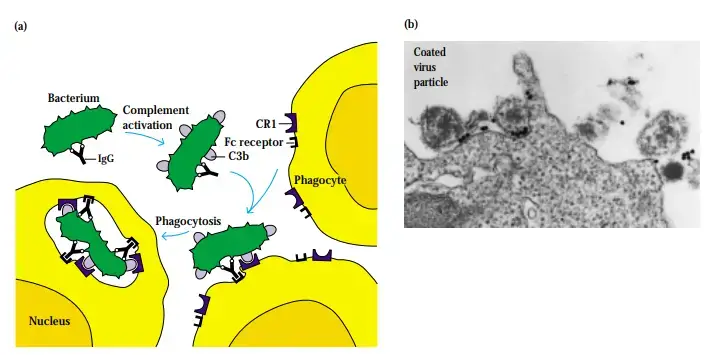
Opsonization is the process where complement system coat the surface of pathogen, apoptotic cells or immune complexes. In this process complement proteins act as tag on the target surface. This makes the target easy for recognition by phagocytic cells.
Enhanced phagocytosis means increase in engulfment of the tagged target. The complement tag works as a bridge between pathogen and phagocyte. Due to this, macrophages, monocytes and neutrophils attach strongly with the target and engulf it more easily.
C3b is the most important opsonin of complement system. It is produced in large amount during complement activation. It binds covalently with the pathogen surface and covers it with many tags.
iC3b is formed when C3b is cleaved by regulatory proteins. It cannot continue the complement cascade. But it remains attached with the target and works as a strong opsonin.
C4b is formed by classical and lectin pathway. It also works as opsonin, but its role is less than C3b. Some other fragments like C3c, C3d/g, iC4b and C4d also help in phagocytosis and adaptive immune response.
Phagocytic cells have complement receptors on their surface. These receptors detect the complement tags present on the target. CR1 mainly binds with C3b and it is present on many immune cells and erythrocytes.
CR3 and CR4 are integrin family receptors. They bind mainly with iC3b. Binding of iC3b with CR3 strongly stimulate phagocytosis.
CRIg is mainly present on liver Kupffer cells and other tissue macrophages. It binds with C3b and iC3b. It helps in rapid clearance of opsonized pathogens and particles from blood.
Opsonophagocytosis is one of the most important host defense function of complement system. In C3 deficiency, bacteria are not coated properly. So extracellular bacteria are not removed efficiently and recurrent severe bacterial infections may occur.
Inflammatory Response Caused by Complement Activation
Inflammatory response is produced when complement proteins are activated during infection or tissue injury. In this process small fragments are formed from complement proteins. These fragments are called anaphylatoxins.
The important anaphylatoxins are C3a and C5a. They are produced during cleavage of complement proteins. C5a is more powerful than C3a. C4a is also produced but it has weak inflammatory action.
C3a and C5a attract immune cells at the site of infection. This movement of immune cells towards chemical signal is called chemotaxis. The cells attracted are neutrophils, monocytes, macrophages, eosinophils and T-cells.
These fragments increase permeability of blood vessels. Due to this, fluid and immune molecules come out from blood into tissue. It also helps antigen-presenting cells to move towards local lymph nodes.
C3a and C5a act on endothelial cells of blood vessels. The endothelial cells produce adhesion molecules. So the vessel wall becomes sticky and immune cells attach with it and then move into the tissue.
The anaphylatoxins also stimulate mast cells and basophils. These cells release histamine and tumor necrosis factor-alpha (TNF-α). These substances cause vasodilation and increase local inflammation.
They also activate neutrophils and macrophages. These cells produce reactive oxygen species (ROS) by oxidative burst. They also release proteolytic enzymes for killing of pathogens.
If C3a and C5a are produced in very large amount in blood, it becomes harmful. It may cause sudden fall of blood pressure and circulatory collapse. This condition is called anaphylactic shock.
Cell Lysis by Membrane Attack Complex (MAC)
Cell lysis by membrane attack complex (MAC) starts from the terminal pathway of complement system. The process begins when C5 convertase cleaves C5 protein. It forms C5a and C5b. C5b is the larger fragment and it starts the formation of MAC.
The newly formed C5b rapidly binds with C6 and C7. These three proteins form C5b-7 complex. This complex becomes lipophilic and attaches with outer layer of target cell membrane.
After this, C8 binds with the C5b-7 complex. C8 is the first component which penetrates deeply into the lipid bilayer of the target membrane. This step starts the actual membrane injury.
The insertion of C8 helps in binding of C9 molecules. About 10 to 18 molecules of C9 are recruited and polymerized. These C9 molecules form a pore like structure. This complete structure is called membrane attack complex (MAC) or C5b-9.
The fully formed MAC makes a large transmembrane channel in the target membrane. This channel is about 10 nm wide and has hydrophilic inner part. Due to this pore, normal structure of cell membrane is permanently disturbed.
Water and solutes pass freely through the pore. The proton gradient and internal ion balance of the cell are lost. The cell cannot maintain its normal internal condition.
Finally the target cell swells and rupture due to osmotic pressure. This process is called osmotic lysis. It causes death of the pathogen or target cell.
This direct killing mechanism is specially effective against Gram-negative bacteria. It is also effective on metabolically inactive cells like erythrocytes.
Chemotaxis and Recruitment of Immune Cells
Chemotaxis is the movement of immune cells towards the chemical signal produced at the site of infection or tissue injury. During complement activation, some small fragments are released after cleavage of complement proteins. These fragments are mainly C3a and C5a. They are called anaphylatoxins.
C3a and C5a act as chemoattractants. Among them, C5a is the most strong and stable chemoattractant. It attracts immune cells from blood towards the affected tissue.
The cells recruited by these complement fragments are neutrophils, monocytes, macrophages, eosinophils, basophils and mast cells. They also help in recruitment of T-cells. In brain, these signals can activate resident microglia.
At first, C3a and C5a diffuse away from the site of complement activation. They form a chemical concentration gradient in the tissue. This gradient works as chemical trail for immune cells.
The anaphylatoxins also act on endothelial cells present in nearby blood vessels. These endothelial cells start expressing adhesion molecules on their surface. Due to this, the vessel wall becomes sticky for immune cells.
Immune cells moving in blood detect this chemical trail. They attach firmly with adhesion molecules present on the endothelial surface. After attachment, they migrate out from blood vessel and enter into the affected tissue.
After reaching the site, C3a and C5a bind with receptors present on immune cells. These receptors are C3aR and C5aR. This binding activates the recruited immune cells.
Activated immune cells show increased phagocytosis. They produce reactive oxygen species (ROS) by oxidative burst and release inflammatory cytokines. Thus chemotaxis helps in bringing immune cells at the site and makes pathogen killing more effective.
Clearance of Immune Complexes
Immune complexes are antigen-antibody clusters which are present in blood. Complement system helps in safe removal of these immune complexes. This is important because their deposition in tissue may cause inflammation and tissue damage.
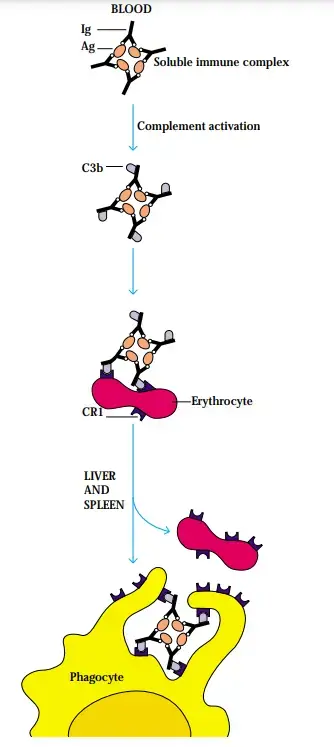
The process starts when C1q recognizes antibody present in the immune complex. C1q binds with these antibodies and activates the classical complement pathway. So the immune complex becomes marked for removal.
After activation of complement cascade, many complement fragments are deposited on the immune complex. The main fragment is C3b. C3b binds on the immune complex and acts as a tag. This tagging is called opsonization.
Erythrocytes have complement receptor 1 (CR1) on their surface. This CR1 recognizes and binds with C3b present on the immune complexes. Thus immune complexes become attached with red blood cells.
After binding, erythrocytes carry the immune complexes in blood circulation. They transport these complexes to the clearance organs. The main organs are liver and spleen.
In liver and spleen, macrophages recognize the immune complexes attached with erythrocytes. These macrophages remove the immune complexes from red blood cells. Then they engulf and destroy the complexes.
The erythrocytes are not destroyed during this process. They return again into blood circulation. Thus immune complexes are removed safely from the blood.
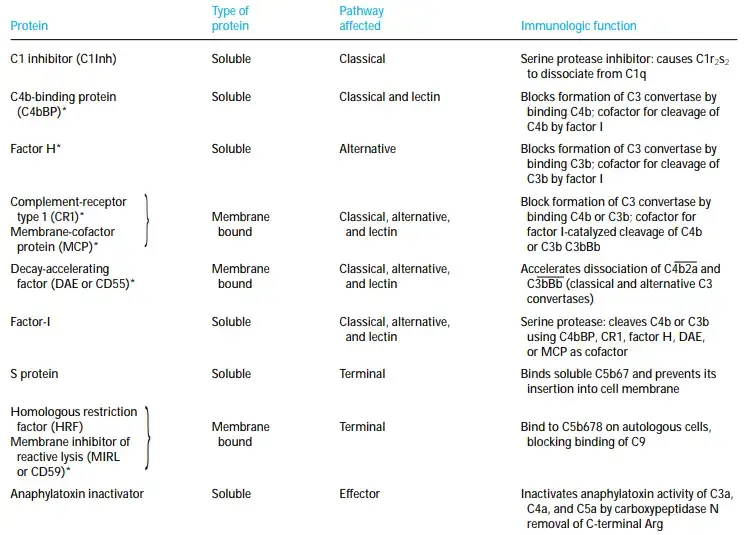
If early complement components are deficient, this clearance becomes defective. The important components are C1q, C1r, C1s, C2 and C4. In this condition, immune complexes accumulate and deposit in vascular wall and kidney tissue.
This deposition may cause autoimmune and inflammatory diseases. It is related with systemic lupus erythematosus (SLE), lupus nephritis and systemic vasculitis.
Removal of Apoptotic and Damaged Cells
Apoptotic cells and damaged cells are continuously formed in the body during normal function. Complement system helps in safe removal of these cells. This is important for normal body homeostasis and prevention of tissue damage.
The removal of apoptotic cells occurs in a silent manner. It does not produce strong inflammatory reaction like pathogen killing. So the dead cells are removed without releasing danger signals and without unnecessary immune response.
The process is mainly started by recognition molecules of classical and lectin pathway. These molecules are C1q, mannose-binding lectin (MBL) and ficolins. They bind with the surface of apoptotic and damaged cells.
During apoptosis, some inner molecules become exposed on the outer membrane of dying cells. C1q binds with these exposed molecules. The important targets are phosphatidylserine, Annexin A2 and Annexin A5. Thus C1q acts as a bridge for recognition of dying cells.
After binding of C1q, MBL or ficolins, a controlled low level complement activation occurs. This causes deposition of C3b on the apoptotic cell surface. C3b works as tag for removal. This tagging is called opsonization.
The complement tags like C1q, MBL and C3b bind with receptors present on scavenger cells. The main scavenger cells are macrophages and immature dendritic cells. These cells engulf the apoptotic cell debris and digest them safely.
This clearance is important for immune tolerance. If apoptotic cells are not removed, they may burst and release nuclear materials like DNA and histones. These self materials may stimulate immune system and start autoimmune reaction.
If C1q or early classical pathway components are deficient, apoptotic debris remain uncleared. These debris accumulate in tissues. Then autoantibodies may be produced against own cell components. This is strongly related with systemic lupus erythematosus (SLE).
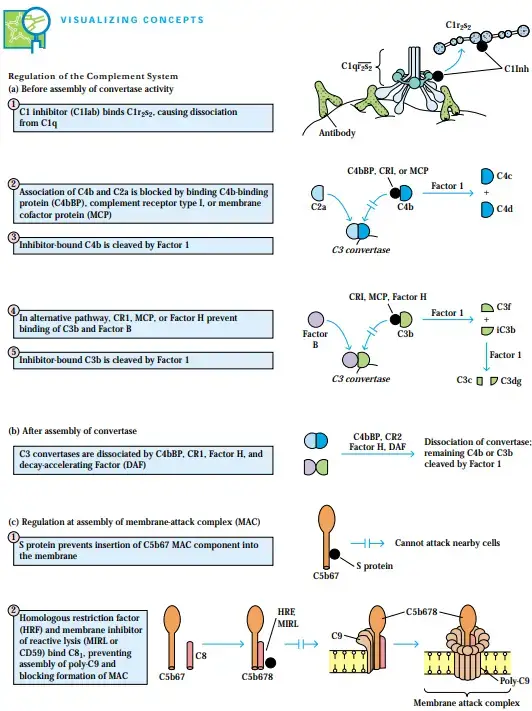
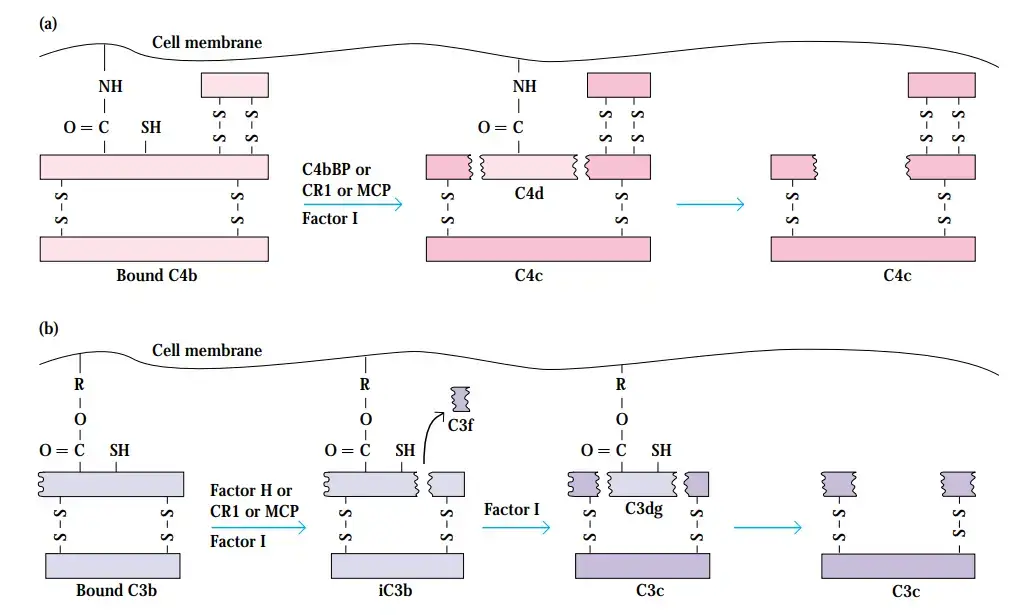
Role of Complement in Host Defense Against Infection
Complement system helps the body in defense against infection. It acts against bacteria, viruses and other invading pathogens. It works by coating the pathogen, attracting immune cells and directly killing some microbes.
During complement activation, large amount of C3b is deposited on the pathogen surface. C3b works as opsonin or tag. Due to this tag, macrophages and neutrophils can recognize the pathogen easily and engulf it.
Complement activation also produces small fragments like C3a, C4a and C5a. These are called anaphylatoxins. They attract immune cells at the site of infection and increase local inflammation.
The complement system can also kill pathogen directly by forming membrane attack complex (MAC). The MAC is made by C5b, C6, C7, C8 and many C9 molecules. It forms pore in the pathogen membrane.
Due to pore formation, water and solutes enter into the pathogen cell. The cell loses its membrane balance and finally rupture. This is specially important against Gram-negative bacteria like Neisseria species.
Complement also helps in viral neutralization. Recognition proteins like mannose-binding lectin (MBL) may bind with viral surface and reduce viral infection.
It also helps adaptive immunity. Complement fragments like C3d and C3dg bind with CR2 receptor on B cells. This helps in strong B cell activation and antibody response.
Role of Complement in Linking Innate and Adaptive Immunity
Complement system is mainly a part of innate immune system. But it also helps in activation of adaptive immune response. So it works as a bridge between innate immunity and adaptive immunity.
During complement activation, fragments like C3d, C3dg and iC3b are formed on pathogen surface. These fragments act as molecular tags. They are recognized by complement receptor 2 (CR2 or CD21) present on B cells.
CR2 forms a co-receptor complex with CD19 and CD81 on B cell surface. When this complex works along with B cell receptor, the activation of B cell becomes very easy. Thus antibody production is increased strongly.
In lymph nodes, follicular dendritic cells (FDCs) capture complement coated antigens. They use CR1 and CR2 receptors for this binding. These trapped antigens are shown to B cells for longer time.
This continuous antigen presentation helps in affinity maturation, isotype switching and formation of long term immunological memory. So complement helps not only in early defense but also in memory response.
Complement activation also produces inflammatory fragments like C3a and C5a. These increase vascular permeability and tissue fluid. Due to this, antigen-presenting cells carrying pathogen can move faster to local lymph nodes.
The classical pathway shows a clear link between adaptive and innate immunity. When B cells produce specific antibodies like IgG or IgM, these antibodies bind with pathogen antigen. Then C1q binds with this antigen-antibody complex.
After C1q binding, the innate complement cascade becomes activated at that site. Thus adaptive immunity gives specificity and complement gives destructive power. In this way complement system connects both immune responses.
Harmful Effects of Excessive Complement Activation
- Organ damage and kidney failure – Excessive complement activation produces strong inflammatory reaction in the body. It also causes wrong formation of membrane attack complex (MAC) on normal host cells. Due to this, healthy cells are damaged and tissue injury occurs. Kidney is highly affected in this condition. It may cause acute kidney injury, C3 glomerulopathy, lupus nephritis and IgA nephropathy.
- Thromboinflammation and severe blood disorders – Excess complement activation also affects the coagulation system of blood. It causes hyper-inflammation and hyper-coagulation together. Due to this, small blood clots are formed inside small vessels. This may cause diseases like atypical hemolytic uremic syndrome (aHUS) and paroxysmal nocturnal hemoglobinuria (PNH). In PNH, red blood cells are destroyed continuously and severe hemolysis occurs.
- Neurological damage and cognitive decline – Complement system normally helps in removal of weak synapses during brain development. But abnormal activation in adult brain causes excessive synaptic pruning by microglia. This loss of synapses may cause neurodegeneration and cognitive defect, as seen in Alzheimer’s disease. After brain injury or stroke, complement activation may also cause neuronal apoptosis, cerebral edema and oxidative brain damage.
- Autoimmune and chronic inflammatory diseases – When complement regulation is defective, dead cells and immune complexes are not removed properly. These materials accumulate and expose self antigens to immune system. Due to this, body starts attacking its own tissues. This may lead to systemic lupus erythematosus (SLE), rheumatoid arthritis and systemic vasculitis.
- Anaphylactic shock and asphyxiating edema – Very high production of C3a and C5a can cause severe systemic inflammation. These anaphylatoxins may cause sudden fall of blood pressure and circulatory collapse, which is called anaphylactic shock. Deficiency of C1 inhibitor (C1-INH) causes uncontrolled bradykinin release. This produces hereditary angioedema (HAE), where swelling occurs in face, abdomen and airway. Airway swelling may become life threatening.
- Tumor progression and immune evasion – In cancer, abnormal complement activation may help tumor growth. In tumor microenvironment, complement can maintain chronic inflammation and promote angiogenesis. It also recruits immunosuppressive cells, which reduce anti-tumor immunity. Due to this, tumor growth, metastasis and resistance to cancer therapy may increase.
Clinical Significance of Complement Activation
- Defense against infection – Complement system is an important first line defense of body. It helps in opsonization of pathogens, attraction of immune cells and direct killing by membrane attack complex (MAC). It is specially important against Neisseria species.
- Renal diseases – Kidney is very sensitive to complement damage. Abnormal complement activation may cause atypical hemolytic uremic syndrome (aHUS), C3 glomerulopathy (C3G), IgA nephropathy and lupus nephritis. In these diseases, complement deposition and inflammation damages kidney tissue.
- Hematological disorders – Uncontrolled complement activation on blood cells causes hemolysis and thrombosis. It is seen in paroxysmal nocturnal hemoglobinuria (PNH) and cold agglutinin disease (CAD). In these condition red blood cells are destroyed and severe anemia may occur.
- Neurological disorders – Complement has role in pruning of weak synapses in brain development. But excess activation causes abnormal synapse loss and neuroinflammation. It is related with Alzheimer’s disease, multiple sclerosis and acute ischemic stroke.
- Ophthalmological diseases – Abnormal complement regulation has important role in eye disease. Defect in Factor H and other complement proteins are related with age-related macular degeneration (AMD). It may cause blindness in old age.
- Autoimmune and inflammatory diseases – Defective early complement pathway causes poor clearance of apoptotic cells and immune complexes. These materials expose self antigen and starts autoantibody formation. It may lead to systemic lupus erythematosus (SLE), rheumatoid arthritis and ANCA-associated vasculitis.
- Cancer and tumor microenvironment – Complement may kill cancer cells by complement-dependent cytotoxicity (CDC). But chronic complement activation in tumor area may also help tumor growth. It promotes inflammation, metastasis and drug resistance.
- Diagnostic biomarkers and therapeutics – Complement proteins and split products are used in diagnosis and monitoring of disease. These include C3, C4, Ba and sC5b-9. Drugs like eculizumab, ravulizumab and pegcetacoplan are used for complement mediated diseases.
References
- Pryzdial, E. L. G., Leatherdale, A., & Conway, E. M. (2022). Coagulation and complement: Key innate defense participants in a seamless web. Frontiers in Immunology, 13, 918775.
- Complement C3a signaling facilitates skeletal muscle regeneration by regulating monocyte function and trafficking – PMC. (n.d.).
- Westacott, L. J., & Wilkinson, L. S. (2022). Complement Dependent Synaptic Reorganisation During Critical Periods of Brain Development and Risk for Psychiatric Disorder. Frontiers in Neuroscience, 16, 840266.
- Complement Dysregulation and Disease: Insights from Contemporary Genetics – PMC. (n.d.).
- Complement Dysregulation and Disease: Insights from Contemporary Genetics – PubMed. (n.d.).
- Jesiołowski, P., Krzywda, M., Furmańczyk-Zawiska, A., & Durlik, M. (2026). Complement Dysregulation in Kidney Diseases: Mechanisms, Biomarkers, and Emerging Targeted Therapies. International Journal of Molecular Sciences, 27(8), 3466,.
- Trageser, J. (2026). Complement Inhibitors as Therapeutic Agents for Autoimmune Disease. BioSupply Trends Quarterly,.
- Creative Biolabs. (n.d.). Complement Receptors of Complement System: CR2.
- Merle, N. S., Church, S. E., Fremeaux-Bacchi, V., & Roumenina, L. T. (2015). Complement System Part I – Molecular Mechanisms of Activation and Regulation. Frontiers in Immunology, 6, 262,.
- Sino Biological. (n.d.). Complement System and Cancer.
- Sino Biological. (n.d.). Complement System in Adaptive immunity: B Cell Immunity.
- Chen, J. Y., Sanghani, N., Palmer, K., Li, Y., Lin, F., & Abbatemarco, J. R. (2025). Complement activation in immunological neurological disorders: mechanisms and therapeutic strategies. Frontiers in Neurology, 16, 1695461,.
- Complement activation in the context of stem cells and tissue repair – PMC – NIH. (n.d.).
- Bajic, G., Degn, S. E., Thiel, S., & Andersen, G. R. (2015). Complement activation, regulation, and molecular basis for complement-related diseases. The EMBO Journal, 34(22), 2735–2757,.
- Complement and T Cell Metabolism: Food for Thought – PMC. (n.d.).
- Complement and human T cell metabolism: location, location, location – PMC – NIH. (n.d.).
- Complement in human disease: approved and up-and-coming therapeutics – PMC. (n.d.).
- Salupo, N., Bartolomeo, K., Bassil, E., Cavanaugh, C., Nakhoul, G., Taliercio, J., & Mehdi, A. (2026). Complement inhibition: A whole new world. Cleveland Clinic Journal of Medicine, 93(4), 227-236,.
- Wikipedia contributors. (2026). Complement receptor 2. In Wikipedia, The Free Encyclopedia,.
- Wikipedia contributors. (2026). Complement system. In Wikipedia, The Free Encyclopedia,.
- Complement-mediated activation of the adaptive immune responses – SciSpace. (n.d.).
- Does complement play a role in bone development and regeneration? – Semantic Scholar. (n.d.).
- Cedzyński, M., Thielens, N. M., Mollnes, T. E., & Vorup-Jensen, T. (2019). Editorial: The Role of Complement in Health and Disease. Frontiers in Immunology, 10, 1869,.
- High Levels of Complement Activating Enzyme MASP-2 Are Associated With the Risk of Future Incident Venous Thromboembolism | Arteriosclerosis, Thrombosis, and Vascular Biology. (n.d.).
- Kolev, M., Das, M., Gerber, M., Baver, S., Deschatelets, P., & Markiewski, M. M. (2022). Inside-Out of Complement in Cancer. Frontiers in Immunology, 13, 931273,.
- Mechanisms Regulating Muscle Regeneration: Insights into the Interrelated and Time-Dependent Phases of Tissue Healing – PMC. (n.d.).
- Tenner, A. J., Stevens, B., & Woodruff, T. M. (2018). New Tricks for an Ancient System: Physiological and Pathological Roles of Complement in the CNS. Molecular Immunology, 102, 3–13,.
- Liv Hospital. (2026). Next-Generation Complement Inhibitors,.
- Bardhan, M., & Kaushik, R. (2023). Physiology, Complement Cascade. In StatPearls. StatPearls Publishing,,.
- Role of CR2 and complement in B cell activation. (n.d.). YouTube.
- Krarup, A., Wallis, R., Presanis, J. S., Gál, P., & Sim, R. B. (2007). Simultaneous Activation of Complement and Coagulation by MBL-Associated Serine Protease 2. PLoS ONE, 2(7), e623,.
- Systemic and Compartmentalized Dynamics of the Complement Cascade: From Molecular Logic to Pathological Overactivity and Therapeutic Strategies. (n.d.).
- Zadroga, Ł., Lewandowski, F., Bębnowska, D., Majchrzak, A., Czyż, A., & Niedźwiedzka-Rystwej, P. (2026). The Complosome: An Emerging Intracellular Complement Network in Cancer Development and Therapy. International Journal of Molecular Sciences, 27(9), 4111,.
- DelveInsight. (2023). The Expanding Market of Complement Inhibitors,.
- Gomez-Arboledas, A., Acharya, M. M., & Tenner, A. J. (2021). The Role of Complement in Synaptic Pruning and Neurodegeneration. ImmunoTargets and Therapy, 10, 373–386,.
- The Role of the Complement System in Synaptic Pruning after Stroke – PMC – NIH. (n.d.).
- The Role of the Complement System in the Pathogenesis of Infectious and Autoimmune Diseases – ResearchGate. (n.d.).
- The complement cascade as a mediator of tissue growth and regeneration – PMC. (n.d.).
- The complement system – PMC – NIH. (n.d.).
- Janeway, C. A. Jr., Travers, P., Walport, M., et al. (2001). The complement system and innate immunity. In Immunobiology: The Immune System in Health and Disease (5th ed.). Garland Science.
- Kozarcanin, H., Lood, C., Munthe-Fog, L., Sandholm, K., Hamad, O. A., Bengtsson, A. A., Skjoedt, M.-O., Huber-Lang, M., Garred, P., Ekdahl, K. N., & Nilsson, B. (2016). The lectin complement pathway serine proteases (MASPs) represent a possible crossroad between the coagulation and complement systems in thromboinflammation. Journal of Thrombosis and Haemostasis, 14(3), 531-545.
- Kozarcanin, H., Lood, C., Fog, L. M., Sandholm, K., Hamad, O. A., Bengtsson, A. A., Skjoedt, M.-O., Huber-Lang, M., Garred, P., Ekdahl, K. N., & Nilsson, B. (2016). The lectin complement pathway serine proteases (MASPs) represent a possible crossroad between the coagulation and complement systems in thromboinflammation. Journal of Thrombosis and Haemostasis, 14(3), 531-545. (University of Copenhagen Research Portal).
- The role of complement in the tumor microenvironment – PMC. (n.d.).
- Yang, R., Fu, D., & Liao, A. (2025). The role of complement in tumor immune tolerance and drug resistance: a double-edged sword. Frontiers in Immunology, 16, 1529184,.
- Xiao, F., Guo, J., Tomlinson, S., Yuan, G., & He, S. (2023). The role of the complosome in health and disease. Frontiers in Immunology, 14, 1146167,.
- de Boer, E. C. W., van Mourik, A. G., & Jongerius, I. (2020). Therapeutic Lessons to be Learned From the Role of Complement Regulators as Double-Edged Sword in Health and Disease. Frontiers in Immunology, 11, 578069,.