

Antigen is a foreign molecule which is recognized by immune system. It may be protein, polysaccharide, lipid or nucleic acid. It is called antigen because it can generate antibody or bind with antibody.
Antigen is mostly found on the surface of bacteria, virus, fungi and parasites. It may also present on normal human cells, cancer cells and allergens such as pollen. These are identified by the immune cells of the body.
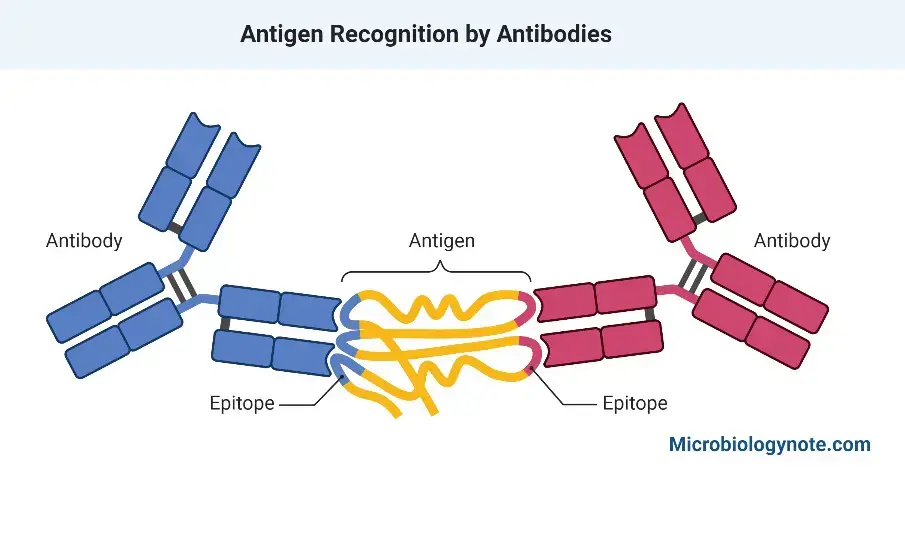
The specific part of antigen which binds with antibody or lymphocyte receptor is called epitope. It is also called antigenic determinant. This is the actual part where antigen and antibody reaction takes place.
All antigens can bind with immune components. But all antigens cannot produce immune response alone. The antigens which can produce immune response are called immunogens.
Haptens are small antigens. They cannot produce immune response by itself. They become immunogenic only when they are attached with a large carrier molecule. Thus antigen helps in recognition and activation of immune response.
Antigen Definition
Antigen is a foreign substance which is recognized by the immune system. It can bind with antibody or T-cell receptor and may produce immune response. It may be protein, polysaccharide, lipid or nucleic acid.

Characteristics and Properties of Antigens
- Foreignness is one of the important property of antigen. An antigen generally should be foreign or non-self to the host body. The more difference between the antigen source and host, the more immune response is produced.
- Molecular size of antigen is also important. Large molecules are more immunogenic than small molecules. Most good immunogens have molecular weight between 14,000 to 600,000 Daltons.
- Very small molecules which have molecular weight below 1,000 Daltons are generally poor immunogen. These are called haptens. They can produce immune response only when attached with large carrier protein.
- Chemical complexity increases the antigenic property. Complex molecules like proteins are good immunogens because they are made up of different amino acids. Simple molecules with repeated units are usually weak immunogens.
- Degradability is required for many immune reaction. The antigen should be taken up by antigen-presenting cells and broken down by enzymes. Then its fragments are shown to immune cells.
- Physical form also affects antigenic nature. Particulate antigens like whole virus or bacterial cell are more immunogenic than soluble antigens. Denatured antigens may also become more immunogenic than native form.
- Structural rigidity helps the antigen to keep its proper shape. Rigid structure helps in binding with lymphocyte receptors. Aromatic amino acids like tyrosine may help to maintain this structure.
- Antigenic specificity is the property by which antigen is recognized as a specific molecule. This specificity depends on active surface region called epitope or antigenic determinant. Antibody binds with this region.
- Host dependency means antigenic response depends on the host body. Age, species and genetic condition of host affect the immune response. So same antigen may not show same response in all host.
- Dose and route of entry also change the effect of antigen. Proper dose is needed for good immune response. Route like subcutaneous may produce better response than intravenous route in many cases.
Structure of Antigen
- Antigen is generally a large and complex macromolecule. It may be made up of protein, polysaccharide, lipid or nucleic acid. Among these, proteins and complex polysaccharides are most common antigenic structure.
- The whole antigen molecule is not directly recognized by immune system. Only some small specific regions present on the antigen surface are recognized. These regions are called epitopes or antigenic determinants.
- One antigen may contain many epitopes on its surface. These epitopes are the actual binding sites for antibody, B-cell receptor or T-cell receptor. So antigenic reaction depends mainly on these small regions.
- Linear epitope is formed by continuous sequence of amino acids. These amino acids are present one after another in the primary polypeptide chain. It is also called sequential epitope.
- Conformational epitope is formed by folding of antigen molecule. In this case, amino acids which are far in linear chain come close together due to three dimensional shape. If the antigen is denatured, this type of epitope is destroyed.
- B-cell epitope is usually present on the outer exposed surface of antigen. It may be linear or conformational in nature. These epitopes are generally made up of about 4 to 8 amino acid residues.
- T-cell epitope is always linear peptide sequence. It is generally formed by about 8 to 15 amino acids. T-cells cannot recognize intact folded antigen, so antigen must be processed and presented with MHC molecule.
- The structural complexity of antigen is important for immune response. A complex protein with different amino acids is a stronger antigen than simple repeating molecule. Simple and flexible molecules are usually weak antigen.
- Structural rigidity helps to maintain the fixed shape of antigen. This fixed shape helps in proper binding with immune receptors. Aromatic amino acids may also help in stabilizing the antigenic structure.
- The molecular size of antigen is also important. Large molecules of about 14,000 to 600,000 Daltons act as complete antigens. Very small molecules called haptens are too small, so they need a large carrier molecule to become immunogenic.
Antigenic Determinants (Epitopes)
- Epitope is the specific active part of an antigen. It is also called antigenic determinant. This part directly binds with antibody, B-cell receptor or T-cell receptor.
- It is the smallest structural part of antigen which is recognized by immune system. The whole antigen is not usually recognized as one unit. Only the epitope region takes part in antigen-antibody reaction.
- Epitopes are very small in size. They generally contain about 4 to 8 amino acid residues or 3 to 4 sugar monomers. So many epitopes may be present on a large antigen.
- All parts of antigen do not act as epitope. The active epitopes are mostly present on the outer exposed surface of folded antigen. This makes them easily available for binding with antibody.
- Linear epitope is formed by a continuous sequence of amino acids. These amino acids are arranged one after another in the polypeptide chain. This type of epitope may be recognized even when antigen is unfolded.
- Conformational epitope is formed due to three dimensional folding of protein. In this, amino acids which are far away in linear chain come close together. When protein is denatured by heat or chemicals, this epitope is destroyed.
- B-cell determinant is the epitope which is recognized by B-cells and free antibodies. These determinants are present on the surface of intact antigen. They are mostly conformational and present as exposed hydrophilic regions.
- T-cell determinant is always a linear peptide fragment. T-cells do not recognize whole folded protein. They recognize only processed peptide fragments presented by Major Histocompatibility Complex (MHC) molecules.
- T-cell epitopes are generally made up of about 8 to 15 amino acids. They are formed after enzymatic breakdown of antigen inside the cell. T-cells usually do not recognize polysaccharide or nucleic acid antigens.
- A single large antigen may have many different epitopes. These epitopes may have different specificity. Therefore different antibodies can bind with different sites on the same antigen surface.
Types of Antigens
A. Based on origin or source
- Exogenous antigen – These antigens enter into the body from outside environment. They may enter through inhalation, ingestion or injection. Examples are bacteria, viruses, fungi, protozoa and pollen.
- Endogenous antigen – These antigens are formed inside the host cell. They may be produced during normal metabolism or during infection by intracellular organisms like virus and intracellular bacteria.
- Autoantigen – These are body’s own substances which are wrongly recognized as foreign. It may be self protein, DNA or RNA. They produce autoimmune reaction.
- Tumor antigen – These antigens are present on the surface of tumor cells. They may be produced due to mutation or abnormal high production of normal proteins in cancer cells.
- Alloantigen – These antigens are present in different individuals of same species. Example is A and B blood group antigens on red blood cells.
- Heterophile antigen – These are similar antigens present in different species. They may show cross reaction because of similarity in antigenic structure.
B. Based on immune response
- Complete antigen – It is also called immunogen. It can produce immune response by itself. It is usually large and chemically complex.
- Incomplete antigen – It is also called hapten. It cannot produce immune response alone. It becomes immunogenic after binding with large carrier protein.
- T-dependent antigen – These are mostly protein antigens. They need help of helper T-cells for stimulation of B-cells and antibody production.
- T-independent antigen – These are mostly large polysaccharides or polymeric antigens. They can stimulate B-cells directly without help of T-cells.
- Superantigen – These are special microbial toxins. They activate many T-cells in non-specific way and cause high cytokine release. It may produce cytokine storm.
Factors Affecting Antigenicity and Immunogenicity
A. Factors related to antigen
- Foreignness – Antigen should be foreign or non-self to the host body. More difference between antigen and host gives more immune response. So antigen from different species is generally more immunogenic.
- Molecular size – Large molecules are more immunogenic than small molecules. Most active immunogens have molecular weight about 14,000 to 600,000 Daltons. Molecules below 1,000 Daltons are usually weak.
- Haptens – Haptens are very small molecules. They cannot produce immune response alone. They become immunogenic only after binding with large carrier protein.
- Chemical complexity – Complex chemical structure increases immunogenicity. Proteins are good immunogens because they contain many different amino acids. Simple repeating molecules are poor immunogens.
- Structural rigidity – Rigid structure helps the antigen to keep its fixed shape. This helps in proper binding of epitope with lymphocyte receptors. Aromatic amino acids may also help to maintain this structure.
- Physical form – Particulate antigens are more immunogenic than soluble antigens. Whole bacterial cells and viruses produce better immune response. Denatured antigens may also show more antigenicity than native form.
- Degradability – Antigen should be degraded by antigen-presenting cells for T-cell dependent response. In this process antigen is phagocytosed and broken into small peptide fragments. These fragments are then presented to helper T-cells.
B. Factors related to host
- Genetic factor – Immune response depends on genetic nature of host. Same antigen may be strong immunogen in one species but weak in another species. Genes for T-cell receptor, B-cell receptor and MHC molecules control this response.
- Age – Age of host affects immunogenicity. Very young and very old individuals show weak immune response. Adult healthy host generally produces better response.
C. Factors related to administration
- Dose – Proper dose of antigen is needed for good immune response. Very low dose may not stimulate the immune system. Very high dose may also produce poor response or immune tolerance.
- Route – Route of entry changes the strength of immune response. Subcutaneous route is generally more effective than intravenous or intragastric route. So same antigen may give different response by different routes.
- Adjuvant – Adjuvants are substances mixed with antigen to increase immune response. They keep antigen for longer time at the site and stimulate immune cells. They also activate cells like macrophages and help in better immunogenicity.
Process of Antigen Recognition by the Immune System
- Antigen enters the body through air, food, skin or blood. After entering it is exposed to the immune cells. Then the immune system starts to identify the antigen.
- B-lymphocytes recognize the antigen directly without processing. The surface receptor of B-cell is called B-cell receptor (BCR). It binds with the specific part of antigen, which is called epitope.
- T-cells do not identify the whole antigen directly. They identify only small peptide part of the antigen. For this, antigen is first taken by antigen-presenting cells (APCs).
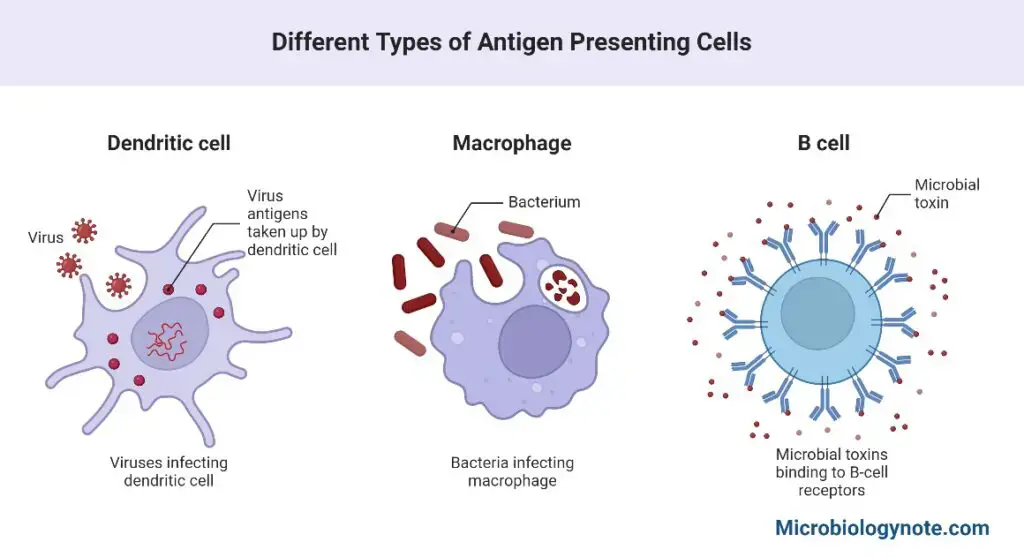
- The main APCs are macrophages, dendritic cells and B-cells. These cells engulf the antigen and break it down inside the cell. This breaking down of antigen is called antigen processing.
- During this process, antigen is converted into small peptide fragments. These fragments are then attached with Major Histocompatibility Complex (MHC) molecules. The formed peptide-MHC complex is carried to the cell surface.
- MHC class I molecule presents the antigen which is produced inside the cell. Such antigens are called endogenous antigens. It occurs mainly in virus infected cells and abnormal body cells.
- MHC class II molecule presents the antigen which comes from outside the cell. Such antigens are called exogenous antigens. It is mainly done by professional antigen presenting cells.
- After presentation, T-cell receptor (TCR) binds with peptide-MHC complex. CD4+ helper T-cells recognize antigen with MHC class II. CD8+ cytotoxic T-cells recognize antigen with MHC class I.
- After proper binding, signal is formed inside the lymphocyte. This signal activates the cell. ITAMs and some kinases take part in this signaling process.
- After activation, different immune response is produced. B-cells produce antibodies. Helper T-cells secrete cytokines. Cytotoxic T-cells destroy infected cells. This is the way by which antigen is recognized by immune system.
Antigen–Antibody Reactions
Antigen-antibody reaction is a specific reaction between an antigen and its corresponding antibody. In this reaction, the epitope of antigen binds with the paratope of antibody. This binding is very specific, like lock and key type reaction.
It is not a covalent binding. It is mainly formed by weak forces such as hydrogen bond, ionic bond, hydrophobic force and van der Waals force. After binding, antigen-antibody complex is formed. This complex helps in neutralization, opsonization, complement activation and removal of antigen.
Step by step process of Antigen–Antibody Reaction
- First the antigen enters into the body. It may be bacteria, virus, toxin or any foreign molecule. The immune system recognize it as non-self substance.
- B-cells produce specific antibody against that antigen. Sometimes membrane bound B-cell receptor also binds with the antigen. The antibody is made only for that specific antigen.
- The antibody comes near the antigen and binds with its active part. The active part of antigen is called epitope. The binding part of antibody is called paratope.
- The epitope and paratope fit with each other. This reaction is very specific. So one antibody usually reacts with its own antigen only.
- After binding, antigen-antibody complex is formed. This complex makes the antigen inactive or easy to remove from body. This is the main result of the reaction.
- In neutralization, antibody covers the active site of virus, bacteria or toxin. So they cannot attach with host cell. As a result infection or toxic effect is blocked.
- In opsonization, antibody coats the surface of antigen. This coating acts as a tag. Then macrophages and neutrophils easily engulf and digest the antigen.
- The antigen-antibody complex may activate complement system. Mainly IgG and IgM take part in this process. It starts the classical pathway of complement.
- During complement activation, inflammation is increased and target cell membrane may be damaged. Membrane attack complex (MAC) may form and causes lysis of the target cell.
- In antibody-dependent cellular cytotoxicity (ADCC), antibody binds with antigen present on infected cell or tumor cell. The Fc region of antibody is then recognized by Natural Killer (NK) cell. After this the target cell is destroyed.
- Finally the antigen is neutralized, phagocytosed or destroyed by immune cells. Thus antigen-antibody reaction protects the body from foreign antigen.
Antigen–Antibody Reaction in Laboratory Test
- In laboratory, this specific reaction is used for diagnosis. Tests like ELISA are based on antigen-antibody binding.
- First a known antigen or antibody is fixed on a solid surface. Usually polystyrene microtiter plate is used.
- Then blocking solution such as BSA is added. It blocks empty spaces of the plate. This prevents unwanted binding.
- The patient sample is added into the well. If specific antigen or antibody is present, it binds and forms antigen-antibody complex.
- The plate is washed to remove unbound materials. Then enzyme linked secondary antibody is added.
- After this substrate is added. The enzyme reacts with substrate and produces colour. The colour indicates that antigen-antibody reaction has occurred.
Antigen Processing and Antigen Presentation
Antigen Processing
Antigen processing is the breakdown of antigen into small peptide fragments inside the cell. It is mainly required for recognition by T-cells because T-cells do not recognize the whole antigen. They recognize the antigen only when it is present as small peptide with MHC molecule.
- The antigen which comes from outside the cell is first taken by antigen-presenting cells (APCs). The important APCs are macrophages, dendritic cells and B-cells.
- These outside antigens are called exogenous antigens. They enter into the cell by phagocytosis or endocytosis. After entering, they are kept inside vesicle like structure.
- Inside the cell, the antigen is acted by proteolytic enzymes. The large antigen molecule is degraded into smaller peptide fragments. These fragments are mostly linear in nature.
- Some antigens are produced inside the cell itself. These are called endogenous antigens. Viral proteins and abnormal tumor proteins are the common examples of this type.
- The endogenous antigen is also broken into small peptide fragments inside the cell. These fragments are then used for joining with MHC class I molecule.
Antigen Presentation
Antigen presentation is the showing of processed antigen on the surface of cell. In this process the small peptide fragment is attached with Major Histocompatibility Complex (MHC) molecule. The formed structure is called peptide-MHC complex.
- The processed peptide alone is not recognized by T-cells. It must be attached with MHC molecule. Then only T-cell receptor (TCR) can recognize it.
- In MHC class I pathway, the antigen is formed inside the cell. It may be viral protein or tumor protein. These peptides are loaded on MHC class I and brought to the cell surface.
- MHC class I is present on almost all nucleated cells. The antigen presented by this molecule is recognized by CD8+ cytotoxic T-cells. Then the infected or abnormal cell is killed.
- In MHC class II pathway, the antigen comes from outside the cell. It is first taken and processed by professional APCs. Then the peptide is loaded on MHC class II molecule.
- MHC class II is mainly found on macrophages, dendritic cells and B-cells. The antigen presented by this molecule is recognized by CD4+ helper T-cells.
- After recognition, CD4+ helper T-cells become active and secrete cytokines. These cytokines help in activation of B-cells, macrophages and other immune cells.
Difference Between Antigen, Immunogen, and Hapten
| Point | Antigen | Immunogen | Hapten |
|---|---|---|---|
| Meaning | Antigen is a substance which can bind with antibody or T-cell receptor. | Immunogen is an antigen which can produce immune response by itself. | Hapten is a small antigen which cannot produce immune response alone. |
| Main property | It has antigenicity. | It has both antigenicity and immunogenicity. | It has antigenicity but lacks immunogenicity. |
| Immune response | It may or may not produce immune response. | It produces humoral or cell mediated immune response. | It does not produce immune response by itself. |
| Size | It may be large or small molecule. | It is generally large molecule. | It is very small molecule. |
| Chemical nature | It may be protein, polysaccharide, lipid or nucleic acid. | It is usually complex molecule like protein or complex polysaccharide. | It is simple small molecule. |
| Carrier molecule | Carrier molecule is not always required. | Carrier molecule is not required. | Carrier molecule is required to become immunogenic. |
| Other name | It is not always complete antigen. | It is called complete antigen. | It is called incomplete antigen. |
| Relation | All antigens are not immunogens. | All immunogens are antigens. | Hapten is antigenic but not immunogenic alone. |
Biological Role of Antigens in Immune Response
- Antigens act as marker for immune recognition. They are recognized by immune system as foreign or non-self substance. Due to this the body can identify bacteria, viruses, fungi and parasites.
- Antigen helps in activation of specific lymphocytes. When antigen binds with specific receptor of B-cells or T-cells, only that particular lymphocyte becomes active. Then these cells multiply and this is called clonal selection.
- Antigen stimulates B-cells for antibody production. In many cases helper T-cells also help in this process. Then B-cells change into plasma cells and produce specific antibodies against that antigen.
- Antigens also help in marking infected cells. When virus grows inside the host cell, small viral antigen are shown on the surface of cell. These are recognized by cytotoxic T-cells and the infected cell is destroyed.
- Tumor cells also show abnormal antigens on their surface. These are called tumor antigens. By this process immune system can identify cancerous or abnormal cell and remove them.
- Antigen is important in formation of immunological memory. After first exposure to antigen, some lymphocytes become memory cells. During second entry of same antigen, the response becomes faster and stronger.
- This memory response is the main basis of vaccination. Vaccine contains antigen or antigen like substance. It trains the immune system without causing severe disease.
- Sometimes antigen may also produce harmful immune reaction. If body’s own antigen is wrongly recognized as foreign, it is called autoantigen. This causes immune attack against own tissues and results in autoimmune disease.
Clinical and Diagnostic Importance of Antigens
- Antigens are used in rapid diagnostic tests for detection of infectious diseases. These tests detect specific antigen of the organism. They are used in diseases like COVID-19, influenza, RSV and strep throat.
- Rapid antigen test gives result in short time. So it is useful for early diagnosis and quick treatment. It also helps in control of spread of infection in population.
- Antigens are very important in vaccine development. Vaccine contains harmless antigen or antigenic part of organism. It may be inactivated virus, weakened organism or recombinant protein.
- After vaccination, the antigen stimulates the immune system. It produces antibodies and memory cells without causing actual severe disease. This gives protection against diseases like flu, measles and HPV infection.
- Antigen-antibody reaction is used in laboratory tests like ELISA. In this test, specific antigen or antibody is detected by binding reaction. It is used for diagnosis of infections like HIV, Lyme disease and also for detection of hormones.
- ELISA is also used for detection of hCG in pregnancy test and for some food allergens. The colour formation in the test shows that antigen-antibody reaction has occurred.
- Tumor antigens are useful in cancer diagnosis and treatment. These antigens are present on malignant cells. They are used as target in monoclonal antibody therapy, cancer vaccine and CAR-T cell therapy.
- Blood group antigens are important in blood transfusion. A, B, AB, O and Rh antigens are present on red blood cells. Matching of these antigens is necessary before blood transfusion.
- Antigens are also important in organ transplantation. Donor and recipient antigens should be matched properly. If not matched, immune rejection reaction may occur.
- Autoantigens are useful in diagnosis of autoimmune diseases. In these conditions immune system reacts against body’s own antigen. It is seen in diseases like systemic lupus erythematosus and rheumatoid arthritis.
- Antigen based tests are also used in public health screening. Donated blood is tested for viral antigens or related markers. It helps in detection of Hepatitis B, Hepatitis C and HIV infection.
Applications of Antigens in Vaccines, Serology, and Disease Diagnosis
- Antigens are used as the main component of vaccines. In vaccine, harmless antigen or antigenic part of organism is given into the body such as inactivated virus, killed organism or recombinant protein, which stimulate immune system without causing actual disease.
- Antigen in vaccine helps in formation of specific antibodies and memory cells. Due to this, when same pathogen enters again, the immune response becomes faster and stronger. It is used in vaccines of influenza, hepatitis B and HPV.
- Antigens are used in rapid diagnostic tests for direct detection of active infection. In these tests microbial antigen present in patient sample binds with specific antibody on the test device and gives visible result. It is used in COVID-19, influenza, RSV and strep throat.
- In serological tests, known antigen is used to detect specific antibody in patient serum. If antibody is present in serum, it binds with antigen and antigen-antibody reaction occurs. This helps to detect present infection, past infection or immune exposure.
- ELISA is an important test where antigen-antibody reaction is used. In indirect ELISA, known antigen is fixed on plate and patient serum is added, then specific antibody if present binds with antigen and the reaction is detected by enzyme linked system.
- Antigens are used in diagnosis of infectious diseases like HIV, hepatitis and Lyme disease. It is also used during disease outbreak studies because antigen and antibody detection helps to know infection status in population.
- Tumor antigens are used in cancer diagnosis and treatment. These antigens are present on malignant cells and act as cancer markers. They are also used as target in monoclonal antibody therapy, cancer vaccine and CAR-T cell therapy.
- Blood group antigens are used for blood typing and transfusion safety. A, B and Rh antigens are present on red blood cells and these antigens must be matched between donor and recipient before blood transfusion.
- Antigen matching is also important in organ transplantation. If donor antigen and recipient immune system are not matched properly, immune rejection may occur. So antigen testing helps to reduce transplant rejection.
- Autoantigens are used in diagnosis of autoimmune diseases. In these diseases body makes antibody against own antigen and detection of these autoantibodies helps in diagnosis of systemic lupus erythematosus and rheumatoid arthritis.
- In allergy diagnosis, specific allergens are used as antigens. These antigens help to detect allergic response against food, pollen and environmental substances by antigen-antibody based tests.
Detection Methods of Antigens
- ELISA – It is a plate based antigen detection method. In this test antigen and antibody reaction is used, and after adding enzyme substrate colour is produced. This colour shows the presence or amount of antigen.
- Direct ELISA – In this method antigen is fixed directly on the plate and enzyme linked primary antibody is added for detection.
- Indirect ELISA – In this method primary antibody first binds with antigen, and then enzyme linked secondary antibody is added to increase the signal.
- Sandwich ELISA – In this method antigen is trapped between capture antibody and detection antibody. It is more specific for antigen detection from complex sample.
- Competitive ELISA – In this method sample antigen and known antigen compete for limited antibody. It is useful for small antigen and haptens.
- Cellular ELISA – It is used for detection of antigen or receptor on the surface of whole cell. In this method cell surface antigen is detected by specific antibody without complete breaking of the cell.
- Multiplex ELISA – It is used for detection of many antigens from one sample. It is useful when different antigen markers are measured together in same test.
- Lateral Flow Immunoassay (LFIA) – It is a rapid strip based antigen detection method. In this test sample moves through the strip by capillary action and antigen binds with specific antibody to form coloured line.
- Rapid Antigen Test – It is a simple clinical test used for quick detection of antigen. It gives result within few minutes and used in COVID-19, influenza and other infection diagnosis.
- Western Blotting – It is used for detection of specific protein antigen. In this method protein antigens are first separated by gel electrophoresis, then transferred to membrane and detected by specific antibody.
- Flow Cytometry – It is used for detection of cell surface or intracellular antigen. Fluorescent labelled antibody binds with specific antigen and then antigen positive cells are counted one by one.
- Surface Plasmon Resonance (SPR) – It is a label free method used to study antigen-antibody binding. It measures real time association and dissociation of antigen and antibody.
- Biolayer Interferometry (BLI) – It is also a label free antigen detection method. It measures real time binding between antigen and antibody and mainly used in research and antibody screening.
Examples of Antigens
- Microbial antigens – Whole bacteria, virus, fungi and protozoa may act as antigen. The bacterial cell wall, capsule, flagella, fimbriae and their toxins are also antigenic in nature.
- Bacterial toxins – Some toxins produced by bacteria act as strong antigen. Tetanus toxin, endotoxin and other secreted toxins are recognized by immune system and antibody is formed against them.
- Viral antigens – The proteins of virus act as antigen. They may be present on viral surface or may be formed inside infected host cell. These antigens are recognized by antibody and also by T-cells.
- Environmental allergens – Pollen, dust, food substance and egg white may act as antigen. These are exogenous antigens and in sensitive person they produce allergic reaction.
- Vaccine antigens – Vaccine contains antigen or antigenic part of organism. Influenza vaccine and tetanus toxoid are examples. These antigens stimulate immune response without producing severe disease.
- Blood group antigens – ABO and Rh antigens are present on red blood cells. These are important in blood transfusion. If mismatched blood is given, antigen-antibody reaction may occur.
- Transplant antigens – The proteins of transplanted tissue and organ may act as antigen. HLA antigens are the important transplant antigens. They are related with graft rejection.
- Endogenous antigens – These antigens are produced inside the body cell. Viral protein formed inside infected cell and abnormal protein of tumor cell are common examples.
- Autoantigens – These are self substances of the body. DNA, RNA, nucleoprotein, thyroglobulin and corneal tissue may act as autoantigen when immune tolerance is lost.
- Tumor antigens – These are present on cancer cell surface. They may be formed due to mutation or abnormal gene expression. They help immune system to identify malignant cell.
- Superantigens – These are microbial toxins which activate large number of immune cells. Staphylococcal enterotoxins, toxic shock toxin, Streptococcal pyrogenic exotoxins and Staphylococcal Protein A are examples.
- Haptens – These are incomplete antigens. Penicillin, aspirin, progesterone, cardiolipin antigen and capsular polysaccharide of pneumococcus are examples. They need carrier molecule for producing immune response.
References
- 2 antigens, immunogens, epitopes, and haptens | PPTX. (n.d.). Slideshare.
- 20.5A: Antigens and antigen receptors. (n.d.). Medicine LibreTexts.
- ANTIGENS. (n.d.). Microbiology and Immunology On-Line.
- University of Illinois Urbana-Champaign. (2025, April 1). Adjuvant use in animals. Research Animal Care and Safety.
- Shaikh, S. (n.d.). Adjuvants: Animated explanation (Alum, Freund’s adjuvants) [Video]. YouTube.
- Adjuvants: Classification, modus operandi, and licensing. (n.d.). PMC – NIH.
- An overview of vaccine adjuvants: Current evidence and future perspectives. (n.d.). PMC – NIH.
- Rego, M. (2024, July 25). Antibodies 101: The four ELISAs and when to use them. Addgene Blog.
- Thermo Fisher Scientific. (n.d.). Antibody production (Immunogen preparation).
- Antigen. (2025, December 19). Wikipedia.
- Janeway, C. A., Jr., Travers, P., Walport, M., & Shlomchik, M. J. (2001). Antigen receptor structure and signaling pathways. In Immunobiology: The immune system in health and disease (5th ed.). Garland Science.
- Janeway, C. A., Jr., Travers, P., Walport, M., & Shlomchik, M. J. (2001). Antigen recognition by T cells. In Immunobiology: The immune system in health and disease (5th ed.). Garland Science.
- Aryal, S. (2022, August 10). Antigen- Properties, types and determinants of antigenicity. Microbiology Info.com.
- Grifols. (n.d.). Antigens: Types, functions, and importance in health.
- Silverman Lab. (n.d.). B-cell superantigens in health & disease. NYU Grossman School of Medicine.
- Biophysical foundations of antigenicity: Taxonomy, structural biology of receptor systems, adjuvant pharmacology, and diagnostic detection architectures. (n.d.).
- Clarifying the mechanism of superantigen toxicity. (n.d.). PMC – NIH.
- Frank, S. A. (2002). Classifications by antigenicity and phylogeny. In Immunology and evolution of infectious disease. Princeton University Press.
- Crystal structure of a superantigen bound to MHC class II displays zinc and peptide dependence. (n.d.). PMC – NIH.
- Development of an enhanced sensitivity method for lateral flow… (n.d.). PMC – NIH.
- Boster Bio. (2024, March 21). Differences among antibody, antigen, epitope, hapten & immunogen.
- Precision Antibody. (2025, August 21). ELISA, flow, western: Choosing the right assay for your antibody.
- Zubair, M., Singh, C., & Farhana, A. (2026, February 20). Enzyme-linked immunosorbent assay (ELISA). StatPearls Publishing.
- Boster Bio. (2024, January 18). Explore ELISA types: Direct, indirect, sandwich, and more.
- Pal, M. (n.d.). Factors influencing immunogenicity. Raniganj Girls’ College.
- 2BScientific. (n.d.). Focus areas / Antigens.
- AlpVHHs. (n.d.). Freund’s vs. water-soluble adjuvants: Which is better for alpaca immunization?
- Gener8. (n.d.). How does a lateral flow immunoassay work?
- Creative Diagnostics. (2016, November 24). Immunogen, antigen, hapten, epitope, and adjuvant.
- Immunogens and antigens. (n.d.). Oncohema Key.
- Goldman, A. S., & Prabhakar, B. S. (1996). Immunology overview. In S. Baron (Ed.), Medical microbiology (4th ed.). University of Texas Medical Branch at Galveston.
- Rama University. (n.d.). LT.5 Nature of antigen, immunogenicity, antigenicity. Department of Biotechnology, Faculty of Engineering & Technology.
- Antibodies-online. (n.d.). Lateral flow antibodies.
- Jackson ImmunoResearch. (n.d.). Lateral flow immunoassay basics.
- Lateral flow assays. (n.d.). PMC – NIH.
- Abcam. (n.d.). Lateral flow assays | Rapid point-of-care testing.
- Pathogenesis of B-cell superantigen-induced immune complex-mediated inflammation. (n.d.). PMC – NIH.
- Deacy, A. M., Gan, S. K.-E., & Derrick, J. P. (2021, September 20). Superantigen recognition and interactions: Functions, mechanisms and applications. Frontiers in Immunology, 12, 731845.
- Superantigen recognition and interactions: Functions, mechanisms and applications. (n.d.). PMC – NIH.
- Sundberg, E. J., Deng, L., & Mariuzza, R. A. (2007). TCR recognition of peptide/MHC class II complexes and superantigens. Seminars in Immunology, 19(4), 262–271.
- The adaptive immune system: Antigens. (2014, July). Doc Kaiser’s Microbiology Home Page.
- The B cell superantigen Finegoldia magna protein L causes pulmonary inflammation by a mechanism dependent on MyD88 but not B cells or immunoglobulins. (n.d.). PMC – NIH.
- The effect of haptens on protein-carrier immunogenicity. (n.d.). PMC – NIH.
- Janeway, C. A., Jr., Travers, P., Walport, M., & Shlomchik, M. J. (2001). The structure of a typical antibody molecule. In Immunobiology: The immune system in health and disease (5th ed.). Garland Science.
- St John’s Laboratory. (n.d.). Types of ELISA | Direct, indirect, sandwich, competitive.
- Wheeler, A. (2025, April 22). What is a lateral flow immunoassay? Global Access Diagnostics (GADx).