

Antigen Presenting Cells (APCs) are immune cells which capture foreign antigens, process them and present them on their cell surface. The antigen is presented with Major Histocompatibility Complex (MHC) molecules. It is important for activation of T cells.
APCs are the link between innate and adaptive immune response. They take antigen from microbes, infected cells and abnormal cells. Then the antigen is broken into small peptide parts and these parts are placed on the cell surface with MHC.
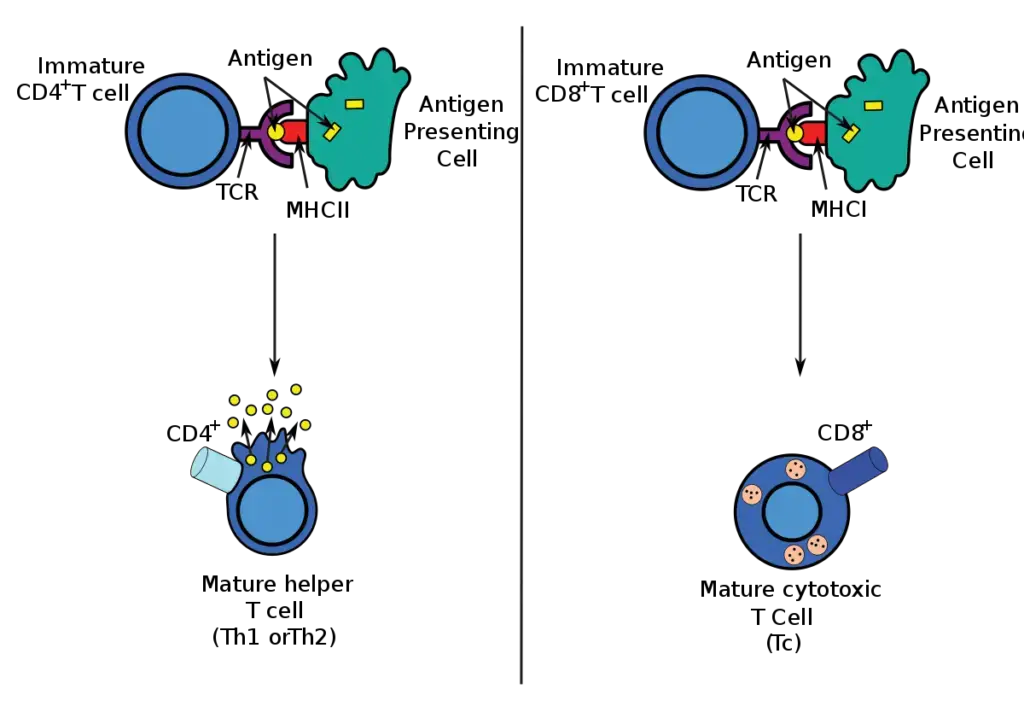
The presented antigen is recognized by T lymphocytes through T cell receptor (TCR). After this interaction, immature T cells are activated. They may develop into cytotoxic T cells or helper T cells.
Cytotoxic T cells destroy infected cells and tumour cells. Helper T cells help in activation of other immune cells. They also produce signals which control the immune response.
There are mainly two types of APCs. These are professional APCs and non-professional APCs.
Professional APCs include dendritic cells, macrophages and B cells. These cells express MHC class II molecule. They can activate naive T cells by giving antigen signal, co-stimulatory signal and cytokine signal.
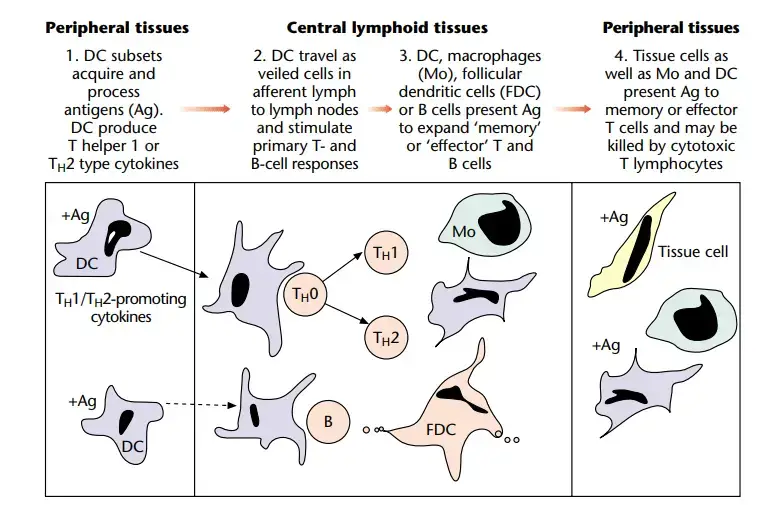
Dendritic cells are the most effective professional APCs. They capture antigen from tissue and migrate to lymph nodes. In lymph node, they present the antigen to naive T cells.
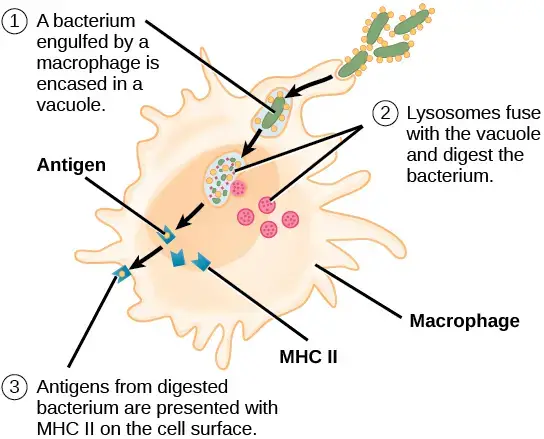
Macrophages engulf microbes and foreign particles by phagocytosis. Then they process the antigen and present it with MHC class II. They also produce cytokines during inflammation.
B cells bind specific antigen by surface immunoglobulin. Then they process the antigen and present it to helper T cells. This helps in antibody production.
Non-professional APCs include almost all nucleated cells of the body. They usually express MHC class I molecule. These cells present endogenous antigens, which are formed from proteins present inside the cell.
During viral infection or cancerous change, the abnormal cell presents antigen with MHC class I. This antigen is recognized by cytotoxic T cells. Then the infected or abnormal cell is destroyed.
Antigen Presenting Cells (APCs) are immune cells which capture, process and present foreign antigens on their surface with Major Histocompatibility Complex (MHC) molecules. It is used to activate T lymphocytes and start the adaptive immune response.
Basic Characteristics of Antigen Presenting Cells
- Antigen Presenting Cells (APCs) capture the foreign antigens and process them inside the cell. Then the antigenic peptide fragments are displayed on the cell surface with Major Histocompatibility Complex (MHC) proteins.
- APCs interact directly with T cells through T cell receptor (TCR). This interaction is important for activation of adaptive immune response.
- Professional APCs can give three important signals to naive T cells. These are antigen-MHC complex, co-stimulatory signal and cytokine signal.
- Professional APCs include dendritic cells, macrophages and B cells. These cells express MHC class II molecules and also have co-stimulatory molecules.
- Professional APCs also have pattern recognition receptors (PRRs). These receptors help to recognize microbial products and foreign particles.
- Non-professional APCs include almost all nucleated cells of the body. They mostly express MHC class I molecules.
- Non-professional APCs present endogenous antigen. These antigens are formed from proteins present inside the cell.
- The MHC class I antigen presentation helps cytotoxic T cells to identify infected cells and cancerous cells. Then these abnormal cells are destroyed.
- APCs take antigen inside the cell by different mechanisms. Macrophages and dendritic cells take antigen by phagocytosis, while B cells take antigen by receptor mediated endocytosis.
- After capturing pathogen, dendritic cells become mature. In this stage, they increase MHC molecules and co-stimulatory molecules on their surface.
- Mature dendritic cells migrate to lymph nodes. In lymph node, they search matching T cells and activate them by antigen presentation.
- APCs are important cells for starting immune reaction. They connect antigen recognition with T cell activation.
Role of APCs in the Immune System
- Pathogen capture – Antigen Presenting Cells (APCs) detect foreign antigens like bacteria, viruses and tumour cells. They engulf them by phagocytosis or endocytosis and break them into small peptide pieces inside the cell.
- Antigen display – The processed antigen pieces are brought on the surface of APCs. These are attached with Major Histocompatibility Complex (MHC) molecule and shown to the immune cells.
- T cell activation – Professional APCs go to lymph nodes and present the antigen to naive T cells. They give antigen signal, co-stimulatory signal and cytokine signal which is needed for activation.
- T cell differentiation – APCs release polarizing cytokines. These cytokines help the T cells to change into different types such as Th1, Th2 and Th17 cells.
- Cytotoxic defence – Some APCs mainly dendritic cells can show extracellular antigen on MHC class I molecule. This is called cross-presentation and it activates CD8+ cytotoxic T cells.
- Killing infected cells – The activated CD8+ T cells identify virus infected cells and cancerous cells. These cells are then killed by cytotoxic action.
- Antibody response – Follicular dendritic cells and subcapsular sinus macrophages hold the intact antigen. They show these antigen to B cells in lymph node and help in antibody production.
- Immune tolerance – APCs also present self-antigens without danger signal. This makes T cells inactive or forms regulatory T cells, so autoimmune reaction is prevented.
Types of Antigen Presenting Cells
1. Professional APCs
These are the most active antigen presenting cells. They express MHC class II molecule and can activate naive T cells.
- Dendritic cells – Dendritic cells (DCs) are the most effective APCs. They capture antigen from tissue and present it to naive T cells.
- Macrophages – Macrophages are phagocytic cells. They engulf pathogens and cell debris, then process the antigen and present it to helper T cells.
- B cells – B cells bind soluble antigen by B cell receptor (BCR). Then they process it and present it to helper T cells through MHC class II molecule.
2. Non-professional APCs
These cells usually express MHC class I molecule. They present endogenous antigen which are produced inside the cell.
- General nucleated cells – Almost all nucleated cells of body can act as non-professional APCs. Examples are fibroblasts and hepatocytes.
- Endothelial and epithelial cells – These are structural cells. During inflammation or viral infection, they may express MHC class II and present antigen to T cells.
3. Atypical APCs
These cells are not regular APCs. They show antigen only in some special immune conditions.
- Granulocytes – Neutrophils, eosinophils and basophils may present exogenous antigen through MHC class II molecule during inflammatory condition.
- Mast cells – Mast cells can increase MHC class II molecule in some inflammatory environment. Then they may act as antigen presenting cells.
- Type 2 innate lymphoid cells – ILC2s can express MHC class II during chronic inflammation. They activate memory CD4+ T cells in peripheral tissues.
- Lamina propria APCs – These are atypical APCs present in intestinal mucosa. They can start primary immune response and direct T cells for cytokine production.
Origin and Development of APCs
- Most of the professional Antigen Presenting Cells (APCs) are originated from hematopoietic stem cells present in the bone marrow. Dendritic cells develop from myeloid progenitor cells and B cells develop from lymphoid progenitor cells.
- Macrophages are developed from circulating monocytes. These monocytes are also formed in bone marrow and then enter into blood circulation.
- All APC like cells are not formed from bone marrow. Follicular dendritic cells (FDCs) are non-hematopoietic stromal cells and they are developed from mesenchymal origin.
- The precursor cells such as monocytes circulate in the blood before entering into peripheral tissues. After migration into tissue, they differentiate into tissue APCs.
- Immature APCs, mainly dendritic cells, remain in tissues and monitor the surrounding environment. They take foreign antigen by phagocytosis or pinocytosis.
- When immature APCs meet pathogen or danger signal, they recognize it by pattern recognition receptors (PRRs). These receptors identify pathogen associated molecular patterns (PAMPs) present on microbes.
- After antigen recognition, the antigen is internalized into the APC. This starts the maturation process of the antigen presenting cell.
- During maturation, APCs lose most of their ability to engulf new pathogens. They become more active for antigen presentation.
- Mature APCs increase the expression of Major Histocompatibility Complex (MHC) molecules on their surface. They also increase co-stimulatory molecules like CD80, CD86 and CD40.
- Activated APCs, mainly dendritic cells, leave the peripheral tissue. They move through lymphatic vessels with the help of chemokine receptor CCR7.
- The maturing APCs enter into regional draining lymph nodes. They reach the T cell rich area of the lymph node.
- In the lymph node, APCs become fully mature professional APCs. They present processed antigen to naive T cells and start adaptive immune response.

Antigen Processing by APCs
1. Endogenous pathway (MHC class I)
- In this pathway, the antigen is formed inside the cell. These antigens may be viral proteins or abnormal self proteins present in cytosol.
- The cytosolic proteins are first broken into small peptide fragments by a multi-enzyme complex called proteasome.
- The formed peptide fragments are transported from cytosol into Endoplasmic Reticulum (ER). This transport is done by TAP (Transporter associated with Antigen Processing) proteins.
- Inside the ER, the peptides are trimmed into proper size by enzymes like ERAP. Usually the size becomes about 8 to 10 amino acids.
- The trimmed peptide is loaded into newly formed MHC class I molecule. This loading is helped by peptide loading complex and chaperone proteins like tapasin, calreticulin and ERp57.
- After stable binding, the peptide-MHC class I complex leaves the ER. It passes through Golgi apparatus and then reaches the plasma membrane.
- On the cell surface, this peptide-MHC class I complex is presented to CD8+ cytotoxic T cells. Then the infected or abnormal cell can be recognized.
2. Exogenous pathway (MHC class II)
- In this pathway, the antigen comes from outside the cell. These may be bacterial proteins, foreign proteins or other extracellular antigens.
- Professional APCs take the external antigen by phagocytosis or receptor mediated endocytosis. The antigen becomes enclosed in vesicles called endosome or phagosome.
- These vesicles fuse with lysosomes. Inside this acidic vesicle, proteolytic enzymes like cathepsins break the antigen into small peptide fragments.
- At the same time, MHC class II molecule is formed in the ER. Its peptide binding groove is blocked by invariant chain (Ii), so internal cell proteins cannot bind with it.
- The MHC class II-invariant chain complex moves from ER and Golgi apparatus to the endosomal compartment. This compartment already contains digested foreign peptides.
- In the endosome, the invariant chain is degraded. A small part called CLIP remains attached in the binding groove of MHC class II molecule.
- HLA-DM removes the CLIP from the groove. Then it helps in loading of suitable foreign peptide into the MHC class II molecule.
- The peptide-MHC class II complex is then transported to the cell surface. It is presented to CD4+ helper T cells.
3. Cross-presentation pathway
- In some condition, professional APCs, mainly dendritic cells, take antigen from outside the cell but present it with MHC class I molecule.
- In cytosolic route, the internalized antigen escapes from endosome into cytosol. Then it is degraded by proteasome.
- The peptide fragments are transported into ER by TAP proteins. Then they are loaded on MHC class I molecule.
- In vacuolar route, the antigen does not enter cytosol. It is degraded inside endolysosome by cathepsins.
- In this route, the peptide is loaded directly on MHC class I molecule within the vesicle. Here cytosol, proteasome and TAP are not used.
- The peptide-MHC class I complex then reaches the cell surface. It activates CD8+ T cells against virus infected cells or tumour cells.
Antigen Presentation Mechanism
- After antigen processing, the small peptide fragments are carried to the cell membrane of Antigen Presenting Cells (APCs). These peptides are placed in the binding groove of Major Histocompatibility Complex (MHC) molecules.
- The peptide-MHC complex is displayed on the surface of APC. This makes the antigen visible for T lymphocytes.
- A naive T cell comes in contact with the APC. Its T cell receptor (TCR) binds with the specific peptide-MHC complex.
- This first binding is called signal 1. It gives the antigen specific signal to the T cell.
- The binding between APC and T cell is supported by co-receptors. CD4 co-receptor binds with MHC class II and CD8 co-receptor binds with MHC class I.
- Other adhesion molecules also help to make the contact strong. Molecules like ICAM-1 and CD58 help in holding the APC and T cell together.
- After this, APC gives the second signal. This is called co-stimulatory signal and it is needed to prevent the T cell from becoming inactive.
- The co-stimulatory molecules CD80 (B7.1) and CD86 (B7.2) present on APC bind with CD28 receptor present on T cell. This helps in survival and multiplication of the T cell.
- APC also releases cytokines into the contact area between APC and T cell. This is called signal 3.
- These cytokines decide the final type of T cell response. For example, IL-12 helps in formation of Th1 cells and IL-4 helps in formation of Th2 cells.
- After receiving all three signals, the T cell becomes fully activated. It starts rapid multiplication which is called clonal expansion.
- The activated T cells then leave the lymphoid organ. They move towards the site of infection or inflammation and perform their immune function.
- In another pathway, Follicular Dendritic Cells (FDCs) and subcapsular sinus macrophages hold intact antigen. They do not break the antigen completely.
- These intact antigens are presented directly to B cells in lymph node. This helps in B cell activation, germinal centre formation and production of high affinity antibodies.
Major Histocompatibility Complex (MHC) and APCs
- MHC is a molecule present on the surface of cell. It is used for holding the antigen peptide and showing it to T cells.
- In APCs, antigen is first processed into small peptide. Then the peptide is attached with MHC molecule on the cell surface.
- There are two main classes of MHC. These are MHC class I and MHC class II.
- MHC class I is present on almost all nucleated cells. It shows the antigen which is produced inside the cell.
- MHC class I is made up of one alpha heavy chain and one beta-2 microglobulin. It presents antigen to CD8+ cytotoxic T cells.
- The groove of MHC class I is closed type. So it binds short peptide, generally 8 to 10 amino acids.
- MHC class II is present mainly on professional APCs. These cells are dendritic cells, macrophages and B cells.
- MHC class II is made up of alpha chain and beta chain. It presents outside antigen to CD4+ helper T cells.
- The groove of MHC class II is open type. So longer peptide can bind in it, usually 12 to 24 amino acids.
- In MHC class I pathway, the protein inside the cell is degraded by proteasome. The peptide is then carried into Endoplasmic Reticulum (ER) by TAP protein.
- In the ER, the peptide is loaded on MHC class I molecule. Then this complex passes through Golgi body and comes on the cell surface.
- In MHC class II pathway, the outside antigen is taken inside the APC by endocytosis or phagocytosis. The antigen is broken in endosome.
- MHC class II is formed in ER. Its groove is blocked by invariant chain, so other internal peptide cannot bind.
- Later the invariant chain is degraded and CLIP remains in the groove. HLA-DM removes CLIP and helps in loading of antigen peptide.
- The peptide-MHC complex is recognized by T cell receptor (TCR). This is the first signal for activation of T cell.
- Some dendritic cells can present outside antigen with MHC class I also. This is called cross-presentation.
- In human, MHC is called Human Leukocyte Antigen (HLA) system. It is present on chromosome 6.
- HLA genes are many in number. Some examples are HLA-A, HLA-B, HLA-C, HLA-DR, HLA-DP and HLA-DQ.
Interaction Between APCs and T Cells
- After taking the foreign antigen, professional APCs such as dendritic cells process it inside the cell. Then they move through lymphatic vessels and reach lymph node.
- In lymph node, the APC comes in contact with naive T cells. Here the antigen is already present on the surface of APC with MHC molecule.
- The T cell receptor (TCR) of T cell binds with the specific peptide-MHC complex. This is the first signal and it is called antigen recognition.
- The binding is supported by CD4 or CD8 co-receptor of the T cell. CD4 binds with MHC class II and CD8 binds with MHC class I.
- Some adhesion molecules also help to hold both cells together. ICAM-1 and CD58 make the contact more strong between APC and T cell.
- This close contact between APC and T cell is called immunological synapse. In this area, different signals are passed from APC to T cell.
- After antigen recognition, the APC gives second signal. This is co-stimulatory signal and it is not antigen specific.
- The CD80 (B7.1) and CD86 (B7.2) molecules of APC bind with CD28 receptor of T cell. This signal helps in survival and proliferation of T cell.
- If this second signal is absent, the T cell may become inactive. This inactive condition is called anergy, or the cell may die by apoptosis.
- Then the APC gives third signal by releasing cytokines. These cytokines are released near the immunological synapse.
- The cytokines decide the type of T cell response. IL-12, IL-4 and IL-6 can direct the T cell to form different effector cells.
- The activated T cell may form Th1, Th2 or Th17 cells according to cytokine signal and type of pathogen.
- After getting all three signals, the T cell becomes fully activated. It starts rapid multiplication and forms many antigen specific T cells.
- These effector T cells then leave the lymph node. They move to the site of infection or inflammation and perform their immune function.
Co-stimulatory Molecules in Antigen Presentation
1. Immunoglobulin superfamily
- CD28 – CD28 is the main co-stimulatory receptor present on T cells. It binds with CD80 (B7.1) and CD86 (B7.2) present on activated APCs. This helps in T cell survival, proliferation and production of IL-2.
- ICOS – ICOS (CD278) is expressed on T cells after the first activation. It binds with ICOS-L (B7-H2/CD275) on APCs. It is used in formation of T follicular helper (Tfh) cells, immune memory and survival of regulatory T cells (Treg).
2. Tumor Necrosis Factor Receptor Superfamily
- CD40 and CD40L – CD40 is present on professional APCs like B cells, dendritic cells and macrophages. It binds with CD40L (CD154) present on activated helper T cells. This reaction activates the APC more and increases B7 molecules.
- B cell help – CD40-CD40L interaction is very important for B cells. It helps in isotype switching and affinity maturation of antibody.
- 4-1BB – 4-1BB (CD137) is present on T cells after activation. It binds with 4-1BBL on APCs. It supports survival of CD8+ T cells and helps in long lasting memory cell formation.
- OX40 – OX40 (CD134) is another receptor present on activated T cells. It binds with OX40L on APCs. It prevents death of T cells and helps in Th2 or Th17 type response.
- CD27 – CD27 is present on naive T cells. It binds with CD70 on activated APCs. This interaction helps in early T cell proliferation and Th1 type response.
3. Co-inhibitory molecules
- CTLA-4 – CTLA-4 (CD152) is increased on T cells after activation. It binds with CD80 and CD86 on APCs with more affinity than CD28. It stops excess T cell activation and prevents autoimmune over reaction.
- PD-1 – PD-1 (CD279) is an inhibitory receptor present on T cells. It binds with PD-L1 (CD274) and PD-L2 (CD273) present on APCs. This decreases too much T cell activity and helps in tissue tolerance.
4. B cell specific co-stimulation
- CR2 – Complement receptor 2 (CR2/CD21) is used when B cells act as APCs. It binds with complement fragments like iC3b and C3d attached with microbial surface.
- B cell coreceptor complex – CR2 works with CD19 and CD81 and forms B cell coreceptor complex. This makes the B cell more sensitive to the specific antigen and helps in strong B cell activation.
Functions of APCs in Adaptive Immunity
- Antigen capture and presentation – Antigen Presenting Cells (APCs) are used to capture foreign antigens from bacteria, viruses or other pathogen. These antigens are processed into small peptide fragments and then shown on cell surface with Major Histocompatibility Complex (MHC) molecule.
- Naive T cell activation – Professional APCs present antigen to naive T cells. The antigen-MHC complex gives first signal and CD80 or CD86 gives co-stimulatory signal, which is required for proper activation and multiplication of T cells.
- T cell differentiation – APCs produce polarizing cytokines. These cytokines act as third signal and help the activated helper T cells to change into Th1, Th2 or Th17 cells.
- Cytotoxic defence – Some APCs, mainly dendritic cells, present outside antigen with MHC class I by cross-presentation. This activates CD8+ cytotoxic T cells which kill virus infected cell and cancerous cell.
- Antibody production – Follicular dendritic cells (FDCs) and subcapsular sinus macrophages hold intact antigen in lymph node. These antigen are shown to B cells and helps in B cell activation, mutation and high affinity antibody formation.
- Immune tolerance – APCs can also present self-antigen without danger signal. In this condition, T cells become inactive or regulatory T cells (Tregs) are formed, and autoimmune reaction is prevented.
Clinical Significance of Antigen Presenting Cells
- Cancer vaccine – Dendritic cells (DCs) are important in cancer vaccine. Patient monocytes are taken and changed into DCs in laboratory. Then tumour antigen is loaded on them and they are given back to patient to activate anti-tumour T cells.
- Sipuleucel-T – Sipuleucel-T is a dendritic cell based vaccine. It is used in metastatic castration-resistant prostate cancer. It helps immune system to attack prostate tumour cells.
- Combination therapy – APC therapy gives better effect when used with chemotherapy, radiotherapy or checkpoint inhibitor. Chemotherapy and radiotherapy kill tumour cells and release tumour antigen. Anti-PD-1 and anti-CTLA-4 stop the blocking of activated T cells.
- Autoimmune diseases – Tolerogenic dendritic cells (tDCs) are used to suppress autoimmune response. They are made from patient monocytes by using vitamin D3, dexamethasone and specific autoantigen. These cells suppress autoreactive T cells and increase regulatory T cells (Tregs).
- Immune tolerance therapy – tDCs are studied in Type 1 Diabetes, Rheumatoid Arthritis, Multiple Sclerosis and Crohn’s Disease. It is used for bringing back tolerance against own body antigen.
- Organ transplantation – APCs present antigen with Major Histocompatibility Complex (MHC) molecule. In human it is called Human Leukocyte Antigen (HLA) system. This is important in graft acceptance and rejection.
- HLA matching – HLA molecules are different in different person. If donor and recipient HLA is not matched, the graft is recognized as foreign by immune system. Then transplant rejection may occur.
- Artificial APCs – Artificial APCs (aAPCs) are made by using synthetic cells or nanoparticles. They carry MHC-peptide complex and co-stimulatory signals. They are used for increasing tumour specific T cells and CAR-T cells.
- Immune monitoring – APCs are useful for knowing the immune response in patient. The number, maturity and migration of dendritic cells can show how the vaccine or therapy is working.
- Clinical biomarker – Dendritic cell movement to lymph node is used as a marker in some cancer vaccine studies. Good migration of DCs may indicate better immune activation and better treatment response.
Applications of APCs in Immunotherapy and Vaccines
- DC cancer vaccine – Dendritic cells (DCs) are used for making cancer vaccine. Patient monocytes are taken and cultured into DCs. Then tumour antigen, tumour lysate or neoantigen is loaded on them and again given to patient for activation of anti-tumour T cells.
- Sipuleucel-T – Sipuleucel-T is a DC based cancer vaccine. It is used in metastatic castration-resistant prostate cancer. It helps the immune system to recognize and attack prostate tumour cells.
- Tolerogenic DCs – Tolerogenic dendritic cells (tDCs) are used in autoimmune diseases. They are prepared outside the body by using vitamin D3, dexamethasone and specific autoantigen. These cells increase regulatory T cells (Tregs) and help to restore self tolerance.
- Autoimmune therapy – tDCs are tested in diseases like Type 1 Diabetes, Rheumatoid Arthritis, Multiple Sclerosis and Crohn’s Disease. It is used to reduce autoreactive T cells against own body tissues.
- Artificial APCs – Artificial APCs (aAPCs) are made by engineered cells or nanoparticles. They are coated with peptide-MHC complex and co-stimulatory signals. These are used for expanding tumour specific T cells and CAR T cells.
- CAR T cell improvement – The co-stimulatory property of APCs is used in CAR T cell design. Domains like ICOS and OX40 are added in CAR structure to increase cytotoxicity, memory formation and long survival of T cells.
- Checkpoint inhibitor combination – DC vaccines are used with immune checkpoint inhibitors like anti-PD-1 and anti-CTLA-4. The vaccine makes tumour specific T cells and checkpoint inhibitor removes the blocking signal from these T cells.
- Chemo and radiotherapy combination – DC vaccines are also used with chemotherapy or radiotherapy. These treatments kill tumour cells and release more tumour antigen. They also increase MHC class I expression and decrease suppressor cells like Tregs and MDSCs.
- Adoptive cell therapy – Dendritic cells are used with Cytokine-Induced Killer (CIK) cells or Natural Killer T (NKT) cells. The interaction between these cells increases cytotoxic action against solid tumour.
- Leukemia derived DCs – In myeloid leukemia, leukemic blasts can be changed into leukemia-derived dendritic cells. These cells present patient specific leukemia antigen and help to start anti-leukemia immune response.
- Exosome vaccine – Exosomes from plasmacytoid dendritic cells (pDCexos) are used as vaccine carrier. They transfer tumour antigen to host DCs and help in cross-priming of CD8+ cytotoxic T cells.
- Vaccine site preconditioning – Before giving DC vaccine, the injection site may be preconditioned with tetanus/diphtheria toxoid. This creates local inflammation and CCL3 chemokine release, which helps more DCs to migrate to lymph nodes.
- Direct APC activator – Some molecules directly activate APCs and act like adjuvant. IMP321 is an example, which is tested for increasing immune response against metastatic cancers like melanoma and breast cancer.
References
- Antigen presentation to B cells – PMC – NIH. (n.d.).
- Eiz-Vesper, B., & Schmetzer, H. M. (2020). Antigen-presenting cells: Potential of proven und new players in immune therapies. Transfusion Medicine and Hemotherapy, 47(6), 429–431.
- Wikipedia contributors. (2026, April 9). Antigen-presenting cell. In Wikipedia, The Free Encyclopedia.
- COSTIMULATION SIGNALS FOR MEMORY CD8+ T CELLS DURING VIRAL INFECTIONS. (n.d.).
- Heesters, B. A., van Megesen, K., Tomris, I., de Vries, R. P., Magri, G., & Spits, H. (2021). Characterization of human FDCs reveals regulation of T cells and antigen presentation to B cells. Journal of Experimental Medicine, 218(10), e20210790.
- Clinical Tolerogenic Dendritic Cells: Exploring Therapeutic Impact on Human Autoimmune Disease – PMC. (n.d.).
- Wikipedia contributors. (2025, December 22). Co-stimulation. In Wikipedia, The Free Encyclopedia.
- Thermo Fisher Scientific. (n.d.). Costimulatory and inhibitory interactions control T cell response.
- DC-Based Vaccines for Cancer Immunotherapy – PMC – NIH. (n.d.).
- Nava, S., Lisini, D., Frigerio, S., & Bersano, A. (2021). Dendritic cells and cancer immunotherapy: The adjuvant effect. International Journal of Molecular Sciences, 22(22), 12339.
- Hato, L., Vizcay, A., Eguren, I., Pérez-Gracia, J. L., Rodríguez, J., Gállego Pérez-Larraya, J., Sarobe, P., Inogés, S., López Díaz de Cerio, A., & Santisteban, M. (2024). Dendritic cells in cancer immunology and immunotherapy. Cancers, 16(5), 981.
- Editing Antigen Presentation: Antigen Transfer between Human B Lymphocytes and Macrophages Mediated by Class A Scavenger Receptors – PMC. (n.d.).
- Emerging strategies for treating autoimmune disease with genetically modified dendritic cells – PMC. (n.d.).
- Ex Vivo-Generated Tolerogenic Dendritic Cells: Hope for a Definitive Therapy of Autoimmune Diseases – PMC. (n.d.).
- Follicular Dendritic Cells Modulate Germinal Center B Cell Diversity through FcγRIIB – PMC. (n.d.).
- Kamal, S., & Lappin, S. L. (2023). Genetics, histocompatibility antigen. In StatPearls. StatPearls Publishing.
- How Follicular Dendritic Cells Shape the B-Cell Antigenome – PMC – NIH. (n.d.).
- How do follicular dendritic cells interact intimately with B cells in the germinal centre? – PMC. (n.d.).
- Moreno-Cortes, E., Franco-Fuquen, P., Garcia-Robledo, J. E., Forero, J., Booth, N., & Castro, J. E. (2023). ICOS and OX40 tandem co-stimulation enhances CAR T-cell cytotoxicity and promotes T-cell persistence phenotype. Frontiers in Oncology, 13, 1200914.
- Inflammatory Cytokines as a Third Signal for T Cell Activation – PMC. (n.d.).
- Wikipedia contributors. (2026, January 6). Lymph node. In Wikipedia, The Free Encyclopedia.
- MHC class II of different non-professional antigen-presenting cells mediate multiple effects of crosstalk with CD4+T cells in lung diseases – PMC. (n.d.).
- Cruz-Tapias, P., Castiblanco, J., & Anaya, J. M. (2013). Major histocompatibility complex: Antigen processing and presentation. In J. M. Anaya, Y. Shoenfeld, A. Rojas-Villarraga, et al. (Eds.), Autoimmunity: From Bench to Bedside. El Rosario University Press.
- Mechanisms of Costimulation – PMC – NIH. (n.d.).
- Molecular and cellular architecture of antigen presentation: Genetic polymorphisms, synaptic biophysics, and therapeutic modulation. (n.d.).
- Pathways of Antigen Processing – PMC. (n.d.).
- Present Yourself! By MHC Class I and MHC Class II Molecules – PMC. (n.d.).
- Professional and non-professional antigen-presenting cells in the porcine small intestine – PMC. (n.d.).
- Schuijs, M. J., Hammad, H., & Lambrecht, B. N. (2019). Professional and “amateur” antigen-presenting cells in type 2 immunity. Trends in Immunology, 40(1), 22–34.
- Cavanagh, M., & Gwyer Findlay, E. (2022). T-cell activation. BiteSized Immunology. British Society for Immunology.
- Harryvan, T. J., de Lange, S., Hawinkels, L. J. A. C., & Verdegaal, E. M. E. (2021). The ABCs of antigen presentation by stromal non-professional antigen-presenting cells. International Journal of Molecular Sciences, 23(1), 137.
- Xu, W., & Banchereau, J. (2014). The antigen presenting cells instruct plasma cell differentiation. Frontiers in Immunology, 4, 504.
- Janeway, C. A., Jr., Travers, P., Walport, M., & Shlomchik, M. J. (2001). The major histocompatibility complex and its functions. In Immunobiology: The Immune System in Health and Disease (5th ed.). Garland Science.
- Tolerogenic Dendritic Cell-Based Approaches in Autoimmunity – PMC – NIH. (n.d.).
- Tolerogenic Dendritic Cells and T-Regulatory Cells at the Clinical Trials Crossroad for the Treatment of Autoimmune Disease; Emphasis on Type 1 Diabetes Therapy – PMC. (n.d.).
- Trial watch: Dendritic cell-based anticancer immunotherapy – PMC – NIH. (n.d.).