

Complement system is an ancient part of innate immune system. It acts as first line defence of body against infections. It is present in blood and tissue fluid.
It is made up of about 50 plasma and membrane bound proteins. These proteins remain mostly inactive form. After getting proper signal, they become activated one after another in enzymatic cascade.
The activated complement system helps in killing of pathogens. It causes opsonization, where pathogens are coated by complement proteins. So the pathogen can be easily recognized and engulfed by phagocytic cells.
It also produces inflammatory fragments. These fragments attract immune cells at the site of infection. It helps in removal of dead cells, damaged cells and harmful immune complexes.
The final effect is formation of Membrane Attack Complex (MAC). It forms pore on target cell membrane. Water enters into the cell and cell undergoes lysis.
There are three main pathways of complement activation. These are classical pathway, lectin pathway and alternative pathway. All these pathways finally help in destruction of microbes and protection of the body.
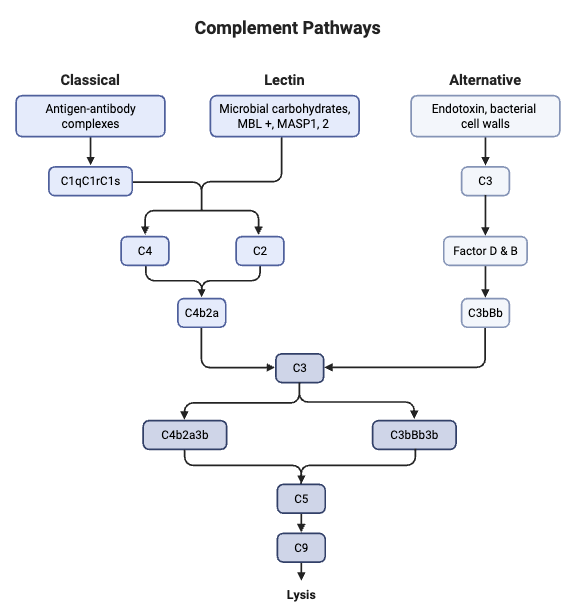
Overview of Complement Activation Pathways
Complement activation pathways are the different routes by which complement system becomes active. There are three main pathways. These are classical pathway, lectin pathway and alternative pathway.
Classical pathway is activated by antigen-antibody complex. The antibodies are mainly IgG and IgM. After antibody binds with foreign antigen, the complement reaction starts.
Lectin pathway is activated without antibody. It starts when special proteins like MBL and ficolins bind with carbohydrate pattern present on microbial surface. These patterns are found on bacteria, fungi and some viruses.
Alternative pathway is active at low level all time. It starts by spontaneous hydrolysis of C3 protein. This is called C3 tick-over. It does not need antibody or fixed recognition molecule.
All the three pathways start in different way. But they finally meet at activation of C3 protein. C3 is cleaved and then complement cascade becomes stronger.
After C3 cleavage, the pathway helps in opsonization, inflammation and formation of Membrane Attack Complex (MAC). Thus microbes are destroyed and body is protected from infection.
What is Alternative pathway?
Alternative pathway is one of the pathway of complement system which starts without antibody. It is activated by spontaneous C3 tick-over and forms C3bBb on microbial surface for complement amplification.
Alternative pathway is a pathway of complement system. It is a part of innate immunity. It works as continuous defence system against invading pathogens.
It does not need antibody for activation. It also does not need special recognition molecule like MBL or C1q. It starts automatically at low level in blood.
The pathway starts by spontaneous hydrolysis of C3 protein. This is called C3 tick-over. In this process C3 reacts with water and forms C3(H₂O).
Then C3(H₂O) binds with Factor B. Factor D cleaves this bound Factor B and forms initial C3 convertase in fluid phase. This enzyme cleaves more C3 into C3a and C3b.
C3b becomes attached on microbial surface. Then more Factor B binds with C3b and again Factor D cleaves it. This forms surface bound C3 convertase (C3bBb).
Properdin (Factor P) stabilizes this C3 convertase. So the reaction continues for more time and more C3b is produced. This is called amplification loop.
Later C5 convertase is formed. It starts terminal pathway and formation of Membrane Attack Complex (MAC). MAC makes pore on pathogen membrane and causes lysis of the pathogen.
Alternative pathway was discovered by Louis Pillemer and his colleagues in 1954. It was first known as properdin pathway.
This discovery was not accepted easily at first. There was much controversy about this pathway. More than ten years of scientific study was needed for its proper acceptance.
The important feature of this pathway was its ability to activate by itself. It does not need antigen-antibody complex for starting. This made it different from the classical pathway.
Importance of Alternative Pathway
- First line defence – Alternative pathway works as early defence system. It remains active at low level in blood. So it gives immediate protection before antibody is formed.
- Continuous surveillance – It continuously checks foreign surface in the body. When C3b is deposited on pathogen surface, the pathway becomes more active. Thus it helps in quick response against microbes.
- Amplification of complement reaction – Alternative pathway is the main amplification pathway of complement system. It increases its own reaction and also increases classical pathway and lectin pathway reaction. Most of the downstream complement activation is increased by this pathway.
- Pathogen destruction – It helps in formation of Membrane Attack Complex (MAC). MAC forms pores on microbial membrane. Then water enters into the cell and pathogen undergoes lysis.
- Opsonization – This pathway produces large amount of C3b. C3b coats the pathogen surface. This is called opsonization.
- Phagocytosis – After coating by C3b, the pathogen becomes easy for phagocytic cells. Macrophages and neutrophils recognize it and engulf the microbe.
- Inflammation – During this pathway, C3a and C5a are formed. These are inflammatory mediators. They attract immune cells at the site of infection or injury.
- Clearance of dead cells – Alternative pathway also removes immune complexes, cell debris and apoptotic cells. It helps in cleaning of tissue and prevents continuous inflammation.
- Tissue repair – In tissue injury, it helps in tagging damaged cells for removal. After removal of damaged cells, healing becomes proper. It is important in repair of injured tissue.
- Cancer surveillance – Alternative pathway also helps in recognition of malignant cells. It takes part in immune surveillance and may help in removal of cancer cells.
Major Components of Alternative Pathway
- C3 – C3 is the central protein of complement system. It starts the alternative pathway by spontaneous hydrolysis. This forms C3(H₂O).
- C3b – C3b is formed after cleavage of C3. It attaches on microbial surface. It helps in formation of C3 convertase and also works as opsonin.
- Factor B – Factor B binds with C3(H₂O) or surface bound C3b. After binding, it becomes suitable for cleavage. It is needed for making active convertase complex.
- Factor D – Factor D is an enzyme of this pathway. It cleaves Factor B only when Factor B is bound with C3(H₂O) or C3b. This cleavage helps in formation of C3bBb.
- Properdin (Factor P) – Properdin is positive regulator of complement system. It binds with C3bBb complex. It stabilizes the complex and increases the activity of pathway.
- Factor H – Factor H is a soluble regulatory protein. It competes with Factor B for binding with C3b. Thus it prevents excess activation on host cells.
- Factor I – Factor I is a regulatory enzyme. It works with Factor H. It cleaves C3b into inactive iC3b and stops unwanted complement damage.
- Terminal components – C5, C6, C7, C8 and C9 are terminal components. They are common for all complement pathways. They form Membrane Attack Complex (MAC).
- Membrane Attack Complex (MAC) – MAC is formed by C5b-9. It makes pore on target cell membrane. Due to this pore, the target cell undergoes lysis.
Initiation of Alternative Pathway
Step 1
Alternative pathway begins by spontaneous hydrolysis of C3 protein. This occurs continuously at low level in blood. This process is called C3 tick-over.
Step 2
In this step, internal thioester bond of C3 reacts with water. After this reaction, C3 is changed into C3(H₂O). About small amount of circulating C3 undergoes this change.
Step 3
The formed C3(H₂O) exposes binding site for Factor B. Then Factor B binds with C3(H₂O). This forms C3(H₂O)B complex.
Step 4
Factor D then acts on the bound Factor B. Factor D is a serum protease. It cleaves Factor B into Ba and Bb.
Step 5
The Bb fragment remains attached with C3(H₂O). This forms C3(H₂O)Bb. It is the first fluid phase C3 convertase of alternative pathway.
Step 6
This C3 convertase cleaves more C3 molecules present in blood. C3 is broken into C3a and C3b. C3a goes into fluid phase and helps in inflammation.
Step 7
The C3b fragment becomes attached on nearby foreign surface. Mainly it attaches on microbial membrane. Then more Factor B binds with this surface bound C3b.
Step 8
Again Factor D cleaves bound Factor B. Ba is released and Bb remains attached. Thus surface bound C3 convertase (C3bBb) is formed.
Step 9
Properdin (Factor P) binds with C3bBb. It forms C3bBbP. This makes the enzyme more stable.
Step 10
Now the stabilized C3 convertase cleaves more and more C3. This makes a positive amplification loop. More C3b deposits on pathogen surface and the pathway moves toward pathogen destruction.
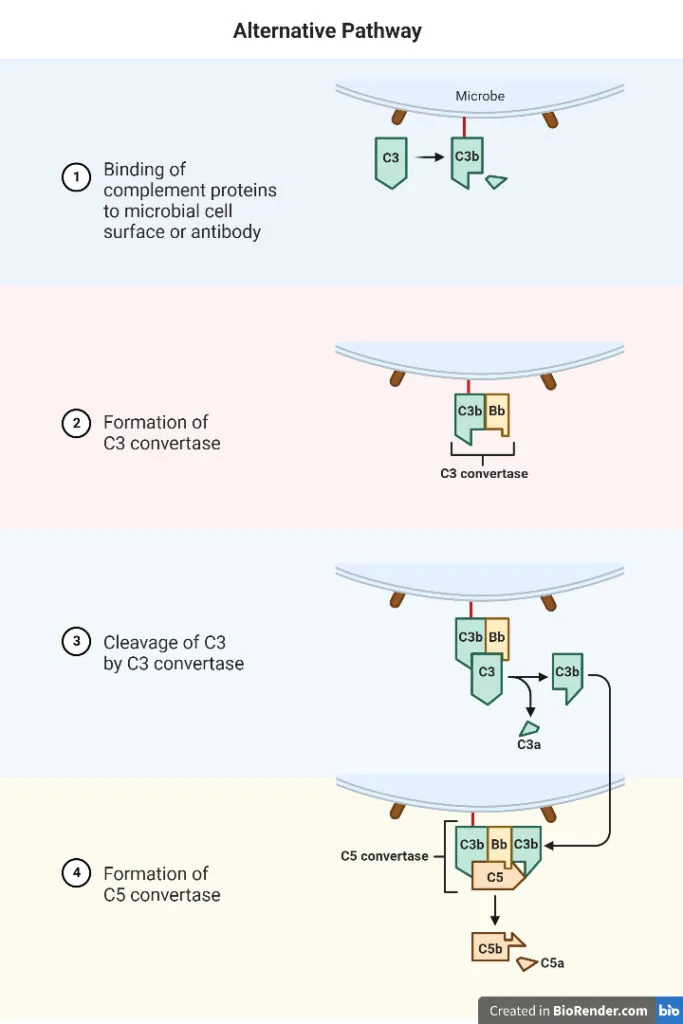
Formation of C3 Convertase in Alternative Pathway
Step 1
C3 protein undergoes spontaneous hydrolysis in blood. This occurs at low level continuously. This process is called C3 tick-over.
Step 2
In this process, internal thioester bond of C3 reacts with water. Then C3 changes into C3(H₂O). This is an altered form of C3.
Step 3
The formed C3(H₂O) binds with Factor B. This binding occurs in fluid phase. Thus C3(H₂O)B complex is formed.
Step 4
Factor D acts on this complex. It cleaves the bound Factor B into Ba and Bb. Ba is smaller fragment and it is released.
Step 5
The Bb fragment remains attached with C3(H₂O). This forms C3(H₂O)Bb. It is the first fluid phase C3 convertase of alternative pathway.
Step 6
This fluid phase C3 convertase cleaves more C3 molecules. C3 is split into C3a and C3b. C3a is released in fluid and C3b becomes reactive.
Step 7
The reactive C3b attaches on nearby target surface. It mainly attaches on microbial membrane. Then Factor B binds with surface attached C3b.
Step 8
Again Factor D cleaves the bound Factor B. Ba is released and Bb remains attached with C3b. Thus C3bBb is formed.
Step 9
C3bBb is the surface bound C3 convertase of alternative pathway. It is more important convertase in this pathway. It cleaves more C3 and forms more C3b.
Step 10
Properdin (Factor P) binds with C3bBb. It forms C3bBbP. Properdin stabilizes the convertase and prevents quick breakdown of it.
Step 11
The stable C3 convertase continues cleavage of C3. More C3b deposits on pathogen surface. This forms amplification loop and makes the complement reaction strong.
Formation of C5 Convertase and Membrane Attack Complex (MAC)
Step 1
The process starts when extra C3b binds with already formed C3 convertase. In alternative pathway, the C3 convertase is C3bBb. It may be stabilized by properdin.
Step 2
After binding of another C3b, the complex becomes C5 convertase. In alternative pathway it is written as C3bBbC3b or (C3b)₂BbP.
Step 3
This C5 convertase cleaves C5 protein. C5 is split into C5a and C5b. C5a is released and acts as strong inflammatory molecule.
Step 4
C5b remains near the target surface. It starts the terminal part of complement cascade. This stage is not enzymatic like earlier steps.
Step 5
C5b first binds with C6. Then C7 also binds with it. Thus C5b-7 complex is formed.
Step 6
The C5b-7 complex becomes lipid loving. So it inserts into the lipid layer of pathogen cell membrane. This is the first attachment of terminal complex with membrane.
Step 7
Then C8 binds with this membrane attached complex. C8 enters deeper into the membrane. It makes the structure more fixed in the target membrane.
Step 8
After this, many C9 molecules are attached. About 10 to 18 C9 molecules bind and polymerize. They arrange in ring like form.
Step 9
The final complex is C5b-9. This is called Membrane Attack Complex (MAC). It is a pore forming complex of complement system.
Step 10
MAC makes a hole in the target cell membrane. Water and ions move through this pore. The osmotic balance is lost and the target cell undergoes lysis.
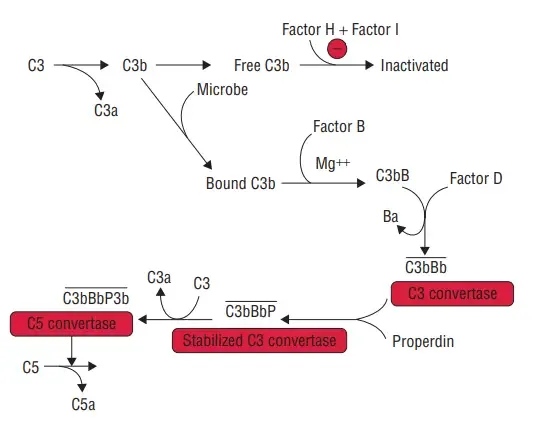
Stepwise Mechanism of Alternative Pathway
Step 1
Alternative pathway does not need antibody for its starting. It starts by spontaneous hydrolysis of C3 protein. This process is called C3 tick-over.
Step 2
In this step, internal thioester bond of C3 reacts with water. Then C3 changes into C3(H₂O). This occurs continuously at low level in blood.
Step 3
The formed C3(H₂O) binds with Factor B in fluid phase. After this binding, Factor B becomes suitable for cleavage.
Step 4
Factor D cleaves the bound Factor B. It forms two fragments, Ba and Bb. Ba is released away and Bb remains attached.
Step 5
C3(H₂O) with attached Bb forms C3(H₂O)Bb. This is the first fluid phase C3 convertase of alternative pathway.
Step 6
This C3 convertase cleaves more C3 molecules. C3 is broken into C3a and C3b. C3a works as inflammatory fragment and C3b works as opsonin.
Step 7
The newly formed C3b attaches with nearby foreign surface. It may attach on microbial membrane. This attachment occurs due to reactive thioester bond present in C3b.
Step 8
Surface attached C3b binds with more Factor B. Then Factor D again cleaves the bound Factor B. Ba is released and Bb remains attached with C3b.
Step 9
This forms C3bBb. It is the surface bound C3 convertase of alternative pathway. It is the main enzyme complex of this pathway.
Step 10
Properdin (Factor P) binds with C3bBb. It forms C3bBbP. Properdin stabilizes the enzyme and prevents its quick breakdown.
Step 11
The stabilized C3 convertase cleaves more and more C3. More C3b is deposited on the pathogen surface. This is called amplification loop.
Step 12
When extra C3b binds with C3 convertase, C5 convertase is formed. In alternative pathway it is C3bBbC3b or (C3b)₂BbP.
Step 13
C5 convertase cleaves C5 into C5a and C5b. C5a is a strong inflammatory molecule. C5b starts terminal complement pathway.
Step 14
C5b binds with C6, C7, C8 and many C9 molecules. These proteins form Membrane Attack Complex (MAC or C5b-9).
Step 15
MAC makes pore on the target cell membrane. Water and ions enter through this pore. The osmotic balance is disturbed and the target cell undergoes lysis.
Functions of Alternative Pathway in Innate Immunity
- Immediate immune defence – Alternative pathway works as first line defence in innate immunity. It remains active at low level all time. So it can act before formation of specific antibody.
- Continuous surveillance – It continuously checks the body fluid for foreign surface. When C3b is deposited on microbial surface, the pathway becomes active. Thus the pathogen is detected early.
- Amplification of complement – Alternative pathway acts as strong amplification loop. It increases its own activation. It also increases the complement reaction started by classical pathway and lectin pathway.
- Opsonization – It produces large amount of C3b. C3b coats the microbial surface. This coating is called opsonization.
- Phagocytosis – The C3b coated pathogen is easily recognized by macrophages and neutrophils. Then the pathogen is engulfed and destroyed inside the phagocytic cells.
- Direct pathogen lysis – It helps in formation of Membrane Attack Complex (MAC). MAC makes pore on pathogen membrane. Due to this, the pathogen undergoes lysis and dies.
- Inflammatory signalling – During this pathway C3a and C5a are formed. These are called anaphylatoxins. They attract immune cells at the site of infection.
- Clearance of immune complexes – C3b also binds with immune complexes. Then these complexes are recognized by complement receptors on phagocytes. Thus they are removed from the body.
- Cellular housekeeping – Alternative pathway helps in removal of cell debris and apoptotic cells. It keeps the tissue clean and prevents more tissue damage.
- Tissue repair – After removal of dead and damaged cells, tissue repair becomes proper. So this pathway helps in maintaining tissue integrity.
- Cancer immune surveillance – Alternative pathway also takes part in checking malignant cells. It may help in recognition and removal of cancer cells by immune system.
Regulation and Control of Alternative Pathway
Alternative pathway is active continuously at low level. So it needs proper control. Otherwise it may damage normal host cells and causes unnecessary inflammation.
- Soluble regulators – These regulators are present in plasma. They control the pathway in fluid phase and also near the surface.
- Complement Factor H (CFH) – Factor H is the main soluble regulator of alternative pathway. It competes with Factor B for binding with C3b. It also breaks the active C3 convertase (C3bBb). It works as cofactor for Factor I.
- Complement Factor I (CFI) – Factor I is a plasma serine protease. It cleaves C3b into inactive iC3b. For this action, it needs cofactors like Factor H, MCP or CR1.
- Factor H-like protein 1 (FHL-1) – FHL-1 is a small splice form of Factor H. It has decay accelerating activity and cofactor activity. It gives local tissue protection, mainly in some tissues like Bruch’s membrane of eye.
- Complement Factor H-related proteins (CFHRs) – CFHRs are a group of proteins from FHR-1 to FHR-5. They are similar to Factor H but lacks strong inhibitory part. They compete with Factor H and FHL-1 for binding with C3b. They mainly increase complement activation in controlled way.
- Membrane bound regulators – These proteins are present on host cell membrane. They protect body cells from complement attack.
- Decay-accelerating factor (DAF / CD55) – DAF is present on cell membrane. It removes Bb from C3bBb. So the C3 convertase is broken down and host cell is protected.
- Membrane cofactor protein (MCP / CD46) – MCP is a membrane glycoprotein. It acts as cofactor for Factor I. It helps in cleavage of surface bound C3b into inactive form.
- Complement receptor 1 (CR1 / CD35) – CR1 is found on erythrocytes and immune cells. It has two function. It breaks C3 convertase and also works as cofactor for Factor I.
- CD59 – CD59 controls terminal complement pathway. It binds with C5b-8 complex. It stops C9 binding and polymerization. So Membrane Attack Complex (MAC) is not formed on host cell.
- Thrombomodulin – Thrombomodulin is present on endothelial cell surface. It inactivates C3a and C5a. It also increases Factor I mediated inactivation of C3b.
Difference Between Classical, Lectin, and Alternative Pathways
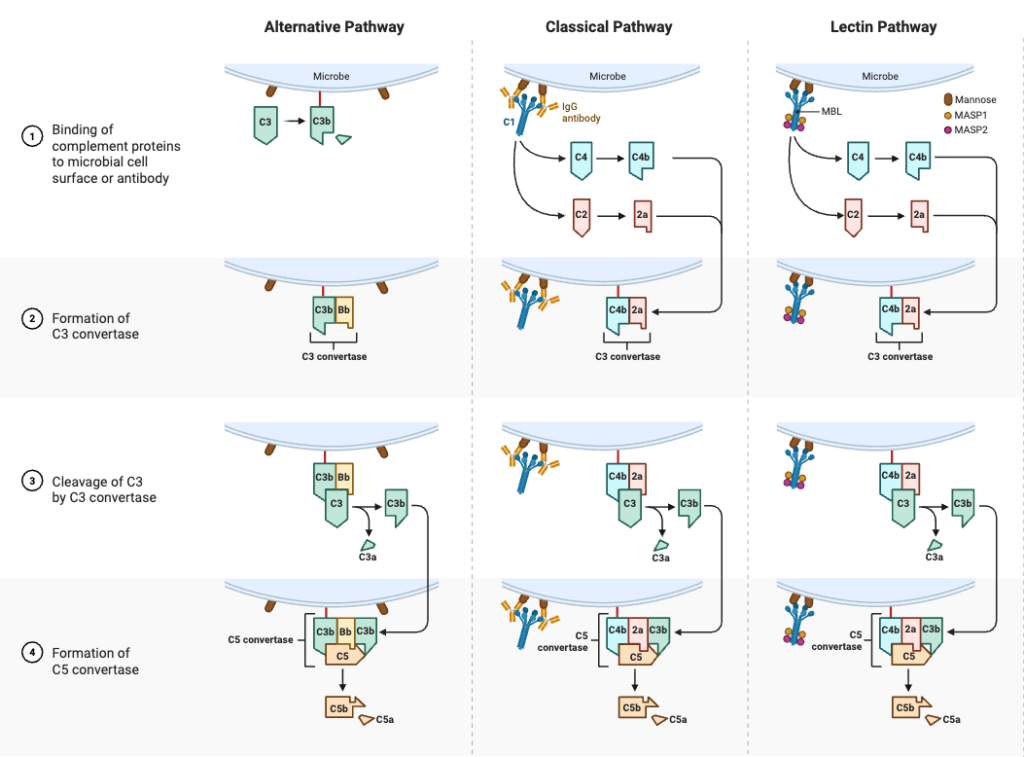
| Basis | Classical pathway | Lectin pathway | Alternative pathway |
|---|---|---|---|
| Initiation | It starts when antibody binds with antigen. The antibodies are mainly IgM and IgG. | It starts without antibody. It starts when MBL or ficolins binds with sugar pattern on microbes. | It starts automatically by C3 tick-over. In this process C3 reacts with water. |
| Main trigger | Antigen-antibody complex is the main trigger. C-reactive protein (CRP) may also activate it. | Carbohydrate pattern on microbial surface is the main trigger. | Spontaneous hydrolysis of C3 is the main trigger. |
| Recognition molecule | C1q recognizes the immune complex. | Mannose-binding lectin (MBL) and ficolins recognize microbial sugar groups. | No special recognition molecule is needed. C3b is deposited on foreign surface. |
| Unique components | It uses C1 complex. This includes C1q, C1r and C1s. It also uses C4 and C2. | It uses MBL, ficolins and MASP enzymes. Mainly MASP-1 and MASP-2. It also uses C4 and C2. | It does not use C1, C2 and C4. It uses Factor B, Factor D and properdin (Factor P). |
| Protease enzymes | C1r and C1s are the main enzymes. | MASP-1 and MASP-2 are the main enzymes. | Factor D is the main cleaving enzyme. |
| C3 convertase | It forms C4b2a. | It also forms C4b2a. | It forms C3bBb. |
| Nature of response | It is a targeted response. It usually starts after antibody formation. | It is also targeted response but antibody is not needed. It directly recognizes microbial surface. | It is continuous surveillance response. It remains active at low level. |
| Role in immunity | It links adaptive immunity with complement system. | It gives early innate defence by sugar recognition. | It gives immediate defence and also works as amplification loop. |
| Amplification | It can be amplified by alternative pathway after C3b formation. | It can also be amplified by alternative pathway. | It is the main amplification pathway of complement system. |
| Final effect | It causes opsonization, inflammation and MAC formation. | It causes opsonization, inflammation and MAC formation. | It also causes opsonization, inflammation and MAC formation. |
Clinical Significance of Alternative Pathway
- Atypical hemolytic uremic syndrome – Atypical hemolytic uremic syndrome (aHUS) is caused by uncontrolled alternative pathway activation. The activation occurs on host cell surface and damages endothelial cells. Small clots are formed in small vessels. This is called thrombotic microangiopathy. Kidney is mainly affected and acute kidney failure may occur.
- C3 glomerulopathy – C3 glomerulopathy (C3G) occurs due to excess activation of alternative pathway in fluid phase. Large amount of C3 fragments are deposited in glomeruli. This deposition causes inflammation in kidney filtering part. Slowly kidney damage increases.
- Paroxysmal nocturnal hemoglobinuria – Paroxysmal nocturnal hemoglobinuria (PNH) is a genetic disorder. Red blood cells do not have protective proteins like CD55 and CD59. So the red blood cells become sensitive to complement attack. Alternative pathway damages these cells. Hemolysis, anemia and thrombosis are seen.
- Age-related macular degeneration – Age-related macular degeneration (AMD) is related with defect in Complement Factor H. Due to this, alternative pathway is not controlled properly in eye. Continuous complement activation causes inflammation. Retinal pigment epithelium is damaged. Vision loss may occur.
- IgA nephropathy – In IgA nephropathy (IgAN), abnormal IgA deposits are formed in kidney. Alternative pathway amplifies the reaction against these deposits. More complement activation causes vascular lesion and crescent formation. Disease progression becomes more severe.
- Lupus nephritis – Lupus nephritis is mainly started by autoantibodies and classical pathway. But alternative pathway increases the kidney damage. It works as amplification loop. Severe flare of disease may be associated with it.
- Sepsis and SIRS – In severe bacterial infection, alternative pathway activation may become systemic. It is not limited only at the infected site. More inflammatory mediators are released. Capillary leakage and organ damage may occur.
- Ischemia-reperfusion injury – Ischemia-reperfusion injury (IRI) occurs when blood supply comes back after oxygen lack. It is seen in liver, kidney and other organs. Alternative pathway causes more inflammation and oxidative stress. Tissue damage and cell death occurs.
- Traumatic spinal cord injury – After spinal cord injury, alternative pathway becomes activated. It increases secondary inflammation in nervous tissue. Neuroinflammation, demyelination and tissue destruction occurs. So the injury becomes more severe.
- Cancer immune evasion – Some tumour cells use complement regulators for protection. They may express Factor H on their surface.
Factor H inactivates C3b. So tumour cells escape from complement mediated lysis and immune surveillance.
Inhibitors of Alternative Pathway
- Factor B inhibitors – These inhibitors block Factor B and prevent the formation of C3bBb convertase of alternative pathway.
- Iptacopan (Fabhalta / LNP023) – Iptacopan is an oral small molecule inhibitor of Factor B. It prevents formation of C3bBb convertase. It is used in paroxysmal nocturnal hemoglobinuria (PNH), IgA nephropathy (IgAN) and C3 glomerulopathy (C3G).
- Sefaxersen (IONIS-FB-LRx / RG6299) – Sefaxersen is given by subcutaneous route. It acts as antisense oligonucleotide or RNA interference agent. It reduces hepatic mRNA expression of Factor B.
- Ruxoprubart (NM8074) – Ruxoprubart is a monoclonal antibody. It binds with activated Bb fragment and not with normal Factor B. It blocks the amplification loop but keeps classical pathway preserved.
- HRS-5965, MY008211A and NTQ5082 – These are oral small molecule Factor B inhibitors. They are being studied in clinical trials, mainly for conditions like IgA nephropathy.
- Factor D inhibitors – These inhibitors act on Factor D. Factor D is needed for cleavage of Factor B and formation of alternative pathway C3 convertase.
- Danicopan (Voydeya / ACH-4471) – Danicopan is an oral small molecule inhibitor of Factor D. It is used with C5 inhibitors in PNH patients who have extravascular hemolysis.
- Vemircopan (ALXN2050) – Vemircopan is an oral Factor D inhibitor. It was studied for IgA nephropathy and lupus nephritis. Its development was discontinued in early 2025.
- BCX9930 – BCX9930 is an oral Factor D inhibitor. It was studied in clinical trials for treatment of PNH.
- Proximal C3 and C3b inhibitors – These inhibitors block C3 or C3b. They can block all complement pathways, but they directly stop the alternative pathway amplification loop.
- Pegcetacoplan (Empaveli / Syfovre) – Pegcetacoplan is a PEGylated cyclic peptide inhibitor. It binds with C3 and C3b. It prevents action of C3 convertase and formation of downstream products. It is used in PNH, geographic atrophy, C3G and primary immune-complex membranoproliferative glomerulonephritis (IC-MPGN).
- ARO-C3 and SGB-9768 – These are subcutaneous RNA interference therapeutics. They reduce hepatic synthesis of C3 and decrease circulating C3 level.
- Compstatin analogs (Cp20) – These are cyclic peptides. They bind with C3 and inhibit cleavage of C3.
- Properdin inhibitors – These inhibitors block properdin. Properdin is the only positive regulator of complement system and it stabilizes alternative pathway C3 convertase.
- NM-5072 and NM-3086 – These are monoclonal antibodies against properdin. They are present in clinical pipeline for PNH.
- Preclinical monoclonal antibodies (14E1, 6E11A4, 3A3E1) – These antibodies block properdin in experimental studies. They destabilize alternative pathway C3 convertase and prevent hemolysis and endothelial damage.
- MASP-3 inhibitors – These inhibitors act on MASP-3. MASP-3 activates pro-Factor D into mature Factor D in resting blood.
- Zaltenibart (OMS-906) – Zaltenibart is a humanized monoclonal antibody. It targets MASP-3. It is being studied in C3G, IC-MPGN and PNH.
- Engineered Factor H derivatives – These are recombinant regulators made from Factor H parts. They inhibit alternative pathway by using regulatory and surface binding domains.
- MiniFH / MidiFH – These are engineered small forms of natural Factor H. They contain important regulatory and surface binding regions. They show more strong inhibition of alternative pathway than native Factor H.
- KP104 – KP104 is a recombinant bifunctional fusion protein. It links Factor H regulatory domains with anti-C5 monoclonal antibody. It inhibits both alternative pathway and terminal pathway.
- TT30 – TT30 is a targeted fusion protein. It contains C3 fragment binding domains of complement receptor 2 (CR2) and regulatory domains of Factor H. It brings alternative pathway inhibition directly at the site of complement activation.
Deficiencies and Disorders Associated with Alternative Pathway
- Factor D deficiency – Factor D deficiency is a proximal defect of alternative pathway. Proper opsonization is reduced. MAC formation is also reduced. The patient becomes susceptible to repeated bacterial infections. Common infections are caused by Neisseria meningitidis and Neisseria gonorrhoeae.
- Atypical hemolytic uremic syndrome (aHUS) – aHUS is due to dysregulation of alternative pathway on host cell surface. Endothelial cell damage occurs. Small thrombi are formed in small vessels. Hemolytic anemia, thrombocytopenia and acute renal failure are the important features.
- C3 glomerulopathy (C3G) – C3G is due to uncontrolled activation of alternative pathway in fluid phase. Dense deposit disease and C3 glomerulonephritis are included in it. Large amount of C3 fragments are deposited in glomeruli. Persistent inflammation and progressive renal damage occurs.
- Paroxysmal nocturnal hemoglobinuria (PNH) – PNH is a rare acquired genetic disorder. Red blood cells lack CD55 and CD59. These are protective surface regulators. In absence of them, red cells are lysed by complement. Hemolysis, anemia, thrombosis and bone marrow failure are seen.
- Age-related macular degeneration (AMD) – AMD and geographic atrophy (GA) are associated with abnormal regulation of alternative pathway. Defect of Complement Factor H (CFH) is important. Local complement activation occurs in eye. Drusen deposition, retinal pigment epithelial damage and vision loss occurs.
- Acquired partial lipodystrophy (APL) – APL is characterized by loss of subcutaneous fat from upper half of body. It is due to complement mediated destruction of adipocytes. The fat loss commonly occurs before renal disease. Later C3G may develop.
- IgA nephropathy and IC-MPGN – IgA nephropathy (IgAN) and IC-MPGN are immune complex related renal diseases. In these conditions alternative pathway becomes over activated. It causes glomerular inflammation. Progressive kidney tissue damage is produced.
- Systemic lupus erythematosus and vasculitis – SLE, lupus nephritis and ANCA-associated vasculitis are autoimmune disorders. These are mainly initiated by autoantibodies. Alternative pathway acts as amplification loop. It increases systemic inflammation and renal tissue destruction.
- Sepsis and SIRS – In severe bacterial infection, alternative pathway activation becomes uncontrolled. Systemic amplification occurs. Large amount of C3a and C5a are produced. Leukocyte activation, endothelial damage and capillary leakage occurs.
- Traumatic spinal cord injury and hepatic ischemia-reperfusion injury – In spinal cord injury and liver ischemia-reperfusion injury, alternative pathway amplifies inflammation. Secondary tissue injury occurs. Demyelination, oxidative stress and tissue destruction are increased.
- Cancer immune evasion – Many malignant tumours use complement regulators. Factor H is expressed on tumour cell surface. It inactivates C3b and prevents MAC formation. The tumour cell escape from complement mediated destruction.
References
- AdisInsight. (n.d.). Vemircopan – Alexion AstraZeneca rare disease. Springer Nature.
- AdooQ. (n.d.). Vemircopan (ALXN2050) | complement factor D inhibitor.
- Anwar, D., Khan, A. A., Ahmed, H., Rashmeen, S., Farhat, S., Shahnoor, S., & Khan, A. M. (2025). FDA approval of crovalimab: A milestone in paroxysmal nocturnal hemoglobinuria treatment. Annals of Medicine and Surgery, 87(1), 27–29. https://doi.org/10.1097/MS9.0000000000002848
- Armento, A., Sonntag, I., Almansa-Garcia, A.-C., Sen, M., Bolz, S., Arango-Gonzalez, B., Kilger, E., Sharma, R., Bharti, K., Fernandez-Godino, R., de la Cerda, B., Clark, S. J., & Ueffing, M. (2025). The AMD-associated genetic polymorphism CFH Y402H confers vulnerability to Hydroquinone-induced stress in iPSC-RPE cells. Frontiers in Immunology, 16, 1527018. https://doi.org/10.3389/fimmu.2025.1527018
- Author Unknown. (n.d.). Molecular architecture, regulatory networks, and pathological deviations of the alternative complement pathway: A comprehensive clinical and therapeutic review.
- Ayehu, G., Atari, M., Hassanein, M., & Jhaveri, K. D. (2024). C3 glomerulopathy. In StatPearls. StatPearls Publishing.
- Barchart. (2026). NM-8074 (Ruxoprubart) sales forecast signals strong long-term growth potential across complement-mediated diseases through 2034, DelveInsight.
- Barratt, J., Garred, P., Lafayette, R. A., Zhang, H., & Floege, J. (2025). Complement-mediated kidney diseases: Role of alternative pathway in glomerular inflammation. Kidney International Reports, 11(2), 103705. https://doi.org/10.1016/j.ekir.2025.11.029
- Barratt, J., & Weitz, I. (2021). Complement factor D as a strategic target for regulating the alternative complement pathway. Frontiers in Immunology, 12, 712572. https://doi.org/10.3389/fimmu.2021.712572
- Bryson, S. (2026). Study finds alternative pathway is main driver of aHUS. aHUS News.
- Chen, J. Y., Galwankar, N. S., Emch, H. N., Menon, S. S., Cortes, C., Thurman, J. M., Merrill, S. A., Brodsky, R. A., & Ferreira, V. P. (2020). Properdin is a key player in lysis of red blood cells and complement activation on endothelial cells in hemolytic anemias caused by complement dysregulation. Frontiers in Immunology, 11, 1460. https://doi.org/10.3389/fimmu.2020.01460
- Creative Biolabs. (n.d.). Alternative complement pathway introduction.
- Creative Biolabs. (n.d.). C3 glomerulopathy & complement therapeutic research introduction.
- Creative Biolabs. (n.d.). How is complement activated in alternative pathway.
- DelveInsight. (2026). Complement inhibitor market size, forecast, companies, insights.
- ERKNet. (n.d.). C3 glomerulonephritis & IC-MPGN.
- Haydock, L., Yen, H.-Y., Gao, H., Harrisson, R., & Isenring, P. (2021). Genetic abnormalities in biopsy-proven, adult-onset hemolytic uremic syndrome and C3 glomerulopathy. Journal of Molecular Medicine, 100(2), 269–284. https://doi.org/10.1007/s00109-021-02102-1
- Hipa.ai. (n.d.). Iptacopan alternatives: vs Ravulizumab, Pegcetacoplan, Crovalimab.
- Hycult Biotech. (n.d.). Alternative pathway.
- Hycult Biotech. (n.d.). Complement factor H.
- Investigative Ophthalmology & Visual Science (IOVS). (n.d.). Complement factor H variant Y402H is a major risk determinant for geographic atrophy and choroidal neovascularization in smokers and nonsmokers.
- Investigative Ophthalmology & Visual Science (IOVS). (n.d.). Functional and structural implications of the complement factor H Y402H polymorphism associated with age-related macular degeneration.
- Investigative Ophthalmology & Visual Science (IOVS). (n.d.). Functional and structural implications of the complement factor H Y402H polymorphism associated with age-related macular degeneration.
- Jesiołowski, P., Krzywda, M., Furmańczyk-Zawiska, A., & Durlik, M. (2026). Complement dysregulation in kidney diseases: Mechanisms, biomarkers, and emerging targeted therapies. International Journal of Molecular Sciences, 27(8), 3466. https://doi.org/10.3390/ijms27083466
- Kavout. (2026). Is Novartis’s kidney portfolio a game changer after ERA 2026 data.
- Kusakabe, J., Hata, K., Tajima, T., Miyauchi, H., Zhao, X., Kageyama, S., Tsuruyama, T., & Hatano, E. (2023). Properdin inhibition ameliorates hepatic ischemia/reperfusion injury without interfering with liver regeneration in mice. Frontiers in Immunology, 14, 1174243. https://doi.org/10.3389/fimmu.2023.1174243
- Leng, T. (2026). Pegcetacoplan does not impact anti-VEGF treatment in geographic atrophy. Modern Retina.
- Levy Erez, D. (2017). C3 nephritic factors: A changing landscape. Journal of Allergy and Clinical Immunology, 140(1), 57–59. https://doi.org/10.1016/j.jaci.2017.02.018
- Makou, E., Herbert, A. P., & Barlow, P. N. (2013). Functional anatomy of complement factor H. Biochemistry, 52(23), 3949–3962. https://doi.org/10.1021/bi4003452
- Mallett, G., Kamala, O., Pappworth, I. Y., Smith-Jackson, K., Gibson, B. G., Asif, M., Denton, H., Cox, C., Walsh, P., Kavanagh, D., & Marchbank, K. J. (2026). Properdin deficiency or anti-properdin treatment ameliorates disease in the C3 gain-of-function mouse model of atypical haemolytic uraemic syndrome. Frontiers in Immunology, 17, 1828298. https://doi.org/10.3389/fimmu.2026.1828298
- Martín, B., & Smith, R. J. H. (2018). C3 glomerulopathy. In M. P. Adam et al. (Eds.), GeneReviews®. University of Washington, Seattle.
- Osborne, A. J., Nan, R., Miller, A., Bhatt, J. S., Gor, J., & Perkins, S. J. (2018). Two distinct conformations of factor H regulate discrete complement-binding functions in the fluid phase and at cell surfaces. Journal of Biological Chemistry, 293(44), 17166–17187. https://doi.org/10.1074/jbc.RA118.004767
- Patsnap Synapse. (n.d.). NovelMed Therapeutics, Inc. – drug pipelines, patents, clinical trials.
- Premera Blue Cross. (2026). 5.01.571 C3 and C5 complement inhibitors. [Medical Policy Document].
- PubMed Central (PMC). (n.d.). Antibody inhibition of properdin prevents complement-mediated intravascular and extravascular hemolysis 1.
- PubMed Central (PMC). (n.d.). Complement inhibition for geographic atrophy: A tempting target with mixed results.
- PubMed Central (PMC). (n.d.). Complement in human disease: Approved and up-and-coming…
- PubMed Central (PMC). (n.d.). Differential effects of C5 inhibition, C3 inhibition, and alternative pathway inhibition on bacterial killing in vitro.
- PubMed Central (PMC). (n.d.). Factor B as a therapeutic target for the treatment of complement-mediated diseases.
- PubMed Central (PMC). (n.d.). Factor H: A complement regulator in health and disease, and a mediator of cellular interactions.
- PubMed Central (PMC). (n.d.). Modulation of the alternative pathway of complement by murine factor H-related proteins.
- PubMed Central (PMC). (n.d.). Overactivity of alternative pathway convertases in patients with complement-mediated renal diseases.
- PubMed Central (PMC). (n.d.). Small-molecule factor D inhibitors selectively block the alternative pathway of complement in paroxysmal nocturnal hemoglobinuria and atypical hemolytic uremic syndrome.
- PubMed Central (PMC). (n.d.). Targeting properdin in the treatment of atypical haemolytic uraemic syndrome: Better than eculizumab?
- PubMed Central (PMC). (n.d.). The alternative complement pathway revisited.
- PubMed Central (PMC). (n.d.). The complement system: History, pathways, cascade and inhibitors.
- PubMed Central (PMC). (n.d.). Y402H polymorphism of complement factor H affects binding affinity to C-reactive protein.
- PubMed. (n.d.). Diseases of complement dysregulation-an overview.
- Qiao, F., Atkinson, C., Kindy, M. S., Shunmugavel, A., Morgan, B. P., Song, H., & Tomlinson, S. (2010). The alternative and terminal pathways of complement mediate post-traumatic spinal cord inflammation and injury. The American Journal of Pathology, 177(6), 3061–3070. https://doi.org/10.2353/ajpath.2010.100158
- Roccatello, D., Norouzi, S., El Kossi, M., Rivera, M. U., Fischereder, M., Silva, A. L., Assady, S., Souza, P. A. M., Youssef, W., Singh, A. T., Yu, J., Sullivan, C., Zodiatis, A., Infante, C. C., Hamel, B., Farag, Y. M. K., & Cheung, C. K. (2025). Efficacy and safety of ALXN2050 in IgAN: Results of a randomized, double-blind, placebo-controlled phase 2 trial. In Kidney Week – Abstract Details. American Society of Nephrology.
- Sándor, N., Schneider, A. E., Matola, A. T., Barbai, V. H., Bencze, D., Hammad, H. H., Papp, A., Kövesdi, D., Uzonyi, B., & Józsi, M. (2024). The human factor H protein family – an update. Frontiers in Immunology, 15, 1135490. https://doi.org/10.3389/fimmu.2024.1135490
- Sepp, T., Khan, J. C., Thurlby, D. A., Shahid, H., Clayton, D. G., Moore, A. T., Bird, A. C., & Yates, J. R. W. (2006). Complement factor H variant Y402H is a major risk determinant for geographic atrophy and choroidal neovascularization in smokers and nonsmokers. Investigative Ophthalmology & Visual Science, 47(2), 536–540. https://doi.org/10.1167/iovs.05-1143
- Sino Biological. (n.d.). Alternative complement pathway.
- UnitedHealthcare. (2026). Complement C5 inhibitors – Commercial medical benefit drug policy.
- Wong, E. K. S., & Kavanagh, D. (2018). Diseases of complement dysregulation—an overview. Seminars in Immunopathology, 40(1), 49–64. https://doi.org/10.1007/s00281-017-0663-8