

Complement system is an important part of the innate immune system which acts as first line defence against infections. It protects the body from foreign microorganisms and also helps in removing damaged cells and immune complexes. It is present in blood and tissue fluid in inactive form.
It is made up of many soluble plasma proteins, cell surface receptors and regulatory proteins. These proteins are generally present in inactive state and become active only after getting proper danger signal. The signal may be foreign bacteria, virus, fungi, damaged cells or antigen-antibody complex.
The activation of complement system occurs through three main pathways. These are classical pathway, alternative pathway and lectin pathway. After activation, a series of enzyme reactions takes place one after another. This is referred to as complement cascade.
During this process, the microorganisms are recognized and coated by complement proteins. This coating is called opsonization. It helps phagocytic cells to identify and engulf the microbes more easily. The complement system also produces inflammatory mediators which attract neutrophils, macrophages and other immune cells at the site of infection.
The final effect of complement activation is the formation of Membrane Attack Complex (MAC). It forms a pore-like structure on the surface of target cell membrane. Due to this pore, water and ions enter into the cell and the microbial cell bursts. Thus, the complement system helps in killing microbes, clearing harmful substances and supporting the adaptive immune response.
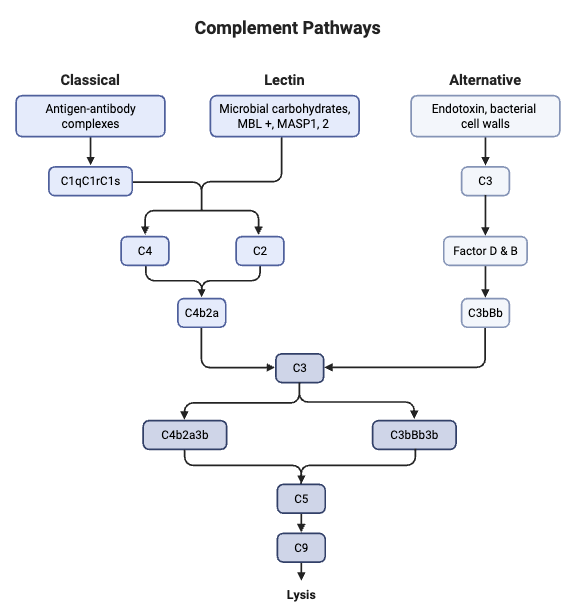
Complement Activation Pathways
Complement activation pathways are the routes by which the complement system becomes active during infection. There are three main pathways. These are classical pathway, lectin pathway and alternative pathway.
Classical pathway is activated when antibodies are attached to foreign antigen. Mainly IgG and IgM antibodies take part in this pathway. After antigen-antibody complex is formed, C1q binds with it and starts the complement cascade.
Lectin pathway is not based on antibody. It is activated when mannose-binding lectin (MBL) or ficolins bind with sugar molecules present on the surface of microorganisms. These sugars are generally found on bacterial, fungal and other microbial surfaces.
Alternative pathway is continuously activated at very low level in blood. It starts by spontaneous breakdown of C3 protein, which is called tick-over. This pathway can directly act on foreign surface and also increases the effect of classical and lectin pathways.
All the three pathways finally meet at the cleavage of C3 protein. In this step, C3 convertase breaks C3 into active fragments. These fragments help in opsonization, inflammation and further activation of terminal pathway.
The terminal pathway leads to formation of Membrane Attack Complex (MAC). It forms pore-like structure on the target cell membrane. As a result, water and ions enter into the cell and the cell undergoes lysis. During this process inflammatory molecules are also released which recruit other immune cells at the site of infection.
What is Lectin pathway?
Lectin pathway is one of the pathway of complement system. It is a part of innate immunity and gives early protection against microorganisms. It does not need antibody for its activation.
It is activated when mannose-binding lectin (MBL), ficolins or collectins binds with carbohydrate group present on the surface of pathogens. These carbohydrate groups are found on bacteria, viruses, fungi and also on dead or damaged host cells.
After binding, MBL forms complex with MBL-associated serine proteases (MASPs). The important enzymes are MASP-1 and MASP-2. MASP-1 first activates itself and then activates MASP-2.
Activated MASP-2 cleaves C4 and C2. This forms C3 convertase (C4b2a). This is the main enzyme of this pathway.
Then C3 convertase cleaves C3. It helps in opsonization, inflammation and further complement activation. Finally Membrane Attack Complex (MAC) is formed which make pores on target cell membrane and causes lysis of cell.
Lectin pathway is one of the pathway of complement system which is activated without antibody. It starts when mannose-binding lectin (MBL) or ficolins binds with carbohydrate group present on microbial surface and leads to formation of C3 convertase.
Lectin pathway was discovered after the classical pathway and alternative pathway. It is the latest discovered pathway among the three main complement activation pathways.
The classical pathway and alternative pathway were known earlier in 20th century. But lectin pathway was properly discovered and described much later, near the end of 20th century and beginning of 21st century.
Before its discovery, some complement activation was seen which did not follow the classical pathway. This created confusion because the recognition molecules and protease enzymes of this pathway were not known at that time.
Mannose-binding lectin (MBL) was the first collectin discovered in this pathway. It became the most studied recognition molecule of lectin pathway. It binds with mannose and other sugar groups present on microbial surface.
After this, MBL-associated serine proteases (MASPs) were identified. MASP-1 was the first reported enzyme among them. It is also considered as an ancient enzyme in evolution.
Later, MASP-3 was discovered as another serine protease component of this pathway. Collectin-11 (CL-11) was discovered more recently in 2006 and it was first called kidney collectin.
Although lectin pathway was discovered last, it is considered as an old ancestral immune system. It gives a pre-antibody method for recognizing foreign microorganisms. The later antibody based classical pathway is considered to have developed by using some parts of this older pathway.
Importance of Lectin Pathway
- First-line defence – Lectin pathway gives early protection against microorganisms. It does not need antibody. It recognizes carbohydrate pattern present on bacteria, viruses and fungi.
- Pathogen killing – It activates the complement cascade and helps in formation of Membrane Attack Complex (MAC). This complex makes pore on pathogen membrane and causes destruction of the cell.
- Opsonization – The pathway helps in coating of pathogens by complement fragments. This makes the pathogen easily recognized by phagocytic cells. Then the pathogen is engulfed and destroyed.
- Clearance of dead cells – It also helps in removal of apoptotic or damaged host cells. This prevents accumulation of harmful cell debris in the tissue.
- Inflammation – During this pathway, active fragments like C3a and C5a are formed. These are called anaphylatoxins. They attract immune cells at the site of infection and increase inflammatory response.
- Embryonic development – Some components of lectin pathway like Collectin-11 (CL-11), Collectin-10 (CL-10) and MASP-3 are important in normal embryonic development. They help in movement of neural crest cells during formation of skull, face and other structures.
- Alternative pathway activation – Lectin pathway is linked with alternative pathway. Active MASP-3 converts pro-Factor D into active Factor D. This helps in amplification of alternative pathway.
- Blood clotting – MASP-1 and MASP-2 can act on coagulation factors like prothrombin and fibrinogen. It helps in clot formation. This may trap pathogens but sometimes it also causes unwanted thrombosis.
- Role in diseases – When lectin pathway is activated in wrong way, it can cause tissue damage. It is involved in ischemia-reperfusion injury, IgA nephropathy, organ transplant injury and severe inflammatory condition like COVID-19 associated endotheliopathy.
Components of Lectin Pathway
- Pattern Recognition Molecules (PRMs) – These are soluble recognition molecules of lectin pathway. They bind with carbohydrate group or acetyl group present on pathogens and damaged host cells.
- Mannose-binding lectin (MBL) – MBL is a liver derived protein. It binds with sugars like mannose, fucose and N-acetylglucosamine present on microbial surface.
- Ficolins – Ficolins mainly recognize acetylated compounds. It includes Ficolin-1 (M-ficolin), Ficolin-2 (L-ficolin) and Ficolin-3 (H-ficolin).
- Collectins – Collectins include Collectin-11 (CL-11 or CL-K1) and Collectin-10 (CL-10 or CL-L1). They may circulate together as CL-LK complex and recognize microorganisms and apoptotic cells.
- MBL-associated serine proteases (MASPs) – These are enzyme components of lectin pathway. They remain attached with PRMs and start the proteolytic cascade after binding with target surface.
- MASP-1 – MASP-1 is the main initiating protease. It first activates itself after PRM binding. Then it activates MASP-2 and also cleaves C2.
- MASP-2 – MASP-2 is the important effector enzyme of this pathway. It cleaves C4 and C2 and helps in formation of C3 convertase (C4b2a).
- MASP-3 – MASP-3 is also associated with lectin pathway recognition molecules. Its main function is to cleave pro-Factor D into active Factor D. This helps in activation of alternative pathway.
- MBL-associated proteins (MAps) – These are non-enzymatic regulatory proteins. They are formed by alternative splicing of MASP genes and control excess complement activation.
- MAp44 (MAP-1) – MAp44 acts as a competitive inhibitor. It prevents too much activation by displacing MASP-1 and MASP-2 from the recognition molecule complex.
- MAp19 (sMAP) – MAp19 is a small truncated protein. It has no catalytic domain and mainly circulates in unbound state. It acts as a weak inhibitor.
- Complement substrates – These are complement proteins which are cleaved during the pathway and form active complement fragments.
- C4 and C2 – These are cleaved by active MASPs. They form C4b2a, which is the C3 convertase of lectin pathway.
- C3 – C3 is the central complement protein. C3 convertase cleaves it into C3a and C3b. C3a helps in inflammation and C3b works as opsonin for tagging the target cell.
Step by Step Detail Mechanism of Lectin Pathway
Step 1- Pathogen recognition and binding
In the first step, pattern recognition molecules recognize the pathogen surface. These molecules are mannose-binding lectin (MBL), ficolins and collectins like CL-11.
These molecules remain in blood with inactive MBL-associated serine proteases (MASPs). The pathway starts when these molecules bind with non-self carbohydrate structures or acetylated residues present on pathogen surface or damaged host cell.
Step 2- Conformational change and MASP-1 autoactivation
After binding with the target surface, a conformational change occurs in the PRM-MASP complex. This structural change acts as the signal for enzyme activation.
Due to this change, MASP-1 becomes activated by itself. This is called autoactivation of MASP-1.
Step 3- Activation of MASP-2
The activated MASP-1 now acts on nearby inactive MASP-2. MASP-2 is present as zymogen form in the complex.
MASP-1 cleaves the activation peptide of MASP-2. After this cleavage, MASP-2 becomes active effector enzyme.
Step 4- Cleavage of C4 and surface anchoring
The active MASP-2 cleaves C4 protein present in blood. C4 is cleaved into C4a and C4b.
C4a is small anaphylatoxin fragment and it is released. C4b is the large fragment. After cleavage, C4b exposes reactive thioester bond.
Due to this reactive bond, C4b attaches covalently with target pathogen surface. So C4b becomes fixed on the surface.
Step 5- Cleavage of C2
After C4b is attached, C2 binds with surface bound C4b. This binding needs magnesium ion.
Then C2 is cleaved into C2a and C2b fragments. MASP-2 can cleave C2, but MASP-1 performs most of this cleavage during normal activation.
Step 6- Formation of C3 convertase
The larger active fragment of C2 remains attached with C4b. Together they form C4b2a complex.
In some modern writing, it is also written as C4b2b. This complex is called lectin pathway C3 convertase. It is the main enzyme complex of this pathway.
Step 7- Cleavage of C3 and amplification
The C3 convertase cleaves C3 protein into C3a and C3b. C3 is present in high amount in plasma.
C3a is released and acts as inflammatory signal. C3b attaches on the pathogen surface and works as opsonin. It marks the pathogen for phagocytosis.
The deposited C3b also helps to start alternative pathway amplification loop. This produces more C3b and makes immune response more strong.
Step 8- Formation of C5 convertase
Some newly formed C3b binds with the already formed C3 convertase. This changes the enzyme activity.
The complex becomes C5 convertase. It is written as C4b2a3b or C4b2b3b. This enzyme now cleaves C5 protein.
Step 9- Terminal pathway and MAC formation
The C5 convertase cleaves C5 into C5a and C5b. C5a is released and acts as strong inflammatory molecule.
C5b binds with C6, C7 and C8. Then many C9 molecules come and polymerize. These proteins form membrane attack complex (MAC or C5b-9).
The MAC makes pore in the membrane of pathogen. Due to this pore, water and solutes enter inside. Finally the pathogen cell undergo osmotic lysis and die.
C4-bypass
In some cases, when the target surface has high amount of active enzymes, MASP-1 and MASP-2 can directly cleave C3. In this process, C3b is deposited without normal C4 and C2 steps.
This is called C4-bypass mechanism. It is an extra way of activation in special condition.
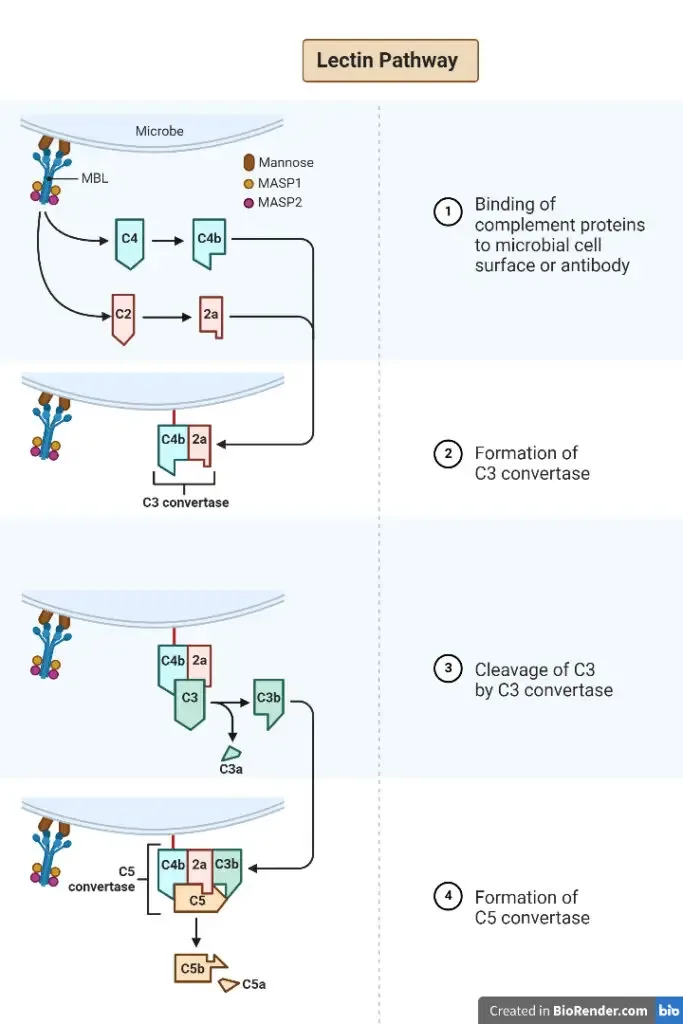
Recognition of Pathogens by the Lectin Pathway
Step 1: Continuous surveillance
In this step, Pattern Recognition Molecules (PRMs) continuously move in blood and mucosal surface. These molecules include mannose-binding lectin (MBL), ficolins and collectin-11 (CL-11). They remain in ready form with inactive MBL-associated serine proteases (MASPs).
Mainly MASP-1 and MASP-2 are attached with these recognition molecules. They do not act until the recognition molecule bind with proper target surface.
Step 2: Recognition of pathogen surface
When bacteria, fungi or virus enters into the body, the PRMs bind with repeated surface pattern present on them. These repeated structures are called pathogen-associated molecular patterns (PAMPs). They are mostly sugar or acetylated groups.
MBL binds with sugar patterns like mannose, fucose and N-acetylglucosamine (GlcNAc). Ficolins mainly bind with acetylated compounds like GlcNAc and GalNAc. Collectin-11 mostly binds with L-fucose and D-mannose.
Step 3: Structural change in PRM
After binding with pathogen surface, a structural change occurs in the PRM. This is called conformational change. This change passes through the collagen like arms of the recognition molecule.
This change then reaches to attached MASP enzymes. So the binding of pathogen works like a trigger for enzyme activation.
Step 4: Auto-activation of MASP-1
In this step, inactive MASP-1 becomes active by itself. This is called auto-activation. It is the first enzymatic activation after pathogen recognition.
Activated MASP-1 now starts the protease activity inside the complex.
Step 5: Activation of MASP-2
Active MASP-1 then acts on nearby inactive MASP-2. It cleaves the activation peptide of MASP-2 and converts it into active enzyme.
Now MASP-2 becomes the main effector enzyme of the lectin pathway.
Step 6: Cleavage of C4 and C2
Active MASP-2 cleaves complement protein C4 and C2. These proteins are present in blood in inactive form. After cleavage, active fragments are formed.
C4 is cleaved and forms C4b. C2 is cleaved and forms C2a. These fragments are needed for making the main enzyme of this pathway.
Step 7: Formation of C3 convertase
C4b attaches strongly on the pathogen surface. Then C2a binds with this attached C4b. Together they form C4b2a.
C4b2a is called C3 convertase of the lectin pathway. This enzyme cleaves C3 and amplify the complement cascade. After this, pathogen is tagged, inflammation starts and further destruction of pathogen takes place.
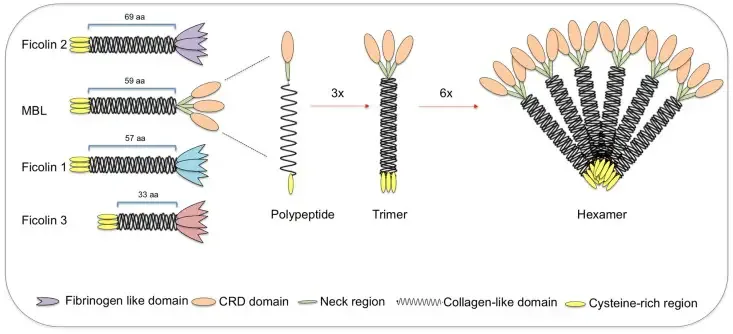
Mechanism of Activation of Lectin Pathway
Step 1
Lectin pathway is initiated by binding of MBL, ficolins and collectins with the pathogen surface. The binding is with carbohydrate group, acetyl group or other danger molecules present on bacteria, fungi, virus and damaged host cell.
Step 2
After the binding, there is change in the structure of the recognition molecule. The change is transmitted to the MASP enzymes attached with it. The enzymes are present in inactive form.
Step 3
MASP-1 is then activated by itself. This is called autoactivation. It is the first active protease formed in the pathway.
Step 4
The activated MASP-1 cleaves the inactive MASP-2. Thus MASP-2 becomes active. MASP-2 is the important effector enzyme of lectin pathway.
Step 5
Active MASP-2 cleaves C4 into C4a and C4b. C4b is attached to the pathogen surface. C4a is released in the fluid.
Step 6
Then C2 binds with C4b. This binding requires Mg²⁺. C2 is cleaved into C2a and C2b.
Step 7
The surface bound C4b combines with C2a. It forms C4b2a. This is called C3 convertase of lectin pathway.
Step 8
C3 convertase cleaves C3 into C3a and C3b. C3a takes part in inflammation. C3b is deposited on pathogen surface and acts as opsonin.
Step 9
Some C3b joins with C3 convertase. It forms C5 convertase (C4b2a3b). This enzyme cleaves C5 into C5a and C5b.
Step 10
C5b binds with C6, C7, C8 and C9. This forms Membrane Attack Complex (MAC). It forms pore on the target cell membrane and causes lysis of the cell.
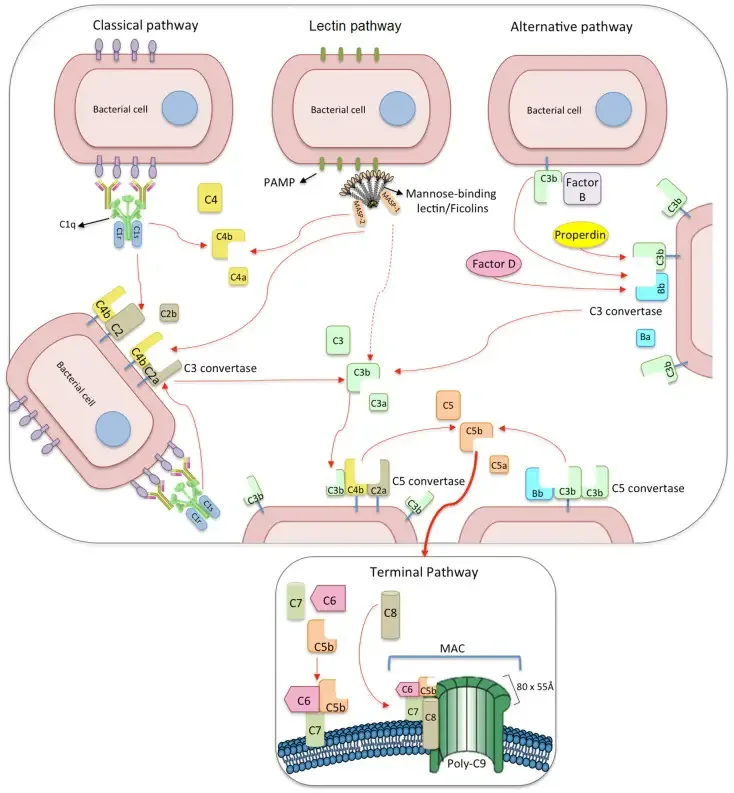
Formation of C3 Convertase in Lectin Pathway
Step 1
MBL, ficolins or collectins first binds with target surface. The target may be pathogen or damaged cell. After binding, structural change occurs in the recognition molecule.
Step 2
This change activates MASP-1. MASP-1 activates itself and then cleaves MASP-2. Thus MASP-2 becomes active enzyme.
Step 3
Active MASP-2 cleaves C4 protein. C4 is divided into two fragments, C4a and C4b. C4a is small fragment and it is released away.
Step 4
C4b is the large fragment. After cleavage, a reactive thioester bond is exposed on C4b. Due to this, C4b becomes attached with pathogen surface or damaged cell surface.
Step 5
Then C2 binds with the surface bound C4b. This binding requires Mg²⁺ ion. So C2 is now placed near C4b on the target surface.
Step 6
The attached C2 is cleaved into C2a and C2b. MASP-1 cleaves C2 more efficiently. MASP-2 can also cleave C2, but MASP-1 does most of this cleavage during normal activation.
Step 7
The larger C2a fragment remains attached with C4b. The smaller C2b fragment is released away. Thus C4b and C2a together form C4b2a.
Step 8
C4b2a is called C3 convertase of lectin pathway. It is formed on the target surface. This enzyme cleaves C3 and starts amplification of complement reaction.
Role of Lectin Pathway in Complement Cascade
- Initiation of innate defence – Lectin pathway acts as early immune response. It uses mannose-binding lectin (MBL), ficolins and collectins for recognizing pathogens. It detects carbohydrate group and acetyl group on microbes and damaged cells. Antibody is not needed in this pathway.
- Formation of C3 convertase – After recognition of target surface, the attached MASP enzymes are activated. Mainly MASP-1 and MASP-2 take part in it. They cleave C4 and C2. This forms C4b2a, which is the C3 convertase of lectin pathway.
- Opsonization – C3 convertase cleaves C3 into C3a and C3b. C3b is deposited on the surface of pathogen. It works as opsonin. So the microbe becomes easily recognized and engulfed by phagocytic cells.
- Inflammation – The pathway produces small active fragments like C3a and C5a. These are called anaphylatoxins. They attract immune cells at the infected site and also increase vascular permeability.
- Cell lysis – The pathway helps in formation of C5 convertase. This enzyme cleaves C5 into C5a and C5b. Then C5b starts formation of Membrane Attack Complex (MAC). MAC makes holes in the pathogen membrane and causes lysis.
- Amplification of complement reaction – C3b formed by lectin pathway also activates the alternative pathway. This produces more complement activation. MASP-3 also converts pro-Factor D into active Factor D, which is needed for alternative pathway.
- Link with blood coagulation – Active MASP-1 and MASP-2 can act on coagulation factors like prothrombin and fibrinogen. It helps in clot formation and trapping of pathogens. But excess activation may cause microvascular thrombosis in severe disease.
- Role in development – Some lectin pathway components also have function beyond immunity. Collectin-11 and MASP-3 help in embryonic morphogenesis. They guide migration of neural crest cells during development of face and skull.
Functions of Lectin Pathway in Innate Immunity
- Rapid recognition of pathogen – Lectin pathway gives early defence in innate immunity. It uses MBL, ficolins and collectins for direct recognition of pathogen surface. It binds with PAMPs present on bacteria, virus, fungi and parasites. Antibody is not required here.
- Opsonization – It produces complement fragments like C3b and C4b. These fragments are deposited on the surface of microbes. This coating helps the phagocytic cells to recognize the pathogen easily and engulf it.
- Phagocytosis – After opsonization, the pathogen becomes more suitable for phagocytosis. Macrophages and neutrophils bind with the coated microbe. Then the microbe is taken inside the cell and destroyed.
- Direct cell lysis – The pathway helps in formation of Membrane Attack Complex (MAC). This complex is inserted into the membrane of target pathogen. It forms pore and causes osmotic lysis of the cell.
- Inflammation – During activation, small fragments like C3a and C5a are released. These are called anaphylatoxins. They attract immune cells to the infected area and increase vascular permeability.
- Leukocyte recruitment – C3a and C5a act as chemotactic substances. They bring leukocytes at the site of infection. They also help in activation of immune cells and release of reactive oxygen species.
- Clearance of apoptotic cells – The recognition molecules of lectin pathway also bind with damaged host cells. They recognize DAMPs, DNA and other exposed molecules on apoptotic cells. This helps in safe removal of cellular debris.
- Prevention of autoimmunity – Removal of dead cells is important for tissue balance. If apoptotic cells are not cleared properly, their contents may stimulate immune reaction. So this pathway helps in preventing unwanted autoimmune response.
- Activation of coagulation – MASP enzymes also connect complement system with blood clotting. MASP-1 and MASP-2 can act on prothrombin and fibrinogen. This helps in clot formation around microbes and limits their spread.
- Activation of endothelial cells – MASP-1 can activate endothelial cells. It increases adhesion molecules and cytokine secretion. This helps immune cells to attach and move towards the infected tissue.
- Amplification of alternative pathway – Lectin pathway also supports the alternative pathway. MASP-3 converts pro-Factor D into active Factor D. This is needed for alternative pathway amplification loop.
Comparison of Lectin Pathway with Classical and Alternative Pathways
| Basis of comparison | Classical pathway | Lectin pathway | Alternative pathway |
|---|---|---|---|
| Activation | It is activated by antigen-antibody complex. Mainly IgG and IgM are involved. | It is activated without antibody. MBL, ficolins and collectins bind with microbial sugar or acetyl group. | It is activated by spontaneous breakdown of C3. This is called tick-over. |
| Recognition molecule | C1q is used for recognition. It binds with immune complex. | Mannose-binding lectin (MBL), ficolins and collectins are used. | No fixed recognition molecule is present. C3b binds on foreign surface and properdin stabilizes it. |
| Protease enzyme | C1r and C1s are the main protease enzymes. | MASP-1 and MASP-2 are the main protease enzymes. | Factor D cleaves Factor B after binding with C3b. |
| C3 convertase | It forms C4b2a. | It also forms C4b2a. | It forms C3bBb. |
| Need of antibody | Antibody is needed for activation. | Antibody is not needed. | Antibody is not needed. |
| Main role | It links antibody response with complement activation. | It gives early innate defence by direct recognition of microbial surface. | It works as continuous surveillance and amplification loop. |
| Amplification | It is amplified by alternative pathway after C3b formation. | It is also amplified by alternative pathway. MASP-3 helps by activating Factor D. | It is the main amplification pathway of complement system. |
| Common meeting point | It meets at cleavage of C3. | It meets at cleavage of C3. | It also meets at cleavage of C3. |
| Final effects | Produces opsonization, inflammation and MAC formation. | Produces opsonization, inflammation and MAC formation. | Produces opsonization, inflammation and MAC formation. |
| Evolutionary nature | It is newer pathway and related with adaptive immunity. | It is older innate pathway. | It is also older innate pathway. |
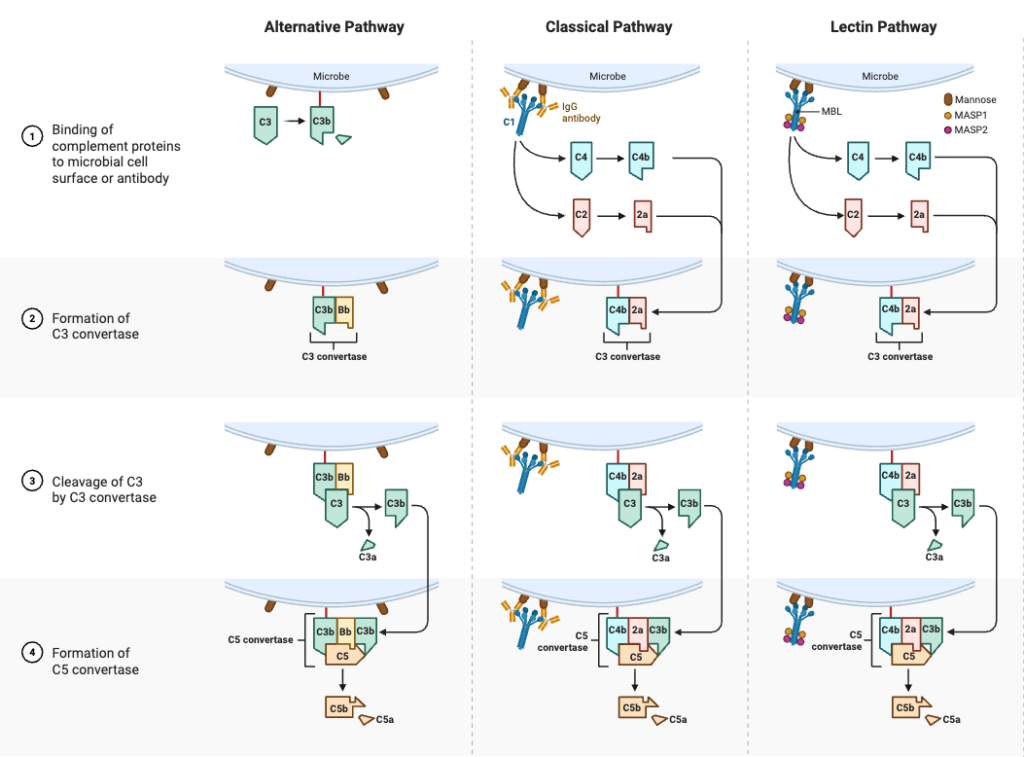
- Activation
- Classical pathway – It is mainly activated by antigen-antibody complex. The antibodies are mostly IgG and IgM. So this pathway needs antibody for its starting.
- Lectin pathway – It is activated without antibody. It starts when MBL, ficolins or collectins bind with carbohydrate group or acetyl group on pathogen and damaged cell.
- Alternative pathway – It is activated by spontaneous breaking of C3 in blood. This is called tick-over. It remains active at low level all time.
- Recognition molecules
- Classical pathway – It uses C1q for recognition. C1q binds with immune complex or other danger signals.
- Lectin pathway – It uses mannose-binding lectin (MBL), ficolins and collectins like CL-11. These molecules directly recognize microbial surface.
- Alternative pathway – It does not use fixed recognition molecule like others. It mainly depends on C3b deposition on foreign surface. Properdin then stabilizes the complex.
- Protease enzymes
- Classical pathway – The main protease enzymes are C1r and C1s. They take part in starting the cascade.
- Lectin pathway – The main protease enzymes are MASP-1 and MASP-2. These are attached with MBL and other recognition molecules.
- Alternative pathway – The main enzyme is Factor D. It cleaves Factor B after Factor B binds with C3b.
- C3 convertase formation
- Classical pathway – It cleaves C4 and C2. The formed C3 convertase is C4b2a.
- Lectin pathway – It also cleaves C4 and C2. So the C3 convertase is also C4b2a.
- Alternative pathway – It forms different C3 convertase. This is C3bBb.
- Amplification
- Classical pathway – After C3b formation, the alternative pathway can increase its effect.
- Lectin pathway – It also forms C3b and then alternative pathway amplifies the reaction. MASP-3 also converts pro-Factor D into active Factor D, so it helps alternative pathway.
- Alternative pathway – It works as main amplification loop. It produces more C3 convertase and increases complement activation.
- Point of meeting
- All three pathways meet at C3 cleavage. C3 is the central complement protein.
- After this step, same type of effects are produced. These are opsonization, inflammation and formation of Membrane Attack Complex (MAC).
- Final effects
- C3b helps in coating of pathogen. This is called opsonization.
- C3a and C5a act as inflammatory mediators. They attract immune cells.
- MAC forms pore on target cell membrane and causes lysis of the cell.
- Evolutionary nature
- Lectin pathway and alternative pathway are older innate immune pathways. They can recognize non-self surface without antibody.
- Classical pathway is newer in evolution. It is linked with adaptive immunity because it needs antibody for its activation.
Regulation of Lectin Pathway
- Fluid phase regulators – These regulators are present in blood and control the pathway before excess activation. They mainly act on active MASP enzymes, C4b, C3b and inflammatory fragments.
- C1 esterase inhibitor (C1-INH) – It is the main soluble regulator of lectin pathway. It binds with active site of MASP-1 and MASP-2. After binding, these enzymes become inactive. This type of inhibition is called suicide inhibition.
- Antithrombin and Alpha 2-macroglobulin – These are also present in blood. They decrease the activity of MASP-1 and MASP-2. Thus uncontrolled activation of pathway is prevented.
- C4b-binding protein (C4BP) – It binds with deposited C4b. It stops the binding of C2 with C4b. It also helps in decay of C3 convertase (C4b2a).
- Factor I – Factor I is a protease enzyme. It cleaves surface bound C3b and C4b into inactive fragments. It works with cofactors like C4BP or membrane receptors.
- Carboxypeptidase N – It controls inflammatory activity. It cleaves C3a and C5a. Due to this, their inflammatory and vasoactive effects become reduced.
- Endogenous competitive inhibitors – These are regulatory proteins formed by alternative splicing of MASP genes. They have no proper catalytic activity and compete with active MASPs.
- MAp44 (MAP-1) – It is formed from MASP1 gene. It has similar structural part like MASP-1 and MASP-3, but no catalytic domain is present. It displaces MASP-1 and MASP-2 from MBL and other recognition molecules. So cleavage of C4 and C2 is reduced.
- MAp19 (sMAP) – It is a small protein formed from MASP2 gene. It also lacks serine protease domain. It acts as weak competitive inhibitor by replacing MASPs from recognition complex.
- Membrane bound regulators – These are present on host cell membrane. They protect normal body cells from complement mediated damage.
- Decay-accelerating factor (DAF / CD55) – It is a membrane protein. It breaks down C3 convertase (C4b2a) on host cell surface. Thus the host cell is protected.
- Membrane cofactor protein (MCP / CD46) – It is a transmembrane glycoprotein. It acts as cofactor for Factor I. It helps in cleavage and inactivation of C3b and C4b on host cells.
- Complement receptor 1 (CR1 / CD35) – It is present on immune cells and erythrocytes. It has decay accelerating activity and also cofactor activity for Factor I. It helps in removal of convertase complex.
- Protectin (CD59) – It blocks the terminal pathway. It binds with C5b-8 complex and prevents C9 insertion. So Membrane Attack Complex (MAC) is not formed on host cell membrane.
Deficiencies or Disorders Associated with Lectin Pathway
- 3MC syndrome – 3MC syndrome is a rare congenital disorder. It occurs due to mutation in MASP1, COLEC11 and COLEC10 genes. These genes are related with MASP-1, MASP-3, Collectin-11 and Collectin-10. These components are needed during embryonic development. They help in movement of cells. Mutation causes abnormal development of face, skull and other organs. Cleft lip, cleft palate, wide spaced eyes, short stature, hearing loss and skeletal defects may be seen.
- Mannose-binding lectin deficiency – MBL deficiency is a common defect of lectin pathway. It is caused by change in MBL2 gene. Many persons with this defect may remain healthy. But some persons suffer from repeated infections. The infections are mostly upper respiratory tract infection, pneumonia and meningitis. It is more common in infants, children and immunocompromised patients.
- Ficolin deficiency – Ficolin deficiency occurs due to abnormal level of ficolins. Ficolin-3 deficiency is related with repeated respiratory infection. It may also cause lung damage. Ficolin-2 deficiency may be associated with bronchiectasis and respiratory infection. In newborn babies it may be related with prematurity and low birth weight.
- Ischemia-reperfusion injury – Ischemia-reperfusion injury (IRI) occurs when blood flow comes back after lack of oxygen. It may occur after heart attack, stroke and organ transplantation. In this condition Collectin-11 binds with stressed cell surface. It recognizes L-fucose on the cell. Then MASP-2 is activated and complement reaction causes tissue damage.
- HSCT-associated thrombotic microangiopathy – HSCT-TMA is a severe disorder after stem cell transplantation. In this condition endothelial injury activates lectin pathway. Small clots are formed in blood vessels. Red blood cells are damaged. Kidney and other organs may also be injured.
- IgA nephropathy – IgA nephropathy is a kidney disease. It is caused by deposition of abnormal IgA1 complexes in glomeruli. MBL, MASP-1 and MASP-2 are also deposited in kidney filtering part. This shows activation of lectin pathway. Proteinuria and kidney failure may occur in severe case.
- Rheumatic fever and rheumatic heart disease – In streptococcal infection, lectin pathway may help in protection. But high MBL level and some changes in MBL2 and FCN2 genes may increase the chance of rheumatic heart disease (RHD). In this disease heart tissue is damaged for long time. The heart valves are mainly affected.
- COVID-19 associated endotheliopathy – In severe COVID-19, SARS-CoV-2 nucleocapsid protein binds with MASP-2. It causes over activation of lectin pathway. Endothelial cells are damaged. Inflammation becomes high. Small blood vessels may show clot formation.
- Atypical hemolytic uremic syndrome – Atypical hemolytic uremic syndrome (aHUS) is a disorder of abnormal complement regulation. It causes hemolysis and kidney failure. In this disorder lectin pathway and alternative pathway may become uncontrolled. Excess complement activation damages small vessels. MASP-2 and MASP-3 are important targets for treatment.
Clinical Significance of Lectin Pathway
- 3MC syndrome – 3MC syndrome is a rare congenital disorder. It is caused by mutation in MASP1, COLEC11 and COLEC10 genes. These genes are related with MASP-1, MASP-3, Collectin-11 and Collectin-10. These components helps in migration of neural crest cells during embryonic development. Defect causes cleft lip, cleft palate, craniosynostosis, hearing loss, cognitive defect and skeletal abnormality.
- Mannose-binding lectin deficiency – MBL deficiency is a common condition of immune system. It occurs due to structural or promoter change in MBL2 gene. Many persons remain healthy. But some patients get repeated infections. Upper respiratory tract infection and pneumonia are common. It is more important in young children and chemotherapy treated immunocompromised patients. Sometimes MBL deficiency may give some protection against intracellular pathogens. Examples are Mycobacterium spp. and Leishmania.
- Ischemia-reperfusion injury – Ischemia-reperfusion injury (IRI) occurs when blood flow returns after oxygen lack. It is seen after myocardial infarction, stroke and organ transplantation. In kidney injury, Collectin-11 binds with stress induced L-fucose pattern on damaged kidney cells. Then MASP-2 is recruited. Complement activation and inflammation causes tissue damage.
- HSCT-associated thrombotic microangiopathy – HSCT-TMA is a severe complication after hematopoietic stem cell transplantation. It occurs when endothelial injury activates the lectin pathway. Small thrombus are formed in blood vessels. Thrombocytopenia, hemolytic anemia and organ damage may occur. Narsoplimab, a MASP-2 inhibitor, is used as targeted treatment and it helps in improving this condition.
- IgA nephropathy – IgA nephropathy (IgAN) is a kidney disease where lectin pathway has important clinical role. In glomeruli, MBL, MASP-1, MASP-2 and C4d are deposited with galactose deficient IgA1 complex. This deposition indicates activation of lectin pathway in kidney. It is related with severe proteinuria and falling kidney function.
- Rheumatic fever and rheumatic heart disease – Lectin pathway molecules first help in defence against streptococcal infection. But excess activation may become harmful in chronic stage. High MBL level and high producing variants of MBL2 and FCN2 genes are associated with more chance of rheumatic heart disease (RHD). It may cause chronic rheumatic carditis and damage of heart valves.
- COVID-19 associated endotheliopathy – In severe COVID-19, SARS-CoV-2 nucleocapsid protein binds directly with MASP-2. This causes over activation of lectin pathway on vascular endothelial cells. Due to this, inflammation becomes high. Microvascular injury and thrombotic complications are produced. It is one of the important clinical effect in severe COVID-19.
- Ficolin insufficiency – Abnormal level of ficolins are related with different diseases. Ficolin-3 deficiency is rare but may be associated with severe necrotizing enterocolitis in premature neonates. Ficolin-2 insufficiency is related with bronchiectasis, recurrent respiratory infections and perinatal infections in newborn babies.
Inhibitors of Lectin Pathway
- Physiological inhibitors – These are natural inhibitors present in the body. They control lectin pathway and prevent excess complement activation.
- C1 esterase inhibitor (C1-INH) – C1-INH is the main fluid phase inhibitor of lectin pathway. It binds with active site of MASP-1 and MASP-2. After binding, the enzymes become inactive. This is called suicide inhibition.
- MAp44 (MAP-1) – MAp44 is formed from MASP1 gene by alternative splicing. It has no catalytic domain. It replaces MASP-1 and MASP-2 from MBL and ficolins. So the cascade is not started properly.
- MAp19 (sMAP) – MAp19 is a small protein formed from MASP2 gene. It lacks serine protease domain. It competes with active MASPs for binding site on PRMs. It acts as weak inhibitor.
- Antithrombin – Antithrombin is a natural plasma inhibitor. In presence of heparin, it inhibits MASP-1 and MASP-2 more effectively. Thus the activity of pathway is reduced.
- Alpha 2-macroglobulin – Alpha 2-macroglobulin is a broad protease inhibitor in blood. It may inhibit MASP-1 and reduce lectin pathway activation. Its exact physiological role on activating surface is not very clear.
- Therapeutic inhibitors – These are synthetic or biological inhibitors. They are used or studied for blocking harmful activation of lectin pathway in diseases.
- Narsoplimab (OMS721) – Narsoplimab is a fully human monoclonal antibody. It binds with MASP-2 and inhibits it. It blocks cleavage of C4 and C2. It does not block classical and alternative pathway. It is useful in HSCT-TMA and IgA nephropathy.
- Zaltenibart (OMS906) – Zaltenibart is a humanized monoclonal antibody against MASP-3. It stops conversion of pro-Factor D into active Factor D. Thus alternative pathway amplification is reduced. It is studied in paroxysmal nocturnal hemoglobinuria (PNH).
- Nafamostat mesilate (FUT-175) – Nafamostat mesilate is a synthetic serine protease inhibitor. It blocks complement cascade strongly. But it is not specific for only one pathway.
- SFMI-1 and SFMI-2 – These are selective peptide inhibitors. They are made from sunflower trypsin inhibitor (SFTI) scaffold. SFMI-1 inhibits MASP-1 and SFMI-2 inhibits MASP-2.
- SGMI-1 and SGMI-2 – These are small protein inhibitors. They are based on Schistocerca gregaria protease inhibitor-2 (SGPI-2) scaffold. SGMI-1 inhibits MASP-1 and SGMI-2 inhibits MASP-2.
- TFMI-3 – TFMI-3 is a recombinant protein inhibitor. It is derived from tissue factor pathway inhibitor (TFPI). It blocks MASP-3 and prevents formation of active Factor D from pro-Factor D.
- Anti-MBL antibodies – These antibodies bind with globular region of MBL. Example is 3F8. They prevent MBL from binding with ligand. Thus initiation of lectin pathway is blocked.
- Asparaginase – Asparaginase is mainly used in cancer treatment. It can also inhibit lectin pathway. It dissociates MBL-MASP complex and prevents activation.
- Engineered fusion proteins – These are recombinant molecules made for targeted inhibition. Examples are MAP-1:CD55 1-4, MAP-1:CD35 1-3 and sMAP-FH. They combine recognition targeting part with complement regulatory part and inhibit pathway at injured tissue site.
References
- Atkinson, J. P., & Frank, M. M. (2006). Bypassing complement: Evolutionary lessons and future implications. Journal of Clinical Investigation, 116(5), 1215–1218. https://doi.org/10.1172/JCI28622
- Bayarri-Olmos, R., Kirketerp-Moller, N., Pérez-Alós, L., Skjodt, K., Skjoedt, M.-O., & Garred, P. (2018). Development of a quantitative assay for the characterization of human collectin-11 (CL-11, CL-K1). Frontiers in Immunology, 9, Article 2238. https://doi.org/10.3389/fimmu.2018.02238
- Beltrame, M. H., Catarino, S. J., Goeldner, I., Boldt, A. B. W., & de Messias-Reason, I. J. (2015). The lectin pathway of complement and rheumatic heart disease. Frontiers in Pediatrics, 2, Article 148. https://doi.org/10.3389/fped.2014.00148
- Biological Functions of the Novel Collectins CL-L1, CL-K1, and CL-P1. (n.d.).
- CL-L1 and CL-K1 Exhibit Widespread Tissue Distribution With High and Co-Localized Expression in Secretory Epithelia and Mucosa. (n.d.).
- COLEC10 is mutated in 3MC patients and regulates early craniofacial development. (n.d.).
- Collectins and Ficolins: Humoral Lectins of the Innate Immune System. (n.d.).
- Complement C3 recognition by C3 convertases. (n.d.).
- Complement System in Dermatological Diseases – Fire Under the Skin. (n.d.).
- Complement activation in immunological neurological disorders: mechanisms and therapeutic strategies. (n.d.).
- Complement regulation: physiology and disease relevance. (n.d.).
- Creative Biolabs. (n.d.). How is complement activated in lectin pathway.
- Creative Biolabs. (n.d.). Lectin pathway.
- Crystal structure of the CUB1-EGF-CUB2 region of mannose-binding protein associated serine protease-2. (n.d.).
- de Boer, E. C. W., van Mourik, A. G., & Jongerius, I. (2020). Therapeutic lessons to be learned from the role of complement regulators as double-edged sword in health and disease. Frontiers in Immunology, 11, Article 578069. https://doi.org/10.3389/fimmu.2020.578069
- Development and characterization of narsoplimab, a selective MASP-2 inhibitor, for the treatment of lectin-pathway-mediated disorders. (n.d.).
- Dobó, J., Kocsis, A., Farkas, B., Demeter, F., Cervenak, L., & Gál, P. (2024). The lectin pathway of the complement system-activation, regulation, disease connections and interplay with other (proteolytic) systems. International Journal of Molecular Sciences, 25(3), 1566. https://doi.org/10.3390/ijms25031566
- Dobó, J., Kocsis, A., & Gál, P. (2018). Be on target: Strategies of targeting alternative and lectin pathway components in complement-mediated diseases. Frontiers in Immunology, 9, Article 1851. https://doi.org/10.3389/fimmu.2018.01851
- Dobó, J., Schroeder, V., Jenny, L., Cervenak, L., Závodszky, P., & Gál, P. (2014). Multiple roles of complement MASP-1 at the interface of innate immune response and coagulation. Molecular Immunology, 61(2), 69–78. https://doi.org/10.1016/j.molimm.2014.05.013
- Dudler, T., Yaseen, S., & Cummings, W. J. (2023). Development and characterization of narsoplimab, a selective MASP-2 inhibitor, for the treatment of lectin-pathway–mediated disorders. Frontiers in Immunology, 14, Article 1297352. https://doi.org/10.3389/fimmu.2023.1297352
- Factors of the Lectin Pathway of Complement Activation and Their Clinical Associations in Neonates. (n.d.).
- Ficolins and the Recognition of Pathogenic Microorganisms: An Overview of the Innate Immune Response and Contribution of Single Nucleotide Polymorphisms. (n.d.).
- Howard, M., Farrar, C. A., & Sacks, S. H. (2018). Structural and functional diversity of collectins and ficolins and their relationship to disease. Seminars in Immunopathology, 40(1), 75–85. https://doi.org/10.1007/s00281-017-0642-0
- Hurler, L., Toonen, E. J. M., Kajdácsi, E., van Bree, B., Brandwijk, R. J. M. G. E., de Bruin, W., Lyons, P. A., Bergamaschi, L., … & Prohászka, Z. (2022). Distinction of early complement classical and lectin pathway activation via quantification of C1s/C1-INH and MASP-1/C1-INH complexes using novel ELISAs. Frontiers in Immunology, 13, Article 1039765. https://doi.org/10.3389/fimmu.2022.1039765
- Interactions between mannose-binding lectin and MASPs during complement activation by the lectin pathway. (n.d.).
- JensenLab. (n.d.). COLEC10. DISEASES.
- Khaled, S. K., Claes, K., Goh, Y. T., Kwong, Y. L., Leung, N., Mendrek, W., Nakamura, R., Sathar, J., Ng, E., Nangia, N., Whitaker, S., & Rambaldi, A. (2022). Narsoplimab, a mannan-binding lectin-associated serine protease-2 inhibitor, for the treatment of adult hematopoietic stem-cell transplantation–associated thrombotic microangiopathy. Journal of Clinical Oncology, 40(22), 2447–2457. https://doi.org/10.1200/JCO.21.02389
- Mannan Binding Lectin Serine Peptidase (MASP). (n.d.).
- MAp19, the alternative splice product of the MASP2 gene. (n.d.).
- MBL-associated serine proteases (MASPs) and infectious diseases. (n.d.).
- Mechanism of complement-dependent haemolysis via the lectin pathway: role of the complement regulatory proteins. (n.d.).
- National Center for Biotechnology Information. (2026, May 19). COLEC11 collectin subfamily member 11 [Homo sapiens (human)] (Gene ID: 78989).
- National Library of Medicine. (2018, July 1). 3MC syndrome. MedlinePlus.
- Nauser, C. L., Howard, M. C., Fanelli, G., Farrar, C. A., & Sacks, S. (2018). Collectin-11 (CL-11) is a major sentinel at epithelial surfaces and key pattern recognition molecule in complement-mediated ischaemic injury. Frontiers in Immunology, 9, Article 2023. https://doi.org/10.3389/fimmu.2018.02023
- O’brien, R. (2021). Complement System Activation and Functions. Encyclopedia. https://encyclopedia.pub/entry/8137
- Panagiotou, A., Trendelenburg, M., & Osthoff, M. (2018). The lectin pathway of complement in myocardial ischemia/reperfusion injury—Review of its significance and the potential impact of therapeutic interference by C1 esterase inhibitor. Frontiers in Immunology, 9, Article 1151. https://doi.org/10.3389/fimmu.2018.01151
- Pudasaini, D. (2022, September 6). Lectin pathway of the complement system. Microbe Notes.
- Rooryck, C., Diaz-Font, A., Osborn, D. P. S., Chabchoub, E., Hernandez-Hernandez, V., Shamseldin, H., Kenny, J., Waters, A., Jenkins, D., Kaissi, A. A., Leal, G. F., Dallapiccola, B., Carnevale, F., Bitner-Glindzicz, M., Lees, M., Hennekam, R., Stanier, P., Burns, A. J., Peeters, H., Alkuraya, F. S., & Beales, P. L. (2011). Mutations in lectin complement pathway genes COLEC11 and MASP1 cause 3MC syndrome. Nature Genetics, 43(3), 197–203. https://doi.org/10.1038/ng.757
- Safety, Tolerability and Efficacy of Narsoplimab, a Novel MASP-2 Inhibitor for the Treatment of IgA Nephropathy. (n.d.).
- Shamovsky, V. (2012, December 20). Proteolytic cleavage of complement factor C4 [Gallus gallus]. Reactome.
- Sarma, J. V., & Ward, P. A. (2011). The complement system. Cell and Tissue Research, 343(1), 227–235. https://doi.org/10.1007/s00441-010-1034-0
- The Arizona Board of Regents on behalf of The University of Arizona. (2025). 3MC Syndromes. Hereditary Ocular Diseases.
- The collectins CL-L1, CL-K1 and CL-P1, and their roles in complement and innate immunity. (n.d.).
- The complement system: history, pathways, cascade and inhibitors. (n.d.).
- The Lectin Pathway of Complement and Rheumatic Heart Disease. (n.d.).
- The Lectin Pathway of the Complement System: Molecular Mechanisms, Evolutionary Origins, and Clinical Therapeutics. (n.d.).
- The Lectin Pathway of the Complement System—Activation, Regulation, Disease Connections and Interplay with Other (Proteolytic) Systems. (n.d.).
- The mannose-binding lectin: a prototypic pattern recognition molecule. (n.d.).
- Wikipedia contributors. (2025, September 30). Lectin pathway. In Wikipedia, The Free Encyclopedia. https://en.wikipedia.org/w/index.php?title=Lectin_pathway&oldid=1314310355
- W Jason Cummings’s research works. (n.d.).