

Fluorescence spectrometry is an analytical technique that is used to measure the light emitted by a substance after absorption of electromagnetic radiation. It is also known as fluorimetry. It is a very sensitive method for detecting small amount of substance.
In this method, the sample is first exposed with a particular wavelength of high energy light. This light may be ultraviolet light or laser light. The molecules absorb this light and the electrons are excited to higher energy state.
After excitation, the electrons do not remain in that state for long time. They return back to the normal ground state and release the extra energy as emitted light. This emitted light has usually longer wavelength than the absorbed light.
The emitted light is measured by an instrument called spectrofluorometer. It measures the intensity of fluorescence at different wavelength and gives fluorescence spectrum. This spectrum is used for identification and estimation of molecules.
Fluorescence spectrometry is more sensitive because emitted light is measured directly against dark background. It is used in medical diagnosis, environmental monitoring and material science.
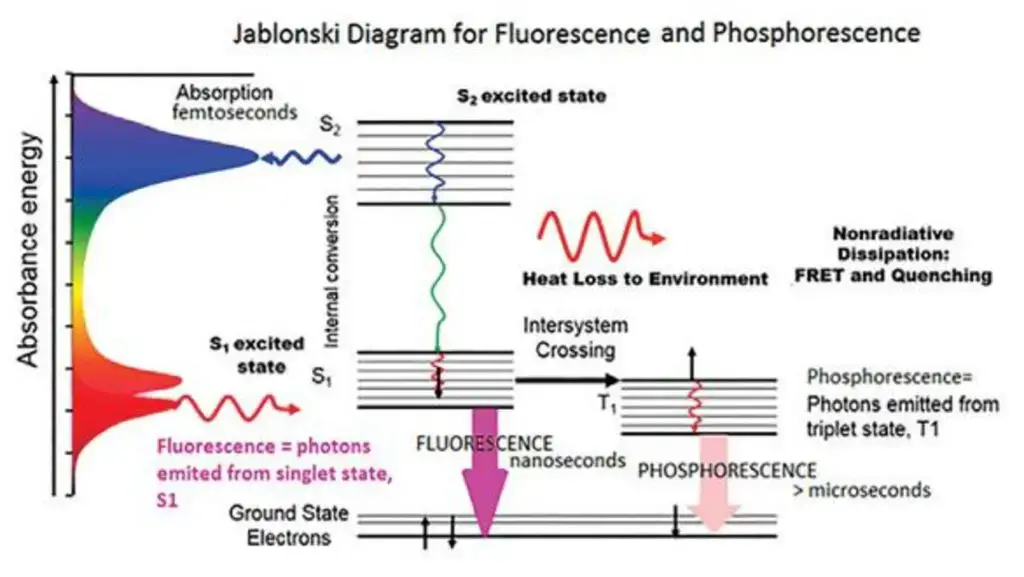
Principle of fluorescence spectroscopy
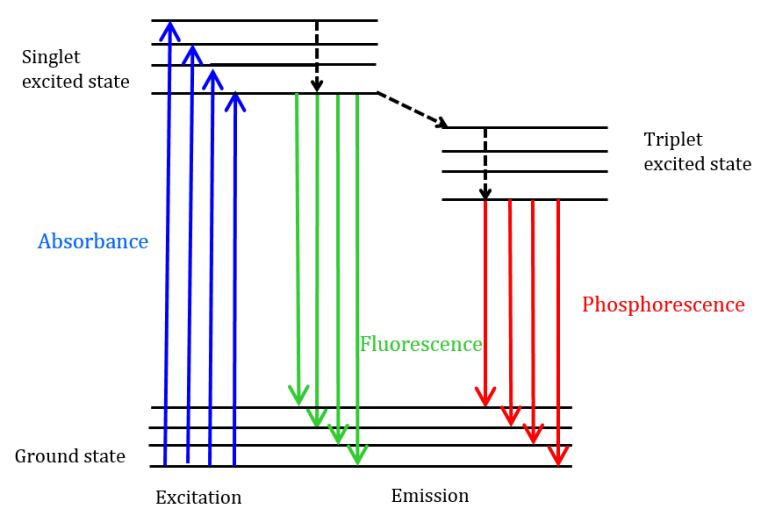
Fluorescence spectroscopy is based on the absorption of electromagnetic radiation by fluorescent molecules. These molecules are called fluorophores. When the molecule absorbs light of specific wavelength, the electrons become excited from ground state to higher energy state.
The excited state is unstable. So, the electrons lose some amount of energy by non-radiative vibration relaxation. After this, the electrons return back to the original ground state.
During returning to the ground state, the excess energy is emitted in the form of light. This emitted light is called fluorescence. The emitted light has less energy and longer wavelength than the absorbed light.
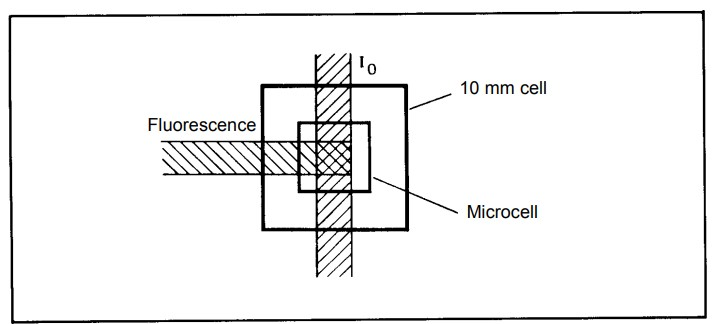
This difference between absorbed light and emitted light is called Stokes shift. In spectrofluorometer, the emitted fluorescence is measured usually at 90° angle to the incident light. This prevents the detection of transmitted light.
The intensity of emitted light is measured against dark background. It is used to know the concentration, molecular structure and other properties of the substance with high sensitivity.
Fluorescence Phenomenon
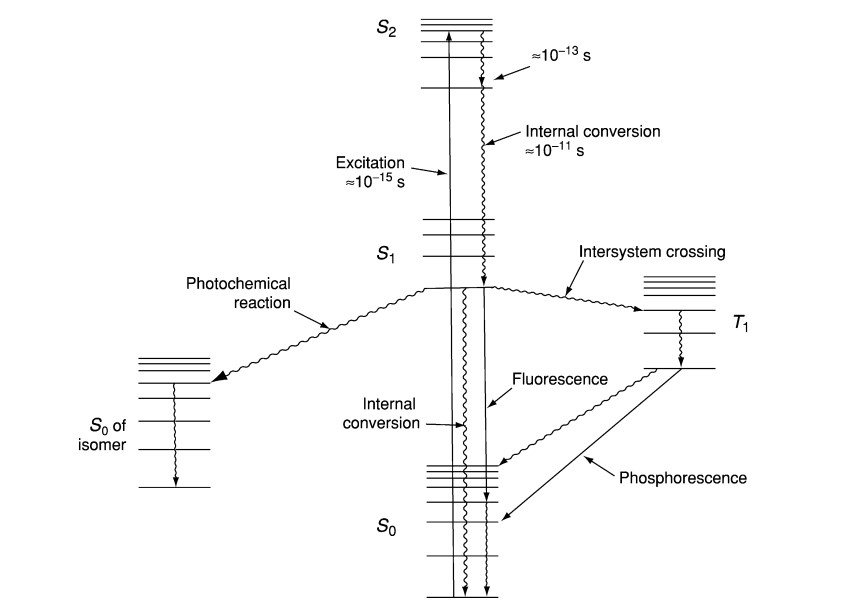
Fluorescence phenomenon is a type of photoluminescence in which a substance absorbs light energy and then emits light energy almost immediately. The substance which shows fluorescence is called fluorophore.
In this phenomenon, the molecule absorbs photon of light at a particular wavelength. Due to this absorption, the electrons are excited from lower energy ground state to higher energy excited state.
The excited state is not stable. So, the molecule loses small amount of energy by non-radiative vibration relaxation. This energy is lost as heat or vibration.
After this, the electron comes back to the ground state. During this return, the remaining energy is emitted in the form of light. This emitted light is called fluorescent light.
The emitted light has less energy and longer wavelength than the absorbed light. This difference between absorbed light and emitted light is known as Stokes shift.
The whole process occurs very fast. It usually takes place in nanoseconds.
Operating Procedure of Fluorescence spectroscopy
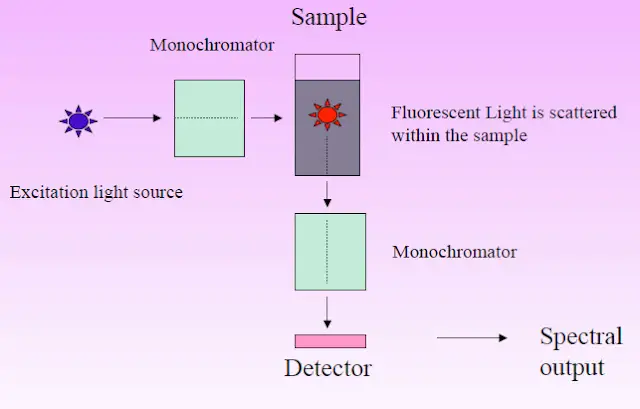
The following are the operating procedure of fluorescence spectroscopy–
- The sample is first prepared and taken in a clean cuvette. The cuvette is generally made up of quartz. It is used because quartz do not absorb much ultraviolet light.
- The cuvette containing sample is placed in the sample holder of the instrument.
- The light source is then switched on. Xenon arc lamp or laser is used as the source of light.
- The light from the source is passed through excitation monochromator or filter. It selects only the required wavelength of light.
- The selected light is allowed to fall on the sample. The molecules of the sample absorb this light.
- After absorption of light, the electrons of the molecule are excited to higher energy state.
- The excited molecules are unstable. So, they return back to the ground state after very short time.
- During this return, light is emitted from the sample. This emitted light is known as fluorescence.
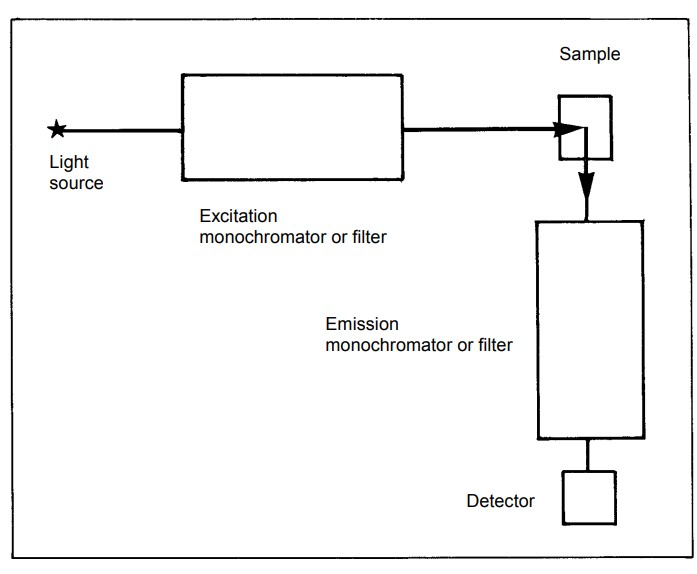
- The emitted fluorescence is collected at 90° angle to the incident light. This is done to reduce scattered light and transmitted light.
- The emitted light is passed through emission monochromator or filter. It selects the required wavelength of emitted light.
- The selected emitted light is then received by a detector. Generally photomultiplier tube (PMT) is used.
- The detector converts the light into electrical signal.
- The signal is sent to the recorder or computer system. It gives a fluorescence spectrum.
- The spectrum is then used for qualitative and quantitative analysis of the sample.
Instrumentation of fluorescence spectroscopy
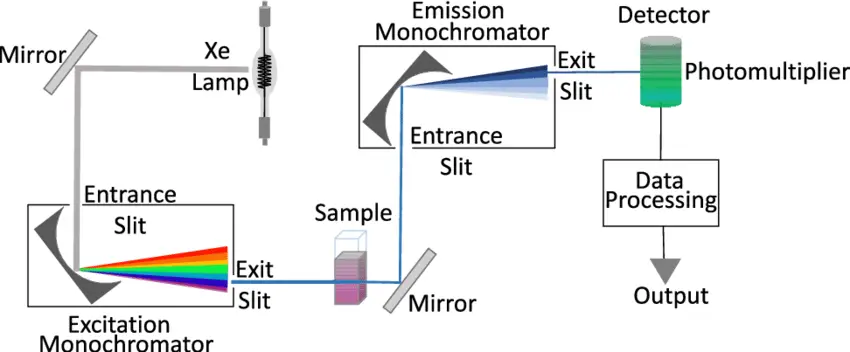
The following are the parts of fluorescence spectroscopy–
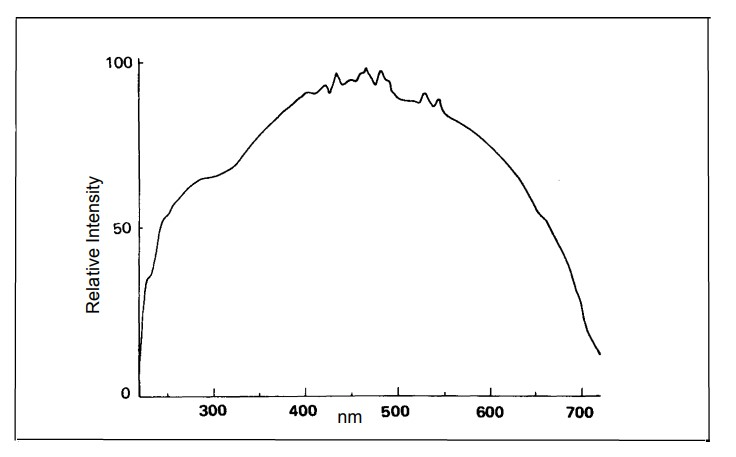
- Light source– It is used to give electromagnetic radiation for excitation of sample molecules. Common sources are xenon arc lamp, mercury vapour lamp, LED and laser.
- Excitation monochromator or filter– It is used to select the required wavelength of light from the light source. This selected light is allowed to fall on the sample.
- Sample holder– It is used to hold the sample during analysis. The sample is generally kept in quartz cuvette, because quartz absorbs less ultraviolet light.
- Emission monochromator or filter– It is used to select the required wavelength of fluorescent light emitted by the sample. This selected light then goes to the detector.
- Detector– It is used to detect the emitted fluorescent light. It converts the light into electrical signal. The detector is generally placed at 90° angle to the incident light to reduce scattered light.
- Photomultiplier tube (PMT)– It is a highly sensitive detector used in fluorescence spectroscopy. It can detect very low intensity of emitted light. Photodiode and CCD camera are also used.
- Data analysis system– It receives the signal from the detector. It processes the signal and gives result as fluorescence spectrum.
- Polarizers– These are optional parts used in the excitation and emission path. It is used to measure fluorescence polarization and anisotropy.
Factors that affect fluorescence spectroscopy
The following are the factors that affect fluorescence spectroscopy–
- Solvent properties– Solvent affect the fluorescence of fluorophore. Polarity, dielectric constant and refractive index of solvent may change absorption and emission wavelength. This is known as solvatochromism.
- Temperature– High temperature usually decrease fluorescence intensity. Molecular vibration and collision increase. So, energy is lost in non-radiative way.
- Concentration– At low concentration, fluorescence intensity increases with concentration. At high concentration, this relation is not proper. It is due to inner filter effect, aggregation and dimer formation.
- pH– pH changes the charge and structure of fluorophore. So, fluorescence intensity and emission spectrum may change.
- Quenchers– Quenchers are substances which reduce fluorescence intensity. Oxygen, halogens, amines and heavy atoms act as quenchers. They remove energy from excited molecule without emission of light.
- Molecular rigidity– Rigid molecules show high fluorescence. In rigid structure, less energy is lost by rotation and vibration.
- Photobleaching– Long exposure of fluorophore to excitation light causes permanent chemical damage. As a result fluorescence intensity decreases slowly.
- Scattering and autofluorescence– Some samples scatter light and some samples show their own fluorescence. This interfere with proper detection of fluorescence. Rayleigh scattering, Raman scattering and autofluorescence are included in it.
Applications of fluorescence spectroscopy
The following are the applications of fluorescence spectroscopy–
- Medical and clinical diagnosis
- It is used for diagnosis of diseases like cancer and metabolic disorders by detecting specific biomarkers.
- It is used for identification of viral and bacterial infections by highly sensitive immunoassay.
- It is used in monitoring of therapeutic drugs and pharmacokinetic study to know drug distribution in the body.
- Forensic science
- It is used in detection of invisible biological fluids at crime scene such as blood, saliva, semen and vaginal secretion.
- It is used to determine the age or time since deposition of biological stains like semen.
- It is used for detection of trace amount of illicit drugs such as cocaine, heroin, 3,4-MDMA and explosives.
- Biological and life sciences
- It is used for study and quantification of structural dynamics of DNA, RNA and proteins.
- It is used to track cellular process, metabolic activity and protein-protein interaction in real time.
- It is used in image-guided surgery where fluorescent nanoprobes helps surgeons to visualize tumor margins and sentinel lymph nodes.
- Food safety and quality control
- It is used for detection of harmful contaminants such as mycotoxins, pesticides and heavy metals in food materials.
- It is used for monitoring the presence and concentration of food additives, synthetic colourants and preservatives.
- It is used for identification of counterfeit foods or adulterants such as fake olive oil and altered honey.
- Environmental monitoring
- It is used for assessment of water quality by tracking chromophoric dissolved organic matter (CDOM) and pollutants in water channels and soil.
- It is used for detection of trace toxic elements like mercury and arsenic in environmental samples.
- It is used for identification of origin of oil spills and tracing municipal waste water.
- Pharmaceutical industry
- It is used in drug discovery by screening interaction of pharmaceutical compounds with biomolecules.
- It is used in quality control to verify purity, consistency and composition of active pharmaceutical ingredients.
- It is used for evaluation of thermal stability of biocatalysts and pharmaceutical products.
- Materials science and engineering
- It is used for checking quality, efficiency and crystal structure of photovoltaic materials and solar cells.
- It is used for characterization of optical properties of new materials like quantum dots, nanoparticles and semiconductors.
- It is used for measuring fluorescence in commercial products such as optical brighteners in laundry detergents and food dyes.
Advantages of fluorescence spectroscopy
The following are the advantages of fluorescence spectroscopy–
- Fluorescence spectroscopy is highly sensitive technique which can detect trace concentration of substances up to 1000 times lower than UV-Visible spectrophotometry.
- It measures the emitted light directly against a dark background, so very small amount of analyte can also be detected.
- It is highly selective because only specific compounds absorb and emit light at particular wavelength.
- It acts as a two-dimensional filter by using both excitation and emission wavelength.
- It is used to detect targeted molecules even in complex mixture.
- It is a non-destructive technique because the sample remains chemically intact after irradiation.
- It is useful for forensic analysis, repeated testing and continuous in-vivo monitoring.
- It gives rapid result and is used for real-time observation of dynamic biological processes.
- It is also used in high-throughput screening and immediate on-site diagnostic result.
- It provides quantitative information such as concentration of the sample.
- It also gives qualitative information such as molecular dynamics, structural conformation and molecular interaction.
- It is sensitive to local physical environment of the sample such as pH, polarity and ion concentration.
- It is used in different measurement types such as steady-state fluorescence, time-resolved kinetics, 3D emission-excitation matrix (EEM) and fluorescence resonance energy transfer (FRET).
- It requires only small amount of sample for analysis.
- It is comparatively inexpensive and easy technique than many complex analytical methods.
- It can be used in different laboratory and field applications.
Limitations of fluorescence spectroscopy
The following are the limitations of fluorescence spectroscopy–
- All compounds do not show natural fluorescence, so many substances need fluorescent labels or probes for their detection.
- The attachment of fluorescent label may change the natural properties, behaviour or interaction of the target molecule.
- The fluorescence spectra usually gives few and broad peaks, so it is difficult to separate specific substances from complex mixture.
- Overlapping signals may occur when many fluorescent compounds are present in the same sample.
- The fluorescence signal can be quenched by other molecules such as oxygen, halides and sample impurities.
- Quenching may decrease the fluorescence intensity by collision or interaction with the fluorophore.
- It requires careful sample preparation because small interference can affect the final result.
- The fluorescence property is highly affected by environmental factors such as temperature, pH and solvent composition.
- Reproducible result is difficult to obtain when the experimental conditions are not constant.
- Continuous exposure to high energy excitation light such as UV light or laser can cause photobleaching.
- In photobleaching, the fluorophore is destroyed by photochemical reaction and the fluorescence intensity decreases with time.
- The measurement may be affected by autofluorescence from sample or solvent.
- Light scattering effects such as Raman scattering and Rayleigh scattering may also produce optical interference.
- Inner filter effect occurs in highly concentrated or strongly absorbing samples.
- In this effect, excitation light is absorbed near the front surface of cuvette and the whole sample does not fluoresce equally.
- It is less suitable for thick, turbid or opaque samples because visible light scattering and tissue absorption reduce penetration of excitation light.
- Fluorescence instruments are generally more complex than UV-Visible spectrophotometer.
- The instrument cost is also high, so it may not be easily available in all laboratories.
Precautions of Fluorescence Spectroscopy
The following are the precautions of fluorescence spectroscopy–
- The sample should be kept highly diluted during fluorescence spectroscopy.
- The optical density of the sample should be preferably less than 0.05 to prevent inner filter effect.
- The concentration of sample should be low, so that fluorescence intensity and concentration remain in linear relation.
- Clean pipettes and tubes should be used to avoid contamination of the sample.
- The sample should be transparent because turbidity and impurities can cause light scattering.
- High-purity quartz cuvette should be used for fluorescence measurement.
- The cuvette should be properly aligned in the sample holder before taking reading.
- The cuvette should be free from scratch, fingerprints and stain because these can alter light transmission.
- The temperature, pH and solvent composition of the sample should be kept constant during the analysis.
- Continuous exposure of sample to high energy excitation light should be avoided.
- This is done to prevent photobleaching and irreversible photochemical decomposition of fluorophores.
- Dissolved oxygen should be reduced because it can quench the fluorescence signal.
- In highly sensitive studies, triplet quenchers may be added or measurement may be done in controlled glove box.
- Blank solution of pure solvent should be used for correction of background autofluorescence and solvent absorption.
- Reference channel should be used to correct fluctuation in excitation lamp intensity with time.
- The instrument should be adjusted in 90-degree detection geometry.
- In this arrangement, fluorescence emission is collected at right angle to the excitation light beam.
- This prevents the bright transmitted or scattered excitation light from reaching the detector.
References
- Sauer, M., Hofkens, J., & Enderlein, J. (2011). Basic principles of fluorescence spectroscopy. In Handbook of Fluorescence Spectroscopy and Imaging. Wiley-VCH.
- Larsen, D. (2024, February 3). 10.3.2: The Stokes shift. Chemistry LibreTexts.
- Patel, R. (2023). A review of the forensic applications for the analysis of biological fluids using fluorescence spectroscopy [Honors thesis, University at Albany]. Scholars Archive.
- Jones, M. (2024). Advancements in fluorescence sensors: Revolutionizing medical and forensic examination. Journal of Forensic Research, 15(1).
- Parvin, N., Aslam, M., Alam, M. N., & Mandal, T. K. (2025). Advances in NIR-II fluorescent nanoprobes: Design principles, optical engineering, and emerging translational directions. Micromachines, 16(12), 1371.
- Creative Proteomics. (n.d.). Application of fluorescence spectroscopy.
- Agilent. (n.d.). Applications of fluorescence spectroscopy, fluorescence analysis.
- MDPI. (2025). Biosensors, Volume 15, Issue 7 (July 2025) – 74 articles.
- ResearchGate. (n.d.). Body fluids and spectroscopic techniques in forensics: A perfect match?.
- AlpHa Measure. (2025, March 18). CDOM sensor: Role in monitoring water quality.
- Biocompare. (n.d.). Choosing the best detection method: Absorbance vs. fluorescence.
- YSI. (n.d.). Colored dissolved organic matter (CDOM/fDOM).
- Patsnap Synapse. (2025, May 9). Comparing UV-Vis vs. fluorescence spectrophotometers.
- Diamond Diagnostics. (2024). Enhancing patient care: Spectrophotometers for clinical labs.
- Yosemite Technologies. (2024, November 4). FDOM vs. CDOM: Exploring complexities of dissolved organic matter.
- HINOTEK. (n.d.). Fluorescence spectrophotometer vs UV-visible spectrophotometer: Which to choose?.
- So, P. T., & Dong, C. Y. (n.d.). Fluorescence spectrophotometry. Massachusetts Institute of Technology.
- Povrozin, Y., & Barbieri, B. (2016). Fluorescence spectroscopy. In M. Kurtz (Ed.), Handbook of Measurement in Science and Engineering (Vol. 3). John Wiley & Sons.
- Penn State Materials Research Institute. (n.d.). Fluorescence spectroscopy.
- O’Kane, M. (n.d.). Fluorescence spectroscopy instrumentation and principle. Ossila.
- Rayem, R. (2024). Fluorescence spectroscopy in food safety detection of contaminants and additives. Journal of Analytical & Bioanalytical Techniques, 15(12), 713.
- Wikipedia. (2026, February 14). Fluorescence spectroscopy.
- ResearchGate. (n.d.). Fluorescence spectroscopy in clinical, pharmaceutical, and forensic applications.
- Achetib, N., Falkena, K., Swayambhu, M., Aalders, M., & van Dam, A. (2023, February). Forensic body fluid identification. Amsterdam University of Applied Sciences.
- Murali, K., Murugan, D., Pathak, R., Chauhan, A., Munjal, S., Usha, S. P., & Shrivastav, A. M. (2026, March 10). Forensic detection: A comprehensive review of SERS mechanisms and applications. ACS Applied Optical Materials.
- Center for Accelerator Mass Spectrometry. (n.d.). Forensic science and environmental monitoring. Lawrence Livermore National Laboratory.
- Kennedy, P. (2024, September 3). Guide to fluorescence spectroscopy instrumentation. Ibsen Photonics.
- PMC. (n.d.). Intrinsic fluorescence markers for food characteristics, shelf life, and safety estimation: Advanced analytical approach.
- MRC Lab. (n.d.). Introduction to fluorescent spectrophotometer.
- LumeDEL. (2025, November 3). LEDs for spectroscopy: Precision light for critical measurements.
- PMC. (n.d.). Light-emitting-diode-induced fluorescence from organic dyes for application in excitation–emission fluorescence spectroscopy for food system analysis.
- Anonymous. (n.d.). Molecular fluorescence spectrophotometry: Theoretical foundations, instrumental architectures, and multi-disciplinary analytical frontiers.
- Andersson, A., Powers, L., Harir, M., Gonsior, M., Hertkorn, N., Schmitt-Kopplin, P., Kylin, H., Hellström, D., Pettersson, Ä., & Bastviken, D. (2024). Molecular level seasonality of dissolved organic matter in freshwater and its impact on drinking water treatment. Environmental Science: Water Research & Technology, 10, 1964-1981.
- HORIBA. (n.d.). Photoluminescence spectroscopy uncovers photovoltaic properties.
- HunterLab. (2026, February 3). Quality control in the pharmaceutical industry: The spectrophotometric solution for small molecules.
- PMC. (n.d.). Recent developments in fluorescent materials for heavy metal ions analysis from the perspective of forensic chemistry.
- Catingan, S. D., & Moores, A. (2024, January 25). Recent progress in surface-enhanced fluorescence using gold nanorods. ACS Applied Nano Materials, 7(16), 18467-18485.
- Bryan, J., Hoff, P., & Osburn, C. L. (2023, May 20). Routine estimation of dissolved organic matter sources using fluorescence data and linear least squares. ACS ES&T Water, 3(8), 2073-2082.
- PicoQuant. (n.d.). Solar cell characterization.
- PMC. (n.d.). Specific fluorescent signatures for body fluid identification using fluorescence spectroscopy.
- Yelimeshyn, S. (2025, December 24). Spectrophotometers in the lab: How they work and applications. BostonMed Supply.
- Yelimeshyn, S. (2025, December 24). Spectrophotometers in the lab: Uses & applications. BostonMed Supply.
- Hamamatsu. (n.d.). Spectroscopy for food safety.
- Reynolds, D. M. (2014, June 5). The principles of fluorescence. In P. G. Coble, J. Lead, A. Baker, D. M. Reynolds, & R. G. M. Spencer (Eds.), Aquatic organic matter fluorescence (pp. 3-34). Cambridge University Press.
- Persee. (2026, January 21). The role of spectrophotometry in pharmaceutical quality control and drug.
- Liang, S. (2019, October 31). The use of atomic fluorescence in environmental analysis. Aurora Biomed.
- MRC Lab. (n.d.). What are fluorescent spectrophotometers used for?.
- Agilent. (n.d.). What is fluorescence spectroscopy? Principles overview.
- HORIBA. (n.d.). What is fluorescence spectroscopy?.
- Lambda Advanced Technology. (n.d.). Why fluorescence spectrophotometry offers lower detection limits than UV-Vis spectrophotometry.
- AAT Bioquest. (2020, June 1). Why is fluorescence more sensitive than UV-VIS absorption spectroscopy?.