

Bioreactor is a special vessel or system used for growing living cells. It is used for microorganisms, plant cells and animal cells. It gives controlled condition for their growth and activity.
In bioreactor, temperature, pH, oxygen level and nutrients are controlled properly. Due to this, the cells grow in suitable condition. The metabolic activity of cells also takes place in proper way.
It is used to carry out biological reactions. In this process, raw organic materials are converted into useful products. Pharmaceuticals, vaccines, antibodies, biofuels and fermented foods are produced by using bioreactor.
The early form of bioreactor was simple fermentation vessel. Ancient people used ceramic vessels for making bread, wine, beer and mead. At that time, microorganisms were not known but fermentation was used.
In the 19th century, Louis Pasteur showed the role of microorganisms in fermentation. This made fermentation more scientific. Later Chaim Weizmann used bacterial strains for production of acetone during World War I.
Modern bioreactor development increased after the discovery of penicillin by Alexander Fleming. Large scale production of penicillin needed bigger and controlled vessels. By 1945, industrial bioreactors produced very large amount of penicillin.
After this, bioreactors were improved with better sterilization, agitation and aeration system. In the 1980s, they were also used for plant and animal cell culture. Now bioreactors are more automatic and advanced with single-use plastic vessels, sensors, AI control and other modern systems.
Principle of Bioreactor
Principle of Bioreactor is based on providing controlled condition for growth of cells or microorganisms. The bioreactor gives a suitable environment where the living cells can grow, multiply and produce useful product.
In this system, the culture vessel is supplied with proper nutrients. Nutrients like glucose, amino acids, salts and other growth materials are added. These are used by the cells for growth and metabolism.
The important factors like temperature, pH and oxygen level are controlled during the process. If these conditions are not proper, the cell growth becomes slow or the product formation becomes less.
After suitable condition is made, the selected microorganism or cell is added into the bioreactor. This is called inoculation. The cells start multiplying and produce the required biological product.
The stirrer or agitator mixes the culture medium. It helps in uniform distribution of oxygen and nutrients. Due to this, all cells get almost same condition inside the vessel.
During growth, cells use nutrients and release waste products. Carbon dioxide, lactic acid and other waste may be produced. These wastes should be removed or controlled because they can inhibit the cell growth.
Thus, bioreactor works by maintaining proper growth condition, mixing, aeration and waste control. In this way, useful products like enzymes, vaccines, antibiotics and other biological products are produced.
Criteria for an Ideal Bioreactor
- Bioreactor should have proper agitation and mixing. The cells and culture medium should mix uniformly. Due to this, nutrients and oxygen reach to all parts of the medium.
- It should have efficient aeration system. Oxygen supply is needed for aerobic culture. The bioreactor should transfer oxygen properly into the medium.
- It should control the environmental factors. Temperature, pH, pressure and nutrient level should be monitored. These should be adjusted according to the need of organism.
- It should maintain sterile condition. The vessel and all parts should be sterilized properly. Contamination should not enter during fermentation.
- The material of bioreactor should be non-corrosive. It should tolerate pressure, temperature and pH changes. It should not release toxic substances into the medium.
- It should have foam control system. Foam is produced during aeration and mixing. Excess foam may disturb the culture and reduce the working volume.
- It should have proper feeding port. Nutrients, acid, alkali or other materials can be added through this port. The addition should be done in sterile way.
- It should have sampling port. Small amount of culture can be removed for checking growth and product formation. Sampling should not contaminate the whole culture.
- It should be easy to clean and operate. The design should allow proper washing, sterilization and maintenance. This helps in repeated use of the bioreactor.
Bioreactor Design
- Vessel is the main container of bioreactor. The culture medium and cells are kept inside it. It may be made of stainless steel 316L, borosilicate glass or single-use plastic.
- Headplate is present at the top of vessel. It holds the important lines and connections. Sensors, inlet tubes, outlet tubes and mechanical parts are fitted through it.
- Agitation system is used for mixing the culture. It has motor, shaft and impeller. The impeller may be Rushton turbine, pitched blade or marine propeller.
- Mixing helps in uniform distribution of nutrients, oxygen and heat. But too much mixing may damage sensitive cells. So agitation should be controlled properly.
- Aeration system gives sterile air or gases into the culture. Air, oxygen, nitrogen or CO₂ may be supplied according to need of cells.
- Sparger is present near the bottom of the vessel. It breaks the gas into bubbles. Small bubbles increase oxygen transfer into the medium.
- Baffles are vertical plates fixed on the inner wall of vessel. They stop the circular flow of liquid. It reduces vortex formation and improves mixing.
- Heat transfer system is used to maintain proper temperature. Cooling jacket, heating jacket, internal coil or heat exchanger may be used. It removes heat produced during cell growth.
- Sensors are used to check the condition inside the bioreactor. pH, temperature, dissolved oxygen, pressure and biomass can be monitored. These readings help in controlling the process.
- Advanced bioreactor may have PAT system. Raman spectroscopy may be used to check glucose, lactate and glutamine. These are observed without opening the vessel.
- Foam control system is used to control foam. Foam is formed during aeration and agitation. Foam probe detects foam and antifoam is added by pump.
- Exhaust system removes the gases from headspace. It has sterile filter, condenser and pressure valve. O₂ and CO₂ level can also be checked in off-gas.
- Inlet port is used to add fresh medium, nutrients, acid or alkali. The addition should be aseptic. It prevents contamination of culture.
- Outlet port is used to remove product, waste or culture medium. It is used during batch or continuous process.
- Sampling port is used to take small amount of culture. The sample is checked for cell growth, pH, product formation and contamination. Sampling should be done in sterile way.
- Cleaning and sterilization system keeps the bioreactor clean. CIP and SIP systems are used in stainless steel bioreactor. Cleaning chemicals and steam are passed through spray devices and valves.
- Automation control system controls the whole process. It may be PLC or SCADA based. It controls feed rate, gas flow, temperature, pH and other conditions according to sensor readings.
Important factors need to be consider in designing Bioreactors
- Organism type should be considered first. Bacteria, yeast, plant cell and animal cell do not need same condition. Some cells are strong and some cells are shear sensitive.
- The product to be formed is also important. The design may change for enzyme, vaccine, antibody, antibiotic or biofuel production. The bioreactor should support the product formation properly.
- Agitation and mixing should be proper. Nutrients, oxygen and heat should be distributed uniformly in the medium. But very high stirring may damage delicate cells.
- Aeration system should give enough oxygen. Aerobic culture needs continuous oxygen transfer from gas bubble to liquid medium. If oxygen is less, growth and product formation becomes poor.
- CO₂ removal should be considered. During cell growth, CO₂ is produced. If it accumulates in the medium, it may inhibit the cells and reduce productivity.
- Temperature control system is needed. Biological reactions are sensitive to temperature. Heating jacket, cooling jacket or coil may be used to keep proper temperature.
- pH control is also needed. Cell growth changes the pH of medium. Acid or alkali addition system should be present to maintain suitable pH.
- Foam control should be present in the design. Foam is produced due to aeration and agitation. Foam may contaminate the filter or disturb the culture volume.
- The material of vessel should be suitable. Stainless steel 316L, glass or single-use plastic may be used. The material should not release toxic substances into the culture.
- Sterility should be maintained. The design should allow cleaning and sterilization. CIP and SIP system are useful for large stainless steel bioreactors.
- Feed ports should be placed properly. Nutrient, gas and pH control chemicals should mix quickly after addition. Poor mixing may create local high concentration and damage the cells.
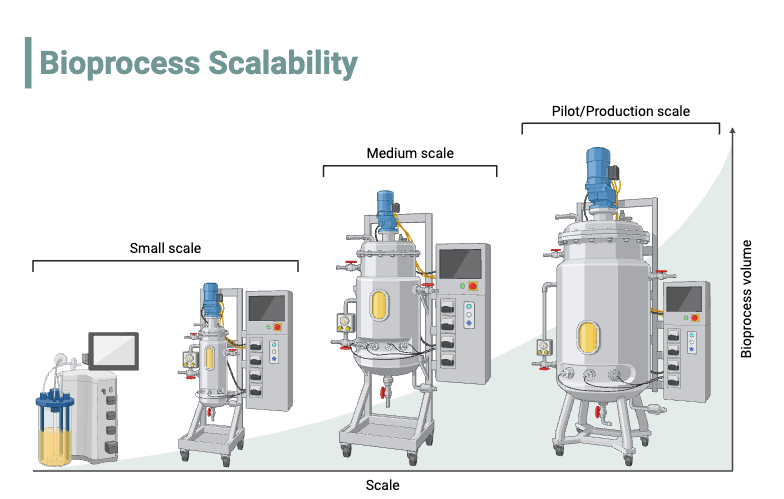
- Scale-up should be considered during design. Small laboratory condition may not work same in large tank. Heat generation, pressure, mixing and gas transfer change with size.
- The design should be easy to operate and monitor. Sensors for pH, temperature, dissolved oxygen and pressure should be fitted. These help to control the whole process during fermentation.
Diagram of a bioreactor
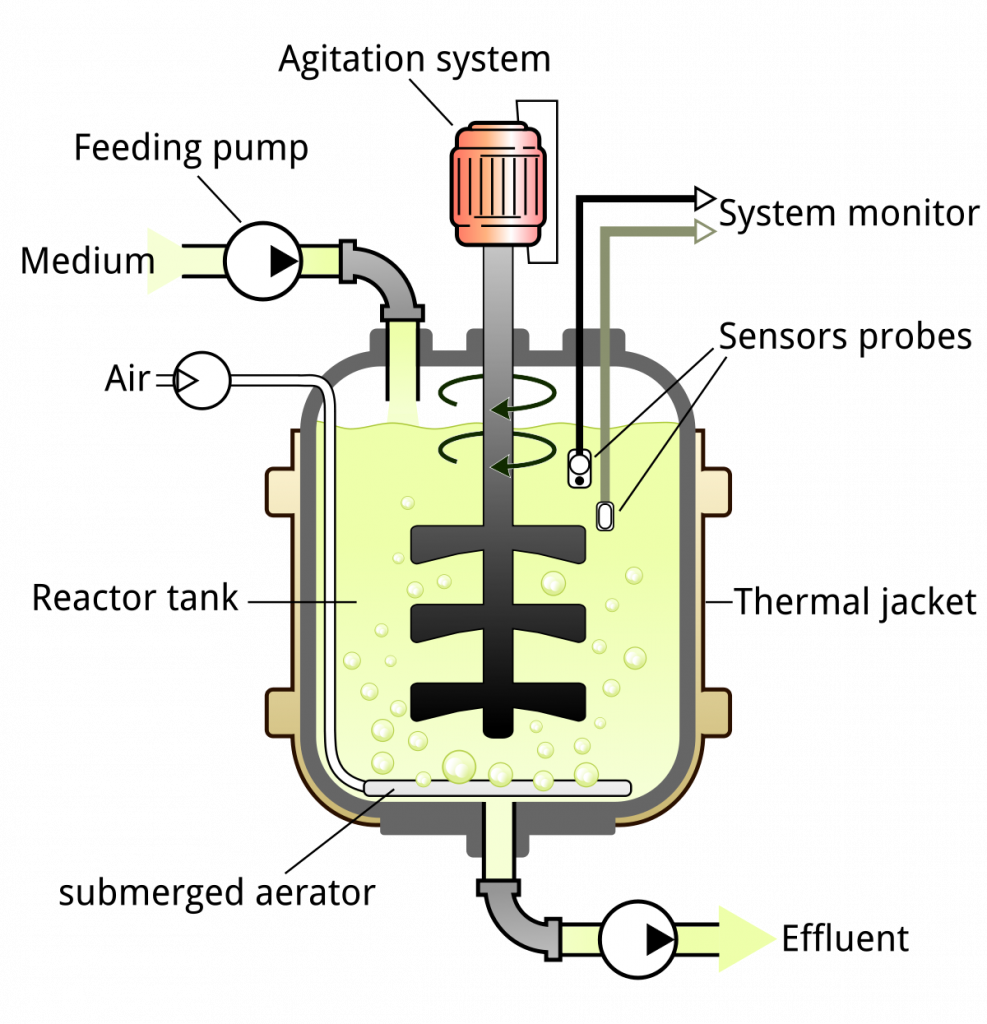
Parts of the bioreactor and their function
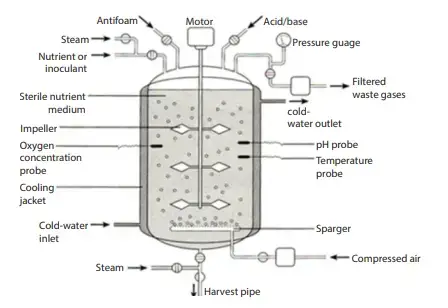
- Vessel or chamber – It is the main container of bioreactor. The culture medium and cells are kept inside it. It is air tight and sterile, so fermentation takes place without contamination.
- Headplate – Headplate is present at the top of the vessel. It holds ports, sensors and mechanical connections. Addition line and sampling line are also fitted through it.
- Agitator or stirrer – Agitator is used for mixing the culture medium. It has shaft and blades connected with motor. It helps in uniform distribution of nutrients, oxygen and heat.
- Impeller – Impeller is the blade part of agitator. It rotates inside the vessel. It keeps the cells and medium in mixed condition and prevents settling of cells.
- Baffles – Baffles are vertical plates fixed inside the wall of vessel. They stop vortex formation. They make the liquid movement more turbulent and improve mixing.
- Sparger – Sparger is present near the bottom of the vessel. It supplies sterile air or oxygen into the medium. It forms small bubbles, so oxygen transfer becomes better.
- Gas supply system – This system gives required gases to the culture. Air, oxygen, nitrogen or CO₂ may be supplied. It is used according to the need of organism.
- Exhaust system – Exhaust system removes waste gases from the vessel. CO₂ and other gases produced during growth are removed. It also helps to maintain pressure in the headspace.
- Heat transfer system – It maintains the temperature inside the bioreactor. Heating jacket, cooling jacket, internal coil or heat exchanger may be used. Proper temperature is needed for cell growth and enzyme activity.
- pH control system – It measures and controls the pH of the culture. If pH changes, acid or alkali is added automatically. This keeps the medium in suitable condition.
- Sensors or probes – Sensors are used to check different conditions inside the bioreactor. pH, temperature, dissolved oxygen, pressure and biomass can be monitored. These readings are used for process control.
- Foam control system – Foam is formed due to aeration and agitation. Foam probe detects the foam level. Antifoam is then added by dosing pump to reduce foam.
- Inlet ports – Inlet ports are used to add fresh medium, nutrients, sugar, acid, alkali and other additives. The addition is done in sterile way. This prevents contamination.
- Outlet ports – Outlet ports are used to remove product, waste medium or culture. It is useful in batch, fed batch and continuous process. The removal should be controlled.
- Sampling port – Sampling port is used to remove small amount of culture for testing. Cell density, pH, substrate level and product formation can be checked. Sampling is done without disturbing the whole culture.
- Cleaning and sterilization system – CIP and SIP systems are used for cleaning and sterilization. Cleaning chemicals and steam are passed through pipes and spray devices. It keeps the bioreactor aseptic.
- Control system – Control system is the main operating part of bioreactor. It receives signal from sensors and controls temperature, pH, gas flow and agitation speed. It helps to maintain the required growth condition.
Bioreactor Types
- Stirred tank bioreactor – It is also called STR or CSTR. It has mechanical stirrer and impeller for mixing. It is the most commonly used bioreactor.
- Airlift bioreactor – In this bioreactor, air or gas is passed into the medium. The liquid moves due to gas flow. It may have internal or external draft tube for circulation.
- Bubble column bioreactor – It is a tall vertical column type bioreactor. Air is supplied from bottom side. The bubbles mix the medium and also give oxygen.
- Packed bed bioreactor – It has a fixed bed of solid particles or support material. The cells or enzymes are attached on this support. Nutrient medium flows over the bed.
- Fluidized bed bioreactor – It is similar to packed bed but the particles are not fixed. The liquid or gas moves upward and keeps the particles suspended. This gives better mixing and contact.
- Photobioreactor – It is used for photosynthetic organisms. Microalgae and cyanobacteria are grown in this bioreactor. Light is supplied by sunlight or artificial lamp.
- Membrane bioreactor – It has biological reaction and membrane filtration together. The membrane separates cells or biomass from the liquid. It is useful for product recovery and waste treatment.
- Perfusion bioreactor – Fresh medium is supplied continuously in this type. Used medium and waste are removed at the same time. The cells are retained inside the vessel.
- Wave bioreactor – It has sterile disposable plastic bag on a rocking platform. The rocking movement produces wave in the medium. It gives gentle mixing and low shear.
- Single-use bioreactor – It is made of plastic bag or disposable vessel. It is used for one batch and then discarded. Cleaning and sterilization are not needed after use.
- Solid-state fermentation bioreactor – It is used for growth on solid medium with less water. Trays, fixed beds and stirred drums are used in this type. It is useful for fungi and some enzyme production.
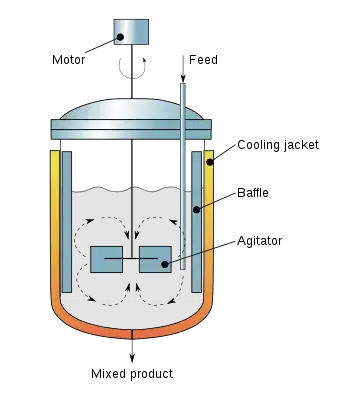
1. Continuous stirred tank fermentor
Continuous stirred tank fermentor is a cylindrical vessel used for continuous fermentation. It is also called Stirred Tank Reactor (STR) or CSTR. It contains mechanical stirrer for mixing the liquid culture.
- The vessel is the main body of the fermentor. It is usually cylindrical in shape. In industrial scale, it is made of stainless steel and in laboratory scale it may be made of borosilicate glass.
- The height and diameter of the vessel is maintained in proper ratio. The height to diameter ratio is generally 3 to 5. This helps in good mixing and aeration.
- The agitator is present inside the vessel. It has motor, shaft and impellers. Rushton turbine or pitched blade impeller may be used for mixing.
- The agitator mixes the medium, cells and nutrients. It also breaks the air bubbles into small bubbles. Due to this, oxygen is distributed in the culture.
- The sparger is present at the bottom of the fermentor. It supplies sterile air or oxygen into the medium. Air bubbles are formed and then spread by the impeller.
- The fermentor works on continuous process. Fresh medium enters into the vessel and culture medium is removed at the same time. This keeps the volume almost constant.
- In chemostat type, the flow rate of medium is controlled. The growth is controlled by limiting nutrient. In turbidostat type, the turbidity or cell density is controlled.
- Sensors and probes are fitted in the fermentor. pH, temperature, dissolved oxygen and foam level are measured. These values are controlled during fermentation.
- Heating or cooling jacket is present around the vessel. It maintains the required temperature. Proper temperature is needed for growth of microorganisms and product formation.
- It is used for production of antibiotics, vaccines, enzymes and therapeutic proteins. It is also used in food fermentation and beverage production.
- It is used for biofuel production and wastewater treatment also. Hydrocarbon rich industrial waste can be treated by using this fermentor.
- The main advantage of continuous stirred tank fermentor is continuous operation. It gives uniform mixing, good oxygen transfer and stable production.
- It also gives good control of temperature, pH and dissolved oxygen. The construction is simple and cleaning is easier than many complex systems.
- The limitation is that it consumes more power. The motor and pumps need energy for continuous stirring and aeration.
- Foaming is also common in this fermentor. Strong agitation and aeration produce foam. Shaft seal and bearing may also create maintenance problem and contamination risk.
2. Bubble column bioreactors
- Bubble column bioreactor is a tall cylindrical vessel. It is filled with liquid medium. The height is more than diameter and the ratio is generally 4 to 6.
- In this bioreactor, there is no mechanical stirrer. Mixing is done by air bubbles. So the structure is simple than stirred tank bioreactor.
- Sterile air or gas is supplied from the bottom of the column. It is given by perforated plate, pipe or microporous sparger.
- The air bubbles rise upward through the liquid medium. During this movement, oxygen is supplied to the microorganisms. The rising bubbles also mix the medium.
- The mixing is gentle in this bioreactor. So it is useful for sensitive cells. Plant cells and some delicate cultures can be grown in it.
- Vertical baffles or perforated plates may be placed inside the vessel. These help in better mixing and mass transfer. The bubbles spread more properly.
- It is used in fermentation process. Chemicals, pharmaceuticals and some biological products can be produced by this bioreactor.
- It can also be used as bubble column photobioreactor. In this type, light is supplied for photosynthetic organisms. Microalgae can be grown by using rising bubbles and light.
- The main advantage is simple design. It has less moving parts. So maintenance is less and contamination risk is also reduced.
- It gives good heat management and flow distribution. It may have lower capital and operating cost than stirred tank bioreactor.
- The limitation is that its mixing is not always highly efficient. It has no draft tube like airlift bioreactor. So circulation may be less controlled.
- Installation may be difficult in some large systems. It may also need more catalyst than fixed bed bioreactor. So it is not suitable for all processes.
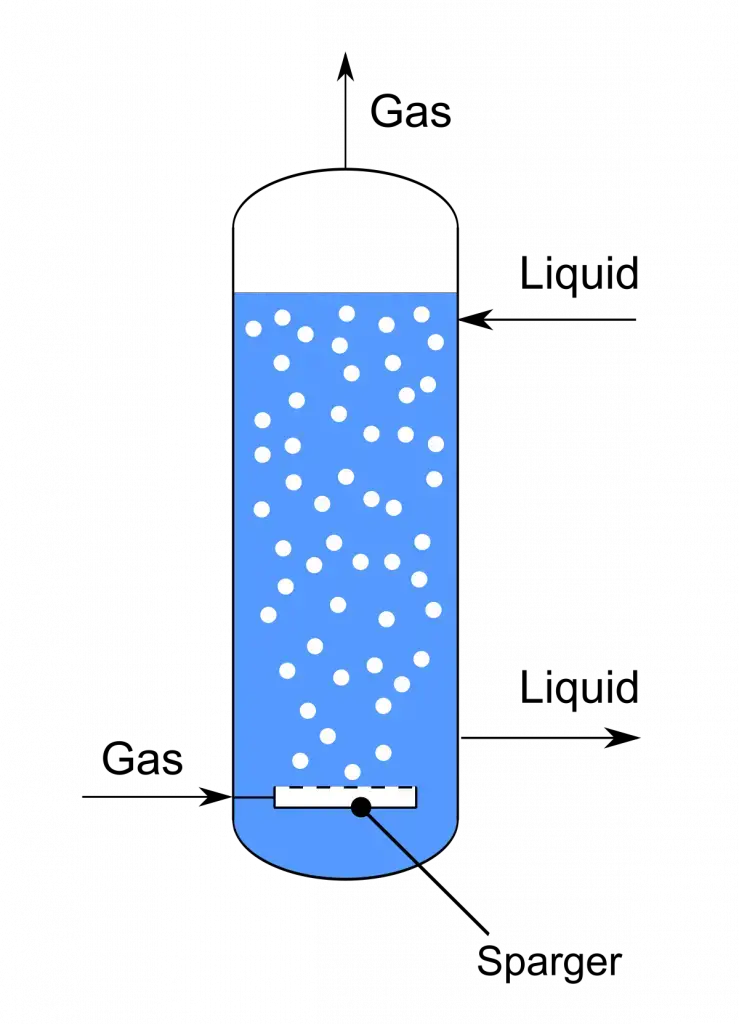
3. Air-lift bioreactors
- Air-lift bioreactor is a bioreactor where mixing is done by air or gas. It does not have mechanical stirrer or impeller. The air itself moves the liquid medium.
- In this bioreactor, sterile air is supplied from the bottom. The air enters through sparger and forms bubbles. These bubbles help in aeration and mixing.
- It has a draft tube. The draft tube divides the vessel into two parts. One part is called riser and another part is called downcomer.
- In the riser region, air bubbles are present. The liquid becomes lighter because of gas bubbles. So the liquid moves upward.
- In the downcomer region, gas is less or absent. The liquid becomes heavier and moves downward. In this way, a continuous circulation is formed.
- The movement of liquid is due to difference in density. The aerated riser has lower density and downcomer has higher density. This difference makes the liquid flow.
- It gives gentle mixing. There is no blade to cut the cells. So it is useful for sensitive cells like animal cells, plant cells and insect cells.
- It needs less energy than stirred tank bioreactor. There is no motor and shaft for agitation. The design is simple and operation is also easy.
- It is easy to maintain and sterilize. Since moving parts are absent, mechanical failure is less. Contamination risk from shaft seal is also reduced.
- It gives good oxygen transfer. The rising bubbles supply oxygen to the culture. Nutrients and heat are also distributed in the medium.
- The limitation is that it depends on air pressure. If more mixing is needed, more air pressure is required. This may increase the operating cost.
- Foam control is difficult in this bioreactor. There is no impeller to break the foam. So foam may collect at the top of the culture.
- It is used for cultivation of plant cells, animal cells and insect cells. It is also used for microalgae and cyanobacteria culture.
- It is used in production of enzymes, antibiotics, methanol and single-cell proteins. It is also used in some aerobic bioprocesses.
- It is used in wastewater treatment also. UASB type process and anaerobic digestion can be done for breaking pollutants and producing methane-rich biogas.


4. Packed Bed Reactors

- Packed bed reactor is also called fixed bed bioreactor. It contains a fixed bed of solid particles inside the vessel. Cells or enzymes are attached on these particles.
- The solid bed remains stationary. It does not move during operation. The nutrient medium flows through the bed and comes in contact with the immobilized cells.
- The flow of medium may be upward or downward. Downward flow is commonly preferred. It prevents the particles from lifting and becoming fluidized.
- The support material may be gel, glass, ceramic, metal or polymer. These may be in the form of beads, fibres, rings or saddles. The cells grow or remain attached on their surface.
- The packed column is the main chamber of this reactor. It holds the support matrix and biological culture. The column should allow proper flow of medium through the bed.
- The support matrix gives large surface area for cell attachment. It also helps in distribution of medium. It prevents the bed from settling too much.
- Inlet port is used for entering fresh nutrient broth. Outlet port is used for removing the product rich liquid or spent medium. In this way, continuous operation can be done.
- Sometimes permeable membrane is also used. It keeps the solid support inside the vessel. The liquid medium can pass out through it.
- The main advantage is that there is no mechanical stirrer. So cells are protected from shear stress. It is useful for immobilized cells and enzymes.
- It can hold high cell density. The conversion rate may be high because many cells are present in small volume. This makes the reactor efficient.
- It needs less energy. There are no moving mechanical parts. So maintenance and operating cost become less.
- It can be used in continuous process. The medium enters and product comes out continuously. So steady operation can be maintained.
- The limitation is that cleaning is difficult. The packed bed has many small spaces. Catalyst or support replacement is also not easy.
- Heat and nutrient gradients may occur inside the bed. Some part may get less oxygen or nutrient. This can reduce the activity of cells.
- Channeling may occur in this reactor. The liquid may pass through one easy path instead of flowing uniformly. Then all cells do not get equal medium.
- Pressure drop is also a problem. When the liquid passes through packed bed, resistance is produced. In large scale, this becomes more difficult.
- It is used in wastewater treatment. Pollutants and organic compounds are removed by microbial action. It is also used for enzyme production.
- It is used for production of bioplastics, biopolymers and biogas. Organic waste can be converted into methane by microbial process.
5. Fluidized Bed Bioreactor
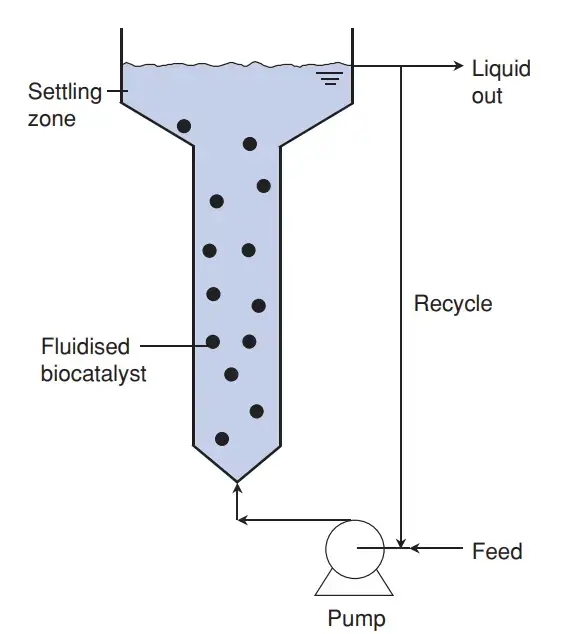
- Fluidized bed bioreactor is also called FBBR. It is similar to packed bed bioreactor but the particles are not fixed. The particles remain suspended in the liquid.
- In this bioreactor, liquid or gas is passed from bottom side with high velocity. Due to this upward flow, the solid particles lift up. This condition is called fluidized state.
- The cells or enzymes are attached on the solid particles. These particles act as support matrix. The medium moves around them and reaction takes place.
- The particles should have proper weight. If the particles are very light, they may flow out with liquid. If they are very heavy, they settle at the bottom.
- The upper part of the reactor is usually wider. The liquid velocity becomes less in this region. So the liquid can come out but the solid particles remain inside the vessel.
- The reactor vessel holds the liquid medium and support particles. It should allow upward flow of liquid or gas. It also keeps the particles in circulating condition.
- The support matrix gives surface for microorganisms to attach and grow. The particles may be small beads or carrier materials. More surface area gives more cell attachment.
- Gas distribution system is present at the bottom. It supplies air or gas into the reactor. It helps in aeration, mixing and fluidization of particles.
- Pump is used to circulate the liquid medium. The liquid is passed again and again through the reactor. This keeps contact between substrate and biocatalyst.
- Filtration system may be used to separate liquid and particles. It helps to keep the carrier particles inside the reactor. Product or treated liquid can be removed.
- It reduces some problems of packed bed reactor. Clogging, channeling and bed compaction are less. Pressure drop is also less than packed bed in many conditions.
- It gives good mixing. Heat and mass transfer are also better. Nutrients and oxygen can reach the cells more uniformly.
- It can work in continuous process. Liquid can be recycled and product can be removed. High amount of biocatalyst can be maintained inside the vessel.
- The limitation is that proper pumping is needed. Flow rate should be correct. If flow is less, particles settle and if flow is high, particles may wash out.
- The reactor vessel may be large in size. Pressure loss or pressure drop may also occur during operation. So control is needed.
- It is used in wastewater treatment. Both aerobic and anaerobic treatment can be done. Industrial and municipal waste water are treated by this reactor.
- It is used for biofuel production. Biomass can be converted into biofuels. Biohydrogen can be produced by anaerobic fermentation.
- It is used in bioremediation. Contaminated soil, water and sediments can be treated. Pollutants are degraded by microbial action.
- It is used in chemical industry and food processing. It is also used for drying of materials. In pharmaceutical and agriculture work, it may be used for coating or encapsulation of particles.

6. Photobioreactor
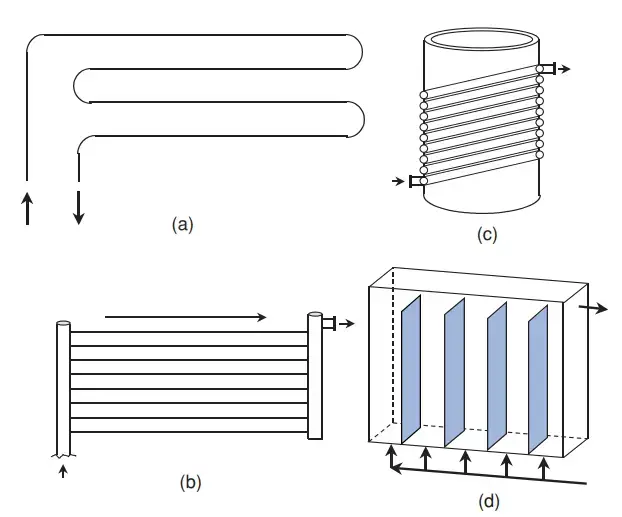
- Photobioreactor is a special type of bioreactor used for growing photosynthetic organisms. Microalgae and cyanobacteria are commonly grown in it. It works in presence of light.
- In this bioreactor, sunlight or artificial light is used. The organisms use this light for photosynthesis. By this process, light energy is converted into biomass and useful products.
- The cultivation vessel is the main container of photobioreactor. It is usually transparent. This helps the light to enter into the culture medium.
- Light source is an important part of this bioreactor. Sunlight, LED or fluorescent lamp may be used. The intensity and type of light can be adjusted according to the organism.
- Mixing system is used to keep the cells suspended. It prevents settling of cells at the bottom. It also helps all cells to get light equally.
- Aeration system supplies air or CO₂ into the culture. CO₂ is needed for photosynthesis. It also helps in removal of excess oxygen formed during photosynthesis.
- Environmental control system maintains temperature, pH and nutrient level. These conditions are important for algal growth. If these are not proper, the growth becomes poor.
- Harvesting system is used after growth of culture. The algal cells are separated from the medium. Centrifugation, filtration or flocculation may be used.
- Tubular photobioreactor has long transparent tubes. These tubes may be arranged horizontally or vertically. It is used for large scale algal cultivation.
- Flat plate photobioreactor has transparent flat panels. The culture gets good light from broad surface. It can give high biomass production.
- Bag photobioreactor uses sterile transparent plastic bags. It is simple and low cost. It is useful for small scale and research work.
- Bubble column photobioreactor is a vertical column type system. Air bubbles rise through the culture. They provide mixing, aeration and suspension of algal cells.
- Open raceway pond is an open type photobioreactor. It is simple and cheaper. But contamination and weather effect are more in this system.
- Photobioreactor is used for biofuel production. Algae and cyanobacteria can produce biodiesel, bioethanol and biogas.
- It is used for food and nutrition products. Antioxidants, omega-3 fatty acids, food additives and nutraceuticals can be produced.
- It is used for production of enzymes, pharmaceuticals, bioproducts and bioplastics. Many useful compounds are obtained from algal culture.
- It is used in wastewater treatment. Algae remove nutrients from wastewater. It can also capture CO₂ from the system.
- The advantage of photobioreactor is that light, temperature and nutrient condition can be controlled. It gives better growth than open system in many cases.
- The limitation is high initial cost. Sterilization is also difficult. If contamination occurs, the algal culture may be affected.

7. Membrane Bioreactor
- Membrane bioreactor is also called MBR. It is a bioreactor in which biological treatment and membrane separation are used together. Microorganisms break the organic matter and membrane separates the treated liquid.
- In this system, activated sludge process may be used. The microorganisms remain in the mixed liquid. They degrade the organic wastes present in the water.
- The membrane is semi-permeable type. It may be microfiltration, ultrafiltration, nanofiltration or reverse osmosis membrane. It allows clean water or product to pass and holds cells and biomass.
- Submerged membrane bioreactor has membrane directly inside the bioreactor tank. The membrane remains dipped in the mixed liquor. Filtration occurs inside the same tank.
- External membrane bioreactor is also called side-stream MBR. In this type, the membrane is placed outside the main tank. The mixed liquor is pumped to the membrane unit for filtration.
- Anaerobic membrane bioreactor is also called AnMBR. It uses anaerobic digestion with membrane separation. It is useful for wastewater treatment and biogas production.
- Hybrid MBR combines membrane bioreactor with other treatment steps. It may use oxidation or anaerobic, anoxic and aerobic zones. This helps in better removal of contaminants.
- The bioreactor tank is the main vessel. It contains mixed liquor, microorganisms, organic matter and water. The biological reaction occurs inside this tank.
- The membrane module is the filtering part. It may be hollow fibre, flat sheet, spiral wound or tubular type. The selection depends on the process need.
- Aeration system supplies oxygen for microbial growth. The bubbles also clean the membrane surface by creating movement. This helps to reduce fouling.
- Pump and permeate system draw the liquid through the membrane. The treated water which passes through membrane is called permeate. Solids and biomass remain behind.
- Sludge discharge system removes extra biomass. If sludge becomes too much, membrane fouling increases. So sludge should be removed time to time.
- MBR is used in municipal and industrial wastewater treatment. It gives good quality treated water. It also needs less space than some conventional treatment systems.
- It is used for removing toxic pollutants. Pharmaceuticals, personal care chemicals and other contaminants can be reduced from wastewater.
- It is used in water reuse and reclamation. Treated water may be used again for non-drinking purpose and sometimes after more treatment for potable use.
- It is used in food and beverage industry also. Waste recovery and bioconversion process can be done. Biofuels, enzymes and other useful products may be produced.
- The main problem in membrane bioreactor is membrane fouling. Solids and biomass collect on the membrane surface. This reduces filtration and increases pressure.
- Proper control of HRT, aeration rate, membrane material and pore size is needed. If these are not correct, the system performance becomes poor.
- Modern MBR may use AI and machine learning control. It helps to predict pressure change and fouling. It also helps to improve filtration process.

8. Rotary Drum Bioreactor
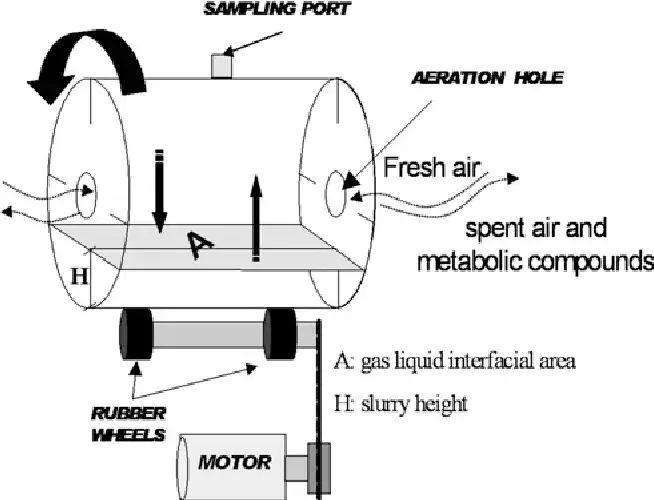
- Rotary drum bioreactor is a cylindrical type bioreactor. The drum is placed horizontally. It rotates slowly during the fermentation process.
- The drum is partly filled with biological culture or solid substrate. It is not filled completely. Some free space is kept for movement and aeration.
- The slow rotation of drum mixes the substrate. The culture and solid medium move inside the drum. It helps in aeration and uniform contact of microorganisms.
- Some rotary drum bioreactor may have internal paddle mixer. It gives extra mixing of the substrate. In some industrial use, it is also called Tomuzetto.
- It can allow sterilization of substrate inside the system. Temperature can also be controlled. In some process, substrate cooking is also done in the same drum.
- Ventilation or forced aeration may be given into the drum. This helps oxygen supply to the microorganisms. It is important for aerobic solid state fermentation.
- It is mainly used in Solid-State Fermentation (SSF). In this process, microorganisms grow on solid medium having low water content.
- It is used in food production also. Koji fermentation for making traditional foods like Miso can be done. The capacity may be about 500 to 3000 kg.
- The main advantage is good oxygen transfer. The rotating movement exposes the substrate to air. So microbial growth becomes better.
- It gives good mixing of solid substrate. Aeration and homogenization are improved. This helps in better fermentation.
- The limitation is that scale-up is difficult. Large industrial design needs many assumptions. Mixing, heat transfer and aeration do not increase in simple way.
- It may damage fungal hyphae. Many SSF process uses filamentous fungi. Mechanical movement of drum can break their delicate hyphae.
- The solid medium may form clumps. This is called agglomeration. Due to this, growth becomes uneven and heat transfer also becomes poor.
- Use of rotary drum bioreactor is reduced in many places now. It is because of scaling problem, fungal damage and difficulty in uniform operation.
9. Mist Bioreactor

- Mist bioreactor is a type of cultivation system. In this system, cells or plant tissues are not fully dipped in liquid medium. They are grown in chamber and nutrient mist is supplied.
- The nutrient solution is converted into fine mist or cloud. The droplets are very small, about 10-50 µm. These droplets reach the surface of explant or tissue.
- The tissue is usually kept on suspended scaffold or support. The root or tissue mass remains partly in air. So oxygen transfer is better than submerged culture.
- The nutrient mist forms a thin film on the tissue surface. This film supplies nutrients and water. The cells use it for growth and metabolic activity.
- The mist is produced by ultrasonic nozzle, pressure nozzle or spinning disk nozzle. These nozzles break the nutrient solution into tiny droplets. But sometimes spray pattern may not be equal in all parts.
- The chamber condition is controlled. Temperature is usually kept about 22°C to 28°C. Air and nutrient flow are adjusted by valves.
- It allows rapid gas exchange. The tissue gets oxygen easily because it is not fully covered by liquid. This is useful for delicate plant tissues and roots.
- It is used in aeroponic type culture. It is also used in micropropagation and plant tissue culture. Plant protoplast and delicate cell lines may be grown by this method.
- The main advantage is better oxygen supply. Less liquid surrounds the tissue. So suffocation of cells is reduced.
- The limitation is nozzle clogging. Small spray holes may block by salts or particles. If nozzle blocks, mist supply becomes uneven.
- Evaporation loss may also be high. Humidity can change inside the chamber. If airflow suddenly increase, mist density becomes difficult to control.
- Mist distribution may be uneven in some regions. Some tissues may get more droplets and some may get less. This can affect the growth of culture.
10. Immobilized cell bioreactor

- Immobilized cell bioreactor is a bioreactor where cells are kept fixed in one place. The cells are not freely moving in the liquid medium. They remain attached or trapped in a support material.
- This type of bioreactor is used to get high cell density. More cells can be kept in small space. Packed bed and fixed bed reactor are commonly used for immobilized cells.
- The cells may attach to the surface of support material by natural forces. Hydrophobic interaction, hydrogen bonding and salt bridges help in attachment. Due to this, cells remain on the adsorbent material.
- In passive immobilization, cells attach naturally on solid matrix. They stick on the surface and form a layer. This layer is called biofilm.
- In active immobilization, cells are fixed by physical or chemical method. The cells may be attached, confined or entrapped in a material. This is done purposely to keep cells inside the reactor.
- The support material may be beads, gels, fibres or porous particles. The cells grow on them or remain inside them. Nutrient medium flows around the immobilized cells.
- The main advantage is easy product recovery. If the product is released into the liquid medium, it can be collected easily. The cells remain inside the reactor.
- Immobilized cells can be reused for many cycles. The same cells may continue to produce product for longer time. This reduces the need of fresh inoculum.
- The limitation is mass transfer problem. Substrate and oxygen may not reach inner cells properly. This is more serious in aerobic process.
- Diffusion resistance occurs inside the particle. Nutrients move slowly into the inner part. So some cells may get less food and oxygen.
- Product inhibition may also occur. The product may collect inside the inner core. High product concentration can slow down the reaction.
- If the support material breaks or cells detach, the process may become unstable. So proper carrier and flow condition are needed for good working of immobilized cell bioreactor.
11. Activated sludge bioreactor
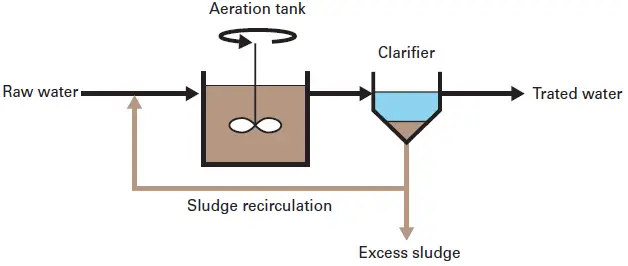
- Activated sludge bioreactor is used for treatment of sewage and wastewater. Sewage containing organic matter is passed into aeration tank. The tank contains large number of microorganisms.
- In the aeration tank, air or oxygen is supplied. The microorganisms use oxygen and break the organic matter. The organic materials are converted into CO₂, water and new microbial cells.
- The microorganisms form flocs in the tank. These flocs contain bacteria and other microbes. They help in removing dissolved and suspended organic wastes from wastewater.
- After aeration, the mixture is passed into settling tank. The microbial flocs settle down as sludge. Clear treated water is separated from the upper part.
- A part of the settled sludge is returned back to the aeration tank. This is called sludge recycling. It keeps enough active microorganisms in the tank for continuous treatment.
- The remaining extra sludge is removed from the system. This is called waste sludge. If it is not removed, the tank becomes overloaded with biomass.
- In homogeneous tank type, the feed is mixed uniformly. Microorganisms, oxygen and substrate remain almost same in all parts of the tank. It gives uniform treatment condition.
- In plug flow type system, the wastewater flows through a long channel. The inlet is extended. It improves settling of sludge and also controls microbial growth.
- It is mainly used in municipal sewage treatment plants. It is also used for industrial wastewater treatment where organic load is high.
- It can also be used for biofuel production. Organic wastes may be converted into bioethanol and biogas. Milk based waste and other wastes can be used for this purpose.
- The main advantage is that it can handle high organic loading rate. Large amount of organic waste can be treated by this process.
- The limitation is high energy requirement. Aeration needs more power. The plant also needs high capital cost and operating cost.
11. Immersed membrane bioreactor
- Immersed membrane bioreactor is also called submerged membrane bioreactor or SMBR. In this type, the membrane is placed directly inside the mixed liquor. The biological treatment and filtration occur in same system.
- The mixed liquor contains wastewater, microorganisms and organic matter. The microorganisms break down the organic wastes. Then the membrane separates the treated water from biomass.
- The membrane remains dipped inside the bioreactor tank. So separate external membrane unit is not needed. The treated water is pulled through the membrane by suction.
- Hollow fiber membrane is commonly used in this system. It gives large surface area in small volume. So filtration can be done in compact space.
- Flat sheet membrane may also be used. These membranes are arranged in plate and frame type. They are used where cleaning and maintenance need to be easier.
- Aeration system is fitted near the membrane module. It supplies oxygen for microorganisms. It also produces movement around the membrane surface.
- The air bubbles create shear force on the membrane. This helps to remove solids from the membrane surface. So membrane fouling is reduced.
- Membrane fouling is the main problem in this bioreactor. Solids and biomass collect on membrane surface. If fouling increases, filtration becomes slow.
- The system gives good quality treated water. The membrane holds back suspended solids and many microorganisms. So the effluent becomes more clear.
- It is mainly used in wastewater treatment. Municipal wastewater and industrial wastewater can be treated by this process. It is useful where good effluent quality and less space are needed.
12. Reverse membrane bioreactor

- Reverse membrane bioreactor is a type of membrane bioreactor. In this system, microbial cells are kept inside a membrane bag or membrane module. The substrate medium remains outside the membrane.
- The membrane works as selective barrier. Nutrients pass from outside medium into the membrane chamber. The cells use these nutrients for growth and reaction.
- The product or metabolites diffuse out from the membrane to the outer liquid. In this way, both inward and outward movement takes place through the membrane.
- The cells are trapped inside small membrane sachets or modules. These may be flat sheet type or hollow fibre type. These membrane packets act like small microreactors inside the tank.
- It gives high biomass retention. The cells do not wash out easily because they are enclosed inside membrane. This is useful for slow growing microorganisms.
- Shear stress is low in this system. The cells are protected from direct agitation. So the cell stability becomes better.
- It is used for toxic wastewater treatment. The membrane protects the cells from sudden toxic shock to some extent. It is also useful in special biotransformation process.
- The system usually operates at about 20°C to 35°C. Substrate and product level are controlled in the outer liquid phase.
- The main limitation is diffusion resistance. Nutrients and oxygen may not pass fast through the membrane. Product removal may also become slow.
- Membrane fouling is common problem. Solids may collect on the outer surface of membrane. Then cleaning is needed again and again.
- Concentration gradient may form around the membrane sachets. If mixing is not uniform, some membrane packets get more substrate and some get less.
- Maintenance of membrane bags is difficult. Membrane may clog, tear or lose its efficiency. So regular checking is required for proper working.
Types of Cultivation Methods used in Bioreactor
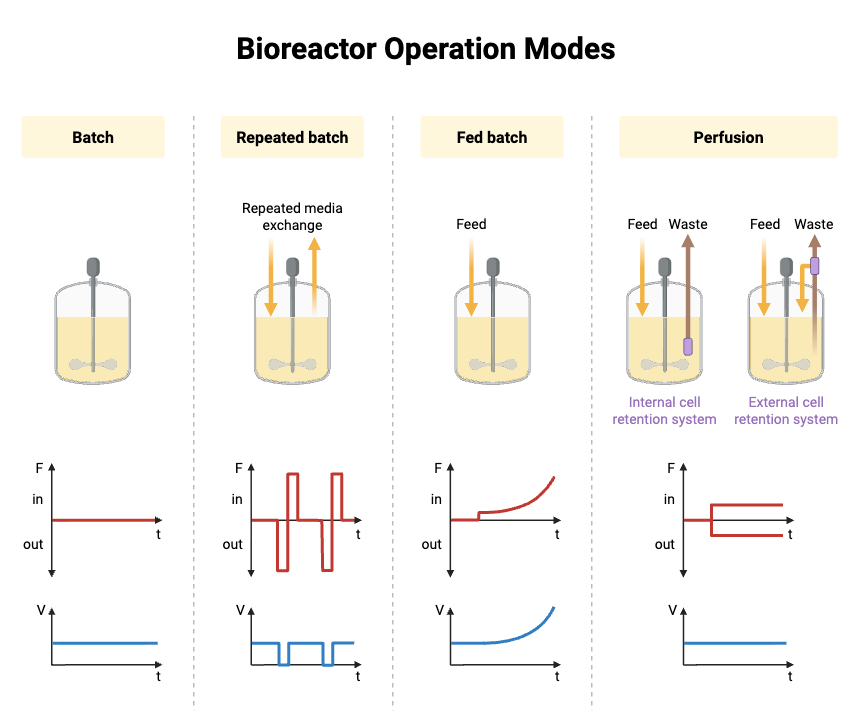
- Batch cultivation – In this method, the medium and cells are added into the bioreactor at the beginning. After this, no fresh medium is added and no culture is removed. The process runs up to the end and then product is collected.
- Fed-batch cultivation – In this method, nutrients are added during the cultivation. The feeding may be continuous or at some time interval. But the culture is not removed until the batch is completed.
- Continuous cultivation – In this method, fresh medium is added continuously into the bioreactor. Same volume of culture is removed at the same time. It helps to keep the culture in steady condition.
- Chemostat cultivation – It is a type of continuous cultivation. The growth is controlled by limiting nutrient concentration. Fresh medium enters and culture leaves at fixed rate.
- Turbidostat cultivation – It is also a continuous cultivation method. In this, the cell density is maintained by measuring turbidity. When turbidity increases, fresh medium is added and culture is removed.
- Semi-continuous cultivation – In this method, some part of the culture is removed after a certain time. Fresh medium is added to replace the removed amount. The remaining cells again continue to grow.
- Perfusion cultivation – In this method, fresh medium is supplied continuously and spent medium is removed. But the cells are retained inside the bioreactor. Filters, membranes or microcarriers may be used for cell retention.
- Perfusion cultivation is useful for high cell density culture. The cells get fresh nutrients for long time. Waste products are also removed, so the culture can remain active for longer period.

What are Aerobic and anaerobic bioreactors?
Aerobic Bioreactor
- Aerobic bioreactor is used where oxygen is needed. The microorganisms grow in presence of oxygen. Without oxygen, the growth becomes poor.
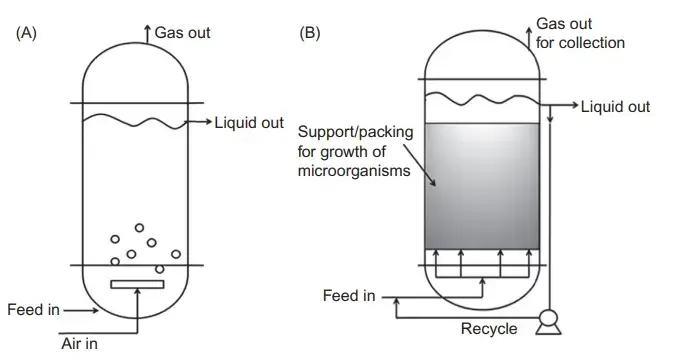
- Air or oxygen is supplied into the medium. It is usually given by sparger. The stirrer mixes the air with the medium.
- Oxygen should reach all parts of the culture. So agitation and aeration are both important. If oxygen is less, the product formation also becomes less.
- Oxygen Transfer Rate (OTR) is an important factor in this bioreactor. It tells how much oxygen is transferred into the liquid medium.
- Stirred tank bioreactor and airlift bioreactor are used for aerobic process. These bioreactors are good for mixing and oxygen supply.
- It is used in aerobic wastewater treatment. It is also used for production of enzymes, antibiotics and some biofuels.
Anaerobic Bioreactor
- Anaerobic bioreactor is used where oxygen is not needed. The process takes place in absence of oxygen. Oxygen is avoided in this system.
- Air is not supplied into the medium. The vessel is kept closed. This helps to maintain oxygen free condition.
- The main control is on pH, temperature and feeding. These condition are kept proper for anaerobic organisms.
- Fermenter is commonly used name for anaerobic bioreactor. Sugars are converted into ethanol, lactic acid and other products.
- It is used for anaerobic digestion. Organic waste is broken down by microorganisms. Methane-rich biogas is produced.
- It is also used in wastewater treatment. Anaerobic Membrane Bioreactor (AnMBR) is one type, where anaerobic digestion and membrane separation are used together.
Uses of bioreactor
- Bioreactor is used for making pharmaceutical products. Vaccines, antibiotics and therapeutic proteins are produced. Penicillin, streptomycin, insulin and monoclonal antibodies are produced by this method.
- It is used for growing stem cells. These cells are used in cell therapy and tissue engineering. It is also useful in regenerative medicine.
- It is used for production of biofuels. Microorganisms and microalgae are grown in the bioreactor. Bioethanol, biodiesel, biohydrogen and methane biogas are formed.
- It is used in food and beverage fermentation. Beer, wine, spirits and fermented foods are produced. The controlled condition helps the fermentation process.
- It is used for making food additives and nutritional products. Antioxidants, omega-3 fatty acids, alternative proteins and lab-grown meat can be produced.
- It is used in wastewater treatment. Municipal and industrial wastewater are treated by microbial action. Organic wastes and pollutants are broken down.
- It is used in bioremediation. Toxic pollutants and hydrocarbons present in soil or water are degraded by microorganisms.
- It is used for CO₂ capture also. Algae and some microorganisms use CO₂ during growth. So it helps in reducing carbon dioxide from the system.
- It is used for production of industrial enzymes. Enzymes used in detergent and food processing are produced in large amount.
- It is used for making bioplastics and biopolymers. Microorganisms convert raw substrates into useful biodegradable materials.
Advantages of bioreactor
- Bioreactor gives proper controlled condition for cell growth. Temperature, pH, oxygen and nutrients are maintained. So the cells grow better and metabolic activity also increase.
- It helps to maintain sterile condition. The culture is kept in closed and aseptic vessel. So the chance of contamination becomes less.
- It gives high product yield. Proper mixing and oxygen transfer helps the organism to use nutrients well. Due to this, more amount of desired product is formed.
- It gives uniform mixing of medium. Nutrients, oxygen and heat are distributed in the whole culture. So all cells get nearly same condition.
- It allows real time monitoring. Sensors are used to check pH, temperature, dissolved oxygen and pressure. The condition can be adjusted during the process.
- It can be used for small scale and large scale production. Laboratory bioreactor is small. Industrial bioreactor is made in large size for commercial production.
- It is useful for many types of culture. Bacteria, yeast, fungi, plant cells and animal cells can be grown in different bioreactor.
- It can be used in different process. Stirred tank, airlift, packed bed and other designs are used according to need. So it is versatile.
- In some bioreactor, fresh nutrients can be added continuously. Waste medium can also be removed. This helps the culture to remain active for long time.
- It reduces manual handling of culture. Many steps are controlled by automatic system. This makes the process more stable and less chances of error.
- Limitations of bioreactor
Limitations of Bioreactor
- Bioreactor scale-up is difficult. The condition used in small laboratory vessel does not become same in large industrial tank. Oxygen distribution, nutrient mixing and heat removal become problem.
- Contamination risk is high in large bioreactor. If bacteria, fungus or virus enter into the culture, whole batch may be spoiled. This causes loss of time and materials.
- Shear stress may damage the cells. When agitation is increased for better mixing and aeration, delicate animal cells and plant cells may break or get injured.
- Heat control becomes difficult in large volume. Growing cells produce metabolic heat. If heat is not removed uniformly, some part of culture may become too warm.
- Oxygen supply may not be equal in all parts. Some region may get less oxygen. Due to this, growth and product formation become uneven.
- Sensors may not work same in large scale. pH, dissolved oxygen and temperature probes need proper calibration. Wrong sensor reading may disturb the whole process.
- Stirred tank bioreactor uses more power. The motor, shaft and impeller need high energy for mixing. Foaming is also common due to agitation and aeration.
- Airlift bioreactor needs high air pressure. This increases energy cost. Foam breaking is also poor because there is no mechanical impeller.
- Bubble column bioreactor has simple design but mixing is less efficient. It has no draft tube. Installation cost may be high and control of process may be difficult.
- Packed bed bioreactor is difficult to clean. Temperature control is not uniform. Clogging, channeling and pressure drop may occur during operation.
- Fluidized bed bioreactor needs proper pumping condition. If flow is not correct, particles may settle or pressure loss may occur. Large vessel is also required.
- Photobioreactor is costly. It needs proper light supply and transparent surface. Sterilization of large photobioreactor is also difficult.
- Membrane bioreactor has membrane fouling problem. Solids and cells may block the membrane. Maintenance and replacement cost become high.
- Immobilized cell bioreactor has mass transfer limitation. Substrate and oxygen may not reach inner cells properly. Product may also accumulate inside and inhibit the reaction.
- Activated sludge bioreactor needs high energy and capital. Operation cost is more. It also needs careful control for proper wastewater treatment.
References
- AGC Biologics. (2026, January 28). Solving four challenges in development & production with scale-out manufacturing.
- Anupama, P. M. (2024). Bioreactors – A critical review on construction, considerations and applications. In Futuristic trends in biotechnology V3B17 (Vol. 3, pp. 50-76). Iterative International Publishers. https://doi.org/10.58532/V3BJBT17P1CH5
- Atlas Scientific. (2025, July 30). 6 types of bioreactors.
- Basetwo. (2026, March 16). Developing an AI digital twin for bioreactors: A step-by-step guide.
- Bell, D. (n.d.). How economies of scale lower cultivated meat costs. Cultivated Meat Shop.
- BioProcess International. (n.d.). Extractables and leachables from single-use disposables. Informa PLC.
- Butean, A., Cutean, I., Barbero, R., Enriquez, J., & Matei, A. (2025). A review of artificial intelligence applications for biorefineries and bioprocessing: From data-driven processes to optimization strategies and real-time control. Processes, 13(8), 2544. https://doi.org/10.3390/pr13082544
- Chaudhry, M. A. (2025, November 3). Lessons in bioreactor scale-up, part 9: Use of mathematical models to design dCO2 stripping strategies. BioProcess International, 23(9).
- de Marchin, T. (n.d.). Digital twins and hybrid models in biologics production: A model comparison. Cencora.
- Esmonde-White, K. A., Cuellar, M., & Lewis, I. R. (2022). The role of Raman spectroscopy in biopharmaceuticals from development to manufacturing. Analytical and Bioanalytical Chemistry, 414(2), 969–991. https://doi.org/10.1007/s00216-021-03727-4
- Extractables and Leachables Safety Information Exchange (ELSIE). (n.d.). Risk assessment for leachables in drug product and drug product manufacturing systems.
- faCellitate. (n.d.). Key components of bioreactors. Cell Culture Insights.
- Fassler, J. (2021, September 22). Lab-grown meat is supposed to be inevitable. The science tells a different story. The Counter.
- GeeksforGeeks. (2025, July 23). Bioreactors.
- Graf, A., Woodhams, A., Nelson, M., Richardson, D. D., Short, S. M., Brower, M., & Hoehse, M. (2022). Automated data generation for Raman spectroscopy calibrations in multi-parallel mini bioreactors. Sensors, 22(9), 3397. https://doi.org/10.3390/s22093397
- Green Elephant Biotech. (n.d.). Scale-up vs. scale-out in bioprocessing.
- Harsini, F., & Swartz, E. (2023). Trends in cultivated meat scale-up and bioprocessing. The Good Food Institute.
- Humbird, D. (2021). Scale-up economics for cultured meat. Biotechnology and Bioengineering, 118(8), 3239–3250. https://doi.org/10.1002/bit.27848
- Humbird, D., Sitaraman, H., Stickel, J., Sprague, M. A., & McMillan, J. (2016, November 18). CFD study of full-scale aerobic bioreactors: Evaluation of dynamic O2 distribution, gas-liquid mass transfer and reaction [Conference presentation]. 2016 AIChE Annual Meeting, San Francisco, CA.
- KaviKumar46. (n.d.). Bioreactors – Basic designing and types [PowerPoint slides]. SlideShare.
- Linch, Z., & Dullaghan, N. (2021, September 24). Cultured meat: A comparison of techno-economic analyses. Effective Altruism Forum.
- MarketsandMarkets. (2024, August). Single-use bioreactors market outlook 2024–2029: Accelerating biomanufacturing efficiency and flexibility.
- Metastat Insights. (n.d.). Bioreactors market size, share & growth report by 2031.
- MilliporeSigma. (n.d.). Extractables and leachables risk assessment for single-use systems. Sigma-Aldrich.
- MilliporeSigma. (n.d.). In-line real-time monitoring of CHO cell culture process parameters using Raman spectroscopy. Sigma-Aldrich.
- Muralidharan, N. (2026, February 5). The myth of bioreactor scale-up: A biology-first approach to achieving robust manufacturing. BioProcess International, 24(2).
- Muralidharan, N., Younger, T., Chan, G., Ball, S., Davis, M., & Bolduc, E. (2025, February 20). eBook: Bioreactor design — Leveraging established principles and modern insights. BioProcess International.
- Nasrollahpour, S., Purewal, S., Das, R. K., & Brar, S. K. (2026). Biodegradation of per- and polyfluoroalkyl substances: Mechanisms, challenges, and emerging strategies for sustainable remediation. Environmental Science: Water Research & Technology, 12, 397-420. https://doi.org/10.1039/D5EW00888C
- Palladino, F., Marcelino, P. R. F., Schlogl, A. E., José, Á. H. M., Rodrigues, R. C. L. B., Fabrino, D. L., Santos, I. J. B., & Rosa, C. A. (2024). Bioreactors: Applications and innovations for a sustainable and healthy future—A critical review. Applied Sciences, 14(20), 9346. https://doi.org/10.3390/app14209346
- Pharma Ed Resources. (2024, November 13-14). Extractables & leachables West 2024.
- PMC. (n.d.). Extractables and leachables in pharmaceutical products: Potential adverse effects and toxicological risk assessment [Access denied].
- PMC. (n.d.). Substantial gradient mitigation in simulated large-scale bioreactors by optimally placed multiple feed points [Access denied].
- ResearchGate. (n.d.). Advances in bioreactor technologies for PFAS degradation with safety assessment [Access denied].
- ResearchGate. (n.d.). Application of bioreactors in production of alternative proteins – review [Access denied].
- ResearchGate. (n.d.). Bioreactor engineering [Access denied].
- ResearchGate. (n.d.). Temporarily unavailable [Access denied].
- Rose, E. (2025). Bioreactor design and scale-up strategies in modern fermentation technology: Challenges and opportunities. Fermentation Technology, 14(183). https://doi.org/10.35248/2167-7972.25.14.183
- Sanchez, C., & Gay, N. (2024). Implementing Raman spectroscopy for automated monitoring of a cell culture bioprocess (Application Note No. 491). Eppendorf SE.
- Scientific Bioprocessing. (n.d.). Scaling up in bioprocessing – Bridging the gap from lab bench to industrial production.
- Specht, L. (n.d.). An analysis of culture medium costs and production volumes for cultivated meat. The Good Food Institute.
- Tayade, M., & Waje, O. (2026, January). Bioreactors market – By product type, by cell, by molecule, by usage, by material, by size, by end use – Global forecast, 2026 – 2035. Global Market Insights Inc.
- Tiwari, P. (n.d., January 16). Revolutionising biomanufacturing with Holloid’s imaging solutions. Holloid.
- WILCO AG. (n.d.). Process analytical technology (PAT) with NIRS.
- Xing, Z., Duane, G., O’Sullivan, J., Chelius, C., Smith, L. B., Smith, L. A., Borys, M. C., & Khetan, A. (2024). Validation of a CFD model for cell culture bioreactors at large scale and its application in scale-up. Journal of Biotechnology, 387, 79-88. https://doi.org/10.1016/j.jbiotec.2024.02.006
- ZETA BIOSYSTEM. (n.d.). Parts of a bioreactor: Learn more about every component.