

Bench top centrifuge is a compact laboratory instrument which is kept on laboratory table or working bench. It is used for the separation of different components of liquid sample. It works by rotating the sample tubes at high speed with the help of a motorized rotor.
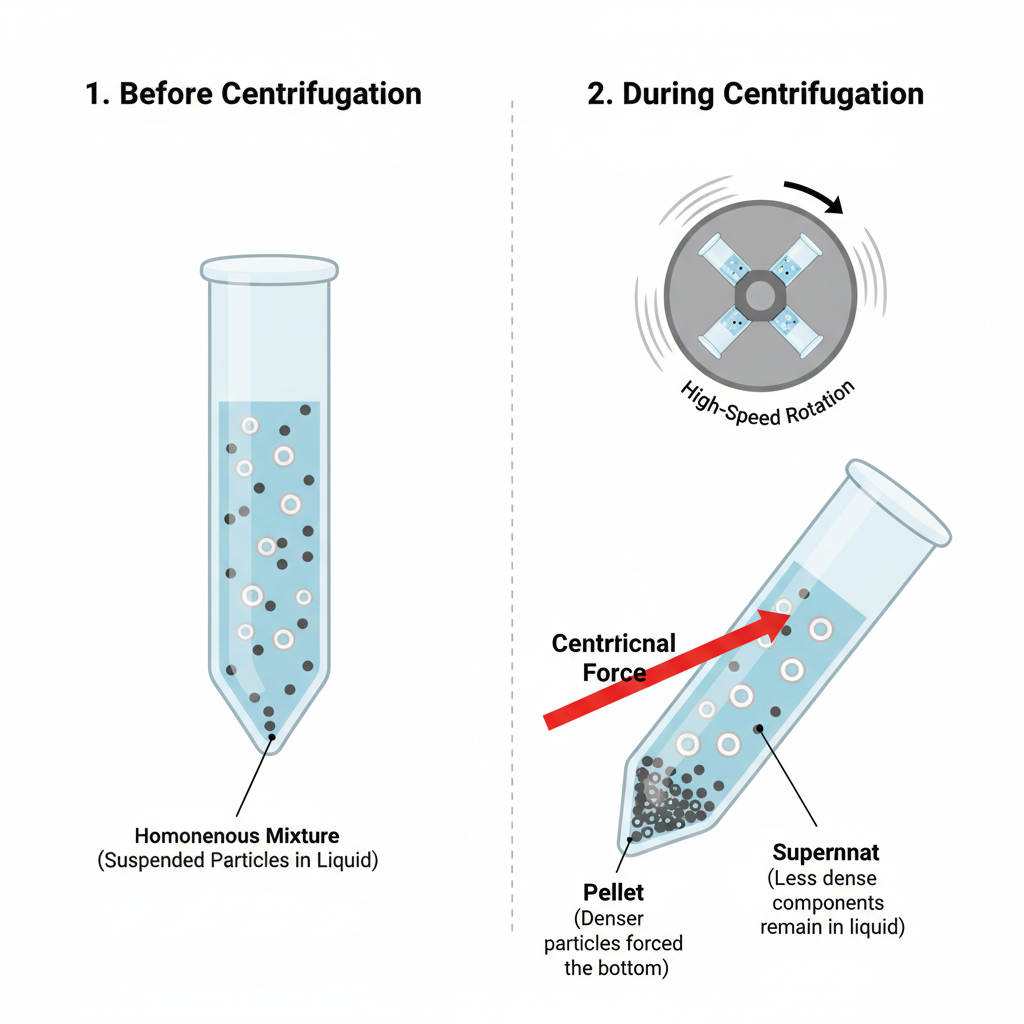
During this process, a strong centrifugal force is produced. Due to this force, the heavier and denser particles move towards the bottom of the tube. The lighter components remain at the upper part of the tube. In this way, the liquid mixture is separated according to density, size and mass of the particles.
Bench top centrifuge can hold different types of tubes by using different rotors. It is used in clinical laboratory, research laboratory and industrial laboratory. It is commonly used for blood, urine, proteins, cell culture and other biological samples.
The history of centrifuge is old. In 1707, Benjamin Robins introduced the whirling arm apparatus. Later, centrifuge was used in dairy industry for separating cream from milk. Friedrich Miescher used centrifugation for isolation of nucleic acid. Theodor Svedberg also used ultracentrifuge for studying proteins.
Modern bench top centrifuge are now more improved. They are small in size, easy to operate and controlled by electronic system. They are important instrument in routine laboratory work and also in molecular biology, clinical diagnosis and research work.
Principle of Benchtop Centrifuges
Principle of Benchtop Centrifuges is based on the principle of centrifugal force. In this process, the sample tubes are placed inside the rotor and rotated at high speed. Due to this high speed rotation, a strong outward force is produced.
This force acts on the particles present in the liquid sample. The heavier and denser particles move away from the centre of rotation. They settle at the bottom of the tube in less time.
The lighter particles remain above the heavier particles. Some lighter components may remain suspended in the upper part of the tube. Thus the sample is separated according to density, mass and size of particles.
By this method, the natural sedimentation process becomes faster. The substances which normally take long time to settle under gravity can be separated quickly. So benchtop centrifuge is used for separation, purification and collection of different parts of a sample.
Types of Benchtop Centrifuges
A. On the basis of speed and capacity
- Microcentrifuge / Mini centrifuge – It is a small type of benchtop centrifuge. It is used for very small volume samples. It generally holds 0.2 ml to 2.0 ml tubes and is mostly used in molecular biology work.
- Low-speed benchtop centrifuge – It is used for routine separation of samples. It is used for blood, urine and cellular materials. It generally works at about 300 to 6000 rpm.
- High-speed benchtop centrifuge – It works at higher rotational speed. It is used for separation of smaller particles like cell organelles, viruses and biomolecules. It may work at about 15,000 to 30,000 rpm.
- Benchtop ultracentrifuge – It is a highly specialized centrifuge. It produces very high centrifugal force. It is used for separation of macromolecules, density gradient samples and very small particles.
B. On the basis of temperature control
- Refrigerated benchtop centrifuge – It has a built-in cooling system. It maintains low temperature during centrifugation. It is used for heat sensitive samples like enzymes, proteins and living cells.
- Ventilated / Ambient benchtop centrifuge – It does not have internal cooling system. It works at room temperature. It is used for normal samples which do not need cold condition.
C. On the basis of application
- Clinical benchtop centrifuge – It is used in clinical diagnostic laboratory. It is used for routine processing of blood, serum, plasma and urine samples.
- General-purpose benchtop centrifuge – It is used for different types of laboratory work. It can hold different rotors and different tube sizes. It is used for microplates, conical tubes and other sample containers.
- Specialized application centrifuge – It is made for special purpose. Hematocrit centrifuge, cell washer, blood bank centrifuge and PRP centrifuge are included in this type.
D. On the basis of rotor design
- Fixed-angle centrifuge – It has tubes placed at a fixed angle in the rotor. The angle is usually about 45°. It is used for fast pelleting of particles.
- Swing-out centrifuge – It has buckets which swing outward during rotation. The tubes become horizontal during spinning. It is used for clear and horizontal separation layer.
E. On the basis of automation
- Automated benchtop centrifuge – It is used in high-throughput laboratory. It may be connected with robotic sample handling system. It reduces manual work and processes many samples with less human handling.
Parts of Benchtop Centrifuges
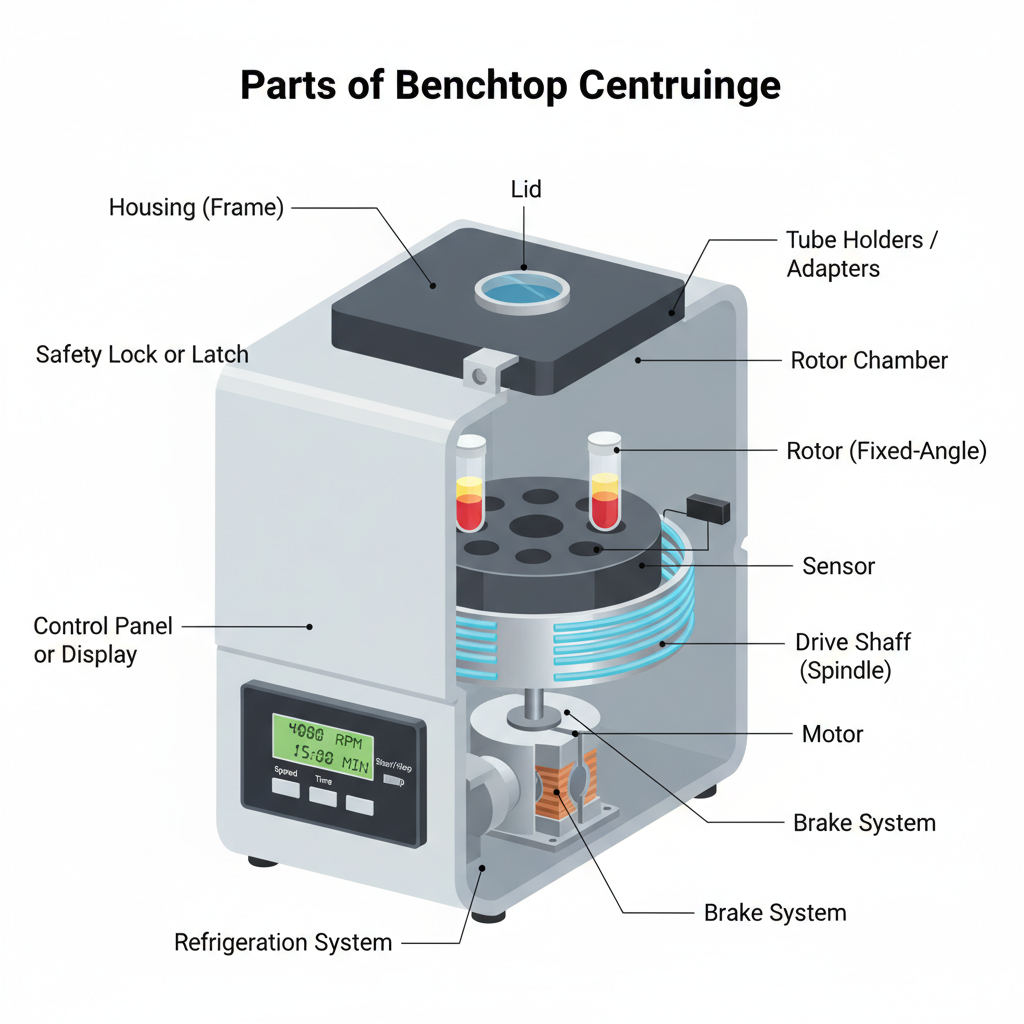
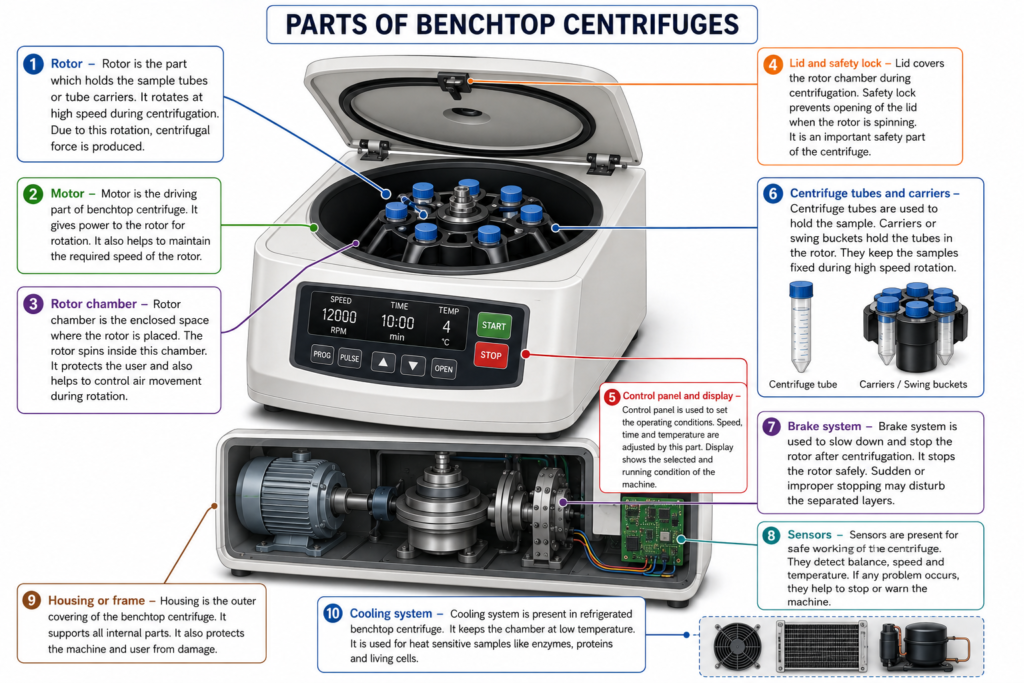
- Rotor – Rotor is the part which holds the sample tubes or tube carriers. It rotates at high speed during centrifugation. Due to this rotation, centrifugal force is produced.
- Motor – Motor is the driving part of benchtop centrifuge. It gives power to the rotor for rotation. It also helps to maintain the required speed of the rotor.
- Rotor chamber – Rotor chamber is the enclosed space where the rotor is placed. The rotor spins inside this chamber. It protects the user and also helps to control air movement during rotation.
- Lid and safety lock – Lid covers the rotor chamber during centrifugation. Safety lock prevents opening of the lid when the rotor is spinning. It is an important safety part of the centrifuge.
- Control panel and display – Control panel is used to set the operating conditions. Speed, time and temperature are adjusted by this part. Display shows the selected and running condition of the machine.
- Centrifuge tubes and carriers – Centrifuge tubes are used to hold the sample. Carriers or swing buckets hold the tubes in the rotor. They keep the samples fixed during high speed rotation.
- Brake system – Brake system is used to slow down and stop the rotor after centrifugation. It stops the rotor safely. Sudden or improper stopping may disturb the separated layers.
- Sensors – Sensors are present for safe working of the centrifuge. They detect balance, speed and temperature. If any problem occurs, they help to stop or warn the machine.
- Housing or frame – Housing is the outer covering of the benchtop centrifuge. It supports all internal parts. It also protects the machine and user from damage.
- Cooling system – Cooling system is present in refrigerated benchtop centrifuge. It keeps the chamber at low temperature. It is used for heat sensitive samples like enzymes, proteins and living cells.
Operating Procedure of Benchtop Centrifuges
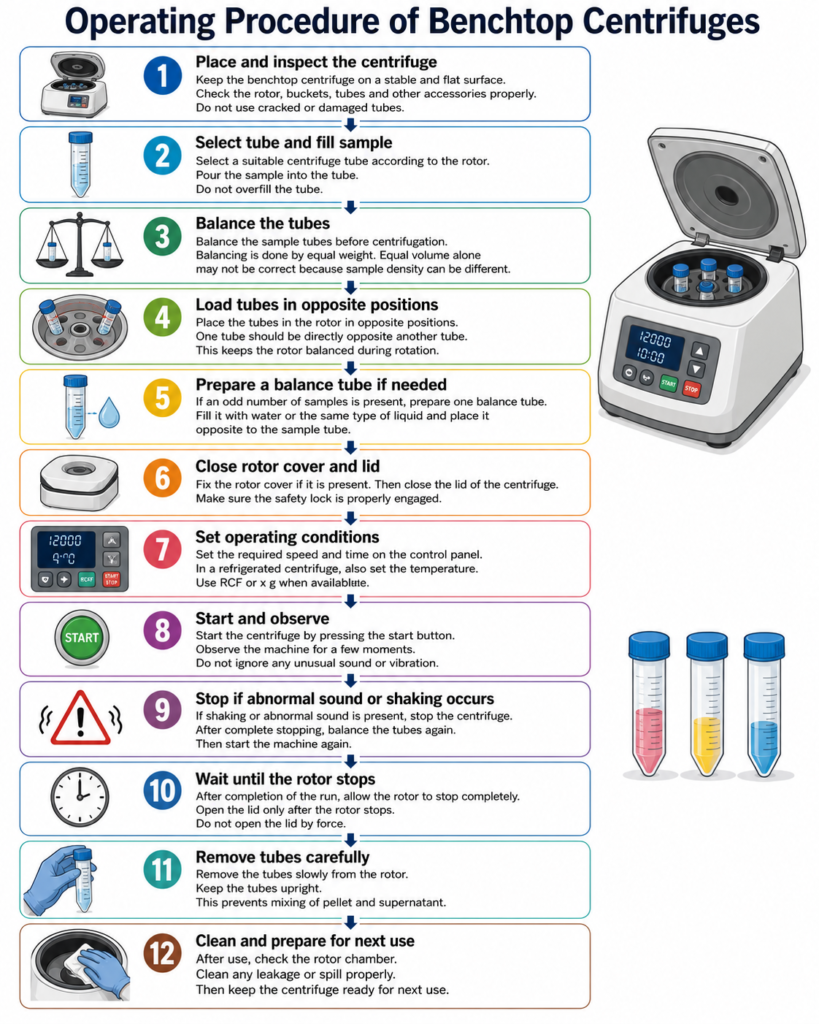
- First the benchtop centrifuge is kept on a stable and flat surface. The rotor, buckets, tubes and other accessories are checked properly. Cracked or damaged tube should not be used.
- Suitable centrifuge tube is selected according to the rotor. The sample is poured into the tube. The tube should not be over filled.
- The sample tubes are balanced before centrifugation. Balancing is done by equal weight. Only equal volume is not always correct because density of sample may be different.
- The tubes are placed in the rotor in opposite position. One tube is placed directly opposite to another tube. This keeps the rotor balanced during rotation.
- If odd number of sample is present, one balance tube is prepared. It is filled with water or same type liquid. Then it is placed opposite to the sample tube.
- The rotor cover is fixed if it is present. Then the lid of the centrifuge is closed. The safety lock should be properly engaged.
- The required speed and time are set on the control panel. In refrigerated centrifuge, the temperature is also set. RCF or x g is used when available.
- The centrifuge is started by pressing start button. The machine is observed for few moments. Any unusual sound or vibration should not be ignored.
- If shaking or abnormal sound is present, the centrifuge is stopped. After complete stopping, the tubes are balanced again. Then the machine is started again.
- After completion of run, the rotor is allowed to stop completely. The lid is opened only after the rotor stops. The lid should not be opened by force.
- The tubes are removed slowly from the rotor. The tubes are kept upright. This prevents mixing of pellet and supernatant.
- After use, the rotor chamber is checked. Any leakage or spill is cleaned properly. Then the centrifuge is kept ready for next use.
Uses of Benchtop Centrifuges
- Benchtop centrifuge is used in clinical diagnostic laboratory. It is used for separation of whole blood into serum, plasma and blood cells.
- It is used for routine urine examination. The urine sample is centrifuged and the sediment is used for microscopic examination.
- It is used in molecular biology work. It helps in extraction and purification of DNA, RNA and proteins.
- It is used to remove solid debris from cell lysate. After centrifugation, the clear liquid part can be used for PCR, sequencing and other tests.
- It is used in cell culture work. The cells are collected as pellet at the bottom of the tube. The culture medium remains as upper liquid part.
- It is used for harvesting of cells from culture media. It also helps in separation of some cell organelles from broken cells.
- It is used in microbiology laboratory. Bacteria, viruses and other microorganisms can be separated and concentrated from liquid sample.
- It is used in pharmaceutical research. It helps in separation of particles, precipitates and impurities during drug development and formulation work.
- It is used in environmental science. Suspended solids, sediments and contaminants are separated from water and soil samples.
- It is used in food and beverage testing. It helps to concentrate pathogenic bacteria like Salmonella from food sample and also removes suspended particles.
- It is used in industrial quality control. Different liquid mixtures are centrifuged for checking and separation of unwanted materials.
- It is also used in nanotechnology work. It helps in preparation of nanomaterials by removing clumps or agglomerates from materials like quantum dots and carbon nanotubes.
Advantages of Benchtop Centrifuges
- Benchtop centrifuge is small in size. It can be kept easily on laboratory bench. It saves laboratory space and can also be used inside clean bench or biosafety cabinet.
- It is easy to move from one place to another. Due to small size and compact structure, it is more portable than large floor centrifuge.
- It is less costly than large centrifuge. The maintenance cost is also low. So it is useful for routine laboratory work.
- It is versatile in use. Different types of rotors can be used in it. So different tube sizes and sample volumes can be processed.
- It separates the sample in short time. The rotor can reach high speed quickly. So separation becomes fast and efficient.
- It is simple to operate. The control panel and display are easy to use. Speed, time and temperature can be set without much difficulty.
- It can have programmable settings. Same running condition can be saved and used again. This helps in repeated laboratory work.
- It uses less energy than large centrifuge. So it is more economical for daily use.
- It produces less noise during operation. Many models work quietly and do not disturb the laboratory environment.
- It has safety features for protection. Lid lock, imbalance detector and overspeed protection are present in many models. These parts prevent accident during high speed rotation.
Disadvantages of Benchtop Centrifuges
- Benchtop centrifuge has limited sample capacity. It cannot process large amount of sample like floor standing centrifuge. So it is not suitable for large scale work.
- It has lower maximum speed than large centrifuge. Some small particles need very high centrifugal force for separation. In such cases, ordinary benchtop centrifuge is not enough.
- It may not have all advanced features. Some models do not have automatic rotor identification and special rotor options. So its use becomes limited in some advanced work.
- It may produce noise during high speed rotation. This can disturb the laboratory environment. The noise becomes more if the rotor is not balanced properly.
- It may produce vibration during running. Improper balancing of tubes increases the vibration. This may damage the machine or sample tube.
- All benchtop centrifuges do not have cooling system. So temperature sensitive samples cannot be processed safely in normal model.
- Heat may be produced during long running or high speed centrifugation. This heat can affect enzymes, proteins and living cells.
- It has limited rotor compatibility in some models. Only selected tube size or sample container can be used. So it may not be useful for all types of laboratory samples.
Precautions for operating Benchtop Centrifuges
- Before starting, the centrifuge tubes, rotor, buckets and O-rings are checked properly. Any crack, wear, deformity or corrosion should not be present. Damaged part should not be used.
- Suitable centrifuge tube is selected according to the speed and temperature of the run. The tube should be strong enough for centrifugation. Wrong tube may break during high speed rotation.
- The tubes should not be over filled or under filled. The sample is filled according to the recommended volume. Improper filling may cause leakage or tube damage.
- The sample tubes are balanced properly before starting. Balancing is done by mass, not only by volume. This prevents shaking and vibration during rotation.
- The tubes are placed opposite to each other in the rotor. If odd number of sample is present, one balance tube is used. It is filled with water or similar liquid and placed opposite to the sample.
- The rotor should be seated properly on the drive shaft. The buckets or safety cups should move freely. Improper fitting may cause imbalance during centrifugation.
- The lid of the centrifuge is closed and locked before starting the machine. The centrifuge should not be run with open or loose lid.
- Maximum speed and maximum load of rotor should not be exceeded. High density liquid, plastic adapter or steel tube may need lower speed. Manufacturer instruction should be followed.
- After starting the centrifuge, the machine is observed for few moments. If abnormal sound, rattling or strong vibration is present, the centrifuge is stopped immediately.
- The lid should be opened only after the rotor stops completely. The rotor should not be stopped by hand. Safety lock should not be bypassed.
- Biohazardous, chemical or radioactive sample should be used in capped tube or sealed safety cup. Loading and unloading should be done inside biosafety cabinet or fume hood when needed.
- After centrifuging hazardous sample, the lid is not opened immediately. It is kept closed for some time so that aerosol can settle down.
- Any spill inside the centrifuge should be cleaned immediately. The rotor chamber should be kept dry and clean after use.
- Abrasive brush and strong alkaline cleaning solution should not be used. These may remove protective coating and cause corrosion of aluminium parts.
References
- Advanced Motion Controls. (2026, April 29). Brushed vs brushless motor: Key differences, performance, and how to choose.
- AELAB. (n.d.). What is the difference between RPM and RCF in centrifuges.
- Applus+ Keystone. (n.d.). Centrifuge UL 61010-2-020 product safety & compliance testing.
- Applus+ Keystone. (n.d.). IEC 61010-2-020 product safety testing of centrifuges.
- Appendix 8. Notes on centrifugation. (n.d.).
- Beckman Coulter. (n.d.). Benchtop centrifuges, lab equipment.
- Beckman Coulter. (n.d.). Principles of centrifugation.
- Beckman Coulter. (n.d.). Rotor types – centrifugation.
- Bio Basic. (n.d.). Benchtop centrifuges: Powering precision in molecular biology.
- Biocompare. (n.d.). Refrigerated benchtop centrifuges.
- Bong, N. (2025, October 27). Difference between brushed and brushless motors – Key advantages explained. Progressive Automations.
- California State University San Marcos. (n.d.). Centrifuge safety. Safety, Health, & Sustainability.
- Corning. (n.d.). Centrifugation: Lab techniques, examples and types.
- Dickson, R. (2026, March 5). Centrifuge speed interactive calculator. Firgelli Automations.
- Drucker Diagnostics. (n.d.). How does a centrifuge work? Guide to centrifuge machines.
- Drucker Diagnostics. (n.d.). Just a moment…
- Drucker Diagnostics. (n.d.). Rotor care 101: How to extend the life of your centrifuge rotor.
- Eppendorf. (n.d.). Refrigerated centrifuges.
- Fisher Scientific. (n.d.). Benchtop centrifuges.
- Fluid Metering, Inc. (2026, March 2). Choosing between brushed and brushless motors in pump systems. News-Medical.Net.
- Future Market Insights. (2025, July 21). Automated centrifuge system market demand – 2035.
- GlanLab Instrument. (2026, March 2). Common centrifuge problems and how to fix them.
- Goodman, T. (2007, February 1). Centrifuge safety and security. American Laboratory.
- International Electrotechnical Commission. (2016, May 27). IEC 61010-2-020:2016: Safety requirements for electrical equipment for measurement, control, and laboratory use – Part 2-020: Particular requirements for laboratory centrifuges.
- Kantawala, H. (2025, December 24). What makes a brushless motor better for centrifuges? Explained simply. Hindustan Scale Company.
- Karwan, C. (2024, February 16). Common centrifuge issues and how to fix them. New Life Scientific.
- Lab Manager. (n.d.). Lab centrifuges: Types, rotor selection, and operating best practices.
- Lab Manager. (n.d.). The basics of centrifuge operation and maintenance: A laboratory guide.
- Liam. (2025, June 18). The future of best centrifuge technology trends for 2025 your ultimate guide. Sichuan Shuke Instrument Co., Ltd.
- LW Scientific. (n.d.). E8 fixed centrifuge troubleshooting guide.
- MarathonLS. (n.d.). Centrifuge troubleshooting guide: Solve common lab issues.
- Pacelli, A. (2026, January 22). Brushed vs. brushless motors: Technical comparison. Fluid Metering.
- Pipette.com Team. (2025, August 15). 8 types of laboratory centrifuges & the purposes they serve. Pipette.com.
- Pipette.com Team. (2026, February 27). How does a centrifuge work? A practical lab guide. Pipette.com.
- Shanghai Luxiangyi Centrifuge Instrument Co., Ltd. (2024, July 3). A comprehensive analysis of benchtop centrifuges: From operating principles to wide-ranging applications—Understand it all in one article!
- Shanghai Luxiangyi Centrifuge Instrument Co., Ltd. (2025, March 31). Common applications and advantages of benchtop centrifuges – An analysis.
- Sigma-Aldrich. (n.d.). G force calculator: RCF to RPM.
- Spherical Insights. (2026, April). Top 20 companies in the global laboratory centrifuges market (2025–2032): Spherical insights analysis.
- Stanford Environmental Health & Safety. (n.d.). Centrifuge safety.
- Stony Brook University Environmental Health and Safety. (n.d.). Centrifuge and rotor safety guide.
- Surwase, A. (2025, December). Next generation centrifuge market forecast to 2032. Persistence Market Research.
- The benchtop centrifuge: An exhaustive analysis of theoretical principles, engineering architecture, operational protocols, and multidisciplinary applications. (n.d.).
- The Lab Depot. (n.d.). Essential clinical centrifuge applications in modern labs.
- Thota, S. T. (2026, January 29). Centrifuge market size, share, industry report 2025-2032. DataM Intelligence.
- UL Standards & Engagement. (2016, December 15). UL 61010-2-020: Safety requirements for electrical equipment for measurement, control, and laboratory use – Part 2-020: Particular requirements for laboratory centrifuges.
- University of Kentucky Research Safety. (n.d.). Centrifuges.
- Wei, L. (n.d.). Bench top centrifuge full guide – Types, principles, parts, applications, pros & cons. Drawell.
- Wei, L. (n.d.). Top 10 problems in lab centrifuge: What are effective troubleshooting steps. Drawell.
- Westlab. (2023, May 2). Differences between RCF & RPM in centrifugation.