

Centrifuge is a mechanical device used to separate the components of liquid or gaseous mixture on the basis of their size, shape and density.
It is operated by placing the sample mixture in tubes or containers which are fitted inside a rotor. The rotor is then rotated at very high speed around a fixed central axis.
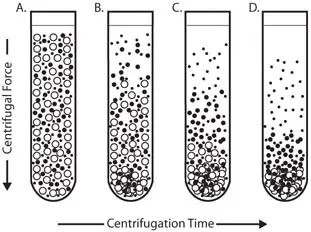
During rotation, a strong centrifugal force is produced. This force increases the natural process of sedimentation. The heavier and denser particles move outward towards the bottom or side of the tube, while lighter particles remain near the upper part or centre.
A centrifuge can produce force many times greater than gravity. So the separation which normally takes long time by natural settling can be completed within few seconds or minutes.
Centrifuge is used in clinical laboratories for separation of blood components like red blood cells and plasma. It is also used in biotechnology for DNA extraction, protein purification and separation of cell parts. In industries, it is used in wastewater treatment, chemical processing and food production.
Definition of Centrifuge
A centrifuge is a laboratory instrument that uses spinning and centrifugal force to separate mixtures based on their density.
Principle of a Centrifuge
Centrifuge is based on the principle of sedimentation. It uses high speed rotation to separate the components of liquid mixture on the basis of density, mass and size.
When the sample is placed in a rotor and rotated rapidly around a fixed central axis, centrifugal force is produced. This force acts away from the axis of rotation and increases the settling of particles.
During this process, the heavier and denser particles move outward towards the bottom or sides of the tube. The lighter and less dense particles remain suspended near the centre or upper part of the liquid.
The rate of sedimentation depends on the strength of centrifugal force, density difference between particles and medium and viscosity of the liquid. More force gives faster separation.
Thus, centrifuge separates the substances from complex liquid mixture in few seconds or minutes. This separation is much faster than normal gravitational settling.
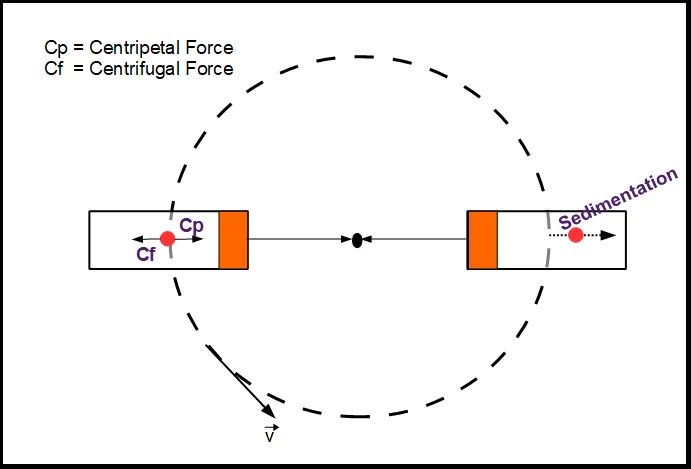
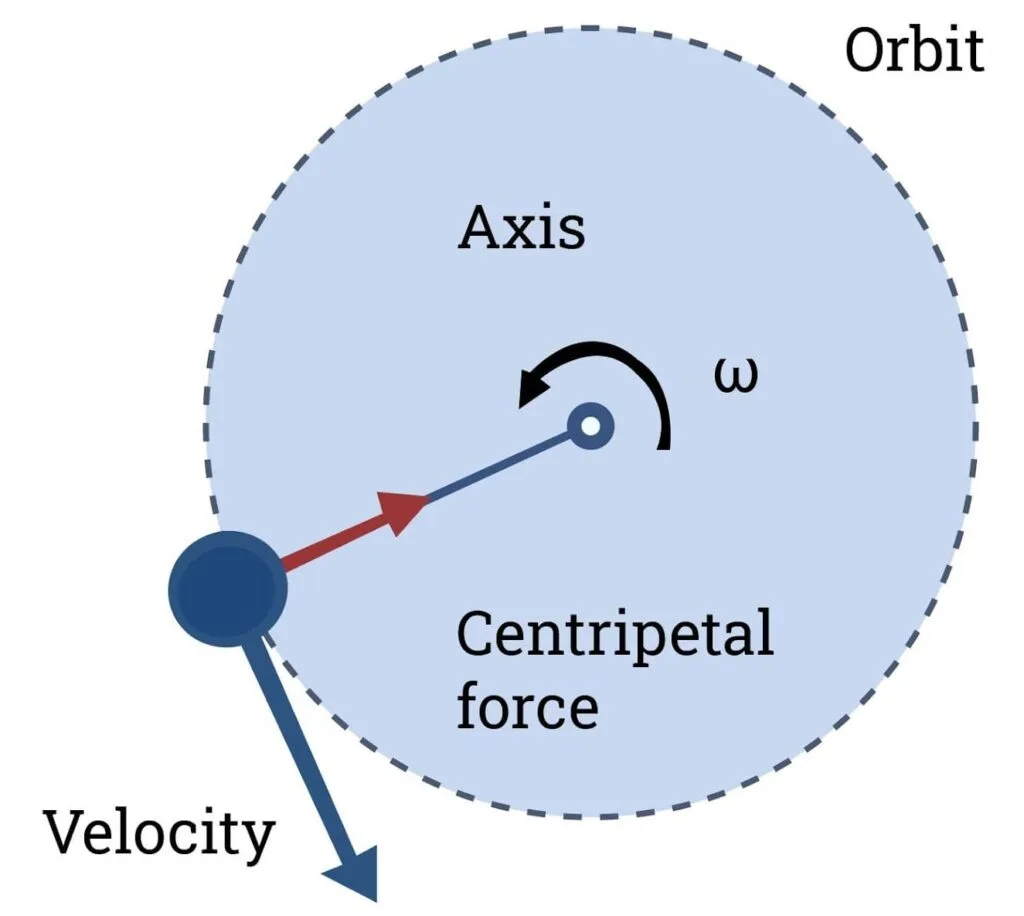
What is Sedimentation coefficient?
Sedimentation coefficient is the measurement of rate or velocity at which a biological particle or macromolecule moves in a tube under centrifugal field during centrifugation.
It is also known as s value. It depends mainly on the mass, size and shape of the particle. The compact and spherical molecule sediments faster than long fibrous molecule of same weight because it has less frictional resistance.
The value of sedimentation coefficient is very small. So it is expressed in Svedberg unit (S). One Svedberg unit is equal to 10⁻¹³ second.
Sedimentation coefficient is used to study the hydrodynamic property of macromolecules. It is also used for determining the size, shape and subunit composition of proteins, ribosomes and other complex molecules.
Parts of a Centrifuge
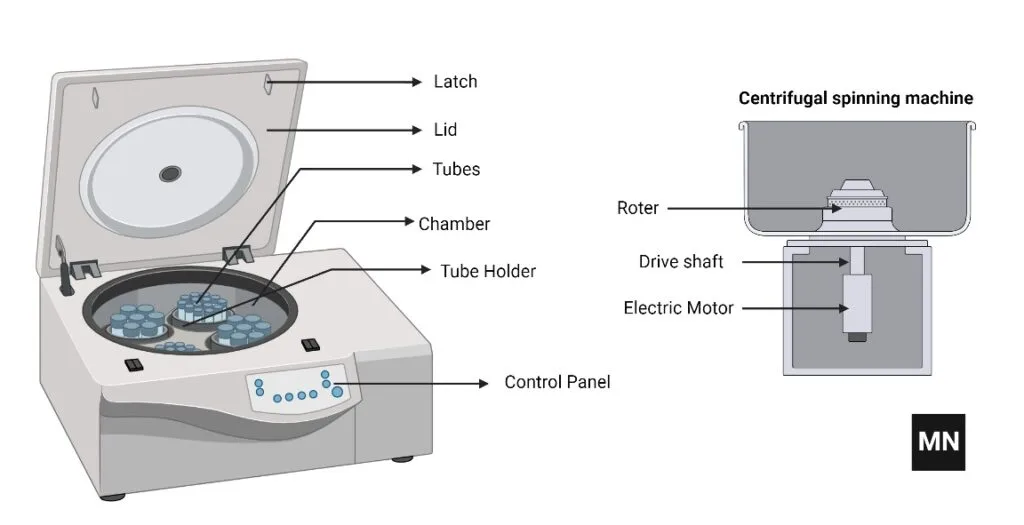
- Rotor- The rotor is the rotating part of the centrifuge. It holds the tubes containing samples and spins them at high speed. Due to this spinning centrifugal force is produced.
- Motor– The motor is present inside the centrifuge. It gives power for rotation of the rotor. The speed of the rotor is controlled by this part.
- Rotor chamber- Rotor chamber is the space where the rotor is placed. It is closed during working of centrifuge. It also protects the user from the rotating rotor.
- Lid– Lid is the upper covering of the centrifuge. It covers the rotor chamber during centrifugation. The machine cannot be safely operated without closing the lid.
- Tube holder or swing bucket– These parts hold the sample tubes in the rotor. The tubes are kept in proper position during rotation. It prevents breaking and spilling of sample.
- Control panel- Control panel is the part by which the centrifuge is operated. Speed and time are adjusted from this part. In some centrifuge temperature also can be adjusted.
- Brake system- Brake system helps to stop the rotor after the process is completed. It decreases the speed of the rotor slowly or quickly depending on the setting.
- Safety lock- Safety lock is a protective part of centrifuge. It does not allow the lid to open when rotor is moving. This prevents accident during centrifugation.
- Sensors– Sensors are present in modern centrifuge. They detect speed, imbalance and temperature. If any error occurs, the machine may stop automatically.
- Housing or frame- Housing is the outer body of the centrifuge. It holds and supports all internal parts. It also protects the inner parts from outside damage.
- Refrigeration system– Refrigeration system is present in refrigerated centrifuge. It keeps the sample at low temperature during centrifugation. This is useful for temperature sensitive samples.
Types of Centrifuge Rotors
Types of Centrifuge Rotors
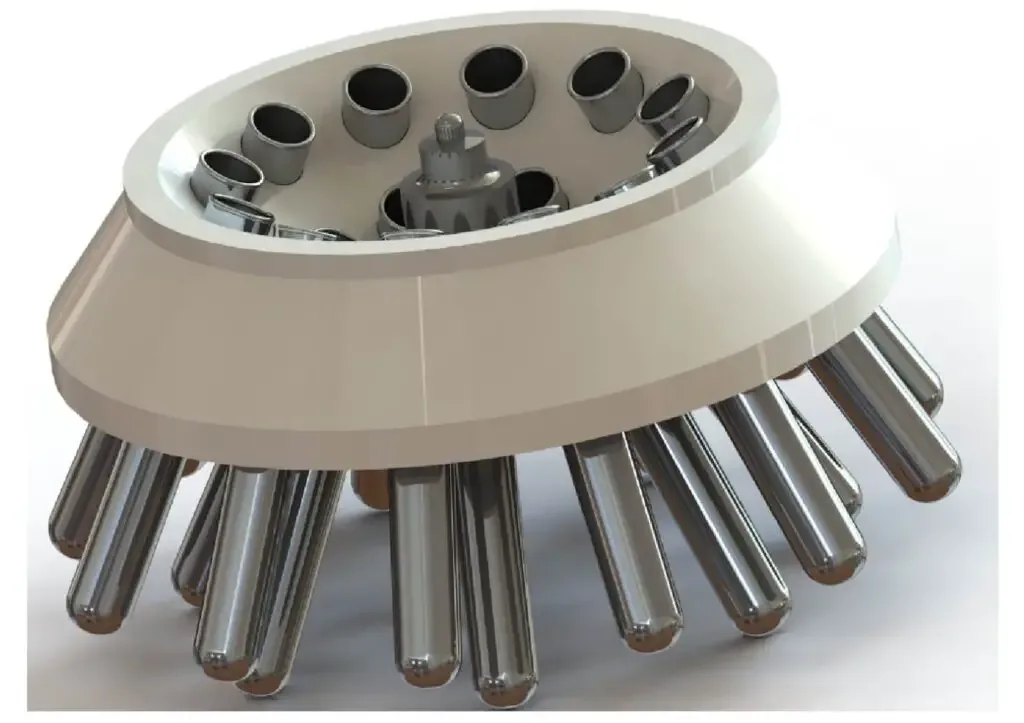
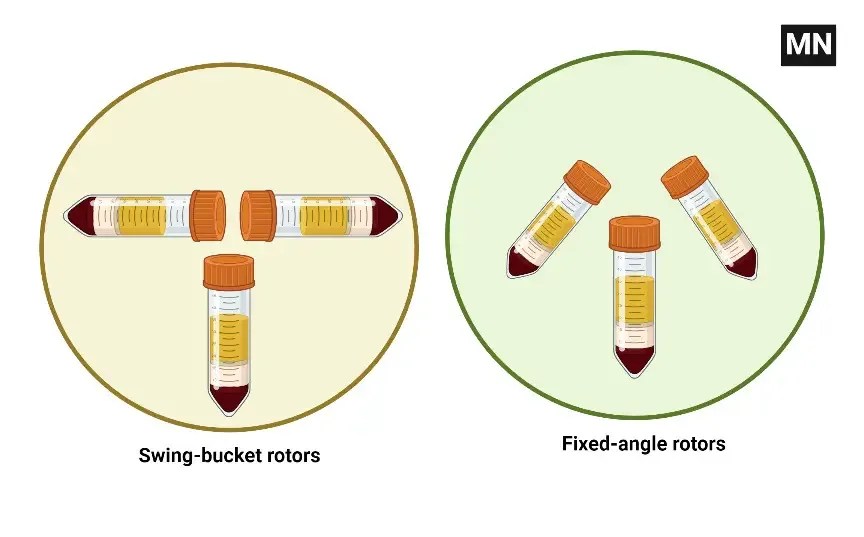
- Fixed-angle rotor- In this rotor, sample tubes are held at a fixed angle. The angle is generally 14 to 45 degree. During centrifugation the tube position does not change. It is used for rapid pelleting of DNA, RNA, cell debris and other particles.
- Swinging-bucket rotor- In this rotor, sample tubes are kept in buckets. The buckets remain vertical at first, and during rotation they swing outward into horizontal position. It is used for large volume sample, low speed centrifugation and density gradient separation.
- Vertical rotor- In this rotor, sample tubes are kept completely vertical during centrifugation. It is mostly used in ultracentrifugation. The particles travel a short distance to the wall of the tube, so separation occurs very fast. It is used for isopycnic separation.
- Near-vertical rotor- This rotor is similar to vertical rotor. But the tubes are kept at a slight angle, generally 7 to 9 degree. It gives fast separation and reduces mixing or contamination of separated bands. It is used in isopycnic separation.
- Continuous-flow rotor- This rotor is used for continuous processing of large amount of sample. The liquid sample enters the centrifuge continuously without stopping the machine again and again. It is used in vaccine production, cell harvesting and industrial bioprocessing.
- Zonal rotor- This rotor has no separate tube cavities. It is used for large scale density gradient separation and subcellular fractionation. It can process high volume sample and reduces the tube wall effect.
- Specialty rotor- These are special rotors made for special purpose. Drum rotor, microplate rotor and PCR strip rotor are examples of this type. They are used according to the type of sample and required centrifugation method.
Types of centrifugation techniques
- Analytical centrifugation- This technique is used to study the physical properties of particles and purified macromolecules. It gives information about shape, molecular weight and sedimentation behaviour. The movement of particles is observed during centrifugation.
- Preparative centrifugation- It is used for separation and recovery of different components from a mixture. Cells, tissues, organelles and membrane vesicles can be separated by this method. The separated part is collected for further use.
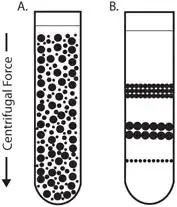
- Differential centrifugation- It separates particles on the basis of their size and density. In this technique, the sample is centrifuged at increasing speed one after another. Larger and heavier particles settle first as pellet, while smaller particles remain in the supernatant.
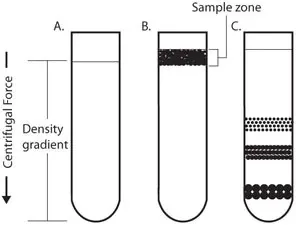
- Density gradient centrifugation- In this technique, the particles move through a medium having different density. The particles settle at the region where the density of medium is similar to their own density. It is used for better separation of molecules and cell components.
- Rate-zonal density gradient centrifugation- It is also called moving zone centrifugation. In this technique, particles are separated on the basis of their size, shape and sedimentation coefficient. The particles move through density gradient at different rate.
- Isopycnic centrifugation- It is also called equilibrium sedimentation. In this technique, particles are separated only on the basis of their buoyant density. The particles move in the gradient until they reach the position where their density is equal to the density of medium.
- Pelletization– In this technique, high centrifugal force is used to collect particles at the bottom of the tube. The deposited particles form a concentrated pellet. The remaining liquid is removed or used for analysis.
- Sedimentation velocity centrifugation- This technique is used to measure the speed of movement of particles under centrifugal force. It helps to know the size distribution and interaction of particles.
- Clarification– This technique is used to remove suspended solid particles from a liquid. After centrifugation, a clear liquid is obtained. It is used in wastewater treatment and beverage production.
- Phase separation- In this method, chemical substances are separated from aqueous medium or matrix into a solvent. The separated phase is used for further biological or chemical analysis.
- Ultrafiltration– This method uses a membrane during centrifugation. It is used for separation, purification and concentration of macromolecules.
- Hematocrit measurement- This is a special centrifugation method used for blood sample. Red blood cells are separated from plasma in capillary tubes. It is used to measure the volume of red blood cells.
Types of Centrifuges
- Benchtop centrifuge- It is a compact type of centrifuge kept on laboratory bench. It is used for general separation of sample in small laboratory work.
- Microcentrifuge or mini centrifuge- It is a small centrifuge used for very small volume samples. It generally holds 0.2 ml to 2 ml tubes. It is mostly used in molecular biology work.
- Clinical centrifuge- Clinical centrifuge is used in diagnostic laboratories. It is mainly used for routine blood and urine analysis.
- Hematocrit centrifuge- It is a special type of centrifuge used for hematocrit test. It spins capillary tubes and separates red blood cells from plasma. It is used to measure red blood cell volume.
- High-speed centrifuge- This centrifuge can rotate at high speed. It is used for separation of small particles like cell organelles, nucleic acids and proteins.
- Low-speed centrifuge- It is a common centrifuge used for routine sedimentation. It separates heavier particles from liquid sample.
- Ultracentrifuge– Ultracentrifuge is a very high speed centrifuge. It can produce centrifugal force more than 1,000,000 × g. It is used for isolation of macromolecules, viruses and nanoparticles.
- Floor-standing centrifuge- It is a large centrifuge placed on the floor. It has high capacity and is used for processing large volume samples. It is used in blood banks and industrial laboratories.
- Refrigerated centrifuge- Refrigerated centrifuge has temperature control system. It keeps the sample cool during centrifugation. It is useful for heat sensitive samples.
- Continuous flow centrifuge- It is used for processing large volume of liquid sample continuously. The sample can enter and leave without stopping the machine again and again.
- Decanter centrifuge- It is a horizontal bowl centrifuge. It is used for separating liquid and solid mixture having high solid content. It is widely used in wastewater treatment.
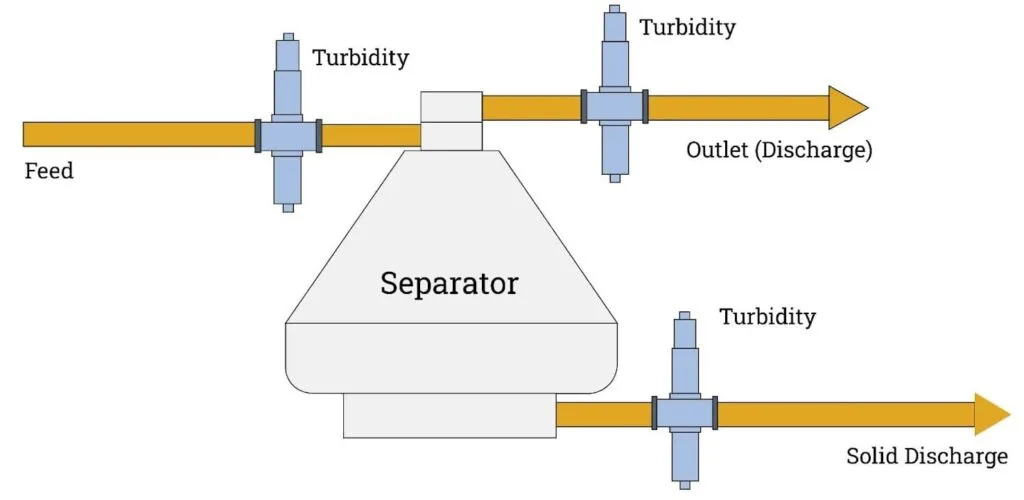
- Disc centrifuge- It is also called disc stack centrifuge. It contains many conical discs arranged inside it. It is used for separating fine particles and immiscible liquids.
- Basket centrifuge- Basket centrifuge has a solid wall or perforated basket. It is used to separate liquid from large solid particles.
- Pusher centrifuge– It is a horizontal basket centrifuge. It has a hydraulic piston which pushes the solid cake out of the bowl continuously.
- Peeler centrifuge- It is a batch type centrifuge. The solid cake is collected, dried and then removed by peeler knife.
- Inverting filter centrifuge- It is a filter centrifuge in which filter cloth is inverted to remove the material. It helps to remove the solid material without leaving much residue.
- Solid bowl vertical centrifuge- It is a compact vertical centrifuge. It is used for clarification of liquid and separation of dense solid particles from liquid.
- Oil centrifuge- Oil centrifuge is used for cleaning lubricating oil. It removes dirt and contaminating particles from oil. It is used in machinery, marine and automobile sectors.
- Vacuum centrifugal concentrator- It is a centrifuge that works with vacuum and heat. It removes solvent by evaporation and concentrates the sample.
- Gas centrifuge- Gas centrifuge is a special centrifuge used for separation of gases. It is used for separation of uranium isotopes and other gas mixtures.
Operating Procedure of Centrifuge
- Sample preparation- Select the proper centrifuge tube according to the sample and centrifuge type. Fill the tube with the sample carefully. Do not overfill the tube.
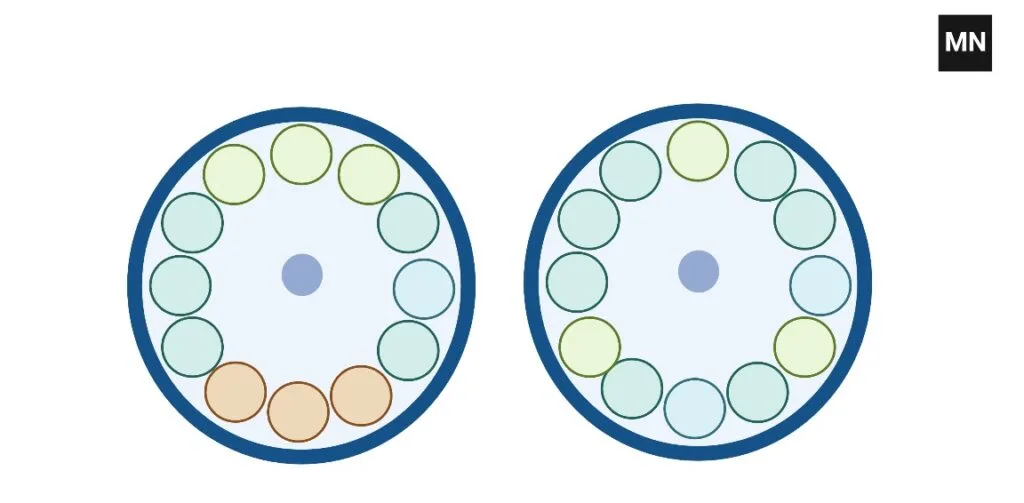
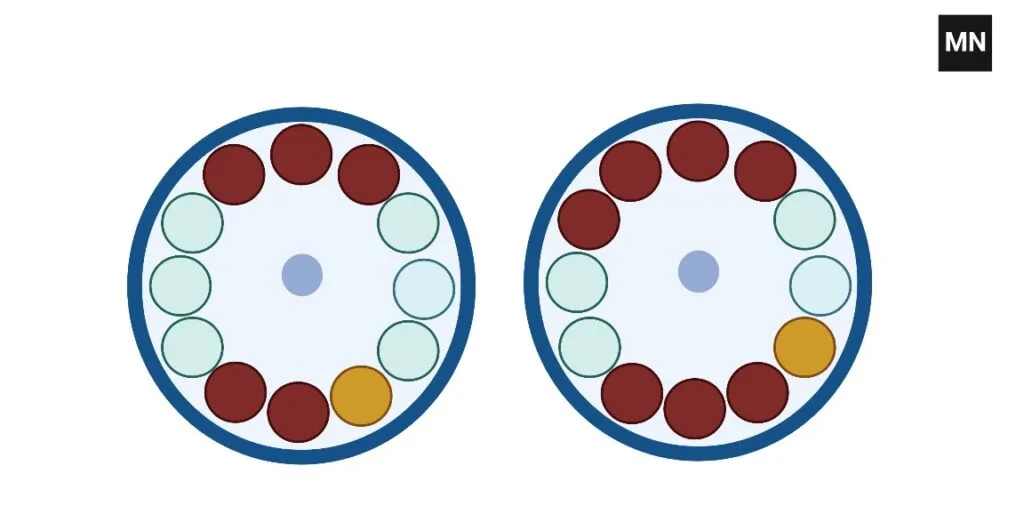
- Balancing of tubes- The tubes should be filled equally. Place the tubes opposite to each other in the rotor. This is done to avoid uneven spinning of the centrifuge.
- Use of balance tube- If the number of sample tubes is odd, an extra tube is used. This tube is filled with equal amount of water or similar liquid. It acts as a balance tube.
- Selection of rotor- Select the correct rotor according to the type and size of tubes. The tubes should fit properly in the rotor or bucket.
- Setting of parameters- Set the required speed and time for centrifugation. The speed may be given in RPM or RCF. In refrigerated centrifuge, the temperature is also adjusted.
- Closing of lid- Close the rotor lid properly if it is present. Then close the main lid of the centrifuge. The lock should be fixed before starting the machine.
- Starting the centrifuge- Start the centrifuge by pressing the start button. The rotor begins to rotate and separation of particles takes place.
- During centrifugation- Do not open the lid while the centrifuge is running. Even after switching off, the rotor may keep moving for some time due to inertia.
- Stopping of centrifuge- After the set time is completed, allow the centrifuge to stop completely. The lid is opened only after complete stopping of the rotor.
- Collection of sample- Remove the tubes carefully from the rotor. Do not shake the tubes because separated particles may mix again. Collect the required part such as pellet or supernatant according to the work.
Centrifuge Balancing – How to balance a centrifuge?
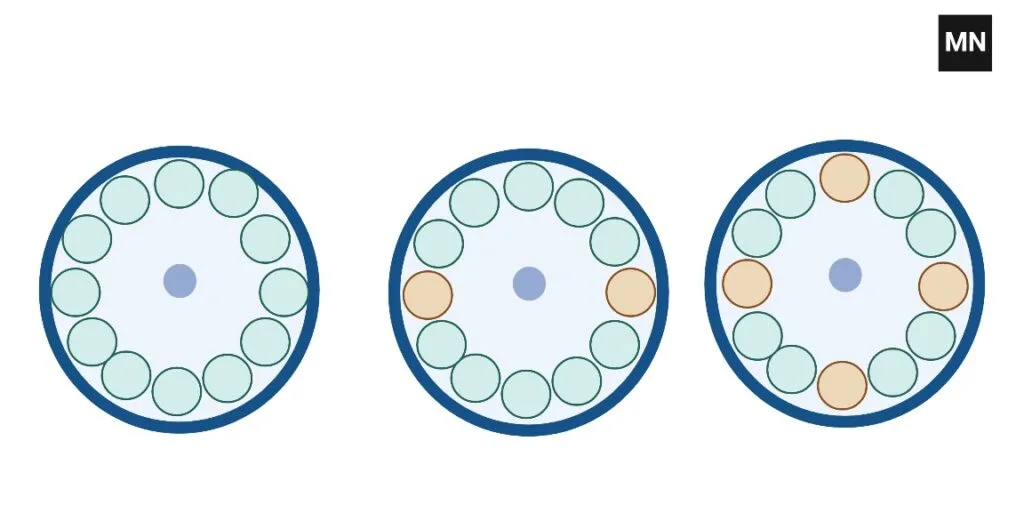
- The liquid present in the centrifuge tubes should be equal in amount. If the volume is unequal, then the rotor will not rotate properly and vibration may occur.
- If the samples have different density, then only equal volume is not sufficient. In this case, the tubes are weighed and the weight of all opposite tubes should be same.
- The tubes are placed opposite to each other in the rotor. A tube should always have another tube of same volume or same weight on the opposite side.
- The tubes should be arranged symmetrically around the central axis of the rotor. This keeps the weight distributed equally during centrifugation.
- If only one sample tube or odd number of tubes are used, then a balance tube is prepared. An identical empty tube is taken and filled with water or similar liquid.
- The balance tube should be made equal to the sample tube in volume or weight. Then it is placed directly opposite to the sample tube.
- Before starting the centrifuge, the rotor should be checked properly. Proper balancing prevents shaking, tube breakage and damage of the centrifuge.
Applications of Centrifuge
- In clinical laboratory, centrifuge is used for separation of blood. Red blood cells, white blood cells, plasma and platelets are separated by this process. It is also used in hematocrit test.
- It is used in urine examination. The urine sample is centrifuged and the sediment is collected at the bottom. This sediment is then used for microscopic study.
- In molecular biology, centrifuge is used for separation of DNA, RNA and proteins. It is also used for purification of these molecules after extraction.
- It is used for separation of cell organelles. Nucleus, mitochondria, ribosomes and other small cell parts can be separated by different centrifugation process.
- It is used in cell harvesting. The cells present in liquid culture are collected as pellet at the bottom of the tube.
- In vaccine preparation and drug research, centrifuge is used for separation and collection of required biological materials.
- In food industry, it is used for clarification of fruit juice, wine and beer. The suspended particles are removed from the liquid.
- In dairy industry, centrifuge is used for separation of cream from milk. It is also used for separation of fat from milk.
- It is used in oil refining. Vegetable oils and animal fats are purified by removing unwanted particles.
- In wastewater treatment, centrifuge is used for dewatering of sludge. It separates water from mud and solid waste.
- In industries, centrifuge is used for cleaning lubricating oil and machinery fluids. The dust, dirt and other particles are removed from the oil.
- It is used in fuel and biodiesel refining. It separates unwanted solid particles and water from fuel.
- In mining industries, centrifuge is used for recovery of minerals and metals from ores.
- Gas centrifuge is used for separation of uranium isotopes. It is used in nuclear fuel preparation.
- In forensic science, centrifuge is used for separation of blood sample and other biological evidence. It is also used in toxicology test.
Advantages of Centrifuge
- Centrifuge separates the particles very fast. The process which normally takes hours or days by simple settling can be completed within few seconds or minutes.
- It is used for separation of complex liquid mixtures. Blood, emulsions, oil products and other mixtures can be separated which do not settle easily by natural process.
- It gives quick result in clinical laboratory. Blood sample, urine sample and other body fluids are processed in short time. So the diagnostic work becomes faster.
- It is useful for dewatering of sludge in wastewater treatment. Water is removed from sludge and a dry cake is formed. This decreases the volume of waste material.
- It reduces the storage and transport problem. As the water content is removed, less space is required for keeping the waste material.
- Modern centrifuge can work automatically. Less labour is needed for operation and only proper setting and checking is required.
- It is a closed instrument, so foul smell and splashing of sample are reduced. This helps to keep the working area clean and safe.
- It reduces the use of chemicals in some treatment process. The separation is done mainly by centrifugal force.
- Centrifuge saves time and material in laboratory and industry. It is also used for long time if properly maintained.
- It improves the next processing step. When free liquid is removed from the material, drying, heating or burning process becomes easier and requires less fuel.
Limitations of Centrifuge
- Centrifuge cannot separate very light particles easily. If the mass of particle is very low, it does not settle properly because centrifugation depends on size and weight difference.
- It requires high amount of electricity. High speed rotation needs much power and refrigerated centrifuge also uses more energy for cooling.
- It produces noise and vibration during working. If the tubes are not balanced properly, the vibration becomes more and may damage the machine.
- Maintenance of centrifuge is difficult. It has mechanical and electronic parts, so any damage or fault needs trained person for repairing.
- The cost of centrifuge is high. Ultracentrifuge, high speed centrifuge and refrigerated centrifuge are very expensive instruments.
- Skilled handling is required for using advanced centrifuge. Wrong speed, wrong rotor or improper balancing may cause tube breakage and accident.
- In continuous work, one extra centrifuge may be needed. If the main centrifuge stops working, the process may be interrupted.
- Some industrial centrifugation process needs more polymer. This increases the cost of operation.
- Small centrifuge has limited sample capacity. Microcentrifuge and simple benchtop centrifuge can process only small volume of sample.
- Some centrifuge has limited rotor option. Basic models do not have temperature control and other advanced features.
Precautions of Centrifuge
- The centrifuge tubes should be balanced before starting the centrifuge. Tubes of equal volume or equal weight are placed opposite to each other. Improper balancing may produce vibration and damage the instrument.
- The lid of the centrifuge should be closed properly before starting. Rotor lid, if present, should also be fixed tightly. The lid should not be opened while the rotor is moving.
- Proper tubes should be used according to the rotor. Weak, cracked or wrong size tubes should not be used because they may break during centrifugation.
- The maximum speed of rotor and tube should not be exceeded. More speed than the limit may cause tube breakage or rotor damage.
- The centrifuge should be placed on a flat and strong surface. If shaking or wobbling is seen during running, the machine should be stopped and balance should be checked again.
- Rotor and chamber should be checked regularly. Rust, corrosion, crack, pitting or any damage should be observed carefully. Damaged rotor should not be used.
- The rotor and centrifuge chamber should be cleaned after use. Proper disinfectant should be used according to the material of rotor. After washing, the parts should be dried completely.
- Metal tools should not be used for removing dirt from rotor or chamber. It may scratch the surface and later damage the rotor.
- Lid threads, O-rings and small parts should be cleaned and checked regularly. Grease recommended by manufacturer may be applied to the threads. Cracked or loose O-ring should be replaced.
- Tubes should be handled carefully while loading and removing. Sudden shaking should be avoided because separated pellet and supernatant may mix again.
- The centrifuge should not be left unattended if any abnormal sound or vibration occurs. The machine should be stopped and checked before reuse.
What does RCF stand for centrifuge?
RCF stands for Relative Centrifugal Force. It is also called Relative Centrifugal Field.
It is the actual force produced on the sample during centrifugation. This force pushes the particles away from the central axis of rotation.
RCF is measured in relation to the normal gravity of earth. So it is expressed as g-force or × g.
RPM shows only the speed of rotation of the rotor. But RCF shows the force acting on the sample. So RCF is more useful than RPM in centrifugation.
RCF depends on the speed of rotation and radius of the rotor. If two rotors rotate at same RPM but their radius is different, then the force produced will also be different.
For this reason, RCF is used to compare centrifugation condition. It helps to obtain similar separation result in different centrifuges.
What is RPM in Centrifuge?
RPM stands for revolutions per minute. It is the measurement of rotational speed of the rotor in a centrifuge.
It shows how many full circles the rotor completes in one minute. For example, 3000 RPM means the rotor completes 3000 rotations in 60 seconds.
RPM tells only the speed of spinning. It does not show the actual force acting on the sample. The actual force is expressed as RCF or g-force.
RPM is different from RCF. Two centrifuges may rotate at same RPM, but they may not produce same force because their rotor radius may be different.
So, RPM alone is not always accurate for comparing centrifugation condition. It can be converted into RCF when the radius of rotor is known.
How RPM is calculated?
RPM is calculated from the relation between RCF and radius of the rotor. The standard formula is as follows-
RCF = 1.118 × 10⁻⁵ × r × (RPM)²
Where,
RCF = Relative Centrifugal Force or g-force.
r = radius of the rotor in centimeter.
RPM = revolutions per minute.
If RCF and rotor radius are known, then RPM is calculated by rearranging the formula.
RPM = √ [ RCF / (1.118 × 10⁻⁵ × r) ]
In laboratory, RPM can be calculated by this formula. It can also be measured by nomograph or g to RPM calculator. In many centrifuge, this calculator is present in the operating panel.
Rotor radius is important in this calculation. A larger rotor gives more RCF than a smaller rotor at same RPM.
Relationship between RPM and RCF
RPM and RCF are related with each other in centrifugation. RPM means revolutions per minute and it shows the speed of rotation of the rotor.
RCF means relative centrifugal force. It shows the actual force acting on the sample during centrifugation. So RPM gives speed, but RCF gives force.
The relation between RPM and RCF depends on the radius of the rotor. Rotor radius means the distance from the centre of rotation to the sample tube.
The formula is as follows-
RCF = 1.118 × 10⁻⁵ × r × (RPM)²
Where,
RCF = Relative Centrifugal Force or g-force.
r = radius of the rotor in centimeter.
RPM = revolutions per minute.
From this formula, it is seen that RCF increases with increase of rotor radius. It also increases more when RPM is increased because RPM is squared in the formula.
So two centrifuges running at same RPM may not produce same RCF if their rotor radius is different. For this reason, RCF is more useful than RPM for comparing centrifugation condition.
RCF is used to get similar separation result in different centrifuges. It gives the actual centrifugal force applied on the sample.
What is the difference between RPM and RCF?
| Parameter | RPM (Revolutions Per Minute) | RCF (Relative Centrifugal Force) |
|---|---|---|
| Definition | Measures the number of complete rotations a centrifuge rotor makes per minute. | Measures the force exerted on samples relative to Earth’s gravity (g-force). |
| Indicates | The speed at which the centrifuge is spinning. | The actual centrifugal force applied to the samples. |
| Formula | Directly read from the centrifuge display. | RCF = 1.118 × 10⁻⁵ × r × (RPM)², where r is the rotor radius in cm. |
| Depends on Rotor Size? | No, RPM is independent of rotor size. | Yes, RCF is affected by both RPM and rotor radius. |
| Use in Protocols | Less reliable for standardization, as different rotors will exert different forces at the same RPM. | More reliable, ensuring consistent experimental conditions across different centrifuges. |
| Centrifuge Settings | Many centrifuges are set by RPM, requiring conversion to RCF when needed. | Many modern centrifuges allow direct input of RCF for precise control. |
| Why It Matters | If two centrifuges have different rotor sizes, the same RPM will produce different forces. | Ensures that the correct force is applied, making results reproducible across different centrifuges. |
Differences between swing bucket rotor and fixed angle rotor
| Feature | Swing Bucket Rotor | Fixed Angle Rotor |
|---|---|---|
| Tube Orientation | Tubes are placed in buckets that swing out horizontally during centrifugation, achieving a 90° angle relative to the axis of rotation. | Tubes are held at a fixed angle, typically between 30° to 45°, relative to the axis of rotation. |
| Pellet Formation | Pellets form at the bottom center of the tube, resulting in a flat and uniform sedimentation. | Pellets form along the side of the tube, corresponding to the fixed angle, which can make it challenging to decant supernatant without disturbing the pellet. |
| Maximum Speed | Generally supports lower maximum speeds due to the mechanical stress on moving parts. | Capable of withstanding higher centrifugal forces, allowing for higher speeds and shorter centrifugation times. |
| Sample Capacity | Offers high vessel capacity and flexibility with various adapter options, accommodating different tube sizes and types. | Typically holds more samples due to efficient tube spacing, making it suitable for high-throughput applications. |
| Applications | Ideal for applications requiring gentle separation, such as density gradient centrifugation, and when precise separation is needed. | Suitable for pelleting particles like cells, bacteria, or cellular debris, and for separating biological macromolecules such as DNA, RNA, and proteins. |
References
- Pipette.com Team. (2025, August 15). 8 types of laboratory centrifuges & the purposes they serve. Pipette.com. [URL]
- SIGMA Equipment. (n.d.). A guide to centrifuges. [URL]
- Eppendorf US. (2019, July 22). Basics: Centrifugal force & centrifuge type. Lab Academy. [URL]
- Corning. (n.d.). Centrifugation: Lab techniques, examples and types. [URL]
- Ahmed, E. (2021). Centrifuge [PDF]. Al-Mustaqbal University-College.
- Eppendorf. (n.d.). Centrifuge concentrator. [URL]
- Shutterstock. (n.d.). Centrifuge diagram: Over 293 royalty-free licensable stock illustrations & drawings. [URL]
- Goodman, T. (2007, June 1). Centrifuge rotor selection and maintenance. American Laboratory. [URL]
- Admin. (2024, January 8). Centrifuge top tips part 1 – Types of centrifuges and rotors. Richmond Scientific. [URL]
- Oximio. (n.d.). Clinical centrifuge | Uses in clinical trials. [URL]
- Wei, L. (n.d.). Comparing different types of medical centrifuges – Pros and cons. Drawell. [URL]
- Huading Separator. (2024, November 11). Comprehensive comparison of decanter centrifuges and disc centrifuges. [URL]
- Dolphin Centrifuge. (n.d.). Disc centrifuge parts glossary: An illustrated guide. Alfa Laval Centrifuge Systems. [URL]
- OHAUS. (2025, May 16). Fixed angle or swing out rotor, that is the question! [URL]
- Alberts, B., Johnson, A., Lewis, J., et al. (2002). Fractionation of cells. In Molecular biology of the cell (4th ed.). Garland Science. [URL]
- Centrifuge World. (n.d.). How does a decanter centrifuge work? [URL]
- Biofargo Team. (2021, November 10). How a centrifuge separates blood: Principles & uses. Biofargo. [URL]
- Alfa Laval. (n.d.). How a disc stack centrifuge works. [URL]
- Rama University. (n.d.). LT 25. Centrifugation [PDF]. Department of Biotechnology, Faculty of Engineering & Technology.
- Thermo Fisher Scientific. (n.d.). Lab centrifuges models. [URL]
- FOUR E’s Scientific. (2026, March 6). Laboratory centrifuges: Types, applications, and how to choose the right one. [URL]
- Industrial Quick Search. (n.d.). Principles, classifications and applications of centrifuges. [URL]
- Wei, L. (n.d.). Refrigerated centrifuge: Applications and proper maintainance tips. Drawell. [URL]
- Eppendorf. (n.d.). Refrigerated centrifuges. [URL]
- Beckman Coulter. (n.d.). Relative centrifugal field (RCF). [URL]
- Beckman Coulter. (n.d.). Rotors for density gradient centrifugation. [URL]
- Welch Vacuum. (n.d.). Selecting the optimal vacuum concentrator pump | Case study. [URL]
- Thapa Shrestha, U. (2012, December 31). The basic separation technique. My Scientific Blog – Research and Articles. [URL]
- AHN Biotechnologie GmbH. (2023, January 17). The most effective blood separation methods. News-Medical.Net. [URL]
- Theoretical and applied perspectives on centrifugation: Principles, engineering architectures, and multidisciplinary applications. (n.d.). [Markdown]
- Karwan, C. (2025, May 22). Types of centrifuge rotors. New Life Scientific. [URL]
- Centrisys. (n.d.). Understanding decanter centrifuge: A complete guide. [URL]
- Rocker Scientific. (n.d.). What is centrifugal vacuum concentrator? How does it work? [URL]
- Digitalguider. (2026, February 20). Why a clinical blood centrifuge matters for accurate lab results. Southwest Science. [URL]