

Antibodies are Y-shaped glycoproteins. These are also called immunoglobulins. It is important component of adaptive immunity.
These are produced by B-lymphocytes. After activation, B-cells are changed into plasma cells. These plasma cells produce large amount of antibodies against foreign substances.
The foreign substance is called antigen. Antigen may be bacteria, virus, toxin or any other harmful particle. Antibody is formed when antigen enters into body.
Structurally, an antibody has two heavy chains and two light chains. These chains are joined by disulphide bonds. This arrangement gives a Y-shaped structure.
The tip region of antibody is variable in nature. It binds with specific antigen. This binding is very specific like lock and key type.
After binding, antibody neutralizes the antigen. It prevents the pathogen from entering into host cell. It also stops attachment of pathogen on mucosal surface.
Some antibodies act as marker. They coat the foreign particle and make it easy for phagocytic cells to destroy. This is referred to as opsonization.
Types of Antibodies
The following are the main types of antibodies–
- IgG– IgG (Immunoglobulin G) is most abundant antibody in blood. It forms about 75% of circulating antibody. It is present in blood and tissue fluid. It gives long term immunity. It can cross placenta and protect the developing foetus. It has four subclasses, IgG1, IgG2, IgG3 and IgG4.
- IgA– IgA (Immunoglobulin A) is mainly present in mucosal surface. It is found in respiratory tract and gastrointestinal tract. It is also present in saliva, tears and breast milk. It prevents the attachment of pathogen on mucosal surface.
- IgM– IgM (Immunoglobulin M) is the largest antibody. It has pentameric structure. It is made up of five antibody units. It is the first antibody produced in new infection. It binds with many antigens at a time and helps in early defence.
- IgE– IgE (Immunoglobulin E) is present in very small amount in blood. It is mainly related with allergic reaction. It binds with mast cells and basophils. Then these cells release histamine. It also helps against parasitic infection.
- IgD– IgD (Immunoglobulin D) is found in small amount in blood. It is mainly present on surface of B-cells. It acts as antigen receptor. It helps in activation of B-cells. Its exact role is still not fully known.
Immunoglobulin A (IgA)
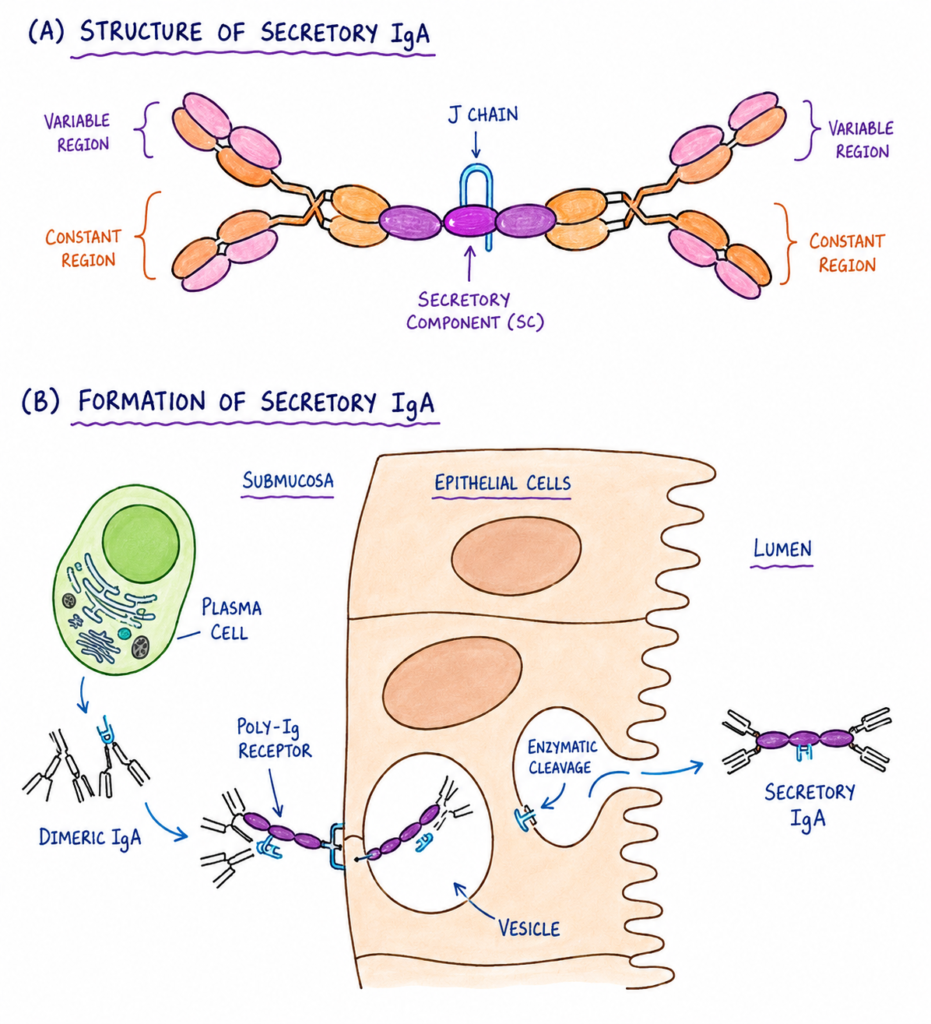
Detail structure of Immunoglobulin A (IgA)
- IgA (Immunoglobulin A) is made up of four chain structure. It has two identical heavy chains and two identical light chains. The heavy chains are called alpha chains. The light chains may be kappa or lambda type.
- The two heavy chains and two light chains together form one monomeric unit. This unit gives normal antibody like structure. It has two upper arms and one lower constant part.
- The upper two arms form Fab regions. Fab means fraction antigen-binding. These regions bind with specific antigen. So this part is important for antigen recognition.
- The lower part is called Fc region. Fc means fraction crystallizable. This region does not bind antigen directly. It helps in attachment with other immune components.
- Between Fab and Fc region, a hinge region is present. This region gives flexibility to the molecule. So the arms can move little and bind antigen properly.
- IgA may be present as monomer. This form is mainly found in blood serum. It has molecular weight about 160 kDa.
- IgA may also be present as dimer. This form is mainly found in mucosal secretion. It is formed by joining of two IgA monomers. Its molecular weight is about 320-385 kDa.
- In dimeric IgA, two monomers are joined by J chain. J chain is also called joining chain. It is about 15 kDa polypeptide. It joins the two monomers at their Fc regions.
- Secretory IgA has one extra secretory component. It is about 70-80 kDa polypeptide. It surrounds the Fc region. It protects IgA from proteolytic enzymes in mucosal area and gastrointestinal tract.
- IgA1 has long hinge region. This hinge region is rich in proline. So it gives more flexibility to the molecule. But it is more easily cleaved by bacterial protease.
- In IgA1, the heavy chains and light chains are joined by covalent disulphide bonds. This gives proper stability to the molecule.
- IgA2 has short and compact hinge region. It is more resistant to enzymatic degradation. In IgA2, the heavy chains and light chains are joined mainly by non-covalent interaction.
Functions of Immunoglobulin A (IgA)
The following are the important functions of IgA–
- IgA (Immunoglobulin A) gives mucosal immunity. It is present on mucosal surface of respiratory tract, gastrointestinal tract and genitourinary tract. So it acts as first line defence at these surface.
- IgA binds with foreign antigens. These antigens may be virus, bacteria, protozoa or toxin. After binding, it neutralizes them and prevents their harmful action.
- IgA prevents the attachment of pathogen with epithelial cells. It cross links the pathogen and traps them in mucus. Then these trapped particles are removed from the body.
- IgA is present in high amount in breast milk and colostrum. It passes from mother to child during feeding. So it gives passive immunity to newborn baby.
- IgA does not activate classical complement pathway properly. But it can activate alternative and lectin pathway. This helps in removal of infectious agents.
- IgA helps to maintain normal microbial balance in intestine. It controls excess inflammation in gut. So it is important for maintaining gut homeostasis.
- IgA protects mucosal surface without producing strong inflammatory reaction. This is important because mucosal surface is continuously exposed to food, microbes and other foreign materials.
Immunoglobulin G (IgG)
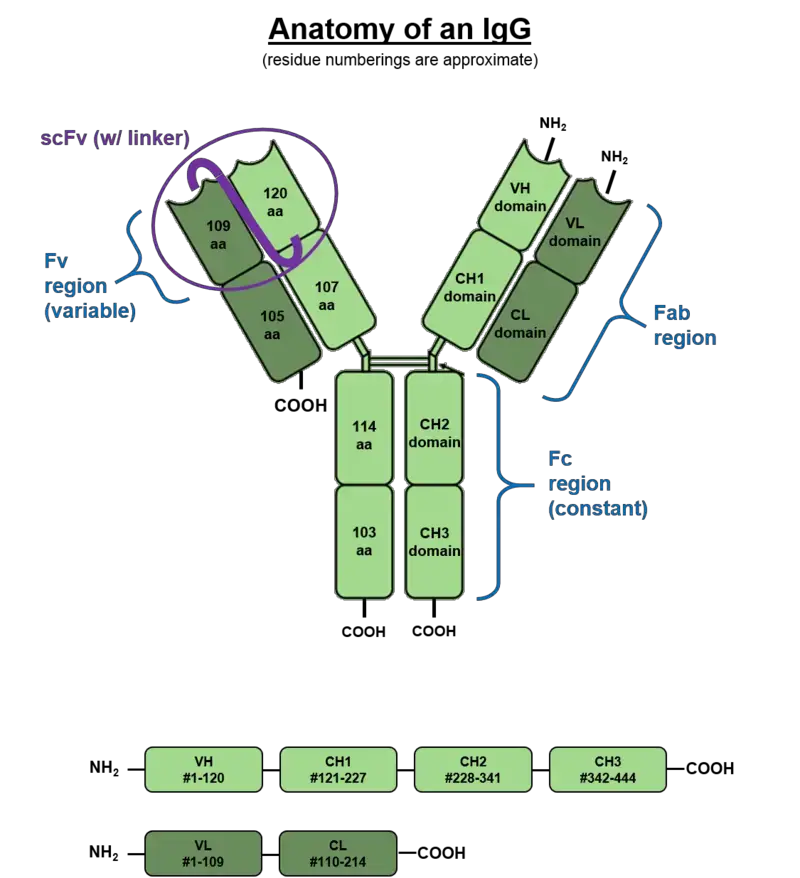
Detail structure of Immunoglobulin G (IgG)
- IgG (Immunoglobulin G) is present as single monomeric unit. It is Y-shaped antibody. Its molecular weight is about 150 kDa.
- IgG is made up of four polypeptide chains. It has two identical heavy chains and two identical light chains.
- The heavy chains of IgG are called gamma (γ) chains. Each heavy chain has molecular weight about 50 kDa.
- The light chains are smaller chains. Each light chain has molecular weight about 25 kDa. These light chains may be kappa or lambda type.
- Each light chain has two domains. One is variable domain (VL) at N-terminal side. Another is constant domain (CL).
- Each heavy chain has one variable domain (VH) and three constant domains. These constant domains are CH1, CH2 and CH3.
- The two heavy chains are joined with each other by covalent disulphide bonds. Each light chain is also joined with one heavy chain by disulphide bond.
- The two heavy chains also remain attached by non-covalent interaction. This interaction is mainly present between their CH3 domains.
- The upper two arms of IgG are called Fab regions. Fab means fragment antigen-binding. These regions contain antigen binding sites.
- Each Fab region is formed by one complete light chain and the upper part of one heavy chain. It includes VH and CH1 domains of heavy chain.
- The lower stem part of IgG is called Fc region. Fc means fragment crystallizable. It is formed by lower hinge region, CH2 and CH3 domains of heavy chains.
- Fc region does not bind antigen. It binds with cell receptors and other effector molecules. So this part helps in immune reaction after antigen binding.
- A hinge region is present between CH1 and CH2 domains. It connects Fab arms with Fc stem. It gives flexibility to the antibody.
- Due to hinge region, the Fab arms can move and rotate. This helps in better binding with antigen. The length of hinge region is not same in all subclasses.
- In IgG1, the hinge region has about 15 amino acids. In IgG2 and IgG4, it has about 12 amino acids. In IgG3, hinge region is long and may contain up to 62 amino acids.
- IgG has conserved N-linked glycosylation site. It is present at position 297. This site is located near the interface of CH2 and CH3 domains.
- Some IgG antibodies also show glycosylation in variable regions. About 10-15% antibodies may have this type of glycosylation.
Functions of Immunoglobulin G (IgG)
The following are the important functions of IgG–
- IgG (Immunoglobulin G) is most abundant antibody in serum. It forms about 75% of serum antibodies. It gives long time systemic immunity. It is more active in secondary immune response. It gives protection after infection and vaccination.
- IgG binds with virus, bacteria and toxin. It neutralizes these antigen. So the pathogen cannot attach with host cell. It cannot enter into host cell and damage is reduced.
- IgG coats the surface of foreign particle. This is called opsonization. The coated pathogen is easily recognized by macrophages and other phagocytic cells. Then engulfment and digestion takes place.
- IgG activates classical complement pathway. Specially IgG1 and IgG3 are active in this function. Complement proteins form pore on bacterial membrane and also bring inflammatory cells at infection site.
- IgG helps in antibody dependent cell mediated cytotoxicity (ADCC). It binds with infected cell or abnormal cell. Its Fc region binds with Fc receptors of immune cells. Then Natural Killer cells (NK cells) destroy the target cell.
- IgG can cross the placenta. It passes from mother to foetus by neonatal Fc receptor (FcRn). So it gives passive immunity to foetus and newborn baby.
- IgG1, IgG2, IgG3 and IgG4 have different work. IgG1 and IgG3 act against viral and protein antigen. IgG2 acts against polysaccharide antigen of encapsulated bacteria like Streptococcus pneumoniae and Haemophilus influenzae. IgG4 is less inflammatory and helps in immune tolerance.
Immunoglobulin M (IgM)
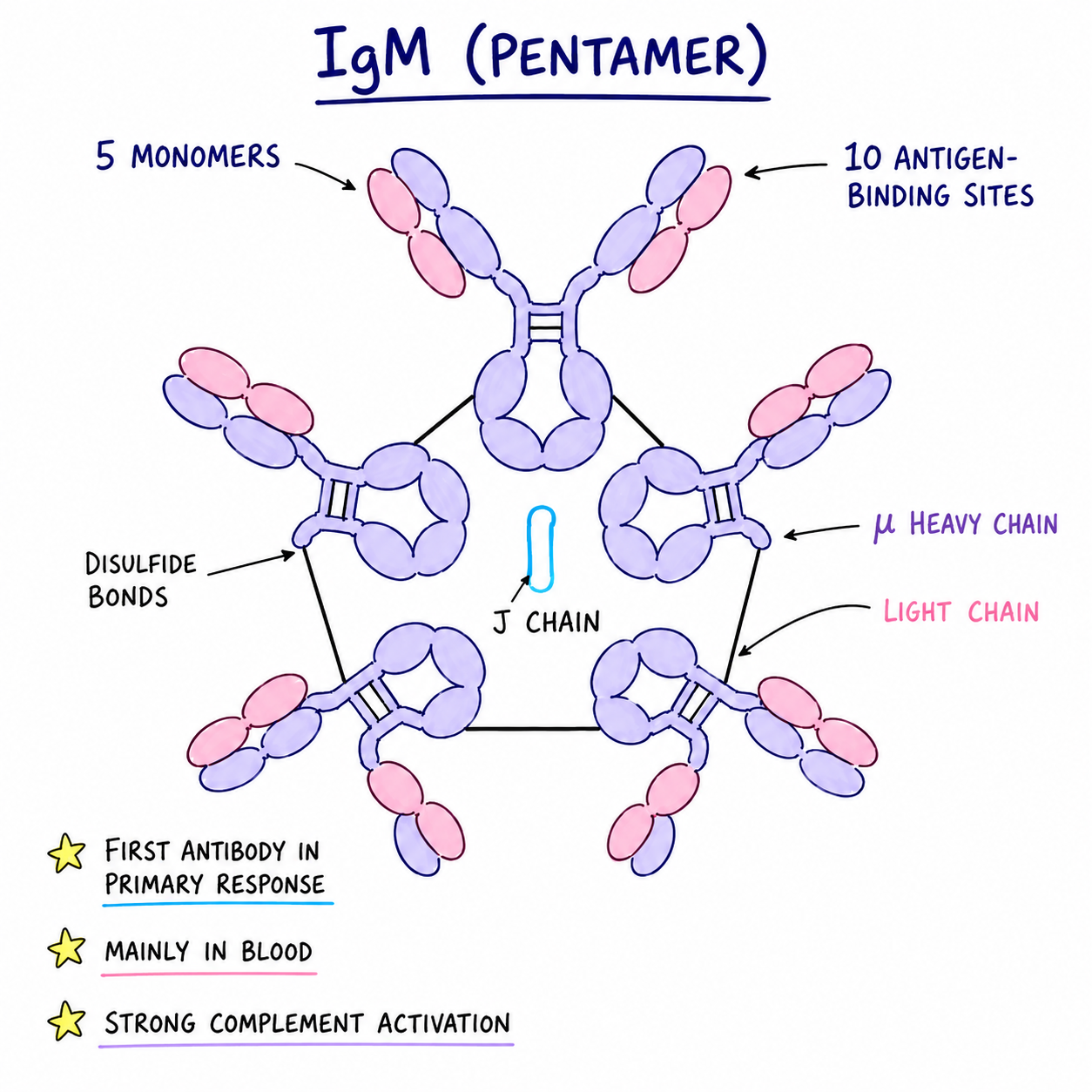
Detail structure of Immunoglobulin M (IgM)
- IgM (Immunoglobulin M) is first formed as single monomeric unit. One monomer has molecular weight about 180 kDa. It has two identical heavy chains and two identical light chains.
- The heavy chain of IgM is called mu (μ) chain. The light chain may be kappa or lambda type. These chains together form antibody like unit.
- Each IgM heavy chain has four constant domains. It has no proper flexible hinge region. So the molecule is less flexible than IgG and IgA.
- IgM is present as monomer on the surface of B-cells. This membrane bound IgM acts as antigen receptor. It helps in recognition of antigen by B-cells.
- The secreted form of IgM is mainly pentameric. It is made up of five IgM monomers. These monomers are arranged in radial form.
- The pentameric IgM is very large molecule. Its molecular weight is more than 900 kDa. Due to large size it mostly remains inside blood vessel.
- The five monomeric units of IgM are joined by disulphide bonds. These bonds are present between the Fc regions of different monomers.
- A J chain is also present in pentameric IgM. J chain means joining chain. It is about 15 kDa polypeptide. It helps to hold the five units together.
- In absence of J chain, IgM may form hexameric structure. This form is made up of six IgM monomers. It is more symmetric type structure.
- Secreted IgM has 10 antigen binding sites. This is because each monomer has two binding sites and pentamer has five monomers. So it binds strongly with multivalent antigen.
- The total binding strength of IgM is very high. This is called high avidity. It is important for binding with repeated antigen present on bacteria and other particles.
- IgM is highly glycosylated antibody. It contains about 12% carbohydrate by weight. These carbohydrate parts help in maintaining structure and stability of the molecule.
Functions of Immunoglobulin M (IgM)
The following are the important functions of IgM–
- IgM (Immunoglobulin M) is the first antibody produced during primary immune response. It appears when body first time exposed to a new antigen or infection. So it gives early protection.
- IgM activates classical complement pathway very strongly. Due to its large pentameric structure, one IgM molecule can start complement reaction after binding with pathogen. This causes pore formation on bacterial membrane and inflammation also starts.
- IgM binds with antigen present on virus and bacteria. It neutralizes them. So the pathogen cannot attach properly with host tissue and infection is prevented.
- IgM is important against encapsulated bacteria. It helps in removal of bacteria like Streptococcus pneumoniae and Haemophilus influenzae from blood circulation.
- IgM may be present as natural antibody also. This natural IgM is produced without previous exposure to particular pathogen. It recognizes common microbial sugars and lipids and gives immediate first line defence in blood.
- IgM acts as opsonin. It coats the pathogen and marks them for destruction. Then macrophages in spleen and liver recognize, engulf and remove them.
- IgM helps in removal of dead and dying host cells. These cells are called apoptotic cells. It helps in safe clearance of these cells from body.
- IgM also helps in mucosal protection. Although it works mainly in blood, pentameric IgM can pass through epithelial cell layer by poly-Ig receptor. Then it helps IgA in protecting mucosal surface.
Immunoglobulin E (IgE)
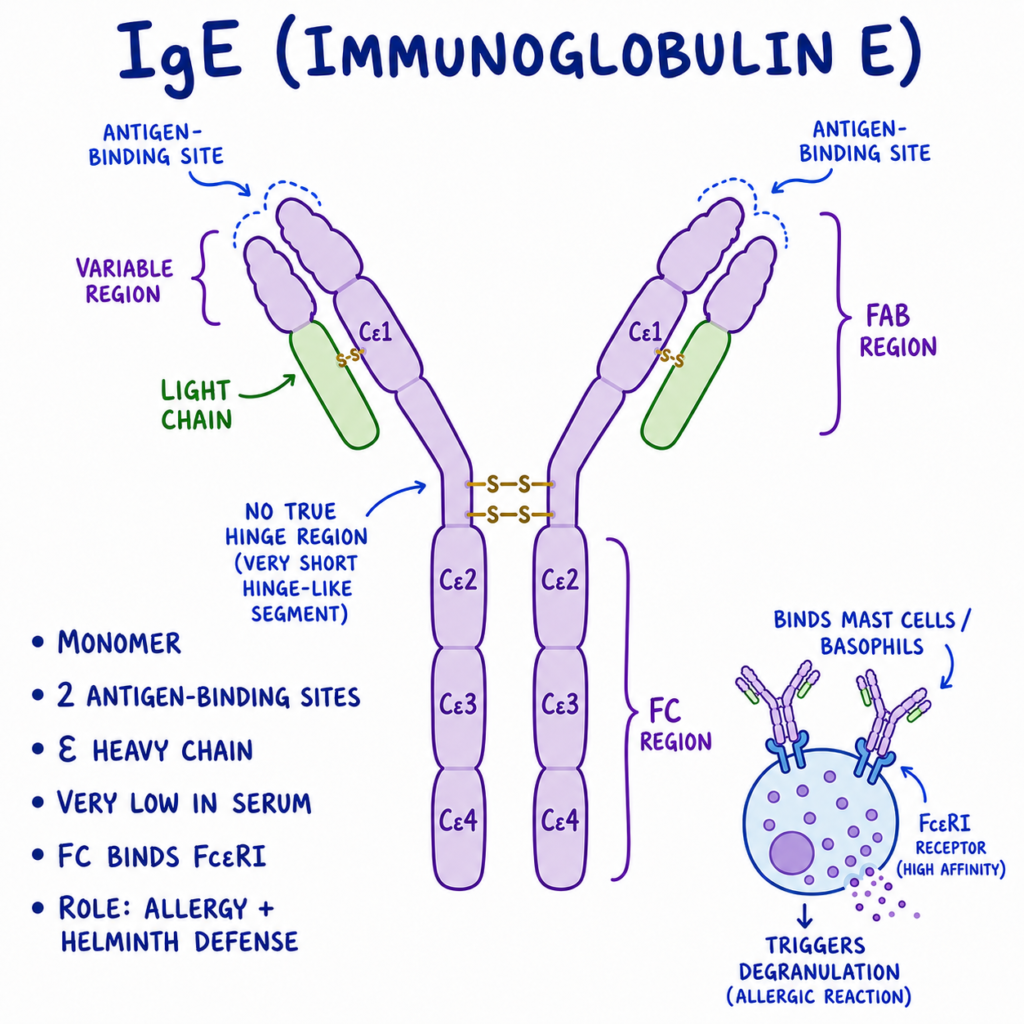
Detail structure of Immunoglobulin E (IgE)
The following are the structure of IgE–
- IgE (Immunoglobulin E) is a single monomeric antibody. It has molecular weight about 188 kDa. It is found as one antibody unit.
- IgE is made up of four polypeptide chains. There are two same heavy chains and two same light chains.
- The heavy chain of IgE is called epsilon (ε) chain. The light chain may be kappa or lambda chain.
- Each epsilon heavy chain has one variable domain (VH). It also has four constant domains. These are Cε1, Cε2, Cε3 and Cε4.
- IgE has extra constant domain than IgG. This extra part is Cε2 domain. So the structure becomes little more long and heavy.
- IgE has no typical hinge region. This is important feature of IgE structure. So it is not flexible like IgG.
- The Cε2 domain gives flexibility in IgE. This part works like hinge region. It helps the molecule to adjust its shape.
- The constant part of IgE can change its shape. It may be in open form or closed form. This change is needed for receptor binding.
- In open form, IgE binds with FcεRI receptor. This receptor is present on mast cells and basophils.
- In closed form, IgE binds with CD23 receptor. This receptor is mainly present on B-cells.
- IgE is highly glycosylated antibody. It has carbohydrate about 12% of its molecular weight. The carbohydrate is mainly N-glycans.
- Human IgE has seven N-linked glycosylation sites in each heavy chain. These sugar parts help to keep the heavy chain stable.
- These carbohydrate chains maintain the proper shape of IgE. They also help in correct binding with receptors.
Functions of Immunoglobulin E (IgE)
The following are the important functions of IgE–
- IgE (Immunoglobulin E) is main antibody for allergic reaction. It is involved in type I hypersensitivity. It is seen in asthma, allergic rhinitis and eczema like condition.
- IgE binds with FcεRI receptor on mast cells and basophils. When allergen binds with this IgE, these cells release histamine, leukotrienes and other chemical substances. This causes inflammation and allergic symptoms.
- IgE gives defence against parasitic infection. It is mainly important against helminths or worms. It coats the parasite and then eosinophils, mast cells and other immune cells bind with it. These cells release toxic proteins and destroy the parasite.
- IgE also gives protection against venoms. It helps in immune defence against some animal venoms. This is a protective function but excess reaction may also cause allergy like response.
- IgE helps in antigen transport. It binds with low affinity CD23 receptor and carries antigen-IgE complex across epithelial lining of respiratory tract and gastrointestinal tract.
- IgE helps in antigen presentation. Through CD23 receptor, it helps B-cells to present different peptide antigen to T-cells. This is referred to as facilitated antigen presentation (FAP).
- IgE helps in immune regulation. It binds with CD23 receptors present on B-cells and other antigen presenting cells. This helps to control its own production and maintain immune homeostasis.
- IgE may also take part in some autoimmune process. In this condition immune regulation becomes disturbed. So IgE is also related with immune dysregulation in some cases.
Immunoglobulin D (IgD)
Detail structure of Immunoglobulin D (IgD)
The following are the structure of IgD–
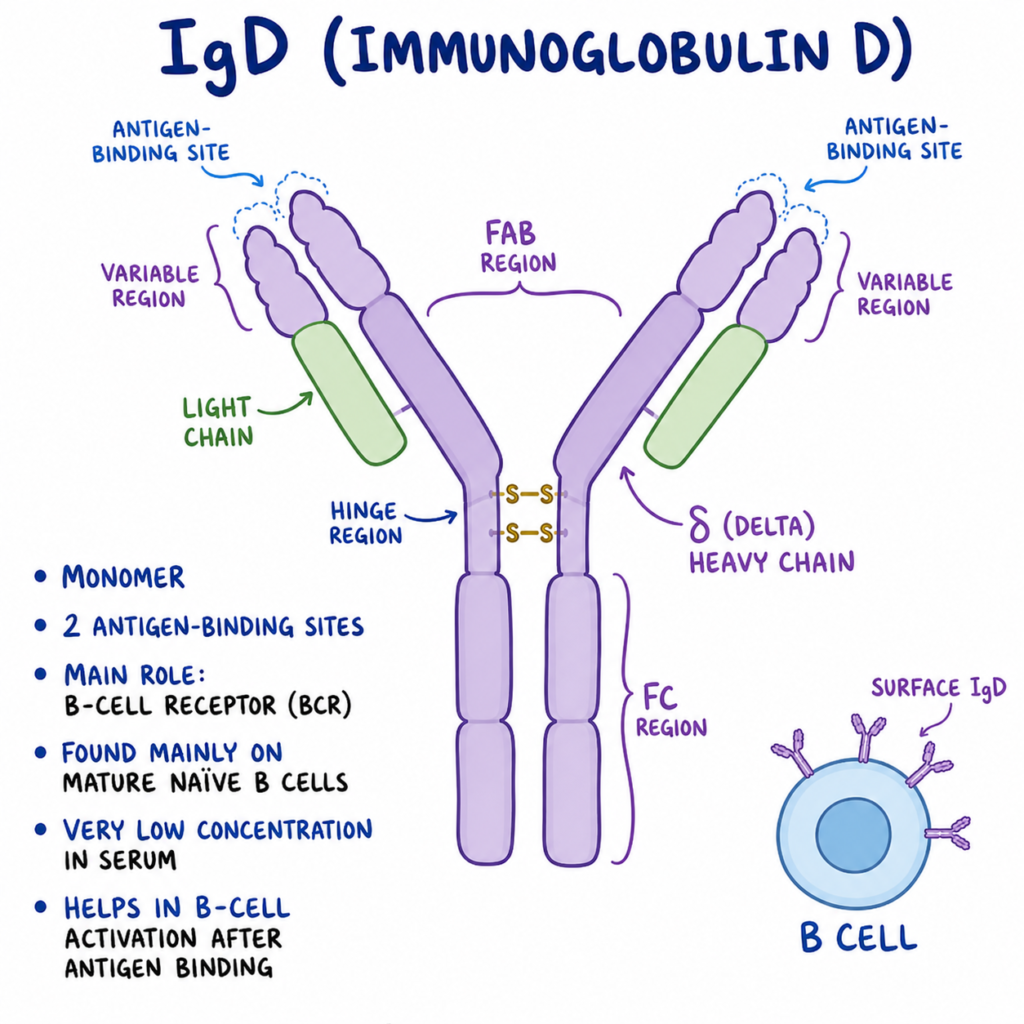
- IgD (Immunoglobulin D) is present as single monomeric antibody. It is highly glycosylated antibody. Its molecular weight is about 180-185 kDa.
- IgD is made up of four polypeptide chains. It has two same heavy chains and two same light chains.
- The heavy chain of IgD is called delta (δ) chain. Each delta chain has molecular weight about 62 kDa.
- The light chain may be kappa or lambda type. Each light chain has molecular weight about 23 kDa.
- Each light chain has one variable domain and one constant domain. Each heavy chain has one variable domain and three constant domains.
- These domains are separated by intra-chain disulphide bonds. So each chain forms different functional parts.
- On the surface of B-cells, two delta heavy chains are joined by only one disulphide bridge. This bridge is present near the carboxy terminal end.
- IgD has very long hinge region. It may contain up to 64 amino acids. This is one important structure of IgD.
- The amino terminal part of hinge region is rich in alanine and threonine. The carboxy terminal part is rich in charged amino acids like lysine, glutamate and arginine.
- IgD has heavy carbohydrate modification. It shows mainly O-linked glycosylation. Up to seven glycan chains may be attached in the long hinge region.
- The long hinge region makes IgD very flexible. But it also makes the molecule easily degraded by proteolytic enzymes.
- IgD does not always remain in normal Y-shaped form. It may take flexible T-shaped structure.
- In this flexible structure, two Fab arms can move widely. So it can bind with antigenic sites which are placed far from each other.
- The Fc region remains in middle part. The antigen binding arms can swivel on both side of this Fc region. This gives special flexibility to IgD molecule.
Functions of Immunoglobulin D (IgD)
The following are the important functions of IgD–
- IgD (Immunoglobulin D) acts as antigen receptor on surface of B-cells. It binds with repetitive multivalent antigen. After binding, it gives signal to B-cell for activation, proliferation and formation of antibody secreting plasma cells.
- IgD helps in maturation of B-cells. It also increases the life span of mature B-cells in peripheral region. It helps in formation and maintenance of B-cell memory and also prevents too much suppression of B-cells.
- Secreted IgD helps in mucosal immune defence. It is mainly active in upper respiratory tract. It binds with microbial virulence factors and neutralizes bacteria, virus and toxins before they enter into cells.
- Free IgD can bind on surface of basophils and mast cells. When respiratory pathogen cross links this IgD, these cells release antimicrobial peptides, inflammatory mediators and B-cell helping factors. This helps in fighting infection.
- IgD may act as substitute of IgM. Due to structural flexibility and similarity, it can take some function of IgM when IgM is defective or not working properly.
- IgD helps to maintain normal microbial balance in body. It also has role in allergy. It may block allergens from producing inflammation in respiratory tract, but cross linking of IgD may also release allergy related mediators.
- IgD helps to increase humoral immunity. It helps B-cells to internalize, process and present antigen to helper T-cells. In this way it supports better antibody response of IgG, IgA and IgM.
Difference between IgD, IgA, IgM, IgE and IgG
| Character | IgD | IgA | IgM | IgE | IgG |
|---|---|---|---|---|---|
| Form | Monomer | Monomer in blood, dimer in secretion | Mainly pentamer | Monomer | Monomer |
| Size | About 180-185 kDa | About 160 kDa monomer, 320-385 kDa dimer | More than 900 kDa | About 188 kDa | About 150 kDa |
| Heavy chain | Delta (δ) | Alpha (α) | Mu (μ) | Epsilon (ε) | Gamma (γ) |
| Amount in blood | Very low, less than 1% | About 15% | First formed in primary response | Very low | Highest, about 75% |
| Main place | Surface of B-cells | Mucosal secretion, saliva, tears, breast milk | Blood and lymph | Mast cells, basophils | Blood and tissue fluid |
| Special structure | Long hinge region, may be T-shaped | J chain and secretory component in dimer | Largest antibody, 10 binding sites | No usual hinge, extra constant domain | Can cross placenta |
| Main function | B-cell activation and maturation | Mucosal immunity | Early defence and complement activation | Allergy and parasite defence | Long term immunity and secondary response |
| Placenta crossing | No | No | No | No | Yes |
| Complement action | Very less | Less, not classical mainly | Strongest | No important | Strong, mainly IgG1 and IgG3 |
References
- Vogel, M., & Engeroff, P. (2020). A role for CD23 in the suppression of allergy. Authorea.
- Boster Bio. (2025). Antibody Isotypes: IgG, IgA, IgM, IgE, IgD. Boster Bio.
- Antibody Structure and Function: The Basis for Engineering Therapeutics – PMC. (n.d.).
- Godwin, L., Sinawe, H., & Crane, J. S. (2022). Biochemistry, Immunoglobulin E. In StatPearls. StatPearls Publishing.
- Sathe, A., & Cusick, J. K. (2022). Biochemistry, Immunoglobulin M. In StatPearls. StatPearls Publishing.
- Clinical manifestation for immunoglobulin A deficiency: a systematic review and meta-analysis – PMC. (n.d.).
- Crystal structure of IgE bound to its B-cell receptor CD23 reveals a mechanism of reciprocal allosteric inhibition with high affinity receptor FcεRI – PMC. (n.d.).
- Immune Deficiency Foundation. (2024). Decoding antibody deficiency diagnoses.
- Zubair, M., Singh, C., & Farhana, A. (2026). Enzyme-Linked Immunosorbent Assay (ELISA). In StatPearls. StatPearls Publishing.
- Arikan, A., Doluca, O., Akhan, S., Sanlidag, T., & Sayan, M. (2023). Evaluation of lateral flow and ELISA techniques for detecting IgG and IgM antibodies in COVID-19 cases in Türkiye. Eastern Mediterranean Health Journal, 29(2), 91-99.
- Expression of FcRn receptor in placental tissue and its relationship with IgG levels in term and pre-term newborns – PMC. (n.d.).
- Booth, B. J., Ramakrishnan, B., Narayan, K., Wollacott, A. M., Babcock, G. J., Shriver, Z., & Viswanathan, K. (2018). Extending human IgG half-life using structure-guided design. mAbs, 10(7), 1098–1110.
- FcRn, but not FcγRs, drives maternal-fetal transplacental transport of human IgG antibodies | PNAS. (n.d.).
- Medicover Genetics. (n.d.). HYPER-IgD SYNDROME/MEVALONATE KINASE DEFICIENCY.
- How J-chain ensures the assembly of immunoglobulin IgM pentamers – PMC. (n.d.).
- Autoinflammatory Alliance. (2022). Hyper IgD Syndrome (HIDS), Mevalonate Kinase Deficiency MVK gene.
- IgA Antibody: Structure, Function, Subclasses, and FAQs | Sino Biological. (n.d.).
- IgG Deficiencies | Johns Hopkins Medicine. (n.d.).
- Vidarsson, G., Dekkers, G., & Rispens, T. (2014). IgG subclasses and allotypes: From structure to effector functions. Frontiers in Immunology, 5, 520.
- Patel, P., Jamal, Z., & Ramphul, K. (2023). Immunoglobulin. In StatPearls. StatPearls Publishing.
- Schultz, C. (2021). Immunoglobulin A. Gen Int Med Clin Innov, 6(2).
- Wikipedia contributors. (2026). Immunoglobulin A. In Wikipedia, The Free Encyclopedia.
- Aryal, S. (2024). Immunoglobulin D (IgD) – Properties, structure and functions. Microbiology Info.com.
- Cleveland Clinic. (2025). Immunoglobulin D (IgD): Function, tests & disorders.
- Wikipedia contributors. (2025). Immunoglobulin D. In Wikipedia, The Free Encyclopedia.
- Immunoglobulin D: Properties, Measurement, and Clinical Relevance – PMC. (n.d.).
- Thermo Fisher Scientific. (n.d.). Immunoglobulin IgA Class.
- BioSupply Ltd. (2020). Immunoglobulin J Chain: The Essential Linker in Mucosal Immunity and Polymeric Antibody Formation.
- Elba, S., Castellino, A., Soriasio, R., Castellino, C., Bonferroni, M., Mattei, D., Strola, G., Drandi, D., Mordini, N., Foglietta, M., Rapezzi, D., Celeghini, I., Grasso, M., Giordano, F., Orcioni, G. F., & Massaia, M. (2020). Immunoglobulin M (IgM) multiple myeloma versus Waldenström macroglobulinemia: diagnostic challenges and therapeutic options: two case reports. Journal of Medical Case Reports, 14, 75.
- Impact of structural modifications of IgG antibodies on effector functions – PMC. (n.d.).
- Wikipedia contributors. (2025). J chain. In Wikipedia, The Free Encyclopedia.
- Jackson ImmunoResearch. (n.d.). Lateral flow immunoassay basics.
- Mapping of the CD23 Binding Site on Immunoglobulin E (IgE) and Allosteric Control of the IgE-FcεRI Interaction – PMC. (n.d.).
- Metabolic properties of human IgA subclasses – PMC – NIH. (n.d.).
- Mevalonate Kinase Deficiency – Symptoms, Causes, Treatment | NORD – National Organization for Rare Disorders. (n.d.).
- Mevalonate kinase deficiency (hyperimmunoglobulin D syndrome) in a Tanzanian girl: a case report – PMC. (n.d.).
- Molecular and Functional Diversity of Immunoglobulin Classes: Structural Mechanics, Ontogeny, and Pathological Deviations. (n.d.).
- Monoclonal Gammopathies | Johns Hopkins Medicine. (n.d.).
- Monoclonal IgM Gammopathy and Waldenström’s Macroglobulinemia – PMC – NIH. (n.d.).
- Modglin, L. (2026). Multiple myeloma vs. Waldenström macroglobulinemia: Key differences. Patient Power.
- New Insights into the Enigma of Immunoglobulin D – PMC – NIH. (n.d.).
- Plattner, K. P., Bachmann, M. F., & Vogel, M. (2023). On the complexity of IgE: The role of structural flexibility and glycosylation for binding its receptors. Frontiers in Allergy, 4, 1117611.
- Wei, H. (2021). Polymeric immunoglobulin receptor. Encyclopedia MDPI.
- Wikipedia contributors. (2026). Polymeric immunoglobulin receptor. In Wikipedia, The Free Encyclopedia.
- Quantification of the IgG antibody response half-life for hybrid immunity to SARS-CoV-2. (n.d.).
- Recent Advances in Lateral Flow Immunoassay for Rapid Diagnosis of Viral Diseases. (n.d.).
- Mimoun, A., Delignat, S., Peyron, I., Daventure, V., Lecerf, M., Dimitrov, J. D., Kaveri, S. V., Bayry, J., & Lacroix-Desmazes, S. (2020). Relevance of the materno-fetal interface for the induction of antigen-specific immune tolerance. Frontiers in Immunology, 11, 810.
- Role of Polymeric Immunoglobulin Receptor in IgA and IgM Transcytosis – PMC. (n.d.).
- Sample Analysis Through Prototype Development: ELISA KITs and Lateral Flow. (n.d.).
- Secondary structure of the immunoglobulin J chain – PMC – NIH. (n.d.).
- Selective IgG subclass deficiency: quantification and clinical relevance – PMC. (n.d.).
- The Function and Regulation of Immunoglobulin D – PMC – NIH. (n.d.).
- The enigmatic function of IgD: some answers at last – PMC. (n.d.).
- The immunoglobulin J chain is an evolutionarily co-opted chemokine – PMC. (n.d.).
- Janeway, C. A. Jr., Travers, P., Walport, M., & Shlomchik, M. J. (2001). The structure of a typical antibody molecule. In Immunobiology: The Immune System in Health and Disease (5th ed.). Garland Science.
- Transplacental Antibody Transfer: Mechanisms, Pregnancy-Related Disruptions, and Emerging Experimental Models – PMC. (n.d.).
- Haleva, J. (n.d.). Understanding causes of low & high total immunoglobulins. Vibrant Wellness.
- Morell, M. (2025). Waldenström’s macroglobulinemia vs. multiple myeloma: What’s the difference? MyMyelomaTeam.