

Membrane Bioreactor (MBR) is a wastewater treatment system. In this system, biological treatment and membrane filtration are present together.
Microorganisms remain suspended in the aeration tank or bioreactor. These microorganisms break down the organic pollutants of wastewater.
In MBR, clarifier is not used for separation of treated water and sludge. The separation is done by membrane.
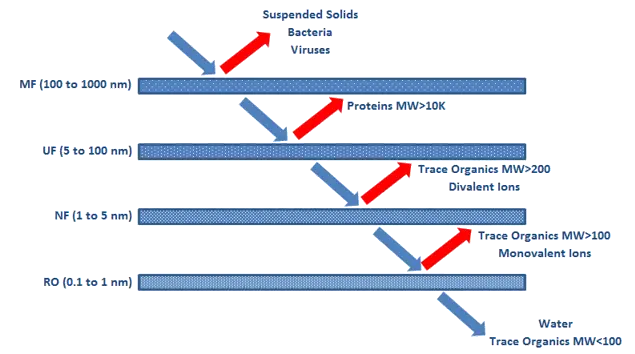
The membrane may be microfiltration membrane or ultrafiltration membrane. It has very small pores.
Suspended solids, bacteria and other contaminants cannot pass through the membrane. Water passes through the membrane.
So, Membrane Bioreactor is compact in design. It occupies less space and gives clear treated water. This water may be used again in many cases.
Working Principle of Membrane Bioreactor
Working Principle of Membrane Bioreactor (MBR) is based on biological degradation and membrane separation process. In this system, the ordinary biological treatment is combined with microfiltration or ultrafiltration membrane.
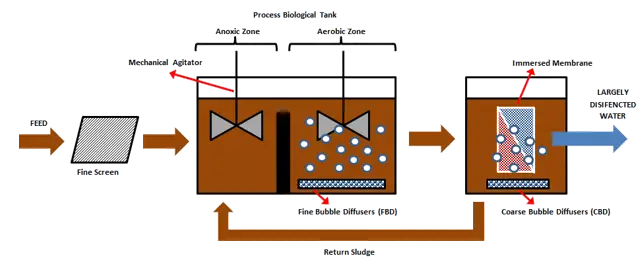
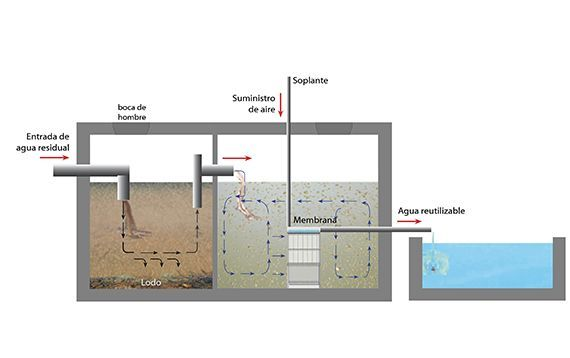
The wastewater is first introduced into the aeration tank. In this tank, the suspended microorganisms break down the organic pollutants present in the wastewater. In aerobic membrane bioreactor (MBR), oxygen is supplied for the activity of microorganisms.
During this process, the microorganisms oxidize the organic matter into carbon dioxide and water. The biological sludge and treated water are then separated by membrane, not by settling tank. The membrane acts as a physical barrier.
The clean treated water passes through the membrane as permeate. But suspended solids, bacteria and other microorganisms are retained inside the bioreactor. This helps to maintain high amount of active microorganisms in the tank.
Thus, MBR gives efficient wastewater treatment. It produces clear effluent with very low suspended solids.
Types of Membranes used in Membrane Bioreactor
The membranes used in membrane bioreactor (MBR) are classified on the basis of configuration, membrane material and pore size.
A. On the basis of configuration
1. Hollow fiber membrane
Hollow fiber membrane is made up of many thin straw like fibers. Each fiber has a hollow space inside it.
It gives large membrane surface area in a small space. It is commonly used in MBR system. But pore blocking may occur inside the fibers.
2. Flat sheet membrane
Flat sheet membrane is made up of flat membrane sheets. These sheets are fixed on plastic frames and arranged in parallel cassettes.
It is easy to clean and maintain. It is also more resistant to physical debris and solid entanglement.
3. Tubular membrane
Tubular membrane is made up of large diameter tubes. It is mostly used in side stream or external MBR system.
It is strong and durable. It can tolerate high pressure, high flow velocity and high concentration of solids.
B. On the basis of membrane material
1. Polymeric membrane
Polymeric membrane is made up of synthetic polymers. The common polymers are polyvinylidene fluoride (PVDF), polyethersulfone (PES), polyethylene (PE) and polysulfone (PS).
These membranes are commonly used in commercial MBR system. They are flexible, low cost and have good chemical stability.
2. Ceramic membrane
Ceramic membrane is an inorganic membrane. It is made up of alumina, titania, zirconia or silicon carbide.
It has high mechanical strength. It can tolerate high temperature and harsh chemical cleaning. But it has high initial cost.
C. On the basis of filtration grade or pore size
1. Microfiltration membrane
Microfiltration (MF) membrane has pore size about 0.1 to 10 μm. It removes suspended solids, bacteria and large colloidal particles.
It acts as a physical barrier in MBR treatment process.
2. Ultrafiltration membrane
Ultrafiltration (UF) membrane has pore size about 0.01 to 0.1 μm. It gives more fine separation than microfiltration membrane.
It removes suspended solids, bacteria, viruses, proteins and other macromolecules from wastewater.
Parts of Membrane Bioreactors
The following are the important parts of membrane bioreactor (MBR)–
1. Pretreatment equipment
Pretreatment equipment is used to remove large and unwanted materials before wastewater enters into the bioreactor.
It includes fine screens, grit removal system, oil and grease separator and flow equalization tank. Fine screens remove hair, fibres and sharp debris from wastewater.
2. Biological tank
Biological tank is the main tank where biological treatment takes place. It may contain aerobic, anoxic or anaerobic zone.
In this tank, microorganisms degrade the organic pollutants present in wastewater. Aeration is also supplied in aerobic tank for microbial activity.
3. Membrane module
Membrane module is the main filtration unit of MBR. It may be flat sheet membrane or hollow fiber membrane.
It separates treated water from biological sludge. The membrane module may be submerged inside the tank or placed outside the tank.
4. Aeration and air scouring system
Aeration system supplies oxygen to the microorganisms present in biological tank. This helps in oxidation of organic matter.
Air scouring system produces air bubbles near the membrane surface. These bubbles clean the membrane surface and reduce membrane fouling.
5. Pumps
Pumps are used to move wastewater, treated water and sludge in the system.
The common pumps are feed pump, permeate suction pump, backwash pump and sludge recirculation pump. These pumps maintain the flow in different parts of MBR.
6. Holding tanks
Holding tanks are used to store different liquid or sludge temporarily.
It includes membrane tank, sludge tank and permeate tank. The permeate tank stores treated water after membrane filtration.
7. Piping and control valves
Piping and control valves are used to carry and control the movement of wastewater, air and sludge.
They help to direct the flow from one part to another part. They also help in reverse flow during backwashing.
8. Monitoring and control equipment
Monitoring and control equipment are used to check the working condition of MBR system.
It includes flowmeter, pressure gauge, dissolved oxygen (DO) sensor and level controller. These instruments help to maintain proper operation.
9. Clean-in-place system
Clean-in-place (CIP) system is used for chemical cleaning of membrane without removing it from the system.
It includes chemical dosing and backwashing arrangement. It helps to recover membrane function and reduce fouling.
10. Post-treatment and solids handling unit
Post-treatment unit is used for final polishing of treated water. It may include UV disinfection system.
Solids handling unit is used to manage waste biological sludge. Sludge dewatering screw press is used to remove water from sludge.
Operating Procedure of Membrane Bioreactor
The following are the operating procedure of membrane bioreactor (MBR)–
1. Pre-treatment
In this step raw wastewater is first allowed to pass through fine screen. The fine screen removes large debris, hair, fibres and abrasive particles present in wastewater. This is done because these substances may block the membrane pores and also damage the membrane surface.
2. Biological treatment
After screening, wastewater is entered into the bioreactor. The bioreactor contains suspended microorganisms which is called activated sludge. These microorganisms degrade the organic pollutants present in wastewater.
In aerobic MBR, air or oxygen is supplied into the aeration tank. The supplied oxygen helps the microorganisms for oxidation of organic matter. During this process nitrogen and phosphorus may also be removed from wastewater.
3. Membrane filtration
In this step the mixed liquor from bioreactor is filtered through membrane. Microfiltration (MF) or ultrafiltration (UF) membrane is generally used in MBR.
The clean water is drawn through the small pores of membrane by pump or vacuum. This water is called permeate. The membrane does not allow biomass, suspended solids and bacteria to pass through it and they remain inside the bioreactor.
4. Membrane scouring and cleaning
During filtration some solids are deposited on the membrane surface. This may reduce the filtration rate and cause fouling. So coarse air bubbles are supplied near the membrane surface.
These air bubbles scour the membrane surface and remove the deposited solids. Sometimes the filtration is stopped for short time and this is called relaxation. In some system clean water is passed in reverse direction through membrane and this is called backwashing or backpulsing.
5. Sludge wasting
As the membrane retains solid particles and microorganisms, the biomass concentration becomes high inside the bioreactor. So some amount of excess sludge is removed from the tank at regular interval.
This process is called sludge wasting. The removed sludge is then thickened, dewatered and disposed.
6. Post-treatment
The treated water obtained from membrane filtration is clear and contains very low suspended solids. It may be discharged or used for reuse purpose.
For high quality reuse, further treatment may be given. UV disinfection and reverse osmosis (RO) are commonly used as post-treatment process.
Treatment Process
The following are the treatment process of membrane bioreactor (MBR)–
1. Pre-treatment
In this step raw wastewater is first passed through fine screens. The fine screens remove large particles, debris, hair, fibres and other solid materials present in wastewater. Sometimes oil and grease are also removed before the wastewater enters into the main treatment tank.
This step is important because large particles may damage the membrane surface. It also prevents severe clogging of membrane pores in the later stage.
2. Biological treatment
After pre-treatment, the screened wastewater enters into the bioreactor. The bioreactor contains active microorganisms which are present in the form of suspended biomass. These microorganisms break down the organic pollutants present in wastewater.
In this process aeration and mixing are provided in the tank. In aerobic zone, oxygen is supplied for microbial activity. In anoxic zone, nitrogen removal may take place. During this biological treatment, organic matter, nitrogen and phosphorus are reduced from wastewater.
3. Membrane filtration
After biological treatment, the mixed liquor is passed through membrane filtration unit. In MBR, microfiltration (MF) or ultrafiltration (UF) membrane is generally used instead of ordinary gravity settling tank.
The membrane acts as a physical barrier. It allows clean treated water to pass through the membrane pores. But suspended biological sludge, bacteria and other solid particles are retained inside the bioreactor. The water which passes through the membrane is called permeate.
4. Post-treatment
The treated water obtained after membrane filtration is clear and has low suspended solids. It may be discharged directly or reused according to the required water quality.
For better quality water, further polishing treatment may be given. UV disinfection or advanced filtration may be used before discharge or recycling of treated water.
Types of Membrane Bioreactors
The following are the types of membrane bioreactors (MBR)–
A. On the basis of membrane placement
1. Submerged membrane bioreactor
In submerged membrane bioreactor, the membrane modules are submerged inside the biological aeration tank. The treated water is taken out through the membrane by vacuum or negative pressure.
Air is supplied in the aeration tank. This air is used for oxygen supply to the microorganisms and also for scouring of membrane surface. The same air bubbles remove the deposited solids from membrane surface.
This type requires less energy. It is mostly used in large scale municipal wastewater treatment plant.
2. Sidestream membrane bioreactor
In sidestream membrane bioreactor, the membrane modules are placed outside the main bioreactor tank. The mixed liquor from the bioreactor is pumped into the external membrane unit.
The movement of mixed liquor takes place at high velocity and pressure. So, the energy requirement is high. The membrane unit is outside, so cleaning and maintenance is easier. It is suitable for thick and highly polluted industrial wastewater.
B. On the basis of biological process
1. Aerobic membrane bioreactor
In aerobic membrane bioreactor, dissolved oxygen is supplied continuously into the bioreactor. The microorganisms use oxygen for oxidation of organic pollutants.
The organic matter is broken down and converted into carbon dioxide and water. It is the most common type of MBR.
2. Anaerobic membrane bioreactor
In anaerobic membrane bioreactor (AnMBR), oxygen is absent. The degradation of organic matter is carried out by anaerobic bacteria.
During this process, methane rich biogas is produced. The produced biogas can be used as energy source. The amount of waste sludge is also less than aerobic system.
C. Hybrid and advanced membrane bioreactor
1. Moving bed biofilm membrane reactor
Moving bed biofilm membrane reactor (MBBMR) is a combined system of MBR and moving bed biofilm process. In this system, small plastic or sponge carriers are added into the bioreactor.
The biofilm grows on the surface of these carriers. So, attached growth of microorganisms takes place along with suspended growth. The concentration of active biomass becomes high without increasing much suspended solids load on the membrane.
2. Membrane aerated biofilm reactor
Membrane aerated biofilm reactor (MABR) is a system where membrane is used for oxygen supply. The bacterial biofilm grows on the membrane surface.
The membrane is gas permeable. Oxygen passes through the membrane and reaches the biofilm directly. In this system bubble formation is not required like ordinary aeration. It is used for energy saving and nutrient removal.
Membrane bioreactor design
The following are the important design points of membrane bioreactor (MBR)–
1. System configuration
The MBR system is designed either as immersed type or sidestream type. In immersed type, the membrane modules are placed inside the biological tank. In sidestream type, the membrane modules are placed outside the main bioreactor.
In immersed MBR, the treated water is taken out through the submerged membrane by suction pressure. In sidestream MBR, the mixed liquor is pumped from the bioreactor to the external membrane unit. The selection of configuration depends on wastewater type, flow rate, energy requirement and maintenance facility.
2. Pretreatment design
Pretreatment is necessary before the wastewater enters into the membrane tank. Fine screens of about 1 to 3 mm are used for removing abrasive particles, hair, fibres and floating debris. Perforated plate screen is generally preferred because it gives better protection to membrane.
Flow equalization tank is provided when peak flow is very high than average flow. It is mainly used when peak flow becomes more than 2.5 times of average daily flow. Oil and grease separator is also used when oil and grease concentration is more than 100 mg/L.
3. Bioreactor design parameters
The bioreactor is designed to maintain proper amount of microorganisms for degradation of pollutants. The mixed liquor suspended solids (MLSS) is generally maintained between 4,000 to 10,000 mg/L in the bioreactor. In membrane tank, it may be maintained up to 15,000 mg/L.
The sludge retention time (SRT) is maintained about 10 to 20 days. The food to microorganism ratio (F/M ratio) is kept 0.1 or less when nitrification is required. If nitrification is not required, it should not be more than 0.3. Sludge recycle rate is generally kept between 200% to 400% of influent flow.
4. Membrane selection and flux
The membrane is selected according to the nature of wastewater and type of system. Hollow fiber membrane, flat sheet membrane and tubular membrane are commonly used in MBR system.
The permeate flux is kept low and safe to avoid severe fouling. For complex industrial wastewater, flux rate is generally maintained about 10 to 15 L/m²/hr. Higher flux may increase the load on membrane and may cause rapid blocking of membrane pores.
5. Aeration and air scouring design
Aeration is provided for biological treatment and for oxygen supply to microorganisms. Air scouring is provided for cleaning the membrane surface and removing deposited solids.
The blower and pipe line used for biological aeration should be separated from blower and pipe line used for air scouring. This is done because both air systems have different function and different air requirement.
6. Capacity and standby arrangement
The MBR should be designed with extra membrane capacity. Generally N+1 design is used. It means one extra membrane tank is provided beyond the normal requirement.
This arrangement helps the plant to continue the treatment when one tank is removed for cleaning or maintenance. Peak flow should generally not be more than 1.5 to 2 times of average flow. If the peak flow is high, equalization basin is required.
7. Maintenance and accessibility
The system should be designed in such a way that each basin can be emptied completely. Grit, sludge and liquid should be removed from the basin during cleaning and maintenance.
Membrane cassettes should be placed in such way that they can be removed easily. Crane or lifting arrangement is required for removing membrane cassette. During design, wet weight of cassette and extra weight of deposited solids should also be considered.
Design Features
The following are the design features of membrane bioreactor (MBR)–
- Integrated treatment unit
MBR combines biological degradation and membrane filtration in one system. The microorganisms degrade organic pollutants and the membrane separates treated water from sludge. It does not require secondary settling tank or clarifier. - Reduced footprint
MBR requires less space than conventional activated sludge system. Biological treatment and separation takes place in compact unit. The space requirement is reduced about 30% to 50%. - Independent retention time
In MBR, hydraulic retention time (HRT) and solids retention time (SRT) are controlled separately. Water can be treated in short time, while microorganisms remain in the tank for long time. The SRT may be 20 to 50 days or more and HRT may be 4 to 10 hours. - High biomass concentration
The bioreactor is designed to maintain high amount of biomass. The mixed liquor suspended solids (MLSS) is generally about 8,000 to 15,000 mg/L. This gives better biological degradation. - Module configuration
MBR is designed as submerged type or sidestream type. In submerged type, membrane is placed inside the aeration tank. In sidestream type, membrane is placed outside the bioreactor and mixed liquor is pumped through it. - Membrane geometry
The membrane module may be hollow fiber or flat sheet type. Hollow fiber membrane has thin straw like tubes in bundle. Flat sheet membrane has plane sheets fixed on rigid frame. - Pretreatment arrangement
Fine screen is placed before the bioreactor. The screen size is generally 1 mm to 5 mm. It removes hair, fibres and abrasive debris, which may damage or clog the membrane. - Aeration and scouring
Aeration is provided for oxygen supply to microorganisms. Air scouring is provided for cleaning of membrane surface. Coarse air bubbles remove deposited solids from membrane surface. Biological aeration blower and membrane scouring blower are often kept separate. - N plus 1 design
MBR plant is generally designed by N plus 1 concept. It means one extra membrane tank or module is provided. This extra unit is used when one membrane tank is under cleaning or maintenance. - Peak flow equalization
Peak flow is generally kept about 1.5 to 2.5 times of average daily flow. If peak flow is more, equalization tank is provided. It controls sudden hydraulic load on membrane. - Modular scalability
MBR system is modular. More membrane cassette or units can be added for increasing treatment capacity. It is useful for future expansion and small decentralized treatment system.
Applications of Membrane Bioreactors
The following are the applications of membrane bioreactors (MBR)–
- MBR is used for treatment of municipal sewage. It is used in city wastewater treatment plant, small town, remote community and decentralized local treatment system. The treated water may be discharged or reused.
- MBR is used in housing complex, apartments and master planned residential areas. It treats domestic wastewater coming from toilet, kitchen, bathroom and washing activities. It is useful where compact treatment plant is required.
- MBR is used in hotels, resorts, hospitals, office buildings, airports and sports arenas. The wastewater produced from these places is treated and reused for non-potable purpose. It may be used for flushing, gardening and cleaning.
- MBR is used for treating high strength organic wastewater from food and beverage processing units. It is used in breweries, wineries, dairy industry, meat processing, poultry, seafood and fruit or vegetable processing unit. These wastewater contains high amount of organic load.
- MBR is used in textile dyeing, printing and washing industries. The wastewater from these industries contains colour, chemicals and organic pollutants. It helps in decolourization and treatment of wastewater for reuse.
- MBR is used for treatment of wastewater from pharmaceutical manufacturing. This wastewater may contain antibiotics, active pharmaceutical compounds and toxic chemicals. The membrane and biological process helps in removal of these complex pollutants.
- MBR is used in chemical factories, refineries and petrochemical plants. These industries produce complex wastewater having toxic compounds and sometimes high salinity. It is used for reducing pollutants before discharge or reuse.
- MBR is used for reclaiming wastewater from automobile and electronics manufacturing. In automobile industry, it treats water from car painting and parts coating process. In electronics industry, it is used where purified water is needed for microchips and circuit board production.
- MBR is used for treating difficult waste streams from oil, gas and mining activities. It is used for mine influenced water, produced water, drilling mud wastewater and coal liquefaction wastewater. These wastewaters are generally high strength and difficult to treat.
- MBR is used for water reuse in agriculture and aquaculture. The treated water may be used for crop irrigation. It is also used in fish processing and oyster farming sites where good quality water is required.
- MBR is used for treating landfill leachate and solid waste digestate. These wastes contain high amount of organic matter, ammonia and other pollutants. It helps to reduce the pollution load before final discharge.
Advantages of Membrane Bioreactors
The following are the advantages of membrane bioreactors (MBR)–
- MBR produces very clear and good quality effluent. The treated water contains very low amount of suspended solids, bacteria and organic pollutants. So, this water can be used for recycling and reuse purpose.
- MBR requires less land area than conventional wastewater treatment system. In this system, biological treatment and membrane filtration are combined in one unit. So, secondary settling tank or clarifier is not required.
- MBR can reduce the space requirement about 30% to 50% than ordinary activated sludge process. It is useful in the places where land area is limited or plant expansion is required.
- MBR produces less amount of waste sludge. It can be operated at longer sludge retention time (SRT). Due to long retention of sludge, microorganisms get more time to degrade waste materials and the final sludge volume becomes less.
- MBR gives stable treatment performance. The membrane acts as a physical barrier and does not allow suspended solids and microorganisms to pass out with treated water. So, the effluent quality remains more uniform.
- MBR can tolerate sudden change in flow rate and pollutant load. It also works better when sludge settling condition is poor. This is because solid-liquid separation is done by membrane and not by gravity settling.
- MBR has high treatment efficiency. The membrane retains all microorganisms inside the bioreactor. Thus high amount of active biomass or mixed liquor suspended solids (MLSS) can be maintained in the tank.
- MBR helps in faster degradation of organic pollutants. High biomass concentration increases the contact between microorganisms and wastewater. So, the breakdown of pollutants becomes more effective.
- In anaerobic membrane bioreactor (AnMBR), biogas is produced during degradation of organic matter. This biogas contains methane and can be collected for energy recovery. It can reduce the energy cost of treatment plant.
- MBR system is modular in design. The treatment capacity can be increased by adding more membrane modules or cassettes. It is suitable for small communities, remote areas and decentralized wastewater treatment system.
- MBR gives flexibility in operation. It can be used for municipal, industrial and reuse application. It is also suitable where high quality treated water is required.
Disadvantages of Membrane Bioreactors
The following are the disadvantages of membrane bioreactors (MBR)–
- MBR has high initial cost than conventional activated sludge system. The cost becomes high due to membrane modules, fine screen, control system and other special equipment. The capital cost may be about 15% to 50% higher than ordinary system.
- MBR requires more energy for operation. Continuous air is supplied for biological treatment and also for membrane scouring. The energy consumption may be about 20% to 50% more than conventional treatment system.
- Membrane fouling is a major problem in MBR. Biological matter, organic oil, colloidal particles and inorganic minerals may deposit on the membrane surface. These materials block the membrane pores and reduce the flow of treated water.
- Due to fouling, the filtration efficiency becomes low. The operating pressure also increases with time. So, regular cleaning is required to maintain the membrane performance.
- MBR needs strict pretreatment before wastewater enters into the bioreactor. Fine screens of about 1 to 3 mm are required to remove hair, fibres, abrasive particles and large debris. Grease separator is also required when oil and grease are present.
- The membrane is delicate and may be damaged by sharp particles or fibrous materials. Oils and grease may also clog the membrane surface. So poor pretreatment can cause permanent damage of membrane.
- MBR requires frequent cleaning of membrane. Physical backwashing and chemical cleaning are used for removal of deposited materials. Clean-in-place (CIP) cleaning is done by using chemicals like sodium hypochlorite and acids.
- Chemical cleaning increases the operating cost of the plant. It also adds chemical handling problem and may create environmental burden if not managed properly.
- MBR needs skilled operator and technical knowledge for proper operation. The control system, membrane pressure, flow rate, cleaning cycle and membrane integrity should be checked regularly. So it is difficult to operate in areas where technical support is not available.
- Membrane replacement is costly. Even after proper maintenance, membrane has limited life span. In general, membrane may require replacement after 5 to 10 years of operation.
- The waste sludge from MBR may be difficult to settle and dewater. It may contain colloidal particles and filamentous bacteria. Sometimes extra chemicals are needed for sludge handling.
Comparison of External and Internal Membrane Based MBR System Configurations
The following are the comparison of external and internal membrane based MBR system configurations–
- In internal MBR, the membrane modules are placed inside the biological aeration tank or in a separate membrane compartment. In external MBR, the membrane modules are placed outside the main bioreactor tank in a separate membrane unit.
- In internal MBR, the membrane remains submerged in mixed liquor. In external MBR, the mixed liquor is pumped from the bioreactor to the outside membrane module for filtration.
- In internal MBR, the treated water is drawn through membrane by vacuum or negative suction. In external MBR, high pressure pump is used to push the mixed liquor through the membrane unit.
- Internal MBR requires less energy for operation. The energy consumption is generally about 0.4 to 1.0 kWh/m³. The same air bubbling system is used for oxygen supply and for scouring of membrane surface.
- External MBR requires more energy than internal type. The energy consumption is about 2.0 to 4.0 kWh/m³ or more. This is due to high pumping requirement and cross flow operation.
- In internal MBR, fouling is controlled mainly by air scouring. Air bubbles remove deposited solids from membrane surface. Periodic relaxation and backwashing are also used for cleaning of membrane.
- In external MBR, fouling is controlled by high cross flow velocity. The mixed liquor moves at high speed along the membrane surface. This movement prevents thick solid layer formation on membrane surface.
- In internal MBR, maintenance is little difficult because the membrane is inside the tank. For major cleaning or replacement, the wet membrane cassette is lifted out from the tank by crane or lifting system.
- In external MBR, maintenance is easier because the membrane unit is outside the bioreactor. Chemical cleaning, inspection and replacement of parts can be done more easily.
- Internal MBR is mostly used in large scale municipal wastewater treatment plant. It is more energy saving and can be applied for high flow treatment.
- External MBR is mostly used for low flow and highly polluted industrial wastewater. It is selected where strong fouling control and easy maintenance are more important than energy saving.
| Features | Internal membrane based MBR | External membrane based MBR |
|---|---|---|
| Membrane location | The membrane modules are placed inside the biological aeration tank or in a separate membrane compartment. | The membrane modules are placed outside the main bioreactor tank in a separate membrane unit. |
| Position of membrane | The membrane remains submerged in mixed liquor. | The membrane remains outside and mixed liquor is pumped to it from bioreactor. |
| Driving force | The treated water is drawn through membrane by vacuum or negative suction. | High pressure pump is used to push the mixed liquor through the membrane unit. |
| Energy requirement | It requires less energy for operation. Energy consumption is about 0.4 to 1.0 kWh/m³. | It requires more energy for operation. Energy consumption is about 2.0 to 4.0 kWh/m³ or more. |
| Aeration use | Same air bubbling system is used for oxygen supply and membrane scouring. | Separate pumping is required for cross flow movement through membrane. |
| Fouling control | Fouling is controlled mainly by air scouring, relaxation and backwashing. | Fouling is controlled mainly by high cross flow velocity. |
| Cleaning action | Air bubbles remove deposited solids from membrane surface. | Fast movement of mixed liquor removes solids from membrane surface. |
| Maintenance | Maintenance is little difficult because membrane is inside the tank. | Maintenance is easier because membrane unit is outside the tank. |
| Membrane removal | Wet membrane cassette is lifted from tank by crane or lifting system. | External module can be inspected, cleaned and replaced more easily. |
| Main application | It is mostly used in large scale municipal wastewater treatment plant. | It is mostly used for low flow and highly polluted industrial wastewater. |
| Main advantage | It is energy saving and suitable for high flow treatment. | It gives better fouling control and easy maintenance. |
References
- A Complete Guide to Membrane Fouling in MBR Systems: Causes … (2026). SHANGHAI CM.
- A case study of antibiotic wastewater treatment by using a membrane biological reactor system. (n.d.). ResearchGate.
- Anaerobic Membrane Bioreactor: Wastewater Treatment Explained. (2026). RACO Manufacturing.
- Anaerobic Membrane Bioreactors (AnMBR) for Treatment of DMF-containing wastewater. (2025). AD & Biogas Blog.
- Anaerobic Membrane Bioreactors for Municipal Wastewater Treatment: A Literature Review. (n.d.).
- Anaerobic membrane bioreactor (AnMBR) process control. (n.d.). The MBR Site.
- Benefits – New Logic Research – VSEP. (2026). New Logic Research.
- Bhattacharyya, A., Liu, L., Lee, K., & Miao, J. (2022). Review of biological processes in a membrane bioreactor (MBR): Effects of wastewater characteristics and operational parameters on biodegradation efficiency when treating industrial oily wastewater. Journal of Marine Science and Engineering, 10(9), 1229.
- Case Study | Knowledge Base. (n.d.). Toray Membrane.
- Ceramic vs polymeric membrane implementation for potable water treatment. (n.d.). ResearchGate.
- Comparing the performance of the conventional and fixed-bed membrane bioreactors for treating municipal wastewater. (n.d.). PMC.
- Comparison of MBR and MBBR Technologies in Industrial Wastewater Treatment. (n.d.). Fluor.
- Cost-Effective and Durable Ceramic Membrane: Fabrication and Performance Optimization. (n.d.).
- Differences Between MBR and Activated Sludge. (2026). Seven Seas Water Group.
- Fouling and Chemical Cleaning of Microfiltration Membranes: A Mini-Review. (n.d.). PMC.
- From Fines to Compliance: MBR + Advanced RO Solutions for Food & Beverage Wastewater. (2024). ZwitterCo.
- Hasan, K. S., Visvanathan, C., Ariyamethee, P., Chantaraaumporn, S., & Moongkhumklang, P. (n.d.). Introduction to vibratory shear enhanced membrane process and its application in starch wastewater recycle. VSEP.
- How to Clean MBR Membranes – CIP Procedures and Chemical Cleaning Guide. (2025). Oxy Membrane.
- Industrial MBRs − textiles sector. (n.d.). The MBR Site.
- JWC Environmental. (2026). Pretreatment Screens for Membrane Bioreactors.
- khalidi-idrissi, A., Madinzi, A., Anouzla, A., Pala, A., Mouhir, L., Kadmi, Y., & Souabi, S. (2023). Recent advances in the biological treatment of wastewater rich in emerging pollutants produced by pharmaceutical industrial discharges. International Journal of Environmental Science and Technology, 20, 1–22.
- Kim, J., Wu, B., Jeong, S., Jeong, S., & Kim, M. (2024). Recent advances of membrane-based hybrid membrane bioreactors for wastewater reclamation. Frontiers in Membrane Science and Technology, 3, 1361433.
- LCA of a Membrane Bioreactor Compared to Activated Sludge System for Municipal Wastewater Treatment. (n.d.). PMC.
- Li, C., Du, X., Huang, C., & Zhang, Z. (2023). Effects of high pharmaceutical concentrations in domestic wastewater on membrane bioreactor treatment systems: Performance and microbial community. Membranes, 13(7), 650.
- MBBR vs. MBR vs. FBBR: A Comprehensive Comparison of Wastewater Treatment Technologies. (n.d.). ClearFox.
- MBR Flat Sheet Membrane – The Ultimate Guide. (2025). Oxy Membrane.
- MBR Membrane Module Selection Guide: How to Choose the Best System for Your Needs? (n.d.). Hangzhou NIHAO Environmental Tech Co., Ltd.
- MBR design guidelines. (n.d.). Europe Membrane.
- MBR membrane module configurations. (n.d.). The MBR Site.
- MBR vs Conventional Activated Sludge: Which Wastewater Treatment System Is Right for Your Project? (n.d.). reUse.
- Membrane Bioreactor Modules: Hollow Fiber Vs Flat Sheet, Integrity And Cleaning. (2026). PatSnap Eureka.
- Membrane Bioreactor Vs Conventional Activated Sludge: Footprint, Effluent Quality And Energy. (2025). PatSnap Eureka.
- Membrane Bioreactors Global Market Report 2025. (2026). GlobeNewswire.
- Membrane Filtration Modules Market Size, Trends & Forecast 2025-2034. (2021). USD Analytics.
- Membrane Technologies. (n.d.). Dynatec Systems Inc.
- Membrane materials used in MBR technology: ceramic. (n.d.). The MBR Site.
- Multi-Tech solution streamlines textile wastewater treatment. (2024). DuPont.
- Nouira, A., Ben Hamden, M., Sayehi, M., & Bekri-Abbes, I. (2025). Transforming waste to water filters: A mini-review of ceramic membranes from upcycled materials. Waste, 3(3), 29.
- (PDF) A REVIEW OF MEMBRANE BIOREACTOR (MBR … (n.d.). ResearchGate.
- Performance comparison of three different reactors (MBBR, MBR and MBBMR) for municipal wastewater treatment. (2020). KAUST Repository.
- Pharmaceutical wastewater treatment using MBR membrane technology. (n.d.). Hangzhou NIHAO Environmental Tech Co., Ltd.
- Pretreatment: Screening and degritting. (n.d.). The MBR Site.
- Rahman, T. U., Roy, H., Islam, M. R., Tahmid, M., Fariha, A., Mazumder, A., Tasnim, N., Pervez, M. N., Cai, Y., Naddeo, V., & Islam, M. S. (2023). The advancement in membrane bioreactor (MBR) technology toward sustainable industrial wastewater management. Membranes, 13(2), 181.
- Sohail, N., Ahmed, S., Chung, S., & Nawaz, M. S. (2020). Performance comparison of three different reactors (MBBR, MBR and MBBMR) for municipal wastewater treatment. Desalination and Water Treatment, 174, 71–78.
- State-of-the-Art Review on the Application of Membrane Bioreactors for Molecular Micro-Contaminant Removal from Aquatic Environment. (n.d.). PMC.
- Technical Engineering Analysis of Membrane Bioreactor Systems: Principles, Architectural Configurations, Process Dynamics, and Global Industrial Implementations. (n.d.).
- The Do’s And Don’ts Of MBR Pretreatment. (2026). Water Online.
- Top Techniques for Cleaning MBR Membranes? (n.d.). Morui.
- Transforming textile wastewater into reusable process water. (n.d.).
- Treatment of Wastewater from a Food and Beverage Industry Using … (n.d.).
- United States Environmental Protection Agency. (2007). Wastewater Management Fact Sheet – Membrane Bioreactors.
- Vibratory shear-enhanced process. (2025). In Wikipedia. Wikimedia Foundation.
- VSEP RO Treatment for Super Saturated Brines & High TDS Water. (2026). New Logic Research.
- Wastewater reuse in the food and beverage industry. (n.d.). SAMCO Technologies.
- what’s the MBR Membrane Fouling Cleaning Method. (2023). Hinada.
- Why Membrane Bioreactors Are Reshaping Wastewater Treatment … (n.d.).
- Yang, X. (2021). Study of a hybrid system: Moving Bed Biofilm Reactor – Membrane Bioreactor (MBBR-MBR) in the treatment and reuse of textile industrial effluents [Doctoral dissertation, Universitat Politècnica de Catalunya]. UPCommons.
- Yang, X., López-Grimau, V., Vilaseca, M., & Crespi, M. (2020). Treatment of textile wastewater by CAS, MBR, and MBBR: A comparative study from technical, economic, and environmental perspectives. Water, 12(5), 1306.