

Immunoelectrophoresis is a biochemical analytical technique used for separation and identification of proteins in biological sample. It combines two process, electrophoresis and immunodiffusion. It is mainly used for detection of serum proteins, immunoglobulins and other antigenic substances.
In this method, the antigen mixture is first placed in agarose gel. Then electric current is passed through the gel. Due to this, different protein components are separated according to their size, charge and mobility.
After electrophoretic separation, a trough is cut in the gel. Specific antiserum containing antibodies is added in this trough. The separated antigens and antibodies diffuse towards each other through the gel.
When the antigen and antibody meet in suitable proportion, they form visible precipitin arcs or precipitation lines. These arcs are used to identify the type and nature of the proteins present in the sample. The number, position and shape of precipitin arcs gives information about the antigen-antibody reaction.
The principle of immunoelectrophoresis is based on separation of antigenic proteins by electrophoresis and their identification by specific antigen-antibody reaction. First proteins are separated in the gel. Then they react with corresponding antibodies and form insoluble immune precipitate.
It is mostly performed under near-native condition. So, the structure and antigenic property of proteins are maintained during the process. This helps in proper reaction between antigen and antibody.
Immunoelectrophoresis is used in clinical diagnosis for studying abnormal serum protein pattern. It is useful for detection of missing proteins, increased proteins and abnormal immunoglobulins. It is also used in the diagnosis of multiple myeloma, Waldenström’s macroglobulinemia and different immunodeficiency disorders.
This technique was developed in the early 1950s. Pierre Grabar and C. A. Williams described the method of immuno-electrophoretic analysis of antigenic mixtures in 1955. Later, different modified forms were developed such as crossed immunoelectrophoresis and rocket immunoelectrophoresis.
Although many modern and faster techniques are now available, immunoelectrophoresis is still important in some clinical and research works. It is used for characterization of proteins, checking purity of antigen or antibody preparations and studying antigen-antibody interaction in gel medium.
Objectives of Immunoelectrophoresis
- To separate and characterize complex mixture of proteins, mainly present in serum, urine and other biological fluids.
- To detect and identify specific normal and abnormal proteins by using antigen-antibody reaction.
- To approximately estimate the amount of different serum proteins and immunoglobulins from the pattern of precipitin arcs.
- To diagnose protein abnormalities such as monoclonal gammopathy, polyclonal gammopathy, multiple myeloma and hypogammaglobulinemia.
- To detect different immunodeficiency disorders and immune related disease condition by studying abnormal protein pattern.
- To monitor the therapeutic response of patient in diseases which affect the immune system.
- To study the specificity of antigen-antibody interaction in gel medium.
- To check the purity of antigens and antibodies during purification process and to detect any impurities.
- To identify a single specific antigen from a complex mixture of different antigens.
- To analyse soluble antigens obtained from plant tissues, animal tissues and microbial extracts.
Principle of Immunoelectrophoresis
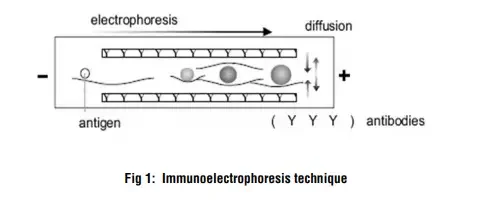
Immunoelectrophoresis is based on the combined principle of gel electrophoresis and immunodiffusion. In this technique, the antigenic proteins are first separated in agarose gel by the application of electric current. The proteins move in the gel according to their charge, size and charge to mass ratio.
After electrophoresis, a narrow trough is made in the gel parallel to the separated antigen bands. Specific antiserum containing antibodies is then added into this trough. The separated antigens and antibodies start to diffuse towards each other through the gel matrix.
During diffusion, the antigen and its specific antibody meet at a suitable concentration. This region is called the zone of equivalence. At this point, the antigen and antibody combine and form large insoluble immune complexes.
These immune complexes are seen as visible precipitin arcs or opaque curved lines in the gel. The position, number and shape of these arcs depends on the electrophoretic movement, diffusion rate and immunological specificity of the protein.
Thus, immunoelectrophoresis helps in identification and characterization of individual proteins present in a complex mixture. It is mainly useful for study of serum proteins, urine proteins and different immunoglobulins.
Materials Required for Immunoelectrophoresis
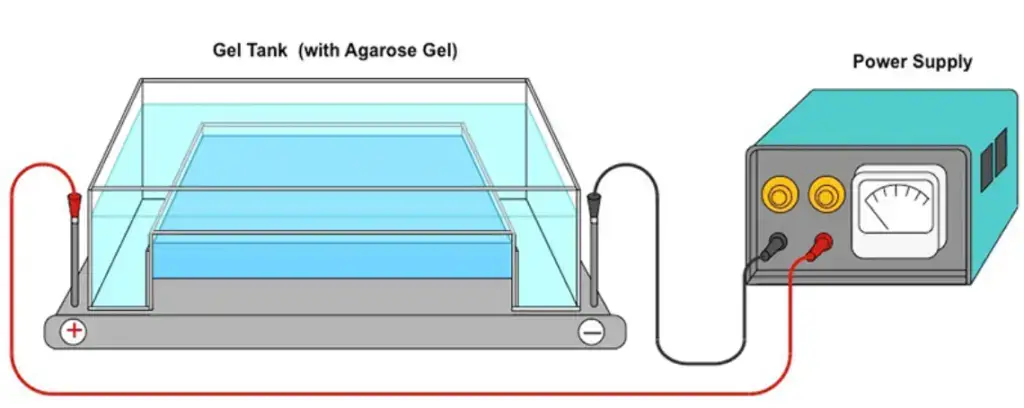
- Horizontal electrophoresis chamber is required for keeping the gel and running the electrophoresis process.
- D.C. power supply is used to pass electric current through the agarose gel.
- Agarose powder is used for preparation of gel medium in which antigen and antibody diffuse.
- Electrophoresis buffer such as barbital buffer or veronal buffer of pH 8.6 is used for maintaining proper pH and ionic condition.
- Glass plate or microscope slide is used as a support for casting the agarose gel.
- Antigen sample such as serum, urine, cerebrospinal fluid or standard antigen is required for electrophoretic separation.
- Specific antisera are required for reaction with separated antigen. It may contain antibodies against human serum proteins, IgG, IgA, IgM, kappa and lambda light chains.
- Micropipette and tips are used for adding antigen sample and antiserum into wells and trough.
- Gel puncher or well cutter is required for making wells and trough in the agarose gel.
- Filter paper strips or sponge wicks are used to connect the gel with buffer present in electrophoresis chamber.
- Water bath, microwave, hot plate or Bunsen burner is used for melting agarose during gel preparation.
- Incubation oven at 37°C is used for proper diffusion and formation of precipitin arcs.
- Moist chamber is required to prevent drying of the gel during antigen-antibody diffusion.
- Tracking dye such as bromophenol blue is used to observe the movement during electrophoresis.
- Distilled water is used for preparation of solution and washing purpose.
- 0.85% saline solution is used for washing the gel and removing unreacted proteins.
- Protein staining solution such as Coomassie Brilliant Blue or Amido Black is used to stain the precipitin arcs.
- Destaining solution such as acetic acid and methanol is used to remove excess stain from the gel.
- Beaker, graduated cylinder, microtest tubes, pipettes and petri plates are required for preparation and handling of reagents.
- Paper towel, plastic wrap or aluminium foil are used for covering, drying and handling of gel during the procedure.
Procedure of Immunoelectrophoresis
- Agarose gel is first prepared on a clean glass slide or glass plate. Generally 1-2% agarose gel is used for this process.
- After solidification of the gel, small circular wells are made in the application zone. The wells are usually made towards the cathodic side of the gel.
- The antigen sample such as serum or urine is diluted if required. Then small amount of sample is added into the well by using micropipette.
- A control sample is also added into another well. It is used for comparing the pattern of separated proteins.
- The slide containing gel is placed in the electrophoresis chamber. The gel is connected with buffer by using filter paper strips or sponge wicks.
- Electric current is then applied through the gel. Usually about 100 volts current is applied for 20-45 minutes.
- During electrophoresis, the protein components move through the gel and are separated according to their charge, size and charge to mass ratio.
- After electrophoresis is completed, the slide is removed carefully from the chamber. A narrow trough is then cut in the gel parallel to the migration path of separated proteins.
- Specific antiserum is added into the trough. The antiserum contains antibodies which react with the separated antigens.
- The gel slide is kept in a moist chamber in horizontal position. It is incubated at room temperature for about 18-24 hours for proper diffusion.
- During incubation, the antigen and antibody diffuse towards each other through the gel. They react at the zone of equivalence and form insoluble immune complexes.
- The immune complexes appear as visible precipitin arcs in the gel. These arcs indicate the specific antigen-antibody reaction.
- After diffusion, the gel is washed with 0.85% saline solution. This removes unreacted and unbound proteins from the gel.
- The gel is then dried at temperature below 70°C. After drying, the gel is stained with protein stain such as Coomassie Brilliant Blue or Amido Black.
- The excess stain is removed by using destaining solution. Finally the result is observed by studying the number, position and shape of elliptical precipitin arcs.
Results of Immunoelectrophoresis
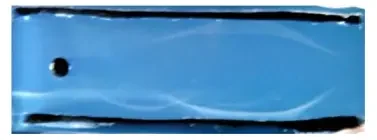
- The result of immunoelectrophoresis is observed by the formation of visible precipitin arcs in the gel.
- Presence of elliptical precipitin arcs indicates positive antigen-antibody reaction. It means the specific antigen has reacted with its corresponding antibody.
- Absence of precipitin arc indicates that no reaction has taken place. It may be due to absence of specific protein, very low amount of protein or antigen excess condition.
- Different proteins are identified by the position, shape and intensity of the precipitation lines in the gel.
- The number of precipitin arcs indicates the number of antigenic components present in the sample.
- The size and thickness of the arc gives approximate idea about concentration of the protein.
- Thick precipitin arc present near the antiserum trough indicates increased amount of protein in the sample.
- Short or faint arc present away from the antiserum trough indicates decreased amount of protein.
- Abnormal shape of arcs such as bulging, thickening, shortening or shifted position indicates abnormal protein pattern.
- Presence of double arcs may indicate presence of more than one related antigenic component or abnormal immunoglobulin pattern.
- The arc pattern is compared with normal control. This helps to detect overproduction, deficiency or structural abnormality of serum proteins.
- Abnormal precipitin pattern is useful in detection of monoclonal gammopathy, biclonal gammopathy, multiple myeloma and other immune related disorders.
Advantages of Immunoelectrophoresis
- Immunoelectrophoresis has high resolving power because it combines the separation property of electrophoresis with the specificity of immunodiffusion.
- It is used to separate and identify different proteins present in complex biological mixture like human serum.
- It can detect many different antigens at the same time from a single sample.
- It is highly specific because it depends on specific antigen-antibody reaction.
- It helps in identification of normal and abnormal serum proteins by observing the precipitin arcs.
- It can detect both structural abnormality and change in concentration of different proteins.
- It gives a clear pattern of protein fractions, which helps in comparison with normal control sample.
- It is useful for routine evaluation of immunoglobulins and other serum protein abnormalities.
- It is a reliable and accurate method for studying antigenic proteins in clinical and research laboratory.
- It is comparatively cost-effective and can be used in immunology and biochemistry laboratories without very advanced instruments.
Limitations of Immunoelectrophoresis
- Immunoelectrophoresis has low sensitivity as compared to newer methods like immunofixation and mass spectrometry.
- It may not detect very small amount of monoclonal proteins or low level disease condition.
- The procedure is time consuming. It requires long time for electrophoresis, diffusion, washing, staining and drying.
- The complete process may take up to two or three days for final observation of precipitin arcs.
- The interpretation of result depends mainly on visual observation. So, the skill and experience of technician is important.
- Different observers may interpret the same precipitin pattern differently. This can produce variation in result.
- Some normal proteins may migrate in same region and hide the small target protein.
- Certain proteins such as transferrin or fibrinogen may interfere with the result and produce confusing or false positive band.
- It is mainly a semi-quantitative method. It cannot measure exact amount of protein with high precision.
- It is not very suitable for following small changes in protein level or tumour burden during treatment.
- It requires specific antisera for detection of each antigenic protein. Large amount of good quality polyclonal antibodies may be needed.
- The method detects clonality indirectly by studying protein migration and arc pattern. It does not directly show the genetic or structural identity of the clone.
Applications of Immunoelectrophoresis
- Immunoelectrophoresis is used for diagnosis of multiple myeloma, Waldenström’s macroglobulinemia and other paraproteinemias.
- It is used for detection of monoclonal gammopathy and polyclonal gammopathy in serum protein.
- It is used to know abnormal absence or excess production of serum proteins, urine proteins and CSF proteins.
- It helps in detection of hypogammaglobulinemia and other immunodeficiency disorders.
- It is used for study of abnormal immunoglobulin pattern in different disease condition.
- It is used in diagnosis of complement deficiency, dysgammaglobulinemia, cryoglobulinemia and pyroglobulinemia.
- It is used for detection of autoantibodies in Systemic Lupus Erythematosus (SLE) and Rheumatoid Arthritis.
- Counter immunoelectrophoresis is used for rapid detection of bacterial and viral antigens in infections like meningitis and pneumonia.
- It is used for identification of specific allergens by reaction with IgE.
- It is used to monitor therapeutic response of patient in immune system related diseases.
- It is used in research laboratory for separation of complex protein mixtures.
- It is used for study of antigen-antibody reaction in gel medium.
- It is used to check purity of antigens and antibodies during purification.
- It is used to isolate a single antigen from a mixture of many antigens.
- It is used in preparation and quality control of therapeutic antibodies and vaccines.
- Affinity immunoelectrophoresis is used for binding studies and for studying glycan or ligand binding property of proteins.
Precautions of Immunoelectrophoresis
- Gloves and safety goggles should be worn during the experiment.
- Reagents should not be pipetted by mouth. Micropipette should be used for sample and reagent handling.
- Hands should be washed with soap and water after handling serum, urine or other biological sample.
- During heating of agarose, care should be taken because hot agarose may splash and cause burn.
- Heat resistant gloves should be used while melting agarose on hot plate, water bath or microwave.
- The electrophoresis chamber should be kept on a dry and level surface before switching on the power supply.
- Very high voltage should not be used. Excess voltage may produce heat and melt the agarose gel.
- High temperature should be avoided because it may denature antigens and affect precipitin arc formation.
- Barbital buffer should be handled carefully because it may be toxic in large amount.
- Reagents containing sodium azide should not be mixed with acidic solution, because toxic vapour may be formed.
- 2-mercaptoethanol should be handled under fume hood. It should not come in contact with skin and eyes.
- Fresh sample should be used for the test. Old or contaminated sample may give wrong precipitin pattern.
- The sample should be protected from hemolysis, evaporation and microbial contamination.
- The agarose should be completely dissolved before casting the gel.
- Glass slide or plate should be cleaned properly with alcohol so that gel can spread evenly.
- If antiserum is mixed with agarose, the agarose should be cooled near 55°C. High heat may inactivate the antibodies.
- Wells and trough should be cut neatly. Rough margins may disturb diffusion and formation of arcs.
- Care should be taken during sample loading so that the well is not damaged.
- The gel should not be directly submerged in electrophoresis buffer. Saturated paper wicks should be used for electrical contact.
- Antiserum should be added only after electrophoretic separation of proteins is completed.
- Antiserum should be added slowly into the trough. Overfilling should be avoided because it may overflow and contaminate nearby area.
- The gel should be kept in moist chamber during diffusion. Wet cotton or wet paper towel should be placed inside the chamber.
- The gel should not be allowed to dry during incubation, because drying may stop diffusion and distort the precipitin arcs.
References
- iGene Labserve. (n.d.). 9 Tips to troubleshoot the challenges you encounter in gel electrophoresis.
- PubMed. (n.d.). Analysis of multiple bands on serum protein immunofixation electrophoresis: Challenge in interpretation of clonality in a patient with light chain-predominant multiple myeloma.
- PubMed. (n.d.). Application of image analysis techniques to two-dimensional crossed immunoelectrophoresis study.
- Sigma-Aldrich. (2003). Barbital buffer (B5934).
- Morphisto GmbH. (n.d.). Barbital EDTA buffer pH 8.6.
- PMC – NIH. (n.d.). Clinical applications of mass spectrometry in multiple myeloma.
- Aita, M. H. C., Arantes, L. C., Aita, B. C., & Silva, J. E. P. (2015). Comparison between immunofixation and electrophoresis for the early detection of relapsed multiple myeloma. Jornal Brasileiro de Patologia e Medicina Laboratorial, 51(6), 359-368. https://doi.org/10.5935/1676-2444.20150057
- PubMed. (n.d.). Comparison of immunofixation and immunoelectrophoresis methods.
- SlideShare. (n.d.). Crossed immunoelectrophoresis.
- Multiple Myeloma Research Foundation. (n.d.). Diagnostic testing for multiple myeloma | Blood, urine, & bone tests.
- MBBS NAIJA. (n.d.). Electrophoresis and immunofixation for multiple myeloma [Video]. YouTube.
- Agulló, C. (2026, January 6). Enhanced sensitivity and accuracy of mass spectrometry over immunofixation for monitoring treatment response in multiple myeloma. Association for Diagnostics & Laboratory Medicine.
- Prasad, E. M., & Bendre, R. (2026). Future of monoclonal gammopathy diagnosis: Mass spectrometry, a transformation in perspective beyond electrophoresis. International Journal of Medicine and Public Health, 16(2), 826-834. https://doi.org/10.70034/ijmedph.2026.2.142
- HiMedia Laboratories. (n.d.). HiPer® rocket immunoelectrophoresis teaching kit.
- PatSnap Eureka. (2025, June 30). How to minimize errors in gel electrophoresis?
- BIOTED. (n.d.). Inmunoelectrophoresis.
- Proteintech Group. (n.d.). IP troubleshooting.
- (n.d.). Immunoelectrophoresis.
- (n.d.). Immunoelectrophoresis.
- Wikipedia contributors. (2025, May 26). Immunoelectrophoresis. Wikipedia, The Free Encyclopedia.
- SlideShare. (n.d.). Immunoelectrophoresis.
- Burke, D. (2018, August 15). Immunoelectrophoresis-serum test: What you need to know. Healthline.
- Aryal, S. (2024, December 30). Immunoelectrophoresis: Principle, procedure & applications. Microbe Notes.
- Sinha, S. (2025, October 17). Immunoelectrophoresis: Principle, techniques & applications. DPMI India.
- Farinde, A., & Devaraj, S. (2026, February 17). Immunofixation: Reference range, interpretation, collection and panels. Medscape.
- Blue Cross Blue Shield of Rhode Island. (2025, October 1). Medical coverage policy | Mass spectrometry (MS) testing in monoclonal gammopathy.
- Shah, D., Seiter, K., & Besa, E. C. (2026, March 30). Multiple myeloma workup: Approach considerations, blood studies, urine studies. Medscape.
- PMC – NIH. (n.d.). Multiple myeloma: A case of atypical presentation on protein electrophoresis.
- Creative Proteomics. (n.d.). Overview of two-dimensional gel electrophoresis.
- PMC – NIH. (n.d.). Rocket and two dimensional immunoelectrophoresis in diagnosis of caprine brucellosis.
- SlideShare. (n.d.). Rocket immunoelectrophoresis.
- PMC – NIH. (n.d.). Serum and urine electrophoresis for detection and identification of …
- Helena Laboratories. (n.d.). TITAN IV immunoelectrophoresis procedure.
- American Cancer Society. (2025, February 28). Tests for multiple myeloma.
- (n.d.). The analytical evolution of immunoelectrophoresis: Principles, clinical pathophysiology, and the diagnostic transition to mass spectrometry.
- LabX. (n.d.). Troubleshooting common electrophoresis problems and artifacts.
- Yeasen. (2025, June 23). Troubleshooting nucleic acid gel electrophoresis—solved in one go!
- PubMed. (n.d.). Two-dimensional (crossed) immunoelectrophoresis.
- Morphisto GmbH. (n.d.). Veronal-buffer / electrophoresis buffer pH 8.6.
- Dr.Oracle. (2025, August 20). What is the most commonly used buffer pH for electrophoresis of serum proteins?