

Alcohol burner is a small laboratory heating instrument used for gentle heating and sterilization. It is also called spirit lamp.
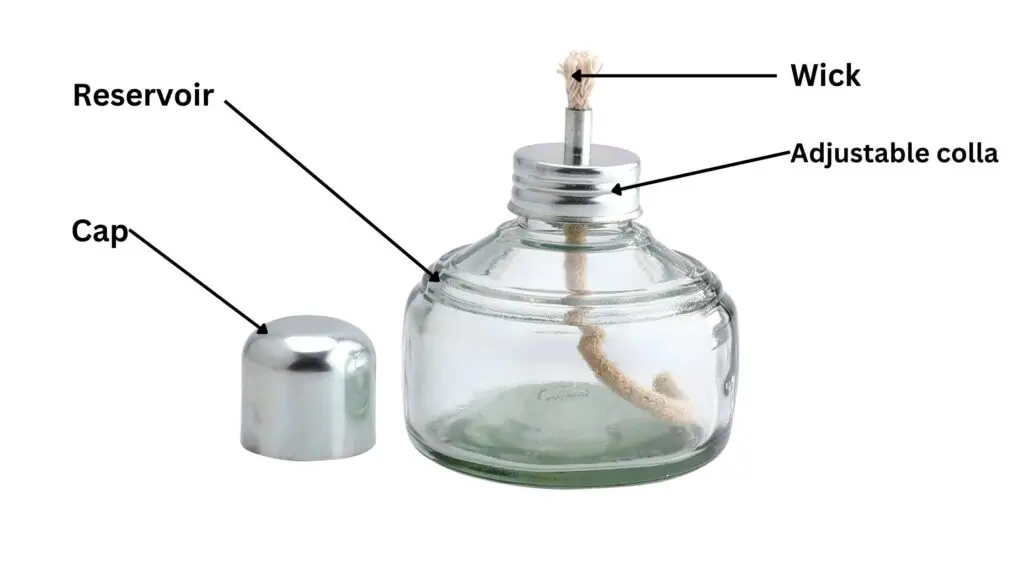
It is made up of glass, brass, aluminium or stainless steel. It has a fuel reservoir and a cap with cotton wick. Some burners may also have wickless copper tube.
The fuel used in alcohol burner is alcohol. Ethanol, methanol, denatured alcohol or isopropanol may be used as fuel.
The alcohol moves upward through the wick by capillary action. When the wick is lighted, the alcohol vapour burns and produces a steady flame.
The flame is clean and mostly smokeless. It gives lower heat than Bunsen burner. The flame temperature is about 800-1000°C and flame height is generally small.
It is used when mild heating is needed. It is also used in microbiology work for sterilization and in classrooms where gas burner is not preferred.
Alcohol burner is portable and does not need gas pipe. So it is useful in field work and small laboratory. It is safer than pressurized gas burner, but alcohol is inflammable and should be handled carefully.
The use of alcohol as fuel became possible after development of distillation. Later spirit lamp became a common laboratory heating device. In places where alcohol was cheap, it was widely used before gas burners became common.
Working Principle of Alcohol burner
Working Principle of Alcohol Burner is based on capillary action, vaporization and combustion of alcohol. The liquid fuel burns at the exposed end of wick and gives flame.
The burner has a reservoir filled with alcohol. A porous wick, usually made up of cotton or ceramic fibre, is partly dipped in the alcohol.
The alcohol rises upward through the wick by capillary action. The fuel moves from the reservoir to the tip of wick against gravity.
When the wick is lighted, the alcohol present at the tip starts to vaporize. The alcohol vapour mixes with oxygen of air.
This vapour then burns and produces a clean steady flame. The reaction is exothermic and heat is released during combustion.
The flame size depends on the length of exposed wick. Longer wick gives larger flame and shorter wick gives smaller flame.
The burner is put off by covering the wick with cap. This stops oxygen supply and the flame goes out.
Factors that affect the working of an alcohol burner
The following are the factors that affect the working of Alcohol Burner–
- Fuel type and purity
The type of alcohol affects the flame. Ethanol, methanol and isopropanol give different heat and flame. Pure alcohol burns better, but water mixed fuel burns poorly. - Wick condition and fit
The wick should be clean and cut properly. Burnt, frayed or dirty wick gives uneven flame and soot. If wick is too tight in the cap, fuel movement becomes poor and flame may sputter. - Pressure equalization
Pressure inside the burner should remain normal. If the burner is completely sealed, pressure change may push fuel up through the wick and cause flooding. A small breather hole helps to prevent this. - Fuel level
The fuel level should not be too high or too low. Overfilling may cause spilling and flooding of wick, while very low fuel may make the wick dry and burn it. - Capillary action
The alcohol rises through the wick by capillary action. If the wick fibre is proper, fuel reaches the top continuously. If the wick is blocked or damaged, flame becomes weak. - Airflow and oxygen supply
Proper oxygen supply is needed for complete combustion. Less air gives yellow sooty flame and may form carbon monoxide. Strong air current may disturb or extinguish the flame. - Burner design
The design of burner affects its flame. Wickless copper tube burner gives more steady flame and broad base glass burner helps to reduce spilling of fuel.
Parts of a Alcohol burner
The following are the parts of Alcohol Burner–
- Fuel reservoir
It is the main body of the burner. It holds the alcohol fuel and is usually made up of borosilicate glass, stainless steel, aluminium or brass. - Wick
It is a cord used to carry alcohol from reservoir to the flame. It works by capillary action and is commonly made up of cotton or ceramic fibre. - Wick holder
It is also called collar. It holds the wick in proper position and is made up of metal, glass or porcelain. - Adjustable wick holder
It is present in some burners. It controls the exposed length of wick and helps to change the flame size. - Snuffer cap
It is used to put off the flame. It covers the wick and stops oxygen supply to the flame. - Storage cap
The cap also covers the wick when burner is not in use. It reduces evaporation of alcohol from the burner. - Gasket or seal
It is present inside the cap in some burners. It prevents fuel leakage and reduces evaporation during storage. - Breather hole
It is a small vent hole present in cap or wick support. It equalizes pressure inside and outside the reservoir. - Metal stand
It is an optional accessory used with alcohol burner. It supports beaker, flask or test material above the flame.
Operating Procedure of Alcohol burner
The following are the operating procedure of Alcohol Burner–
- The burner is placed on stable and fire resistant surface. The place should be well ventilated and combustible materials should be removed from nearby area.
- The reservoir is filled with good quality fuel like denatured alcohol or 95% ethanol. It should not be filled more than 80% of its capacity.
- The wick is adjusted properly. About 1 cm of wick should remain above the metal collar.
- The wick holder is tightened properly. It prevents leakage of alcohol from the burner.
- The main fuel bottle is closed tightly before lighting the burner. It should be kept away from the working area.
- The snuffer cap is removed from the wick. The wick is then lighted by match, spark igniter or long reach lighter.
- The burner is kept upright during use. It should not be tilted because alcohol may spill.
- The flame should not be left unattended. If adjustment is needed while hot, tongs or heat resistant gloves should be used.
- After use, the flame is put off by placing snuffer cap over the wick. The flame should not be blown out by mouth.
- Tongs may be used for placing the cap. This prevents burning of fingers.
- The burner is allowed to cool completely after extinguishing. It should not be touched or moved when hot.
- If the burner is not used again soon, remaining alcohol is removed and kept in original fuel container. This prevents evaporation and wastage of fuel.
Precautions of Alcohol burner
The following are the precautions of Alcohol Burner–
- Personal safety should be maintained during work. Safety goggles, flame resistant lab coat and heat resistant gloves should be used, and long hair, loose cloth and hanging jewellery should be tied back.
- The burner should be used in a safe place. It should be kept on stable flat surface, in well ventilated area, away from shelves, hanging apparatus, biosafety cabinet, tissue culture hood and combustible materials.
- Fuel should be handled carefully. Only recommended fuel like denatured alcohol or ethanol should be used, pure methanol should be avoided as far as possible, and the reservoir should be filled only up to about 80%.
- Refilling should be done safely. Fuel bottle should not be opened near flame, burner should not be refilled when hot or burning, spilled alcohol should be wiped and extra fuel should be stored away from work place.
- The burner and wick should be checked before use. Glass body should not have crack or chip, the wick should be clean, flat trimmed and about 1 cm above the collar, and the burner should not be allowed to run dry.
- Lighting should be done carefully. Spark igniter or long reach lighter should be used, hand should be kept away from flame, and hand or body should not be passed over the open flame.
- The burner should not be left unattended. Heated objects should be held by tongs and kept on heat resistant surface.
- The flame should be extinguished only with snuffer cap. It should not be blown out by mouth, and tongs may be used to place the cap.
- The burner should be cooled before handling. The cap and body remain hot after use, so it should not be touched or stored until it becomes cool.
- Remaining fuel should be removed if the burner is not used for long time. The fuel should be poured back into original container to prevent evaporation.
Uses of Alcohol burner
The following are the uses of Alcohol Burner–
- It is used in general laboratory and school experiments. It gives gentle open flame and is useful where gas supply is not available.
- It is used for flame sterilization of small instruments. Scalpels, forceps, glass rods and inoculation needles can be sterilized by this flame.
- It is used in microbiology and mycology work. It helps during transfer of microbial cultures, mushroom spore culture and flaming of agar plates.
- It is used in dental laboratory work. Dental wax, temporary crown and heat sensitive resin materials can be warmed or adjusted by its flame.
- It is used in lapidary and jewellery work. Shellac based dopping wax can be melted for fixing gemstones on dop sticks.
- It is used for warming transfer jigs and small jewellery materials. The clean moderate flame does not produce much soot and does not discolor sensitive stones easily.
- It is used in microscopy work. It gives low heat flame which is useful for slide preparation and small testing work.
- It is used in outdoor and field research. It is portable and gives heating or sterilization source in remote place, camping and survival condition.
Advantages of Alcohol burner
The following are the advantages of Alcohol Burner–
- It is safer than gas burner. It does not need pressurized gas pipe or rubber hose, so chance of gas leakage and explosion is less.
- It is small and portable. It can be carried easily and used in field work, temporary laboratory and place where gas supply is not present.
- It gives clean flame when good fuel is used. Denatured alcohol or ethanol gives smokeless flame and does not produce much soot.
- It is useful for sterile work. The clean flame does not leave carbon deposit and helps in sterilization of small instruments.
- It gives gentle heat. The flame temperature is lower than Bunsen burner, so it is suitable for mild heating work.
- It is useful for heat sensitive materials. Dental wax, resin and some gemstones can be warmed without strong heating.
- It is low cost instrument. The design is simple and the burner can be used for long time with little maintenance.
- Its fuel is easily available. Denatured alcohol and methylated spirit are cheap and can be stored for long time.
- It is useful in classroom experiments. Because the flame is small and controlled, it is more suitable for beginner students.
Limitations of Alcohol burner
The following are the limitations of Alcohol Burner–
- It gives lower flame temperature. The flame temperature is usually about 800-1000°C, so it is not suitable for very high temperature heating.
- It cannot replace Bunsen burner for strong heating. Intense chemical reaction and some metal flame tests need higher flame temperature.
- The flame height is limited. Usually the flame does not become more than about 5 cm.
- Flame control is not very precise. It is mainly controlled by changing the wick length, and there is no proper air-gas valve like Bunsen burner.
- Flooding may occur in some burners. If pressure equalization vent is absent, pressure change may push alcohol out through the wick.
- Flooding is dangerous because fuel may spread outside the burner. This can catch fire easily.
- Alcohol fuel evaporates easily. If the cap is not tight, fuel may slowly evaporate during storage.
- The burning depends on fuel quality. High grade ethanol gives clean flame, but poor fuel gives bad flame.
- Isopropyl alcohol may produce yellow and sooty flame. It may leave residue on apparatus and may give unpleasant smell.
- The wick needs regular care. Burnt or frayed wick gives uneven flame and soot.
- The wick should not be allowed to become dry during burning. If the burner runs out of fuel, dry cotton wick may burn and become damaged.
References
- (PDF) Development and Performance Evaluation of an Ethanol Gel Cook-Stove. (n.d.). ResearchGate. Retrieved from [URL].
- A simple spirit lamp, circa 1830 (A) and an incandescent alcohol lamp,… | Download Scientific Diagram. (n.d.). ResearchGate. Retrieved from [URL].
- Alcohol Burner Lamp/ Spirit Lamp 100 ml. (n.d.). CaresWorth Dental. Retrieved from [URL].
- Campwala, M. (n.d.). Alcohol Burner Uses in Laboratory | Function of Spirit Lamp. Science Equip. Retrieved from [URL].
- Alcohol Burner, Wickless. (n.d.). Walmart. Retrieved from [URL].
- Alcohol Burners. (n.d.). Fisher Scientific. Retrieved from [URL].
- Alcohol Lamp. (n.d.). Skyjems. Retrieved from [URL].
- Alcohol burner. (2026, January 31). In Wikipedia. Retrieved from [URL].
- Alcohol burner. (n.d.). Slideshare. Retrieved from [URL].
- Jones, K., & Jones, J. (n.d.). Best Alcohol Cooking Fuels for Campers and Preppers. The Provident Prepper. Retrieved from [URL].
- Bunsen Burner Vs Spirit Lamp: Which Heating Tool Is Safer For Your Lab? (2025, August 29). LabChoice Australia. Retrieved from [URL].
- Bunsen Burner vs Alternative Lab Burners: Which One Is Right for You? (2025, April 16). Supertek Glassware. Retrieved from [URL].
- Tadashi Science. (n.d.). Burning Rubbing Alcohol – How Combustion Reactions Work | Chemistry Study Tips [Video]. YouTube. Retrieved from [Youtube].
- CALORIMETRY: COMBUSTION OF ALCOHOLS. (n.d.). The Open University. Retrieved from [URL].
- Conny C. (2023, February 23). Ca. 1910 Mouralis alcohol incandescent lamp. Classic Pressure Lamps & Heaters. Retrieved from [URL].
- Peiris, A., & Stein, B. (2023, January 29). Capillary Action. Chemistry LibreTexts. Retrieved from [URL].
- Capillary Action: Definition, Examples & How It Works. (n.d.). Vedantu. Retrieved from [URL].
- Cao, H., Amador, C., Jia, X., & Ding, Y. (2015). Capillary Dynamics of Water/Ethanol Mixtures. Industrial & Engineering Chemistry Research, 54(48), 12196-12203. Retrieved from [PDF].
- Capillary action. (2026, April 19). In Wikipedia. Retrieved from [URL].
- Frye, D. (2024, May 21). Choosing the Right Fuel for Your Alcohol Stove. Practical Sailor. Retrieved from [URL].
- OpenStax College. (n.d.). Cohesion and Adhesion in Liquids: Surface Tension and Capillary Action. Physics. Retrieved from [URL].
- Common Choices for Alcohol Fueled Stoves. (n.d.). Thru-Hiker. Retrieved from [URL].
- Dental Laboratory Alcohol Bunsen Burner Spirit Lamp (with wick). (n.d.). Chongqing New World Trading Co., Ltd. Retrieved from [URL].
- Description and History of Oil Lamps. (n.d.). Milwaukee Public Museum. Retrieved from [URL].
- Heat of Combustion: Theory & Experiment. (n.d.). HSC Chemistry – Science Ready. Retrieved from [URL].
- Delly, J. G. (n.d.). How to Make/Modify and Use an Alcohol Lamp. The McCrone Group. Retrieved from [URL].
- Wiberg, M. (2023, November 8). How to Use an Alcohol Lamp in Mycology. Out Grow. Retrieved from [URL].
- Incomplete combustion. (n.d.). IB Colourful Solutions in Chemistry. Retrieved from [URL].
- Isopropyl alcohol (c3h7OH) burns in air according to this equation: 2C3H7OH + 9O2. (n.d.). Gauth. Retrieved from [URL].
- Laboratory Burner Safety. (n.d.). USC Environmental Health & Safety. Retrieved from [URL].
- OpenSTEM Africa: Ghana: Background (Calorimetry: combustion of alcohols). (n.d.). OLCreate. Retrieved from [URL].
- Operating Instructions for Wick-tape Alcohol Lamp. (n.d.). Home Science Tools. Retrieved from [PDF].
- Spirit Lamp – Durable & Autoclavable Alcohol Burner. (n.d.). Denmax Dental. Retrieved from [URL].
- Spirit Lamps And Alcohol Burners: Simple And Reliable Heat Sources For The Laboratory. (2025, August 29). LabChoice Australia. Retrieved from [URL].
- Spirit Lamps. (n.d.). VWR, part of Avantor. Retrieved from [URL].
- Technical Monograph on the Alcohol Burner: Thermodynamics, Design Architecture, and Laboratory Implementation. (n.d.). Retrieved from [Markdown].
- The History of Alcohol Distillation. (n.d.). Barmalade. Retrieved from [URL].
- The Use of Ethanol Gel Cook-Stove as a more Accessible Alternative Cooking Energy. (n.d.). ResearchGate. Retrieved from [URL].
- The combustion of isopropyl alcohol is described by the following balanced equation. 2C3H8O(g) +… (n.d.). Homework.Study.com. Retrieved from [URL].
- Why the Portable Metal Alcohol Burner Lamp Is a Must-Have for Chemistry Labs and Outdoor Survival. (n.d.). AliExpress. Retrieved from [URL].
- Wickless Spirit Lamp Alcohol Burner Set | Mycology & Liberia. (n.d.). Ubuy. Retrieved from [URL].
- Write the balanced equation for the complete combustion of methanol and determine the energy… (n.d.). Homework.Study.com. Retrieved from [URL].
Hello, thank you for this information. I would like to know the approximate radius of the sterile field around the alcohol lamp. How big is the sterile zone?
Thank you