

Agglutination reaction is an immunological reaction where insoluble or particulate antigen combines with its specific antibody and forms visible clumping.
In this reaction, the antigen may be present on RBC, bacteria or artificial carrier like latex beads. The antibodies are known as agglutinins and the antigen present on particle surface is called agglutinogen. The antibody binds with many antigenic sites and works like a bridge between particles. So the particles come together and form large clumps.
This reaction is different from precipitation reaction. In precipitation reaction the antigen is soluble. But in agglutination reaction the antigen is large and insoluble particle, so the clumping is easily visible.
Agglutination reaction occurs in two stages. First is sensitization stage, where antibody attaches with antigen surface. This is rapid and reversible. Second is lattice formation stage, where cross linking occurs between antigen and antibody and visible clumps are formed.
The reaction depends on proper amount of antigen and antibody. It also depends on pH, temperature and ionic strength. IgM is more effective in agglutination because it is large and can easily bridge the particles. IgG is smaller and sometimes need special method to show visible clumping.
Agglutination tests are used in clinical laboratory because they are rapid, cheap and sensitive. It is used in blood grouping, cross matching, Widal test, syphilis diagnosis and detection of autoimmune conditions. The reaction may be direct agglutination or indirect agglutination, where antigen or antibody may be naturally present or artificially attached to carrier particles.
Principle of Agglutination Reaction
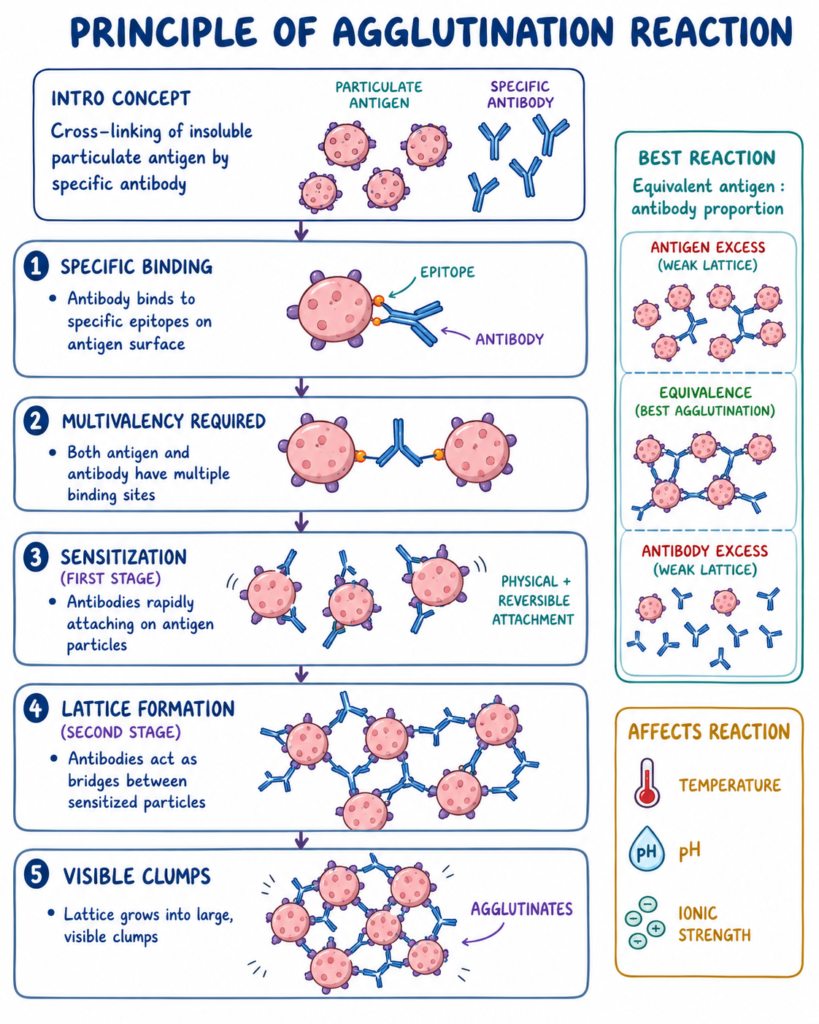
Agglutination reaction is based on the cross linking of insoluble particulate antigen by its specific antibody.
In this reaction, antibody binds with specific epitopes present on the surface of antigen particles. The antigen and antibody must be multivalent. It means both should have more binding sites. Then only one antibody can join more than one antigen particle.
The reaction takes place in two stages. First stage is sensitization. In this stage, antibody rapidly attach with the antigen surface. This attachment is physical and reversible.
Second stage is lattice formation. In this stage, the antibodies act as bridges between the sensitized particles. Then the particles are connected with each other and form a large three dimensional lattice.
As a result, visible clumps are formed. These visible clumps are called agglutinates.
The reaction occurs best when antigen and antibody are present in equivalent proportion. It also depends on temperature, pH and ionic strength of the medium.
Requirements for Agglutination Reaction
- Particulate antigen – The antigen should be insoluble and particulate in nature. Example, bacteria, RBC or latex beads. The antigenic determinant should be present on the surface and easily available for antibody binding.
- Multivalent antigen and antibody – Both antigen and antibody should be multivalent. It means they should have more than one binding site. This helps in cross linking and formation of large lattice network.
- Proper antigen-antibody ratio – The antigen and antibody should be present in proper equivalent amount. This is called zone of equivalence. If antibody is excess, it is called prozone. If antigen is excess, it is called postzone. In both condition agglutination may be weak or absent.
- Suitable temperature – The reaction need suitable temperature for proper binding of antigen and antibody. If temperature is not proper, the reaction may become slow or poor.
- Suitable pH – The medium should have proper pH. Proper pH helps in stable antigen and antibody combination.
- Ionic strength or electrolyte – Suitable ionic strength is required for agglutination reaction. Electrolyte concentration helps the particles to come near and form visible clumps.
- Appropriate antibody class – IgM is more effective for agglutination because it is large and has many binding sites. IgG is smaller and sometimes special enhancement method is needed for visible clumping.
- Reduction of zeta potential – Some particles like RBC have negative surface charge and they repel each other. This repulsive force is called zeta potential. It should be reduced by LISS, positively charged polymers or proteolytic enzymes.
- Adequate incubation time – Sufficient time should be given for reaction. First antibody attaches with antigen surface, this is sensitization. Then slow cross linking occurs and visible agglutinates are formed.
Types of Agglutination Reactions
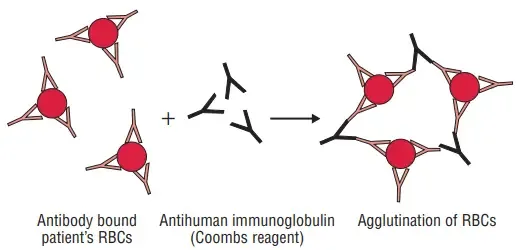
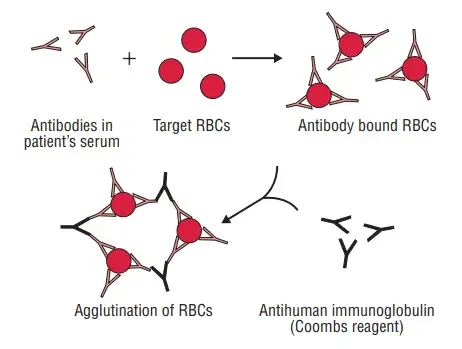
- Direct agglutination – It is the agglutination reaction where the antigen is naturally present on the surface of particle, such as whole bacterial cells or red blood cells (RBC). When specific antibody is added, these particles clump together and visible agglutination is formed.
- Indirect agglutination – It is also called passive agglutination. In this reaction, soluble antigen is artificially attached on inert carrier particles like latex beads, charcoal or treated RBC, so that antigen-antibody reaction can be seen as visible clumping.
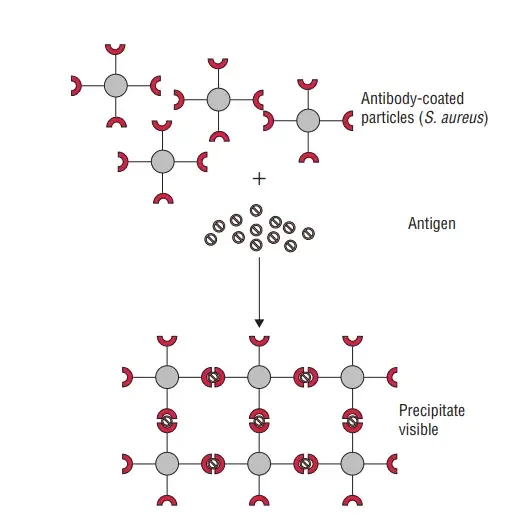
- Reverse passive agglutination – It is opposite of passive agglutination. In this test, known antibody is artificially attached on carrier particles and it is used to detect soluble antigen present in patient sample.
- Hemagglutination – It is a type of agglutination reaction where red blood cells (erythrocytes) are clumped. It is used in ABO blood typing and also for detection of some viruses which can naturally cross-link red blood cells.
- Coagglutination – It is a special type of reverse passive agglutination where killed Staphylococcus aureus bacteria, mainly Cowan I strain, is used as carrier particle. Its surface contains Protein A, which binds with antibodies used in the test.
- Agglutination inhibition – It is a competitive agglutination reaction where absence of visible clumping shows positive result. It is used for detection of small amount of soluble antigen like hCG in early pregnancy test or some specific antiviral antibodies.
These reactions are performed by slide, tube or microtiter plate method according to need, but these are methods and not separate types.
Detail Step by Step Procedure of Agglutination Reactions
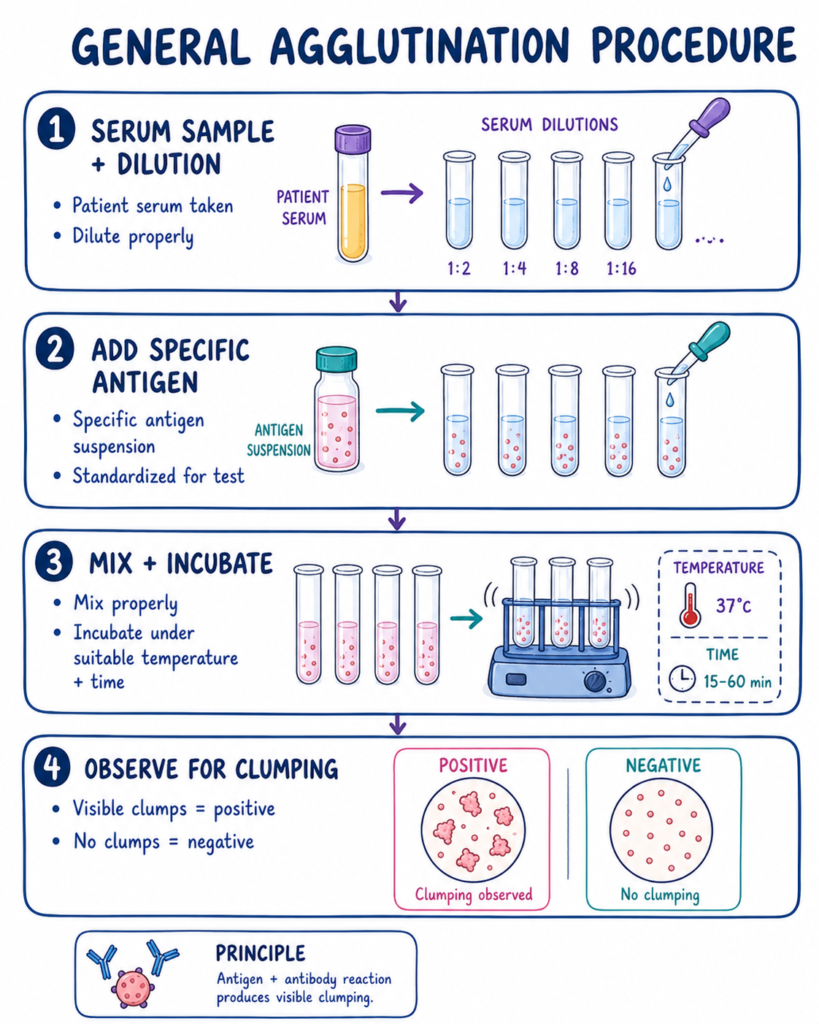
General Agglutination Procedure
- Step 1- The patient’s serum sample is taken and diluted properly. Dilution is done according to the type of test and required result.
- Step 2- A specific antigen suspension is added to the diluted serum. The antigen should be standardized and suitable for that particular agglutination test.
- Step 3- The serum and antigen mixture is mixed properly. Then it is incubated under suitable condition. Proper temperature and time is required for antigen-antibody reaction.
- Step 4- After incubation, the mixture is observed for clumping. If visible clumps are formed, then the result is positive. If no clumping is seen, then the result is negative.
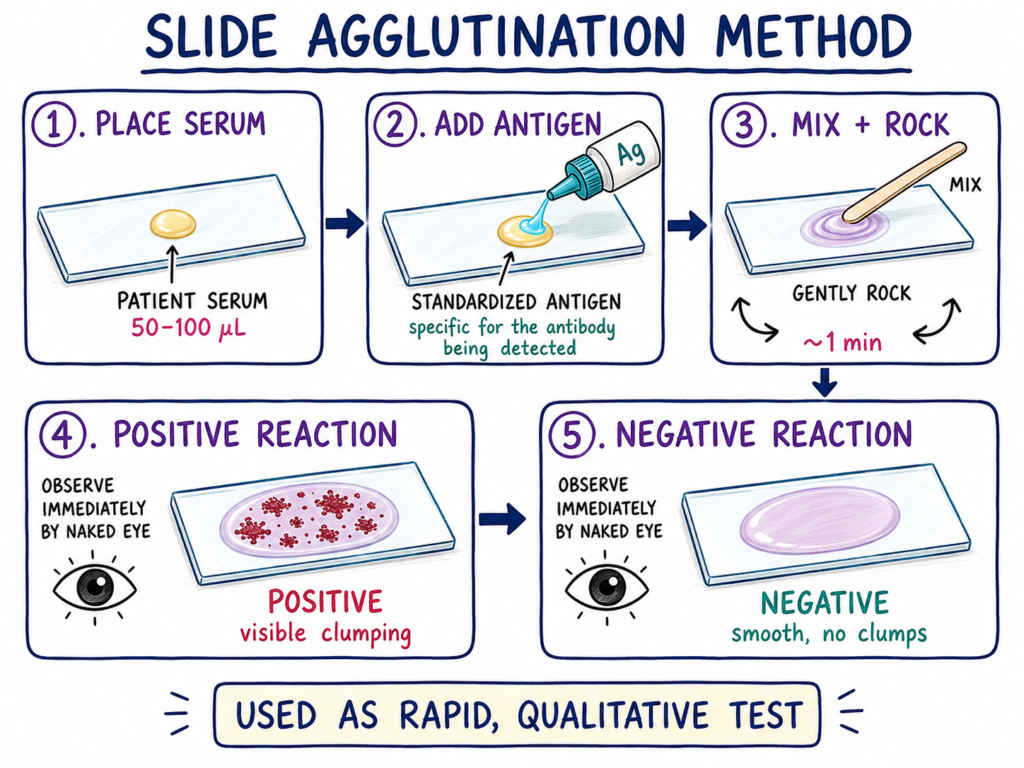
Slide Agglutination Method
- Step 1- A clean glass slide or test card is taken. One drop of patient’s serum is placed on the slide. The volume may be about 50-100 μL.
- Step 2- One drop of corresponding standardized antigen suspension is added to the serum drop. The antigen should be specific for the antibody which is to be detected.
- Step 3- The contents are mixed properly with an applicator stick. After mixing, the slide is gently rocked or rotated for about 1 minute.
- Step 4- The mixture is observed immediately by naked eye. Formation of visible clumping or granular aggregation indicates positive agglutination reaction.
- Step 5- If the mixture remains smooth and no visible clump is present, then the reaction is negative. This method is mainly used as rapid and qualitative test.
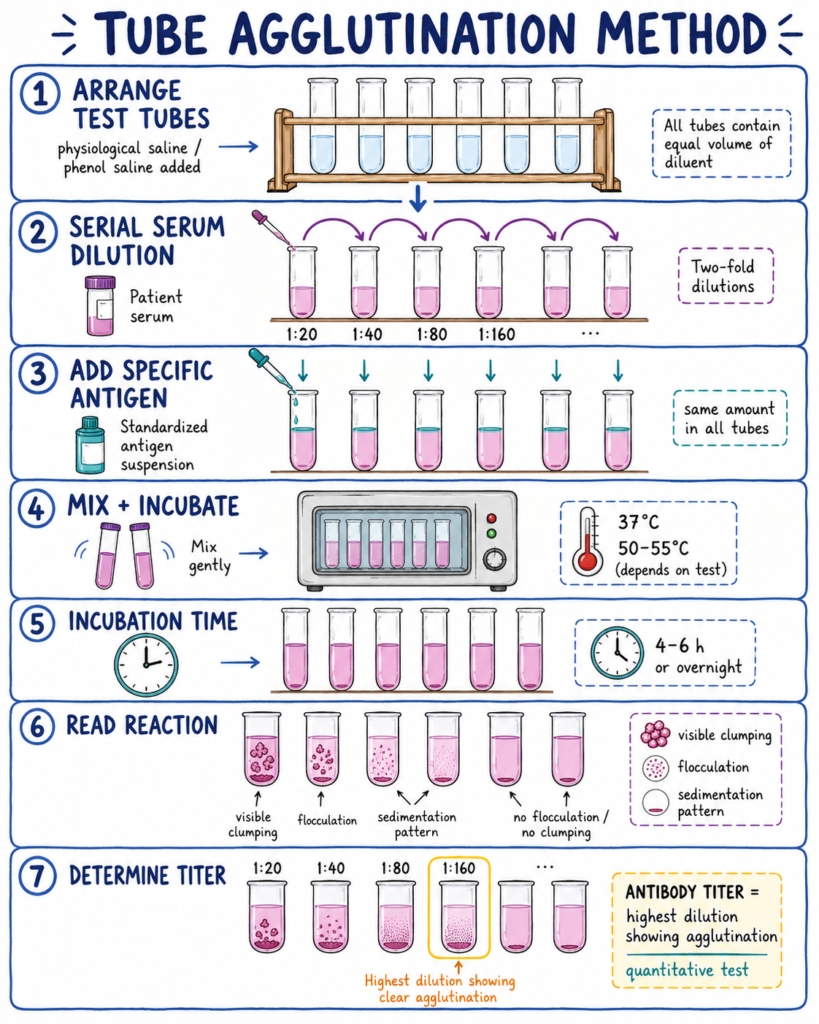
Tube Agglutination Method
- Step 1- A series of clean test tubes are arranged. A diluent like physiological saline or phenol saline is added in the tubes.
- Step 2- The patient’s serum is diluted serially in the tubes. Usually two-fold dilution is made, such as 1:20, 1:40, 1:80, 1:160 and so on.
- Step 3- A constant and standardized volume of specific antigen suspension is added to each test tube. Same amount of antigen is added in all tubes.
- Step 4- The tubes are mixed gently. Then the tubes are incubated at suitable temperature. It may be incubated at 37°C or 50-55°C, depending on the test.
- Step 5- The incubation is done for required time. It may be 4-6 hours or sometimes overnight, according to the agglutination assay.
- Step 6- After incubation, the tubes are examined for visible clumping. Flocculation or sedimentation pattern at the bottom of tube is also observed.
- Step 7- The highest dilution of serum which still shows clear agglutination is taken as the antibody titer. This method is used for quantitative measurement of antibody level.
Results of Agglutination Reactions
Positive result is indicated by visible clumping in the reaction mixture. The clumps may appear as granular aggregation or flocculation. This shows that the specific antigen or antibody is present in the patient sample and cross linked lattice has been formed.
Negative result is indicated when the mixture remains smooth and uniform. No visible clump is seen. This usually shows absence of the specific antigen or antibody in the sample.
Weak result is seen when only small or fine granules are formed. It may occur due to low amount of antibody. It may also occur in early stage of infection or due to improper testing condition.
In microtiter plate agglutination, the positive result appears as a diffuse and spread out mat at the bottom of well. The negative result appears as smooth compact button or pellet at the centre of the well. It occurs because unagglutinated cells slide down and settle at the centre.
False negative result may occur due to improper proportion of antigen and antibody. If antibody is present in excess, it is called prozone phenomenon. If antigen is present in excess, it is called postzone phenomenon. In both condition lattice network cannot form properly and visible clumping is absent, even target substance may be present.
In agglutination inhibition test, the result is interpreted in opposite way. Here absence of clumping indicates positive result. Visible clumping indicates negative result. This type of reaction is used in some competitive assays, such as detection of hCG in rapid pregnancy test.
Applications of Agglutination Reactions
- It is used for determining ABO and Rh blood group. In blood grouping, the RBC agglutinate with its specific antibody. It is also used in cross matching of donor and recipient blood before transfusion. Coombs test is used for detecting incomplete antibodies.
- It is used for diagnosis of infectious diseases. In this test, specific antibody present in patient serum is detected by using known antigen. Widal test is used for typhoid and paratyphoid fever. RPR test is used for syphilis. It is also used for brucellosis and leptospirosis.
- It is used for identification of bacteria. Specific antisera are mixed with bacterial suspension. If agglutination occurs, the bacteria is identified. It is used for serotyping of Salmonella, Escherichia coli and Vibrio cholerae.
- It is used for rapid detection of antigen in clinical sample. The sample may be CSF, serum or urine. It is used for detection of cryptococcal antigen. It is also used for detection of Vi antigen of Salmonella Typhi.
- It is used for measuring antibody level in serum. For this, patient serum is diluted serially and antigen is added. The highest dilution showing agglutination is called antibody titer. It helps in knowing infection progress and immune response after vaccination.
- It is used for diagnosis of autoimmune diseases. The autoantibodies present in serum can be detected by agglutination method. Example, Rheumatoid Factor (RF) in rheumatoid arthritis and antinuclear antibody (ANA) in lupus.
- It is used in pregnancy testing by agglutination inhibition method. It detects small amount of human chorionic gonadotropin (hCG) in urine. In this test no clumping means positive result. Visible clumping means negative result.
Limitations of Agglutination Reactions
- Agglutination reaction may give negative result in early stage of infection. In first week or more, patient may not produce detectable amount of antibody. So test may become negative even infection is present.
- False negative result may occur due to excess antibody or excess antigen. Excess antibody is called prozone phenomenon. Excess antigen is called postzone phenomenon. In both condition proper lattice is not formed and clumping does not appear.
- False negative result may also occur in immunodeficient patient. In this condition antibody production is poor. Sometimes hyperproteinemia also interfere with the reaction and weak or negative result may come.
- False positive result may occur due to cross reaction. Antibody produced from past infection, previous vaccination or other disease may react with test antigen. This may happen in malaria, dengue, rheumatoid arthritis and lupus.
- Some agglutination tests cannot clearly separate active infection from past infection. It also may not separate infection from previous vaccination. So repeated test may be needed after some time to confirm the diagnosis.
- The result reading is mostly done by visual observation. Fine clumping or weak clumping may be difficult to identify. So interpretation may vary from one person to another person.
- Agglutination reaction need suitable condition for proper result. Proper pH, temperature and ionic strength are needed. If these conditions are not maintained, the reaction may become weak or false.
- In cell based agglutination, zeta potential may interfere with clumping. RBC and other particles may repel each other due to negative surface charge. So special enhancement medium may be required to reduce this repulsion.
- Some agglutination tests need special laboratory facility. Example, Microscopic Agglutination Test (MAT) for leptospirosis may require live infectious bacterial culture. This can create biohazard and need trained laboratory worker.
- Negative result does not always rule out disease. The amount of antigen or antibody may be below the sensitivity level of test. So the target may be present but agglutination may not be visible.
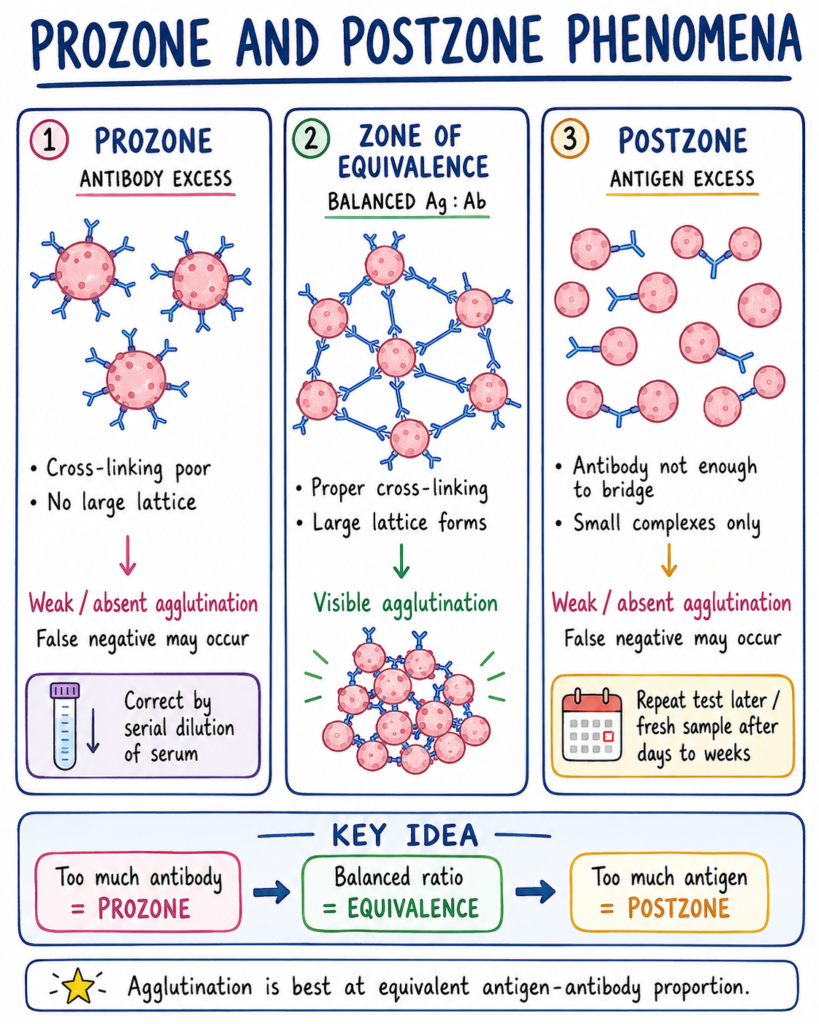
Prozone and Postzone Phenomena
Prozone phenomenon is a condition where antibody is present in very excess amount than the antigen.
In this condition, almost all antigenic sites or epitopes are occupied by separate antibody molecules. So one antibody cannot make bridge between two antigen particles. Cross linking does not occur properly. For this reason, large lattice is not formed.
As a result visible agglutination is absent or very weak. So the test may show false negative result, although specific antibody is present in the patient sample. This type of condition may be seen in diseases where antibody level is very high, such as syphilis, brucellosis and some autoimmune disorders.
The prozone effect can be corrected by serial dilution of patient serum. Dilution reduces the excess antibody concentration. Then antigen and antibody come into proper proportion and visible clumping may occur.
Postzone phenomenon is a condition where antigen is present in very excess amount than the available antibody.
In this condition, antibody binds with antigen, but the amount of antibody is not enough to form bridges between different antigen particles. Small antigen-antibody complexes are formed, but they cannot join together into large lattice.
As a result the particles remain suspended in the fluid. Visible agglutination is weak or absent. So false negative result may occur, even antigen is present in the test mixture.
The postzone reaction can be corrected by testing a fresh sample after some days or one or more week. During this time the patient may produce more antibody. Then proper antigen-antibody ratio is obtained and agglutination may be visible.
Zone of equivalence is the proper balanced condition of antigen and antibody. In this zone, antigen and antibody are present in suitable proportion. Proper cross linking occurs and visible agglutination is formed.
References
- Alba Bioscience Limited. (2023, April). Papain solution kit ALBAzyme for tube technique [PDF]. AliveDx.
- Amrita Hospital. (2025, November 27). Widal test – Purpose, procedure & results explained.
- Aryal, S. (2023, November 7). Agglutination: Reactions, types, tests, applications. Microbe Notes.
- Biophysical principles, molecular mechanisms, and clinical applications of agglutination reactions in serology and immunohematology. (n.d.).
- Biology LibreTexts. (n.d.). 12.2E: Agglutination reactions.
- Brisse, M., & Paul, C. (n.d.). Agglutination | Definition, reaction & examples – Lesson. Study.com.
- Chaffin, J. (n.d.). Glossary: LISS. Blood Bank Guy.
- Chauhan, A. (2024, September 18). Weil Felix test interpretation: Decoding rickettsial disease tests. Flabs.
- Chauhan, A. (2025, September 11). Agglutination test: Principle, types & diagnostic uses. Flabs.
- Clinical Gate. (n.d.). Agglutination methods.
- Cornell University College of Veterinary Medicine. (n.d.). Leptospira microagglutination testing.
- Cox, A. L., Zubair, M., & Tadi, P. (2023, February 15). Weil Felix test. StatPearls. PubMed.
- Cox, A. L., Zubair, M., & Tadi, P. (2023, February 15). Weil Felix test. In StatPearls. StatPearls Publishing. NCBI Bookshelf.
- Department of Microbiology, College of Medicine. (2025). Agglutination reactions [PDF].
- Fahim, F. I. (2026, April 4). Agglutination and precipitation reactions in immunology. Prezi.
- Fathima, A. (n.d.). Agglutination inhibition. SlideShare.
- Hurd, R. (2025, July 3). Latex agglutination test. MedlinePlus Medical Encyclopedia.
- Jadhav, S. (2025, July 8). Widal test: Procedure, normal range, results explained. Unipath.
- Kaur, P. (2023). Latex agglutination: Useful diagnostic tool in medicine and biology. Journal of Immunological Techniques & Infectious Diseases, 12(2). https://doi.org/10.4172/2329-9541.1000344
- Kimron Veterinary Institute / Ministry of Agriculture. (n.d.). Leptospirosis microscopic agglutination test (MAT) sample submission and results interpretation guide [PDF]. Gov.il.
- Laboratory approaches in desensitization for ABO-incompatible … (n.d.).
- Learn Serology. (n.d.). Serological endpoints: Agglutination – Stage 2.
- Linear Chemicals, S.L.U. (2006, April). hCG-Latex [PDF].
- Lumen Learning. (n.d.). Agglutination assays | Microbiology.
- LunarLullaby. (2021). Agglutination reactions. Principles and reactions. EduBirdie.
- Malvern Instruments Ltd. (n.d.). Tech note: Zeta potential – An introduction in 30 minutes [PDF]. Knowledge Center.
- Marshall-Andon, T., & Heinz, P. (2017). How to use … the Monospot and other heterophile antibody tests. Archives of Disease in Childhood – Education and Practice, 102(4), 188-193. https://doi.org/10.1136/archdischild-2016-311526
- Mayo Clinic Laboratories. (n.d.). Syphilis antibody, Treponema pallidum particle agglutination, serum. Neurology Catalog.
- Mechanisms of prozone formation in agglutination reaction. (n.d.). Scilit.
- Metropolis India. (2026, May 14). Widal test – Introduction, principle and procedure.
- Miller, L. E., & Stevens, D. C. (2022). Precipitation and agglutination reactions. In Clinical immunology & serology: A laboratory perspective (p. 175). F.A. Davis Company.
- Missiakas, D. (2014). Molecular basis and intervention of Staphylococcus aureus agglutination. Grantome.
- nanoComposix. (n.d.). Zeta potential measurements.
- nanomicronspheres. (n.d.). Understanding the agglutination test: A key diagnostic tool in clinical laboratories.
- Oncohema Key. (2016, June 12). Agglutination methods.
- Oxbridge Solutions Limited. (2018, January 1). Paul Bunnell test. GPnotebook.
- Pope, V. (2001). Serodia Treponema pallidum particle agglutination test [PDF]. Syphilis Serology Reference Laboratory, Centers for Disease Control and Prevention.
- PraxiLabs. (n.d.). Widal test – Test for typhoid fever. Virtual Labs.
- Reckon Diagnostics P. Ltd. (2020, September). Salmonella antigens IMMUNOPAK (Slide agglutination) – WIDAL SLIDE TEST (‘O’,’H’,’AH’,’BH’ Antigen, +ve Control) [PDF].
- San Mateo County Public Health Laboratory. (2008, July 1). Syphilis serology test name: Treponema pallidum – particle agglutination (TP-PA) [PDF]. San Mateo County Health.
- Santos, Y. (n.d.). Agglutination reactions. SlideShare.
- Sigma-Aldrich. (n.d.). Protein A soluble from Staphylococcus aureus (Cowan strain) powder, white.
- Staphylococcus aureus aggregation and coagulation mechanisms, and their function in host-pathogen interactions. (n.d.). PMC.
- Stuempfig, N. D., & Seroy, J. (2023, August 14). Monospot test. In StatPearls. StatPearls Publishing. NCBI Bookshelf.
- Table 1. (2025). Clinical Transplant Research, 39, 250-258. https://doi.org/10.4285/ctr.25.0041
- Tech Team. (n.d.). How does the microscopic agglutination test (MAT) work for leptospirosis? Understand the gold standard diagnosis. Kintek Detection.
- The laboratory diagnosis of syphilis. (n.d.). PMC – NIH.
- Tulip Diagnostics (P) Ltd. (n.d.). Anti human globulin reagent: Basic concepts and practices [PDF].
- Tulip Diagnostics (P) Ltd. (n.d.). FORETEL slide test for pregnancy [PDF].
- Turgeon, M. L. (2025, July 15). Mechanisms of agglutination. In Immunology & serology in laboratory medicine (5th ed., pp. 142-144).
- Wikipedia contributors. (2024, July 27). Gravindex. In Wikipedia, The Free Encyclopedia.
- Wikipedia contributors. (2024, August 22). Weil–Felix test. In Wikipedia, The Free Encyclopedia.
- Wikipedia contributors. (2024, September 19). Heterophile antibody test. In Wikipedia, The Free Encyclopedia.
- Wyatt Technology. (n.d.). Zeta potential overview – Fundamentals and applications.
- Leptospirosis serodiagnosis by the microscopic agglutination test. (n.d.). PubMed.
- Rapid slide coagglutination test for identifying and typing group B streptococci. (n.d.). PMC.
Muy bien explicado
Muchas gracias