

What is Biotechnology?
Biotechnology is the application of biological organisms, cells or their components in order to produce useful products. It is the branch of science where biology is combined with technology for human benefit. In this process living organisms are used to develop or modify products and improve different biological systems.
The term biotechnology was first introduced by Karl Ereky in the year 1919. He described biotechnology as the process where raw materials are converted into useful products with the help of living organisms. This process occurs when microorganisms, plant cells or animal cells are utilized in industrial and scientific activities.
Biotechnology includes both traditional and modern techniques. Traditional biotechnology involves processes such as fermentation used in baking and brewing. Modern biotechnology mainly involves genetic engineering in which the DNA of an organism is modified for specific purposes. Thus biotechnology is widely used in agriculture, medicine, industry and environmental protection for improving the quality of human life.
Applications of Biotechnology in Medical and Healthcare (Red Biotechnology)
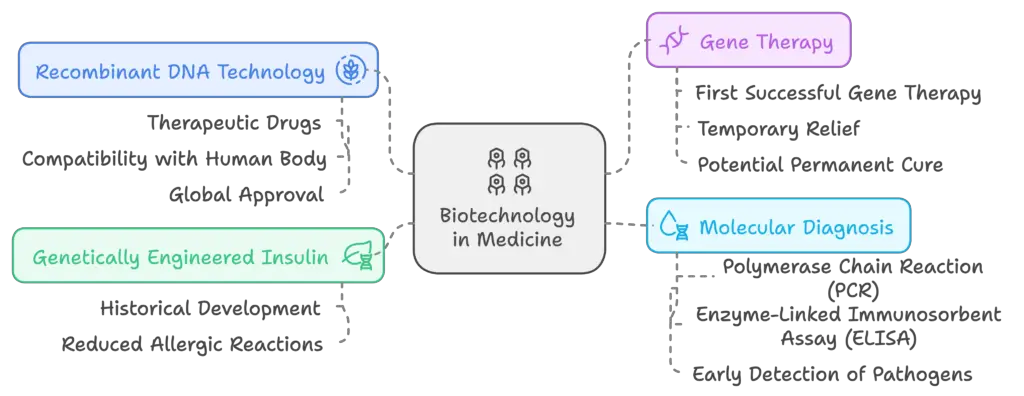
Red biotechnology is concerned with the application of biotechnology in medicine and healthcare. It involves the use of genetic engineering cellular technologies and molecular biology for development of drugs vaccines and diagnostic tools. These technologies help in prevention diagnosis and treatment of many diseases. Some of the important applications are–
- Gene therapy
It is the process by which defective genes responsible for diseases are replaced or corrected. In this method a functional gene is introduced into the patient cells to restore normal function. Gene therapy is used for treatment of genetic disorders such as sickle cell anemia and beta thalassemia. - Genome editing using CRISPR technology
CRISPR–Cas9 is a modern gene editing technique used for precise modification of DNA sequences. It allows insertion deletion or correction of specific genes in the genome. This technology is used in research and treatment of genetic diseases. - RNA based therapeutics and vaccines
RNA biotechnology is used for development of modern vaccines and therapeutic molecules. Messenger RNA (mRNA) vaccines stimulate the body cells to produce antigenic proteins and develop immunity against infectious diseases. Small interfering RNA (siRNA) and antisense oligonucleotides are also used for silencing disease causing genes. - Production of recombinant proteins
Biotechnology allows the production of therapeutic proteins using genetically engineered microorganisms. A well known example is human insulin produced by inserting the insulin gene into bacteria such as Escherichia coli. Recombinant insulin provides a safe and effective treatment for diabetes. - Production of monoclonal antibodies
Monoclonal antibodies are highly specific antibodies produced using hybridoma technology or genetic engineering. These antibodies bind to specific antigens and are widely used in treatment of cancers autoimmune diseases and infectious diseases. - Biopharmaceutical production
Microorganisms yeast and mammalian cell cultures are used as cell factories for production of many pharmaceutical compounds. These include hormones enzymes vaccines and other therapeutic proteins used in medical treatment. - Pharmacogenomics and personalized medicine
Pharmacogenomics studies the influence of genetic variations on drug response. By analyzing genetic information doctors can select suitable drugs and dosages for individual patients. This approach improves effectiveness of treatment and reduces adverse drug reactions. - Precision oncology
In cancer treatment biotechnology is used to identify specific genetic mutations present in tumor cells. Targeted therapies are developed to attack these molecular targets. This method increases the effectiveness of cancer treatment and reduces damage to normal cells. - Molecular diagnostic techniques
Biotechnology has improved the diagnosis of many diseases through molecular methods. Techniques such as Polymerase Chain Reaction (PCR) DNA sequencing and DNA microarrays allow rapid detection of pathogens genetic mutations and inherited disorders. - Artificial intelligence in drug discovery
Modern biotechnology integrates artificial intelligence and computational tools for drug discovery. These systems analyze biological data and predict molecular structures of proteins. This helps in identification of potential drug targets and accelerates development of new medicines. - Regenerative medicine and tissue engineering
Regenerative medicine uses stem cells biomaterials and growth factors to repair or replace damaged tissues and organs. Tissue engineering techniques are used to develop artificial tissues for treatment of injuries degenerative diseases and organ failure.
Applications of Biotechnology in Agriculture (Green Biotechnology)
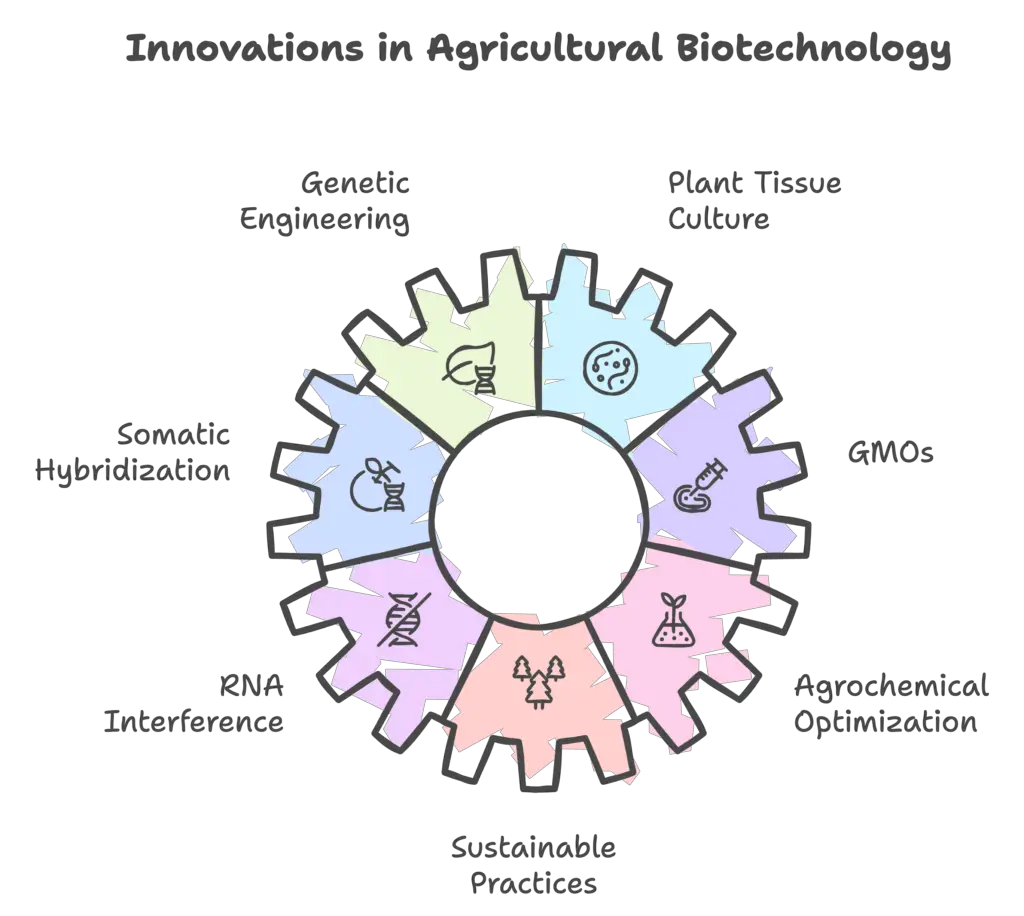
Green biotechnology is concerned with the application of biotechnology in agriculture. It involves the use of genetic engineering microorganisms and molecular techniques for improvement of crop plants and agricultural productivity. This technology helps in increasing crop yield improving nutritional value and developing resistance against pests diseases and environmental stresses. Some of the important applications are–
- Development of genetically modified crops
Genetically modified crops are produced by introducing specific genes into plants using genetic engineering techniques. These genes provide desirable traits such as insect resistance herbicide tolerance and improved productivity. This process helps in improving agricultural yield and reducing crop losses. - Insect resistant crops (Bt crops)
In this method genes from the bacterium Bacillus thuringiensis (Bt) are inserted into crop plants such as cotton maize and soybean. These genes produce Cry proteins which are toxic to insect pests. Bt crops provide protection against insects like cotton bollworm and reduce the use of chemical insecticides. - Herbicide tolerant crops
Certain crops are genetically engineered to tolerate herbicides such as glyphosate. These crops allow farmers to control weeds effectively without damaging the crop plants. Herbicide tolerant crops also help in reducing soil erosion by supporting conservation tillage practices. - Disease resistant crops
Biotechnology is used for development of crop plants resistant to plant pathogens. Genetic engineering techniques help in protecting crops against viruses bacteria and fungal diseases. For example papaya has been genetically engineered to resist papaya ringspot virus. - Resistance to nematodes and pests
RNA interference technology is used to protect plants against parasitic nematodes and other pests. This technology blocks the expression of genes required for survival of the pest organism and prevents damage to crops. - Nutritional enhancement of crops (Biofortification)
Biotechnology is used to increase the nutritional value of crop plants. Crops are genetically modified to contain higher levels of vitamins minerals and proteins. A well known example is Golden Rice which contains provitamin A (β-carotene) and helps in reducing vitamin A deficiency. - Development of stress tolerant crops
Genetic engineering is used to develop crop plants that can tolerate environmental stresses such as drought salinity and extreme temperatures. These crops help in maintaining agricultural productivity under changing climatic conditions. - Gene editing technologies
Modern techniques such as CRISPR–Cas9 are used for precise modification of plant genomes. These technologies allow targeted editing of genes responsible for important agricultural traits and accelerate development of improved crop varieties. - Plant tissue culture and micropropagation
Plant tissue culture is the technique of growing plant cells tissues or organs under sterile laboratory conditions. This method is used for rapid multiplication of disease free plants and production of genetically uniform plant varieties. - Biopesticides
Biotechnology helps in development of biological pesticides using microorganisms or natural products. These biopesticides control insect pests without causing environmental pollution and reduce dependence on synthetic chemical pesticides. - Biofertilizers
Biofertilizers are preparations containing beneficial microorganisms that improve soil fertility and plant growth. These microorganisms increase availability of nutrients such as nitrogen and phosphorus in soil and enhance crop productivity.
Applications of Biotechnology in Industrial Manufacturing (White Biotechnology)
The applications of biotechnology in industrial manufacturing are many. It is the use of microorganisms, living cells and their enzymes for the production of industrial products. This method replaces many chemical processes and helps in eco-friendly manufacturing. Some of the important applications are–
- Industrial enzyme biocatalysis
It is the use of enzymes as catalysts in industrial reactions. These enzymes catalyze chemical reactions under mild conditions like low temperature and neutral pH. This process reduces energy requirement and minimizes the use of harmful chemicals in industries. - Textile manufacturing
In textile industry enzymes are widely used during fabric processing. Amylases are used to remove starch based sizing agents from fabrics (desizing). Cellulases are used for bio-polishing of cotton and for stonewashing of denim. Laccases are used for bleaching and dye decolorization in textile processing. - Detergent production
Different enzymes are added in detergent formulations. Proteases break down protein stains while lipases degrade fats and oils. Amylases remove starch stains present on clothes. Because of these enzymes detergents can function effectively even at low temperature. - Paper and pulp industry
In paper industries enzymes like xylanases and laccases are used during pulp processing. These enzymes help in bio-bleaching of wood pulp. This process reduces the use of chlorine based chemicals during paper manufacturing. - Leather processing
Protease enzymes are used in leather industries for cleaning hides and removing hair from skins. These enzymes also help in softening leather. This method replaces many toxic chemicals used in traditional leather processing. - Production of artificial spider silk
This process occurs when microorganisms are genetically engineered through recombinant DNA technology. These microorganisms produce spider silk proteins. The produced fibers show high tensile strength and elasticity and are used in textiles and medical materials. - Bioplastic production
Microorganisms are used to produce biodegradable plastics through fermentation processes. Plant starch or agricultural wastes are converted into polymers such as polylactic acid (PLA) and polyhydroxyalkanoates (PHA). These materials are used in packaging materials and medical implants. - Production of flavours and fragrances
Engineered microorganisms such as yeast are used to synthesize aromatic compounds through fermentation. Compounds like vanillin patchoulol and ambroxide are produced by this method. These compounds are widely used in food flavouring and perfume industries. - Cosmetic manufacturing
Biotechnology is also used in cosmetic industries. Compounds such as squalane and collagen are produced through microbial fermentation. These products are used in moisturizing creams and anti-wrinkle cosmetic preparations. - Biofuel production
In this process enzymes break down plant biomass such as sugarcane corn and lignocellulosic wastes into fermentable sugars. Microorganisms then convert these sugars into fuels like bioethanol biodiesel and biogas. These fuels are considered renewable sources of energy. - Microalgae based bioenergy
Microalgae are also used for production of biofuels. These organisms grow rapidly and contain high lipid content. These lipids are extracted and converted into biodiesel and other renewable fuels. - Pharmaceutical manufacturing
Industrial biotechnology is used in the synthesis of active pharmaceutical ingredients (APIs). Enzymes such as transaminases and ketoreductases are used for production of chiral drug molecules with high specificity. - Replacement of toxic metal catalysts
In some pharmaceutical manufacturing processes engineered enzymes replace transition metal catalysts. This process reduces toxic metal waste and improves efficiency of drug production.
Applications of Biotechnology in Environmental Protection (Grey Biotechnology)
Grey biotechnology is concerned with environmental protection and pollution control. It is the use of microorganisms plants and enzymes for removal of pollutants from soil water and atmosphere. It also helps in maintenance of biodiversity and treatment of industrial wastes. Some of the important applications are–
- Bioremediation
It is the process by which microorganisms algae fungi or plants are used to remove pollutants from contaminated environments. In this process toxic chemicals present in soil and groundwater are degraded into less harmful substances by microbial activity. This process is widely used for cleaning polluted ecosystems. - In situ bioremediation techniques
This process occurs when the treatment of contamination takes place directly at the polluted site. The contaminated soil or water is not removed from the environment. Some of the important techniques are–- – Bioventing – Oxygen is supplied into contaminated soil which stimulates aerobic microbial degradation of pollutants.
- – Biosparging – Air is injected below the groundwater table which enhances microbial degradation of contaminants present in water.
- – Bioaugmentation – Specific microbial cultures are introduced into contaminated environments for degradation of particular pollutants.
- Ex situ bioremediation techniques
In this method contaminated soil or water is removed from the polluted site and treated in another place. Some common methods are–- – Landfarming – Contaminated soil is spread over land and microbial activity degrades the pollutants present in soil.
- – Composting – Organic wastes are mixed with microorganisms which accelerate decomposition of toxic substances.
- – Biopiles – Contaminated soil is piled and aerated which stimulates microbial degradation of pollutants.
- Removal of petroleum hydrocarbons and oil spills
Certain bacteria are capable of degrading petroleum hydrocarbons present in oil polluted environments. Microorganisms such as Alcanivorax borkumensis and Pseudomonas putida utilize hydrocarbons as a source of energy. This process helps in cleaning marine environments and oil contaminated soils. - Detoxification of heavy metals and radionuclides
Heavy metals cannot be destroyed completely but microorganisms can transform them into less toxic forms. Some microbes convert metals such as uranium into less mobile oxidation states which reduces their toxicity and movement in the environment. - Degradation of pesticides and xenobiotics
Many agricultural pesticides and synthetic chemicals persist in the environment for long periods. Microorganisms degrade these chemicals into simpler and less harmful compounds. This process helps in reducing accumulation of toxic xenobiotic substances in soil and water. - Treatment of textile and industrial effluents
Industrial wastewaters contain dyes heavy metals and organic pollutants. Microbial enzymes such as laccases and peroxidases catalyze the degradation of synthetic dyes. These enzymes convert toxic dye molecules into harmless products such as water and simple organic acids. - Biological treatment of solid wastes
Microbial processes are used for degradation of municipal and industrial solid wastes. Anaerobic digestion breaks down organic waste materials in absence of oxygen. This process produces biogas (methane) which can be used as a renewable source of energy. - Biofloc technology in aquaculture
Biofloc technology utilizes heterotrophic microorganisms present in aquatic systems. These microorganisms convert dissolved organic wastes and nitrogen compounds into microbial biomass called flocs. These flocs serve as protein rich feed for fish and help in maintaining water quality. - Carbon capture by microalgae
Microalgae and cyanobacteria are capable of fixing carbon dioxide through photosynthesis. These organisms are cultivated in bioreactors where they absorb carbon dioxide from atmosphere or industrial emissions. The captured carbon is converted into biomass which can be used for production of biofuels biofertilizers and bioplastics. - Biomineralization of carbon dioxide
Certain enzymes such as carbonic anhydrase catalyze the hydration of carbon dioxide. This reaction converts carbon dioxide into stable carbonates such as calcium carbonate. These carbonates store carbon in stable form and can be used as building materials.
Applications of Biotechnology in Food and Nutrition (Yellow Biotechnology)
Yellow biotechnology is concerned with the use of biological systems in food production and nutrition improvement. It involves the application of microorganisms enzymes and genetic engineering in food processing preservation and nutritional enhancement. Some of the important applications are–
- Use of industrial enzymes in food processing
Enzymes are biological catalysts which accelerate biochemical reactions during food processing. These enzymes help in improving food texture flavour and shelf life. They also allow food processing under mild conditions of temperature and pH. - Baking and carbohydrate processing
Amylase enzymes are used in baking industries. These enzymes convert starch into sugars and improve dough handling and bread volume. Another enzyme glucose isomerase is used for production of high fructose corn syrup from glucose. - Dairy processing
In dairy industry enzymes are used for processing milk and milk products. Lactase hydrolyzes lactose into glucose and galactose which helps in production of lactose free milk. In cheese production rennet (chymosin) catalyzes the coagulation of milk proteins. Lipases are also used for breakdown of milk lipids and development of cheese flavour. - Beverage clarification
Enzymes such as pectinases and cellulases are used in fruit juice and wine industries. These enzymes break down plant cell wall components like pectin and cellulose. This reduces juice viscosity and improves filtration and yield of beverages. - Meat tenderization
Certain plant protease enzymes are used for tenderizing meat. Enzymes such as papain (from papaya) bromelain (from pineapple) and actinidin (from kiwi) hydrolyze muscle proteins and soften meat tissues. - Production of flavours and sweeteners
Genetically engineered microorganisms are used as cell factories for production of food additives. Engineered yeast cells are used for biosynthesis of compounds such as vanillin and other flavour compounds through fermentation processes. - Production of natural sweeteners
Microbial fermentation is used to produce steviol glycosides such as Reb M and Reb D which are zero calorie sweeteners. These compounds provide sweetness without the bitter taste present in natural stevia extracts. - Production of cocoa butter equivalents
Genetically engineered algae are used to produce tailored oils which resemble cocoa butter and shea butter in composition. These oils are used in baking and confectionery industries as substitutes for natural cocoa butter. - Biofortification of crops
Genetic engineering is used to increase the nutritional value of food crops. A well known example is Golden Rice which produces provitamin A (β-carotene). This crop helps in reducing vitamin A deficiency in human populations. - Production of bioactive peptides
Protease enzymes are used to release bioactive peptides from food proteins such as casein in milk. These peptides possess beneficial properties like antioxidant antimicrobial and lipid lowering effects in human body. - Improvement of nutrient absorption
Enzymes such as tannase break down complex plant polyphenols into simpler compounds like gallic acid. These simpler compounds are more easily absorbed in human digestive system and provide antioxidant benefits. - Cultivated or lab grown meat
Biotechnology is used for production of meat through cellular agriculture. In this process animal cells are cultured in controlled bioreactors containing nutrient rich media. These cells grow and form muscle tissues which produce meat without raising animals. - Food safety and quality diagnostics
Biotechnology is also used for monitoring food safety. Enzyme based biosensors are used to detect harmful adulterants pathogens and toxins in food products. These biosensors help in maintaining food quality and preventing food contamination.
Applications of Biotechnology in Marine Resources (Blue Biotechnology)
Blue biotechnology is concerned with the use of marine organisms for development of useful products and technologies. It involves the exploration of biological resources present in oceans seas and other aquatic environments. These resources are used in medicine agriculture industry and environmental protection. Some of the important applications are–
- Production of bioactive compounds for medicine
Marine organisms produce many bioactive compounds which are used in medical treatments. These compounds show antibacterial antiviral and anticancer properties. Marine microorganisms algae and invertebrates are major sources of these therapeutic compounds. - Treatment of osteoporosis
Calcitonin hormone obtained from salmon fish is used for treatment of osteoporosis. This hormone increases calcium uptake and promotes bone calcification. The biological activity of salmon calcitonin is higher than human calcitonin. - Bone grafts and implants
Hydroxyapatite (HA) is an important component of bone and cartilage. It can be obtained from coral skeletons present in marine environments. This compound is used for preparation of bone implants and for filling gaps in fractured bones. - Production of surgical adhesives
Mussels produce special protein fibers known as byssal fibers. These fibers possess strong adhesive properties and high elasticity. These materials are studied for development of surgical sutures ligament grafts and artificial tendons. - Development of anesthetic and analgesic drugs
Certain marine organisms produce potent toxins which affect nerve channels. Tetrodotoxin (TTX) obtained from pufferfish is studied for its action on sodium channels in nerve cells. This compound helps in development of new anesthetic and pain relief drugs. - Genetic improvement of aquatic organisms
Biotechnology is used for improving growth and productivity of aquaculture species. Transgenic salmon with enhanced growth hormone genes show faster growth rate. Genetic modification is also used for improving yield and quality of other aquatic organisms. - Biofloc technology in aquaculture
Biofloc technology uses microbial communities present in water to maintain water quality. These microorganisms convert nitrogenous wastes such as ammonia and nitrates into microbial biomass called flocs. These flocs serve as protein rich feed for fish and shrimp. - Transfer of antifreeze proteins to crops
Some marine fish survive in extremely cold environments due to presence of antifreeze proteins (AFPs). These proteins prevent formation of ice crystals in body fluids. Genes encoding these proteins are studied for development of frost resistant crop plants. - Green fluorescent protein in molecular biology
Green fluorescent protein (GFP) obtained from the jellyfish Aequorea victoria is widely used in molecular biology. It is used as a reporter gene for studying gene expression and cellular processes. - Carbon dioxide sequestration by microalgae
Marine microalgae and cyanobacteria fix carbon dioxide through photosynthesis. These organisms are cultivated to absorb carbon dioxide from atmosphere or industrial emissions. The fixed carbon is converted into biomass. - Production of biofuels from marine algae
Marine algae produce lipid rich biomass which can be converted into renewable biofuels. Microalgae such as Chlorella and Spirulina are cultivated for production of biodiesel and other bioenergy sources. - Cosmetic and skincare products
Marine organisms provide many compounds used in cosmetic industries. Algal extracts are used in skincare products because they contain vitamins minerals and antioxidants. Biotechnology also helps in sustainable production of cosmetic ingredients like squalane without harming marine species.
Applications of Biotechnology in Other Emerging Branches
Biotechnology has expanded into several specialized branches which address different scientific and social challenges. These branches apply biological knowledge for research development policy and technological advancement. Some of the important emerging branches are–
- Blue biotechnology (Marine biotechnology)
It is the branch of biotechnology which deals with marine and aquatic biological resources. Marine organisms are used for development of pharmaceuticals biofuels cosmetics and aquaculture technologies. Some compounds obtained from marine organisms such as antifreeze proteins green fluorescent protein (GFP) and hydroxyapatite are used in medicine and research. - Yellow biotechnology (Food and nutrition biotechnology)
This branch deals with the application of biotechnology in food production processing and nutritional improvement. Genetic engineering and fermentation technologies are used to improve food quality and nutritional value. It also includes production of lactose free dairy products probiotics and functional foods. - Gold biotechnology (Bioinformatics and data science)
Gold biotechnology combines biology with computer science statistics and information technology. It is mainly concerned with storage analysis and interpretation of biological data such as DNA and protein sequences. Bioinformatics tools help in genome analysis drug discovery and understanding gene expression. - Brown biotechnology (Desert or arid land biotechnology)
This branch focuses on the application of biotechnology in desert and dryland environments. It involves development of plant varieties that are resistant to drought high salinity and extreme environmental conditions. These plants help in improving agriculture and biodiversity in arid regions. - Violet or purple biotechnology (Ethics and law)
This branch deals with ethical legal and social issues related to biotechnology. It includes regulation of genetic engineering research intellectual property rights and biosafety policies. It also addresses concerns related to genetic privacy and responsible use of biotechnology. - Orange biotechnology (Education and communication)
Orange biotechnology is concerned with biotechnology education and dissemination of scientific knowledge. It promotes public awareness about biotechnology and its applications. This branch also focuses on training and development of future scientists and researchers. - Black or dark biotechnology (Biodefense biotechnology)
This branch studies the potential misuse of biological systems such as biological warfare and bioterrorism. It involves the study of pathogenic microorganisms and toxins that may threaten human health livestock or crops. It also focuses on development of vaccines diagnostic tools and protective measures against biological threats.
- Ahmad, B. (2025, December 17). Regulating cultivated meat. The Regulatory Review. https://www.theregreview.org/2025/12/17/ahmad-regulating-cultivated-meat/
- American Chemical Society. (2024). Spinning artificial spider silk into next-generation medical materials. ACS Newsroom.
- Ballco, P., Barreiro-Hurlé, J., Gracia, A., & Sanjuán, A. I. (2025). Are consumers ready to accept gene-edited crops? Evidence from a choice experiment for CRISPR-edited tomatoes in Spain. Spanish Journal of Agricultural Research, 23(3), 21503. https://doi.org/10.5424/sjar/2025233-21503
- Boath, J. C. (2025). Bioremediation, waste treatment and carbon capture using bioengineered microbes for sustainable aquaculture. Journal of Environmental Science and Agricultural Research, 3(4), 1–8. https://doi.org/10.61440/JESAR.2025.v3.70
- Chhikara, M., & Maurya, P. (2025). Biotechnology ethics and regulatory frameworks. In S. Agnihotri et al. (Eds.), The spectrum of discovery: Multidisciplinary research in the modern era (Vol. 1, pp. 203–213). Infinity Publication. https://doi.org/10.25215/1304553043
- ETC Group. (2016). Synthetic biology, biodiversity and farmers: Case studies exploring the impact of synthetic biology on natural products, livelihoods and sustainable use of biodiversity (ETC Communiqué #116).
- Farhan, M., Hasani, I. W., Khafaga, D. S. R., Ragab, W. M., Ahmed Kazi, R. N., Aatif, M., Muteeb, G., & Fahim, Y. A. (2025). Enzymes as catalysts in industrial biocatalysis: Advances in engineering, applications, and sustainable integration. Catalysts, 15(9), 891. https://doi.org/10.3390/catal15090891
- Fernandez-Cornejo, J., Wechsler, S., Livingston, M., & Mitchell, L. (2014). Genetically engineered crops in the United States (Economic Research Report Number 162). U.S. Department of Agriculture, Economic Research Service.
- Fernández Ríos, D., Quintana, S. A., Gómez Paniagua, P., Arrúa, A. A., Brozón, G. R., Bertoni Hicar, M. S., Castro Alegría, A., & Goberna, M. F. (2025). Regulatory challenges and global trade implications of genome editing in agriculture. Frontiers in Bioengineering and Biotechnology, 13, 1609110. https://doi.org/10.3389/fbioe.2025.1609110
- Fu, C., & Chen, Q. (2025). The future of pharmaceuticals: Artificial intelligence in drug discovery and development. Journal of Pharmaceutical Analysis, 15(8), 101248. https://doi.org/10.1016/j.jpha.2025.101248
- Future Market Insights. (2025). Enzymes for laundry detergent market | Global market analysis report – 2035.
- Gupta, V., Sengupta, M., Prakash, J., & Tripathy, B. C. (2016). An introduction to biotechnology. In Basic and applied aspects of biotechnology (pp. 1–21). Springer. https://doi.org/10.1007/978-981-10-0875-7_1
- Khan, M. F. (2025). Recent advances in microbial enzyme applications for sustainable textile processing and waste management. Sci, 7(2), 46. https://doi.org/10.3390/sci7020046
- Makkar, S. K. S. (2025). Advances in RNA-based therapeutics: Current breakthroughs, clinical translation, and future perspectives. Frontiers in Genetics, 16, 1675209. https://doi.org/10.3389/fgene.2025.1675209
- Meylani, V., Busaeri, N., Radjasa, O. K., Hiron, N., & Mutiara, F. (2025). Comprehensive review of carbon capture technologies for climate change mitigation. Indonesian Journal of Energy, 8(1), 62–74. https://doi.org/10.33116/ije.v8i1.211
- Mridul, A. (2026). Cultivated meat outlook: 10 leading CEOs lay out their challenges & plans for 2026. Green Queen.
- Oh, S.-D., & Lee, B. (2025). Analysis of the public perception and acceptance of gene-editing technology and gene-edited agricultural products in South Korea. GM Crops & Food, 16(1), 795–810. https://doi.org/10.1080/21645698.2025.2576272
- Papadatou, I., & Michos, A. (2025). Advances in biotechnology and the development of novel human vaccines. Vaccines, 13(9), 989. https://doi.org/10.3390/vaccines13090989
- Polepalli, M. S., & Shukla, A. (2025). A mini-review on the mechanical properties of spider silk and its potential future applications. World Journal of Biology Pharmacy and Health Sciences, 24(1), 076–079. https://doi.org/10.30574/wjbphs.2025.24.1.0877
- PreScouter. (2025). The top 10 carbon capture technologies in 2025.
- Raman, R. (2017). The impact of genetically modified (GM) crops in modern agriculture: A review. GM Crops & Food, 8(4), 195–208. https://doi.org/10.1080/21645698.2017.1413522
- Rostoum, E. (2025, December 17). Viewpoint: U.S. and Europe lagging behind China’s embrace of crop gene editing. Genetic Literacy Project.
- Salem, N., Brar, K. K., Asgarian, A., Kaur, K., Magdouli, S., & Perreault, N. N. (2025). Advancements in carbon capture, utilization, and storage (CCUS): A comprehensive review of technologies and prospects. Clean Technologies, 7(4), 109. https://doi.org/10.3390/cleantechnol7040109
- Sherkow, J. S. (2025). A sociotechnical approach to genomic data privacy: A comparative analysis. International Data Privacy Law, ipaf018. https://doi.org/10.1093/idpl/ipaf018
- Siddikey, F., Jahan, M. I., Hormoni, Hasan, M. T., Nishi, N. J., Hasan, S. M. K., Rahman, N., Faik, M. A. A., & Hossain, M. A. (2025). Enzyme technology in the food industry: Molecular mechanisms, applications, and sustainable innovations. Food Science & Nutrition, 13(9), e70927. https://doi.org/10.1002/fsn3.70927
- Velimirović, A., Jovović, Z., Berjan, S., El Bilali, H., & Allahyari, M. S. (2026). Public perception of genetically modified organisms (GMOs) in Montenegro: Insight for sustainable biotechnology and policy development. GM Crops & Food, 17(1), 2620884. https://doi.org/10.1080/21645698.2026.2620884
- Wikipedia contributors. (2026). Bioremediation. In Wikipedia, The Free Encyclopedia. https://en.wikipedia.org/wiki/Bioremediation
- Wikipedia contributors. (2026). Biotechnology. In Wikipedia, The Free Encyclopedia. https://en.wikipedia.org/wiki/Biotechnology
- Zuk, P. (2025). 11.1: Applications of industrial biotechnology. In Biology LibreTexts. https://bio.libretexts.org/Courses/West_Los_Angeles_College/Biotechnology/11%3A_Industrial_Biotechnology__White_Biotechnology/11.01%3A_Applications_of_Industrial_Biotechnology