Chemical Sterilization Methods Explained

Transcript
Introduction to Chemical Sterilization -Chemical sterilization is a critical process that uses chemical agents to control or eliminate microorganism growth. This method is widely employed in healthcare, laboratory, and industrial settings where complete elimination of microbial life is necessary. Unlike physical methods such as heat or radiation, chemical sterilization offers flexibility for heat-sensitive materials and hard-to-reach surfaces.
Difference Between Sterilization, Disinfection, and Antisepsis -Chemical agents serve three distinct purposes: sterilization (complete elimination of all microorganisms), disinfection (elimination of most pathogenic microorganisms on inanimate objects), and antisepsis (reduction of microorganisms on living tissue). Each level requires different chemical concentrations and contact times. Understanding these differences is crucial for selecting appropriate methods for specific applications.
Ideal Characteristics of Chemical Antimicrobial Agents -An ideal chemical sterilant should possess broad-spectrum antimicrobial activity, water solubility, and stability during storage. It should be non-toxic to humans and animals while maintaining effectiveness at room temperature. Additional desirable properties include good penetration ability, non-corrosiveness, deodorizing capabilities, and detergent properties for enhanced cleaning action.
Factors Affecting Chemical Sterilization Efficacy -The effectiveness of chemical sterilization depends on several factors: concentration of the agent, contact time, temperature, pH, presence of organic matter, and the type/number of microorganisms present. Higher temperatures generally enhance antimicrobial activity, while organic materials like blood or tissue can neutralize many chemical agents, reducing their effectiveness.
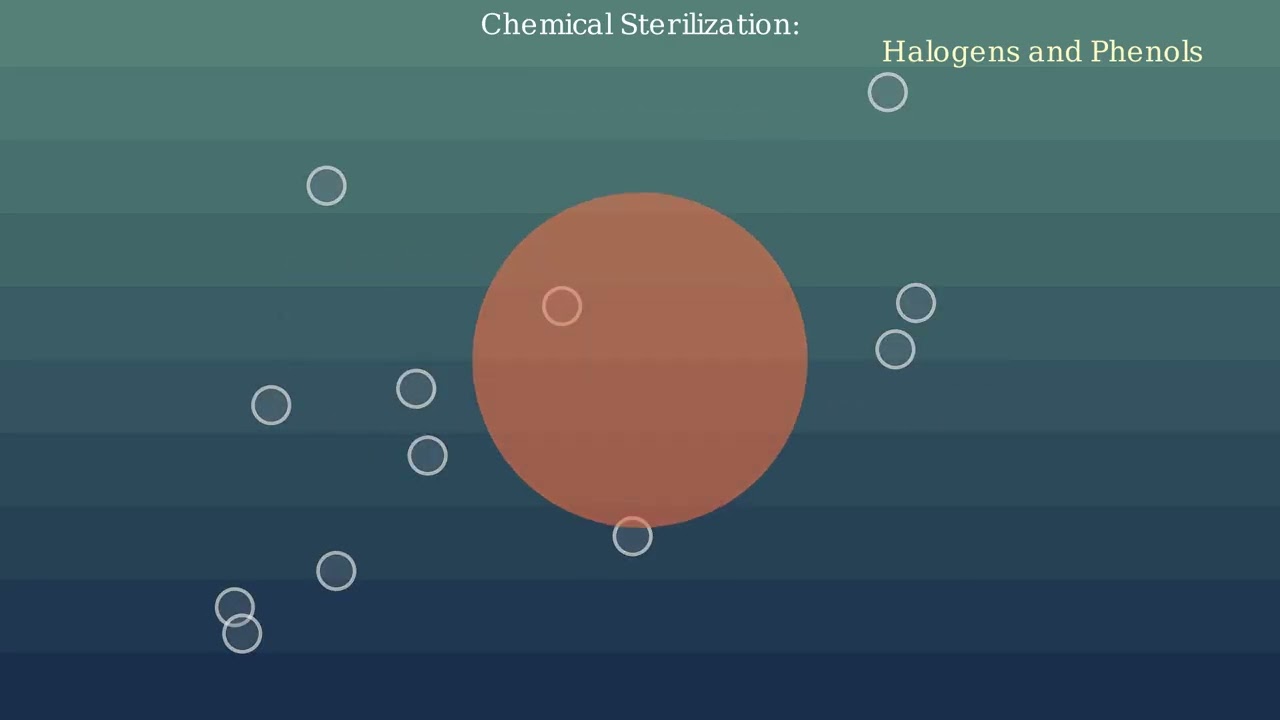
Phenolic Compounds: Properties and Mechanism -Phenolic compounds, derived from coal tar, were among the first chemical disinfectants used. They work by disrupting cell membranes and denaturing proteins. These compounds are effective against bacteria, fungi, and enveloped viruses. Common examples include cresols, xylenols, and chloroxylenols. They remain effective in the presence of organic matter but can cause skin irritation and environmental concerns.
Applications of Phenolic Compounds -Phenolics are commonly used for surface disinfection in hospitals, laboratories, and industrial settings. Products like Lysol contain phenolic derivatives. They’re particularly valuable for disinfecting surfaces contaminated with tuberculosis bacteria. However, their use has declined due to environmental concerns and the development of less toxic alternatives.
Alcohols as Sterilizing Agents -Ethanol (70-90%) and isopropanol (70-95%) are widely used alcohols for disinfection. They act by denaturing proteins and dissolving lipid membranes. Alcohols provide rapid bactericidal action against vegetative bacteria, fungi, and many viruses, but are ineffective against bacterial spores. Their quick evaporation limits contact time, making them unsuitable for complete sterilization.
Practical Applications of Alcohols -Alcohols are primarily used for skin antisepsis before injections, surgical hand scrubs, and disinfecting small surfaces and equipment. Alcohol wipes and hand sanitizers typically contain 60-95% alcohol. Their advantages include rapid action, no residue, and compatibility with many materials. However, they can damage some plastics and rubber with prolonged exposure.
Halogens: Chlorine-Based Disinfectants -Chlorine compounds like sodium hypochlorite (bleach) are powerful oxidizing agents that disrupt cellular processes by chlorinating protein amino groups. They offer broad-spectrum activity against bacteria, fungi, viruses, and some spores. Household bleach (5.25% sodium hypochlorite) diluted 1:10 provides effective disinfection for many applications, including blood spills and general surface disinfection.
Iodine and Iodophors -Iodine-based disinfectants work by oxidizing cellular components and iodinating proteins. Iodophors (iodine complexed with carriers) like povidone-iodine provide sustained release of iodine with reduced staining and irritation. These are commonly used for skin antisepsis before surgery, wound treatment, and equipment disinfection in food processing. They’re effective against bacteria, fungi, viruses, and some bacterial spores.
Heavy Metals as Antimicrobial Agents -Mercury, silver, and copper compounds have antimicrobial properties through binding to protein sulfhydryl groups, disrupting enzyme function. Silver nitrate has been used for preventing neonatal eye infections, while copper surfaces show promise for reducing environmental contamination in healthcare settings. However, environmental concerns and toxicity have limited their widespread use in modern sterilization practices.
Antimicrobial Dyes: Triphenylmethane and Acridine -Certain dyes possess antimicrobial properties. Triphenylmethane dyes like crystal violet and acridine dyes such as acriflavine interact with microbial DNA, disrupting replication. Historically used for wound antisepsis, their clinical use has declined due to limited spectrum and potential toxicity. However, they remain valuable in microbiology laboratories for selective media and staining procedures.
Synthetic Detergents in Sterilization -Synthetic detergents combine cleaning and antimicrobial properties. They work by disrupting cell membranes through their amphipathic structure (having both hydrophilic and hydrophobic regions). While not powerful enough for sterilization alone, they enhance the effectiveness of other disinfectants by removing organic material and biofilms that might protect microorganisms from chemical agents.
Quaternary Ammonium Compounds (QACs) -QACs are cationic detergents that disrupt cell membranes and denature proteins. Examples include benzalkonium chloride and cetylpyridinium chloride. They’re effective against bacteria (especially gram-positive), fungi, and enveloped viruses. QACs are widely used in healthcare settings for surface disinfection, in consumer products, and food processing due to their low toxicity, stability, and residual antimicrobial activity.
Limitations and Applications of QACs -While QACs offer many advantages, they have limited effectiveness against non-enveloped viruses, mycobacteria, and bacterial spores. Their activity is reduced by hard water and anionic detergents. QACs are commonly found in disinfectant wipes, mouthwashes, and low-level disinfectants for environmental surfaces. They’re not suitable for high-level disinfection of critical medical devices.
Aldehydes: Formaldehyde and Glutaraldehyde -Aldehydes are powerful sterilants that cross-link proteins, preventing their proper function. Formaldehyde (as formalin, a 37% solution) and glutaraldehyde (2%) provide high-level disinfection and sterilization. Glutaraldehyde is particularly valuable for heat-sensitive medical equipment like endoscopes. These agents are effective against all microorganisms, including bacterial spores, but require longer contact times for complete sterilization.
Safety Concerns with Aldehydes -Despite their effectiveness, aldehydes pose significant health hazards. They can cause respiratory irritation, skin sensitization, and are potential carcinogens. Proper ventilation, personal protective equipment, and strict adherence to exposure limits are essential when working with these chemicals. Many healthcare facilities have moved to safer alternatives like peracetic acid or hydrogen peroxide systems.
Gaseous Sterilization: Ethylene Oxide -Ethylene oxide (EtO) gas is a highly effective sterilant that alkylates microbial DNA and proteins. It penetrates packaging materials and is used for sterilizing heat-sensitive medical devices, pharmaceuticals, and laboratory equipment. EtO requires specialized equipment with controlled humidity, temperature, gas concentration, and exposure time. Complete sterilization cycles typically take 2-5 hours followed by aeration to remove residual gas.
Formaldehyde Gas Sterilization -Formaldehyde gas, generated from paraformaldehyde or formalin, provides effective surface sterilization in enclosed spaces like biological safety cabinets and rooms. It cross-links proteins and nucleic acids of microorganisms. The process requires controlled humidity (60-80%) and temperature (above 22°C). After exposure, thorough aeration is necessary to remove toxic residues before the space can be safely used.
Acids and Alkalis as Sterilizing Agents -Strong acids and alkalis create extreme pH environments that denature proteins and disrupt microbial cell membranes. Examples include peracetic acid, which combines acid and oxidizing properties for rapid, broad-spectrum activity. Alkaline agents like sodium hydroxide are particularly effective against prions. These agents are corrosive to many materials and require careful handling but provide valuable options for specific sterilization challenges.
Hydrogen Peroxide and Peracetic Acid Systems -Modern sterilization increasingly uses hydrogen peroxide (H₂O₂) and peracetic acid systems. These powerful oxidizing agents damage essential cell components through free radical production. Vaporized hydrogen peroxide and plasma systems provide rapid, low-temperature sterilization for heat-sensitive instruments. Peracetic acid systems are effective for endoscope reprocessing. Both offer environmental advantages over aldehydes and ethylene oxide.
Influence of Microbial Characteristics on Disinfectant Efficacy -Microorganisms vary greatly in their susceptibility to chemical agents. Bacterial spores are most resistant, followed by mycobacteria, non-enveloped viruses, fungi, and vegetative bacteria. Gram-negative bacteria are generally more resistant than gram-positive due to their outer membrane. The physiological state of microbes also matters—actively growing cells are typically more susceptible than those in stationary phase.
Environmental Factors Affecting Chemical Sterilization -Environmental conditions significantly impact sterilization effectiveness. Higher temperatures generally enhance chemical reactions, while organic matter can neutralize many disinfectants. Water hardness affects quaternary ammonium compounds, and pH influences the ionization and activity of many agents. Biofilms provide physical protection against chemical penetration, requiring higher concentrations or longer contact times for effective sterilization.
Validation and Monitoring of Chemical Sterilization -Effective chemical sterilization requires validation and routine monitoring. Chemical indicators verify exposure to the sterilant, while biological indicators containing resistant bacterial spores confirm sterilization efficacy. Regular testing, proper record-keeping, and adherence to manufacturer guidelines ensure reliable results. Monitoring is particularly critical for high-risk applications like medical device reprocessing.
Future Trends in Chemical Sterilization -Chemical sterilization continues to evolve with new technologies focusing on improved safety, environmental impact, and efficacy. Emerging approaches include combination systems that use multiple mechanisms of action, sustainable “green” disinfectants derived from natural sources, and smart delivery systems that ensure optimal concentration and contact time. Regulatory trends increasingly emphasize reduced toxicity and environmental impact while maintaining effective microbial control.
Related Videos