

Glycolysis is a metabolic pathway in which one molecule of glucose is converted into two molecules of pyruvate. It is also called the Embden-Meyerhof-Parnas (EMP) pathway.
It occurs in the cytosol and consists of 10 enzyme-catalyzed reactions. These reactions are divided into two phases. During the process, a net gain of 2 ATP and 2 NADH are formed. Glycolysis does not directly require oxygen (O₂).
What is Glycolysis?
The term glycolysis is derived from Greek words glykys meaning “sweet” and lysis meaning “splitting”. It refers to the breakdown of glucose through a series of enzyme-catalyzed reactions.
Glycolysis is a central pathway of glucose catabolism, where glucose is converted into pyruvate with the formation of metabolic energy. It is also known as the Embden–Meyerhof–Parnas (EMP) pathway.
This pathway is found broadly across living organisms and is present in nearly all types of organisms. It is the first stage of cellular respiration, providing pyruvate and energy that can be used in the further stages of respiration.
Glycolysis at a Glance
| Feature | Details |
|---|---|
| Pathway | Breakdown of glucose into pyruvate |
| Starting molecule | 1 molecule of glucose (6C) |
| End product | 2 molecules of pyruvate (3C) |
| Location | Cytosol of the cell |
| Number of reactions | 10 enzyme-catalyzed reactions |
| Phases | 2 phases. Energy investment phase and energy payoff phase |
| ATP used | 2 ATP |
| ATP formed | 4 ATP |
| Net ATP gain | 2 ATP per glucose molecule |
| NADH formed | 2 NADH |
| Oxygen requirement | Does not directly require O₂ |
| Other name | Embden–Meyerhof–Parnas (EMP) pathway |
| Major role | First pathway of glucose catabolism and an important stage of cellular respiration |
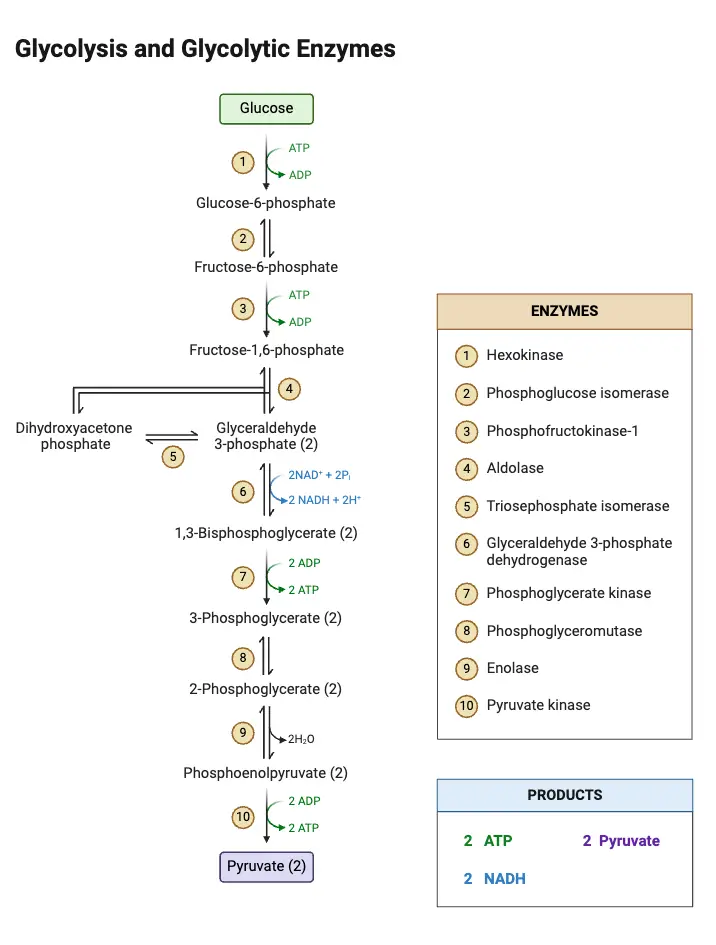
Glycolysis Diagram
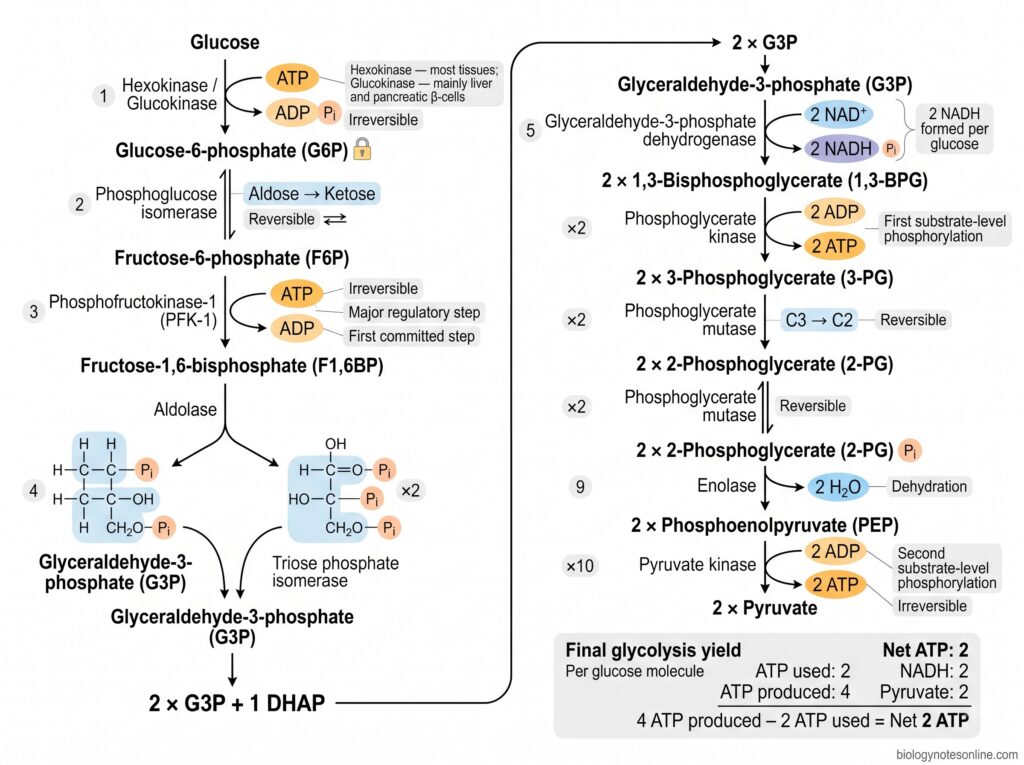
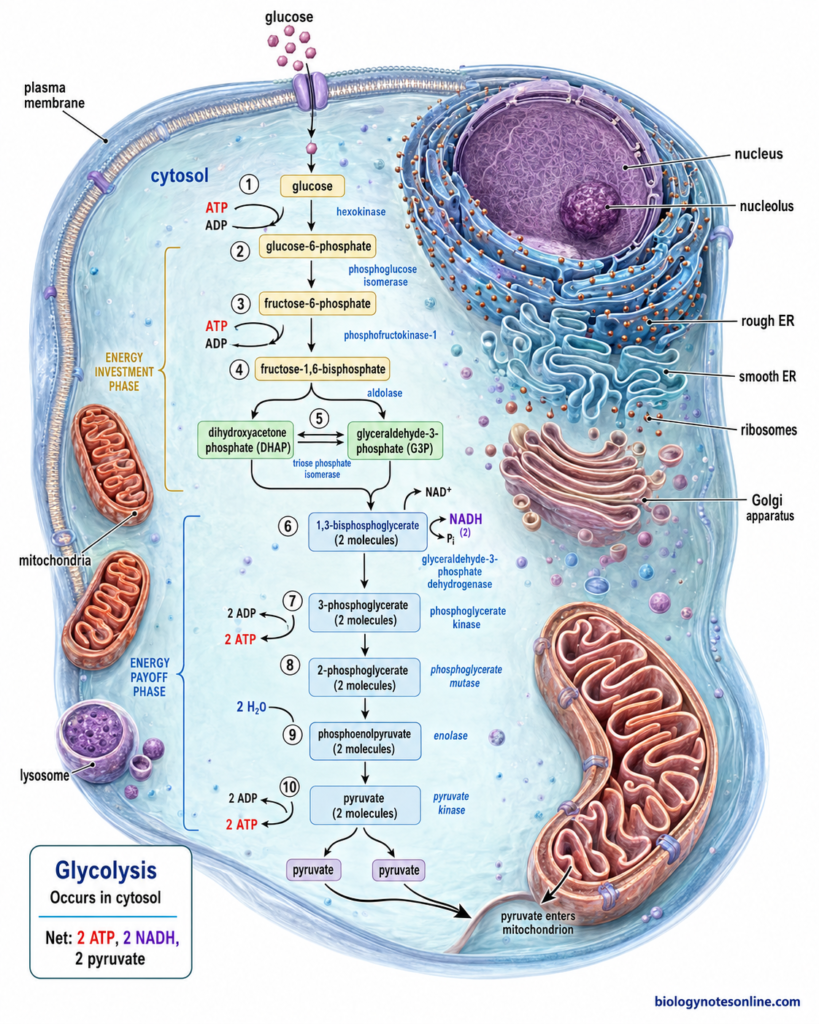
Overall Glycolysis Equation
The overall reaction of glycolysis can be written as follows-
Glucose + 2 NAD⁺ + 2 ADP + 2 Pi → 2 Pyruvate + 2 NADH + 2 H⁺ + 2 ATP + 2 H₂O
One glucose molecule gives two molecules of pyruvate, with a net formation of 2 ATP and 2 NADH.
- Glucose – A six-carbon sugar and the starting substrate of glycolysis.
- NAD⁺ – Oxidized nicotinamide adenine dinucleotide. It acts as an electron acceptor and is reduced to NADH.
- ADP – Adenosine diphosphate. It accepts phosphate during glycolysis to form ATP.
- Pi – Inorganic phosphate used during the glycolytic reactions.
- Pyruvate – A three-carbon compound formed as the final product of glycolysis.
- NADH – Reduced form of NAD⁺. It carries the electrons obtained during oxidation reactions.
- ATP – Adenosine triphosphate. A net 2 ATP molecules are produced from one glucose.
- H₂O – Water. Two molecules are formed in the overall glycolytic reaction.
Where Does Glycolysis Occur?
Glycolysis takes place in the cytosol (cytoplasm) of eukaryotic cells. It occurs outside the mitochondria. The pyruvate formed in the cytoplasm from glycolysis, under aerobic condition, is then brought into mitochondria where the further reactions of respiration take place.
In prokaryotes, it takes place in the cytoplasmic compartment. Mitochondria are absent in these cells. As a result, the reactions involved in the breakdown of glucose to pyruvate are carried out in the cytoplasm itself.
Glycolysis does not need mitochondria for its process. All the enzymes required for this pathway are present in cytosol and the complete conversion of glucose into pyruvate occurs here. Thus, even the cells without mitochondria can obtain energy from glycolysis.
One such example is the mature mammalian erythrocyte (RBC). These cells have no mitochondria. Their energy is therefore mainly obtained by glycolysis, since oxidative phosphorylation cannot take place in them.
Glycolysis Phases
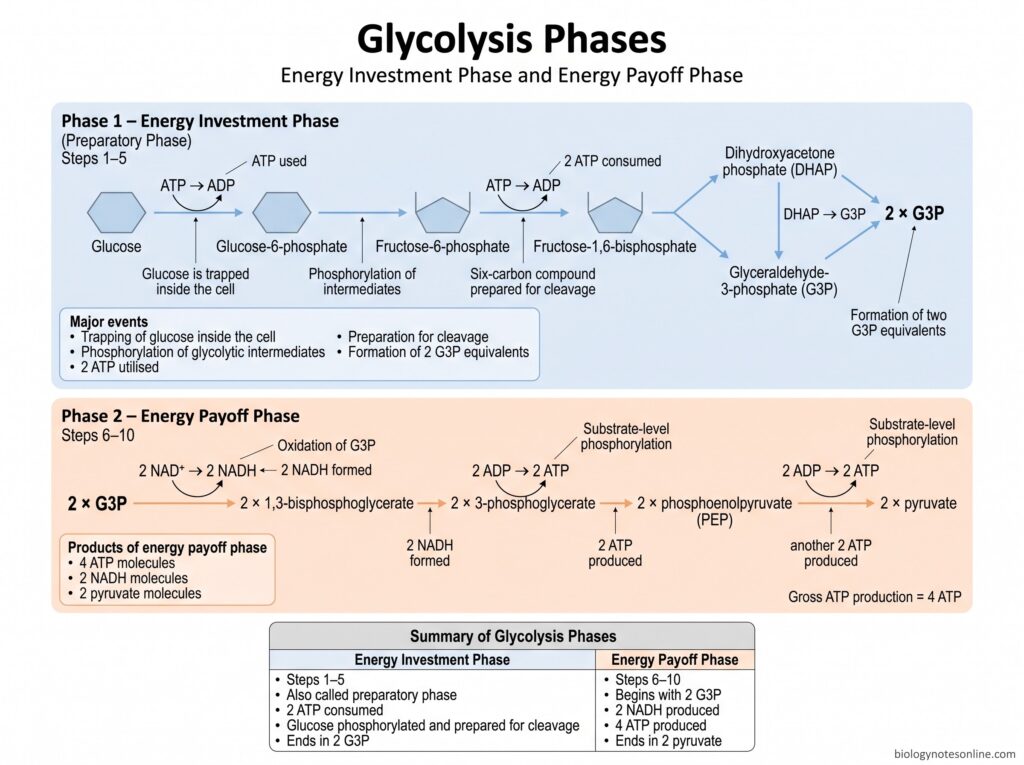
Glycolysis is divided into two phases based on the use and formation of energy. The first five reactions form the energy investment phase. Steps 6 to 10 constitute the energy payoff phase.
Phase 1 – Energy Investment Phase
The first five steps of glycolysis are included in this phase. It is also referred to as preparatory phase.
In this phase, ATP is used at two reactions. One ATP is utilised during conversion of glucose into glucose-6-phosphate. Another ATP is used when fructose-6-phosphate is converted to fructose-1,6-bisphosphate. Thus, total 2 ATP molecules are consumed.
Phosphorylation of glucose forms glucose-6-phosphate and helps in trapping glucose inside the cell. More phosphorylation takes place during the following reactions. The six-carbon compound is now prepared for its splitting.
Fructose-1,6-bisphosphate then breaks into two three-carbon compounds, glyceraldehyde-3-phosphate (G3P) and dihydroxyacetone phosphate (DHAP). DHAP is changed into G3P.
At the end, two molecules of G3P are formed. These enter into the next phase of glycolysis.
The major events of energy investment phase are-
- Trapping of glucose inside the cell.
- Phosphorylation of glycolytic intermediates.
- 2 ATP molecules are utilised.
- Preparation of six-carbon compound for cleavage.
- Formation of two G3P equivalents.
Phase 2 – Energy Payoff Phase
The last five reactions form the energy payoff phase. It includes step 6 to step 10.
Two molecules of G3P are already present at the beginning of this phase. So, each of these reactions takes place twice for one glucose molecule.
In the first reaction of this phase, G3P is oxidised and NAD⁺ is converted into NADH. Since two G3P molecules are involved, total 2 NADH molecules are formed.
ATP is produced at two different steps. The phosphate group is directly transferred from glycolytic intermediate to ADP. This is called substrate-level phosphorylation.
Two ATP are formed during conversion of 1,3-bisphosphoglycerate to 3-phosphoglycerate. Another two ATP are produced when phosphoenolpyruvate (PEP) is converted into pyruvate.
Hence, total 4 ATP molecules are produced in this phase. It is the gross ATP production.
The products of energy payoff phase are-
- 4 ATP molecules.
- 2 NADH molecules.
- 2 pyruvate molecules.
Out of the 4 ATP formed, 2 ATP were already used during the energy investment phase. Hence, glycolysis gives a net gain of 2 ATP molecules from one glucose molecule.
Ten Steps of Glycolysis
Glycolysis occurs through 10 reactions. In these reactions, one molecule of glucose is converted into two molecules of pyruvate. ATP is used in the initial reactions while ATP and NADH are produced in the later reactions.
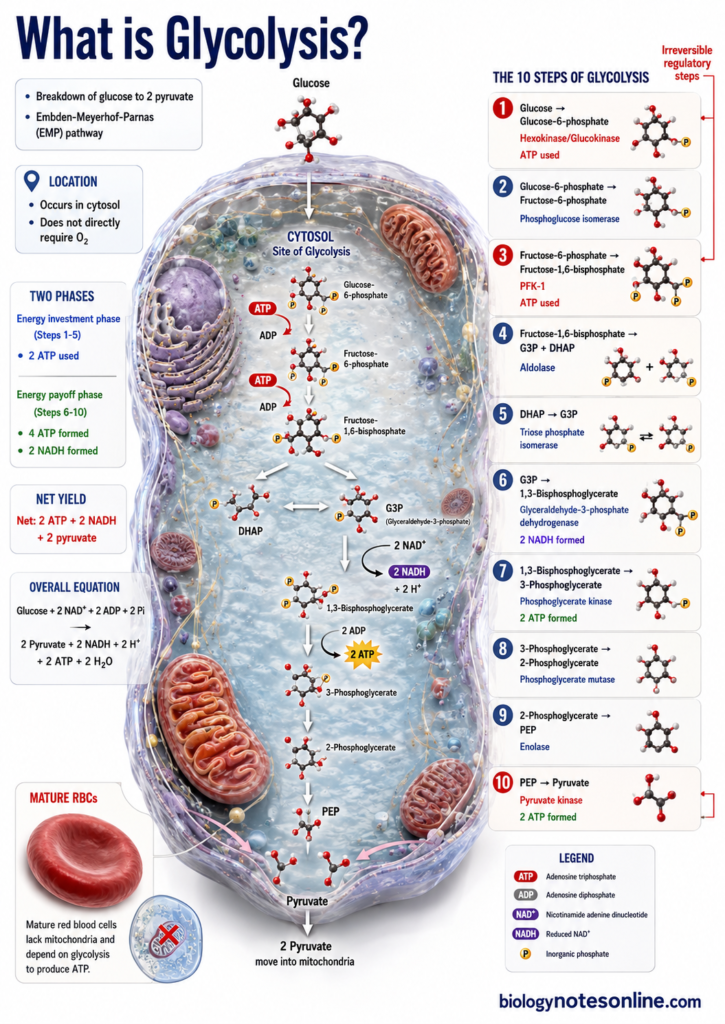
The ten steps are as follows-
| Step | Substrate | Enzyme | Product | Reaction | ATP/NADH | Reversibility |
|---|---|---|---|---|---|---|
| 1 | Glucose | Hexokinase / Glucokinase | Glucose-6-phosphate | Phosphorylation | 1 ATP used | Irreversible |
| 2 | Glucose-6-phosphate | Phosphoglucose isomerase | Fructose-6-phosphate | Isomerization | None | Reversible |
| 3 | Fructose-6-phosphate | PFK-1 | Fructose-1,6-bisphosphate | Phosphorylation | 1 ATP used | Irreversible |
| 4 | Fructose-1,6-bisphosphate | Aldolase | G3P + DHAP | Splitting | None | Reversible |
| 5 | DHAP | Triose phosphate isomerase | G3P | Isomerization | None | Reversible |
| 6 | G3P | Glyceraldehyde-3-phosphate dehydrogenase | 1,3-Bisphosphoglycerate | Oxidation and phosphorylation | 2 NADH formed | Reversible |
| 7 | 1,3-Bisphosphoglycerate | Phosphoglycerate kinase | 3-Phosphoglycerate | Substrate-level phosphorylation | 2 ATP formed | Reversible |
| 8 | 3-Phosphoglycerate | Phosphoglycerate mutase | 2-Phosphoglycerate | Rearrangement | None | Reversible |
| 9 | 2-Phosphoglycerate | Enolase | PEP | Dehydration | None | Reversible |
| 10 | PEP | Pyruvate kinase | Pyruvate | Substrate-level phosphorylation | 2 ATP formed | Irreversible |
Step 1 – Glucose → Glucose-6-Phosphate
Enzyme: Hexokinase / Glucokinase
Glucose is phosphorylated to form glucose-6-phosphate. Here, one ATP molecule is utilised and phosphate group is transferred to glucose.
This phosphorylation also helps to retain glucose inside the cell. Hexokinase performs this reaction in most tissues, while glucokinase performs the same reaction mainly in liver and pancreatic β-cells. The reaction is irreversible.
Step 2 – Glucose-6-Phosphate → Fructose-6-Phosphate
Enzyme: Phosphoglucose isomerase
The glucose-6-phosphate formed in the previous reaction now changes into fructose-6-phosphate.
It is an aldose to ketose rearrangement. Thus glucose-6-phosphate, an aldose is converted into fructose-6-phosphate which is a ketose. No ATP is used here and the reaction is reversible.
Step 3 – Fructose-6-Phosphate → Fructose-1,6-Bisphosphate
Enzyme: Phosphofructokinase-1 (PFK-1)
Fructose-6-phosphate is converted to fructose-1,6-bisphosphate. Here, ATP is utilised.
Another phosphate group is added during the reaction. This reaction is irreversible and is an important regulatory reaction of glycolysis.
PFK-1 controls this step and therefore has a major role in regulation of glycolytic flux. It is also referred to as the first committed step of glycolysis.
Step 4 – Fructose-1,6-Bisphosphate → G3P + DHAP
Enzyme: Aldolase
In this reaction, the six-carbon fructose-1,6-bisphosphate is split into two three-carbon compounds.
The compounds formed are glyceraldehyde-3-phosphate (G3P) and dihydroxyacetone phosphate (DHAP). One molecule of each is produced. No ATP is formed or utilised during this reaction.
Step 5 – DHAP → Glyceraldehyde-3-Phosphate
Enzyme: Triose phosphate isomerase
Dihydroxyacetone phosphate is changed into glyceraldehyde-3-phosphate.
One G3P molecule was already formed during the previous reaction. Thus, two molecules of G3P are now present and both enter the next reactions of glycolysis.
Step 6 – G3P → 1,3-Bisphosphoglycerate
Enzyme: Glyceraldehyde-3-phosphate dehydrogenase
The two molecules of G3P are now converted into 1,3-bisphosphoglycerate (1,3-BPG).
During this process G3P is oxidised, while inorganic phosphate is added. NAD⁺ accepts the electrons and is changed into NADH.
NAD⁺ → NADH
Two G3P molecules are present, so 2 NADH molecules are formed from one glucose molecule.
Step 7 – 1,3-Bisphosphoglycerate → 3-Phosphoglycerate
Enzyme: Phosphoglycerate kinase
The high-energy phosphate present in 1,3-bisphosphoglycerate is transferred to ADP. This forms ATP and 3-phosphoglycerate.
ADP → ATP
This is the first substrate-level phosphorylation of glycolysis.
Since two molecules of 1,3-BPG take part in this reaction, two ATP molecules are produced.
Step 8 – 3-Phosphoglycerate → 2-Phosphoglycerate
Enzyme: Phosphoglycerate mutase
3-phosphoglycerate is rearranged into 2-phosphoglycerate.
Here the phosphate group changes its position from carbon 3 to carbon 2. No ATP or NADH is formed. It is a reversible reaction.
Step 9 – 2-Phosphoglycerate → PEP
Enzyme: Enolase
The 2-phosphoglycerate is converted into phosphoenolpyruvate (PEP).
During this conversion, one molecule of water is removed. It is therefore a dehydration reaction. PEP formed in this reaction has a high-energy phosphate group.
Step 10 – PEP → Pyruvate
Enzyme: Pyruvate kinase
In the final reaction, PEP is changed into pyruvate.
The phosphate group of PEP is transferred to ADP and ATP is produced.
ADP → ATP
This is the second substrate-level phosphorylation of glycolysis. Two molecules of PEP are present, therefore two ATP molecules are produced. The reaction is irreversible.
During complete glycolysis, total 4 ATP molecules are produced and 2 ATP molecules are utilised in the earlier reactions. Therefore, net gain is 2 ATP. Along with it, 2 NADH and 2 pyruvate molecules are formed.
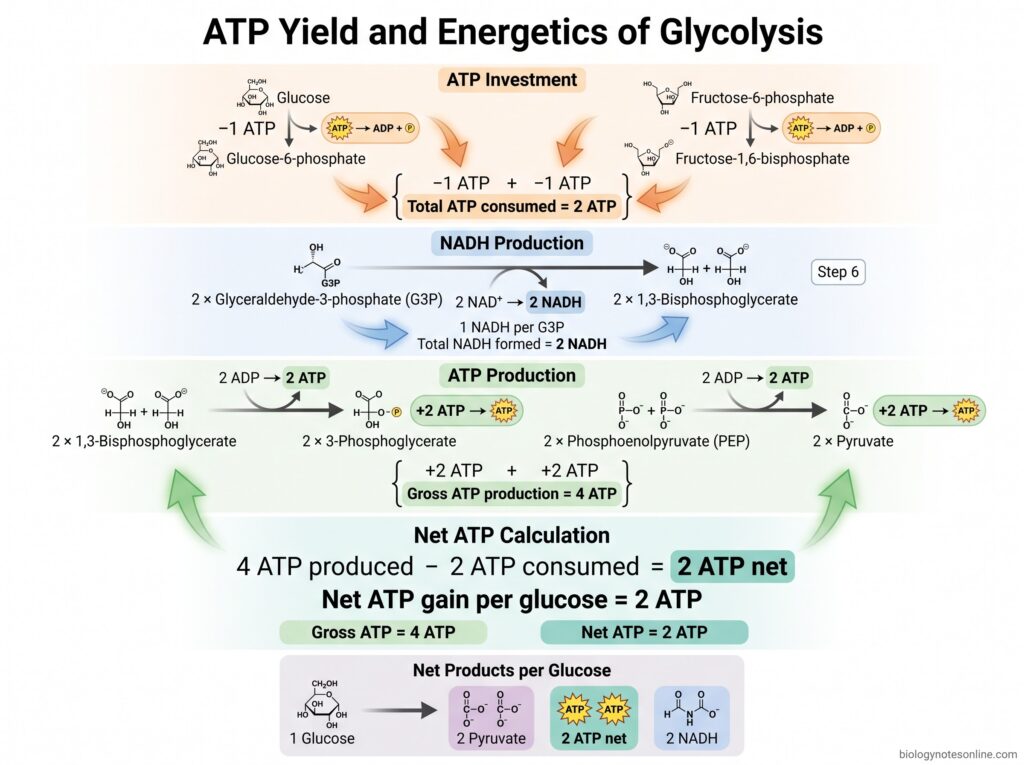
ATP Yield and Energetics of Glycolysis
During glycolysis, ATP is utilised in the early steps and ATP is again formed in the later reactions. In glycolysis, 4 ATP molecules are formed in total, but 2 are consumed. So, a net gain of 2 ATP molecules is achieved. 2 NADH molecules are also formed from one glucose molecule.
ATP Investment
ATP is consumed in two steps of glycolysis.
Step 1: −1 ATP
Glucose is converted to glucose-6-phosphate. Here, one ATP is utilised.
Step 3: −1 ATP
Fructose-6-phosphate is converted to fructose-1,6-bisphosphate. Another ATP is utilised in this step.
Thus,
Total ATP consumed = −2 ATP
ATP Production
ATP is formed at step 7 and step 10.
Step 7: +2 ATP
1,3-Bisphosphoglycerate is converted to 3-phosphoglycerate. Here, ATP is formed. As two molecules of 1,3-bisphosphoglycerate undergo this reaction, total 2 ATP are produced.
Step 10: +2 ATP
Phosphoenolpyruvate (PEP) is converted to pyruvate. ATP is formed in this step. Two PEP molecules are present, hence another 2 ATP molecules are produced.
Therefore,
Total ATP formed = +4 ATP
This is the gross ATP production of glycolysis.
Net ATP Yield
In glycolysis, 4 ATP molecules are produced in total. Out of these, 2 ATP are already consumed in step 1 and step 3.
So,
4 ATP − 2 ATP = 2 ATP
The net gain is 2 ATP molecules for every glucose molecule.
NADH Yield
NADH is produced in step 6 of glycolysis.
2 molecules of glyceraldehyde-3-phosphate (G3P) are now present, which are converted into 1,3-bisphosphoglycerate, NADH is produced. One NADH is formed from each G3P.
Thus,
NADH formed = 2 NADH
Net Products per Glucose
2 molecules of pyruvate are the major product of glycolysis. Along with it, a net gain of 2 ATP and 2 NADH molecules is obtained.
2 pyruvate + 2 ATP + 2 NADH
The 4 ATP is the total ATP formed during glycolysis. But 2 ATP are consumed in the early reactions, so the actual net ATP gain is 2 ATP.
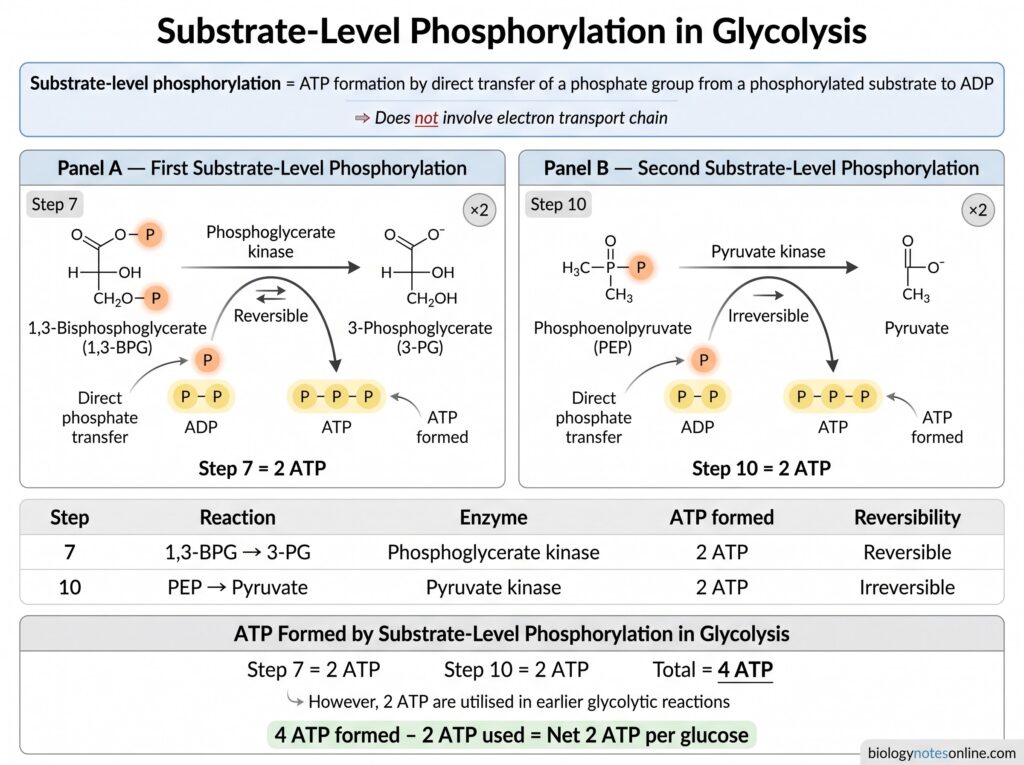
Substrate-Level Phosphorylation in Glycolysis
Substrate-level phosphorylation is a process where ATP is formed by direct transfer of a phosphate group from a phosphorylated substrate to ADP. It does not involve electron transport chain.
In glycolysis, this type of ATP formation occurs at two reactions. These are step 7 and step 10.
First Substrate-Level Phosphorylation
The first substrate-level phosphorylation takes place in step 7.
Here, 1,3-bisphosphoglycerate (1,3-BPG) is converted to 3-phosphoglycerate (3-PG). The phosphate group from 1,3-BPG is transferred to ADP and ATP is formed.
The reaction is as follows-
1,3-BPG + ADP → 3-PG + ATP
Enzyme involved- Phosphoglycerate kinase.
As two molecules of 1,3-BPG are present, this reaction takes place two times. Thus, 2 ATP molecules are produced in this step.
It is a reversible reaction.
Second Substrate-Level Phosphorylation
The second substrate-level phosphorylation occurs in step 10.
In this step, phosphoenolpyruvate (PEP) is converted into pyruvate. Its phosphate group is transferred to ADP. ATP is again formed.
The reaction is as follows-
PEP + ADP → Pyruvate + ATP
Enzyme involved- Pyruvate kinase.
Two molecules of PEP undergo the reaction. Hence, another 2 ATP molecules are formed.
This reaction is irreversible.
Therefore, ATP formed by substrate-level phosphorylation during glycolysis is-
Step 7 = 2 ATP
Step 10 = 2 ATP
Total = 4 ATP
However, 2 ATP molecules are already utilised in the earlier reactions of glycolysis. So, the net ATP gain remains 2 ATP molecules per glucose.
Irreversible Steps of Glycolysis
In glycolysis, three reactions are considered essentially irreversible under cellular conditions. These are step 1, step 3 and step 10. The reactions have a large negative free-energy change and proceed strongly in forward direction. They also form important sites for regulation of glycolysis.
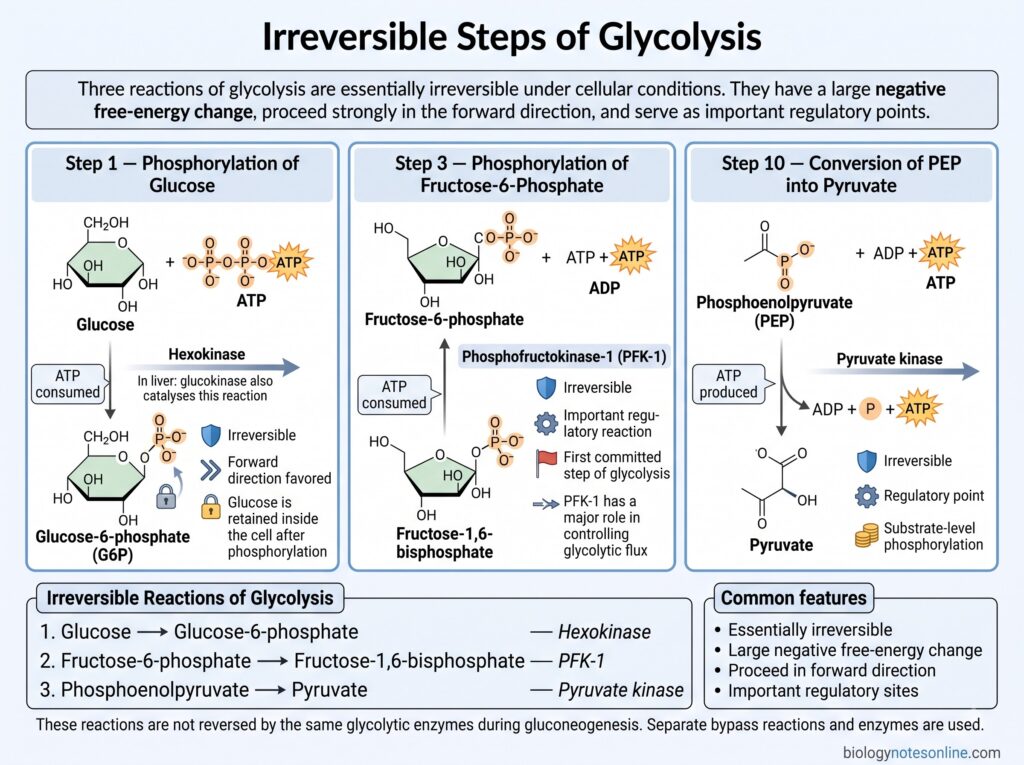
The three irreversible steps are as follows-
Step 1- Phosphorylation of Glucose
In the first step, glucose is phosphorylated to form glucose-6-phosphate (G6P). Here, ATP is utilised.
The reaction is as follows-
Glucose + ATP → Glucose-6-phosphate + ADP
Enzyme involved- Hexokinase.
In liver, glucokinase also catalyses this reaction. The reaction is essentially irreversible. Glucose after phosphorylation is also retained inside the cell in the form of glucose-6-phosphate.
Step 3- Phosphorylation of Fructose-6-Phosphate
Fructose-6-phosphate is converted into fructose-1,6-bisphosphate. Another ATP molecule is consumed in this step.
The reaction is as follows-
Fructose-6-phosphate + ATP → Fructose-1,6-bisphosphate + ADP
Enzyme involved- Phosphofructokinase-1 (PFK-1).
This is an important regulatory reaction of glycolysis. It is also the first committed step towards glycolytic breakdown of glucose. PFK-1 activity therefore has a major role in controlling the pathway.
Step 10- Conversion of PEP into Pyruvate
This is the last step of glycolysis. Phosphoenolpyruvate (PEP) is converted into pyruvate and ATP is formed.
The reaction is as follows-
PEP + ADP → Pyruvate + ATP
Enzyme involved- Pyruvate kinase.
The phosphate group from PEP is transferred to ADP. This forms ATP by substrate-level phosphorylation. The reaction is irreversible under cellular conditions and forms another regulatory point of glycolysis.
Thus, the irreversible reactions of glycolysis are-
- Glucose → Glucose-6-phosphate – Hexokinase.
- Fructose-6-phosphate → Fructose-1,6-bisphosphate – PFK-1.
- Phosphoenolpyruvate → Pyruvate – Pyruvate kinase.
These reactions cannot simply be reversed by the same glycolytic enzymes during gluconeogenesis. Separate bypass reactions and enzymes are used for these steps.
Regulation of Glycolysis
The regulation of glycolysis occurs mainly at the irreversible steps. These are step 1, step 3 and step 10. The enzymes involved are hexokinase/glucokinase, phosphofructokinase-1 (PFK-1) and pyruvate kinase.
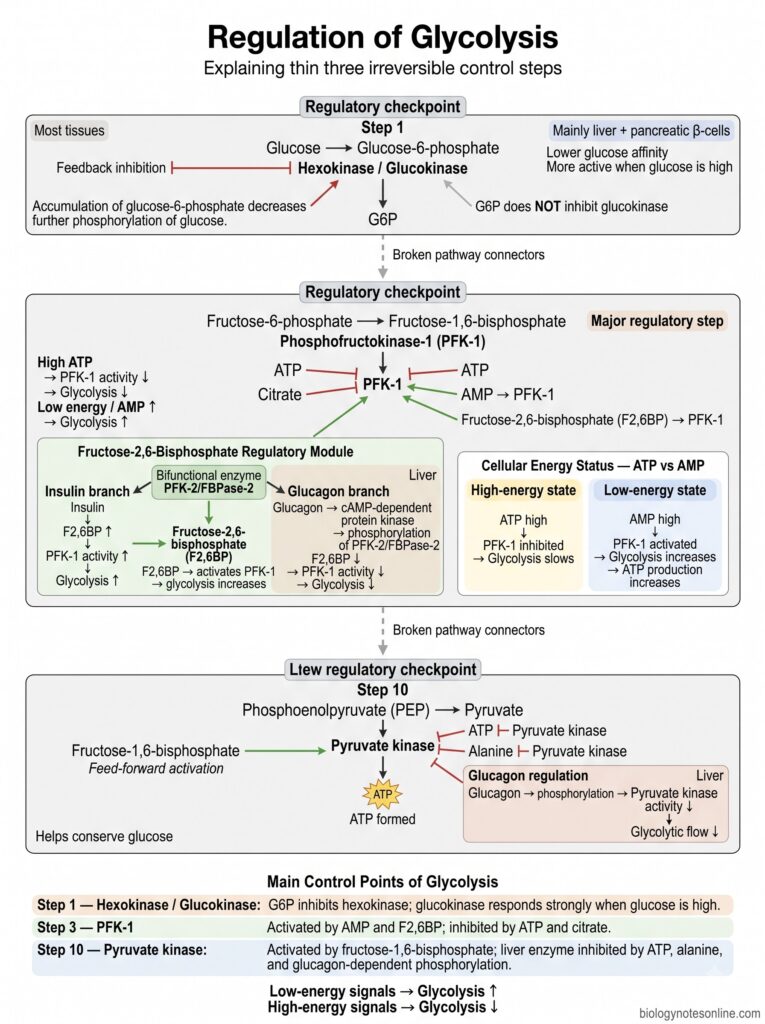
The following are the regulation of glycolysis-
- Regulation of Hexokinase / Glucokinase
- Hexokinase converts glucose into glucose-6-phosphate (G6P).
- Glucose-6-phosphate inhibits hexokinase in most tissues. Accumulation of G6P therefore decreases further phosphorylation of glucose.
- Glucokinase is mainly found in liver and pancreatic β-cells.
- It has lower affinity for glucose than hexokinase and becomes more active when glucose concentration is high.
- Glucokinase is not inhibited by glucose-6-phosphate. Its regulation is different from hexokinase.
- Regulation of Phosphofructokinase-1 (PFK-1)
- PFK-1 catalyses conversion of fructose-6-phosphate into fructose-1,6-bisphosphate.
- This is the major regulatory step of glycolysis.
- ATP inhibits PFK-1. Citrate also inhibits the enzyme.
- AMP activates PFK-1.
- Another important activator is fructose-2,6-bisphosphate (F2,6BP).
- When ATP concentration is high, activity of PFK-1 is decreased. During low energy condition AMP increases and the enzyme becomes more active.
- Regulation by Fructose-2,6-Bisphosphate
- Fructose-2,6-bisphosphate activates PFK-1 and increases glycolysis.
- Its concentration in liver is controlled by PFK-2/FBPase-2, a bifunctional enzyme.
- Insulin increases fructose-2,6-bisphosphate. Glycolysis is increased.
- During glucagon action, the enzyme is phosphorylated through cAMP-dependent protein kinase and fructose-2,6-bisphosphate level decreases.
- PFK-1 activity is then reduced and glycolysis decreases.
- Regulation of Pyruvate Kinase
- Pyruvate kinase converts phosphoenolpyruvate (PEP) into pyruvate. ATP is formed during this reaction.
- Fructose-1,6-bisphosphate activates pyruvate kinase. This is called feed-forward activation.
- ATP and alanine inhibit the liver pyruvate kinase.
- In liver, glucagon causes phosphorylation of pyruvate kinase and its activity is reduced.
- The reaction is therefore decreased during conditions where glucose has to be conserved.
- Regulation by ATP and AMP
- ATP and AMP concentration also affect glycolysis.
- High amount of ATP inhibits PFK-1 and glycolysis is slowed.
- AMP increases when cellular energy is low. It activates PFK-1.
- More glucose then enters glycolytic pathway and ATP production is increased.
The main control of glycolysis is present at hexokinase/glucokinase, PFK-1 and pyruvate kinase reactions. Among these, PFK-1 is the major regulatory enzyme.
Products of Glycolysis
During glycolysis, one molecule of glucose is broken down into two 3-carbon pyruvate molecules. In the process, ATP and NADH are also formed. The net products are 2 pyruvate, 2 ATP and 2 NADH.
| Product | Amount per Glucose | Formation |
|---|---|---|
| Pyruvate | 2 | Terminal carbon product |
| ATP | 2 net | 4 formed, 2 utilised |
| NADH | 2 | Formed during oxidation of G3P |
| H₂O | 2 | Formed in overall glycolytic reaction |
| H⁺ | 2 | Present in overall net reaction |
The overall reaction of glycolysis can be written as-
Glucose + 2 NAD⁺ + 2 ADP + 2 Pi → 2 Pyruvate + 2 NADH + 2 H⁺ + 2 ATP + 2 H₂O
Pyruvate
Pyruvate is the major carbon product of glycolysis. One glucose molecule contains six carbons, which gives two pyruvate molecules containing three carbons each.
Two pyruvate molecules are formed in the last reaction. Phosphoenolpyruvate (PEP) is converted into pyruvate by pyruvate kinase. ATP is also formed here.
ATP
A total of 4 ATP molecules are produced during glycolysis. But two ATP are already utilised in the initial reactions.
Hence, the net gain is-
4 ATP − 2 ATP = 2 ATP
So, glycolysis gives 2 net ATP molecules for every glucose molecule.
NADH
2 NADH molecules are formed during glycolysis.
In step 6, two molecules of glyceraldehyde-3-phosphate (G3P) are oxidised. During this process NAD⁺ is reduced to NADH. Thus, one glucose gives two NADH.
Water and Hydrogen Ions
The net glycolytic reaction also forms 2 molecules of water and 2 H⁺. These are included when the complete balanced reaction of glycolysis is written.
What is the end product of glycolysis?
Pyruvate is the terminal carbon product of the ten-step glycolytic pathway.
Two molecules of pyruvate are obtained from one glucose molecule. Under conditions where lactate is formed, pyruvate is reduced to lactate after the glycolytic pathway for regeneration of NAD⁺.
What Happens to Pyruvate After Glycolysis?
The pyruvate formed at the end of glycolysis can undergo different reactions. It may be oxidised completely or changed into other compounds. The major fates of pyruvate are as follows-
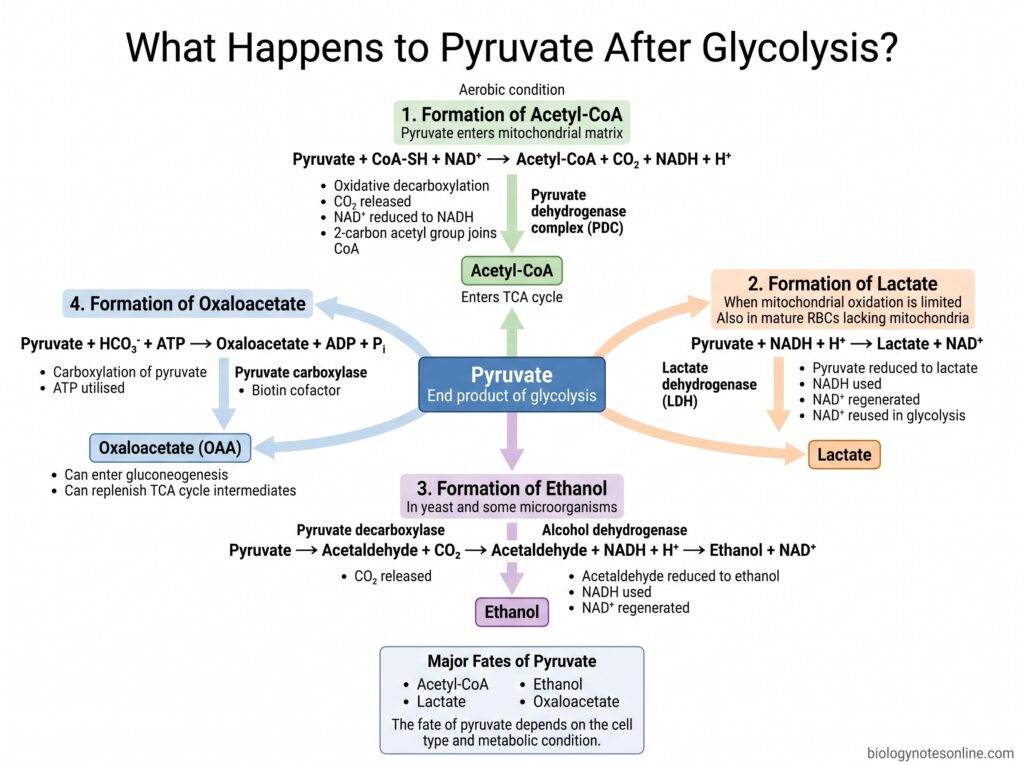
1. Formation of Acetyl-CoA
Under aerobic condition, pyruvate enters the mitochondrial matrix. It is first converted into acetyl-CoA before entering the TCA cycle.
Enzyme involved- Pyruvate dehydrogenase complex (PDC).
Here, pyruvate loses one carbon atom as CO₂. NAD⁺ is reduced to NADH and the remaining two-carbon part combines with CoA.
The reaction is as follows-
Pyruvate + CoA-SH + NAD⁺ → Acetyl-CoA + CO₂ + NADH + H⁺
The acetyl-CoA formed enters into TCA cycle.
2. Formation of Lactate
Pyruvate is converted into lactate in cells where oxidation of pyruvate through mitochondria is limited. This also occurs in mature RBCs which lack mitochondria.
Enzyme involved- Lactate dehydrogenase (LDH).
Pyruvate + NADH + H⁺ → Lactate + NAD⁺
Here, NADH is used and NAD⁺ is regenerated. This NAD⁺ can be reused in glycolysis.
3. Formation of Ethanol
In yeast and some microorganisms, pyruvate forms ethanol. This occurs in two reactions.
First, pyruvate loses CO₂ and forms acetaldehyde.
Pyruvate → Acetaldehyde + CO₂
Enzyme involved- Pyruvate decarboxylase.
Acetaldehyde then is reduced to ethanol.
Acetaldehyde + NADH + H⁺ → Ethanol + NAD⁺
Enzyme involved- Alcohol dehydrogenase.
NAD⁺ is again formed in this reaction.
4. Formation of Oxaloacetate
Pyruvate can also be carboxylated to form oxaloacetate (OAA). Here, ATP is utilised.
Enzyme involved- Pyruvate carboxylase.
The reaction is as follows-
Pyruvate + HCO₃⁻ + ATP → Oxaloacetate + ADP + Pi
Pyruvate carboxylase contains biotin as cofactor. The oxaloacetate formed can enter gluconeogenesis and can also replenish TCA cycle intermediates.
Hence, pyruvate formed from glycolysis may form acetyl-CoA, lactate, ethanol or oxaloacetate depending upon the cell and condition.
What Happens to NADH Produced During Glycolysis?
During glycolysis, 2 molecules of NADH are formed from one molecule of glucose. It is formed in step 6, where NAD⁺ is reduced during oxidation of glyceraldehyde-3-phosphate. The NADH formed is present in cytosol.
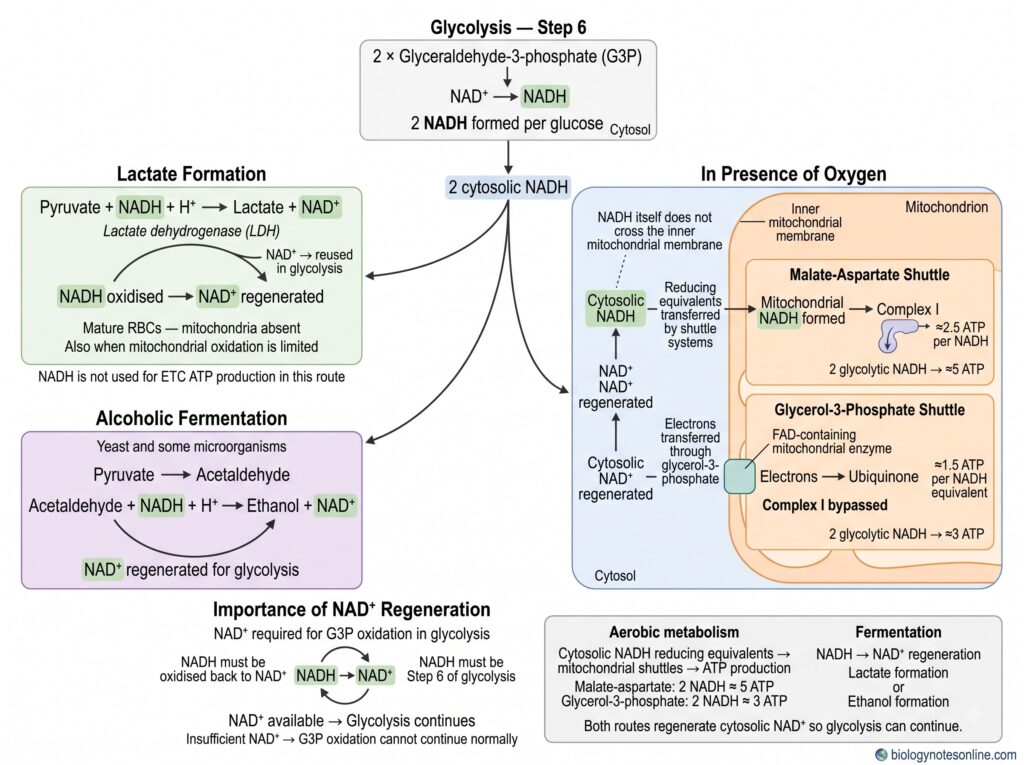
The further use of NADH occurs in different ways.
In Presence of Oxygen
The NADH produced by glycolysis is cytosolic, while the electron transport chain is present in the inner mitochondrial membrane. NADH itself does not pass through this membrane. Its reducing equivalents are transferred by shuttle systems.
There are two major shuttles-
Malate-aspartate shuttle– The electrons of cytosolic NADH are transferred into mitochondria and mitochondrial NADH is formed. This NADH enters the electron transport chain at Complex I. About 2.5 ATP is obtained for one NADH. So, the 2 NADH produced during glycolysis may give about 5 ATP through this shuttle.
Glycerol-3-phosphate shuttle– Here, the electrons from NADH are transferred through glycerol-3-phosphate and then to a FAD-containing mitochondrial enzyme. The electrons are passed to ubiquinone, bypassing Complex I. Less ATP is formed, about 1.5 ATP for each NADH equivalent. Thus, 2 glycolytic NADH give about 3 ATP by this route.
During both processes, cytosolic NAD⁺ is regenerated and can again be used in glycolysis.
In Lactate Formation
When pyruvate is reduced to lactate, NADH is oxidised to NAD⁺. The reaction is catalysed by lactate dehydrogenase (LDH).
The reaction is as follows-
Pyruvate + NADH + H⁺ → Lactate + NAD⁺
Here, NADH is not used for ATP formation through electron transport chain. It is used for regeneration of NAD⁺. This is necessary for glycolysis to continue.
Mature RBCs follow this route as mitochondria are absent. Lactate formation is also increased in tissues where mitochondrial oxidation becomes limited.
In Alcoholic Fermentation
In yeast and some microorganisms, NADH is used during formation of ethanol. Pyruvate is first converted to acetaldehyde. Acetaldehyde then is reduced to ethanol, NADH is oxidised to NAD⁺ during this reaction. This type of sentence and reaction movement also occurs in the uploaded sample.
Acetaldehyde + NADH + H⁺ → Ethanol + NAD⁺
The NAD⁺ produced is again available for glycolysis.
Importance of NAD⁺ Regeneration
NAD⁺ is required during oxidation of glyceraldehyde-3-phosphate in glycolysis. If NADH is not oxidised back to NAD⁺, this reaction cannot continue normally.
So, the NADH formed during glycolysis has two major fates. In aerobic metabolism, its electrons are transferred to mitochondria and used for ATP production. During fermentation, NADH is oxidised back to NAD⁺, allowing glycolysis to continue.
Entry of Other Sugars into Glycolysis
Other carbohydrates can also enter into glycolytic pathway. Before entering, they are changed into different intermediates of glycolysis. The point of entry is different.
Glycogen
Glycogen is broken down by glycogen phosphorylase and glucose-1-phosphate is formed. It is then changed into glucose-6-phosphate by phosphoglucomutase.
Glycogen → Glucose-1-phosphate → Glucose-6-phosphate → Glycolysis
The glucose-6-phosphate formed enters glycolysis directly. Here, the hexokinase reaction is bypassed.
Fructose
The entry of fructose differs in liver and other tissues.
In liver, fructose is phosphorylated to fructose-1-phosphate by fructokinase. It is then split into DHAP and glyceraldehyde. Glyceraldehyde forms glyceraldehyde-3-phosphate, and these enter into glycolysis.
Fructose → Fructose-1-phosphate → DHAP + Glyceraldehyde → G3P
In muscle and adipose tissue, fructose can be converted into fructose-6-phosphate by hexokinase. It then enters glycolysis.
Galactose
Galactose enters glycolysis through the Leloir pathway.
It is first phosphorylated to galactose-1-phosphate. After further reactions, glucose-1-phosphate is formed. This is converted into glucose-6-phosphate, which enters glycolysis.
Galactose → Galactose-1-phosphate → Glucose-1-phosphate → Glucose-6-phosphate → Glycolysis
Mannose
Mannose is first phosphorylated by hexokinase and mannose-6-phosphate is produced.
Mannose-6-phosphate is then isomerised to fructose-6-phosphate by phosphomannose isomerase. From here, it enters glycolytic pathway.
Mannose → Mannose-6-phosphate → Fructose-6-phosphate → Glycolysis
Glycerol
Glycerol is obtained mainly during breakdown of triglycerides. In liver, glycerol kinase converts it into glycerol-3-phosphate.
This is oxidised to dihydroxyacetone phosphate (DHAP) by glycerol-3-phosphate dehydrogenase. DHAP is an intermediate of glycolysis.
Glycerol → Glycerol-3-phosphate → DHAP → Glycolysis
Importance and Significance of Glycolysis
Glycolysis is an important metabolic pathway for breakdown of glucose and formation of energy. It is carried out in the cytoplasm of cells. During this process, ATP, NADH and pyruvate are formed.
The following are the importance and significance of glycolysis-
- ATP production– Glycolysis produces ATP by substrate-level phosphorylation. From one glucose molecule, 4 ATP are formed but 2 ATP are already utilised. Hence, net gain is 2 ATP molecules.
- Without oxygen– Glycolysis itself does not require molecular oxygen. It can produce ATP when oxygen supply becomes limited, if NAD⁺ is regenerated.
- Pyruvate formation– Two molecules of pyruvate are formed from one glucose molecule. Under aerobic condition, pyruvate is converted into acetyl-CoA and enters the TCA cycle.
- NADH formation– During oxidation of glyceraldehyde-3-phosphate, NAD⁺ is reduced and NADH is formed. Two NADH molecules are produced from one glucose.
- RBC energy– Mature Red Blood Cells (RBCs) do not contain mitochondria. Glycolysis is the major source of ATP in these cells.
- Metabolic intermediates– Some glycolytic intermediates enter into other metabolic pathways. Glucose-6-phosphate, DHAP, 3-phosphoglycerate and pyruvate are some examples.
- 2,3-BPG formation– In RBCs, 1,3-bisphosphoglycerate can enter into the Rapoport-Luebering pathway and 2,3-bisphosphoglycerate (2,3-BPG) is formed.
- High energy demand– During intense muscular activity, glycolysis produces ATP rapidly. Pyruvate may be converted into lactate when mitochondrial oxidation becomes limited.
- Other sugars– Fructose, galactose and mannose can enter into glycolytic pathway after conversion into suitable intermediates. Glycogen also enters after formation of glucose-6-phosphate.
- Metabolic connection– Glycolysis is connected with carbohydrate, lipid and amino acid metabolism. Pyruvate may form acetyl-CoA, lactate, alanine or oxaloacetate.
Glycolytic Intermediates as Biosynthetic Precursors
During glycolysis, all the intermediate compounds do not always continue up to pyruvate. Some are taken into other metabolic pathways. These intermediates are also used for formation of different cellular compounds.
| Glycolytic intermediate | Connected pathway/product |
|---|---|
| Glucose-6-phosphate | Pentose phosphate pathway |
| Fructose-6-phosphate | Hexosamine pathway |
| DHAP | Glycerol/lipid metabolism |
| 3-phosphoglycerate | Serine synthesis |
| Pyruvate | Alanine, acetyl-CoA, oxaloacetate |
- Glucose-6-phosphate
Glucose-6-phosphate can enter into the pentose phosphate pathway (PPP). In this pathway, NADPH and pentose phosphates are formed. - Fructose-6-phosphate
A part of fructose-6-phosphate is used in hexosamine pathway. It forms glucosamine-6-phosphate and finally UDP-GlcNAc is produced. - Dihydroxyacetone phosphate (DHAP)
DHAP may be changed into glycerol-3-phosphate. This compound is used in formation of triglycerides and other glycerolipids. - 3-Phosphoglycerate
3-phosphoglycerate (3-PG) is also a precursor for serine synthesis. The first reaction is carried out by 3-phosphoglycerate dehydrogenase (PHGDH). - Pyruvate
Pyruvate can form different compounds. It forms alanine by transamination, acetyl-CoA by pyruvate dehydrogenase complex and oxaloacetate by pyruvate carboxylase.
How to Remember Glycolysis
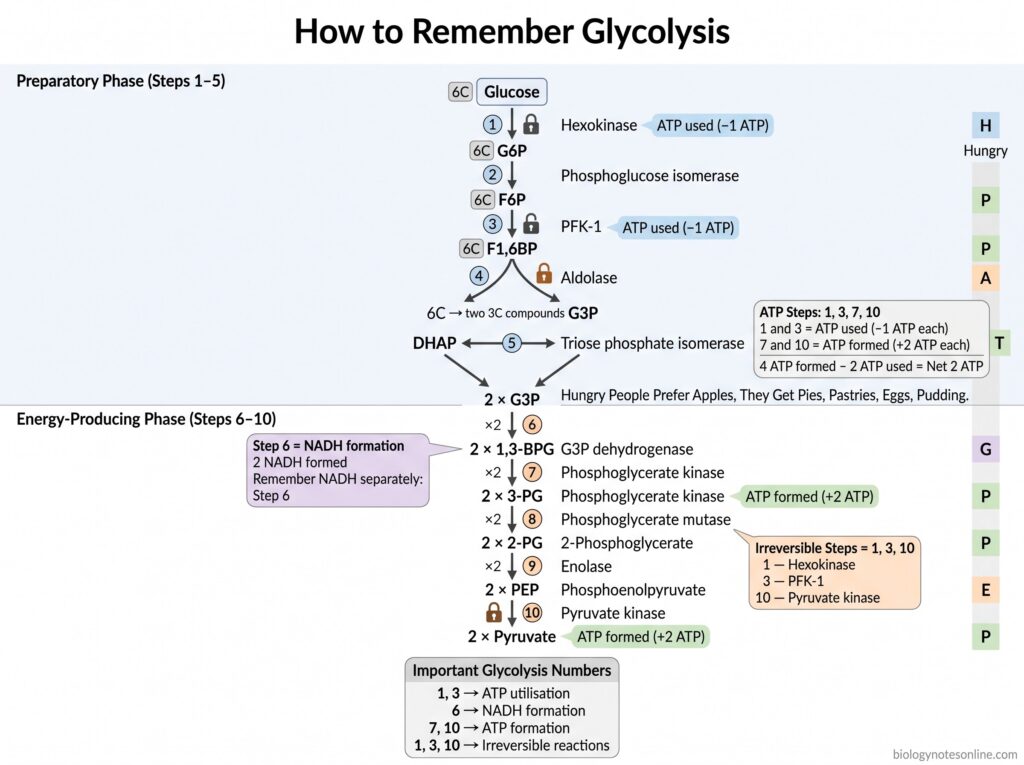
The ten reactions of glycolysis can be remembered in smaller groups rather than remembering all reactions together. First five reactions form the preparatory phase and the last five are energy producing reactions.
First remember the compounds in their sequence-
Glucose → G6P → F6P → F1,6BP → G3P + DHAP → G3P → 1,3-BPG → 3-PG → 2-PG → PEP → Pyruvate
Glucose remains as a 6-carbon compound during the initial reactions. At step 4, fructose-1,6-bisphosphate splits into two 3-carbon compounds. After conversion of DHAP, two G3P molecules continue through the remaining reactions.
The enzymes can be remembered in the same order-
Hexokinase → Phosphoglucose isomerase → PFK-1 → Aldolase → Triose phosphate isomerase → G3P dehydrogenase → Phosphoglycerate kinase → Phosphoglycerate mutase → Enolase → Pyruvate kinase
Their first letters are-
H – P – P – A – T – G – P – P – E – P
A simple mnemonic can be used-
Hungry People Prefer Apples, They Get Pies, Pastries, Eggs, Pudding.
For ATP reactions, remember 1, 3, 7 and 10. ATP is utilised at step 1 and step 3. It is produced at step 7 and step 10. Since the later reactions occur twice, 4 ATP are formed but 2 were already utilised. Net gain is 2 ATP.
1 and 3 = ATP used
7 and 10 = ATP formed
NADH formation is easier to remember separately. It occurs at step 6, during conversion of G3P into 1,3-bisphosphoglycerate. Two G3P molecules undergo this reaction, hence 2 NADH molecules are formed.
The irreversible reactions can be remembered as 1, 3 and 10. These are catalysed by hexokinase, PFK-1 and pyruvate kinase, respectively.
So, the important step numbers to remember are-
1, 3 = ATP utilisation
6 = NADH formation
7, 10 = ATP formation
1, 3, 10 = Irreversible reactions
Remembering these numbers first makes the remaining reactions easier to arrange in their proper sequence.
Glycolysis Quick Revision Table
| Step | Substrate → Product | Enzyme | ATP/NADH | Key fact |
|---|---|---|---|---|
| 1 | Glucose → Glucose-6-phosphate | Hexokinase / Glucokinase | −1 ATP | Glucose phosphorylation. Irreversible step. |
| 2 | Glucose-6-phosphate → Fructose-6-phosphate | Phosphoglucose isomerase | None | Aldose is changed into ketose. |
| 3 | Fructose-6-phosphate → Fructose-1,6-bisphosphate | PFK-1 | −1 ATP | Major regulatory and committed step. Irreversible. |
| 4 | Fructose-1,6-bisphosphate → G3P + DHAP | Aldolase | None | Six-carbon compound splits into two 3-carbon compounds. |
| 5 | DHAP → G3P | Triose phosphate isomerase | None | Two G3P molecules are now formed. |
| 6 | G3P → 1,3-Bisphosphoglycerate | Glyceraldehyde-3-phosphate dehydrogenase | +2 NADH | Oxidation of G3P. NAD⁺ is reduced to NADH. |
| 7 | 1,3-BPG → 3-Phosphoglycerate | Phosphoglycerate kinase | +2 ATP | First substrate-level phosphorylation. |
| 8 | 3-Phosphoglycerate → 2-Phosphoglycerate | Phosphoglycerate mutase | None | Phosphate group changes its position. |
| 9 | 2-Phosphoglycerate → PEP | Enolase | None | Water molecule is removed. |
| 10 | PEP → Pyruvate | Pyruvate kinase | +2 ATP | Second substrate-level phosphorylation. Irreversible step. |
ATP utilised = 2
ATP formed = 4
Net ATP = 2
NADH = 2
Pyruvate = 2
Glycolysis vs Krebs Cycle
| Feature | Glycolysis | Krebs Cycle |
|---|---|---|
| Definition | Glycolysis is the breakdown of glucose into pyruvate through a series of reactions. | Krebs cycle is a cyclic pathway where acetyl-CoA is oxidised and CO₂, NADH and FADH₂ are formed. |
| Other name | EMP pathway (Embden-Meyerhof-Parnas pathway). | Citric acid cycle or TCA cycle. |
| Location in eukaryotes | Takes place in the cytoplasm/cytosol. | Takes place mainly in the mitochondrial matrix. |
| Location in prokaryotes | Cytoplasm. | Cytoplasm. |
| Starting compound | Glucose, a 6-carbon compound. | Acetyl-CoA, a 2-carbon compound. |
| Number of reactions | It consists of 10 enzyme-mediated reactions. | It consists of 8 enzyme-mediated reactions. |
| Nature of pathway | It is a linear pathway. | It is a cyclic pathway. |
| Major carbon product | Two molecules of pyruvate are formed. | Oxaloacetate is regenerated at the end of the cycle. |
| CO₂ formation | CO₂ is not released during glycolysis. | CO₂ is released during the cycle. |
| ATP production | Net gain is 2 ATP per glucose. | 2 GTP/ATP per glucose (two turns of the cycle). |
| NADH formation | 2 NADH are formed per glucose. | 6 NADH are formed per glucose. |
| FADH₂ formation | FADH₂ is not formed. | 2 FADH₂ are formed per glucose. |
| Oxygen requirement | Glycolysis can occur in both aerobic and anaerobic conditions. | The cycle does not use oxygen directly, but it normally continues under aerobic conditions because NAD⁺ and FAD need to be regenerated. |
| Substrate-level phosphorylation | Occurs at step 7 and step 10. | Occurs during conversion of succinyl-CoA to succinate. |
| Main function | Breakdown of glucose and formation of ATP, NADH and pyruvate. | Further oxidation of acetyl-CoA and formation of reduced coenzymes for ATP production. |
| Connection | Pyruvate formed from glycolysis can be converted to acetyl-CoA. | Acetyl-CoA enters the Krebs cycle for further oxidation. |
Glycolysis vs Gluconeogenesis
| Feature | Glycolysis | Gluconeogenesis |
|---|---|---|
| Definition | Glycolysis is the breakdown of glucose into pyruvate. | Gluconeogenesis is the formation of glucose from non-carbohydrate precursors. |
| Type of pathway | It is a catabolic pathway. | It is an anabolic pathway. |
| Main function | It produces energy from glucose. | It maintains blood glucose during fasting or low carbohydrate condition. |
| Location | Mainly occurs in the cytosol. | Occurs in mitochondria, cytosol and endoplasmic reticulum. |
| Major organs | Takes place in almost all cells. | Mainly occurs in liver, and to a lesser extent in kidney. |
| Starting material | Glucose. | Lactate, glycerol, glucogenic amino acids and pyruvate. |
| Final product | 2 pyruvate molecules are formed. | Glucose is formed. |
| Energy | Energy is produced. Net 2 ATP and 2 NADH are formed per glucose. | Energy is consumed. ATP and GTP are required for glucose formation. |
| Irreversible reactions | Irreversible steps are catalysed by hexokinase/glucokinase, PFK-1 and pyruvate kinase. | These steps are bypassed by glucose-6-phosphatase, fructose-1,6-bisphosphatase, pyruvate carboxylase and PEP carboxykinase. |
| PFK-1 / FBPase-1 | PFK-1 promotes glycolysis. | Fructose-1,6-bisphosphatase promotes gluconeogenesis. |
| Effect of insulin | Insulin increases glycolysis, especially in liver. | Insulin decreases gluconeogenesis. |
| Effect of glucagon | Glucagon decreases liver glycolysis. | Glucagon increases gluconeogenesis in liver. |
| Fructose-2,6-bisphosphate | Activates PFK-1 and increases glycolysis. | Inhibits fructose-1,6-bisphosphatase and decreases gluconeogenesis. |
| ATP level | High ATP inhibits glycolysis. | High-energy condition favours gluconeogenesis. |
| Relation between pathways | It breaks glucose down. | It forms glucose back from smaller compounds. |
| Overall significance | Mainly involved in energy production. | Mainly involved in glucose maintenance during fasting. |
Aerobic vs Anaerobic Glycolysis
| Feature | Aerobic Glycolysis | Anaerobic Glycolysis |
|---|---|---|
| Definition | Glycolysis where pyruvate is further used under aerobic condition. | Glycolysis where pyruvate is reduced to lactate when mitochondrial oxidation is limited. |
| Oxygen condition | Occurs when oxygen is available for continued aerobic metabolism. | Occurs during absence or low availability of oxygen, or in cells without mitochondria. |
| Location of glycolysis | Takes place in the cytoplasm. | Takes place in the cytoplasm. |
| End product of glycolysis | Pyruvate. | Pyruvate is formed first, then it is converted to lactate. |
| Fate of pyruvate | Pyruvate enters mitochondria and forms acetyl-CoA. | Pyruvate is reduced to lactate by lactate dehydrogenase. |
| NADH fate | Cytosolic NADH reducing equivalents are transferred to mitochondria and can be used for oxidative phosphorylation. | NADH is used for reduction of pyruvate to lactate. |
| NAD⁺ regeneration | NAD⁺ is regenerated mainly through mitochondrial oxidation of NADH reducing equivalents. | NAD⁺ is regenerated during conversion of pyruvate to lactate. |
| Net ATP from glycolysis | 2 ATP are formed directly per glucose. | 2 ATP are formed per glucose. |
| Additional ATP from NADH | Glycolytic NADH may contribute additional ATP through mitochondrial electron transport. | No additional ATP is obtained from glycolytic NADH through electron transport. |
| Lactate formation | Usually not the major fate of pyruvate. | Lactate is formed. |
| Main tissues/conditions | Common in cells with functional mitochondria and sufficient oxygen supply. | Common in exercising muscle during high demand and in mature RBCs. |
| Further oxidation | Acetyl-CoA enters the Krebs cycle and further oxidation takes place. | Pyruvate is not oxidised through the Krebs cycle during lactate formation. |
| Energy efficiency | Higher overall energy recovery from glucose after glycolysis and mitochondrial oxidation. | Lower energy yield, mainly 2 ATP per glucose. |
References
- Alberts, B., Johnson, A., Lewis, J., Raff, M., Roberts, K., & Walter, P. (2002). Molecular biology of the cell (4th ed.). Garland Science. https://www.ncbi.nlm.nih.gov/books/NBK26882/
- Berry, G. T. (2021). Classic galactosemia and clinical variant galactosemia. In M. P. Adam, J. Feldman, G. M. Mirzaa, R. A. Pagon, S. E. Wallace, L. J. H. Bean, K. W. Gripp, & A. Amemiya (Eds.), GeneReviews®. University of Washington, Seattle. https://www.ncbi.nlm.nih.gov/books/NBK1518/
- Borst, P. (2020). The malate–aspartate shuttle (Borst cycle): How it started and developed into a major metabolic pathway. IUBMB Life, 72(11), 2241–2259. https://doi.org/10.1002/iub.2367
- Chandel, N. S. (2021a). Glycolysis. Cold Spring Harbor Perspectives in Biology, 13(5), a040535. https://doi.org/10.1101/cshperspect.a040535
- Chandel, N. S. (2021b). Mitochondria. Cold Spring Harbor Perspectives in Biology, 13, a040543. https://pubmed.ncbi.nlm.nih.gov/33649187/
- Chaudhry, R., & Varacallo, M. A. (2023). Biochemistry, glycolysis. In StatPearls. StatPearls Publishing. https://www.ncbi.nlm.nih.gov/books/NBK482303/
- Chien, S. (2000). Metabolic management. In G. J. Siegel, B. W. Agranoff, R. W. Albers, S. K. Fisher, & M. D. Uhler (Eds.), Basic neurochemistry: Molecular, cellular and medical aspects (6th ed.). Lippincott-Raven. https://www.ncbi.nlm.nih.gov/books/NBK6156/
- Clarke, D. D., & Sokoloff, L. (1999). Intermediary metabolism. In G. J. Siegel, B. W. Agranoff, R. W. Albers, S. K. Fisher, & M. D. Uhler (Eds.), Basic neurochemistry: Molecular, cellular and medical aspects (6th ed.). Lippincott-Raven. https://www.ncbi.nlm.nih.gov/books/NBK28268/
- Cooper, G. M. (2000). The cell: A molecular approach (2nd ed.). Sinauer Associates. https://www.ncbi.nlm.nih.gov/books/NBK9903/
- D’Alessandro, A., Anastasiadi, A. T., Tzounakas, V. L., Nemkov, T., Reisz, J. A., Kriebardis, A. G., & Papassideri, I. S. (2023). Red blood cell metabolism in vivo and in vitro. Metabolites, 13(7), 793. https://doi.org/10.3390/metabo13070793
- Dholariya, S. J., & Orrick, J. A. (2022). Biochemistry, fructose metabolism. In StatPearls. StatPearls Publishing. https://www.ncbi.nlm.nih.gov/books/NBK576428/
- Eram, M. S., & Ma, K. (2013). Decarboxylation of pyruvate to acetaldehyde for ethanol production by hyperthermophiles. Biomolecules, 3(3), 578–596. https://doi.org/10.3390/biom3030578
- Farhana, A., & Lappin, S. L. (2023). Biochemistry, lactate dehydrogenase. In StatPearls. StatPearls Publishing. https://www.ncbi.nlm.nih.gov/books/NBK557536/
- Fenton, A. W., & Hutchinson, M. (2009). The pH dependence of the allosteric response of human liver pyruvate kinase to fructose-1,6-bisphosphate, ATP, and alanine. Archives of Biochemistry and Biophysics, 484(1), 16–23. https://doi.org/10.1016/j.abb.2009.01.011
- Freeze, H. H., & Elbein, A. D. (2009). Glycosylation precursors. In A. Varki, R. D. Cummings, J. D. Esko, H. H. Freeze, P. Stanley, C. R. Bertozzi, G. W. Hart, & M. E. Etzler (Eds.), Essentials of glycobiology (2nd ed.). Cold Spring Harbor Laboratory Press. https://www.ncbi.nlm.nih.gov/books/NBK1929/
- Gray, L. R., Tompkins, S. C., & Taylor, E. B. (2014). Regulation of pyruvate metabolism and human disease. Cellular and Molecular Life Sciences, 71(14), 2577–2604. https://doi.org/10.1007/s00018-013-1539-2
- Hantzidiamantis, P. J., Awosika, A. O., & Lappin, S. L. (2024). Physiology, glucose. In StatPearls. StatPearls Publishing. https://www.ncbi.nlm.nih.gov/books/NBK545201/
- Hebert, L. F., Jr., Daniels, M. C., Zhou, J., Crook, E. D., Turner, R. L., Simmons, S. T., Neidigh, J. L., Zhu, J.-S., Baron, A. D., & McClain, D. A. (1996). Overexpression of glutamine amidotransferase in transgenic mice leads to insulin resistance. The Journal of Clinical Investigation, 98(4), 930–936. https://www.jci.org/articles/view/118876
- Hinkle, P. C. (2005). P/O ratios of mitochondrial oxidative phosphorylation. Biochimica et Biophysica Acta (BBA) – Bioenergetics, 1706(1–2), 1–11. https://doi.org/10.1016/j.bbabio.2004.09.004
- Jitrapakdee, S., St Maurice, M., Rayment, I., Cleland, W. W., Wallace, J. C., & Attwood, P. V. (2008). Structure, mechanism and regulation of pyruvate carboxylase. Biochemical Journal, 413(3), 369–387. https://doi.org/10.1042/BJ20080709
- Karlstaedt, A., Khanna, R., Thangam, M., & Taegtmeyer, H. (2020). Glucose 6-phosphate accumulates via phosphoglucose isomerase inhibition in heart muscle. Circulation Research, 126(1), 60–74. https://doi.org/10.1161/CIRCRESAHA.119.315180
- Kierans, S. J., & Taylor, C. T. (2024). Glycolysis: A multifaceted metabolic pathway and signaling hub. Journal of Biological Chemistry, 300(11), 107906. https://doi.org/10.1016/j.jbc.2024.107906
- Li, X., Zheng, Y., & Lu, Z. (2016). PGK1 is a new member of the protein kinome. Cell Cycle, 15(14), 1803–1804. https://doi.org/10.1080/15384101.2016.1179037
- Liberti, M. V., & Locasale, J. W. (2016). The Warburg effect: How does it benefit cancer cells? Trends in Biochemical Sciences, 41(3), 211–218. https://doi.org/10.1016/j.tibs.2015.12.001
- McMahon, T. J., Darrow, C. C., Hoehn, B. A., & Zhu, H. (2021). Generation and export of red blood cell ATP in health and disease. Frontiers in Physiology, 12, 754638. https://doi.org/10.3389/fphys.2021.754638
- Melkonian, E. A., Asuka, E., & Schury, M. P. (2023). Physiology, gluconeogenesis. In StatPearls. StatPearls Publishing. https://www.ncbi.nlm.nih.gov/books/NBK541119/
- Melkonian, E. A., & Schury, M. P. (2023). Biochemistry, anaerobic glycolysis. In StatPearls. StatPearls Publishing. https://www.ncbi.nlm.nih.gov/books/NBK546695/
- Mullarky, E., & Cantley, L. C. (2015). Diverting glycolysis to combat oxidative stress. In K. Nakao, N. Minato, & S. Uemoto (Eds.), Innovative medicine: Basic research and development. Springer. https://doi.org/10.1007/978-4-431-55651-0_1
- Naifeh, N., Dimri, M., & Varacallo, M. A. (2023). Biochemistry, aerobic glycolysis. In StatPearls. StatPearls Publishing. https://www.ncbi.nlm.nih.gov/books/NBK470170/
- Nye, C. K., Hanson, R. W., & Kalhan, S. C. (2008). Glyceroneogenesis is the dominant pathway for triglyceride glycerol synthesis in vivo in the rat. Journal of Biological Chemistry, 283(41), 27565–27574. https://pubmed.ncbi.nlm.nih.gov/18662986/
- Patino, S. C., & Orrick, J. A. (2024). Biochemistry, glycogenolysis. In StatPearls. StatPearls Publishing. https://www.ncbi.nlm.nih.gov/books/NBK549820/
- Possemato, R., Marks, K. M., Shaul, Y. D., Pacold, M. E., Kim, D., Birsoy, K., Sethumadhavan, S., Woo, H. K., Jang, H. G., Jha, A. K., Chen, W. W., Barrett, F. G., Stransky, N., Tsun, Z. Y., Cowley, G. S., Barretina, J., Kalaany, N. Y., Hsu, P. P., Ottina, K., . . . Sabatini, D. M. (2011). Functional genomics reveal that the serine synthesis pathway is essential in breast cancer. Nature, 476(7360), 346–350. https://doi.org/10.1038/nature10350
- Schormann, N., Hayden, K. L., Lee, P., Banerjee, S., & Chattopadhyay, D. (2019). An overview of structure, function, and regulation of pyruvate kinases. Protein Science, 28(10), 1771–1784. https://doi.org/10.1002/pro.3691
- Shen, W., Wei, Y., Dauk, M., Tan, Y., Taylor, D. C., Selvaraj, G., & Zou, J. (2006). Involvement of a glycerol-3-phosphate dehydrogenase in modulating the NADH/NAD+ ratio provides evidence of a mitochondrial glycerol-3-phosphate shuttle in Arabidopsis. The Plant Cell, 18(2), 422–441. https://doi.org/10.1105/tpc.105.039750
- Wang, C., Chen, H., Zhang, J., Hong, Y., Ding, X., & Ying, W. (2014). Malate-aspartate shuttle mediates the intracellular ATP levels, antioxidation capacity and survival of differentiated PC12 cells. International Journal of Physiology, Pathophysiology and Pharmacology, 6(2), 109–114. https://pubmed.ncbi.nlm.nih.gov/25057337/
- Wolfe, A. J. (2015). Glycolysis for the microbiome generation. Microbiology Spectrum, 3(3), MBP-0014-2014. https://doi.org/10.1128/microbiolspec.MBP-0014-2014
- Xu, Y.-F., Zhao, X., Glass, D. S., Absalan, F., Perlman, D. H., Broach, J. R., & Rabinowitz, J. D. (2012). Regulation of yeast pyruvate kinase by ultrasensitive allostery independent of phosphorylation. Molecular Cell, 48(1), 52–62. https://pubmed.ncbi.nlm.nih.gov/22902555/
- Yellen, G. (2018). Fueling thought: Management of glycolysis and oxidative phosphorylation in neuronal metabolism. Journal of Cell Biology, 217(7), 2235–2246. https://doi.org/10.1083/jcb.201803152