Life cycle of Algae – Haplontic, Diplontic, Diplohaplontic, and Triphasic

Life cycle of Algae: Haplontic, Diplontic, Diplohaplontic, and Triphasic.

Algae are a group of autotrophic, photosynthetic and oxygen producing organisms, which are mostly found in aquatic habitat. They are present in both freshwater and marine water, but some forms are also found on moist soil, tree bark and other terrestrial places. They contain chlorophyll and prepare their own food by the process of photosynthesis. … Read more

Economic Importance of Algae – Food Industry, Chemical Industry, Agriculture, Medicine

Economic Importance of Algae

Algae are economically very useful organisms. They are used in food, agriculture, medicine, industry and fuel production. They grow very fast. They can grow in sea water and waste water also. For this reason they are used as cheap biological material. Many algae are used as food. Spirulina and Chlorella are used as food supplement. … Read more

Algal Reproduction – Sexual, Asexual and Vegetative Methods

Algae Reproduction

Algae are simple, mostly aquatic and photosynthetic organisms. They are different from land plants because true root, stem and leaves are absent. Vascular tissues are also absent. The plant body of algae is simple. It is not differentiated into different plant parts. This type of body is called thallus. Algae show great variation in size … Read more

Thallus Organisation in Algae – Types, Structure, Examples

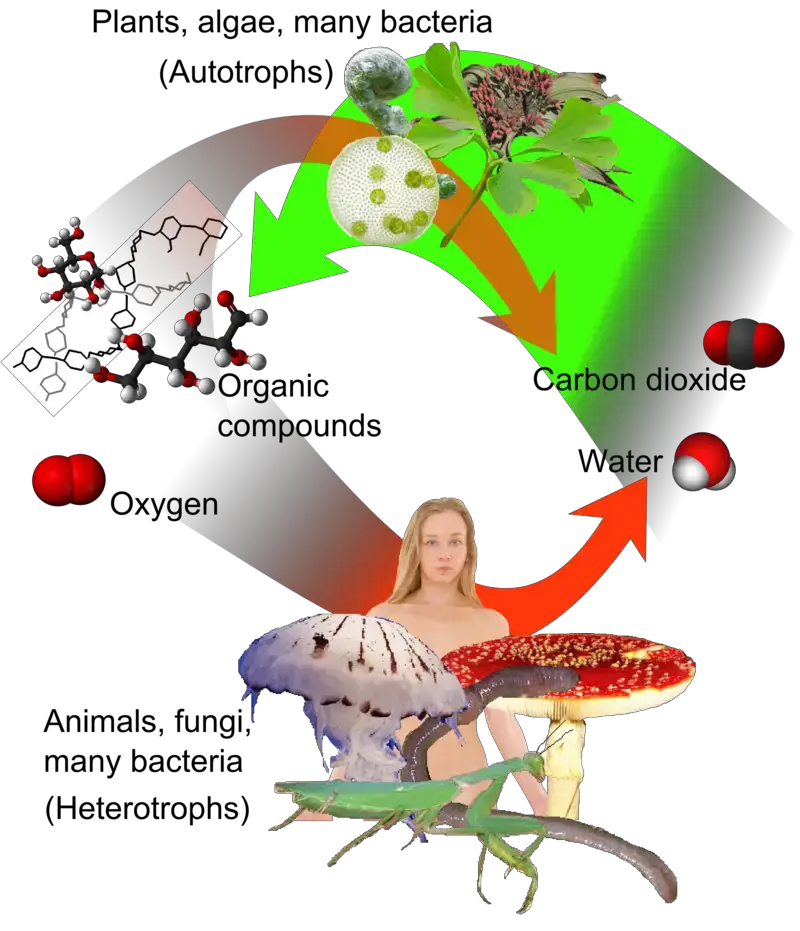
Overview of cycle between autotrophs and heterotrophs.

Algae are a group of autotrophic, non-vascular thalloid plants with chlorophyll and without any formation of embryo. They are mostly photosynthetic in nature. The plant body may be unicellular, colonial or multicellular. Algae possess a simple plant body which is called thallus. The thallus is not differentiated into true root, stem and leaves. They also … Read more

Types of Algae With their example

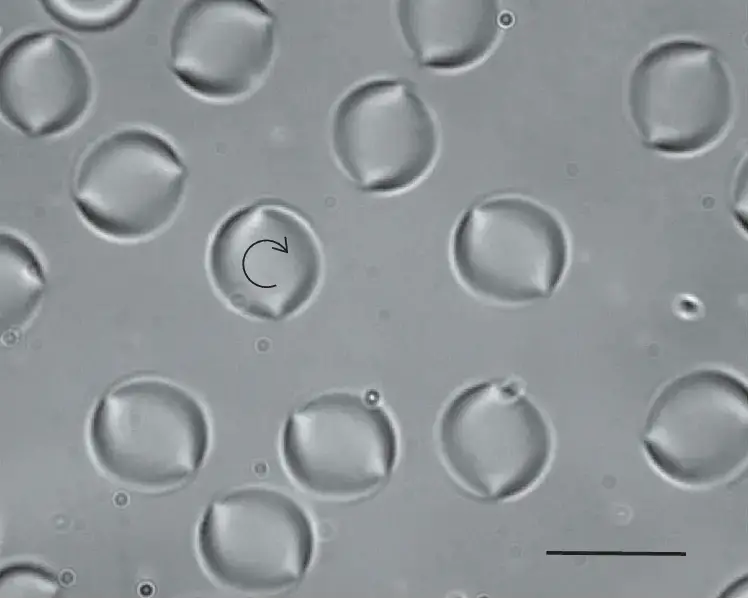
Bright field microscopy images of twisted bipolar droplets in a sample of CCN-37 +5.9%CC. They all rotate clockwise as can be seen in the video S3 of the supplemental material. The bar represents 50 μm. ΔT ¼ 1:25 C and d ¼ 50 μm.

Algae are a group of autotrophic, photosynthetic and non-vascular organisms. They may be unicellular or multicellular in nature. Some algae are microscopic like phytoplankton, while some are large multicellular forms like giant kelp. Algae contain chlorophyll and prepare their food by photosynthesis. During this process they release oxygen and form organic food materials. For this … Read more