

Phagocytosis is a process of engulfing of solid particles by a cell. It is a type of endocytosis. In this process the cell take large particle inside and digest it.
The word phagocytosis is derived from Greek word. It means cell eating. The particle taken inside is generally larger than 0.5 µm.
In unicellular organism like Amoeba, phagocytosis is used for feeding. The food particle is surrounded by the cell surface. Then it is taken inside and digested.
In human body, phagocytosis acts as a defence process. It is done by phagocytic cells. Some important phagocytic cells are macrophages and neutrophils.
In this process the cell membrane first surrounds the particle. Then a vesicle is formed inside the cell. This vesicle is called phagosome.
The phagosome then fuse with lysosome. The lysosome contain digestive enzymes. These enzymes digest and destroy the trapped particle.
Phagocytosis helps to remove bacteria, foreign materials, dead cells and damaged cells. It is important for nutrition in simple organism and defence in higher animals.
Phagocytes
Phagocytes are the cells which perform phagocytosis. It take solid particles inside the cell. Then the particle is digested and destroyed.
These cells engulf particle more than 0.5 µm in size. The particle may be bacteria, dead cell, damaged cell or any foreign body. So these are mainly called eating cells of the body.
Phagocytes are of two types. These are professional phagocytes and non-professional phagocytes.
Professional phagocytes are the active phagocytic cells. They are mainly formed for defence purpose. They move towards microbes, engulf them and kill them inside the cell.
The important professional phagocytes are neutrophils, macrophages, monocytes, dendritic cells, microglia and osteoclasts.
Non-professional phagocytes are the ordinary tissue cells. They can do phagocytosis but in less amount. Example are epithelial cells, endothelial cells, fibroblasts and retinal pigment epithelial cells.
In higher animals, phagocytes are important cells of innate immunity. They destroy microbes by digestive enzymes and reactive oxygen species (ROS). Some phagocytes also help in showing antigen to other immune cells.
The removal of dying body cells by phagocytes is called efferocytosis. It help to remove dead cells without much inflammation.
In unicellular organisms like Amoeba and Paramecium, the cell itself behave as phagocyte. Here it is used for feeding and survival. This feeding process is called phagotrophy.
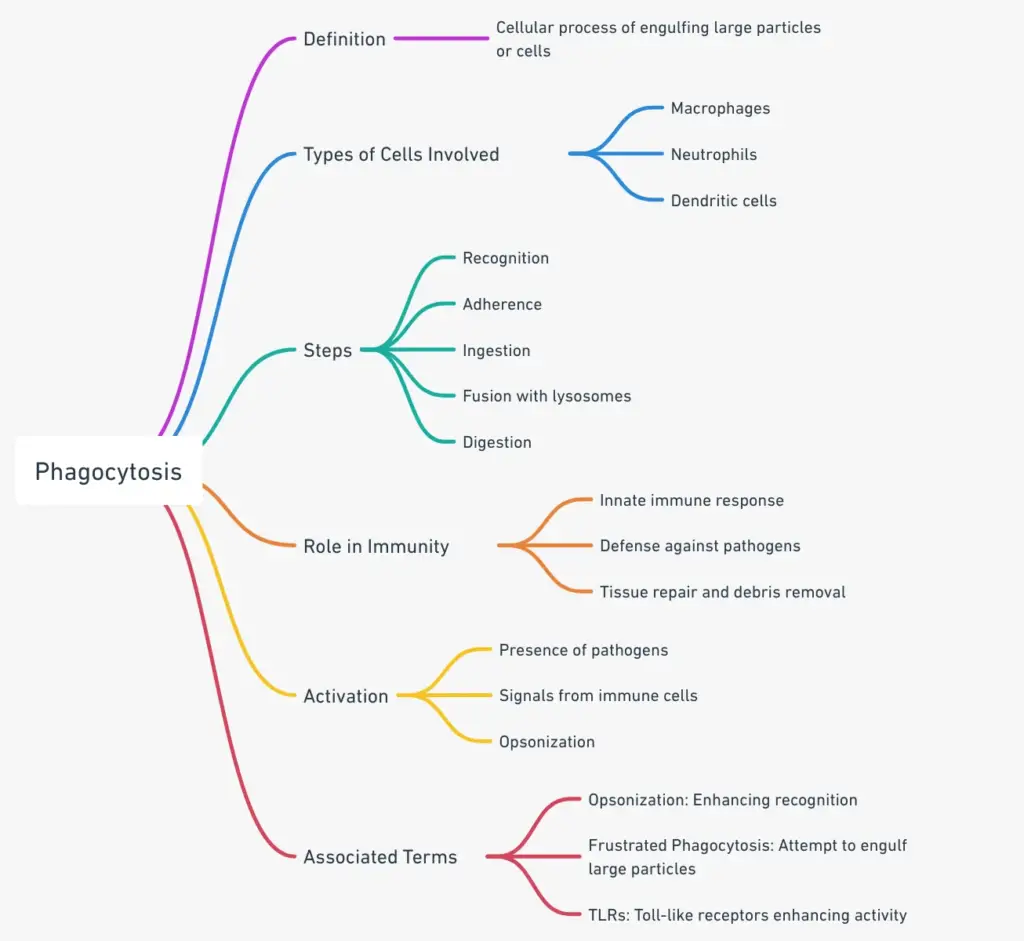
Process of Phagocytosis
The following are the steps of phagocytosis–
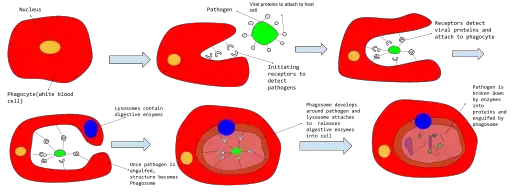
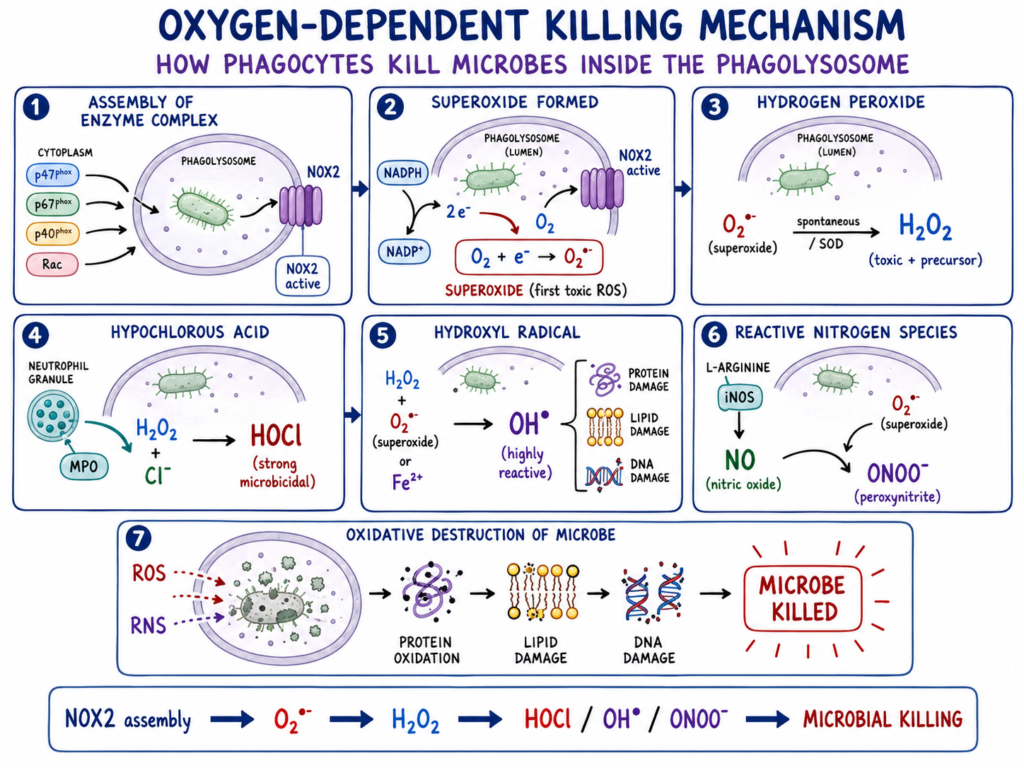
Step 1- Target recognition
In this step the phagocyte first recognize the foreign particle. The particle may be bacteria, dead cell or damaged cell. The receptors present on the surface of phagocyte bind with the particle.
Sometimes the particle is coated by opsonins. These opsonins may be antibodies or complement proteins. This coating make the particle easy for recognition by phagocyte.
Step 2- Formation of phagocytic cup
After recognition, the plasma membrane of the phagocyte start to bend around the particle. A cup like depression is formed. This is called phagocytic cup.
The receptor and particle binding help in this step. It hold the particle at the cell surface.
Step 3- Engulfment of particle
In this step the membrane of phagocyte extend around the particle. These extensions are called pseudopodia.
The actin cytoskeleton help in pushing the membrane forward. The pseudopodia gradually surround the particle from all side. This process is like zipper type engulfment.
Step 4- Formation of phagosome
After complete surrounding, the ends of pseudopodia fuse with each other. The particle become enclosed inside a membrane bound vesicle.
This vesicle is called phagosome. It is newly formed vesicle and contain the engulfed particle inside it.
Step 5- Maturation of phagosome
The newly formed phagosome moves inside the cell. It move toward the inner region of the cell with the help of microtubules.
During this movement, the phagosome fuse with early endosome and then late endosome. The inside of phagosome become more acidic. This is called phagosome maturation.
Step 6- Formation of phagolysosome
In this step the mature phagosome fuse with lysosome. The lysosome contain different digestive enzymes.
After fusion, a new structure is formed called phagolysosome. It is acidic and destructive chamber of the cell.
Step 7- Digestion and killing of particle
Inside the phagolysosome, the particle is digested. The digestive enzymes break down the trapped material.
In case of microbes, killing also occur by respiratory burst. In this process oxygen is used rapidly and toxic substances are formed. These include reactive oxygen species (ROS) and hypochlorous acid (HOCl). These substances damage and kill the microbe.
Step 8- Removal of waste material
After digestion, the useful small materials may be used by the cell. The undigested waste material is removed outside from the cell.
In immune cells, some broken pieces of the microbe are not removed directly. They are shown on the surface of phagocyte as antigen presentation. This help other immune cells to recognize the same pathogen.
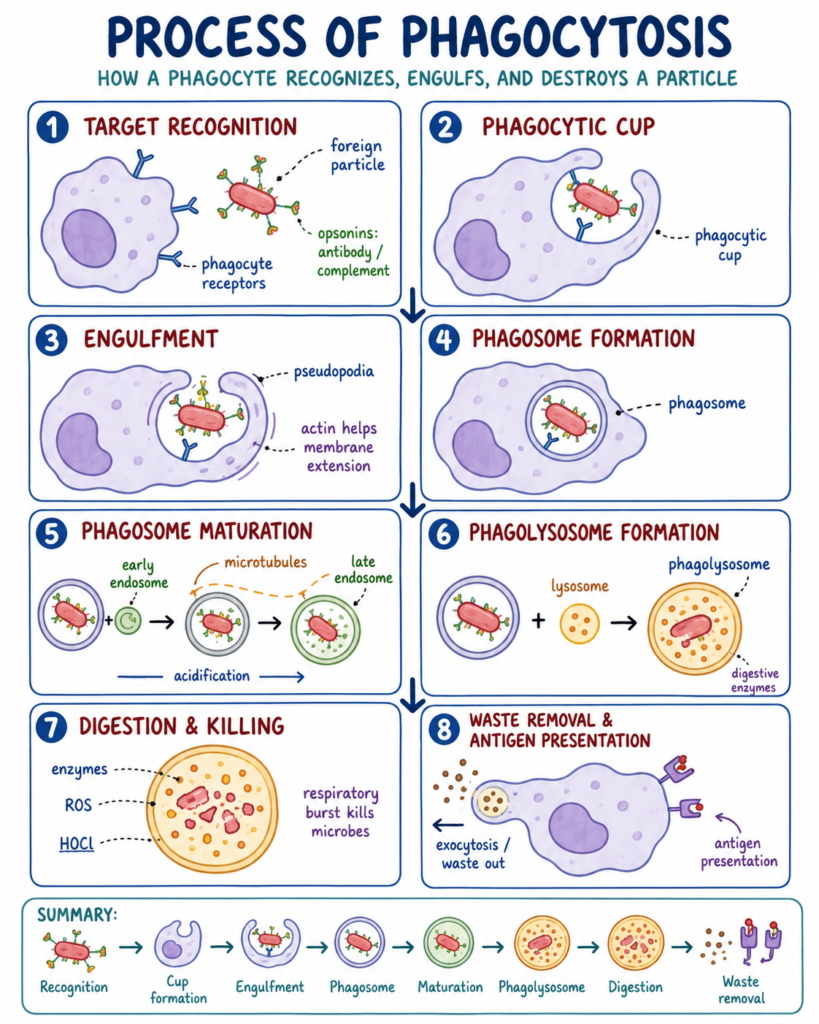
Recognition of Foreign particles for Phagocytosis
The following are the steps of recognition of foreign particles for phagocytosis–
Step 1- Chemotaxis or target recruitment
In this step the phagocyte first comes near to the target. Dead or dying cells release some chemical signals. These are called find-me signals.
The important find-me signals are ATP, UTP, lysophosphatidylcholine (LPC) and sphingosine-1-phosphate (S1P). These chemicals form a chemical path. The phagocyte move along this path towards the target.
Step 2- Checking of healthy body cells
The phagocyte then check whether the cell is healthy body cell or harmful target. Healthy cells have some signals on their surface. These are called don’t-eat-me signals.
The main don’t-eat-me signal is CD47. It bind with SIRPα receptor present on the phagocyte. After this binding, engulfment is stopped. Other inhibitory signals are CD24 and PD-L1.
Step 3- Direct recognition of microbes
In this step the phagocyte directly recognize foreign microbes. It use pattern recognition receptors (PRRs) present on its surface. These receptors bind with pathogen-associated molecular patterns (PAMPs) present on microbes.
The important receptors are scavenger receptors, mannose receptors and C-type lectins. Example of C-type lectins are Dectin-2 and Mincle. These receptors also work with Toll-like receptors (TLRs) for better recognition.
Step 4- Recognition by opsonins
Sometimes the foreign particle is coated by soluble proteins. These coating proteins are called opsonins. This process make the particle more easy to identify.
The important opsonins are antibodies (IgG) and complement fragment iC3b. The phagocyte recognize these tags by Fcγ receptors and complement receptors. This is called opsonic recognition.
Step 5- Detection of eat-me signals
If the target is a dying body cell, then eat-me signals are shown on its surface. The main eat-me signal is phosphatidylserine (PS).
Normally PS remains inside the cell membrane. During apoptosis, it comes on the outer side of membrane. The phagocyte bind with PS by receptors like TIM-4 and BAI-1.
Sometimes PS is recognized indirectly by bridging proteins. These are Gas6 and MFG-E8. Other eat-me signals are calreticulin and plasminogen.
Step 6- Starting of internal signal
After proper binding, the receptors of phagocyte become activated. The bound receptors send signal inside the cell. This step is called signal transduction.
In this step ITAMs are phosphorylated. Then Syk kinase, Rac and Cdc42 become activated. After this the actin cytoskeleton start to work and the cell begin engulfment of the particle.
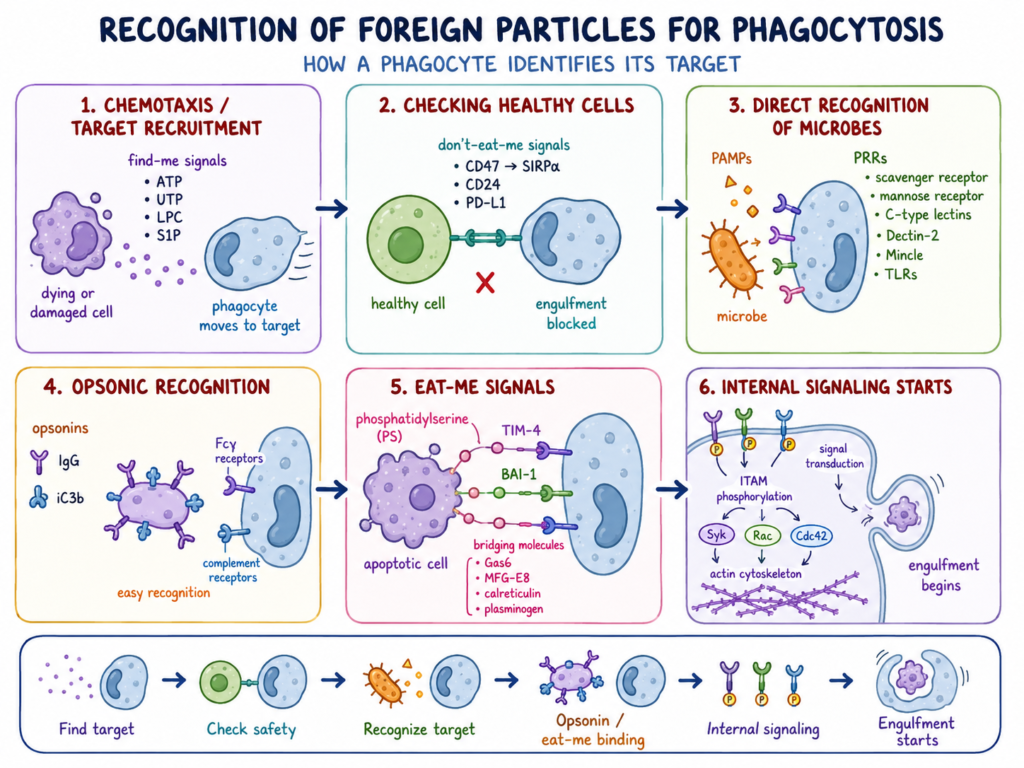
Oxygen-Dependent vs. Oxygen-Independent Killing Mechanisms
Oxygen-dependent killing need oxygen for killing of microbes. It is also called respiratory burst.
Oxygen-independent killing does not need oxygen. It kill microbes by acid, enzymes and lysosomal materials.
Oxygen-Dependent Killing Mechanism
The following are the steps of oxygen-dependent killing mechanism–
Step 1- Assembly of enzyme complex
After engulfment, the microbe is present inside phagolysosome. Then cytoplasmic parts of enzyme move toward phagolysosomal membrane. These are p47phox, p67phox, p40phox and Rac.
These parts join with NOX2 (NADPH oxidase) complex. After this the enzyme complex become active.
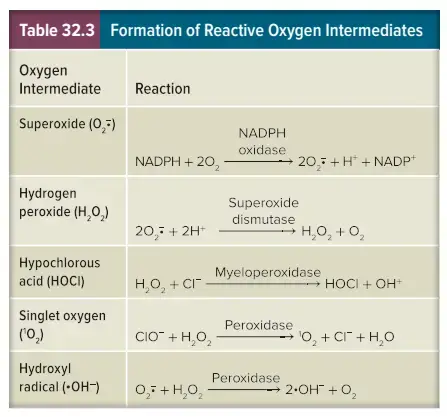
Step 2- Formation of superoxide
In this step NOX2 transfer electrons from NADPH to oxygen. This oxygen is present inside the lumen of phagolysosome.
After this reaction superoxide anion (O₂⁻) is formed. This is the first toxic oxygen product.
The reaction is as follows-
O₂ + e⁻ → O₂⁻
Step 3- Formation of hydrogen peroxide
The superoxide anion then change into hydrogen peroxide (H₂O₂). This may occur by itself or by enzyme superoxide dismutase (SOD).
Hydrogen peroxide is also toxic for microbes. It also acts as raw material for other strong killing substances.
Step 4- Formation of hypochlorous acid
In neutrophils, granules release myeloperoxidase (MPO) inside the phagolysosome. This enzyme use hydrogen peroxide and chloride ion.
Then hypochlorous acid (HOCl) is formed. It is very strong microbicidal substance. It kill microbes very rapidly.
The reaction is as follows-
H₂O₂ + Cl⁻ → HOCl
Step 5- Formation of hydroxyl radical
Some hydrogen peroxide reacts with superoxide or iron. Then hydroxyl radical (OH•) is formed.
This radical is highly reactive. It damage protein, lipid and nucleic acid of microbes.
Step 6- Formation of reactive nitrogen species
In this step enzyme inducible nitric oxide synthase (iNOS) form nitric oxide (NO). This NO move into the phagolysosome.
Then NO combine with superoxide and form peroxynitrite (ONOO⁻). It is a strong reactive nitrogen substance.
Step 7- Oxidative destruction of microbe
The reactive oxygen species (ROS) and reactive nitrogen species (RNS) attack the microbe. They oxidise proteins, damage membrane lipid and destroy microbial DNA.
So the microbe lose its structure and normal function. Finally the engulfed microbe is killed inside the phagolysosome.
Oxygen-Independent Killing Mechanism
The following are the steps of oxygen-independent killing mechanism–
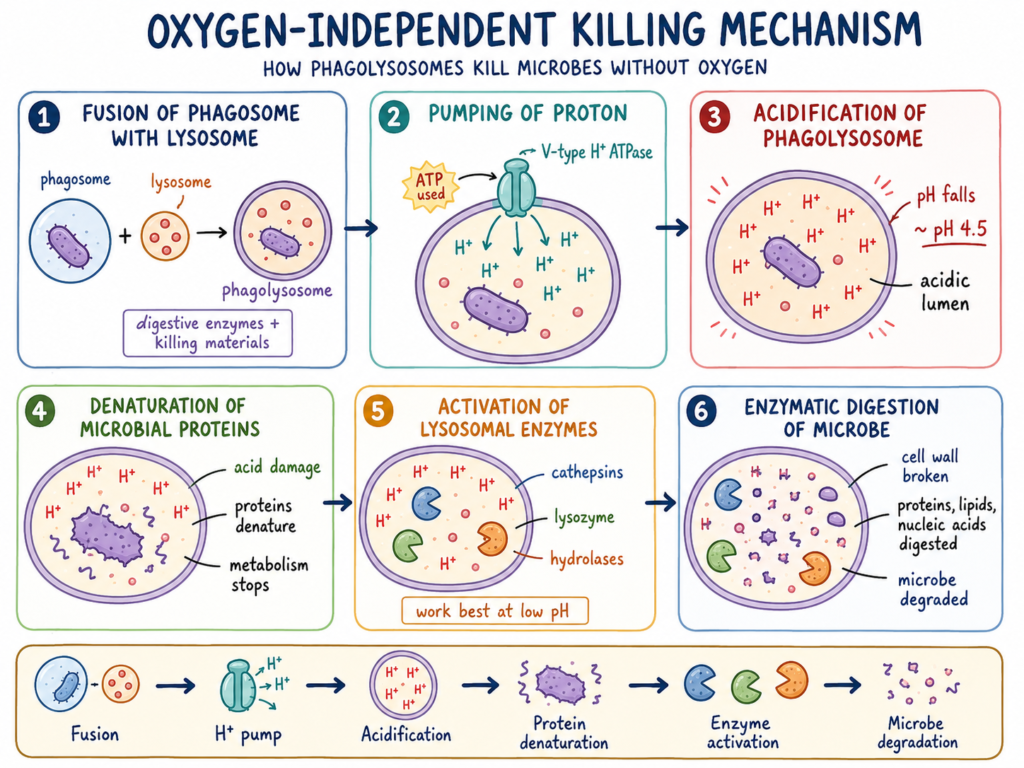
Step 1- Fusion of phagosome with lysosome
After engulfment, the phagosome fuse with lysosome. Then phagolysosome is formed.
The lysosome bring digestive enzymes and killing materials into the vesicle. These materials act without oxygen.
Step 2- Pumping of proton
The membrane of phagolysosome contain V-type H⁺ ATPase. This pump push H⁺ ions inside the lumen.
For this process ATP is used. The inside of phagolysosome gradually become acidic.
Step 3- Acidification of phagolysosome
Due to continuous entry of H⁺ ions, the pH become very low. It may fall up to about pH 4.5.
This acidic condition itself is harmful for microbes. Many microbial activities stop in this low pH.
Step 4- Denaturation of microbial protein
The acid environment denature microbial proteins. The proteins lose their normal shape.
After this the microbe cannot perform its normal metabolism. So killing start by acidic damage.
Step 5- Activation of lysosomal enzymes
The low pH also activate lysosomal enzymes. Important enzymes are cathepsins, lysozyme and other hydrolases.
These enzymes work best in acidic condition. So acidification is needed for proper digestion.
Step 6- Enzymatic digestion of microbe
The activated enzymes digest the microbial parts. Lysozyme break bacterial cell wall. Other hydrolases digest proteins, lipids and nucleic acids.
Thus the engulfed microbe is broken into small fragments. This is called degradation of the microbe.
Main difference
In oxygen-dependent killing, oxygen is used and toxic products like O₂⁻, H₂O₂, HOCl, OH• and ONOO⁻ are formed.
In oxygen-independent killing, oxygen is not used. Killing occur by low pH, lysosomal enzymes and digestive substances inside phagolysosome.
Phagocytosis in Single-Celled Organisms
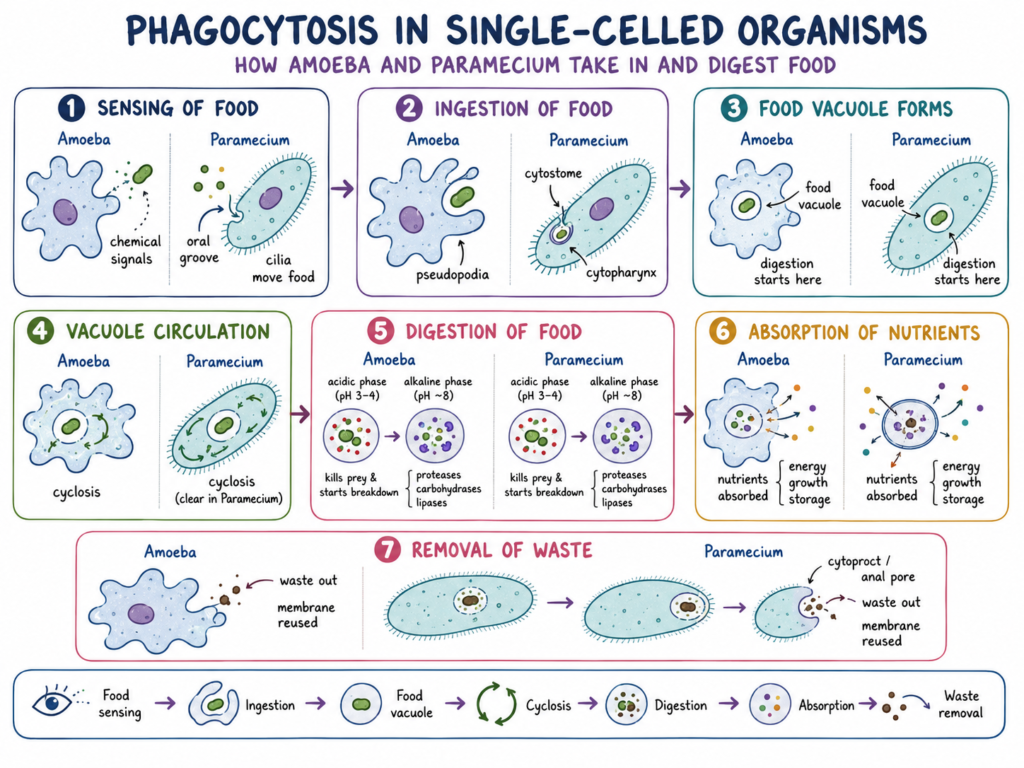
Phagocytosis in single-celled organisms is mainly a feeding process. It is used for taking food particles inside the cell. This type of nutrition is also called phagotrophy.
The following are the steps of phagocytosis in single-celled organisms-
Step 1- Sensing of food particle
In this step the organism first detect the food particle. The food may be bacteria, algae or other small particles. Amoeba detect food by chemical signals and move towards it.
In Paramecium, food is collected by the beating of cilia. The cilia push water and food particles towards the oral groove.
Step 2- Ingestion of food
In Amoeba, the cell surface extend around the food. These extensions are called pseudopodia. The pseudopodia slowly surround the food particle.
In Paramecium, food enter through cytostome or cell mouth. Then it passes into cytopharynx. From there food is taken inside the cell.
Step 3- Formation of food vacuole
After food enter inside, the cell membrane pinch off around the food. A membrane bound sac is formed. This sac is called food vacuole.
The food vacuole contain the food particle. It is the place where digestion will occur.
Step 4- Circulation of food vacuole
The food vacuole moves in the cytoplasm. This movement is called cyclosis. It is clearly seen in Paramecium.
During this movement, the vacuole comes in contact with digestive materials present in the cytoplasm.
Step 5- Digestion of food
The digestive enzymes enter into the food vacuole. Digestion occur in two phases.
In the first phase, the food vacuole becomes acidic. The pH becomes about 3 to 4. This acidic condition kill the prey and start breaking of food.
In the second phase, the vacuole becomes alkaline. The pH becomes about 8. In this phase enzymes like proteases, carbohydrases and lipases digest the food completely.
Step 6- Absorption of nutrients
After digestion, the soluble food materials pass out from the vacuole. They enter into the cytoplasm.
These nutrients are used for energy, growth and other cellular activities. Some nutrients may also be stored by the cell.
Step 7- Removal of waste
After digestion, undigested materials remain in the vacuole. The vacuole becomes smaller and moves towards the cell surface.
In Paramecium, the waste is removed through cytoproct or anal pore. After removal, the vacuole membrane may be reused by the cell.
Diseases related to Phagocytosis
The following are the diseases related with defect or change in phagocytosis–
- Chronic Granulomatous Disease (CGD) – It is an inherited disease. In this disease NOX2 enzyme of neutrophils is defective. So respiratory burst is not properly formed. ROS are not produced properly. The engulfed bacteria remain alive inside phagolysosome.
- Inflammatory Bowel Disease (IBD) – It include Crohn’s disease and ulcerative colitis. In this condition removal of dying cells by efferocytosis is poor. Dead neutrophils are collected in intestine. Then they break and release toxic materials. This causes long time inflammation.
- Nonalcoholic Fatty Liver Disease (NAFLD) – In this disease fat is deposited in liver. The liver phagocytic cells called Kupffer cells become weak in function. Dead liver cells are not removed properly. This causes liver inflammation and later fibrosis.
- Nonalcoholic Steatohepatitis (NASH) – It is severe form of fatty liver disease. In this disease Kupffer cells fail to clear damaged liver cells. Receptors like MerTK and CD36 are affected. So inflammation become more in liver tissue.
- Acute and Chronic Pancreatitis – In this disease macrophages do not clear dead neutrophils properly. The NETs are collected in pancreatic tissue. It is toxic for tissue. So pancreatic damage increase and chronic inflammation may occur.
- Chronic Gastritis and Peptic Ulcer Disease – It is caused mainly by Helicobacter pylori. This bacteria produce VacA and CagA. These factors stop proper fusion of phagosome with lysosome. So bacteria is not killed properly and inflammation continue in stomach.
- Systemic Lupus Erythematosus (SLE) – In this disease apoptotic cells are not cleared properly. The dead cells rupture and release nuclear materials. These materials act as self antigen. Then autoimmune reaction is started.
- Cancer – Some cancer cells escape from phagocytes. They show CD47 on their surface. CD47 is a don’t-eat-me signal. So phagocyte cannot engulf the cancer cell properly.
- Tumor Progression – In tumor, phagocytosis may be altered. Tumor cells avoid killing by immune phagocytes. Some tumor cells also take nutrients by macropinocytosis. This helps in growth of tumor.
- Neurofibromatosis Type 1 – It is a genetic disease due to mutation in NF1 gene. This gene form neurofibromin protein. It is related with membrane change during phagocytosis and fluid uptake. Defect in this gene cause tumors in nervous system.
- Tuberculosis – It is caused by Mycobacterium tuberculosis. This bacteria enter inside phagocyte. It block phagosome-lysosome fusion. It also stop acidification. So bacteria survive inside the cell.
- Legionnaires’ Disease – It is caused by Legionella pneumophila. This bacteria change the membrane of phagosome. It stop lysosomal fusion. So the bacteria is not destroyed inside phagocyte.
- Q Fever – It is caused by Coxiella burnetii. This pathogen survive inside phagocytic cells. It disturb normal killing process. So phagocytosis become incomplete.
- Leishmaniasis – It is caused by Leishmania species. The parasite live inside macrophages. It avoid killing inside phagolysosome. So infection remains for long time.
- Aspergillosis – It is caused by Aspergillus species. In weak immunity, phagocytes cannot kill fungal spores properly. So fungal growth occur in tissue. This is related with poor phagocytic killing.
Significance of Phagocytosis
The following are the significance of phagocytosis–
- Body defence – Phagocytosis is an important defence process of the body. It help to identify, engulf and destroy microbes. Bacteria and other foreign particles are removed by this process.
- Innate immunity – It is a part of innate immune system. Macrophages, neutrophils and other phagocytic cells act quickly against pathogen. It gives first line protection before specific immunity start.
- Antigen presentation – Some professional phagocytes digest the microbes and show their small fragments on cell surface. This is called antigen presentation. It help in activation of adaptive immune system.
- Removal of dead cells – Phagocytosis remove dead and dying cells from tissue. This process is called efferocytosis. It prevent bursting of dead cells and prevent release of harmful materials.
- Tissue repair – By removing damaged cells and cell debris, phagocytosis help in tissue healing. It also reduce inflammation in damaged area. So tissue condition become normal slowly.
- Nutrition in unicellular organisms – In organisms like Amoeba and Paramecium, phagocytosis is used for feeding. Food particles are engulfed and digested inside food vacuole. This is called phagotrophy.
- Cleaning of body tissue – It remove foreign particles, dust, cell debris and old cells. So it keep the tissue clean. It is important for normal body condition.
- Evolutionary importance – Phagocytosis is also important in evolution of eukaryotic cell. According to endosymbiotic theory, an ancient cell engulfed bacteria. Later it formed mitochondria. So it has role in origin of complex cell.
Examples of Phagocytosis
The following are some important examples of phagocytosis–
- Feeding in Amoeba – Amoeba show phagocytosis for taking food. It form pseudopodia around bacteria or food particle. Then food is taken inside and food vacuole is formed.
- Feeding in Dictyostelium discoideum – Dictyostelium discoideum is a soil amoeba. It engulf bacteria from soil by pseudopodia. This process gives nutrients and energy to the cell.
- Feeding in Paramecium – Paramecium use cilia for collecting food. The cilia push bacteria, algae and yeast toward oral groove. Then food enter inside and digestion occur in food vacuole.
- Macrophage killing bacteria – Macrophages are professional phagocytic cells. They engulf bacteria like Escherichia coli. Then bacteria are destroyed inside phagolysosome by enzymes and toxic substances.
- Neutrophil destroying pathogen – Neutrophils engulf invading microbes during infection. After engulfment they produce reactive oxygen species (ROS) and acidic enzymes. These kill the microbe inside the cell.
- Phagocytosis of Mycobacterium tuberculosis – Macrophages engulf Mycobacterium tuberculosis. But this bacteria may survive by stopping phagosome-lysosome fusion. So it is also an example of altered phagocytosis.
- Removal of dead cells – Macrophages remove dead and dying body cells. This is called efferocytosis. Dying neutrophils show eat-me signals and then they are engulfed.
- Cleaning of tissue debris – After injury, phagocytes remove cell debris and damaged cells. This keep the tissue clean. It also help in repair of damaged tissue.
References
- AMBOSS. (n.d.). Respiratory burst. https://www.amboss.com/us/snippet/Respiratory_burst
- American Museum of Natural History. (n.d.). Phagocytosis: Cells that eat other cells. https://www.amnh.org/explore/news-blogs/cells-eating-cells-phagocytosis
- Bloomfield, G., Traynor, D., Sander, S. P., Veltman, D. M., Pachebat, J. A., Kay, R. R., & et al. (2015). Neurofibromin controls macropinocytosis and phagocytosis in Dictyostelium. eLife, 4, e04940. https://doi.org/10.7554/eLife.04940
- Cellular mechanisms underlying the impairment of macrophage efferocytosis. (n.d.). PubMed Central (PMC). https://pmc.ncbi.nlm.nih.gov/articles/PMC9992097/
- Control of phagocytosis by microbial pathogens. (n.d.). PubMed Central (PMC). https://pmc.ncbi.nlm.nih.gov/articles/PMC5660709/
- Dictyostelium. (n.d.). Escalante Lab. https://www2.iib.uam.es/rescalante_lab/Sitio_web/Dictyostelium.html
- Drugging the efferocytosis process: Concepts and opportunities. (n.d.). PubMed Central (PMC). https://pmc.ncbi.nlm.nih.gov/articles/PMC9157040/
- Editorial: Phagocytosis: Molecular mechanisms and physiological… (n.d.). PubMed Central (PMC). https://pmc.ncbi.nlm.nih.gov/articles/PMC7533641/
- Efferocytosis of pathogen-infected cells. (n.d.). PubMed Central (PMC). https://pmc.ncbi.nlm.nih.gov/articles/PMC5743670/
- Efferocytosis: The silent guardian of tissue homeostasis and… (n.d.). PubMed Central (PMC). https://pmc.ncbi.nlm.nih.gov/articles/PMC12841828/
- Evolutionary, biophysical, and molecular paradigms of phagocytosis: From protozoan phagotrophy to metazoan host defense. (n.d.).
- Food vacuole membrane growth with microtubule-associated membrane transport in paramecium. (n.d.). PubMed Central (PMC). https://pmc.ncbi.nlm.nih.gov/articles/PMC2109358/
- Fu, Y. L., & Harrison, R. E. (2021). Microbial phagocytic receptors and their potential involvement in cytokine induction in macrophages. Frontiers in Immunology, 12, 662063. https://doi.org/10.3389/fimmu.2021.662063
- Guo, P., & Wang, X. (2010). Rab GTPases act in sequential steps to regulate phagolysosome formation. Small GTPases, 1(3), 170–173. https://doi.org/10.4161/sgtp.1.3.14511
- Immune-like phagocyte activity in the social amoeba. (n.d.). PubMed Central (PMC). https://pmc.ncbi.nlm.nih.gov/articles/PMC3291017/
- Myeloperoxidase: A front-line defender against phagocytosed microorganisms. (n.d.). PubMed Central (PMC). https://pmc.ncbi.nlm.nih.gov/articles/PMC3545676/
- Neupane, L. (2023, August 3). Feeding mechanism in Paramecium. Microbe Notes. https://microbenotes.com/feeding-mechanism-in-paramecium/
- Nguyen, J. A., & Yates, R. M. (2021). Better together: Current insights into phagosome-lysosome fusion. Frontiers in Immunology, 12, 636078. https://doi.org/10.3389/fimmu.2021.636078
- Paramecium. (2026, June 8). In Wikipedia. https://en.wikipedia.org/w/index.php?title=Paramecium&oldid=1358457803
- Phagocytosis at a glance. (n.d.). PubMed Central (PMC). https://pmc.ncbi.nlm.nih.gov/articles/PMC12273632/
- Phagocytosis in cellular defense and nutrition: A food-centered approach to the evolution of macrophages. (n.d.). PubMed Central (PMC). https://pmc.ncbi.nlm.nih.gov/articles/PMC6750737/
- Phagocytosis: Our current understanding of a universal biological… (n.d.). PubMed Central (PMC). https://pmc.ncbi.nlm.nih.gov/articles/PMC7280488/
- Physical constraints and forces involved in phagocytosis. (n.d.). PubMed Central (PMC). https://pmc.ncbi.nlm.nih.gov/articles/PMC7304309/
- Pseudopodia. (2026, April 10). In Wikipedia. https://en.wikipedia.org/w/index.php?title=Pseudopodia&oldid=1348088227
- QIAGEN. (n.d.). Phagosome maturation pathway diagram and gene list. GeneGlobe. https://geneglobe.qiagen.com/us/knowledge/pathways/phagosome-maturation
- Reactive oxygen species in phagocytic leukocytes. (n.d.). PubMed Central (PMC). https://pmc.ncbi.nlm.nih.gov/articles/PMC2491708/
- Respiratory burst. (2026, March 11). In Wikipedia. https://en.wikipedia.org/w/index.php?title=Respiratory_burst&oldid=1342861604
- Sheposh, R. (2017). Phagocytosis. EBSCO Research Starters. https://www.ebsco.com/research-starters/science/phagocytosis
- The mechanism of phagocytosis: Two stages of engulfment. (n.d.). PubMed Central (PMC). https://pmc.ncbi.nlm.nih.gov/articles/PMC4190621/
- The origin of phagocytosis in Earth history. (n.d.). PubMed Central (PMC). https://pmc.ncbi.nlm.nih.gov/articles/PMC7333901/
- The spatial resolution limit of phagocytosis. (n.d.). PubMed Central (PMC). https://pmc.ncbi.nlm.nih.gov/articles/PMC10027436/
- Timing of phagosome maturation depends on their transport switching from actin to microtubule tracks. (n.d.). PubMed Central (PMC). https://pmc.ncbi.nlm.nih.gov/articles/PMC10759163/
- Vaia Editorial Team. (2023, August 22). Pseudopodia: Movement, function & structure. Vaia. https://www.vaia.com/en-us/explanations/biology/biological-organisms/pseudopodia/
- Vedantu. (n.d.). Paramecium: Structure, function, nutrition, reproduction, classification. https://www.vedantu.com/neet/paramecium
- Xpf suppresses the mutagenic consequences of phagocytosis in Dictyostelium. (n.d.). PubMed Central (PMC). https://pmc.ncbi.nlm.nih.gov/articles/PMC5201022/
- Ye, S.-Y., Qu, Y., Zhang, J.-H., Wang, X.-H., Wang, J.-B., Xue, Y.-N., & Liu, J.-D. (2026). Neutrophil efferocytosis in chronic inflammatory gastrointestinal diseases: Mechanistic insights and therapeutic potential. Frontiers in Immunology, 17, 1835168. https://doi.org/10.3389/fimmu.2026.1835168
Thank You. This really helped me as a reference for my college project.
Mundhe, R. (2023) Phagocytosis – how immune system fights off infections in 6 steps, Biology Ideas. Biology Ideas. Available at: Biology Ideas (Accessed: March 20, 2023).