

Mouth pipette is a laboratory method of pipetting in which the suction is created by mouth to draw liquid into a glass pipette tube like drinking with a straw. It was used for taking and transferring small amount of liquids from one container to another container. The volume taken is controlled by the user by mouth suction and stopping the flow.
In this method the air pressure inside the pipette is reduced by lung power and the liquid rises into the pipette. The liquid can be chemical solution, blood sample, microbial culture, or other specimens. After taking the liquid, it is released into another vessel for mixing, transfer, or testing.
Mouth pipetting is an old practice and now considered highly dangerous and not safe for laboratory work. There is chance of accidental swallowing or aspiration of toxic, corrosive and poisonous liquids. It also creates risk of exposure to infectious aerosols, bacteria and hazardous vapours during sucking and blowing out.
Because of these hazards this practice has been banned and phased out from scientific and clinical laboratories. Now safer mechanical pipetting aids are used such as rubber bulb, pipette filler and automatic micropipette. These devices give better control, proper measurement and protect the user from direct mouth contact.
Principle of Mouth Pipette
Mouth pipette principle is based on the creation of negative pressure (vacuum) inside a glass pipette by using mouth suction. The top end of the pipette is kept inside the mouth and the lower tip is placed into the liquid sample. By sucking air out, the pressure inside the pipette is reduced and the liquid is drawn upward into the tube.
In this method the liquid is usually sucked slightly above the required graduation mark (about 1 cm). Then the mouth is removed quickly and the upper opening is closed tightly by index finger so that the liquid column is trapped inside the pipette. This holding is done by maintaining the pressure difference and preventing air entry.
For taking exact volume, the finger pressure is released slowly so that air enters in controlled manner and the liquid drains down gradually. The meniscus is adjusted to match the required mark at eye level. After reaching the mark, the liquid is delivered to another container by removing the finger and allowing the liquid to flow out.
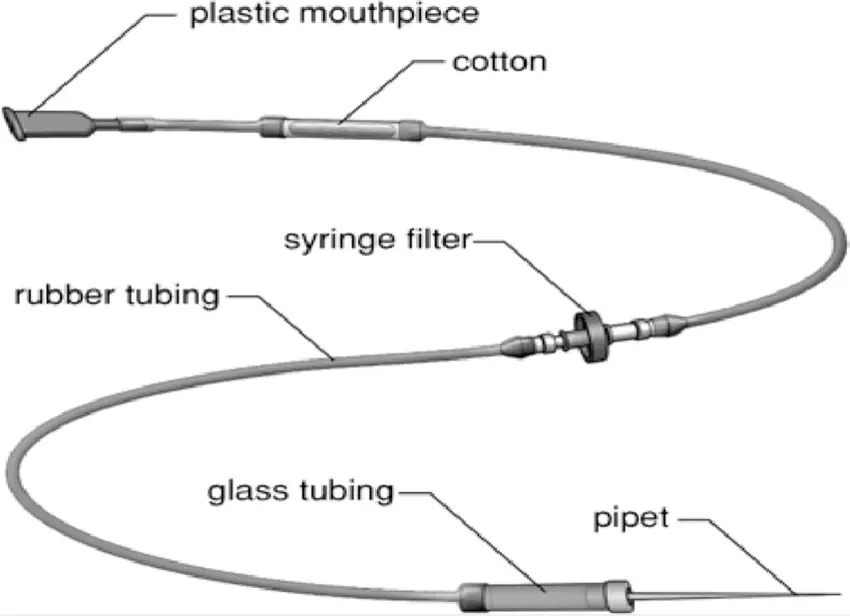
Parts of a Mouth Pipette
- Pipette tube. It is a long narrow glass tube which is open at both ends. The upper end is a little wider for suction and the lower end is narrow for delivery of liquid.
- Tapered tip. It is the pointed lower end of the pipette. It helps in controlling the flow rate and it allows accurate drop placing during dispensing.
- Calibration marks. These are graduated markings present along the length of the pipette. It is used to measure and transfer specific volume of liquid.
- Upper opening. It is the top end of the pipette where suction is applied by mouth. It helps in creating pressure difference so that the liquid is drawn into the tube.
- Rubber bulb (optional). It may be attached on upper end to create suction without mouth suction. It reduces risk of contamination and exposure.
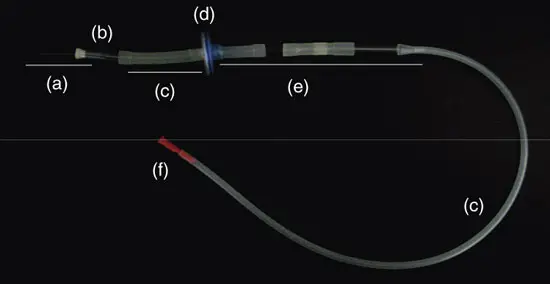
How to Use a Mouth Pipette
Important safety warning. Mouth pipetting is an obsolete and highly dangerous practice and it is prohibited in modern laboratories. It can cause accidental ingestion of toxic, corrosive, radioactive, or infectious materials. It can also lead to inhalation of infectious aerosols and contamination from fingers to mouth.
- Position the pipette. Mouthpiece is placed in the mouth and the glass capillary tip is dipped into the sample solution.
- Aspirate the liquid. Suction is created by mouth (as a vacuum) and the liquid is drawn upward in the glass tube. The liquid is usually sucked about 1 cm above the required graduation mark.
- Seal the opening. The mouth is removed from the mouthpiece and the upper end is closed quickly using the index finger. The liquid is held inside by trapping the air column and maintaining pressure.
- Adjust the volume. The pipette is held at eye level. Finger pressure is reduced gently so that the liquid drains slowly until the meniscus matches the required graduation mark.
- Clean the exterior. The outside of the pipette is wiped with tissue paper to remove any liquid on the surface and to avoid contamination of receiving container.
- Dispense the liquid. The pipette tip is taken to the new container and the finger is released so the liquid drains by gravity. If it is a TD (to deliver) pipette, the last small drop is left in the tip. If it is a blow-out pipette, the final drop is expelled out by blowing.
Uses of Mouth Pipette
- Volumetric transfer. It is used for measuring and transferring specific volume of liquid from one vessel to another.
- Clinical specimen handling. It was used to suck and transfer blood, urine and other body fluids in medical laboratories.
- Microbiology and cell culture. It was used to aspirate and transfer infectious suspensions and live bacterial cultures (tuberculosis, typhoid) and other microbial samples.
- Chemical analysis. It was employed in titration and dilution works to draw acids (HCl, oxalic acid), bases, toxic solvents (chloroform, ether) and poisons.
- Blood diluting and testing. It was used with special blood pipettes and haemocytometer for dilution and counting of RBC and WBC. It was also used in ESR (sed rate) type measurements.
- Embryology and IVF. It was used in delicate transfer of pre-implantation embryos, oocytes handling, and denudation of cumulus cells, because suction control was easy by mouth.
- Neurobiology (patch clamping). It was used to apply gentle suction in patch clamp method to help sealing and break-in at cell membrane with glass pipette.
- Animal and genetic research. It was used in gene targeting work, mouse model production, and picking tiny specimens like worm larvae.
- Handling radioactive materials. It was historically used to take and transfer radioactive solutions and elements like plutonium.
- Food and beverage testing. It was used to handle and test consumable samples like wine, milk and milk products.
Important Safety Considerations for Mouth Pipetting
- Strict prohibition. Mouth pipetting is banned by major safety organizations (CDC, NIH, OSHA). It is a common source of laboratory acquired infection, chemical burns and systemic poisoning.
- Use mechanical alternatives. Mouth suction should be completely avoided. Mechanical pipette aids, rubber bulbs and automatic micropipettes are used for safe pipetting.
- Avoid fluid aspiration. Lung power suction can pull liquid directly into mouth and throat. There is risk of swallowing infectious cultures, toxic solvents, corrosive acids and radioactive materials.
- Prevent vapor and aerosol inhalation. Even if liquid is not swallowed, oral suction can draw aerosol and vapours into respiratory system. Microbial aerosols, radioactive vapours and toxic fumes can be inhaled.
- Beware of finger contamination. The proximal end is closed and adjusted by finger. If finger is contaminated and then mouth is applied, indirect oral contamination can occur.
- Use high efficiency filters for specialized exceptions. In rare specific work (embryo micromanipulation, IVF) mouth pipetting may be used for tactile feedback. In such cases the assembly must be fitted with 0.22 µm filter to trap microorganisms and protect operator and specimen.
Drawbacks of Mouth Pipette
- Accidental ingestion. It is the most dangerous drawback. The hazardous liquid can be swallowed or aspirated by mistake. It may include infectious bacterial cultures, toxic solvents and radioactive materials.
- Inhalation of vapours and aerosols. During oral suction, aerosols and fumes are pulled into lungs. Infectious aerosols and toxic chemical vapours can enter respiratory tract.
- Finger to mouth contamination. The upper end is sealed by finger and then placed near mouth. If finger is contaminated, oral cavity gets contaminated indirectly.
- Severe chemical burns. If concentrated acids or bases are mouth pipetted, it can cause burns in mouth and throat. Tissue necrosis may occur in oral cavity and gastrointestinal tract.
- Systemic poisoning. Volatile chemicals like chloroform or phenol can be inhaled or aspirated. It can cause acute poisoning, dizziness and sometimes loss of consciousness.
- Sample cross contamination. Same glass pipette was often used for more than one sample. It increases chance of cross contamination of experiments and wrong results.
- Lack of precision. Human lung power and visual meniscus adjustment is not consistent. It is tedious, error prone and reproducibility is poor compared to mechanical micropipettes.
References
- Davis, L. (2018, February 16). ‘Programmable droplets’ could replace pipettes. Lab + Life Scientist.
- Bailey, S. (1964). Hazards of mouth pipetting. Defense Technical Information Center.
- ResearchGate. (n.d.). Mouth pipetting in haematology practical in undergraduate training of medical and dental students.
- Critical Process Filtration. (2024, June 14). 0.22 vs 0.2 micron rating — is there really a difference?
- Pham, V. (n.d.). 4: A comprehensive exploration of safety protocols and regulatory frameworks. In Biotechnology Techniques: From Theory to Practice. Biology LibreTexts.
- Lamb, H. (2019, July 23). A brief history of mouth pipetting. The Notes.
- Labrat d’Or. (2025, January 21). A brief history of pipetting.
- PubMed Central. (n.d.). A short history of occupational disease: 1. Laboratory-acquired infections.
- PubMed Central. (n.d.). A case of laboratory-acquired Salmonella Typhi infection due to phage typing in Japan: Whole-genome sequencing confirms the source of infection.
- Laboratory Safety Monograph. (1979, January 2). Aerosol generation from practices and equipment in the laboratory.
- Centers for Disease Control and Prevention. (2026, March 18). Biosafety in microbiological and biomedical laboratories (BMBL) 6th edition.
- Centers for Disease Control and Prevention, & National Institutes of Health. (2020). Biosafety in microbiological and biomedical laboratories (6th ed.). U.S. Department of Health and Human Services.
- Drummond Scientific Company. (2021). Catalog 2022.
- Boston University Office of Research. (n.d.). Chapter 5: Laboratory biosafety practices. In Laboratory safety manual.
- ConductScience. (2026, February 16). Comprehensive pipette guide.
- CooperSurgical. (n.d.). Denudation and handling pipettes.
- PubMed. (n.d.). Development and validation of an automated robotic system for preparation of embryo culture dishes.
- Thomas Scientific. (n.d.). Drummond pipets.
- ART Lab Solutions. (2026). Embryology techniques for bovine gamete and embryo successful outcomes.
- MEDAKA BOOK. (n.d.). Figure 4-4.
- Kemm, F. (n.d.). From innovation to repetition – a history of pipetting. Singer Instruments.
- Integra Biosciences. (n.d.). From mouth pipetting to fully automated liquid handlers.
- Linx Vapor. (2021, October 1). Glass vs organic glass mouthpiece.
- The Lab Warehouse. (n.d.). Haemacytometer pipette with tubing and mouthpiece red cell.
- Phillips, G. B., & Bailey, S. P. (1964). Hazards of mouth pipetting. American Journal of Medical Technology.
- theredditpineapple. (2025). Is my school’s lab considered unsafe? [Online forum post]. Reddit.
- Pasteur Brewing. (n.d.). Louis Pasteur and the Pasteur pipet.
- Slideshare. (n.d.). Louis Pasteur and Robert Koch.
- Bagang, K. (n.d.). Mohr pipette usage and technique guide. Scribd.
- Biotech, Inc. (n.d.). Mouth pieces.
- Kreston, R. (2013, May 10). Mouth pipetting: Blogger reminds medical laboratory technologists of an era when this was leading source of clinical laboratory-acquired infections. Dark Daily.
- ResearchGate. (n.d.). Mouth-pipette and its components.
- Yedowitz, M. (2025, November 2). Pipette technology over the years. BRANDTECH Scientific.
- OER Commons. (n.d.). Pipette aids and pipet – Biotech lab techniques manual.
- Michigan State University Environmental Health & Safety. (n.d.). Pipetting.
- Campwala, M. (n.d.). Plastic vs glass in laboratory. Science Equip.
- Annis, F. (n.d.). Proper pipetting procedures – adjustable pipettes. Universal Medical Inc. Blog.
- Advamed Hospital. (2026, March 30). Robotic IVF technology: Improving fertility treatment.
- Imprimis IVF. (2026). Robotics & automation in IVF labs in 2026.
- Pobel. (2026, February 10). Rubber pipette bulbs and pipette aspiration devices: Types and how to use them. Vidrio Industrial Pobel.
- Discover Magazine. (n.d.). Suck it: The ins and outs of mouth pipetting.
- ABSA International. (n.d.). Summary of changes to the biosafety in microbiological and biomedical laboratories 6th edition (BMBL-6) – Section 1-4.
- University of British Columbia. (n.d.). Technique: Using a volumetric pipet.
- The analytical evolution and systematic obsolescence of oral volumetric aspiration: A technical and regulatory review of laboratory fluidics. (n.d.).
- Pipette.com Team. (2025, April 10). The evolution of micropipettes: A history of lab pipetting innovation. Pipette.com.
- Crystalgen. (2024, January 16). The fascinating history of pipettes. Crystalgen Blog.
- FunCommunication1443. (2025). Was anyone else shook when they found out mouth pipetting as standard procedure wasn’t actually THAT long ago? [Online forum post]. Reddit.
- You_Stole_My_Hot_Dog. (2023). Was mouth pipetting actually a real thing, or is it just a big meme? [Online forum post]. Reddit.
- ALWSCI. (n.d.). What is a 0.22 micron filter used for?
- ECHEMI. (n.d.). When did mouth pipetting stop becoming a way to handle liquids in a lab?
- One Girls Vintiques. (n.d.). Yankee certified blood pipette with tubing & mouthpiece no. A-2450 white cells. eBay.
- Occupational Safety and Health Administration. (n.d.). eTool: Hospitals – laboratory – biological hazards – infectious diseases. U.S. Department of Labor.