

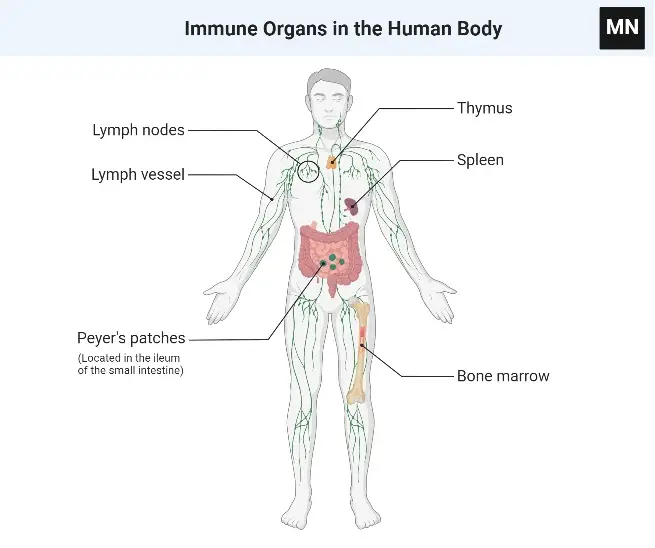
The organs of immune system are the organs and tissues which are involved in the defence of body. These organs work together to destroy or neutralize the pathogens. Pathogens may otherwise cause disease in the body.
The organs of immune system are generally divided into three categories. These are primary lymphoid organs, secondary lymphoid organs and tertiary lymphoid organs.
Primary lymphoid organs are the specialized organs where lymphocytes are generated, mature and proliferate. These organs are important for early development of immune cells. The main primary lymphoid organs are bone marrow and thymus.
Bone marrow is a tissue present inside the bones. It is the site where all blood cells are originated. B cells undergo almost all of their development in the bone marrow. It also produces immature T cells which later goes to thymus.
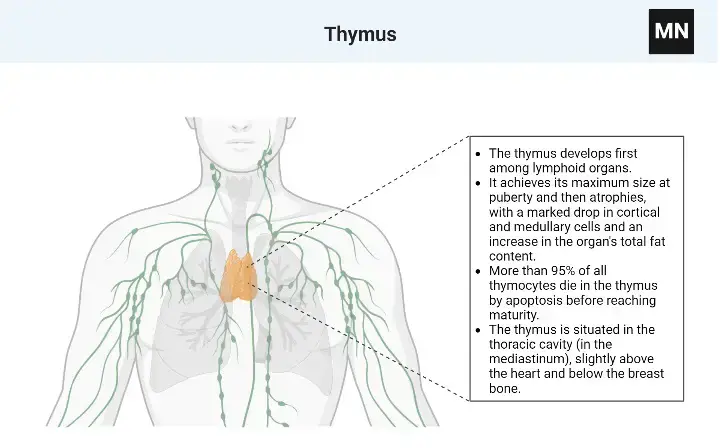
Thymus is a bilobed gland located in the upper chest region. It is present just above the heart. Immature T cells or thymocytes leave the bone marrow and migrate into thymus. Here they undergo maturation and selection process.
This selection process is important because it makes the T cells able to defend the body. At the same time, it prevents them from attacking the own healthy cells of the body.
Secondary lymphoid organs are the sites where mature immune cells gather. In these organs the lymphocytes meet with antigens. Antigens are the foreign substances which stimulate immune response.
The important secondary lymphoid organs are lymph nodes, spleen and lymphoid nodules.
Lymph nodes are small bean shaped structures. They are distributed throughout the lymphatic system. They act as filters for lymph fluid. During this process, debris and pathogens are trapped and then destroyed by immune cells.
Spleen is a highly vascular organ attached with stomach. It acts as a filter of blood. It removes blood-borne pathogens from the blood. It also clears away dying and old red blood cells.
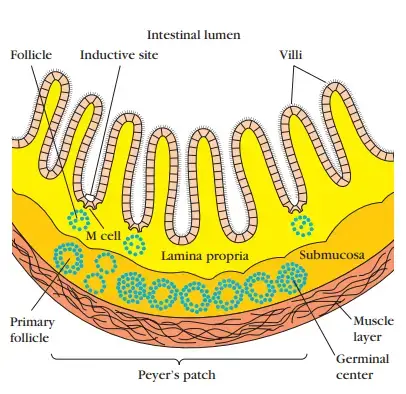
Lymphoid nodules are dense clusters of lymphocytes. They are present in different regions of mucosa. The examples are tonsils present in the throat and Peyer’s patches present in the small intestine.
These nodules form mucosa-associated lymphoid tissue or MALT. It protects the respiratory tract and digestive tract. It guards the body against environmental and ingested pathogens.
Tertiary lymphoid organs or TLOs are abnormal lymph node like clusters. They are also called ectopic lymphoid structures. These structures are formed after birth in non-lymphoid tissues.
Unlike primary and secondary lymphoid organs, TLOs are formed dynamically. They are formed in response to chronic immune mediated inflammation. This may occur due to persistent infection, autoimmune disease, transplant rejection or cancer.
TLOs lack the fibrous capsule which is present in secondary lymphoid organs. So their lymphocytes can interact directly with the local tissue environment. Due to this, localized immune responses are produced in that tissue.
Classification of Immune System Organs
The immune system organs are classified into three main groups. These are primary lymphoid organs, secondary lymphoid organs and tertiary lymphoid organs. This classification is mainly based on the site of lymphocyte formation, maturation and antigen dependent immune response.
1. Primary lymphoid organs
Primary lymphoid organs are also called central lymphoid organs. These are the sites where lymphocytes are generated and mature without the presence of antigens. These organs are mainly involved in development of immune cells.
The following are the primary lymphoid organs-
- Bone marrow– It is the soft tissue present inside the bones. It is the site where all blood cells are originated. B-lymphocytes mature in the bone marrow.
- Thymus– It is a gland present in the upper chest region. T-lymphocytes migrate to thymus for their maturation. In thymus, they become immunocompetent cells.
- Fetal liver and yolk sac– These act as primary lymphoid organs during fetal development. They help in formation of blood cells in the developing embryo.
2. Secondary lymphoid organs
Secondary lymphoid organs are also called peripheral lymphoid organs. These are the sites where mature immune cells are collected. In these organs, lymphocytes encounter with antigens and form adaptive immune response.
The following are the secondary lymphoid organs-
- Spleen– It is a vascular organ which filters the blood. It removes blood borne pathogens and aged red blood cells from the circulation.
- Lymph nodes– These are small bean shaped structures present in clusters throughout the body. They filter the lymph fluid and trap debris, pathogens and foreign particles.
- Mucosa-associated lymphoid tissue (MALT)- These are unencapsulated clusters of lymphoid tissue present in mucosal linings. They protect the mucosal surfaces from entering pathogens. The important parts of MALT are-
- Tonsils– These are lymphoid tissues present in the pharynx. The examples are palatine tonsil, pharyngeal tonsil or adenoid and lingual tonsil.
- Peyer’s patches– These are aggregated lymphoid nodules present in the small intestine. They protect the intestinal mucosa from ingested pathogens.
- Appendix– It is a lymphatic tissue attached to the starting part of colon. It contains lymphoid cells and helps in local immune defence.
- Nasal-associated lymphoid tissue (NALT)- It is found in the nasal cavity. It acts against antigens entering through the nose.
- Bronchus-associated lymphoid tissue (BALT)- It is found along the respiratory tract. It protects the respiratory passage from inhaled pathogens.
3. Tertiary lymphoid organs
Tertiary lymphoid organs or TLOs are also called ectopic lymphoid structures. These are abnormal clusters of immune cells. They are formed after birth in non-lymphoid tissues.
These structures are generally unencapsulated. They are not present as normal fixed lymphoid organs. They develop dynamically during chronic inflammation.
TLOs are formed during persistent infection, autoimmune diseases, transplant rejection and cancer. In these tissues, immune cells collect and produce local immune response.
A. Primary Lymphoid Organs
1. Bone Marrow: Structure and Functions
Structure of Bone Marrow
- Red bone marrow– It is a loose cellular tissue present inside the bones. It contains many developing blood cells and stem cells. It is active in blood cell formation.
- Yellow bone marrow– It is mainly composed of fat cells. It stores fat and acts as a energy reserve. It is less active in blood cell formation.
- Stromal network– The bone marrow has a supporting mattress like network. It is formed by specialized non-lymphoid stromal cells. These cells give support to developing immune cells.
- Stromal cells– These cells provide adhesive contact to the developing cells. They also secrete some growth factors. These growth factors stimulate the development of immune cells.
- Growth factors– The important growth factors are IL-7 and Stem Cell Factor (SCF). These are required for growth and differentiation of lymphoid cells.
- Endosteal niche– It is the region located near the inner surface of bone. It contains bone forming cells and bone resorbing cells. This region helps in maintenance of stem cells.
- Central vascular niche– It is the region present near the central blood vessels. It contains blood vessels and perivascular stem cells. It helps in entry of newly formed cells into blood.
Functions of Bone Marrow
- Hematopoiesis– Bone marrow is the primary site of blood cell formation in adult. This process is called hematopoiesis.
- Formation of blood cells– It produces large number of blood cells every day. These cells are formed from pluripotent hematopoietic stem cells.
- Myeloid lineage– The myeloid lineage gives rise to red blood cells, platelets, macrophages and neutrophils. These cells are important for blood and innate immunity.
- Lymphoid lineage– The lymphoid lineage gives rise to B-cells, T-cell precursors and natural killer cells (NK cells). These are involved in immune response.
- B-cell maturation– Red bone marrow is the main site where B-lymphocytes undergo their development. Here the B-cells form their antigen receptors.
- Negative selection– In this process, harmful B-cells are removed. These harmful cells may attack the body’s own healthy tissues. This is also called central tolerance.
- T-cell precursor formation– T-cells do not mature in bone marrow. But their immature precursors are formed in bone marrow. These immature cells are called thymocytes.
- Migration to thymus– The immature T-cell precursors leave the bone marrow. They enter into blood and travel to the thymus gland. In thymus, they complete their maturation.
2. Thymus: Detail Structure and Functions
Thymus is a bilobed lymphoepithelial organ present in the upper chest region. It is located in the anterosuperior mediastinum between the sternum and aorta, just above the heart. It is a primary lymphoid organ where T-lymphocytes become mature and immunocompetent.
Structure of Thymus
- Location and shape– Thymus is present in the upper part of chest. It is situated behind the breast bone or sternum and above the heart. It is bilobed in shape, so it has two lobes which are joined by connective tissue.
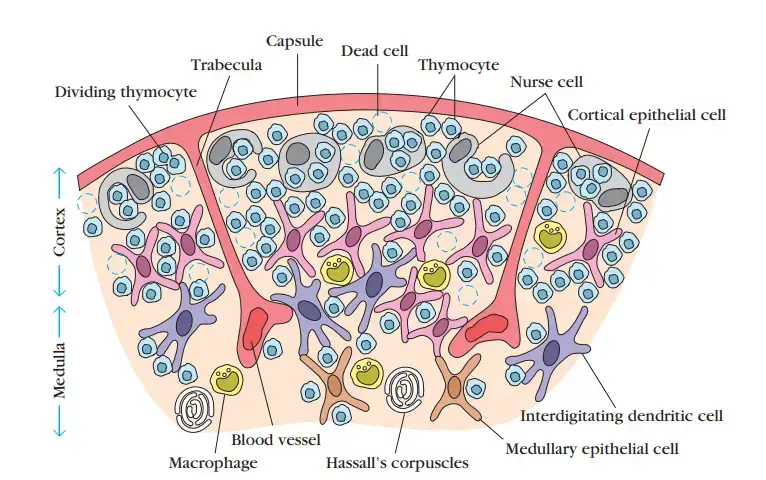
- Capsule– The thymus is covered by a thin connective tissue capsule. This capsule gives protection and support to the thymus. From this capsule, some bands pass inside the organ.
- Trabeculae or septa– The inward extensions of capsule are called trabeculae or septa. These septa divide the two lobes into many small compartments. These compartments are called lobules.
- Lobules– Each thymic lobule is angular in shape and has two main regions. The outer region is called cortex and the inner region is called medulla. These two regions are different in their cell density and function.
- Cortex– Cortex is the outer dark region of each lobule. It is densely packed with rapidly dividing immature T-cells which are called thymocytes. It also contains cortical thymic epithelial cells (cTECs) and some scattered macrophages.
- Blood-thymic barrier– The cortex has special capillaries with a highly impermeable barrier. This is called blood-thymic barrier. It prevents blood borne molecules and foreign antigens from entering into cortex, so early T-cell development occurs in antigen free condition.
- Medulla– Medulla is the inner pale region of thymic lobule. It is less dense than cortex. It contains more mature T-cells, dendritic cells, macrophages and medullary thymic epithelial cells (mTECs).
- Dual embryological origin– Thymus is formed from two different sources. The lymphoid thymocytes arise from hematopoietic stem cells of bone marrow. The supporting thymic epithelial cells are developed from embryonic third pharyngeal pouch.
Functions of Thymus
- T-cell maturation– The main function of thymus is maturation of T-lymphocytes. Immature T-cell precursors come from bone marrow and enter into thymus. In thymus, they multiply, mature and become immunocompetent cells.
- Positive selection– Positive selection takes place in the cortex. In this process, developing T-cells are tested for their ability to recognize own MHC molecules. The cells which cannot bind properly with MHC molecules die by apoptosis.
- Negative selection– Negative selection takes place mainly in the medulla. The surviving T-cells are exposed to many self antigens. The T-cells which react very strongly with own body antigens are eliminated.
- Central tolerance– The removal of self reactive T-cells is called central tolerance. It prevents the immune system from attacking own healthy tissues. This is important for prevention of autoimmune diseases.
- Quality control– Thymus performs strict quality control of developing T-cells. About 98% of developing T-cells fail in the selection process and die inside thymus. Only few cells become mature functional T-cells.
- Endocrine function– Thymus also acts as an endocrine gland. It secretes some peptide hormones which help in T-cell development and immune function. The important hormones are thymosin, thymopoietin, thymulin and thymic humoral factor.
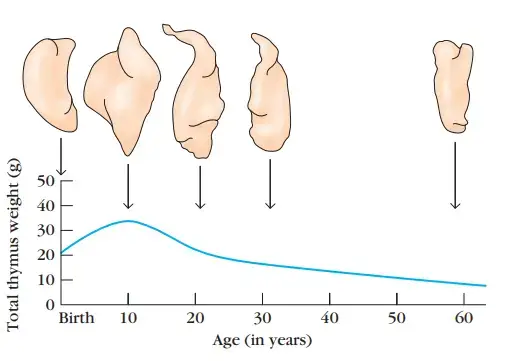
- Activity during childhood– Thymus is highly active during fetal life and childhood. It reaches maximum weight at puberty. During this period, large number of functional T-cells are produced.
- Age-associated involution– After puberty, thymus gradually decreases in size. The functional lymphoid tissue is slowly replaced by fatty or adipose tissue. But it still exports functional T-cells at lower rate throughout adult life.
B. Secondary Lymphoid Organs
1. Lymph Nodes: Detail Structure and Functions
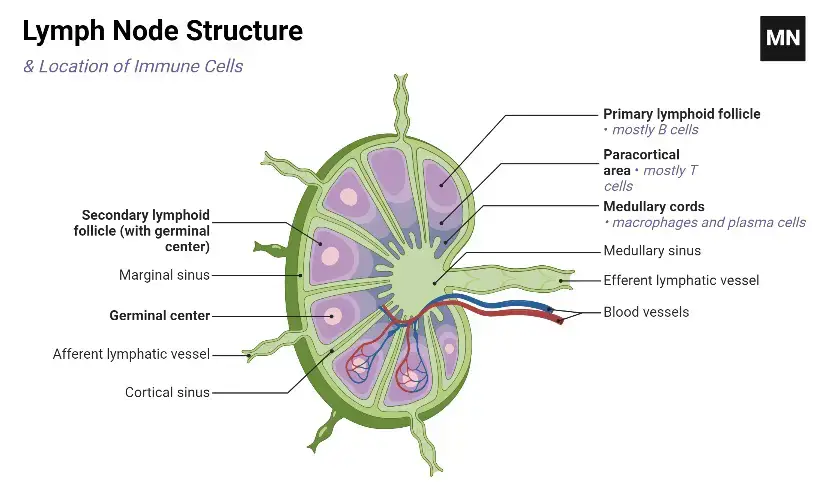
Lymph nodes are small bean shaped or ovoid organs present along the lymphatic vessels. They are secondary lymphoid organs. They act as filter of lymph and help in starting immune response against antigens present in lymph.
Structure of Lymph Nodes
- Shape and covering– Lymph nodes are small, bean shaped or oval shaped organs. They are covered by a tough connective tissue capsule. This capsule protects the lymph node and gives a definite shape to it.
- Trabeculae– The capsule gives inward extensions into the lymph node. These extensions are called trabeculae. They divide the lymph node into different internal compartments and also give support to the node.
- Hilum– Hilum is a depression present on one side of lymph node. It is the region through which efferent lymphatic vessel leaves the lymph node. Blood vessels also enter and leave through this region.
- Reticular framework– The inner part of lymph node is supported by network of reticular fibres. These fibres are produced by fibroblasts. It forms a supporting framework for lymphocytes, macrophages and other cells.
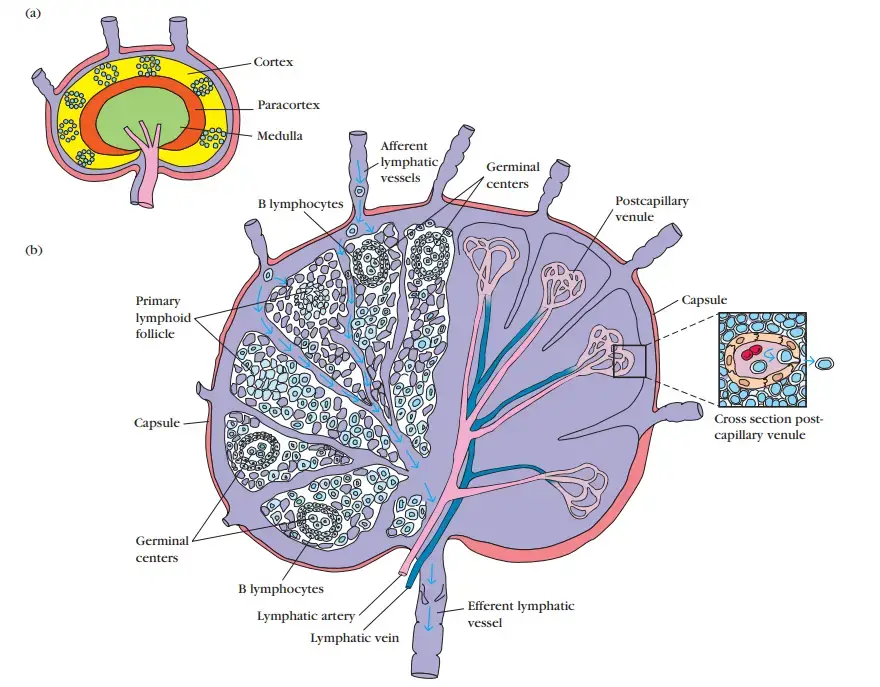
- Cortex– Cortex is the outer region of lymph node. It contains many lymphoid follicles or lymphoid nodules. These follicles mainly contain B-lymphocytes.
- Germinal centre– Some lymphoid follicles have germinal centres. These are the sites where B-cells divide rapidly. It also contains dendritic cells and macrophages. Around this region, some T-cells are also present.
- Paracortex– Paracortex is the inner cortex region present between cortex and medulla. It is mainly rich in T-lymphocytes. This region is important for T-cell activation.
- High endothelial venules– Paracortex contains special post capillary blood vessels called high endothelial venules (HEVs). These vessels have plump cuboidal endothelial cells. They allow lymphocytes from blood to enter into lymph node.
- Medulla– Medulla is the innermost region of lymph node. It has medullary cords and medullary sinuses. It is less dense than cortex.
- Medullary cords– Medullary cords are dense strands of lymphoid tissue. They contain B-cells, macrophages and antibody secreting plasma cells. These cells are involved in immune response.
- Medullary sinuses– Medullary sinuses are spaces through which lymph flows. They contain macrophages and help in removal of foreign particles from lymph.
- Lymph flow– Lymph enters the lymph node through many afferent lymphatic vessels. Then it passes into subcapsular sinus, cortical sinuses and medullary sinuses. At last, lymph leaves through one efferent lymphatic vessel at the hilum.
Functions of Lymph Nodes
- Filtration of lymph– Lymph nodes act as filter of lymph. They trap bacteria, pathogens, foreign antigens and cellular debris from lymph fluid. This helps to prevent their spread in the body.
- Destruction of pathogens– The trapped harmful materials are destroyed by macrophages and dendritic cells present in the lymph node. These cells engulf and digest the pathogens.
- Site of antigen recognition– Lymph nodes are the sites where mature naive lymphocytes come in contact with foreign antigens. Here the lymphocytes scan the antigen and specific immune response is started.
- Immune staging area– Lymph node acts as a meeting place for antigen, B-cells, T-cells and accessory cells. Due to this arrangement, adaptive immune response can be produced properly.
- Recruitment of lymphocytes– High endothelial venules help in entry of naive and memory lymphocytes from blood into lymph node. These lymphocytes then search for antigen inside the lymph node.
- B-cell activation– When antigen is detected, B-cells in the lymphoid follicles become activated. They divide rapidly in the germinal centres and form selected cells.
- T-cell activation– T-cells are mainly activated in the paracortex region. Activated T-cells help in cellular immunity and also help B-cells in antibody production.
- Formation of plasma cells– Activated B-cells may change into plasma cells. These plasma cells are mainly present in the medullary cords. They secrete antibodies.
- Antibody release– The antibodies formed by plasma cells enter into the exiting lymph fluid. These antibodies help in fighting the infection and neutralizing foreign antigens.
2. Spleen: Detail Structure and Functions
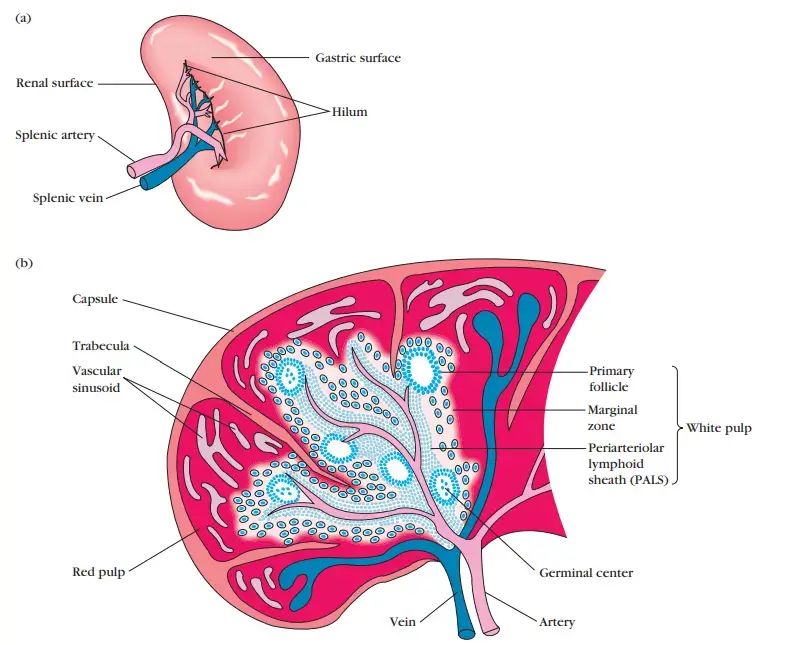
Spleen is a dark red, highly vascular and fragile organ. It is a secondary lymphoid organ. It is present in the upper left abdomen and attached with the stomach. It mainly acts as filter of blood.
Structure of Spleen
- General anatomy– Spleen is a soft dark red organ present near the stomach. It is highly vascular because large amount of blood passes through it. It is fragile in nature and may rupture easily during injury.
- Capsule– The spleen is covered by a connective tissue capsule. This capsule gives protection and support to the organ. From the capsule, some extensions pass inside the spleen.
- Trabeculae– The inward extensions of capsule are called trabeculae. These divide the spleen into incomplete compartments. They also carry blood vessels inside the spleen.
- Vascular nature– Spleen does not have lymphatic drainage like lymph node. It also lacks high endothelial venules (HEVs). It works mainly through blood circulation.
- Blood supply– Blood enters the spleen through splenic artery. The splenic artery divides into smaller branches and then forms central arterioles. These arterioles carry blood into different regions of spleen.
- Open circulation– In spleen, blood enters into open ended capillaries of red pulp. This type of circulation is called open circulation. Then the blood drains out through splenic vein.
- Red pulp– Red pulp forms major part of spleen. It contains venous sinuses and splenic cords or cords of Billroth. It is mainly concerned with filtration of blood.
- Cells of red pulp– Red pulp contains reticular fibres, free and fixed macrophages, erythrocytes, plasma cells and lymphocytes. These cells help in removal of old blood cells and microbes.
- White pulp– White pulp is the lymphoid part of spleen. It is arranged around the central arterioles. It contains lymphoid aggregates which take part in immune response.
- PALS– Periarteriolar lymphoid sheath or PALS is present around central arteriole. It is mainly populated by T-cells. This region is important for T-cell response.
- Lymphoid follicles– The white pulp also contains lymphoid follicles. These follicles mainly contain B-cells. Here B-cells divide and take part in antibody mediated response.
- Marginal zone– Marginal zone is present between red pulp and white pulp. It contains marginal zone B-cells, macrophages and dendritic cells. It traps blood borne antigens.
Functions of Spleen
- Filtration of blood– Spleen is called as filter of blood. The macrophages present in red pulp remove microbes, foreign particles and damaged blood cells from circulation.
- Removal of old RBC– The aged and damaged red blood cells are removed in spleen. These cells are trapped in red pulp and destroyed by macrophages.
- Immune surveillance– White pulp checks the blood for foreign antigens. It acts as a site where blood borne pathogens are recognized by immune cells.
- Immune response– In white pulp, antigens are presented to lymphocytes. T-cells are activated in PALS and B-cells divide in lymphoid follicles. Then antibody response is produced.
- Antibody formation– Activated B-cells change into plasma cells. These plasma cells synthesize antibodies in large amount. These antibodies act against blood borne antigens.
- Storage of cells– Spleen acts as a reservoir of blood cells. It stores platelets, red blood cells, lymphocytes and large number of monocytes.
- Release during emergency– During acute blood loss, spleen can contract. It releases stored red blood cells into circulation. This helps to maintain blood volume and oxygen transport.
- Recycling of blood components– After destruction of old erythrocytes, their useful parts are recycled. Hemoglobin is broken down into amino acids and other components which can be used again by the body.
- Fetal hematopoiesis– During embryonic and early fetal life, spleen helps in formation of blood cells. This process is called hematopoiesis. Later, bone marrow takes over this function.
3. Tonsils: Detail Structure and Functions
Tonsils are dense clusters of lymphoid nodules present in the mucous membrane of back part of mouth and upper throat. They are a part of mucosa-associated lymphoid tissue or MALT. They are mainly involved in protection against pathogens which enter through food and air.
![Three types of tonsils Three types of tonsils. (a) The position and internal features of the palatine and lingual tonsils; (b) a view of the position of the nasopharyngeal tonsils (adenoids). [Part b adapted from J. Klein, 1982, Immunology, The Science of Self-Nonself Discrimination, © 1982 by John Wiley and Sons, Inc.]](https://biologynotesonline.com/wp-content/uploads/2024/04/image-1484.png "Organs of Immune System – Types, Structure, Functions 8")
Structure of Tonsils
- Location– Tonsils are present at the back of mouth and in the upper part of throat. They are embedded in the mucous membrane of pharyngeal region. Due to this position, they can easily come in contact with inhaled and ingested antigens.
- Classification– Tonsils are included under secondary lymphoid organs. They are also the part of MALT. They are made up of dense lymphoid nodules and mainly contain lymphocytes.
- Waldeyer’s ring– The tonsils together form a circular arrangement of lymphoid tissue in the wall of pharynx. This circular arrangement is called Waldeyer’s tonsillar ring. It surrounds the opening of respiratory and digestive passage.
- Palatine tonsils– Palatine tonsils are present on the either side of pharynx or throat. These are the common tonsils which are usually seen in the oral cavity. They help in trapping antigens which enter through mouth.
- Pharyngeal tonsil– Pharyngeal tonsil is also called adenoid. It is present at the back of throat on the roof of posterior nasopharynx. It is covered by ciliated pseudostratified columnar epithelium, which is the common epithelium of respiratory tract.
- Lingual tonsils– Lingual tonsils are many small tonsils present at the base of tongue. They are covered by stratified squamous epithelium. They lie close to skeletal muscle and salivary glands.
- Tubal tonsils– Tubal tonsils are another part of Waldeyer’s ring. They are present near the opening of auditory tube. They help in local immune protection of that region.
- Capsule– Tonsils do not have a complete fibrous capsule. So they are unencapsulated or incompletely encapsulated lymphoid tissues. This is different from lymph node and spleen.
- Tonsillar crypts– The epithelial covering of tonsils goes deeply inside the lymphoid tissue. These deep folded passages are called tonsillar crypts. They increase the surface area for contact with antigens.
- Blood vessels– Tonsils contain special blood vessels known as high endothelial venules or HEVs. These vessels help in entry of lymphocytes from blood into the tonsillar tissue.
Functions of Tonsils
- First line defence– Tonsils act as first line defence in respiratory and digestive tract. They recognize pathogens which enter through eating and breathing. So they are important in oral and environmental pathogen defence.
- Trapping of pathogens– Tonsillar crypts trap inhaled and ingested materials. These materials may contain bacteria, viruses and other antigens. The crypts allow these antigens to come in close contact with lymphoid tissue.
- Elimination of pathogens– After trapping, the pathogens are acted upon by immune cells present in lymphoid follicles. Lymphocytes, macrophages and other immune cells help in destruction of these pathogens.
- Antigen contact– The crypts contain intraepithelial passages. These passages help in close contact between antigen and immune cells. Due to this, immune response can start in the tonsillar tissue.
- Antigen processing– Tonsils help in processing of antigens which enter through mouth and nose. The processed antigens are then recognized by lymphocytes. This helps in formation of specific immune response.
- Secretion of immune components– Tonsils help in synthesis of secretory immune components. They also store pools of immunoglobulins or antibodies. These antibodies help in neutralization of pathogens.
- Childhood immunity– Tonsils are more important in children. They help the child body to recognize common environmental pathogens. They also help in development of immunological memory.
- Swelling during infection– During infection, tonsils become highly active. Due to this, they may swell and become enlarged. Adenoid also shows swelling when it is active against infection.
4. Mucosa-associated lymphoid tissue (MALT): Detail Structure and Functions
Mucosa-associated lymphoid tissue or MALT is the lymphoid tissue which is present in relation with mucous membrane. It is present below the mucosal epithelium. It protects those body surfaces which are directly exposed to outside environment.
Structure of MALT
- General structure– MALT is formed by dome shaped and non-encapsulated lymphoid aggregates. It also contains dense lymphoid follicles. These follicles are present just below the mucous membrane epithelium.
- Absence of capsule– MALT is not covered by a complete fibrous capsule. So it is called unencapsulated lymphoid tissue. This arrangement helps the immune cells to remain close to mucosal surface.
- Location– MALT is distributed along the mucosal lining of different organs. It is mainly found in gastrointestinal tract, respiratory tract and urogenital tract. It is also found in breast tissue and eyes.
- Regional types– According to location, MALT is divided into different types. These include bronchus-associated lymphoid tissue (BALT), nasal-associated lymphoid tissue (NALT), tonsils, appendix and Peyer’s patches.
- BALT– Bronchus-associated lymphoid tissue is present in lungs and respiratory passage. It protects the respiratory tract from inhaled pathogens.
- NALT– Nasal-associated lymphoid tissue is present in nasal region. It helps in defence against antigens which enter through the nose.
- Peyer’s patches– Peyer’s patches are aggregated lymphoid follicles present in the small intestine. They are important part of intestinal immune system.
- Appendix and tonsils– Appendix contains lymphoid tissue near the starting part of colon. Tonsils are present in pharyngeal region. Both are parts of MALT and take part in mucosal defence.
- High endothelial venules– The interfollicular region of MALT contains special blood vessels. These are called high endothelial venules or HEVs. They help in entry of lymphocytes from blood.
- MAdCAM-1– In mucosal tissues, HEVs express a special molecule called MAdCAM-1. It acts like address tag for mucosal lymphocytes. It helps mucosal homing lymphocytes to enter into MALT.
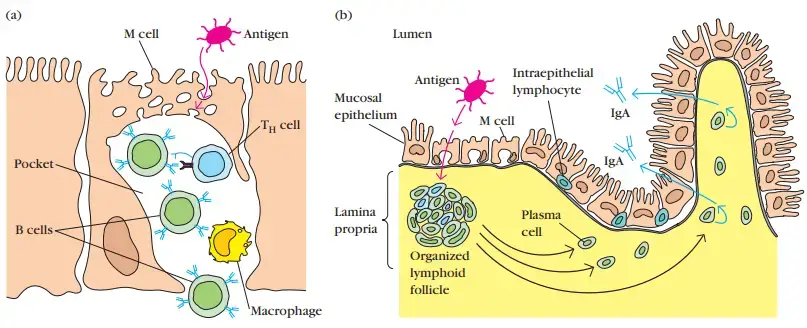
- Special epithelium– Some MALT structures have special epithelial covering. In Peyer’s patches, the covering is called follicle-associated epithelium. It contains Microfold cells or M cells.
- M cells– M cells are special cells present in follicle-associated epithelium. They do not have normal intestinal microvilli or goblet cells like ordinary epithelium. They are mainly involved in taking antigens from lumen.
Functions of MALT
- Immunological barrier– MALT forms a major immunological barrier of the body. It protects the thin epithelial surfaces which are continuously exposed to air, food, water and other external substances.
- First line defence– It acts as first line defence in mucosal surface. It prevents entry and spread of bacteria, viruses and other pathogens through mucous membrane.
- Antigen sampling– M cells continuously sample the materials present in lumen. They take intact proteins, particulate antigens and bacteria by endocytosis or transcytosis.
- Antigen trapping– The antigens taken by M cells are trapped and carried inside the lymphoid tissue. This helps the immune cells to come in contact with those antigens.
- Antigen transport– After capturing antigen, M cells transport them to deep basolateral pockets. These pockets contain dendritic cells, macrophages and lymphocytes.
- Antigen presentation– Dendritic cells engulf the antigen and present it to CD4+ T-helper cells. This starts the adaptive immune response in mucosal tissue.
- Activation of T-cells– The presented antigen activates T-helper cells. These activated T-cells then help other immune cells in the lymphoid follicles.
- Activation of B-cells– Activated T-cells stimulate B-cells present in lymphoid follicles. The B-cells divide and differentiate into antibody forming cells.
- Production of secretory IgA– MALT mainly helps in production of secretory IgA or sIgA. This antibody is secreted on mucosal surface and neutralizes pathogens.
- Mucosal protection– After activation, lymphocytes leave the MALT through draining lymphatics. They pass to mesenteric lymph nodes and later return to mucosal linings. This gives wide mucosal protection in different parts of body.
- Humoral protection– The antibodies formed in MALT give humoral protection at mucosal surface. They prevent attachment and entry of pathogens into epithelial cells.
5. Bronchus-associated lymphoid tissue (BALT): Detail Structure and Function
Bronchus-associated lymphoid tissue or BALT is a part of mucosa-associated lymphoid tissue (MALT). It is associated with the respiratory tract. It is mainly present to protect the lungs and bronchial region from inhaled pathogens.
Structure of BALT
- Classification– BALT is a regional type of MALT. It is specially associated with the respiratory tract. It is a lymphoid tissue which is present near the bronchial mucosa.
- General structure– BALT is made up of lymphoid follicular structures. These follicles are not covered by a complete capsule. So it is unencapsulated lymphoid tissue like other lymphoid nodules.
- Arrangement– The structure of BALT is less organized than fully encapsulated organs like lymph node and spleen. It has lymphoid follicles where many lymphocytes are collected.
- Epithelial covering– The lymphoid follicles of BALT are present just below the epithelial lining of respiratory tract. This position helps them to come in contact with antigens which enters through air.
- Location in lungs– In lungs, BALT is mainly present along the bifurcation of bronchi. These are the branching points of bronchi. It is also present in the space between bronchi and arteries.
- Cellular structure– BALT contains lymphocytes, mainly B-cells and T-cells. It also has antigen presenting cells like macrophages and dendritic cells. These cells help in recognition and response against respiratory antigens.
Functions of BALT
- Defence against inhaled pathogens– BALT is present directly in the airway passage. It recognizes airborne pathogens and antigens which are inhaled from environment. Then it helps to produce local immune response.
- Respiratory tract protection– It protects the bronchial region and lungs from infection. It is important because many microorganisms enter the body through breathing.
- Antigen recognition– The antigens entering through respiratory tract are trapped near BALT. These antigens are recognized by lymphocytes and antigen presenting cells.
- Local immune response– After antigen recognition, B-cells and T-cells are activated. This produces local immune defence in the respiratory mucosa.
- Immune surveillance– BALT continuously monitors the respiratory tract. It works like a watch system for inhaled foreign particles.
- Complementary function– BALT works along with other respiratory lymphoid tissues like tonsils. Together they protect the upper and lower respiratory tract from infection.
6. Lymphatic Vessels and Circulation of Lymphocytes
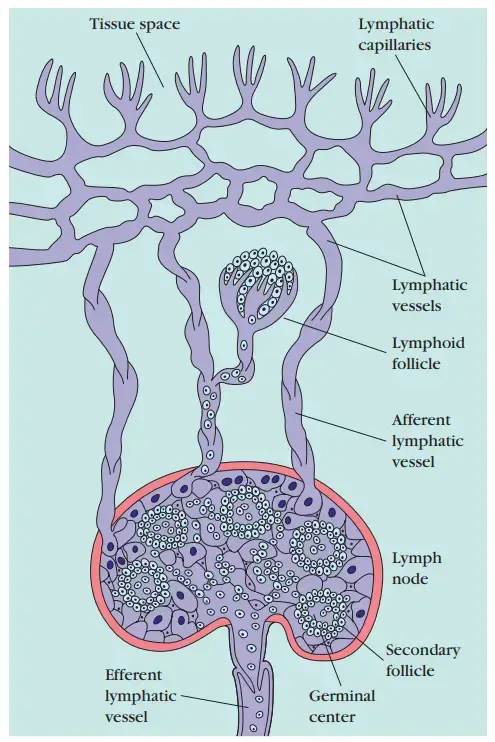
Lymphatic vessels are thin vessels which carry lymph from tissue spaces back to the blood. They are also important for movement of lymphocytes. Through these vessels, lymphocytes move between blood, lymph and lymphoid organs for immune surveillance.
Structure and Function of Lymphatic Vessels
- Origin of lymphatic vessels– The lymphatic system starts from very small lymphatic capillaries. These capillaries are open ended and present among blood vessels in almost all soft tissues of the body. They collect excess tissue fluid from interstitial spaces.
- Structure of lymphatic capillaries– Lymphatic capillaries are made up of single layer of overlapping endothelial cells. These cells act like one way flaps. When tissue pressure is high, the interstitial fluid enters into the lymphatic capillaries.
- Formation of lymph– The excess interstitial fluid which enters into lymphatic capillaries is called lymph. It contains water, proteins, lymphocytes, antigens and some waste materials. This lymph then moves through larger lymphatic vessels.
- Lymph flow mechanism– Lymph is not pumped by heart like blood. It moves slowly through lymphatic vessels. The movement of lymph takes place by body movement, breathing movement and contraction of surrounding skeletal muscles.
- One way valves– The larger lymphatic vessels contain one way semilunar valves. These valves prevent backward flow of lymph. Due to these valves, lymph flows only towards the blood circulation.
- Beaded appearance– The valves present in lymphatic vessels produce small bulges. Due to these bulges, lymphatic vessels show beaded appearance. This is a typical feature of larger lymphatic vessels.
- Drainage pathway– The lymphatic capillaries join to form larger lymphatic vessels. These vessels then form lymphatic trunks. The trunks finally drain into two main ducts, right lymphatic duct and thoracic duct.
- Right lymphatic duct– Right lymphatic duct drains lymph from right upper part of body. It finally opens into the venous blood near the right subclavian vein.
- Thoracic duct– Thoracic duct is the larger lymphatic duct. It drains lymph from most parts of the body. It returns lymph into the blood through the left subclavian vein in the neck region.
- Dietary transport– In the small intestine, special lymphatic capillaries are present. These are called lacteals. They absorb dietary fats and fat soluble vitamins from intestine.
- Chyle formation– The lymph present in intestinal lacteals is milky in colour due to absorbed fat. This milky lymph is called chyle. It is carried by lymphatic vessels and finally returned to blood.
Circulation of Lymphocytes
- Continuous circulation– Lymphocytes continuously move between blood, lymphatic vessels and secondary lymphoid organs. This movement is important for immune surveillance. They search for foreign antigen in different parts of body.
- Naive lymphocytes– Naive T-cells and naive B-cells are mature lymphocytes which have not yet met their specific antigen. They circulate through blood and enter lymphoid organs like lymph nodes and Peyer’s patches.
- Entry through HEVs– Blood borne lymphocytes enter into lymph nodes through special post capillary blood vessels. These vessels are called high endothelial venules or HEVs. These are mainly present in the paracortex region of lymph node.
- Adhesion process– The entry of lymphocytes through HEVs occurs by a stepwise adhesion process. It includes rolling, activation, arrest and transmigration. This helps lymphocytes to leave blood and enter lymphoid tissue.
- Rolling– In this step, lymphocytes loosely attach to the inner surface of HEVs. The surface receptor like L-selectin binds with addressin molecules like PNAd or MAdCAM-1. Due to loose binding, lymphocytes roll along the vessel wall.
- Activation– The rolling lymphocytes are activated by chemokines present on HEV surface. The important chemokine is CCL21. This activation changes the shape and binding capacity of integrins present on lymphocytes.
- Arrest– After activation, lymphocyte integrins like LFA-1 bind strongly with ICAM-1 on the HEV wall. Due to strong binding, lymphocytes stop rolling. This is called arrest.
- Transmigration– After arrest, lymphocytes squeeze between or through the plump endothelial cells of HEVs. This process is called diapedesis or transmigration. After this, lymphocytes enter into lymph node tissue.
- Searching of antigen– Inside the lymph node, lymphocytes move through different regions and search for their specific antigen. T-cells mainly move in paracortex and B-cells move in lymphoid follicles.
- Exit from lymph node– If the lymphocytes do not find their specific antigen, they move towards medullary sinuses. Then they leave the lymph node through efferent lymphatic vessel.
- Return to blood– The lymphocytes travel with lymph through larger lymphatic vessels, lymphatic trunks and ducts. Finally they are returned back into blood through subclavian veins. After this, they again continue their circulation and immune patrol.
Role of Immune Organs in Development and Maturation of Immune Cells
Immune organs are important for formation, maturation and activation of immune cells. Some organs produce the immune cells and make them mature. Some organs provide the site where mature lymphocytes meet with antigen and then immune response is started.
Role of Immune Organs
- Bone marrow– Bone marrow is a primary lymphoid organ. It produces all blood cells and immune cells from pluripotent hematopoietic stem cells. It gives rise to both myeloid and lymphoid cells.
- B-cell development in bone marrow– Bone marrow is the main site for development of B-lymphocytes. In this organ, B-cells form their antigen receptors and become mature. This process is required before the cells enter into blood.
- Selection of B-cells– In bone marrow, developing B-cells undergo selection process. The cells which may attack own body tissues are removed. This prevents formation of harmful self reactive B-cells.
- T-cell precursor formation– Bone marrow also produces immature T-cell precursors. These cells do not mature in bone marrow. They leave the bone marrow and migrate to the thymus through blood.
- Thymus– Thymus is also a primary lymphoid organ. It provides special environment for maturation and proliferation of T-lymphocytes. The immature T-cells which enter into thymus are called thymocytes.
- Positive selection in thymus– Positive selection occurs in the thymic cortex. In this process, developing T-cells are checked whether they can recognize own MHC molecules or not. The cells which cannot recognize MHC die by apoptosis.
- Negative selection in thymus– Negative selection occurs mainly in the thymic medulla. In this process, T-cells which react strongly with own antigens are destroyed. This helps in formation of central tolerance.
- Thymic hormones– Thymus secretes some hormones which help in T-cell development. The important hormones are thymosin, thymopoietin and thymulin. These hormones regulate maturation of T-lymphocytes.
- Fetal liver and yolk sac– Fetal liver and yolk sac act as primary lymphoid organs during early development. They form blood cells and lymphocytes in embryonic and fetal life. Later this function is taken over by bone marrow.
- Secondary lymphoid organs– Secondary lymphoid organs include lymph nodes, spleen, MALT and tonsils. These organs do not mainly produce lymphocytes. They provide the site where mature naive lymphocytes meet with foreign antigens.
- Lymph nodes– Lymph nodes act as staging area for immune response. In lymph nodes, T-cells are activated by antigen presenting cells in the paracortex. B-cells divide inside germinal centres and form antibody secreting plasma cells.
- Germinal centre reaction– In the germinal centres of lymph node, B-cells proliferate and mature. They undergo somatic hypermutation and selection. Then they form plasma cells and memory B-cells.
- Spleen– Spleen helps in immune response against blood borne pathogens. The white pulp contains T-cells and B-cells. These cells are activated when antigens are present in blood.
- MALT– Mucosa-associated lymphoid tissue or MALT helps in immune response at mucosal surfaces. In Peyer’s patches, antigens are captured and presented to T-helper cells. These T-helper cells stimulate B-cells.
- Production of IgA– In MALT, activated B-cells undergo class switching. They mainly produce secretory IgA or sIgA. This antibody protects mucosal surfaces from pathogens entering through food, water and air.
- Tonsils– Tonsils are present in the pharyngeal region. They trap inhaled and ingested antigens. Here lymphocytes become activated against common oral and environmental pathogens.
- Tertiary lymphoid organs– Tertiary lymphoid organs or TLOs are abnormal lymphoid aggregates. These are formed after birth in non-lymphoid tissues during chronic inflammation, infection or cancer.
- Local immune response in TLOs– TLOs act as local immune hubs. They allow antigen presentation, T-cell activation and B-cell clonal expansion in the affected tissue. Somatic hypermutation may also occur there during chronic immune response.
Role of Immune Organs in Initiation of Immune Response
Immune organs are involved in the initiation of immune response by producing immune cells and by bringing antigen and lymphocytes together. The active immune response is mainly started in secondary lymphoid organs. Primary lymphoid organs prepare the immune cells before this process.
Role of Immune Organs
- Primary lymphoid organs– Primary lymphoid organs include bone marrow and thymus. These organs do not directly start active immune response against pathogens. They form and mature the lymphocytes which are later used in immune response.
- Bone marrow– Bone marrow produces all immune cells from hematopoietic stem cells. It also matures B-lymphocytes. After maturation, the naive B-cells enter into blood and circulate through different lymphoid organs.
- Thymus– Thymus is the site of maturation of T-lymphocytes. Immature T-cells coming from bone marrow mature in thymus. Then they become immunocompetent T-cells and leave into blood.
- Release of naive lymphocytes– The mature naive T-cells and B-cells are released into circulation. These cells move through blood, lymph and lymphoid organs. They search for their specific foreign antigen.
- Secondary lymphoid organs– Secondary lymphoid organs are the main sites where immune response is initiated. These organs include lymph nodes, spleen, MALT and tonsils. Here antigen comes in contact with naive lymphocytes.
- Lymph nodes– Lymph nodes act as filter of lymph. They mainly start immune response against pathogens present in body tissues. The antigens from infected tissue are carried to lymph node through lymphatic vessels.
- Role of dendritic cells in lymph node– Dendritic cells engulf pathogens at the site of infection. Then they move through lymphatic vessels and reach the lymph nodes. In lymph node, they present antigen to T-lymphocytes.
- Entry of lymphocytes in lymph node– Naive T-cells and B-cells enter lymph nodes from blood through high endothelial venules or HEVs. These lymphocytes then scan the antigen presenting cells.
- Activation in lymph node– If the lymphocyte recognizes its specific antigen, it becomes activated. The activated T-cells and B-cells multiply and form many similar cells. Then the immune response is started.
- Spleen– Spleen acts as filter of blood. It starts immune response against blood borne pathogens. The microbes present in blood are trapped mainly in the marginal zone and white pulp.
- Antigen presentation in spleen– In spleen, macrophages and dendritic cells trap the microbes and present antigen. The T-cells and B-cells present in white pulp are activated. Then antibody formation and other immune response begins.
- MALT– Mucosa-associated lymphoid tissue or MALT starts immune response at mucosal surfaces. It acts against pathogens which enter through food, water and air. It is present in digestive, respiratory and other mucosal regions.
- Peyer’s patches– Peyer’s patches are part of MALT present in small intestine. They start immune response against ingested antigens. The special M cells take antigens and bacteria from intestinal lumen.
- Role of M cells– M cells transport antigens to the underlying immune cells. These antigens are then taken by dendritic cells. The dendritic cells present antigen to T-helper cells.
- IgA response in MALT– Activated T-helper cells stimulate B-cells in MALT. These B-cells change into plasma cells and mainly produce secretory IgA. This antibody protects the mucosal surface.
- Tonsils– Tonsils are present in throat region. They start immune response against inhaled and ingested materials. Their tonsillar crypts collect antigens and bring them close to lymphoid follicles.
- Immune response in tonsils– The lymphoid follicles of tonsils recognize the entering pathogens. Then lymphocytes become activated. This helps in development of immunity against common oral and environmental pathogens.
- Tertiary lymphoid organs– Tertiary lymphoid organs or TLOs are abnormal lymphoid clusters. They are formed in non-lymphoid tissues during chronic inflammation, infection, autoimmune disease or cancer.
- Local initiation by TLOs– TLOs start immune response directly in the affected tissue. They provide local site for antigen presentation, T-cell activation and B-cell expansion. So the immune response can occur near the site of disease.
- Localized immune hub– TLOs reduce the need of carrying all antigens to distant lymph nodes. They act as local immune hub in chronic condition. In this region, immune cells collect and respond to the antigen present in the same tissue.
Clinical Significance of the Organs of the Immune System
Clinical significance means the importance of immune organs in disease condition. Defect of these organs may cause infection, immune deficiency, autoimmunity, cancer and lymph swelling.
- Thymus
- Immunodeficiency– Thymus is required for maturation of T-cells. If thymus is absent or poorly developed, severe immunodeficiency occurs. In DiGeorge syndrome, T-cells are not formed properly and recurrent viral and fungal infections are seen.
- Aging and immunity– With increasing age, thymus slowly becomes smaller. This is called thymic involution. Due to this, new T-cell formation decreases and immunity becomes weak in old age.
- Thymic tumors and autoimmunity– Thymus may develop thymoma and thymic carcinoma. These are associated with autoimmune diseases like myasthenia gravis, pure red cell aplasia and hypogammaglobulinemia.
- Bone marrow
- SCID– Bone marrow forms blood cells and immune cells. Defect in lymphocyte formation may cause Severe Combined Immunodeficiency (SCID). In this condition, functional adaptive immune cells are not formed and severe infection occurs in infancy.
- Transplantation– Bone marrow transplantation is used in severe immune deficiency, chronic disease and after heavy cancer treatment. It replaces defective blood forming cells and restores immune function.
- Spleen
- Asplenia– Spleen filters the blood. If spleen is removed or not functioning, the condition is called asplenia. In this condition, blood borne microbes are not removed properly.
- Infection risk– After spleen removal, patient becomes more susceptible to encapsulated bacteria. The important examples are Streptococcus pneumoniae and Neisseria meningitidis. These may cause fatal systemic infection.
- Haemorrhage response– Spleen stores red blood cells, platelets and lymphocytes. During acute blood loss, spleen may contract and release stored RBCs into blood. This helps in maintaining blood volume and oxygen delivery.
- Lymph nodes
- Diagnostic indicator– Lymph nodes become enlarged in many disease conditions. This enlargement is called lymphadenopathy. It is seen in local infection, HIV, tuberculosis, rheumatoid arthritis and cancers.
- Cancer metastasis– Lymph nodes filter lymph fluid. So cancer cells travelling through lymph may be trapped in lymph nodes. Then secondary tumor may form in that lymph node.
- Lymphedema– Damage or removal of lymph nodes blocks lymph drainage. Fluid then accumulates in tissues. This swelling is called lymphedema and it is common after cancer surgery.
- Tonsils
- Chronic infection– Tonsils trap pathogens entering through mouth and nose. Due to repeated trapping, tonsils may become infected and swollen. This condition is called tonsillitis.
- Tonsil swelling– Severe enlarged tonsils may disturb breathing and swallowing. In repeated infection, surgical removal may be done, especially in children.
- Tertiary lymphoid organs (TLOs)
- Autoimmunity– TLOs are formed in chronic inflammation. In autoimmune disease, they may produce local autoantibodies and increase tissue damage.
- Autoimmune examples– In rheumatoid arthritis and Hashimoto’s thyroiditis, TLOs may make disease more severe. They support local immune reaction in the target tissue.
- Cancer prognosis– In some cancers, TLOs help in anti-tumor immune response. In melanoma, breast cancer and lung cancer, their presence may show better prognosis.
- Cancer progression– In few cancers, TLOs may support tumor growth. In virus induced hepatocellular carcinoma, they may help cancer progression.
- Lymphatic vessels and lymphatic system
- Lymphoid malignancy– Cancer of lymphoid cells and lymphatic tissues are called lymphoid malignancies. The examples are leukemia, Hodgkin lymphoma and non-Hodgkin lymphoma.
- Elephantiasis– Damage of lymphatic vessels causes poor lymph flow. In lymphatic filariasis, parasites damage the lymphatic vessels. This causes severe lymphedema, thick skin and very large swollen limbs. This condition is called elephantiasis.
Disorders related to dysfunctions of Organs of the Immune System
Disorders of immune system organs occur when the lymphoid organs do not develop properly or their function becomes abnormal. These disorders may cause immune deficiency, recurrent infection, autoimmunity, lymph swelling and cancer of lymphoid tissues.
- Thymus disorders
- DiGeorge syndrome (Thymic aplasia)- It is a congenital disorder caused due to genetic microdeletion on chromosome 22q11. In this condition, thymus is poorly developed or completely absent. Due to this, T-cells are severely deficient and the patient becomes susceptible to recurrent viral and fungal infections.
- Thymoma and thymic carcinoma– These are rare tumors of thymus. They arise from the cells covering the outer surface of thymus gland. These tumors may be associated with abnormal immune reactions.
- Myasthenia gravis– It is a autoimmune disease commonly associated with thymus tumor. In this disease, antibodies are produced against the site where nerve signal passes to muscle. Due to this, muscle weakness is produced.
- Pure red cell aplasia– It is a rare autoimmune condition associated with thymus disorder. In this condition, new red blood cells are not produced properly. This causes severe anemia.
- Hypogammaglobulinemia– It is a disorder in which the body produces very low level of antibodies. It may be associated with thymus abnormality. Due to low antibodies, infection risk becomes increased.
- Bone marrow disorders
- Severe Combined Immunodeficiency (SCID)- It is a group of severe genetic disorders. In this condition, bone marrow cannot develop functional adaptive immune cells properly. T-cells and B-cells are absent or defective.
- Effect of SCID– Due to lack of functional immune system, severe systemic infections occur in infancy. These infections may become life threatening because the body cannot produce proper adaptive immune response.
- Spleen disorders
- Asplenia– Asplenia means absence or surgical removal of spleen. In this condition, blood filtration function of spleen is lost. Blood borne microbes are not removed properly.
- Hyposplenism– Hyposplenism means reduced function of spleen. It also causes poor removal of microbes from blood. It increases the chance of severe systemic infection.
- Infection in splenic dysfunction– In asplenia or hyposplenism, infection by encapsulated bacteria become more dangerous. The important examples are Streptococcus pneumoniae and Neisseria meningitidis. These may cause fatal infection.
- Lymph node and lymphatic vessel disorders
- Lymphadenopathy– Lymphadenopathy means abnormal enlargement of one or more lymph nodes. It is an important clinical sign. It may occur due to local infection, systemic infection, autoimmune disease or cancer.
- Causes of lymphadenopathy– It may be seen in HIV, tuberculosis, systemic lupus erythematosus and rheumatoid arthritis. It may also occur when cancer spreads through lymphatic system.
- Lymphedema– Lymphedema is severe swelling of tissue due to accumulation of lymph fluid. It mostly occurs in limbs. It is caused when lymphatic vessels are damaged, malformed or lymph nodes are surgically removed.
- Elephantiasis– Elephantiasis is an extreme form of lymphedema. It is characterized by very thick elephant like skin and massive swelling of limbs. It is commonly caused by parasitic infection called lymphatic filariasis.
- Lymphoid malignancies
- Lymphomas– Lymphomas are cancers which arise from lymphatic tissues. In this condition, immune cells multiply in uncontrolled manner. It may involve lymph nodes and other lymphoid organs.
- Hodgkin lymphoma– Hodgkin lymphoma is a type of lymphoma. It is characterized by presence of Reed-Sternberg cells. It is also associated with past Epstein-Barr virus infection.
- Non-Hodgkin lymphoma– Non-Hodgkin lymphoma occurs due to abnormal proliferation of B-cells or T-cells. It generally has poorer prognosis than Hodgkin lymphoma.
- Lymphangiosarcoma and lymphangioma– Lymphangiosarcoma is a malignant tumor of lymphatic endothelial lineage or lymphatic vessels. Lymphangioma is a benign tumor of lymphatic vessels.
- Disorders associated with tertiary lymphoid structures (TLSs)
- Formation of TLSs– Tertiary lymphoid structures are abnormal lymphoid structures formed in non-lymphoid tissues. They are formed during chronic inflammation.
- TLSs in autoimmune disease– In rheumatoid arthritis, Crohn’s disease and Hashimoto’s thyroiditis, TLSs may form in the affected tissues. These structures may increase the local immune reaction.
- Loss of tolerance– TLSs are unencapsulated structures. They may disturb normal immune tolerance checkpoints. Due to this, autoreactive B-cells may survive and mature.
- Autoantibody production– In TLSs, autoreactive B-cells may produce autoantibodies directly inside the target organ. These autoantibodies damage the tissue and make autoimmune disease more severe.
References
- Medicine LibreTexts. (n.d.). 19.4: Anatomy of lymphatic organs and tissues.
- Lumen Learning. (n.d.). Anatomy of the lymphatic and immune systems.
- Cell circuits and niches controlling B cell development. (n.d.). PubMed Central (PMC).
- Cellular niches for hematopoietic stem cells in bone marrow under normal and malignant conditions. (n.d.). PubMed Central (PMC).
- Janeway, C. A. Jr., Travers, P., Walport, M., et al. (2001). Generation of lymphocytes in bone marrow and thymus. In Immunobiology: The immune system in health and disease (5th ed.). Garland Science. https://www.ncbi.nlm.nih.gov/books/NBK27123/
- Ager, A. (2017). High endothelial venules and other blood vessels: Critical regulators of lymphoid organ development and function. Frontiers in Immunology, 8, 45. https://doi.org/10.3389/fimmu.2017.00045
- Wikipedia contributors. (2025, March 26). High endothelial venules. Wikipedia, The Free Encyclopedia. https://en.wikipedia.org/wiki/High_endothelial_venules
- OncoDaily. (2026, May 19). Immunophenotypic signatures predict immunotherapy response and survival in NSCLC.
- Columbia University. (n.d.). Lymphatic tissues: Thymus. Histology Laboratory Manual.
- Wikipedia contributors. (2026, May 21). Lymphatic system. Wikipedia, The Free Encyclopedia. https://en.wikipedia.org/wiki/Lymphatic_system
- Columbia University. (n.d.). Lymphoid tissues. Histology Lab Manual. https://histologylab.ctl.columbia.edu/lab08/
- Khan Academy. (n.d.). Lymphoid organs review (article).
- University of Leeds. (n.d.). Lymphoid: The histology guide. https://www.histology.leeds.ac.uk/lymphoid/lymphnodes.php
- CZ CELLxGENE. (n.d.). Medullary thymic epithelial cell type 3. https://cellxgene.cziscience.com/cellguide/CL:0009073
- Wikipedia contributors. (2025, October 5). Medullary thymic epithelial cells. Wikipedia, The Free Encyclopedia. https://en.wikipedia.org/wiki/Medullary_thymic_epithelial_cells
- Neogenesis and development of the high endothelial venules that mediate lymphocyte trafficking. (n.d.). PubMed Central (PMC).
- Ontogeny, histology, and pathophysiology of the lymphoid system: A comprehensive analysis of primary, secondary, and tertiary immune organs. (n.d.).
- Peyer’s patches: The immune sensors of the intestine. (n.d.). PubMed Central (PMC).
- Li, D. (2020, June 8). Primary lymphoid tissue. Medbullets Step 1. https://step1.medbullets.com/immunology/105044/primary-lymphoid-tissue
- Hill, M. A. (2019, February 20). SH practical – Lymphatic structure and organs. UNSW Embryology. https://embryology.med.unsw.edu.au/embryology/index.php/SH_Practical_-_Lymphatic_Structure_and_Organs
- Shah, D. K. (2022). T-cell development in thymus. British Society for Immunology.
- Targeting high endothelial venules: Potential strategies for cancer treatment. (n.d.). PubMed Central (PMC).
- Kang, W., Feng, Z., Luo, J., He, Z., Liu, J., Wu, J., & Rong, P. (2021). Tertiary lymphoid structures in cancer: The double-edged sword role in antitumor immunity and potential therapeutic induction strategies. Frontiers in Immunology, 12, 689270. https://doi.org/10.3389/fimmu.2021.689270
- The bone marrow microenvironment in B-cell development and malignancy. (n.d.). PubMed Central (PMC).
- Taylor, T. (2026, May 26). The Peyer’s patches: Anatomy and 3D illustrations. Innerbody Research.
- The development and function of thymic B cells. (n.d.). PubMed Central (PMC).
- The roles of tertiary lymphoid structures in chronic diseases. (n.d.). PubMed Central (PMC).
- Hill, M. A. (2020, January 23). Thymus development. UNSW Embryology. https://embryology.med.unsw.edu.au/embryology/index.php/Thymus_Development
- Brelje, T. C., & Sorenson, R. L. (2026). Thymus. Histology Guide.
- Cleveland Clinic. (2022, May 15). Thymus: The function of the gland & why it is important.
- Understanding high endothelial venules: Lessons for cancer immunology. (n.d.). PubMed Central (PMC).