

Diatoms are unicellular, eukaryotic microalgae which are found in marine water, freshwater, soil and many moist places. They are microscopic organisms and mostly live as plankton in water bodies. Diatoms are important member of phytoplankton and they perform photosynthesis like green plants.
The most characteristic feature of diatoms is the presence of hard outer wall made up of silica. This wall is called frustule. The frustule is porous, rigid and glass like in nature. Due to this silica wall, diatoms are also called as “jewels of the sea”.
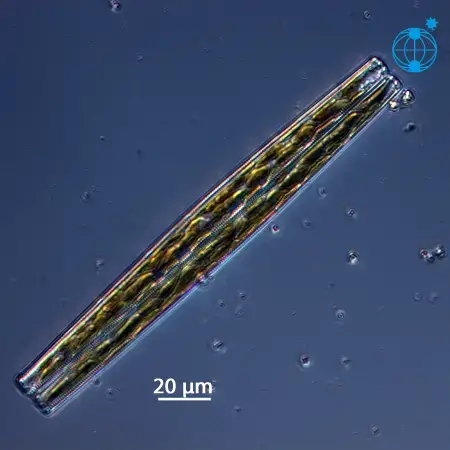
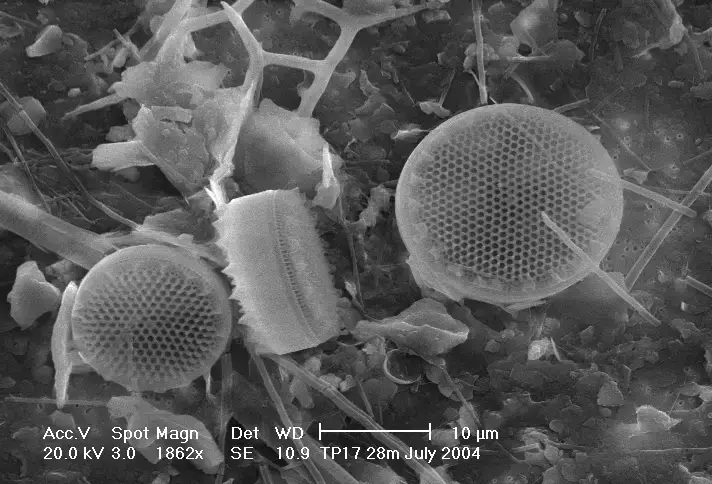
Diatoms may be found as single cell or sometimes they occur in colonies. Their size generally ranges from 2 to 200 μm, but some forms may become much larger. On the basis of shape, diatoms are mainly of two types. These are centric diatoms and pennate diatoms. Centric diatoms show radial symmetry, while pennate diatoms show bilateral symmetry.
They reproduce mainly by cell division. In favourable condition, they multiply rapidly when proper light, nutrients and water are available. During this process one cell divides and gives rise to new cells. Their number can increase very fast in aquatic ecosystem.
Diatoms are photosynthetic in nature. They use sunlight and carbon dioxide to produce food and release oxygen. They contribute large amount of oxygen in the atmosphere. About 20 to 50% of oxygen production on earth is due to diatoms and other phytoplankton. They also help in carbon fixation and form large part of primary productivity in ocean.
Diatoms are very important in aquatic food chain. They are eaten by small aquatic animals and these animals are then eaten by fishes and other large organisms. So diatoms act as primary producers in water ecosystem.
Diatoms are also useful for studying water quality. The presence and number of different diatom species can show the condition of water. They are also used in filter materials, polishing substances and as stabilizer in dynamite. Thus, although diatoms are very small, they have great ecological and economic importance.
Definition of Diatom
A diatom is a tiny, single-celled algae with a hard shell made of silica, found in oceans, waterways, and soil. They play a crucial role in oxygen production, nutrient cycling, and the food web of aquatic ecosystems.
Scientific classification of Diatom
The following are the scientific classification of Diatom–
Domain– Eukaryota
Clade– SAR (Stramenopiles, Alveolates and Rhizaria)
Clade– Stramenopiles or Heterokonts
Division– Ochrophyta
Clade– Khakista
Phylum/Division– Bacillariophyta
Common name– Diatoms
Classes of Diatoms
The following are the major classes of Diatoms–
- Leptocylindrophyceae
- Corethrophyceae
- Melosirophyceae
- Coscinodiscophyceae– These are traditionally radial centric diatoms.
- Thalassiosirophyceae
- Biddulphiophyceae
- Striatellaphyceae
- Plagiogrammaphyceae
- Fragilariophyceae– These are traditionally araphid pennate diatoms.
- Bacillariophyceae– These are traditionally raphid pennate diatoms.
Diatoms are placed under Bacillariophyta because their cell wall is made up of silica and it forms a special glass like wall called frustule. They are included under Ochrophyta and Stramenopiles because they are related with heterokont algal group.
Distribution of Diatom
Diatoms are found in almost all type of aquatic habitat. They occur in marine water, freshwater and also in moist terrestrial places.
The following are the distribution of Diatom–
- Marine habitat– Diatoms are present in oceans and seas. They are found in open sea water, coastal water, deep sea region and upwelling region. In coastal region they are more abundant because nutrients are available in good amount.
- Freshwater habitat– Diatoms are also present in freshwater bodies. They occur in lakes, ponds, rivers, streams and wetlands. In these water bodies they remain as important member of phytoplankton.
- Pelagic region– In pelagic region, diatoms remain freely suspended in water. They float in the water column and are carried from one place to another by water current.
- Benthic region– Some diatoms occur in the bottom region of aquatic habitat. They grow on mud, sand and sediment surface. This type of growth forms thin layer at the water-sediment region.
- Attached forms– Many diatoms remain attached with substratum. They grow on submerged stones, aquatic plants, oyster shell, filamentous algae and floating materials.
- Terrestrial habitat– Some diatoms are found in soil and damp surface. They occur on wet soil, moist rocks and other humid places where water is present for their growth.
- Polar and cold region– Diatoms also occur in cold region. They are found in Antarctic sea ice, Arctic meltpond and other icy aquatic places.
- Different climatic region– Diatoms are distributed from tropical region to temperate and high latitude region. So they show wide distribution in different climatic condition.
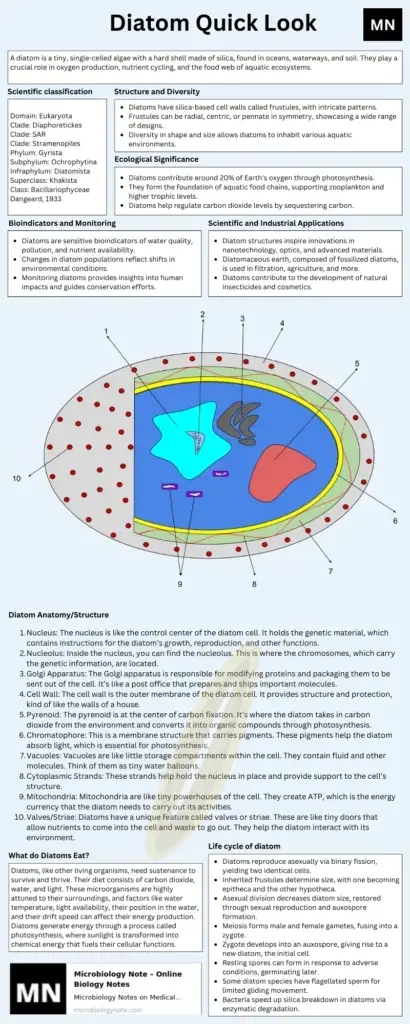
Morphology of Diatom
Diatoms have a hard outer cell wall. This wall is called frustule. It is the main characteristic feature of diatom.
The detailed structure of Diatom is as follows-
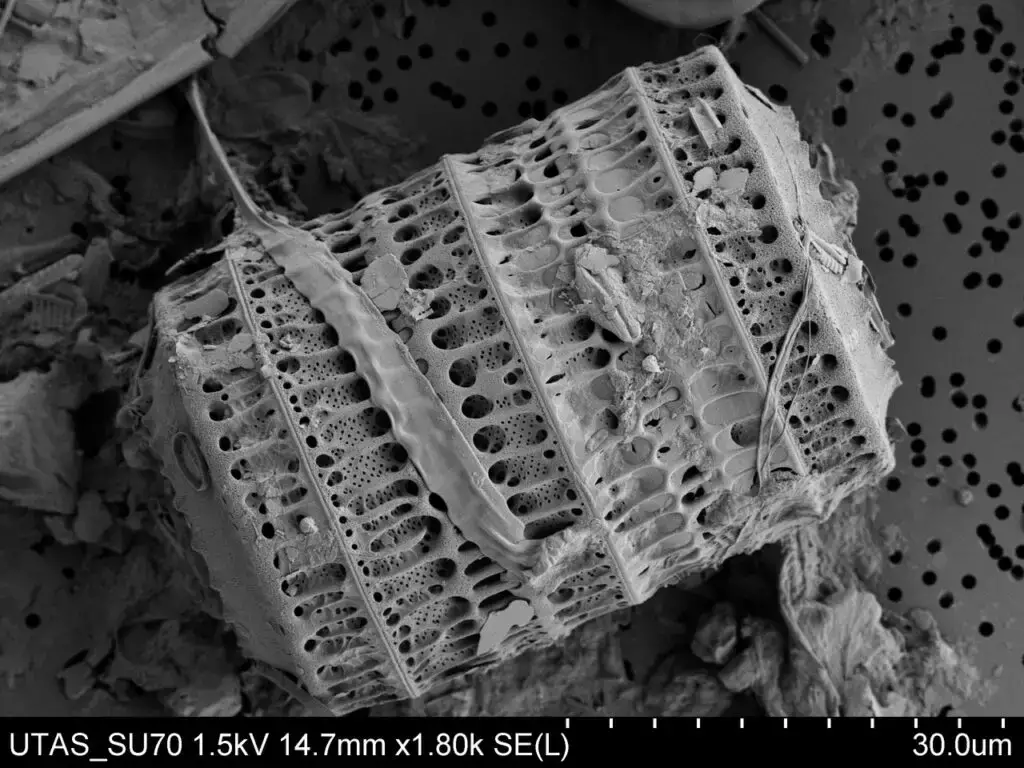
- Frustule– Frustule is the outer cell wall of diatom. It is hard, porous and highly marked. It is made up mainly of biogenic silica (hydrated silicon dioxide or opal). Outside it, there is a thin organic layer made up of polysaccharides.
- Thecae– The frustule is formed of two overlapping halves. These halves are called thecae. They fit with each other like pillbox or petri dish.
- Epitheca– Epitheca is the larger half of the cell wall. It is older half and forms the upper part of the frustule.
- Hypotheca– Hypotheca is the smaller half of the cell wall. It is younger half and fits inside the edge of epitheca.
- Girdle bands– Girdle bands are supportive silica ribbons. They hold the overlapping joint between epitheca and hypotheca. They also act like expansion joint and allow the cell to expand in one direction during growth.
- Areolae– Areolae are small pores present in the frustule. These pores are hexagonal or polygonal in shape. They help in nutrient uptake, gas exchange and removal of waste materials. They also block larger pathogens.
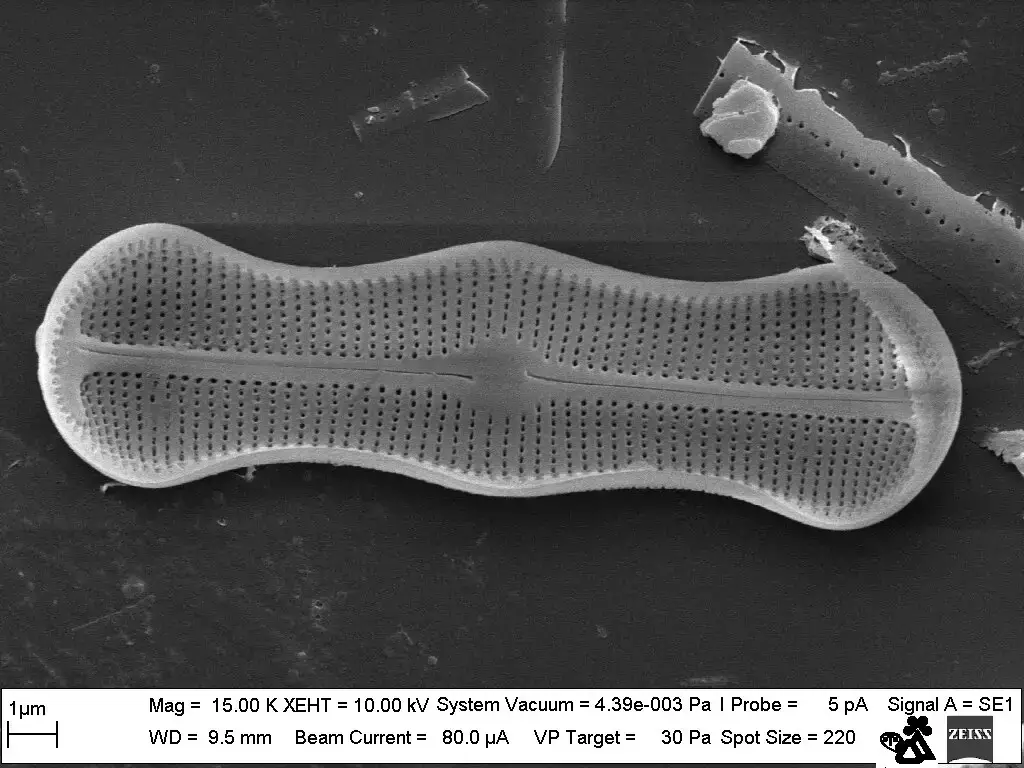
- Striae– Striae are line like arrangement present on the valve surface. These are formed by the pores or areolae. Their pattern is important in the surface marking of diatom.
- Raphe– Raphe is a seam like slit present in many pennate diatoms. Through this slit, adhesive mucilage is secreted. This helps the cell to glide actively over solid surface.
- Nodules– Nodules are thickened part of silica wall. Central nodule is present in the middle region and polar nodules are present at the ends of raphe.
- Pseudoseptum– Pseudoseptum or Ringleiste is an internal silica ridge. It is found in some genera. It projects inside the cell cavity and gives extra structural support.
Thus, diatom has a special siliceous wall with many fine structures. Frustule, thecae, girdle bands, areolae, striae and raphe are the main morphological parts of diatom.
Diatom Anatomy
The following are the anatomy of Diatom–
- Chloroplasts– These are yellowish-brown organelles. It is covered by four cell membranes. It is the place of photosynthesis. The pigments are fucoxanthin, beta-carotene, diatoxanthin, diadinoxanthin, chlorophyll a and chlorophyll c.
- Pyrenoid– It is present inside the chloroplast. It is a special low-permeability part. Here Rubisco enzyme is concentrated. Carbon fixation takes place in this part.
- Central vacuole– It is a large space present in the central region of cell. It is filled with cell sap. This fluid is like seawater but the ion concentration is not same.
- Silica Deposition Vesicle (SDV)– It is a special acidic compartment of the cell. It is covered by silicalemma membrane. New silica valve formation takes place in this compartment. The nanoscale pattern of silica valve is also formed here.
- Cytoplasm– It forms a layer lining the inner surface of the shell. In this layer different organelles are present. It contains nucleus, mitochondria, endoplasmic reticulum, Golgi apparatus, microtubule center and oil bodies.
- Mitochondria– It is present in the cytoplasm. It forms ATP.
- Oil bodies– These are present in cytoplasm. It is used for storage of energy as triacylglycerols.
- Auxospore– It is formed during sexual reproduction. It is expanding and membrane-covered sphere. It restores the maximum size of diatom.
- Incunabula– These are outermost organic and silicified scales or caps. It protects the expanding auxospore.
- Perizonium– It is formed of overlapping transverse and longitudinal silica bands. It gives the proper shape to the auxospore during expansion.
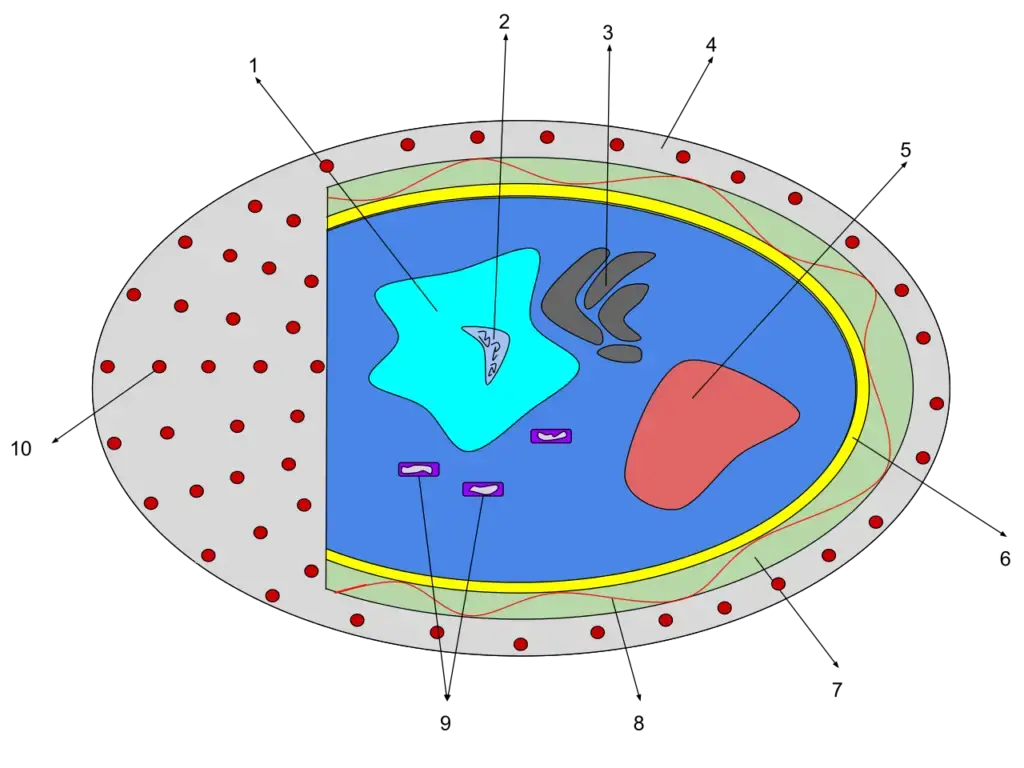
Intricate structures of the diatom
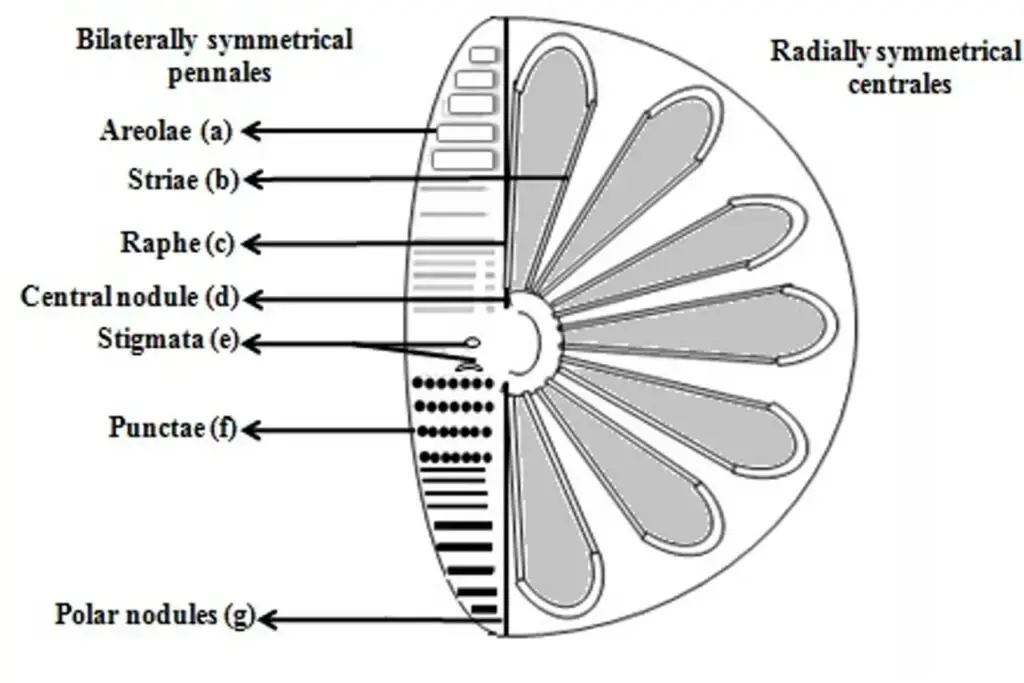
The following are the intricate structures of Diatom–
- Areolae– Areolae are tiny box like structures present on the surface of diatom. They may be hexagonal or polygonal in shape. These boxes show sieve like pattern.
- Striae– Striae are lines present on the surface of diatom. These lines are made by small pores, spots or dots. It looks like many tiny dots arranged in one line.
- Raphe– Raphe is a small slit present in the valves of diatom. It is present on the outer shell part. It helps in movement and other function of the diatom.
- Central nodule– Central nodule is present in the middle part of the raphe. It is the thickened part of the diatom wall. It gives strength and stability to the structure.
- Stigmata– Stigmata are holes present on the surface of valves. From outside they may look round. But inside they are slit like in shape.
- Punctae– Punctae are spots or very small holes present on the surface of diatom. They are like small dimples. They add texture to the surface.
- Polar nodules– Polar nodules are present at the ends of the raphe. These are thickened parts of the wall. They give extra support to the diatom wall.
Silicification in diatom
Silicification is the intracellular biomineralization process in diatoms. By this process diatoms form their hard glass like outer cell wall. This outer wall is called frustule.
The process of silicification takes place in the following steps-
- Uptake– In this step, diatoms take dissolved silicic acid from surrounding water. This uptake is done by special silicon transporter (SIT) proteins. These proteins are present in the plasma membrane.
- Storage and transport– The absorbed silicic acid is stored as soluble precursor. Then it is transported into a special acidic compartment inside the cell. This compartment is called Silica Deposition Vesicle (SDV).
- Polymerization– In this step, silicic acid is changed into amorphous biogenic silica. This occurs inside the low pH condition of SDV.
- Patterning– In this step, silica is arranged into special nanoscale pattern. Modified proteins called silaffins, long-chain polyamines (LCPAs) and cytoskeleton help in this process. These form the species specific pattern of frustule.
- Exocytosis or extrusion– After the new silica valve is completely formed, the membrane of SDV fuses with plasma membrane. Then the completed mineralized structure is pushed outside the cell.
Behaviour of diatom
The following are the behaviour of Diatom–
- Passive drifting– Most of the diatoms move passively. They are carried by ocean current and water turbulence. Wind induced movement of water also helps in their drifting.
- Gliding locomotion– Many pennate diatoms show gliding movement. They move on solid surface by secreting adhesive mucilage. This mucilage comes out through a slit called raphe.
- Buoyancy control– Diatoms have heavy silica wall, so they may sink in water. Individual cells control their buoyancy by internal ionic pump. This helps them to remain in water column.
- Sinking control– Planktonic diatoms use spine or form colonial chains. These increase drag in water. It slows down sinking and keeps them suspended in sunlit surface water.
- Boom and bust survival– When sunlight and nutrients are present in good amount, diatoms divide very fast. This forms large blooms. When condition become unfavourable, they increase their sinking rate.
- Resting condition– In unfavourable condition, diatoms may lose buoyancy control. They may stick together with mucilage or form heavy resting spores. Then they sink to deeper and safer water until nutrients again become available.
- Light sensing– Diatoms can sense light by light activated proteins called phytochromes. They detect low intensity blue and green light. This helps them to sense water depth and adjust in deep water with less light.
- Reproductive movement– Adult diatoms mostly lack flagella. During sexual reproduction, male gametes of centric diatoms swim by single flagellum. Gametes of pennate diatoms move by amoeboid movement and fuse together.
What do Diatoms Eat?
The following are the food materials of Diatoms–
- Sunlight and inorganic carbon– Diatoms use sunlight. They change light energy into chemical energy. They fix dissolved carbon dioxide and bicarbonate ions. Organic food is formed.
- Dissolved silicic acid– Diatoms take dissolved silicic acid from water. It is needed for wall formation. The wall is glass like and called frustule.
- Nitrogen– Nitrogen is taken from water. It is taken as nitrates, nitrites, ammonium and urea. It supports metabolism.
- Phosphorus– Phosphorus is taken as phosphates. It is needed as essential nutrient.
- Trace metals– Small amount of metals are taken by diatoms. These are iron, zinc, cobalt, cadmium and manganese. These work in cellular enzymes.
- Organic carbon– Few species are obligate heterotrophs. They live without light. They absorb proper organic carbon from environment.
Life cycle of diatom
1. Asexual Reproduction (Vegetative Phase)
Step 1- Binary fission
Diatoms mainly reproduce asexually. The vegetative cell divides into two by mitosis.
Step 2- Shell separation
During division, the parent frustule separates into two overlapping halves.
Step 3- New valve formation
Each daughter cell keeps one parental half. This half becomes the new epitheca. A new smaller hypotheca is formed inside it.
Step 4- Progressive shrinking
The new half is always formed inside old rigid shell. So one daughter cell becomes slightly smaller. This continues for many generations. The average size of diatom population decreases. This is known as MacDonald-Pfitzer rule.
2. Triggering the Sexual Phase
Step 5- Critical size threshold
When shrinking continues, the cells become too small. Below critical size, usually less than half of maximum species size, the diatom gets ability for sexual reproduction.
Step 6- Environmental cues
After this size stage, favourable external condition starts sexual phase. Specific light level, temperature and nutrient concentration act as cues.
3. Gamete Formation and Fertilization
Step 7- Meiosis
Small vegetative diatoms undergo meiosis. Haploid gametes are formed.
Step 8- Gamete types
Centric diatoms form small flagellated sperm and larger stationary eggs. Pennate diatoms pair together and form identical amoeba like gametes.
Step 9- Fusion
Gametes fuse together. Diploid zygote is formed. Old restrictive silica cell wall is shed in this process.
4. Size Restoration (Auxosporulation)
Step 10- Auxospore formation
The naked zygote absorbs water. It develops into flexible cell called auxospore.
Step 11- Expansion
Auxospore expands. It is protected by organic membrane and flexible silica bands. These bands are called perizonium and incunabula.
Step 12- Maximum size
The auxospore continues to swell. It reaches the maximum original size of that diatom species.
5. Restarting the Cycle
Step 13- Initial cell creation
After maximum expansion, auxospore forms new full-sized rigid silica shell. This cell is called initial cell.
Step 14- Cycle renews
The large new diatom comes out from auxospore. It again starts normal asexual shrinking division.
Biogeochemistry of Diatom
The following are the biochemistry of Diatom–
1. Photosynthesis and Carbon Fixation
- Diatoms have red algal-type ID Rubisco enzyme. It is highly efficient. It shows more carboxylation than oxygenation.
- In ocean water, CO₂ level is low. So diatoms pump dissolved bicarbonate (HCO₃⁻) inside the cell.
- Carbonic anhydrase (CA) enzymes are present outside and inside the cell. These enzymes convert accumulated bicarbonate into CO₂ near the chloroplast.
- Vacuolar H⁺-ATPase (VHA) proton pump is present in periplastid space. It acidifies the region. This helps in conversion of bicarbonate into CO₂.
- The formed CO₂ diffuses into the pyrenoid. Carbon fixation occurs in this region.
- Some diatoms use C4-like biochemical pathway. Enzymes involved are phosphoenolpyruvate carboxylase (PEPC), phosphoenolpyruvate carboxykinase (PEPCK) and malic enzyme (ME).
- Diatoms use CbbX motor protein for Rubisco activation. It changes the structure of Rubisco and keeps it active.
2. Silica Biomineralization
- Diatoms actively take dissolved silicic acid (Si(OH)₄) from water. It is taken by sodium-dependent silicon transporter (SIT) proteins.
- SIT proteins are present in plasma membrane. They help in transport of silicon into the cell.
- Silica Deposition Vesicle (SDV) is the site of silica polymerization. It is an acidic intracellular compartment.
- Silaffins are modified phosphoproteins. They work with long-chain polyamines (LCPAs).
- Silaffins and LCPAs catalyse silica precipitation. They also guide the silica into species-specific nanoscale pattern.
- Other proteins involved in silica wall formation are silacidins, cingulins and silicanin-1.
3. Nitrogen Metabolism and Respiration
- Diatoms have functional mitochondrial urea cycle. This is unique for eukaryotic autotrophs.
- In animals, urea cycle is used for waste excretion. But in diatoms, it is used to connect carbon and nitrogen metabolism.
- Urea cycle also regulates ammonium. It produces polyamines for silica precipitation.
- Urea cycle helps diatoms to recover from nutrient starvation.
- Some diatoms contain cyanobacterial endosymbionts. These are called spheroid bodies.
- Spheroid bodies perform nitrogen fixation. So these diatoms can live in nitrogen-poor environment.
- In absence of oxygen and sunlight, some diatoms use anaerobic respiration. This is called nitrate respiration (DNRA).
- Nitrate respiration (DNRA) helps them to survive in dormancy.
4. Pigments, Light Sensing and Energy Storage
- Diatom chloroplasts are surrounded by four membranes.
- Main photosynthetic pigments are chlorophyll a, chlorophyll c, beta-carotene, fucoxanthin, diatoxanthin and diadinoxanthin.
- Diatoms use light activated proteins called phytochromes.
- Phytochromes sense low intensity blue and green light. This helps in greater oceanic depths.
- Diatoms store energy mainly as triacylglycerols.
- Triacylglycerols are stored in special internal oil bodies.
5. Specialized Enzymatic Pathways
- Some diatoms produce domoic acid. It is a potent neurotoxin.
- Enzymes involved in domoic acid formation are Magnesium-dependent glutamate N-prenyltransferase (dabA) and N-geranyl-L-glutamate oxidase (dabD).
- Metacaspase III c (MCA-IIIc) enzyme controls programmed cell death.
- MCA-IIIc also regulates cellular response to stress.
- Alternative squalene epoxidase (SQLE) enzyme takes part in lipid and sterol biosynthesis.
- Lipid and sterol biosynthesis helps to maintain cell membrane integrity.
Importance of Diatom
The following are the importance of Diatom–
Ecological and Environmental Importance
- Diatoms produce about 20% to 50% of oxygen on earth every year. This oxygen is formed during photosynthesis.
- Diatoms form nearly half of organic material in oceans. They support large aquatic food web.
- Diatoms fix about 10 to 20 billion metric tons of inorganic carbon every year. They help in biological carbon pump. Atmospheric CO₂ is transferred and stored in deep ocean.
- Diatoms regulate global marine silica cycle. They take more than 6.7 billion tonnes dissolved silicon from water every year. This silicon is used to make their shell.
- Shell dust of diatoms from old dried lake beds of African Sahara is blown by wind. This dust fertilizes the whole Amazon basin every year.
- Diatoms respond quickly to environmental changes. They are used for checking water quality, eutrophication and pollution. They are also used for heavy metal contamination from industry and mining activity.
Industrial and Commercial Uses
- Fossilized remains of diatoms are called diatomaceous earth. It was used by Alfred Nobel to absorb and stabilize volatile nitroglycerine. This helped in invention of dynamite.
- Diatomaceous earth is used for filtration. It removes microscopic impurities from municipal water, swimming pool water, beer, wine and pharmaceuticals.
- Sharp silica particles work as non-toxic mechanical pesticide. They damage insect exoskeleton. Then insects become dehydrated without harmful chemicals.
- Diatomaceous earth is highly absorbent. It is used for cleaning oil spills and hazardous chemical spills. It is also used in cat litter, paints, plastics and toothpaste as mild abrasive.
- Diatomite is used in phase change materials. It is used for energy-efficient building insulation. It helps to regulate indoor temperature and reduce carbon emission.
Scientific, Medical and Technological Applications
- Fossilized diatoms are found in lake and ocean sediment cores. They act as time capsules. They are used to reconstruct past climates, ocean circulation pattern and glacial cycles.
- Silica shell of diatoms have nanoscale patterns. These are used as natural templates. They are used in nanoscale components, optical systems, semiconductor nanolithography and solar cells.
- Diatom frustules are hollow and porous. They can be loaded with therapeutic agents. They may be engineered for targeted treatment of diseases like neuroblastoma and B-lymphoma.
- Functionalized diatom frustules are used to make sensitive optical biosensors. These are used for detection of disease biomarkers, pathogens and environmental toxins.
- Diatom analysis is used in forensic science. It helps to differentiate death by drowning from post-mortem water immersion. This is done by matching diatom species inside body with surrounding water.
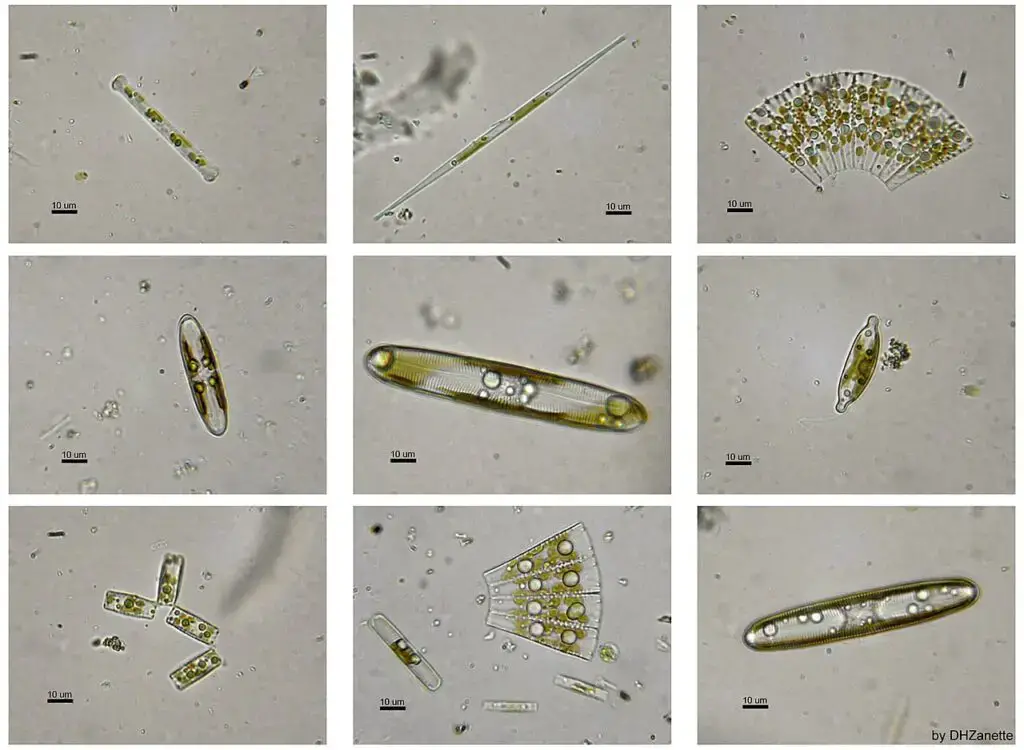
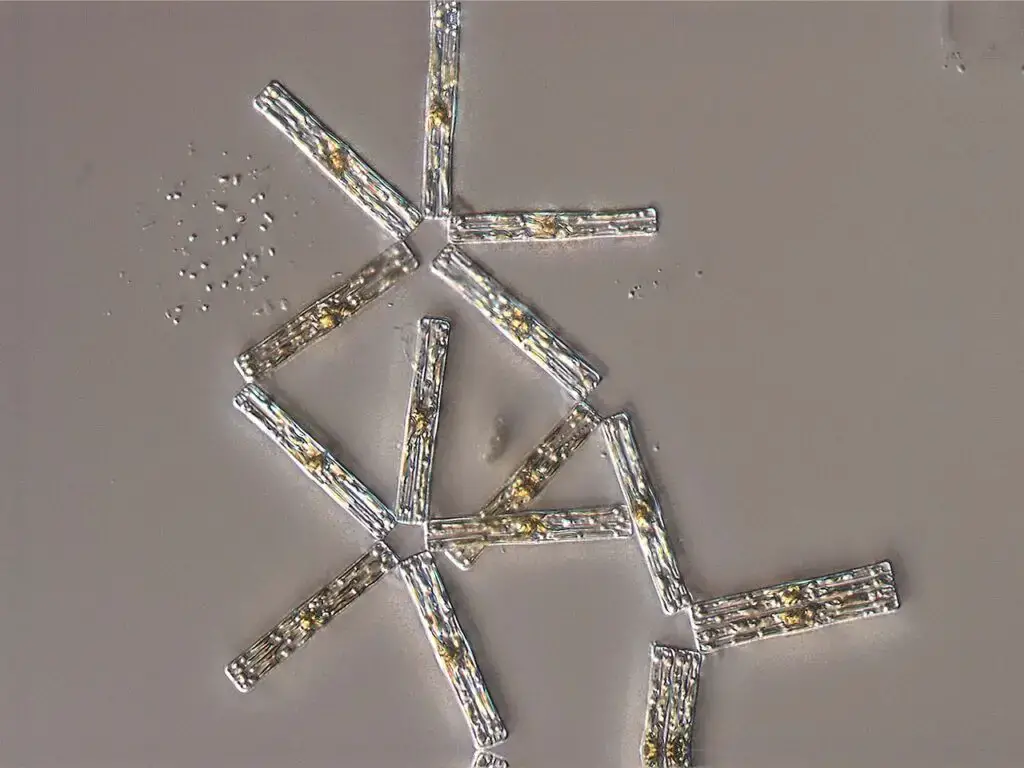
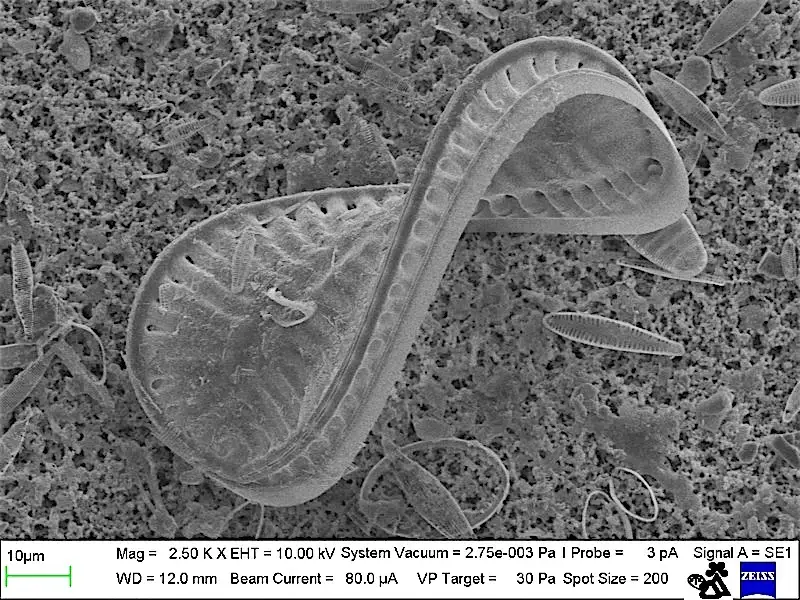
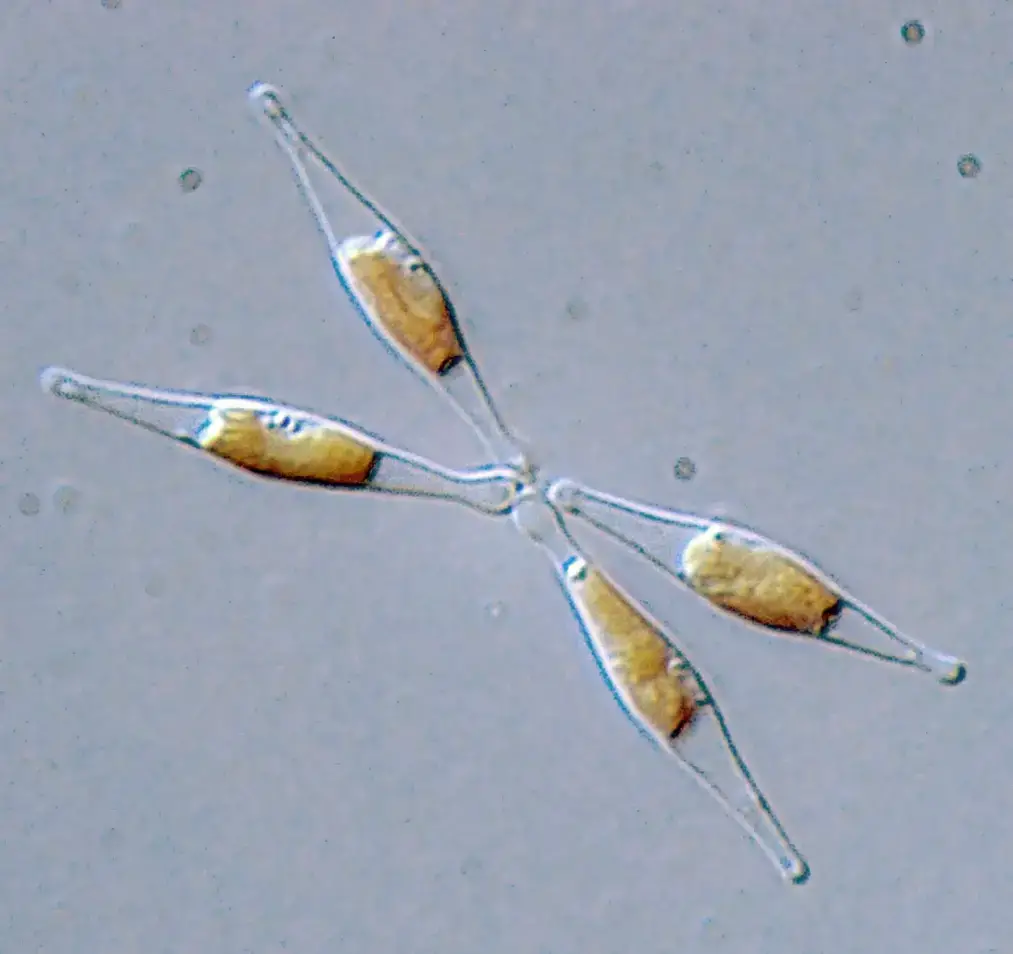
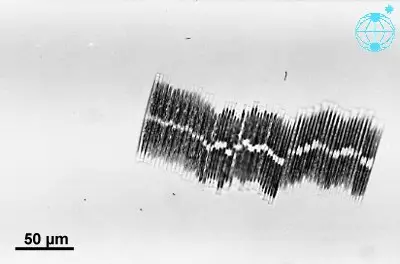
Diatoms Under Microscope
References
- A role for the cell-wall protein silacidin in cell size of the diatom Thalassiosira pseudonana. (n.d.). PubMed Central (PMC).
- Accidental invention: Dynamite. (2024). Custom Powder Systems.
- Lemmel, B. (1998). Alfred Nobel in Krümmel. NobelPrize.org.
- Mann, D. G., & Evans, K. M. (2007). Algae world: The diatom life cycle: Sexual phase. Royal Botanic Garden Edinburgh.
- Glevitzky, M., Corcheş, M. T., & Popa, D. M. (2025). Assessing pollution and diatom-based bioindicators in the Arieș River, Romania. Environments, 12(11), 398. https://doi.org/10.3390/environments12110398
- Idei, M., Mann, D. G., Watanabe, T., & Sato, S. (2025). Auxospore fine structure and development in the surirelloid diatom Campylodiscus cf. neofastuosus (Bacillariophyta). Journal of Phycology, 61(5), 1443-1456. https://doi.org/10.1111/jpy.70085
- UniProt Consortium. (2026). Bacillariophyta (diatoms) | Taxonomy. UniProt.
- Biosilica formation in diatoms: Characterization of native silaffin-2 and its role in silica morphogenesis. (n.d.). PubMed Central (PMC).
- Pierella Karlusich, J. J., Bowler, C., & Biswas, H. (2021). Carbon dioxide concentration mechanisms in natural populations of marine diatoms: Insights from Tara Oceans. Frontiers in Plant Science, 12, 657821. https://doi.org/10.3389/fpls.2021.657821
- Conserved genetic markers reveal widespread diatom sexual reproduction in the global ocean. (n.d.). PubMed Central (PMC).
- Maniscalco, M. A., Brzezinski, M. A., Krause, J. W., & Thamatrakoln, K. (2023). Decoupling silicon metabolism from carbon and nitrogen assimilation poises diatoms to exploit episodic nutrient pulses in a coastal upwelling system. Frontiers in Marine Science, 10, 1291294. https://doi.org/10.3389/fmars.2023.1291294
- Diatom. (2026). In Wikipedia.
- Diatom reproduction. (n.d.).
- Ladera, R. A., Sinco, A. L., Sendaydiego, J. P., Saab, L. L., Hallazgo, C. I. J. S., & Raagas, E. L. (2025). Diatom-based index: A tool for assessing water quality in a Southeast Asian tropical river basin. Pollution, 11(2), 298-311. https://doi.org/10.22059/poll.2024.378540.2437
- Bouazzara, H., & Chaibi, R. (2025). Diatoms and nanotechnology, current trends in nanomaterials applications and environmental monitoring. Environmental Monitoring and Assessment, 197(7). https://doi.org/10.1007/s10661-025-14227-8
- Rabiee, N., Khatami, M., Soufi, G. J., Fatahi, Y., Iravani, S., & Varma, R. S. (2021). Diatoms with invaluable applications in nanotechnology, biotechnology, and biomedicine: Recent advances. ACS Biomaterials Science & Engineering, 7(7), 3053-3068. https://doi.org/10.1021/acsbiomaterials.1c00475
- Al-Zaya, M. (2025). Diatoms: From climatic pasts to future technologies. ArcGIS StoryMaps.
- Brown, K. H. (2025). Dynamite and mining. Mining and Mineral Resources, Research Starters, EBSCO.
- Brown, J. (2016). Dynamite! Alfred Nobel’s birthday and diatomaceous earth. EP Minerals.
- Frustule. (2025). In Wikipedia.
- How do diatoms get big again? (2015). Diatoms of North America.
- ID-Gene Diatoms Molecular Index. (2023). ID-GENE ecodiagnostics.
- Mann, D. G., & Poulíčková, A. (2009). Incunabula and perizonium of Neidium (Bacillariophyta). Fottea, 9(2), 211-222.
- Kociolek, J. P. (2026). A phylogenetic classification of diatoms Bacillariophyta. Journal of Phycology.
- Rao, V. N. R., & Desikachary, T. V. (1970). Macdonald-Pfitzer hypothesis and cell size in diatoms. Nova Hedwigia, Beihefte, 31, 485-493. https://doi.org/10.1127/nova.beihefte/31/1970/485
- Zuluaga-Astudillo, D., Ruge, J. C., & Caicedo-Hormaza, B. (2025). Micromechanical characterization of diatom frustules of multiple origin. Applied Sciences, 15(2), 749. https://doi.org/10.3390/app15020749
- Marine Biological Association. (2024). New research on diatoms and carbon dioxide supply.
- Hook, B. (2023). Phenomenal phytoplankton: Scientists uncover cellular process behind oxygen production. UC San Diego Today.
- Spaulding, S., Potapova, M. G., Bishop, I. W., Lee, S. S., Gasperak, T. S., Jovanoska, E., & Edlund, M. B. (2021). Reproduction (asexual) | Glossary. Diatoms of North America.
- Diatoms and their ecological importance. (2022). ResearchGate.
- Sexual reproduction. (n.d.). WGBIS, CES, IISc.
- Silaffins-driven genetic engineering of diatom cell walls: Insight. (2024). bioRxiv.
- Silica cycle. (2026). In Wikipedia.
- Silica formation in diatoms: The function of long-chain polyamines and silaffins. (n.d.). SciSpace.
- Yoon, H. S., Andersen, R. A., Boo, S. M., & Bhattacharya, D. (2009). Stramenopiles. In Encyclopedia of Microbiology (pp. 721-731). https://doi.org/10.1016/B978-012373944-5.00253-4
- Taxon-specific contributions to silica production in natural diatom assemblages. (n.d.). PubMed Central (PMC).
- Taxonomy of diatoms. (2026). In Wikipedia.
- The biology, morphogenesis, and biogeochemical significance of diatoms. (n.d.).
- The evolution of diatoms and their biogeochemical functions. (n.d.). PubMed Central (PMC).
- What do diatom indices indicate? Modeling the specific pollution… (n.d.). PubMed Central (PMC).
- Blanco, S. (2024). What do diatom indices indicate? Modeling the specific pollution sensitivity index. Environmental Science and Pollution Research, 31(20), 29449-29459. https://doi.org/10.1007/s11356-024-33115-1
- Spaulding, S. (2015). What is diatomaceous earth? Diatoms of North America.
- Kociolek, J. P., Ashworth, M. P., & Alverson, A. J. (2026). A phylogenetic classification of diatoms (Bacillariophyta). Journal of Phycology.
- Ocean Carbon & Biogeochemistry. (2024). Diatoms.