

Plant tissue culture developed as a laboratory-based approach to plant propagation. Traditionally, plants are propagated through seeds and vegetative methods such as cuttings and grafting. Seed propagation involves sexual reproduction, whereas vegetative propagation uses the parts of an existing plant. Plants produced from cuttings generally retain the same genetic characters as the parent plant.
Later, laboratory methods were developed for plant cultivation apart from these conventional propagation methods. Gottlieb Haberlandt published his pioneering work on plant cell culture in 1902 and is regarded as the father of plant tissue culture.
What is Plant Tissue Culture?
Plant tissue culture is a technique of growing plant cells, tissues or organs on suitable nutrient media under aseptic and controlled laboratory conditions. It is carried out outside the parent plant, which is referred to as in vitro cultivation.
The plant material used to start a tissue culture is called an explant. It may be a small piece of leaf, stem, root or shoot tip taken from a plant. The explant is grown on a suitable nutrient medium in a sterile culture vessel. The medium provides the nutrients required for growth and development of the cultured material. Temperature, light and other environmental conditions are maintained according to the type of culture. Aseptic conditions are required to prevent contamination by microorganisms.
Plant tissue culture does not always involve the formation of a complete plant. The cultured cells or tissues may be maintained for experimental studies or for the production of certain plant compounds.
When tissue culture is used for the multiplication of plants, the process is referred to as micropropagation. It is a specific application of plant tissue culture in which new plants are produced from cultured plant material.
History of Plant Tissue Culture
The important developments in the history of plant tissue culture are as follows-
- In 1902, Gottlieb Haberlandt attempted to culture isolated plant cells in artificial nutrient solutions. He used mature cells obtained from different plant tissues. The cells remained alive for some time but did not undergo cell division. Haberlandt also proposed that a complete plant could be developed from an isolated vegetative cell. He is known as the father of plant tissue culture.
- Hanns Hannig successfully cultured isolated mature embryos of certain cruciferous plants on artificial nutrient medium in 1904.
- In 1934, Philip R. White established a continuously growing culture of isolated tomato root tips. The roots were grown in a liquid nutrient medium and maintained by repeated subculturing.
- Roger J. Gautheret obtained cell proliferation from the cambial tissues of certain woody plants in 1934. However, these cultures could not be maintained indefinitely.
- In 1939, continuously growing callus cultures were independently established by Roger J. Gautheret and Pierre Nobécourt using carrot root tissues. During the same year, Philip R. White developed a continuous tissue culture from the tumour tissues of a tobacco hybrid.
- Carlos O. Miller, Folke Skoog and their coworkers discovered kinetin in 1955. This substance was found to promote cell division in cultured plant tissues. Later, kinetin was included in the group of plant growth regulators called cytokinins.
- In 1957, Folke Skoog and Carlos O. Miller demonstrated the effect of auxin and cytokinin on the formation of roots and shoots in cultured tobacco tissues. They found that the relative concentration of these two growth regulators determines the type of organ formed. A higher auxin-to-cytokinin ratio generally promotes root formation. Shoot formation is favoured when the cytokinin-to-auxin ratio is higher.
- F. C. Steward and his coworkers demonstrated the formation of somatic embryos from cultured carrot cells in 1958. These embryos were capable of developing into complete plants. During the same period, F. Reinert also reported somatic embryogenesis in carrot tissue cultures.
- In 1960, Georges Morel developed a method for the propagation of orchids through shoot-tip culture.
- Toshio Murashige and Folke Skoog developed a revised nutrient medium in 1962 for the rapid growth of tobacco tissue cultures. It is referred to as Murashige and Skoog (MS) medium. The medium contains mineral nutrients in suitable concentrations. It is widely used for the cultivation of different types of plant tissues.
Purpose of Plant Tissue Culture
The major objectives of plant tissue culture are as follows-
- To produce a large number of genetically similar plants from a selected parent plant within a short period by micropropagation.
- To obtain disease-free planting materials, especially virus-free plants, through meristem or shoot-tip culture followed by suitable testing.
- To conserve rare, endangered and economically important plant species by maintaining their tissues under in vitro conditions or through cryopreservation.
- To produce haploid plants through anther or microspore culture. The chromosome number can be doubled to obtain homozygous lines for plant breeding.
- To recover hybrid embryos that fail to develop normally in seeds by culturing them on suitable nutrient media. This technique is referred to as embryo rescue.
- To develop improved crop varieties by selecting useful somaclonal variations or cultured cells having desirable characteristics, such as tolerance to certain environmental stresses.
- To produce somatic hybrids by the fusion of isolated plant protoplasts, followed by the regeneration of hybrid plants.
- To regenerate complete plants from genetically transformed or genome-edited cells for plant improvement and genetic studies.
- To produce valuable secondary metabolites, including certain medicinal compounds, from cultured plant cells and tissues.
- To study the growth, cell division, differentiation, organ formation and somatic embryogenesis of plant cells under controlled laboratory conditions.
Principle of Plant Tissue Culture
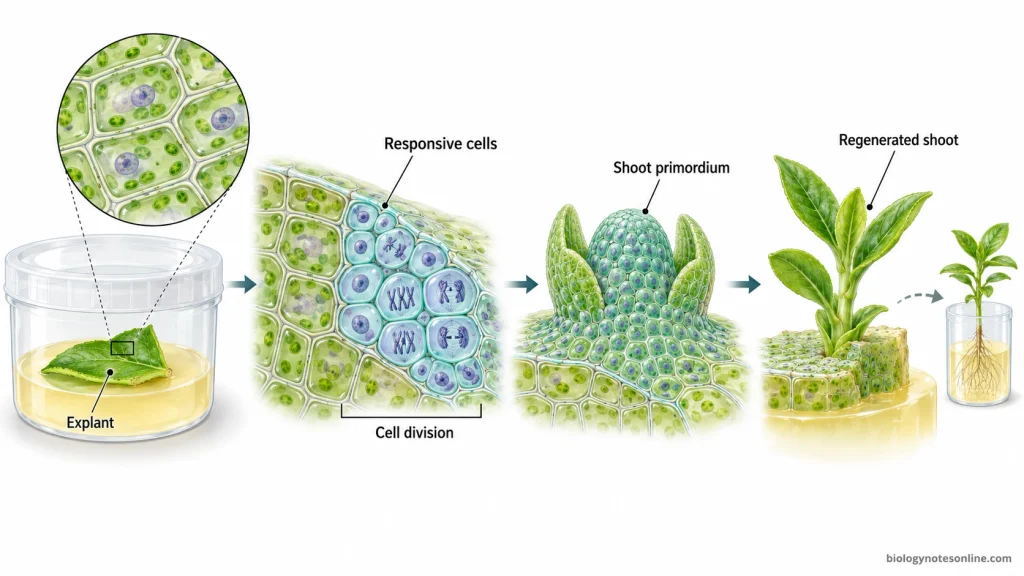
The principle of plant tissue culture is based on cellular totipotency, which is the ability of a single plant cell to develop into a complete plant under suitable conditions. The living plant cells generally possess the genetic information required for the development of different tissues and organs.
When a suitable explant is grown on a nutrient medium, certain cells may start dividing again. These cells can undergo developmental reprogramming and change their previous developmental state. This ability of plant cells to change their developmental fate is referred to as cellular plasticity. The cells may undergo further division and differentiation to form new tissues and organs. Under suitable conditions, a complete plant can be regenerated.
The growth and differentiation of cultured cells are influenced by plant growth regulators, mainly auxins and cytokinins. These regulators control different developmental responses through their signalling activities.
The regeneration ability depends on the genotype, developmental state of the cells, type of explant and culture conditions. Not all plant cells can readily develop into a complete plant. Some cultured cells may survive or undergo cell division without producing a whole plant.
Requirements for Plant Tissue Culture
The following are the essential requirements for plant tissue culture-
Explant Selection
- The explant should be collected from a healthy and actively growing parent plant, preferably free from visible diseases and pest infections.
- Different plant parts can be used as explants, such as shoot tips, meristems, axillary buds, leaves, stem nodes, embryos and cotyledons.
- Young and actively dividing tissues are generally preferred because they often show better growth and regeneration ability under culture conditions.
- Different plants such as banana, potato, orchids and strawberry can be used for tissue culture. No single plant is suitable for all types of cultures. The selection depends on the plant species, genotype and purpose of culture.
Laboratory Equipment and Materials
- Laminar Air Flow Cabinet- It provides a clean working area with filtered air for the aseptic transfer and inoculation of plant tissues.
- Autoclave– It is used for the sterilization of nutrient media, glassware and other heat-resistant laboratory materials.
- Culture Vessels- Test tubes, glass jars, culture bottles, flasks and Petri dishes are used for growing and maintaining plant tissues.
- Dissecting Instruments- Sterile forceps, scalpels, needles and scissors are required for cutting and transferring explants.
- Media Preparation Equipment- Analytical balance, pH meter, magnetic stirrer, hot plate and purified water are required for preparing culture media.
- Microscope- A stereo microscope is used for the dissection of small explants and observation of cultured tissues.
- Culture Room or Growth Chamber- It is equipped with culture racks, lighting systems and temperature controls for maintaining the cultures.
- Other Materials- Sterile nutrient media, distilled water, disinfectants, gloves and suitable vessel closures are required.
Aseptic Conditions
- All culture media, vessels and instruments must be sterilized before use to prevent microbial contamination.
- The explants are surface-sterilized using suitable disinfectants and then washed with sterile water to remove the remaining disinfectant.
- Inoculation and subculturing are carried out inside a laminar airflow cabinet using sterile instruments.
- The working surface should be disinfected before use. Hands or gloves must also be cleaned properly, and the culture vessels should be closed after inoculation.
- Cultures are checked regularly for bacterial and fungal contamination. Contaminated cultures are separated and discarded.
Environmental Conditions for Culture Growth
- Temperature- Most commonly used culture conditions maintain a temperature around 25 ± 2°C. The required temperature may vary with plant species and culture type.
- Light- The cultures are generally maintained under controlled artificial lighting. A 16-hour light and 8-hour dark period is commonly used for shoot cultures. Some cultures require complete darkness.
- Humidity- The culture vessels maintain a humid environment around the growing tissues. Suitable humidity and air circulation are also maintained in the culture room.
- Gas Exchange- The exchange of gases within the culture vessels is influenced by the type of vessel and its closure. Suitable gas exchange is required for normal growth of the cultured tissues.
Plant Tissue Culture Media
Plant tissue culture media are nutrient preparations used for the growth and maintenance of plant cells, tissues and organs under in vitro conditions. The culture medium provides essential mineral nutrients, vitamins, carbon sources and other substances required for cell division and differentiation.
Different plant tissues require different nutrient compositions. The selection of culture medium depends on the plant species, type of explant and purpose of the culture.
Composition of Plant Tissue Culture Media
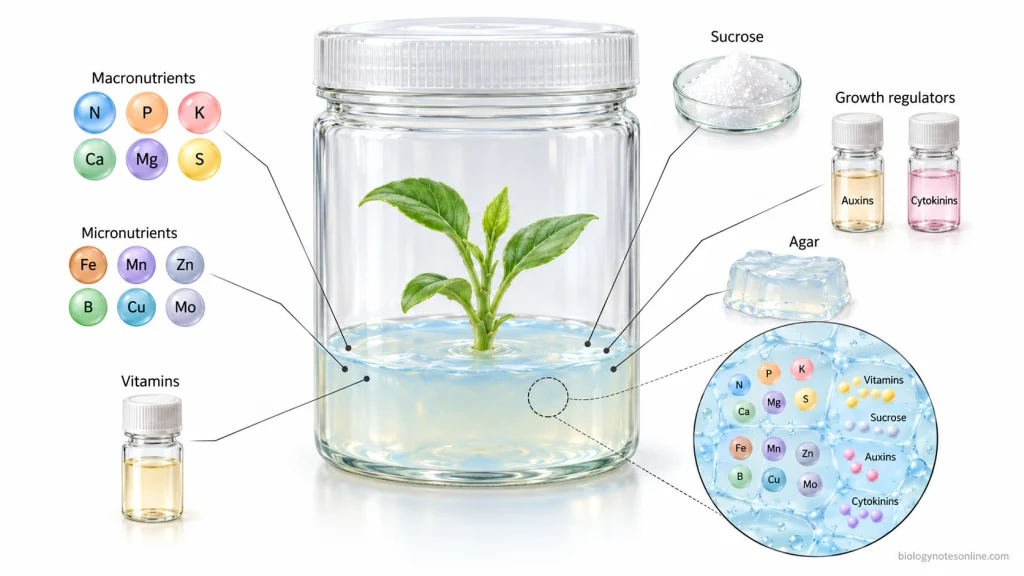
The major components of plant tissue culture media are as follows-
- Macronutrients- These are mineral elements required in relatively large quantities. The major macronutrients include nitrogen (N), phosphorus (P), potassium (K), calcium (Ca), magnesium (Mg) and sulphur (S). They are involved in different metabolic activities, protein synthesis, cell growth and development.
- Micronutrients- Micronutrients are required in very small quantities. They include iron (Fe), manganese (Mn), zinc (Zn), boron (B), copper (Cu) and molybdenum (Mo). Some media also contain cobalt (Co) and iodine (I). These elements are mainly involved in enzyme activities and other cellular processes. Iron is commonly supplied in a chelated form using ethylenediaminetetraacetic acid (EDTA).
- Vitamins- Vitamins are added to the medium for normal growth and metabolism of cultured cells. The commonly used vitamins are thiamine (vitamin B1), pyridoxine (vitamin B6) and nicotinic acid (vitamin B3).
- Amino Acids and Organic Supplements- Amino acids such as glycine, glutamine and asparagine are used as additional sources of organic nitrogen. Some media also contain casein hydrolysate, coconut water or yeast extract. Myo-inositol is another commonly used organic supplement.
- Carbon Sources- Sucrose is the most commonly used carbon source in plant tissue culture. It is generally added at a concentration of 20-30 g/L (2-3%). Glucose and other suitable sugars may also be used. The carbon source provides energy and carbon for the growth of cultured tissues, especially when photosynthetic activity is insufficient.
- Gelling Agents- Agar, agarose and gellan gum are used to solidify the culture media. Agar is commonly used at about 6-8 g/L, although the required amount varies with the desired gel consistency. No gelling agent is required for liquid culture media.
- Water and pH- Purified water is used for dissolving the different components of the nutrient medium. The pH is commonly adjusted around 5.6-5.8 before sterilization, depending on the culture requirements. The pH affects nutrient availability and the physical properties of the medium.
The components of plant tissue culture media and their functions are given below-
| Components | Representative examples | Functions |
|---|---|---|
| Macronutrients | N, P, K, Ca, Mg, S | Cell growth, metabolism and synthesis of cellular components |
| Micronutrients | Fe, Mn, Zn, B, Cu, Mo | Enzyme activities and cellular metabolism |
| Vitamins | Thiamine, pyridoxine, nicotinic acid | Act as components or precursors of coenzymes |
| Amino acids | Glycine, glutamine, asparagine | Provide organic nitrogen |
| Organic supplements | Myo-inositol, casein hydrolysate, coconut water | Support growth or specific developmental responses |
| Carbon sources | Sucrose, glucose | Supply carbon and energy |
| Plant growth regulators | Auxins, cytokinins | Regulate cell division, growth and differentiation |
| Gelling agents | Agar, agarose, gellan gum | Provide a supporting gel matrix |
| Water | Distilled or deionized water | Solvent for culture medium components |
Plant Growth Regulators in Culture Media
Plant growth regulators are added to culture media to control the growth, division and differentiation of plant cells. The two major groups are auxins and cytokinins.
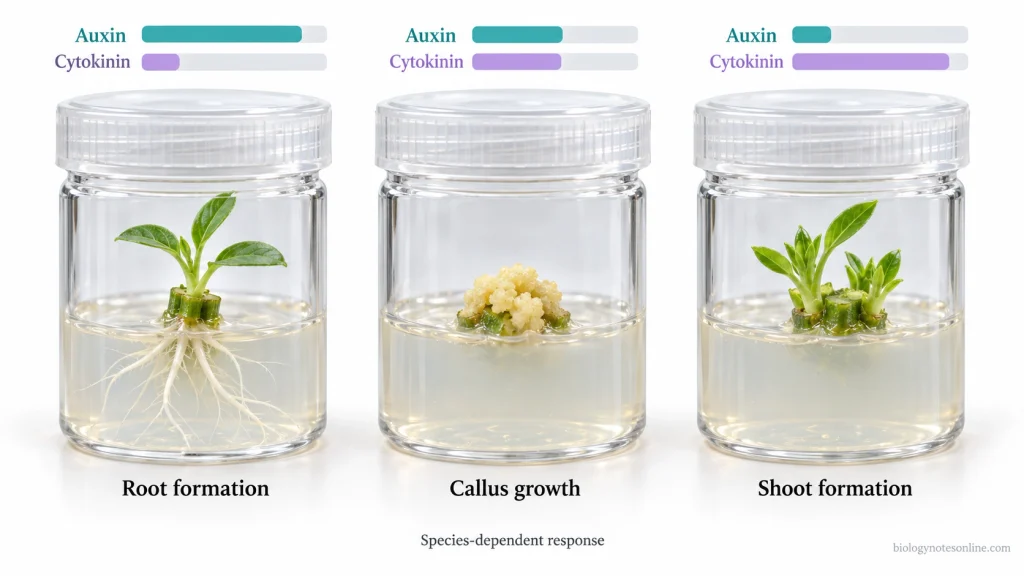
- Auxins- Auxins are mainly involved in cell enlargement, callus induction, root formation and somatic embryogenesis. Commonly used auxins include indole-3-acetic acid (IAA), indole-3-butyric acid (IBA), naphthaleneacetic acid (NAA) and 2,4-dichlorophenoxyacetic acid (2,4-D).
- Cytokinins- These growth regulators promote cell division and shoot bud formation. They are commonly used for shoot multiplication in plant tissue culture. Examples include kinetin, 6-benzylaminopurine (BAP) and zeatin.
- Other Growth Regulators- Gibberellic acid (GA3) is sometimes used for shoot elongation. Abscisic acid (ABA) may be added during the maturation of somatic embryos.
Auxin and Cytokinin Ratio- The relative concentrations of auxins and cytokinins affect the development of cultured tissues. In many cultures, a higher auxin-to-cytokinin ratio favours root formation, whereas a higher cytokinin-to-auxin ratio promotes shoot formation. A suitable combination of both regulators may induce or maintain callus growth. The response varies with plant species, genotype, explant and the endogenous hormone levels. Some cultures can also grow without externally added growth regulators.
Types of Plant Tissue Culture Media
Based on their physical state, plant tissue culture media are divided into three types-
- Solid Media- These media contain a suitable concentration of gelling agent to form a firm supporting surface. They are used for the establishment of explants and growth of shoots or other organized tissues.
- Semisolid Media- Semisolid media have a softer gel consistency. They are commonly used for callus culture, shoot regeneration and other tissue cultures where a moist supporting surface is required.
- Liquid Media- These media do not contain any gelling agent. They are used for cell suspension cultures and certain types of organ cultures. The cultures may be maintained with shaking, aeration or temporary immersion depending on the method. Continuous contact with liquid medium can cause excessive water uptake and hyperhydricity in some cultured shoots.
Commonly Used Plant Tissue Culture Media
Several nutrient media have been developed for growing different plant cells and tissues. Some commonly used media are as follows-
- Murashige and Skoog (MS) Medium- It was developed by Toshio Murashige and Folke Skoog in 1962 for tobacco tissue culture. MS medium contains relatively high concentrations of mineral salts, particularly nitrate and ammonium nitrogen. It is widely used for callus culture, shoot multiplication, plant regeneration and many other plant tissue cultures. The standard MS basal salts do not include separately added plant growth regulators.
- White’s Medium- This medium was developed by Philip R. White for the culture of isolated plant roots. It contains comparatively lower concentrations of several mineral nutrients than MS medium and has been used for root cultures.
- Gamborg’s B5 Medium- It was developed by Gamborg and coworkers in 1968 for soybean cell cultures. B5 medium contains mineral salts and vitamins with a different nitrogen composition from MS medium. It is commonly used for callus and cell suspension cultures.
- Woody Plant Medium (WPM)- It was developed by Lloyd and McCown for the culture of woody plants. The medium contains lower ammonium nitrogen than MS medium and is used for the propagation and growth of tissues from several woody species.
Composition of Standard MS Basal Salts
The following table shows the composition of the standard full-strength MS basal-salt formulation. The quantities are expressed in mg per litre of medium.
| Components | Concentration (mg/L) |
|---|---|
| Macronutrients | |
| Ammonium nitrate (NH₄NO₃) | 1650 |
| Potassium nitrate (KNO₃) | 1900 |
| Calcium chloride dihydrate (CaCl₂·2H₂O) | 440 |
| Magnesium sulphate heptahydrate (MgSO₄·7H₂O) | 370 |
| Potassium dihydrogen phosphate (KH₂PO₄) | 170 |
| Micronutrients and iron source | |
| Boric acid (H₃BO₃) | 6.20 |
| Manganese sulphate tetrahydrate (MnSO₄·4H₂O) | 22.30 |
| Zinc sulphate heptahydrate (ZnSO₄·7H₂O) | 8.60 |
| Potassium iodide (KI) | 0.83 |
| Sodium molybdate dihydrate (Na₂MoO₄·2H₂O) | 0.25 |
| Copper sulphate pentahydrate (CuSO₄·5H₂O) | 0.025 |
| Cobalt chloride hexahydrate (CoCl₂·6H₂O) | 0.025 |
| Ferrous sulphate heptahydrate (FeSO₄·7H₂O) | 27.80 |
| Disodium EDTA dihydrate (Na₂EDTA·2H₂O) | 37.30 |
These are the basal-salt concentrations. Vitamins, organic supplements, sucrose, gelling agents and plant growth regulators are considered separately when preparing a complete working medium. Their amounts may be modified according to the plant species, type of culture and experimental requirements.
Procedure of Plant Tissue Culture
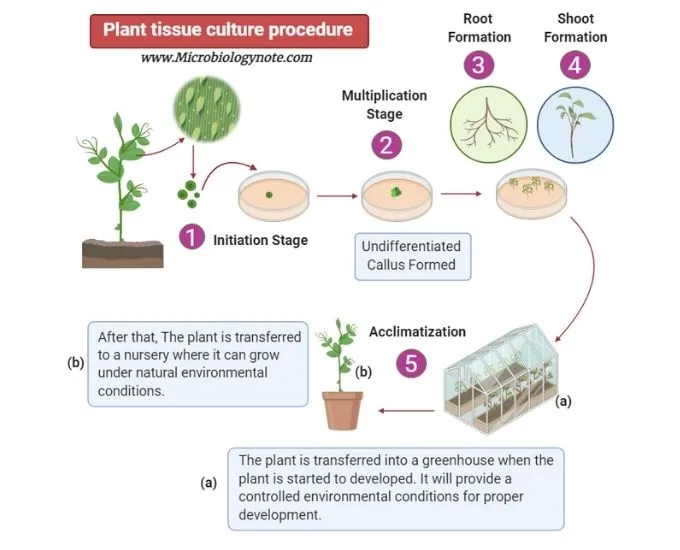
Plant tissue culture involves growing a selected plant tissue on sterile nutrient medium under controlled laboratory conditions. The general procedure is as follows-
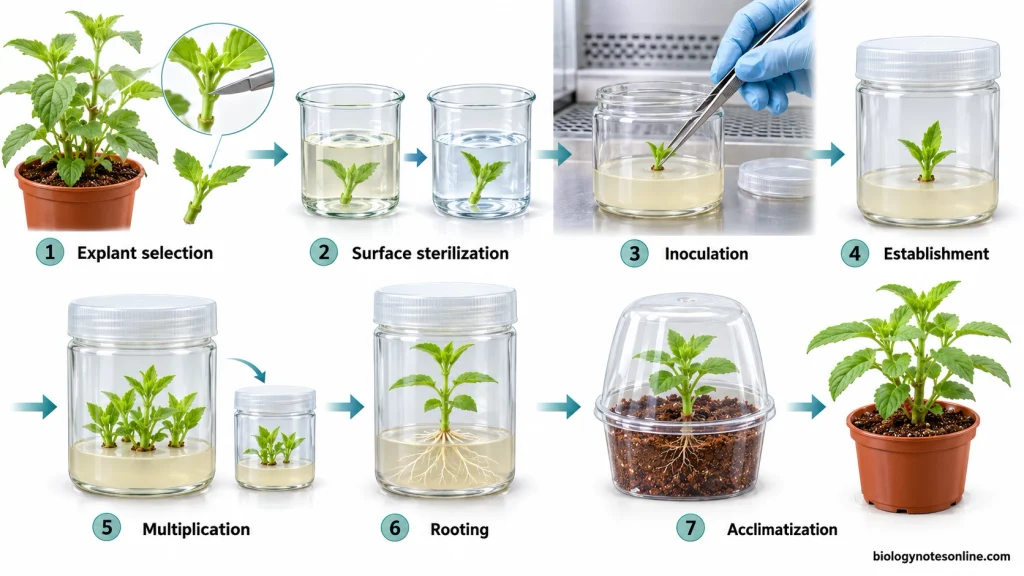
- A healthy and disease-free plant is selected first. From this plant, a suitable explant such as shoot tip, axillary bud, leaf or nodal segment is collected.
- Prepare the nutrient medium containing mineral nutrients, vitamins, carbon source and required plant growth regulators. The pH of the medium is adjusted. Sterilize the prepared medium and culture vessels.
- Wash the collected explant thoroughly under running water to remove dirt and other surface materials.
- The explant is then treated with a suitable surface disinfectant such as sodium hypochlorite. The concentration and treatment time vary depending on the type of explant. After treatment, wash it several times with sterile distilled water.
- Now, inside a laminar airflow cabinet, transfer the sterilized explant onto the nutrient medium using sterile forceps. Close the culture vessel properly.
- Keep the inoculated culture under suitable temperature and light conditions. The culture is checked regularly for contamination and the beginning of tissue growth.
- Depending on the plant species, explant and growth regulators used, the cultured tissue may produce new shoots directly. In some cultures, callus or somatic embryos are formed.
- The growing tissues or shoots are transferred to fresh nutrient medium for further multiplication. This is called subculturing. The process can be repeated several times to increase the number of shoots.
- Allow the newly formed shoots to grow further. For root formation, the shoots may be grown on a suitable rooting medium or directly in a rooting substrate outside the culture vessel.
- The developed plantlets are carefully removed from the culture vessels and the remaining medium is washed off. Transfer them into a suitable potting mixture and maintain high humidity.
- The humidity is gradually reduced and the plantlets are exposed to normal environmental conditions. This process is referred to as acclimatization or hardening. After establishment, the plants are transferred to nursery or soil conditions.
Types of Plant Tissue Culture
Plant tissue culture is classified into different types based on the type of plant cells, tissues or organs used for cultivation. The different techniques involve the growth of isolated cells, callus, protoplasts and organized plant parts under suitable culture conditions.
There is no fixed number of plant tissue culture types. Some of the techniques are also related to each other. Organ culture is a broader type in which intact plant organs such as shoots, roots and embryos are grown on nutrient media. Meristem, shoot tip and embryo cultures may also be included under organ culture.
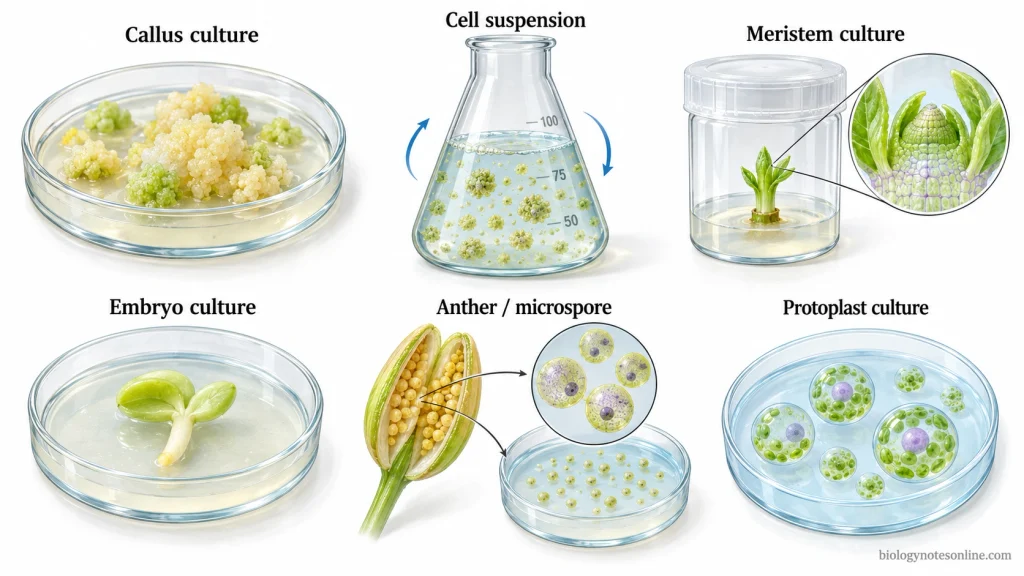
The major types of plant tissue culture are as follows-
1. Callus Culture
- Callus culture involves the cultivation of an unorganized mass of proliferating plant cells on a suitable nutrient medium. The callus is generally obtained from explants such as leaves, stems or roots by providing suitable plant growth regulators.
- The developing callus is transferred to fresh nutrient medium for further growth. It is used for studying cell differentiation, selection of useful cell variants and plant regeneration. However, not all callus tissues can regenerate complete plants.
2. Cell Suspension Culture
- In cell suspension culture, small pieces of friable callus or isolated plant cells are grown in a liquid nutrient medium. The culture flask is usually kept on a shaker to maintain the cells or small cell aggregates in suspension.
- These cultures are used for studying cell growth, large-scale cultivation of plant cells and production of secondary metabolites.
3. Meristem and Shoot Tip Culture
- Meristem culture involves the isolation and cultivation of a small apical meristem on a nutrient medium. In shoot tip culture, a larger portion of the shoot tip containing the apical meristem and developing leaf primordia is used.
- Both techniques are used for the multiplication of plants. Meristem culture is also used to obtain plants free from certain viruses, as the small apical meristem may contain little or no virus. The regenerated plants must be tested to confirm the absence of infection.
4. Embryo Culture
- Embryo culture is a technique in which a mature or immature plant embryo is isolated from the seed or ovule and grown on an artificial nutrient medium. Under suitable conditions, the cultured embryo develops into a seedling.
- It is commonly used for embryo rescue, especially when hybrid embryos fail to develop normally within the seed. The technique is also used for overcoming certain types of seed dormancy and promoting the growth of immature embryos.
5. Anther and Microspore Culture
- Anther culture involves the cultivation of whole anthers containing immature pollen grains on a suitable nutrient medium. In microspore culture, the immature pollen cells or microspores are isolated from the anthers and cultured separately.
- Under suitable conditions, the microspores can develop into embryos or other tissues capable of producing haploid plants. These plants contain a single set of chromosomes.
- The chromosome number of haploid plants can be doubled to produce completely homozygous doubled-haploid plants, which are used in plant breeding.
6. Protoplast Culture
- Protoplast culture involves the cultivation of isolated plant cells from which the cell wall has been removed by enzymatic treatment. The protoplasts are generally obtained from leaf mesophyll tissues or cultured plant cells. Enzymes such as cellulase and pectinase are used for removing the cell wall.
- The isolated protoplasts are grown in a suitable nutrient medium with proper osmotic conditions. Under favourable conditions, they form a new cell wall and undergo cell division. The dividing cells may develop into callus from which complete plants can be regenerated.
- Protoplasts can also be fused to form somatic hybrids. This technique is used in plant breeding for combining genetic materials from different plants, including some plants that cannot be crossed by conventional breeding.
Comparison of Different Types of Plant Tissue Culture
| Type of culture | Cultured material | Major uses |
|---|---|---|
| Callus Culture | Unorganized mass of plant cells | Cell selection and regeneration |
| Cell Suspension Culture | Isolated cells or cell aggregates in liquid medium | Cell growth studies and metabolite production |
| Meristem and Shoot Tip Culture | Apical meristem or shoot tip | Plant multiplication and production of virus-free plants |
| Embryo Culture | Mature or immature plant embryo | Embryo rescue and overcoming certain seed dormancy |
| Anther and Microspore Culture | Anthers or isolated microspores | Haploid and doubled-haploid production |
| Protoplast Culture | Plant cells without cell walls | Somatic hybridization and cell studies |
| Organ Culture | Intact shoots, roots, embryos or other organs | Growth and maintenance of organized plant organs |
Plant Regeneration in Tissue Culture
Plant regeneration in tissue culture involves the formation of new shoots, organs or complete plants from cultured plant tissues. It can take place through the multiplication of existing meristems, organogenesis or somatic embryogenesis.
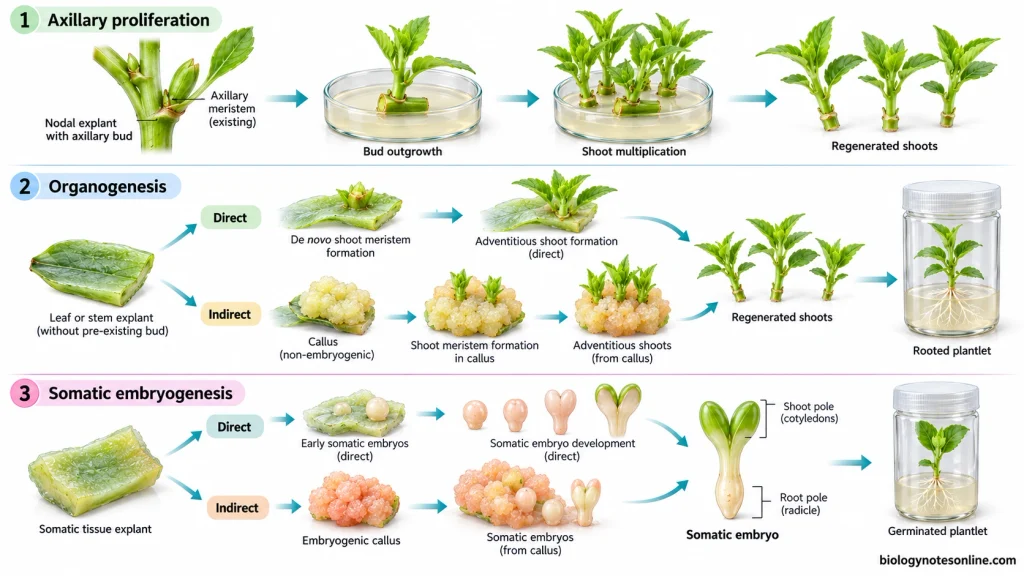
The major pathways of plant regeneration are as follows-
- Shoot Proliferation from Pre-existing Meristems- It involves the growth and multiplication of shoot meristems already present in the cultured explant. The shoot tips or axillary buds are grown on a suitable nutrient medium, where the existing meristems develop into shoots. Cytokinins are commonly used to promote shoot multiplication. This method does not require callus formation or the development of new meristems from other tissues.
- Organogenesis- Organogenesis is the formation of new plant organs such as shoots and roots from cultured plant tissues. The cells undergo division and differentiation to form new meristematic regions, which develop into adventitious organs. It may occur by two different pathways.
- Direct organogenesis- The shoots or roots develop directly from the explant without the formation of an intermediate callus.
- Indirect organogenesis- The explant first develops into a callus. Under suitable culture conditions, some cells of the callus differentiate and form new shoots or roots.
- Somatic Embryogenesis- It is a process in which somatic plant cells develop into embryos without fertilization. Under suitable conditions, certain cultured cells acquire embryogenic characteristics and undergo repeated cell division to form somatic embryos.These embryos have both shoot and root poles. They are not connected to the parent tissue by a vascular connection, unlike the developing adventitious organs.Somatic embryogenesis may be direct or indirect. In direct somatic embryogenesis, the embryos are formed directly from the explant cells. In indirect somatic embryogenesis, an embryogenic callus is formed first, which later gives rise to somatic embryos.Auxins and other culture conditions influence the induction and development of somatic embryos. The required growth regulator conditions vary with the plant species and developmental stage. Mature somatic embryos can germinate and develop into complete plantlets.
Applications of Plant Tissue Culture
The major applications of plant tissue culture are as follows-
- Micropropagation is used for the rapid multiplication of commercially important plants such as banana, sugarcane and orchids.
- Meristem culture followed by virus testing is used to produce virus-free planting materials for seed potato production.
- In forestry, shoot culture and somatic embryogenesis are used for the multiplication of selected trees such as Eucalyptus for clonal plantations.
- Anther and microspore culture are used in plant breeding to produce haploid and doubled-haploid lines, reducing the time required to develop homozygous crop varieties.
- Embryo rescue is used to recover hybrid embryos from crosses between certain distantly related plants, such as different Brassica species.
- Protoplast fusion and culture are used to produce somatic hybrids by combining cells from different plant species.
- Callus culture and in vitro selection are used to obtain plant variants with useful characters, such as tolerance to certain environmental stresses.
- Tissue culture is used for regenerating complete plants from genetically transformed or genome-edited cells.
- Cryopreservation and slow-growth in vitro storage are used to conserve the germplasm of rare, endangered and vegetatively propagated plants.
- Plant cell suspension cultures are used for the production of medicinal secondary metabolites, such as paclitaxel from Taxus species.
Advantages of Plant Tissue Culture
The major advantages of plant tissue culture are as follows-
- It allows rapid multiplication of a large number of plants from a small piece of plant tissue.
- Plants produced through shoot culture are generally genetically uniform and retain the desirable characters of the parent plant.
- The plants can be propagated throughout the year, independent of seasonal changes.
- It requires comparatively less space for maintaining and multiplying a large number of plants.
- Meristem culture, followed by suitable testing, can produce virus-free planting materials.
- It can be used to propagate plants that are difficult to multiply through seeds or conventional vegetative methods.
- Rare, endangered and economically important plant species can be conserved under in vitro conditions.
- The production of plants can be maintained under controlled conditions, allowing a more regular supply of planting materials.
Limitations of Plant Tissue Culture
The major limitations of plant tissue culture are as follows-
- It requires expensive laboratory equipment, controlled conditions and trained personnel.
- Even slight bacterial or fungal contamination can damage or destroy the entire culture.
- Not all plant species or genotypes respond equally to tissue culture. Some tissues fail to regenerate complete plants.
- There is a chance of genetic changes or somaclonal variation, particularly during prolonged callus culture.
- Some explants release phenolic compounds that cause browning and may inhibit tissue growth.
- Cultured plants may develop physiological abnormalities such as hyperhydricity, resulting in weak and abnormal shoots.
- Root formation may be difficult in certain plant species, even after successful shoot regeneration.
- The regenerated plantlets require careful acclimatization before transferring to soil. Some plants may die due to sudden changes in humidity and environmental conditions.
References
- Bhojwani, S. S., & Dantu, P. K. (2013). Plant tissue culture: An introductory text. Springer. https://doi.org/10.1007/978-81-322-1026-9
- Davey, M. R., Anthony, P., Power, J. B., & Lowe, K. C. (2005). Plant protoplasts: Status and biotechnological perspectives. Biotechnology Advances, 23(2), 131–171. https://doi.org/10.1016/j.biotechadv.2004.09.008
- Engelmann, F. (2011). Use of biotechnologies for the conservation of plant biodiversity. In Vitro Cellular & Developmental Biology – Plant, 47(1), 5–16. https://doi.org/10.1007/s11627-010-9327-2
- Fehér, A. (2019). Callus, dedifferentiation, totipotency, somatic embryogenesis: What these terms mean in the era of molecular plant biology? Frontiers in Plant Science, 10, Article 536. https://doi.org/10.3389/fpls.2019.00536
- Gamborg, O. L., Miller, R. A., & Ojima, K. (1968). Nutrient requirements of suspension cultures of soybean root cells. Experimental Cell Research, 50(1), 151–158. https://doi.org/10.1016/0014-4827(68)90403-5
- George, E. F., Hall, M. A., & De Klerk, G.-J. (Eds.). (2008). Plant propagation by tissue culture: Volume 1. The background (3rd ed.). Springer. https://doi.org/10.1007/978-1-4020-5005-3
- Georgiev, M. I., Weber, J., & Maciuk, A. (2009). Bioprocessing of plant cell cultures for mass production of targeted compounds. Applied Microbiology and Biotechnology, 83(5), 809–823. https://doi.org/10.1007/s00253-009-2049-x
- Germanà, M. A. (2011). Anther culture for haploid and doubled haploid production. Plant Cell, Tissue and Organ Culture, 104(3), 283–300. https://doi.org/10.1007/s11240-010-9852-z
- Hazarika, B. N. (2003). Acclimatization of tissue-cultured plants. Current Science, 85(12), 1704–1712. https://www.currentscience.ac.in/Downloads/article_id_085_12_1704_1712_0.pdf
- Hazarika, B. N. (2006). Morpho-physiological disorders in in vitro culture of plants. Scientia Horticulturae, 108(2), 105–120. https://doi.org/10.1016/j.scienta.2006.01.038
- Ikeuchi, M., Sugimoto, K., & Iwase, A. (2013). Plant callus: Mechanisms of induction and repression. The Plant Cell, 25(9), 3159–3173. https://doi.org/10.1105/tpc.113.116053
- Ikeuchi, M., Ogawa, Y., Iwase, A., & Sugimoto, K. (2016). Plant regeneration: Cellular origins and molecular mechanisms. Development, 143(9), 1442–1451. https://doi.org/10.1242/dev.134668
- Larkin, P. J., & Scowcroft, W. R. (1981). Somaclonal variation: A novel source of variability from cell cultures for plant improvement. Theoretical and Applied Genetics, 60(4), 197–214. https://doi.org/10.1007/BF02342540
- Leifert, C., & Cassells, A. C. (2001). Microbial hazards in plant tissue and cell cultures. In Vitro Cellular & Developmental Biology – Plant, 37(2), 133–138. https://doi.org/10.1007/s11627-001-0025-y
- Murashige, T., & Skoog, F. (1962). A revised medium for rapid growth and bio assays with tobacco tissue cultures. Physiologia Plantarum, 15(3), 473–497. https://doi.org/10.1111/j.1399-3054.1962.tb08052.x
- Phillips, G. C., & Garda, M. (2019). Plant tissue culture media and practices: An overview. In Vitro Cellular & Developmental Biology – Plant, 55(3), 242–257. https://doi.org/10.1007/s11627-019-09983-5
- Raghavan, V. (2003). One hundred years of zygotic embryo culture investigations. In Vitro Cellular & Developmental Biology – Plant, 39(5), 437–442. https://doi.org/10.1079/IVP2003436
- Skoog, F., & Miller, C. O. (1957). Chemical regulation of growth and organ formation in plant tissues cultured in vitro. Symposia of the Society for Experimental Biology, 11, 118–131. https://pubmed.ncbi.nlm.nih.gov/13486467/
- Thorpe, T. A. (2007). History of plant tissue culture. Molecular Biotechnology, 37(2), 169–180. https://doi.org/10.1007/s12033-007-0031-3
- White, P. R. (1934). Potentially unlimited growth of excised tomato root tips in a liquid medium. Plant Physiology, 9(3), 585–600. https://doi.org/10.1104/pp.9.3.585
Great information to me