Skip to content
Biology Notes Online
  • Microscopic Images
  • Microbiology
    Agricultural Microbiology
    Bacteriology
    Basic Microbiology
    Biochemistry
    Bioinformatics
    Biotechnology
    Cell Biology
    Environmental Microbiology
    Food Microbiology
    Genetics
    Immunology
    Industrial microbiology
    Medical Microbiology
    Microscope
    Molecular biology
    Mycology
    Parasitology
    Phycology
    Prions
    Protozoa
    Virology
  • Zoology
    Animal Behaviour
    Basic Zoology
    Biology of Insecta
    Chordates
    Developmental Biology
    Endocrinology
    Ethology
    Evolutionary Biology
    Fish and fisheries
    Human Anatomy
    Neuroscience
    Non-chordates
    Pest Management
    Physiology
    Protista
    Reproductive Biology
    Research Methodology
    Vertebrata
  • Botany
    Angiosperms
    Archegoniate
    Biodiversity
    Economic Botany
    Ethnobotany
    Horticultural
    Natural Resource Management
    Plant Anatomy and Embryology
    Plant Breeding
    Plant Ecology and Taxonomy
    Plant Physiology and Metabolism
  • Practical
    Biochemical Test
    Botany Practicals
    Culture Media
    Cytopathology
    Hematology
    Immunology Practical
    Instruments
    Laboratory Techniques
    Laboratory Tests
    Microbiology Techniques
    Protocols
    Staining
    Under Microscope
  • Resources
    Differences
    Research Methodology
    Syllabus

Home » Biology Practicals » Protocols » Page 2

Protocols

Dot Blot Technique – Principle, Procedure and Applications

Avatar for Sourav Pan Sourav Pan (M.Sc. in Microbiology) • Updated October 19, 2026 • 20 min read
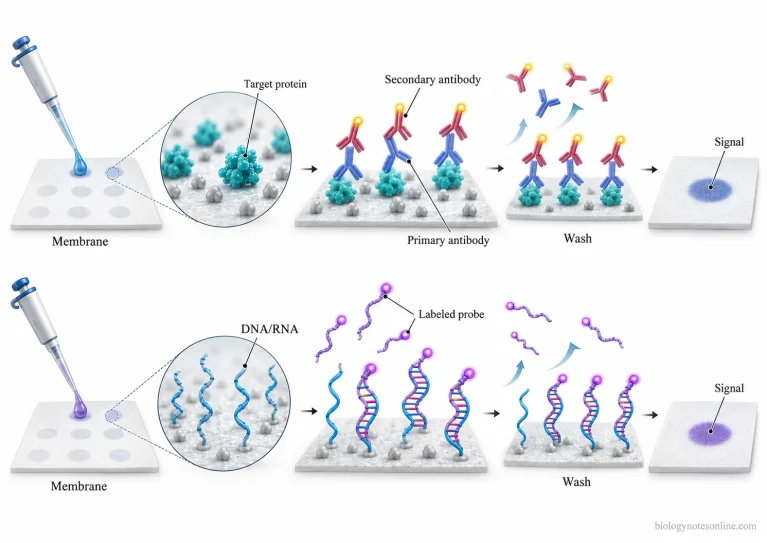
Two dot blot detection pathways showing antibodies binding immobilized proteins and complementary probes hybridizing with DNA or RNA on separate membranes.

Dot blot technique detects specific proteins, DNA, or RNA on a membrane. Explore its principle, protocol, membranes, applications, and result interpretation.

Categories Protocols Leave a comment

Restriction Digest – Principle, Protocol, Results and Troubleshooting

Avatar for Sourav Pan Sourav Pan (M.Sc. in Microbiology) • Updated October 18, 2026 • 26 min read
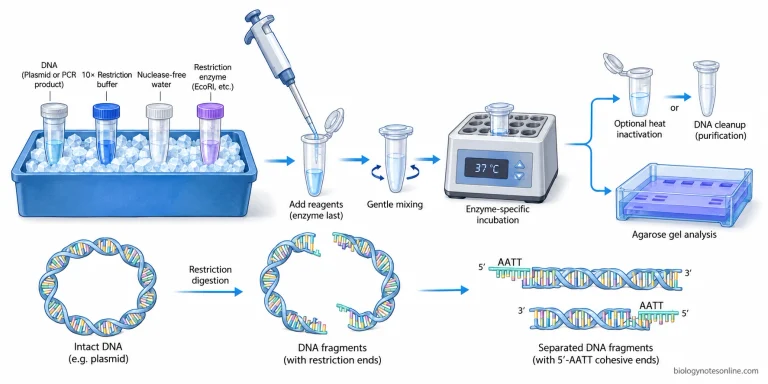
Laboratory workflow showing DNA, restriction enzyme and buffer preparation, incubation, optional cleanup and analysis by agarose gel electrophoresis.

The restriction enzymes cleave the DNA molecule at a specific site or specific nucleotide sequence, is known as recognition sequences or Restriction sites.
Categories Protocols Leave a comment

Reverse Blood Grouping – Principle, Requirements, Procedure, Results and Limitations

Avatar for Sourav Pan Sourav Pan (M.Sc. in Microbiology) • Updated October 18, 2026 • 15 min read
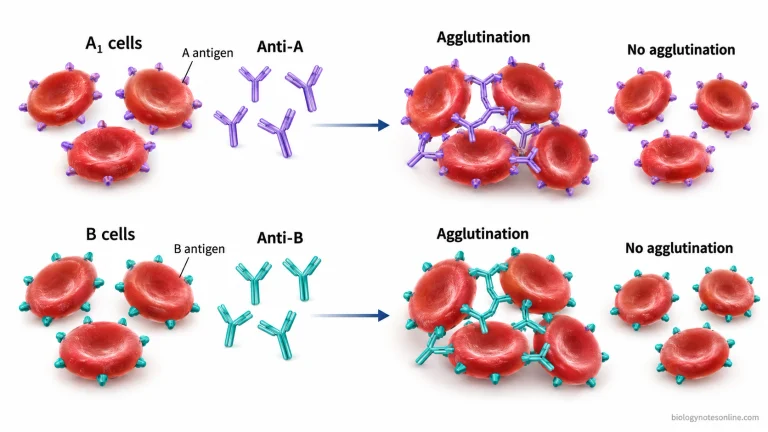
Scientific diagram showing anti-A antibodies binding to A₁ red blood cells and anti-B antibodies binding to B red blood cells, producing agglutination.

Reverse blood grouping helps confirm ABO blood types. Learn its principle, tube, slide and gel methods, results chart, limitations and typing discrepancies.

Categories Protocols Leave a comment

Catalase Test – Principle, Procedure, Results and Uses

Avatar for Sourav Pan Sourav Pan (M.Sc. in Microbiology) • Updated October 18, 2026 • 14 min read
Catalase Test Principle, Procedure, Result and Application.

Catalase test in microbiology: explore its principle, hydrogen peroxide reaction, slide and tube procedures, positive and negative results, and identification uses.
Categories Protocols Leave a comment

Xanthoproteic Test – Principle, Procedure, Results and Uses

Avatar for Sourav Pan Sourav Pan (M.Sc. in Microbiology) • Updated October 17, 2026 • 14 min read
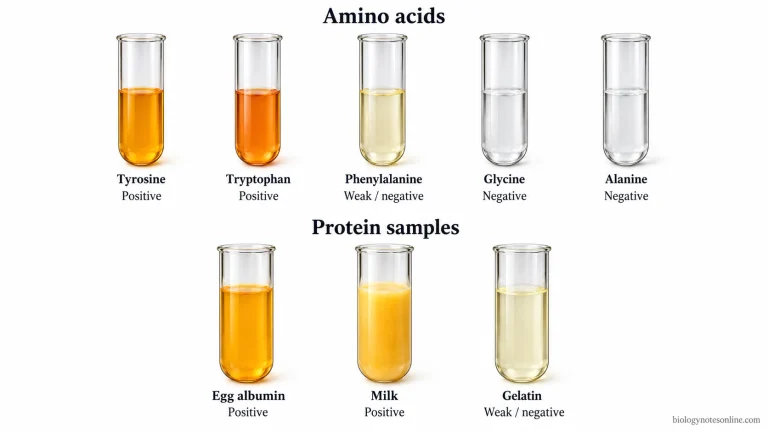
Expected xanthoproteic test results for tyrosine, tryptophan, phenylalanine, glycine, alanine, egg albumin, milk, and gelatin, comparing orange positive and weak or negative reactions.

The xanthoproteic test detects reactive aromatic amino acid groups using nitric acid. Learn its principle, procedure, yellow-to-orange result, and limitations.

Categories Protocols Leave a comment
Newer posts
← Previous Page1 Page2
  • About Us
  • Contact Us
  • Affiliate Disclosure
  • Privacy Policy
  • Terms and Conditions
  • About the Author
  • Medical Disclaimer
  • Fact-Checking Policy
  • Editorial Policy
© 2024–2026 Biology Notes Online