Welcome to Biology Notes Online! We are the BNO Team, dedicated to providing high-quality, accessible biology study notes for students and teachers alike. Our goal is to simplify complex biological concepts and present them in an easy-to-understand format, entirely free of charge. Whether you're preparing for exams, teaching a class, or simply passionate about biology, our comprehensive notes are designed to support your learning and teaching journey.
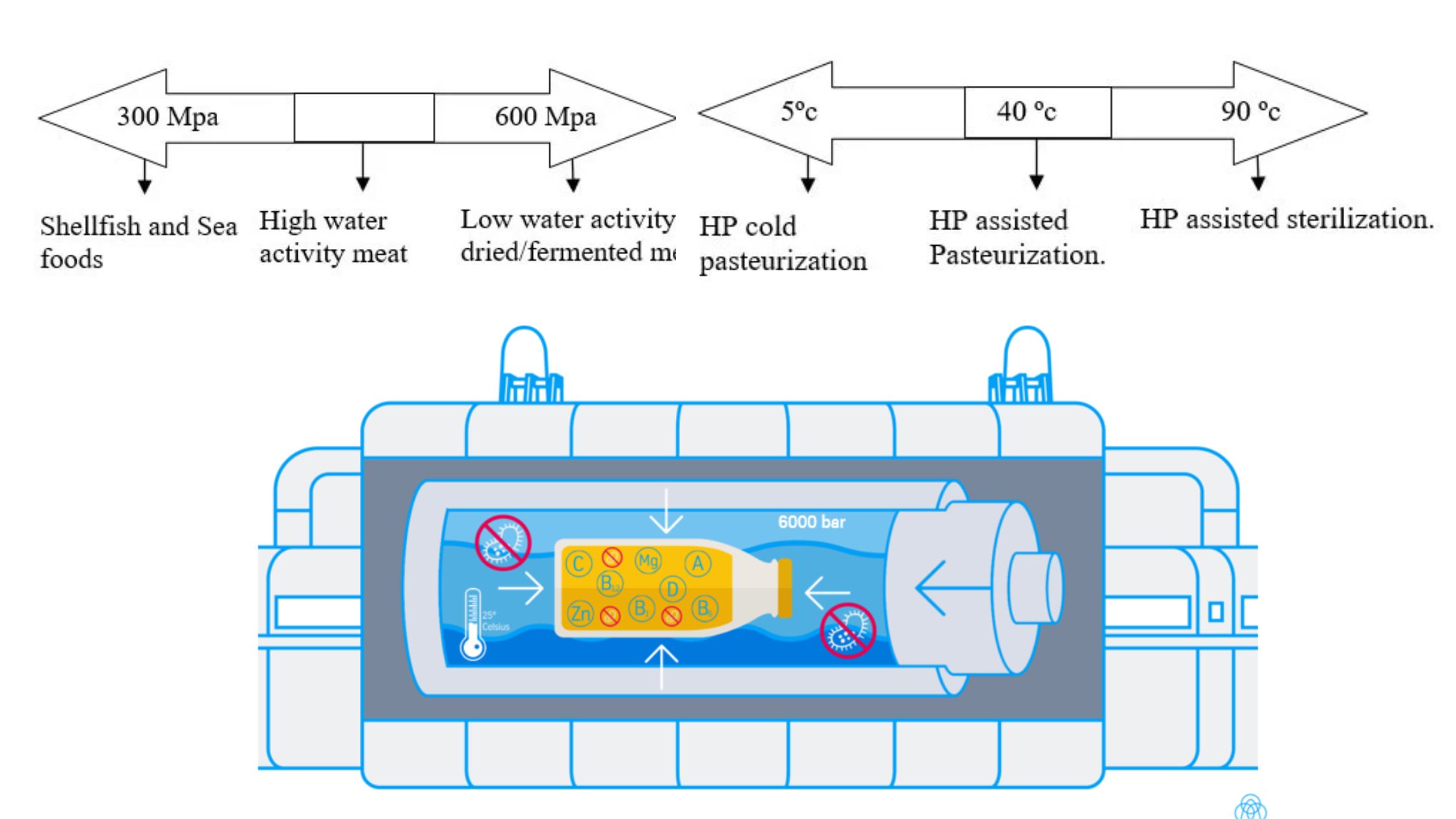
What is High-Pressure Processing (HPP)? When was High Pressure Processing invented? High Pressure Processing (HPP) was invented in June 1899 by Bert Holmes Hite, a researcher from the University of West Virginia. Hite demonstrated the inactivation of microorganisms using high hydrostatic pressure, marking the first documented use of pressure as a food preservation method. Following … Read more
Canning is a highly regarded method for packaging food, ensuring its long-term storage and preservation. Typically, food is packed into metal containers and subjected to appropriate heat treatments, the specifics of which vary depending on the type of food being canned. While the incidence of food spoilage in cans is generally low, there is always … Read more
Causes of Canned Foods Spoilage Appearance of The Unopened Container Types of Biological Spoilage of Canned Foods Typically, types of microorganism-induced spoiling of canned foods are separated into those caused by thermophilic bacteria and those caused by mesophilic microorganisms. Other approaches for categorising types of food spoilage are based on the types of changes that … Read more
General Principles of Culture Maintenance and Preparation Selection of Cultures Maintenance of Activity of Cultures Maintenance of Purity of Cultures Preparation of Cultures Activity of Culture Mixed Cultures Bacterial Cultures With the exception of the propionic acid bacteria added to Swiss cheese, the majority of the bacterial cultures used as starters in dairy products, sausage, … Read more
In breadmaking, microorganisms are useful in two primary ways: (1) they can produce gas to leaven the dough, giving it the desired loose, porous texture, and (2) they can produce flavorful substances. They may also play a role in dough conditioning. Leavening Leavening by Bread Yeasts Leavening by Other Microorganisms Leavening by Chemicals Continuous Breadmaking … Read more
Beer and ale are the most widely produced and consumed malt beverages in this country, and they will be explored here. They are constructed from malt, hops, yeasts, water, and malt adjuncts. Malt is produced from germinated and dried barley grains that have had their sprouts or germs removed. The dried blooms of the hop … Read more
Unless otherwise indicated, the term wine refers to the beverage produced by the alcoholic fermentation of grapes or grape juice by yeasts, followed by ageing. However, wines can be prepared by fermenting the juices of fruits, berries, rhubarb, dandelions, and honey, among others. Grape Wine The majority of grape wines are either red or white. … Read more
At normal temperatures, the normal progression of changes in fruit juices is alcoholic fermentation by yeasts, followed by oxidation of the alcohol to acetic acid by acetic acid bacteria. When enough acetic acid is created, vinegar is the result. Vinegar is a condiment produced from sweet or starchy sources through alcoholic fermentation followed by acetic … Read more
For its production, fermented milk and cheese require a specific fermentation or series of fermentations. Therefore, any abnormalities in these fermentations will harm the product’s quality and may even cause it to spoil. Even the final product may be susceptible to deterioration by microbes. Fermented Milks Cheese Cheese defects may be caused by mechanical or … Read more