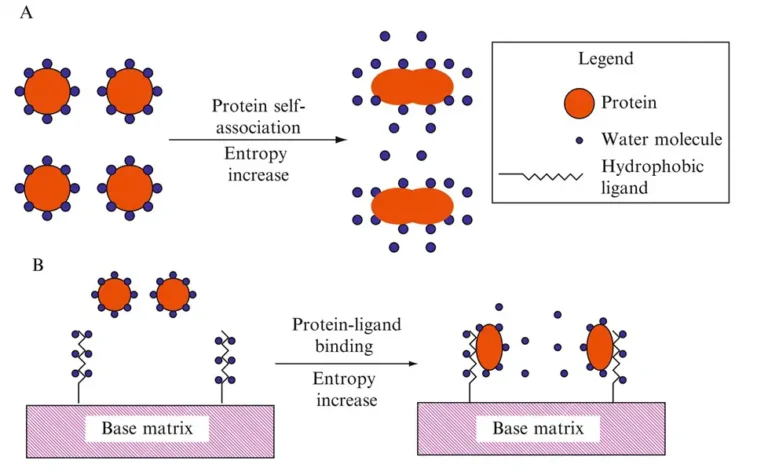
Hydrophobic Interaction Chromatography (HIC) is a chromatographic technique used for separation and purification of proteins, peptides, enzymes and monoclonal antibodies. It separates molecules according to their surface hydrophobic nature. In this method the stationary phase has hydrophobic groups attached to it. These groups may be phenyl, butyl, octyl or other alkyl groups. These groups bind
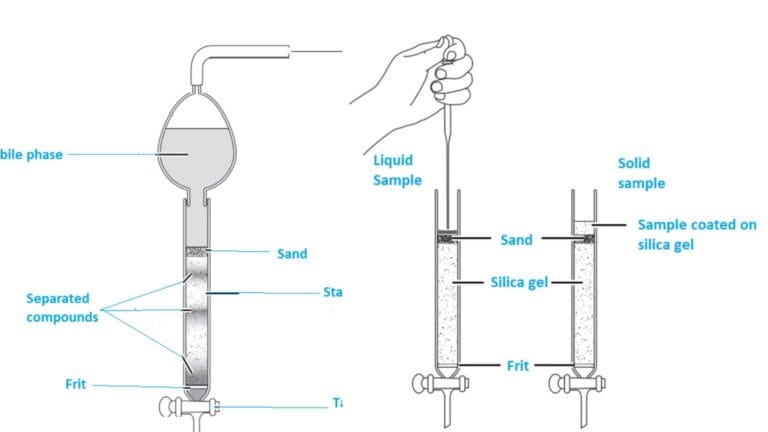
Flash chromatography is a rapid preparative chromatographic technique used for separation and purification of mixture of organic compounds. It separates compounds mainly on the basis of their polarity and their different interaction with stationary phase and mobile phase. It is a modified form of column chromatography. In normal column chromatography, the solvent moves slowly by
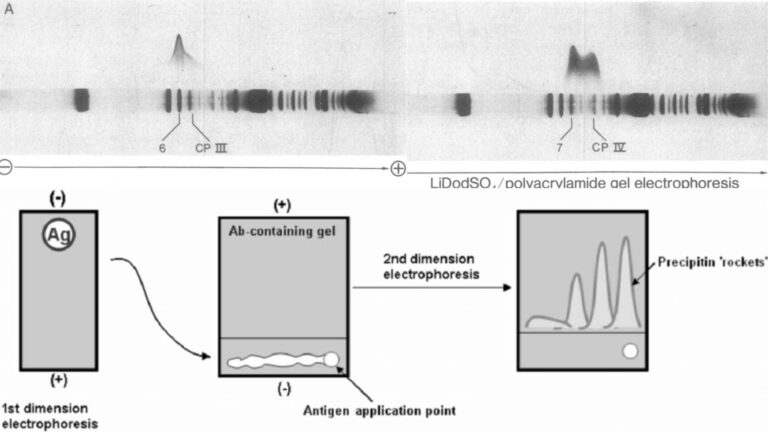
Two-Dimensional Immunoelectrophoresis is a technique used for the analysis and quantitation of mixture of proteins or antigens in a complex sample. It is also called Crossed Immunoelectrophoresis (CIE). It is mostly used for serum, tissue extract, microbial homogenate and other biological sample. In this technique the separation is done in two directions. In the first
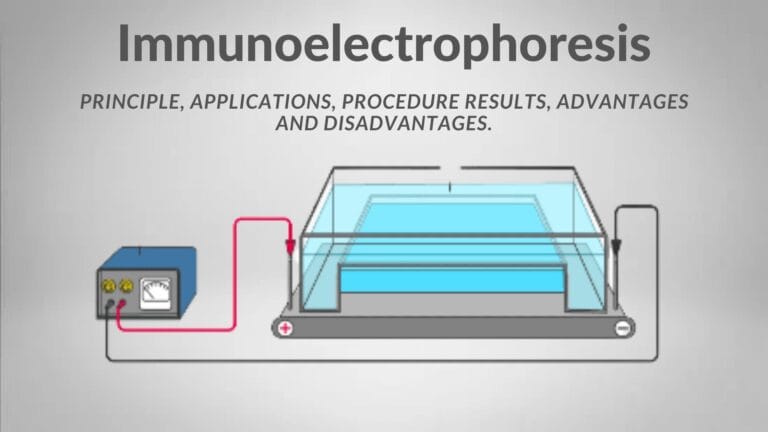
Immunoelectrophoresis is a biochemical analytical technique used for separation and identification of proteins in biological sample. It combines two process, electrophoresis and immunodiffusion. It is mainly used for detection of serum proteins, immunoglobulins and other antigenic substances. In this method, the antigen mixture is first placed in agarose gel. Then electric current is passed through
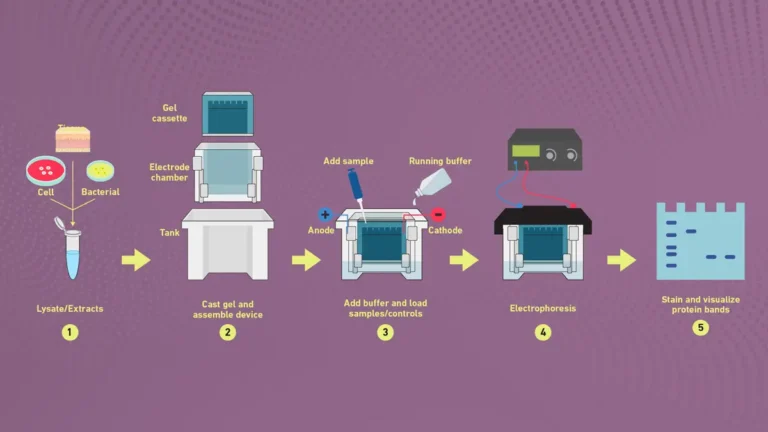
Polyacrylamide Gel Electrophoresis (PAGE) refers as a biochemical technique used for separation of proteins, nucleic acids etc. according to their charge and size. In this method, separation is done by migration of charged molecules through a gel matrix. The gel matrix is polyacrylamide gel. It act as a molecular sieve. The principle is based on
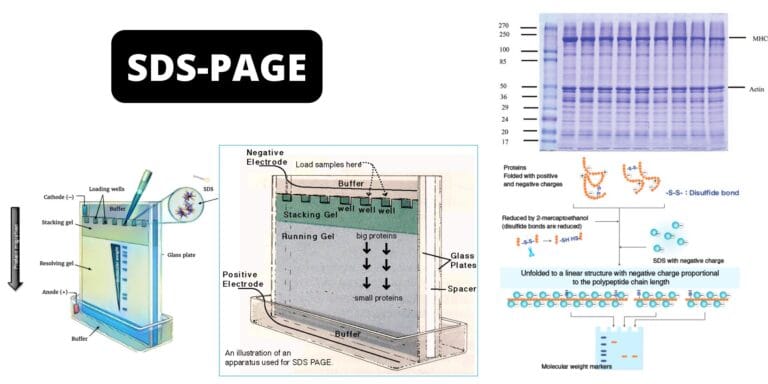
SDS-PAGE is a Sodium Dodecyl Sulfate-Polyacrylamide Gel Electrophoresis. It is a laboratory technique used for separation of proteins according to their molecular weight. It is widely used in biochemical and molecular biology laboratory for protein analysis. In this method, protein sample is treated with SDS and heat. The SDS is an anionic detergent which denature
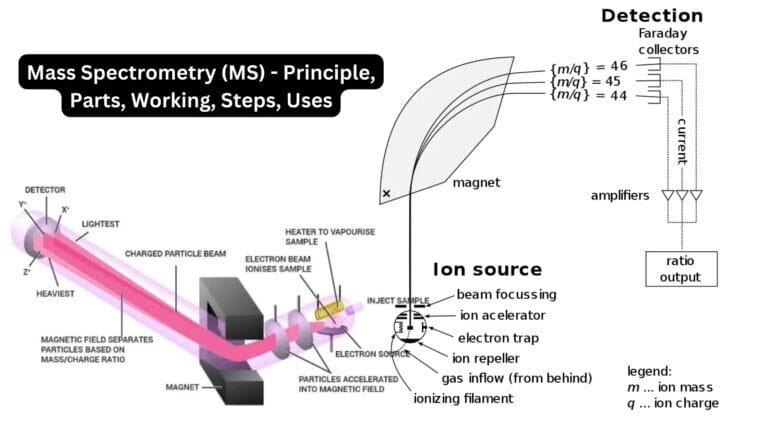
Mass Spectrometry (MS) is a analytical method. It is used for measuring mass of atoms and molecules. It is used to know the chemical composition of sample. In this method, neutral molecules are changed into charged particles. These particles are called ions. Then these ions are separated. The separation is done on the basis of
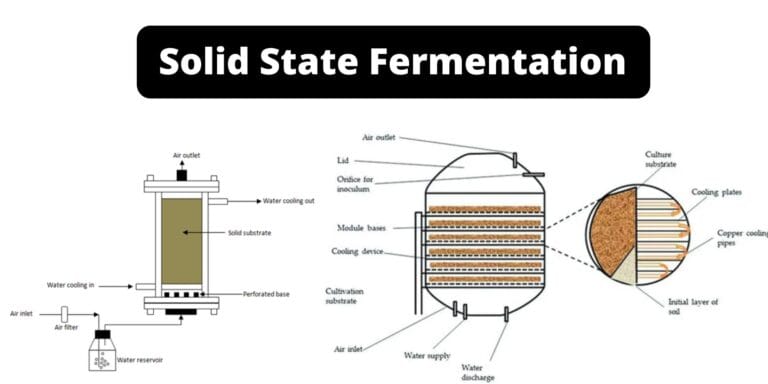
Solid State Fermentation (SSF) is a bioprocess in which microorganisms are grown on moist solid substrate. It is done in absence or near absence of free flowing water. The solid substrate acts as physical support for microbes. It also works as nutrient source. It gives carbon, nitrogen and essential minerals for growth of microorganisms. In
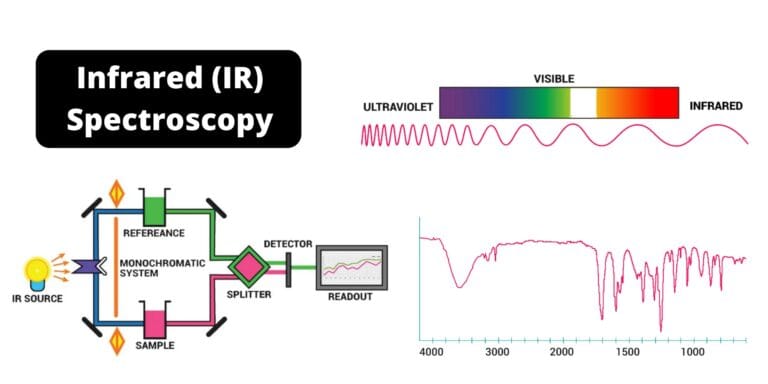
Infrared (IR) Spectroscopy is an analytical technique used to study and identify chemical substances by using infrared light. In this technique, the chemical bonds present in a molecule absorb infrared radiation. The bonds are not rigid, they behave like spring and show stretching and bending vibrations. When the absorbed frequency matches with the natural vibration
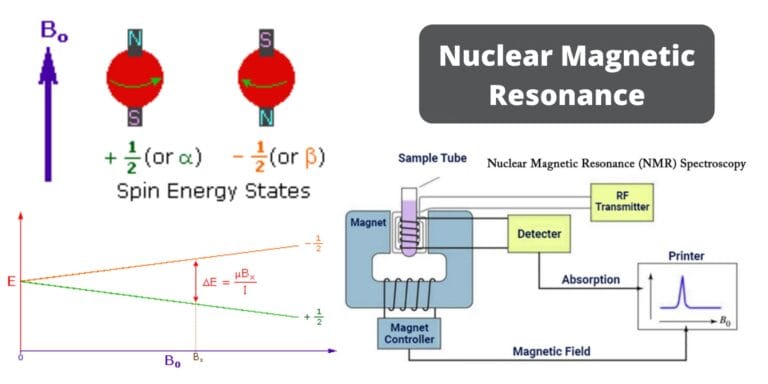
Nuclear Magnetic Resonance (NMR) spectroscopy is a non-destructive analytical method used for knowing the structure and composition of molecules. It is mainly used for organic compounds, biological molecules and chemical samples. It is based on magnetic nature of some atomic nuclei. Mostly hydrogen (¹H) and carbon (¹³C) nuclei are studied in this method. When sample