Molecular biology is the study of the structure and function of molecules that are important in living organisms. It is a broad field that encompasses a variety of subdisciplines, including genetics, genomics, proteomics, and biochemistry.
Molecular biologists use a variety of techniques to study the molecules that are important in living organisms, including DNA, RNA, and proteins. They may use techniques such as DNA sequencing, gene expression analysis, and protein structure determination to study these molecules and understand their roles in living systems.
Molecular biologists often work in research laboratories, where they conduct experiments and analyze data to understand the functions of different molecules and how they interact with one another. They may also work in academia, government agencies, or the pharmaceutical industry, where they may use their knowledge of molecular biology to develop new drugs or therapies.
Molecular biology is an important field because it helps us to understand the fundamental processes that underlie life and how these processes can go wrong in diseases. It also has practical applications in areas such as medicine, agriculture, and biotechnology.
Molecular biology is an important field of study because it helps us to understand the fundamental processes that underlie life and how these processes can go wrong in diseases. It also has practical applications in areas such as medicine, agriculture, and biotechnology. Here are a few examples of the importance of molecular biology:
Medicine: Molecular biology has played a crucial role in the development of new drugs and therapies for a variety of diseases. For example, molecular biologists have used their understanding of the genetic basis of diseases to develop targeted therapies that are more effective and have fewer side effects than traditional treatments. Agriculture: Molecular biology has also had a major impact on agriculture, with the development of genetically modified crops that are resistant to pests and diseases, and that can grow in challenging environments. This has had significant benefits for food production and has contributed to global food security. Biotechnology: Molecular biology is also important for the development of new products and technologies in the field of biotechnology. For example, molecular biologists have used their understanding of DNA and protein synthesis to develop new methods for producing drugs, enzymes, and other products. Environmental conservation: Molecular biology is also used to understand the genetic diversity and evolution of species, which can be useful in efforts to conserve and protect endangered species.
Overall, the study of molecular biology is important for improving our understanding of the fundamental processes of life and for developing new technologies and therapies that can improve human health and well-being.
What is Yeast Artificial Chromosomes (YACs)? Yeast artificial chromosomes (YACs) are the result of a recombinant DNA cloning technique used to isolate and propagate extremely large DNA segments in a yeast host. The YAC cloning system enables the replication of exogenous DNA segments as linear molecules on a significantly larger scale than is possible with … Read more
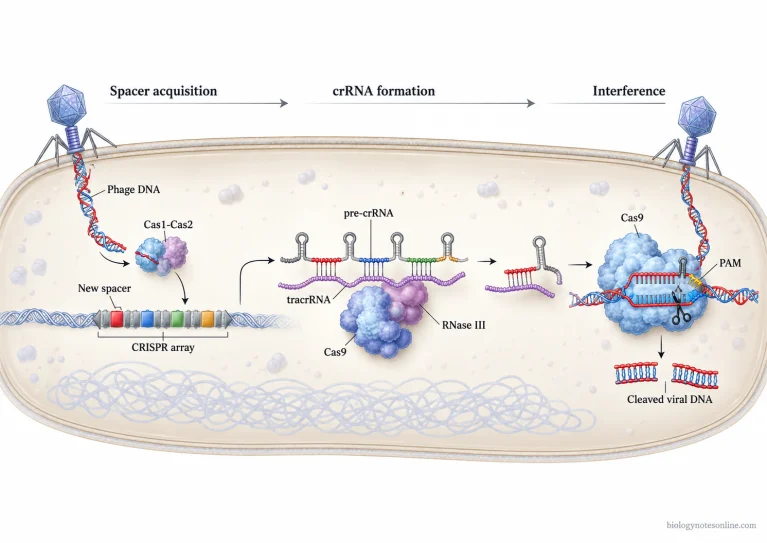
What is PAM Sequence (Protospacer adjacent motif)? Protospacer Adjacent Motif, or PAM, is a type of two-factor authentication that tells Cas to only cut the foreign DNA that is invading. Properties of PAM sequence Spacers/protospacers PAM sequences Functions of PAM Sequence 1. Role of PAM in spacer acquisition 2. Role of PAM in interference 3. … Read more
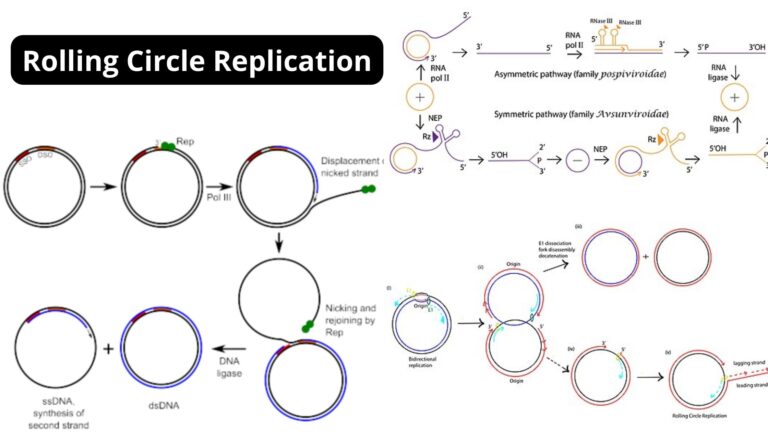
What is Rolling circle replication? Rolling circle replication is a unidirectional and asymmetric process of nucleic acid replication. It is the process by which multiple copies of circular DNA or RNA molecules is synthesized rapidly. This mechanism is commonly seen in bacterial plasmids, bacteriophages and certain plant and animal viruses. In this type of replication … Read more
What is gene/genome editing? Gene or genome editing refers to the deliberate and precise modification of an organism’s genetic material. This advanced biotechnological process allows for the targeted alteration of DNA sequences within a genome, facilitating the correction of genetic anomalies or the introduction of specific traits. Historically, the concept of gene editing traces its … Read more
Name Cas9 endonuclease Alternative name spCas9/spyCas9 Organism Streptococcus pyogenes serotype M1 Molecular weight ~163KDa Gene cas9 Location on chromosome 0.85 to 0.86Mb Protein CRISPR-associated endonuclease Cas9/Csn1 Cofactor Mg2+ Biological processing Interference- defense response to phage.Maintaining CRISPR repeat sequences Functions DNA and RNA bindingMetal ion binding3’-5’ exonuclease activityEndonuclease activity What is Cas9 Protein? Structure of Cas9 HNH … Read more
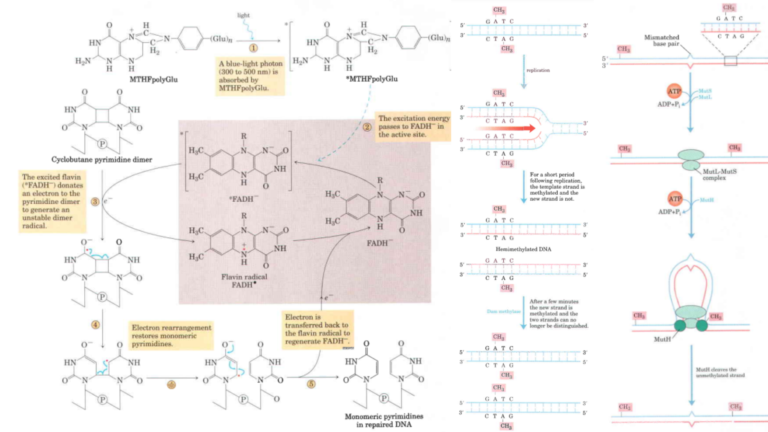
What is dna repair mechanism? DNA repair is a collection of processes by which a cell identifies and corrects damage to the DNA molecules that encode its genome. dna repair definition Types of dna repair mechanism There are present four types of DNA Repair System such as; 1. Mismatch Repair System Enzyme participate in dna … Read more
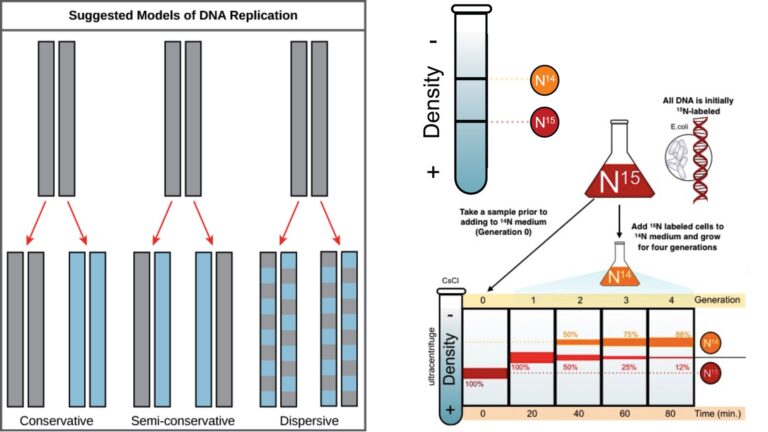
Mode of DNA replication Imagine yourself in 1953, right after the discovery of the double helix structure of DNA. What are some burning questions you and other scientists might have? One big question concerned DNA replication. The double helix shape of DNA gave a tantalising hint about how copying might happen. It seemed likely that … Read more
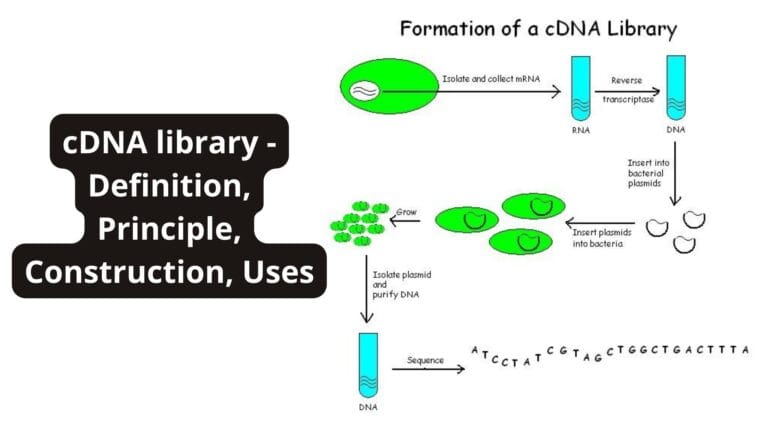
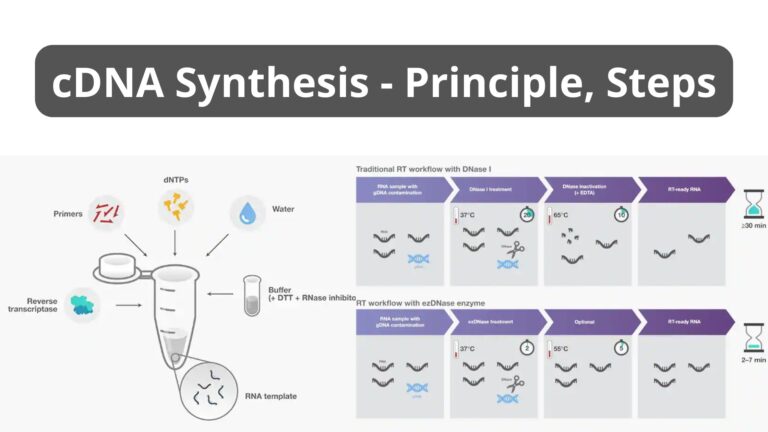
What is cDNA library? Principle of cDNA library Process involved in the construction of cDNA library 1. Extraction of mRNA from the eukaryotic cell 2. cDNA construction In the process of creating cDNAs, there’s different approaches. They are described as follows: a. The RNAse method Step I: Annealing: Step II: Replacing RNA strand with DNA … Read more
A ribonucleoprotein known as telomerase, terminal transferase adds a repeat sequence of telomeres to the 3′ end of chromosomes, the length of which varies depending on species. In most eukaryotic organisms, the chromosomal ends are capped by a repeating sequence known as a telomere. Telomeres prevent DNA damage and chromosomal fusion at the chromosome’s end. … Read more
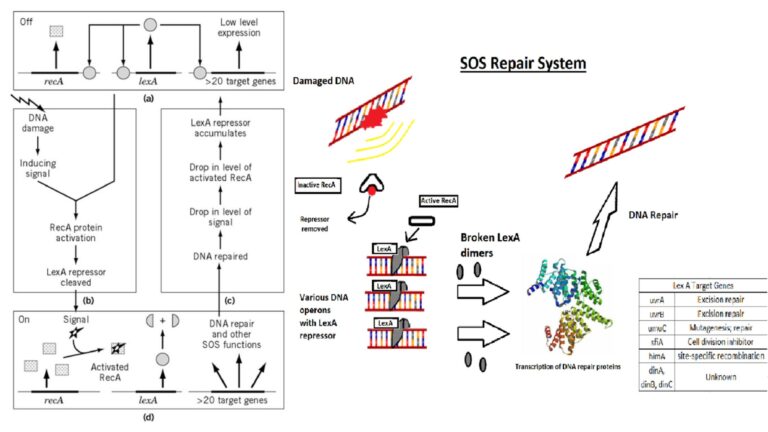
What is SOS Response or SOS Repair? Definition of SOS Response or SOS Repair The SOS response or SOS repair is a cellular mechanism activated in response to DNA damage, where the cell cycle is temporarily halted to facilitate DNA repair and mutagenesis. Central to this system is the RecA protein, which, when stimulated by … Read more