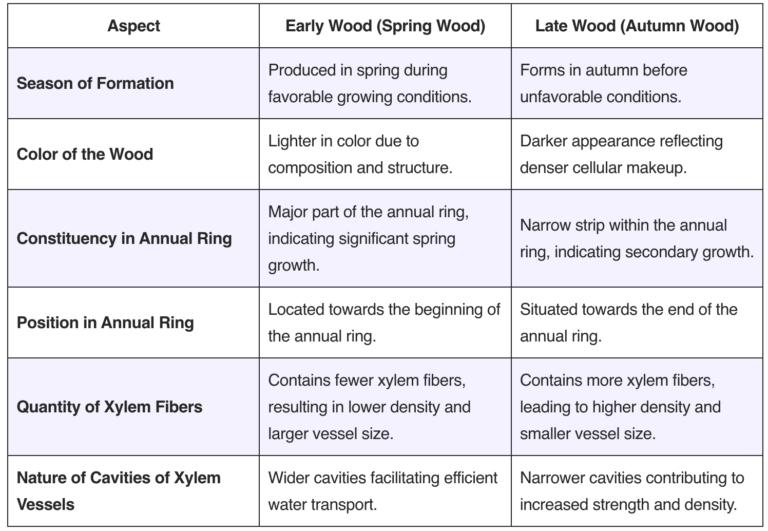
What is Early and Late Wood? Early wood and late wood are fundamental components of tree growth, produced by the cambium layer in response to seasonal changes. These two types of wood are differentiated based on the time of year they are formed and their structural characteristics, playing crucial roles in a tree’s overall development.
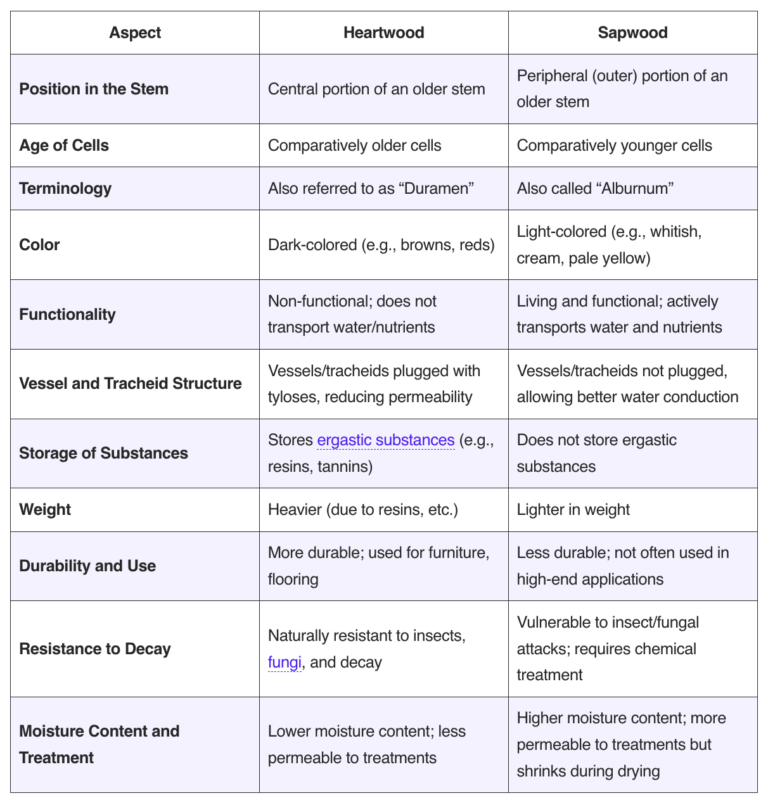
What is Sapwood? Sapwood, also known as alburnum, is the outer, lighter-colored layer of wood found in a tree, situated between the bark and the heartwood. It is composed of living cells, including vessels and fibers, and plays a crucial role in the tree’s physiological processes. Here are some key characteristics and functions of sapwood:
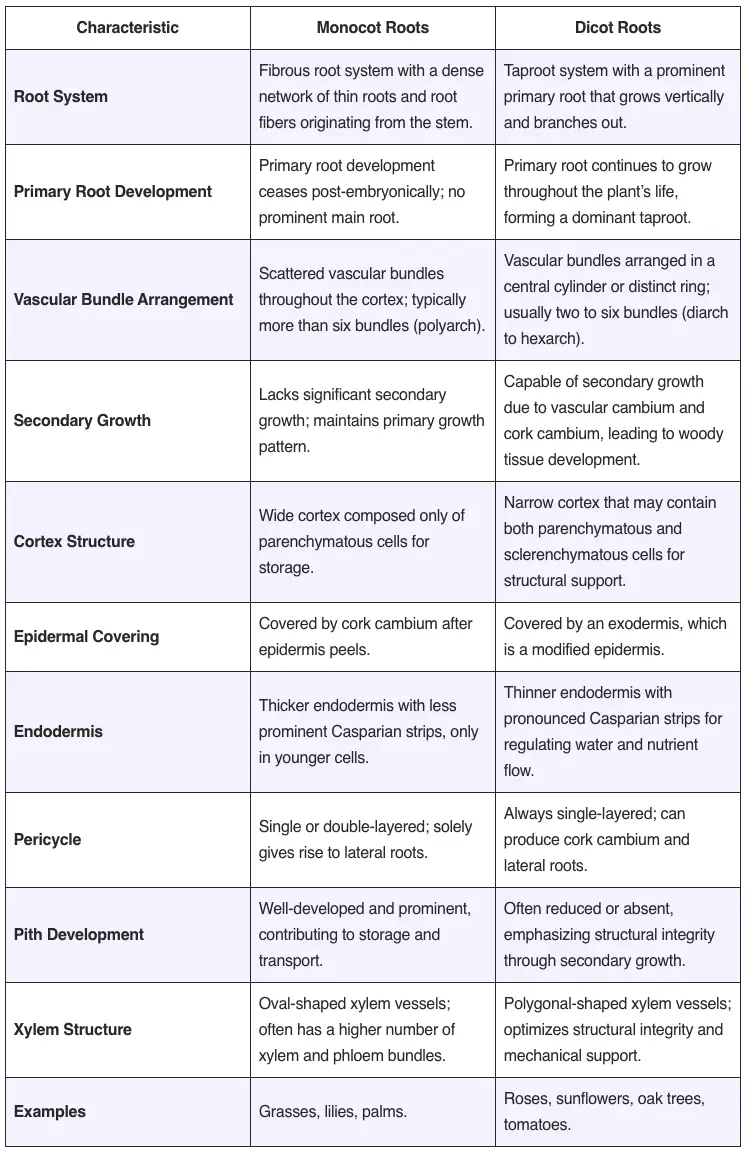
What is Monocot Root? Monocot roots refer to the root systems found in monocotyledonous plants, commonly known as monocots. These plants typically exhibit a distinct root architecture that differentiates them from dicots (dicotyledonous plants). Here is a detailed examination of monocot roots: Structure of Monocot Roots: Functions of Monocot Roots: Examples of Monocot Roots: Common
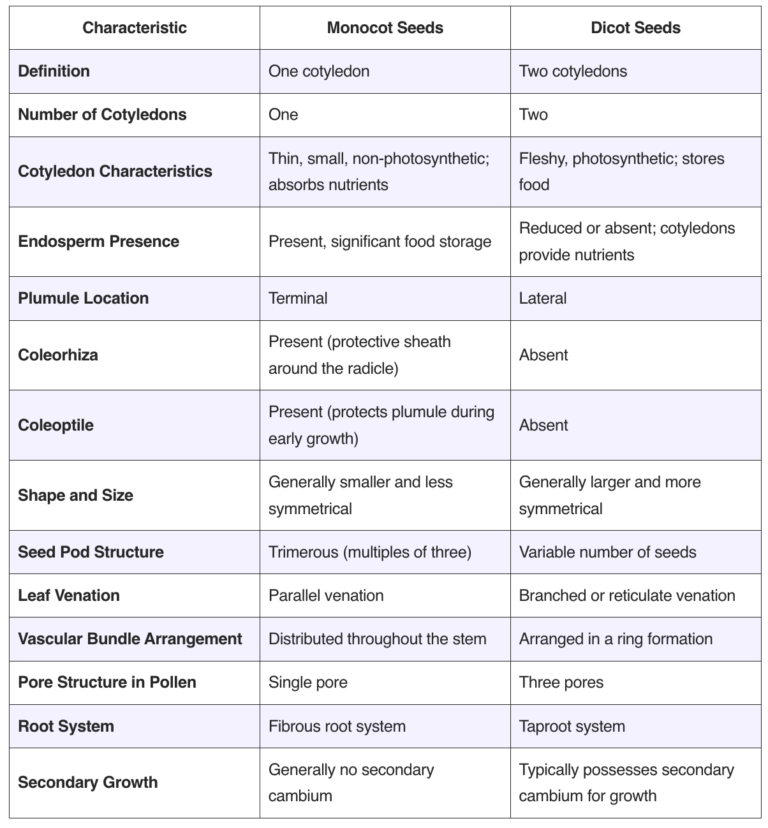
What is Dicot Seed? Dicot seeds, belonging to the group known as dicotyledons, are characterized by the presence of two embryonic leaves, or cotyledons. This classification represents one of the primary divisions among flowering plants, or angiosperms, highlighting the diversity within plant biology. Dicot seeds are crucial for understanding plant development, morphology, and ecological roles.
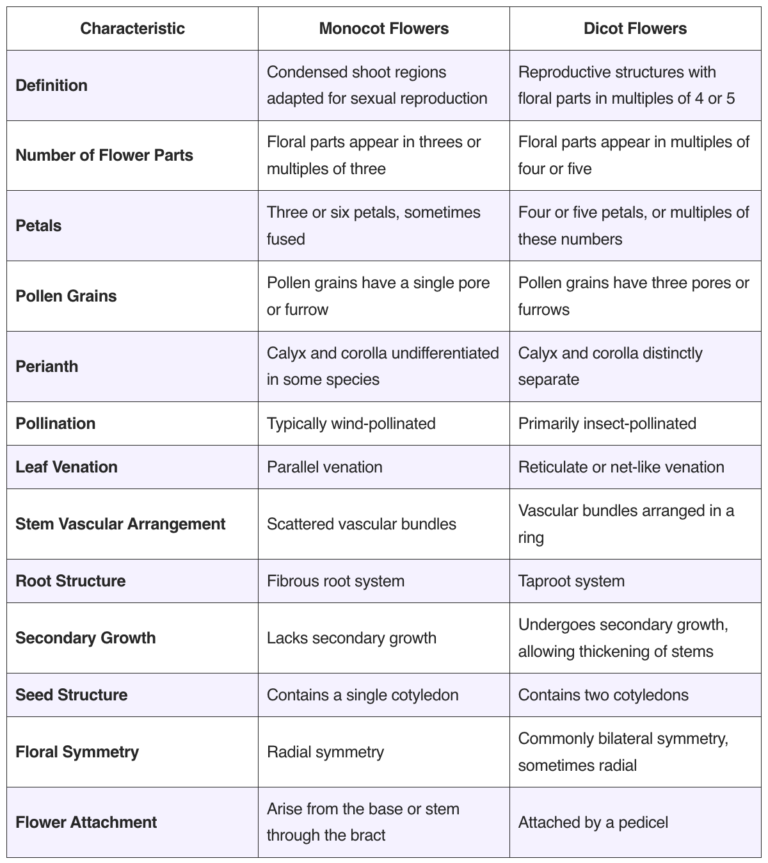
What is Monocot Flower? What is Dicot Flower? Differences Between Monocot and Dicot Flower – Monocot vs. Dicot Flower Monocot and dicot flowers represent two major categories of flowering plants, with distinct characteristics that set them apart. These differences encompass their floral structures, pollen, and methods of pollination. Understanding these distinctions is crucial for identifying
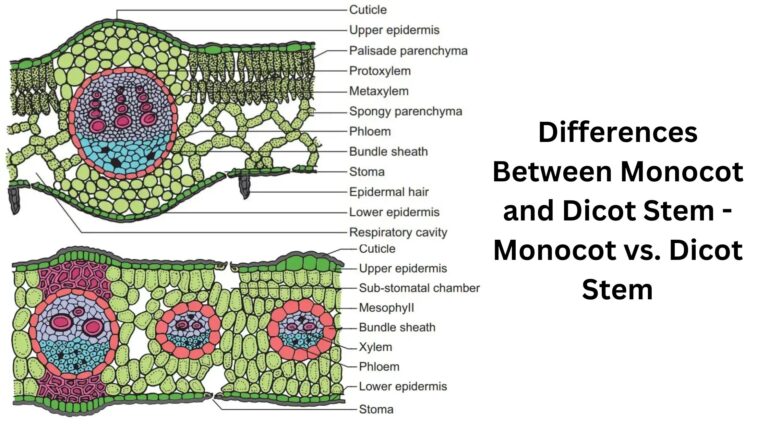
What is Monocot Leaf? What is Dicot Leaf? Difference between Monocot and Dicot Leaves – Monocot vs. Dicot Leaves The differences between monocot and dicot leaves are fundamental in understanding plant biology, as these two groups exhibit distinct structural and functional characteristics. Both types of leaves are essential for plant life but serve varying purposes
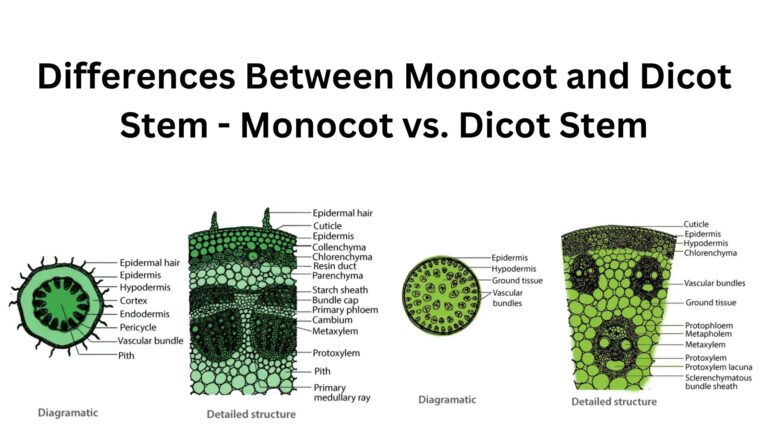
What is Dicot Stem? What is Monocot Stem? Differences Between Monocot and Dicot Stem – Monocot vs. Dicot Stem The following points outline the primary contrasts between monocot and dicot stems: Aspect Monocot Stem Dicot Stem Basic Structure Typically circular and hollow. Generally solid and cylindrical. Hypodermis Composition Composed of non-green sclerenchyma fibers. Made up
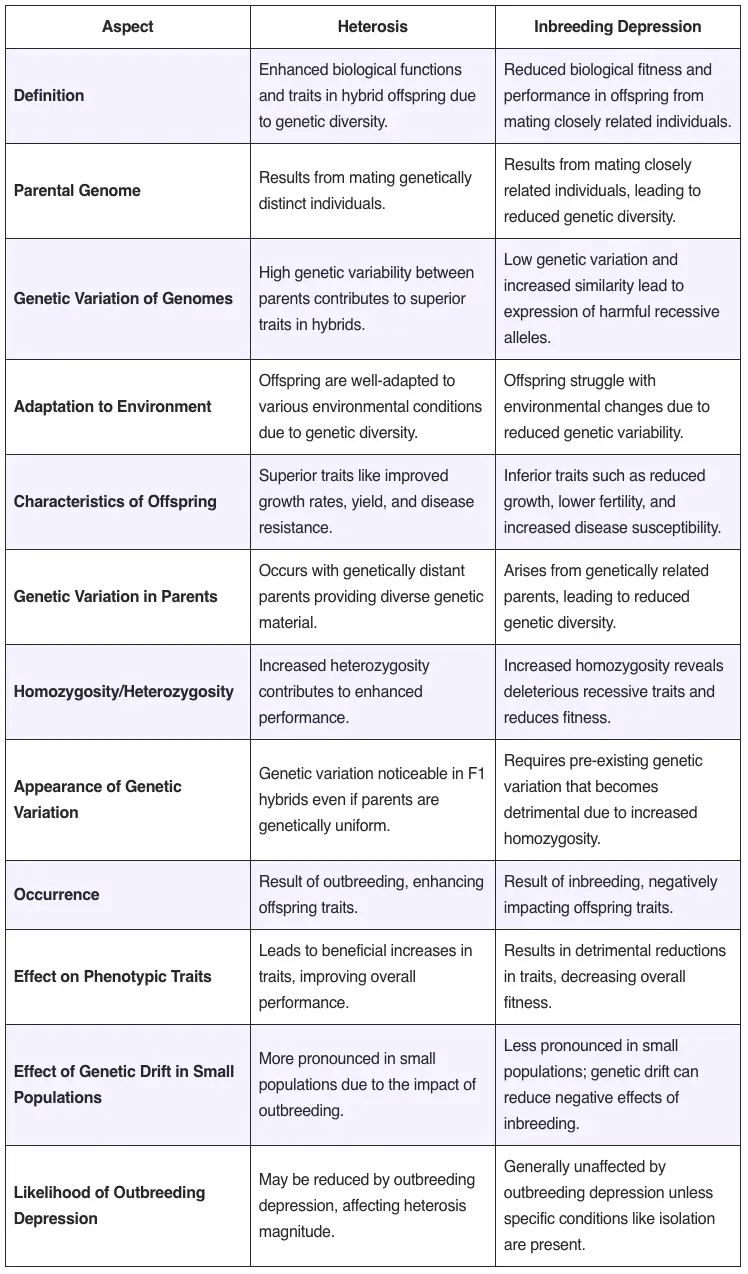
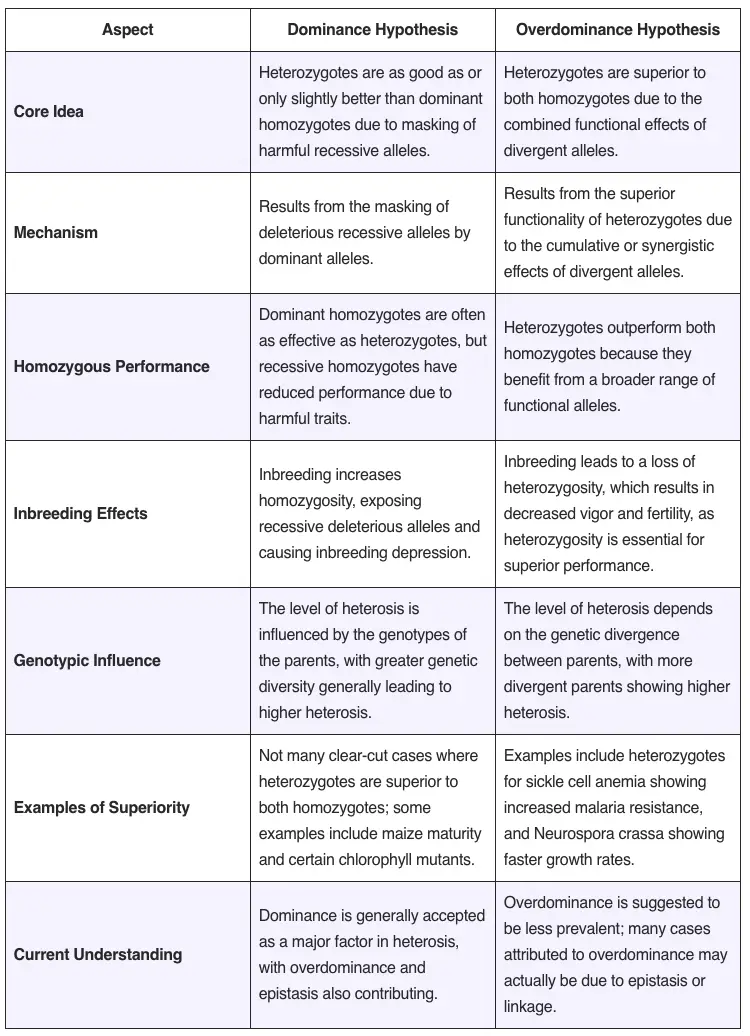
What is Heterosis? Heterosis, commonly known as hybrid vigor, refers to the phenomenon where the offspring of two genetically different parents exhibit greater vigor, growth, yield, or other desirable traits than either of the parent strains. This increased performance in hybrids is a key concept in plant breeding and agriculture. Here’s a closer look at
What is Dominance Hypotheses? The Dominance Hypothesis refers to a concept in plant breeding and genetics that deals with the expression of traits in offspring based on the dominance of alleles. It essentially posits that in a heterozygous state, one allele (the dominant allele) can mask the expression of another allele (the recessive allele). Here’s
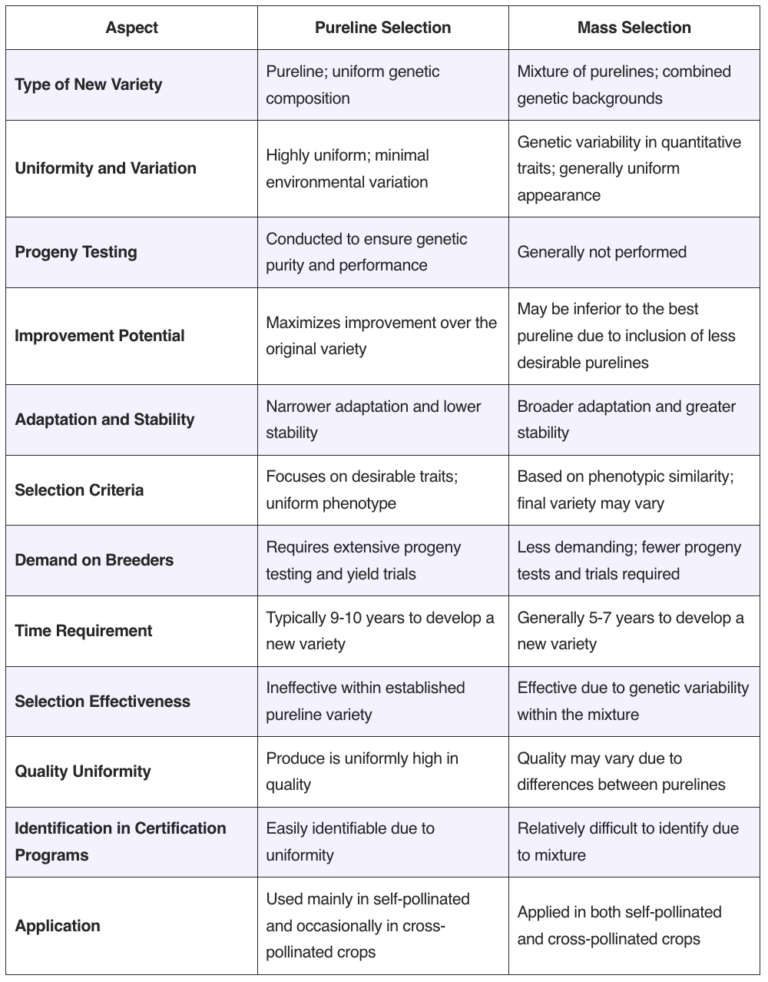
What is Pureline Selection? Pureline selection is a plant breeding method used to develop new varieties from a single genotype or “pure line.” This approach is based on selecting and propagating individuals that consistently exhibit desirable traits, aiming to create a genetically uniform and stable line. Here’s how it typically works: Pureline selection is particularly