Acid-Fast vs Non-Acid-Fast Bacteria – Key Differences

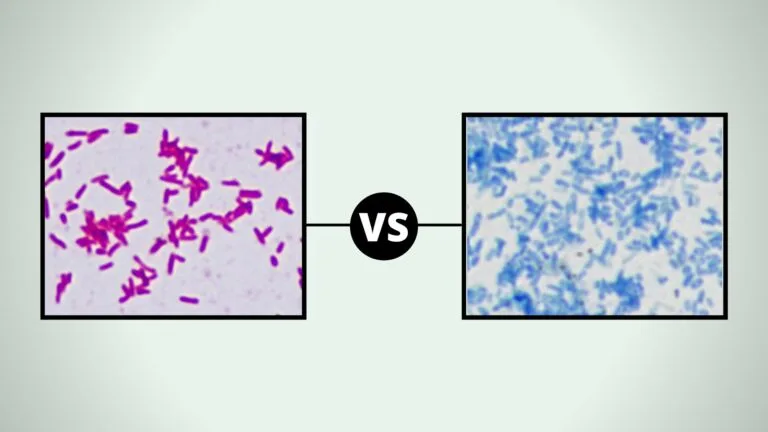
Acid Fast bacteria resist the decolorizing by acid after staining. Non Acid Fast Bacteria readily resist the decolorizing by acid after staining.

Acid Fast bacteria resist the decolorizing by acid after staining. Non Acid Fast Bacteria readily resist the decolorizing by acid after staining.
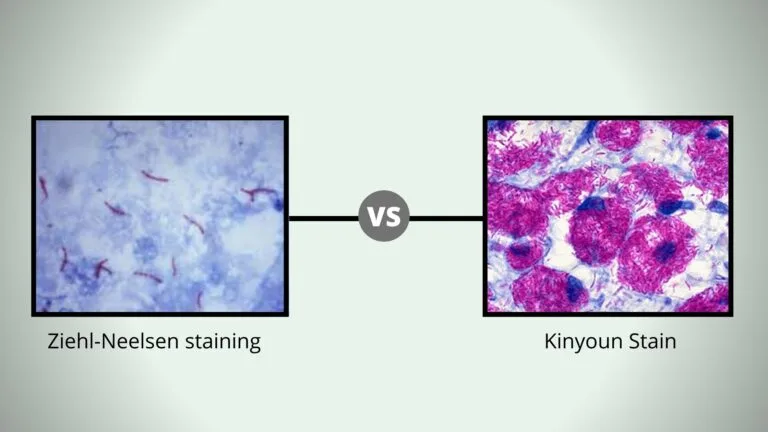
In Kinyoun stain method basic fuchsin is used as a primary stain.
In One-step RT-qPCR or One-step real time Polymerase chain reaction (PCR) the reverse transcriptase and DNA polymerase are premixed into a single tube.

14 Difference Between Brightfield and Phase-contrast Microscope Topic Brightfield Microscope Phase Contrast Microscope Invented by Antonie van Leeuwenhoek (1632–1724) Frits Zernike (1888-1966) in 1932 Staining The Specimen Must be Stained before their observation under bright field Microscope. Staining is not required. Changes in refractive index This Microscope has no ability to alter the refractive index.

In My previous notes i have already discussed about Brightfield Microscope and Fluorescence Microscope, their working principle, parts, definition, application, advantages, disadvantages and light path. You can check them out. Difference Between Brightfield Microscope and Fluorescence Microscope. Topic Brightfield Microscope Fluorescence Microscope Invented by Antonie van Leeuwenhoek (1632–1724) Antonie van Leeuwenhoek (1632–1724) Fluorochromes Not required

In my previous notes, I have already discussed Transmission Electron Microscope and Scanning Electron Microscope, their working principle, parts, definition, application, advantages, disadvantages, and light path. You can check them out. 20 Difference Between Transmission and Scanning Electron Microscope Topic Transmission Electron Microscope Scanning Electron Microscope 3D/2D Image 2D projection image of the inner structure
Difference Between Monera and Protista. The five-kingdom classification system divides the different life forms of earth into five distinct categories such as Kingdom Monera, Protists, Fungi, Plantae, and Animalia. Among them, Monera is the most primitive organism. The key difference between Monera and Protista is that Monera has a prokaryotic cellular organization, whereas Protista has
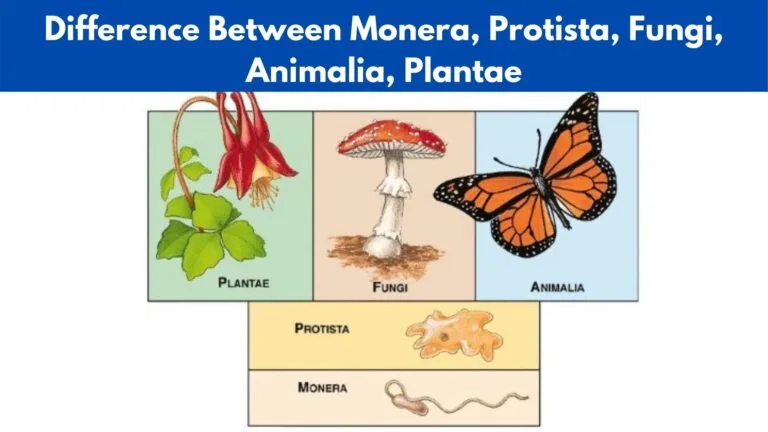
Difference Between Monera, Protista, Fungi, Animalia, Plantae. The five-kingdom classification was proposed by R.H. Whittaker in 1969 and was built on the work of two-kingdom classification. In Five Kingdom Classification, the organisms are classified based on several characteristics such as mode of nutrition, thallus organization, cell structure, phylogenetic relationships, and reproduction. It is the most
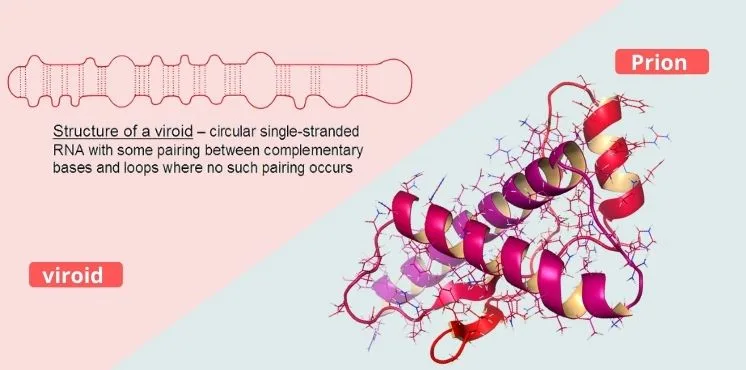
What is Viroid? Viroids represent the smallest known infectious agents affecting plants, characterized by a short (246–467 nt), circular, single-stranded RNA molecule. These entities are characterized by the absence of a protein coat or lipid envelope, categorizing them as “naked” RNA agents, which sets them apart from viruses. The RNA exhibits a robust, base-paired, rod-like
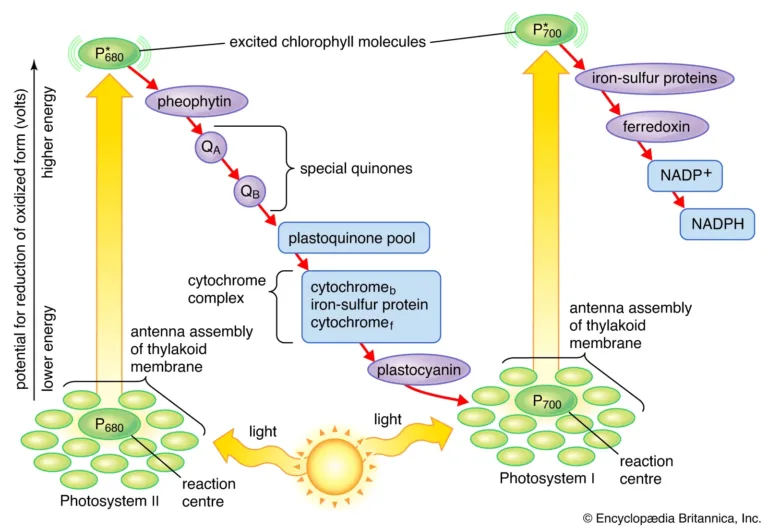
What is Photosystem 1 (PS1)? What is Photosystem 2 (PS2)? Difference between Photosystem 1 (PS1) and Photosystem 2 (PS2) Feature Photosystem I (PSI) Photosystem II (PSII) Location in Thylakoid Membrane Outer surface Inner surface Photocenter P700 P680 Absorbing Wavelength >680 nm <680 nm Photophosphorylation Both cyclic and non-cyclic Only non-cyclic Photolysis of Water No Yes