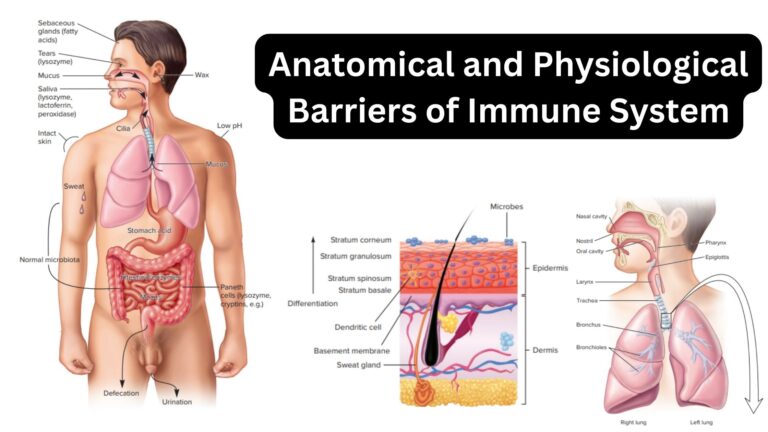
Anatomical and physiological barriers are the first defence barrier of immune system. These barriers stop the entry of pathogen in the body tissue. It is present on the outer surface and also in different opening part of body. Anatomical barriers are mainly skin, hair, mucous membrane and epithelial lining. Skin is the outer covering of
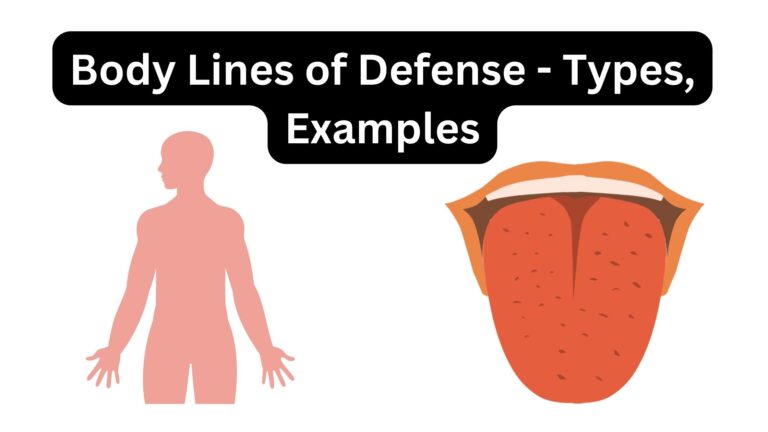
Body lines of defense are the protective system of human body. It protect the body from foreign harmful agents like virus, bacteria and fungi. These harmful agents are called pathogens. The body has three main lines of defense. These are first line of defense, second line of defense and third line of defense. They work
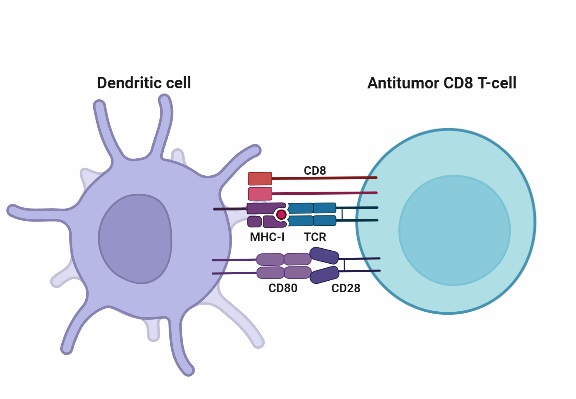
Dendritic cell is a special type of antigen presenting cell (APC). It connects innate immune system with adaptive immune system. It is a messenger cell of immunity. It has many branched projections on its surface. These projections are called dendrites. Due to these dendrites, the cell look like tree shaped or star like. Dendritic cells
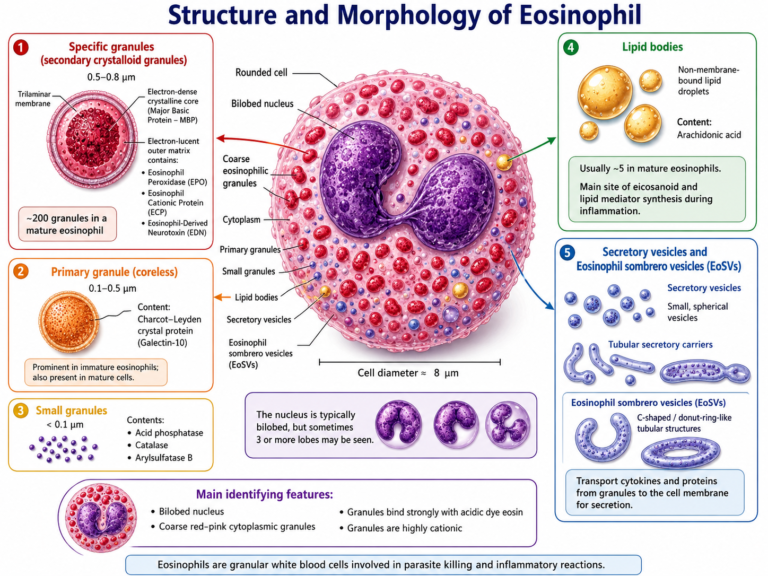
Eosinophils are granulocytic white blood cells formed in the bone marrow, then released into blood and tissues. They are identified by bilobed nuclei and eosin-staining granules containing toxic proteins and cytokines, and they participate in immune regulation, tissue repair, and development. The content also outlines eosinophil development, receptors, migration, activation, and degranulation. It emphasizes their
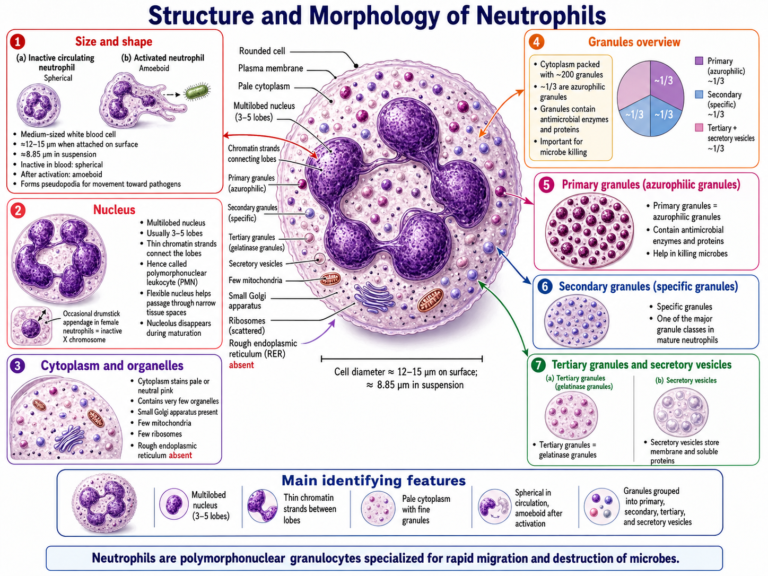
Neutrophils are the most abundant white blood cells and a key part of innate immunity. They are produced in bone marrow, circulate briefly, and rapidly move to infection or injury sites to fight bacteria and fungi through phagocytosis, degranulation, respiratory burst, and NET formation. The content also covers neutrophil development, structure, surface markers, migration, interactions
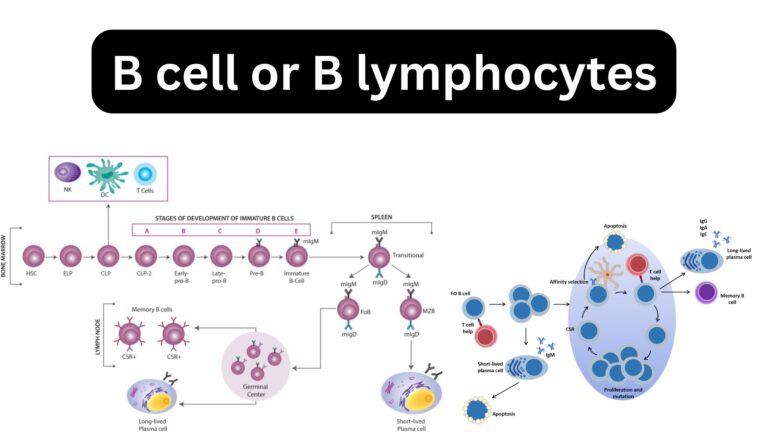
B cells or B lymphocytes are a type of lymphocyte present in blood and lymphoid organs. It is one of the important cell of adaptive immune system. These cells mainly take part in humoral immunity, where antibody is the main defensive substance. The origin of B lymphocytes is from stem cells of bone marrow. In
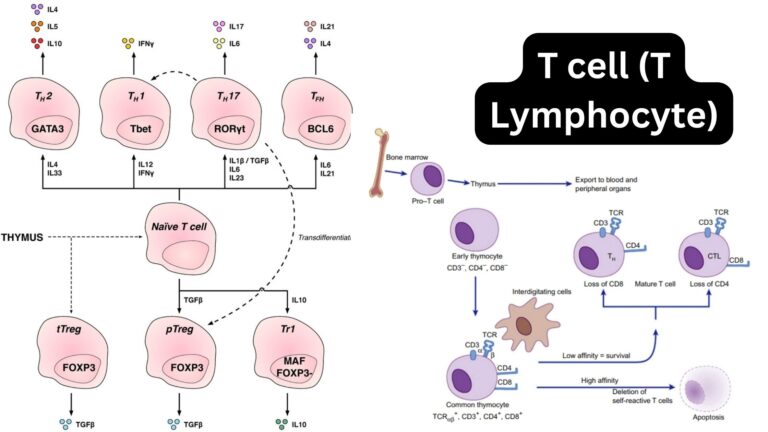
T cell or T lymphocyte is a type of white blood cell which plays an important role in the adaptive immune system. It is mainly involved in the recognition of foreign antigen and destruction of infected cells. It also helps in antibody production and regulation of immune response. T cells are produced from progenitor cells
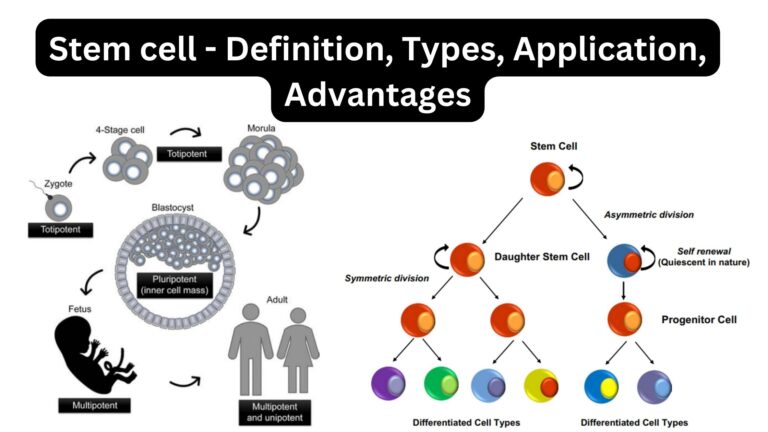
Stem cell is a undifferentiated special type of cell which can give rise to many other specialized cells of the body. It is also called body’s master cell. These cells are found in embryo and also in some adult tissues. Stem cells have two important properties. One is self renewal and another is differentiation. Self
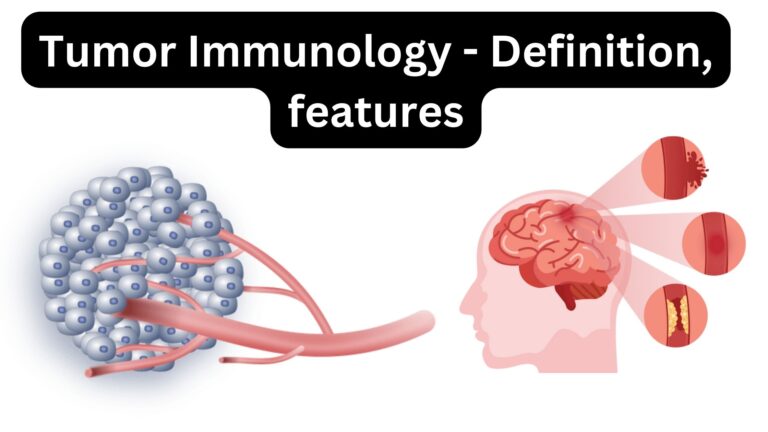
Tumor immunology is the study of interaction between immune system and tumor cells. It deals with how body recognize abnormal neoplastic cells and how these cells escape from immune response. Tumor cells are formed due to abnormal and uncontrolled growth of cells. These cells may express new antigens on their surface. These antigens are recognized
Transplantation is a medical process in which living cells, tissues or organs are transferred from one site to another site. It is done to replace damaged, failed or absent body part. Transplantation is a process in which living cell, tissue or organ is transferred from one site to another site. It is done for replacing