

Dendritic cell is a special type of antigen presenting cell (APC). It connects innate immune system with adaptive immune system. It is a messenger cell of immunity.
It has many branched projections on its surface. These projections are called dendrites. Due to these dendrites, the cell look like tree shaped or star like.
Dendritic cells are present in blood, lymphoid organs, skin, nose, lungs and intestine. These are the places where foreign particles may enter in the body. So they act as sentinel cells.
In immature stage, dendritic cell move in tissue and capture foreign antigen. The antigen may be from bacteria, virus or other harmful substance. After this, antigen is processed inside the cell.
When danger signal is detected, dendritic cell become mature. It stop taking new antigen. Then it moves towards lymph node.
In lymph node, mature dendritic cell present the processed antigen to T-cells and also help in activation of B-cells. This starts specific immune response. So dendritic cells are very important for starting adaptive immunity.
History and Discovery of Dendritic Cells
The following are the important history and discovery of dendritic cells–
- In 1868, Paul Langerhans first discovered dendritic shaped cells in human epidermis. He used gold chloride staining technique. But he wrongly considered them as cutaneous nerve cells.
- In 1961, Birbeck, Breathnach and Everall studied epidermal Langerhans cells by electron microscope. They found rod shaped and tennis racket shaped organelles inside the cells. These were later called Birbeck granules.
- In 1966, Basset and Turpin identified Birbeck granules in lesions of Histiocytosis X. This disease is now known as Langerhans cell histiocytosis. It gave first clear relation with disease condition.
- In 1973, Ralph M. Steinman and Zanvil A. Cohn discovered a new cell type in peripheral lymphoid organs of mice. The cells had tree like branched projections. They gave the name Dendritic cell (DC).
- In 1978, Steinman and Witmer performed mixed lymphocyte reaction experiment. They showed that DCs are professional antigen presenting cells (APC). These cells activate naïve T-cells.
- In 1992, Inaba and his team developed a culture system for producing bone marrow derived DCs in vitro. They used GM-CSF. This helped to solve the problem of low number of DCs in body.
- In the same year, Jacques Banchereau and Christophe Caux generated Birbeck granule containing Langerhans cells in vitro. These cells were produced from CD34+ hematopoietic progenitor cells.
- In 1994, Frederica Sallusto and Antonio Lanzavecchia developed a method to produce dendritic cells from blood monocytes. They used GM-CSF and IL-4. After this, research on DCs increased more.
- In 1999, Sem Saeland and Jenny Valladeau identified langerin (CD207). It is the main structural protein of Birbeck granules.
- In 1999, Labeur and others improved in vitro protocol of DCs. They showed the change of immature DCs into mature immunostimulatory DCs. Immature cells are highly endocytic and mature cells activate immune response.
- In 2002, Miriam Merad showed that steady state Langerhans cells are long lived. These cells are maintained in skin by local self-renewal. So their life cycle is different from other DC subsets.
- In 2003, Frédéric Geissmann and his team showed that tissue resident DCs do not mainly arise from monocytes. By genetic tracing, they proved that these cells come from specific progenitor cells. This established DCs as independent hematopoietic lineage.
- In 2007, researchers found dermal Langerin expressing DCs. These cells are separate population. They are not same with epidermal Langerhans cells.
- In 2010, U.S. Food and Drug Administration (FDA) approved Provenge (sipuleucel-T). It was the first DC based cancer vaccine. It is used for prostate cancer treatment.
- In 2011, Ralph M. Steinman got Nobel Prize in Physiology or Medicine. It was given for discovery of dendritic cell and its role in adaptive immune response.
- In 2014, a unified classification system was proposed for conventional DCs. It classified different subsets like cDC1 and cDC2. This classification is based on their origin in tissues and species.
Origin and Development of Dendritic Cells
The following are the step by step process of origin and development of dendritic cells–
- Step 1- Most of the dendritic cells (DCs) start their life in the bone marrow. They are formed from pluripotent hematopoietic stem cells (HSCs). These stem cells can produce different blood cells.
- Step 2- The HSCs first divide and form early precursor cells. These are myeloid precursors (MPs) and lymphoid precursors (LPs). From the myeloid precursor, a more special cell is formed, called macrophage-DC precursor (MDP).
- Step 3- The MDP then loses its ability to form granulocytes or erythrocytes. It mainly moves towards dendritic cell forming pathway. After this, it gives rise to common DC precursor (CDP).
- Step 4- The common DC precursor (CDP) is the first precursor which is restricted only for dendritic cell lineage. It does not produce many other blood cells. It mainly forms different types of DCs.
- Step 5- The CDP then divides into two main developmental pathways. One pathway forms pre-plasmacytoid DCs (pre-pDCs). These later develop into plasmacytoid dendritic cells (pDCs).
- Step 6- The second pathway forms pre-classical DCs (pre-cDCs). These cells come out from the bone marrow. Then they travel through the bloodstream.
- Step 7- The pre-cDCs reach different peripheral tissues and lymphoid organs. After reaching the tissue, they complete their development. They form major classical or conventional DC subsets.
- Step 8- The main conventional DC subsets are cDC1 and cDC2. These cells are important for antigen presentation and activation of T-cells. They work as normal tissue and lymphoid organ dendritic cells.
- Step 9- During inflammation or infection, another pathway also occurs. Circulating monocytes move into the infected tissue. These monocytes also come from MDP.
- Step 10- In the inflamed tissue, monocytes change into monocyte-derived dendritic cells (moDCs). These cells are temporary type of DCs. They help in local immune response during infection.
- Step 11- Langerhans cells (LCs) are different from this normal bone marrow pathway. They are the dendritic cells of epidermis. They are formed mainly during embryonic development.
- Step 12- Langerhans cells arise from primitive yolk sac erythromyeloid progenitors and fetal liver monocytes. After birth, they remain in the skin. They are maintained by local self-renewal and not mainly from circulating precursors.
- Step 13- The whole development of dendritic cells is controlled by cytokines and growth factors. FLT3L is very important for development of cDCs and pDCs.
- Step 14- Some transcription factors also control exact lineage formation. These include IRF8, PU.1, ID2 and BATF3. These factors decide which precursor cell will become which type of dendritic cell.
Structure and Morphology of Dendritic Cells
The following are the structure and morphology of dendritic cells–
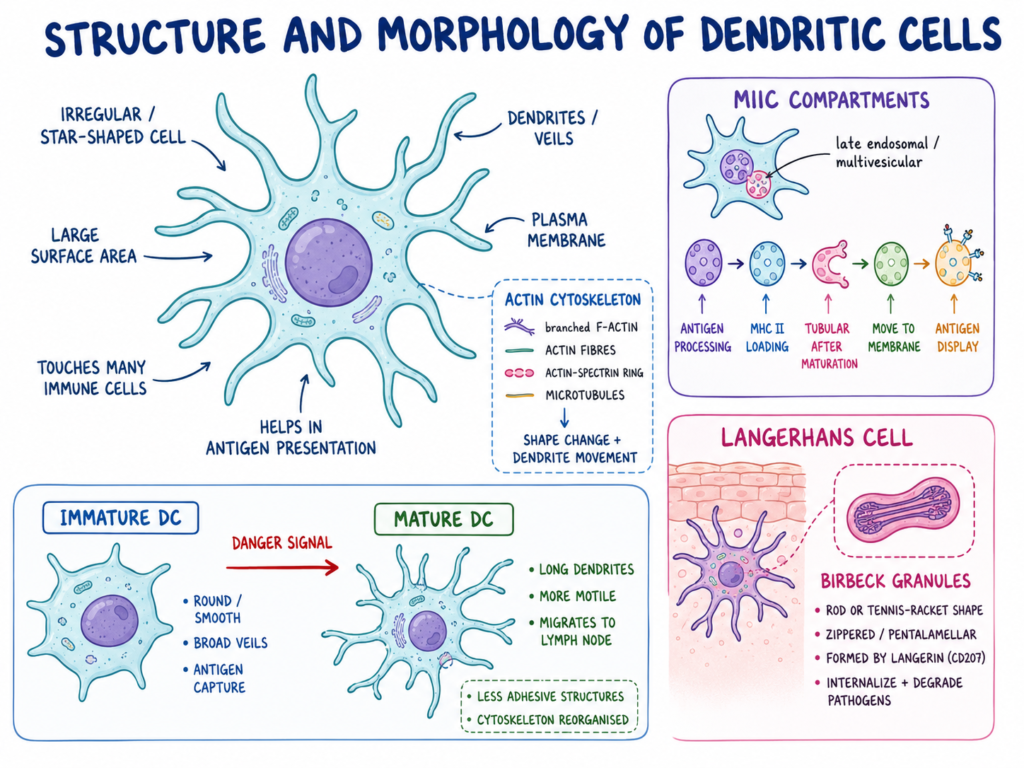
- Dendritic cells (DCs) are irregular shaped immune cells. They have many tree like cytoplasmic projections. These projections are called dendrites or veils.
- Due to these branched projections, the cell look star shaped. The projections are not fixed always. They can change their shape according to the condition of cell.
- The dendrites increase the surface area of the cell. Due to this large surface area, one dendritic cell can touch many surrounding immune cells at the same time. This helps in antigen presentation.
- The shape of dendritic cell is maintained by cytoskeleton. Mainly actin cytoskeleton is involved in this. It helps in movement of dendrites and changing of cell shape.
- The cytoskeleton contains branched F-actin, long actin fibres and actin-spectrin ring like arrangement. Microtubules are also present with actin network. These help in elongation of dendrites and transport of proteins inside the cell.
- In immature stage, dendritic cells may not show long dendrites. They may have broad cytoplasmic veils. For this reason, they are sometimes called veiled cells.
- Immature DCs are generally more round or smooth in shape. They are mainly involved in capturing antigen. Their surface is suitable for taking antigen from surrounding tissue.
- When dendritic cell detect any danger signal, it becomes mature. During maturation, the cell change its morphology. It becomes rough and develops long dendritic processes.
- Mature DCs lose some adhesive structures. Their cytoskeleton is reorganised. This makes the cell more motile and helps it to migrate toward lymph node.
- Inside the cell, there are special antigen processing compartments. These are called MHC class II-containing compartments (MIIC). These compartments are late endosomal and multivesicular type.
- In MIIC, antigen is processed and loaded on MHC class II molecules. After maturation, these compartments become tubular. Then they move toward plasma membrane for antigen display.
- Langerhans cells are special type of epidermal dendritic cells. They contain special organelles called Birbeck granules.
- Birbeck granules are rod shaped or tennis racket shaped organelles. They have zippered and pentalamellar appearance. These are formed by langerin (CD207) protein.
- Birbeck granules help in internalization and degradation of pathogens. They are especially important in Langerhans cells for handling foreign particles like viruses.
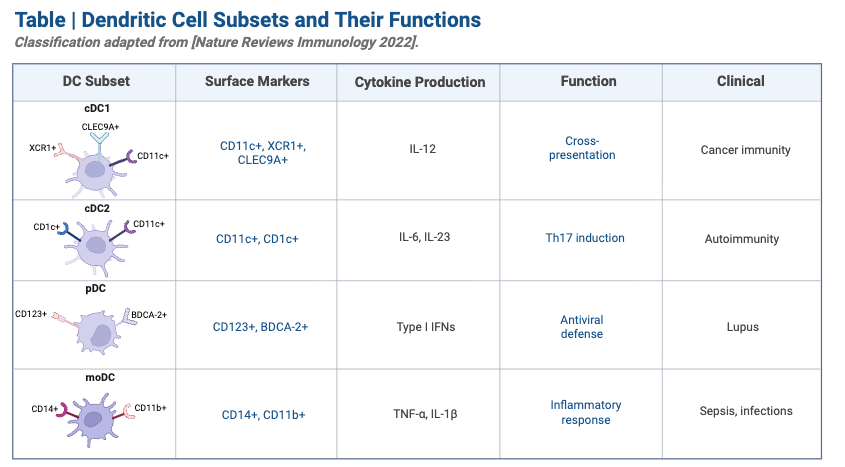
Distribution of Dendritic Cells in the Body – Location
Dendritic cells (DCs) are present in many parts of the body. They are mainly found in those areas where foreign antigens can enter. So they act as immune sentinel cells.
The following are the distribution of dendritic cells in the body-
- Skin- Dendritic cells are highly present in the skin. In the epidermis, the special type of DCs are called Langerhans cells. Other DC subsets are also present in the dermis.
- Stratified epithelia- Dendritic cells are also present in stratified squamous epithelial tissues. These include oral mucosa, pharynx, esophagus, vagina, anus and cervix.
- Mucosal surfaces- They are present in mucous membrane of the body. These include airway epithelium, lung parenchyma and intestinal tract. In intestine, they are found in lamina propria and Peyer’s patches.
- Secondary lymphoid organs- Dendritic cells are present in spleen, tonsils and lymph nodes. In these organs, they present antigen and interact with T-cells.
- Primary lymphoid organs- They are also found in thymus and bone marrow. In thymus, they are present in medullary and cortical epithelial region. In bone marrow, they are present in perivascular clusters.
- Bloodstream- Some DCs and their precursors circulate in the blood. They move from bone marrow to peripheral tissues through blood. They also check blood borne pathogens.
- Internal organs- Dendritic cells are also present in non-lymphoid organs. These include heart, liver, kidney, pancreas and meninges. They are mostly present in interstitial spaces.
- Eye region- They may also present in some eye associated structures. These include choroid plexus and iris.
- Main role- This wide distribution helps in antigen surveillance. Dendritic cells capture foreign antigen from different tissues and help in starting specific immune response.
Classification of Dendritic Cells
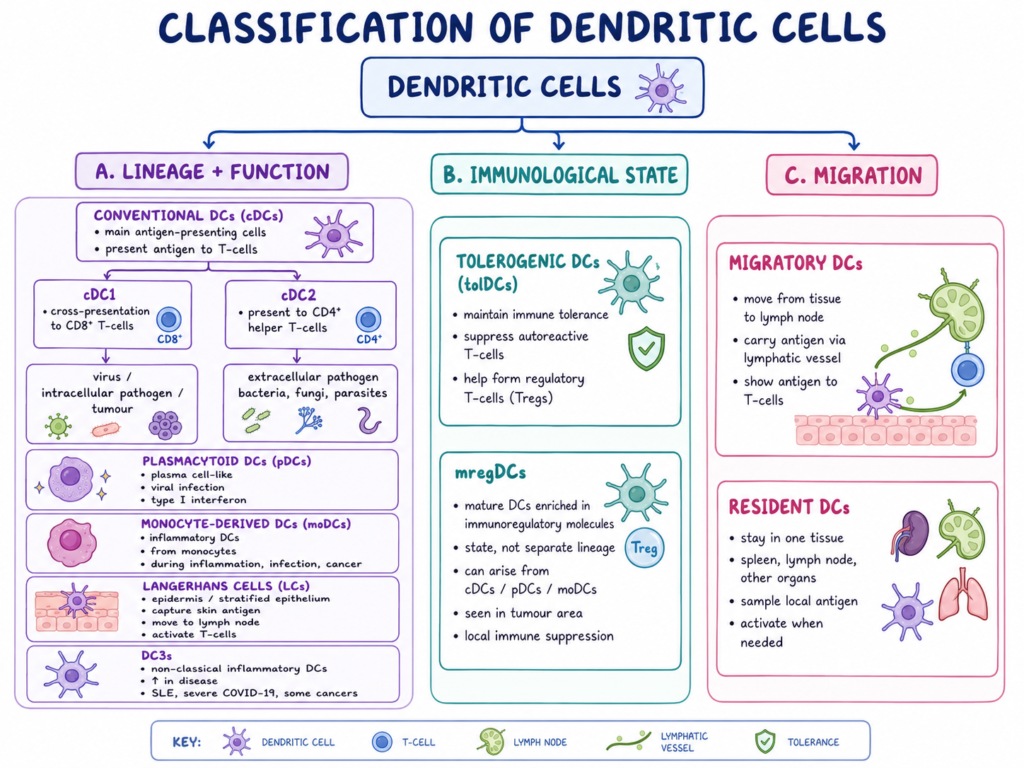
The following are the classification of dendritic cells–
A. On the basis of lineage and function
- Conventional DCs- Conventional dendritic cells (cDCs) are main antigen presenting cells. They present antigen to T-cells. They are of two main types, cDC1 and cDC2.
- cDC1- cDC1 present antigen to CD8+ T-cells. This process is called cross presentation. It is important against virus, intracellular pathogen and tumour cell.
- cDC2- cDC2 present antigen to CD4+ helper T-cells. It mainly help against extracellular pathogen. Such as bacteria, fungi and parasites.
- Plasmacytoid DCs- Plasmacytoid dendritic cells (pDCs) look like plasma cell. They are important in viral infection. They produce large amount of type I interferon.
- Monocyte derived DCs- Monocyte derived dendritic cells (moDCs) are also called inflammatory DCs. They are formed from monocytes. It is mainly formed during inflammation, infection and cancer.
- Langerhans cells- Langerhans cells (LCs) are present in epidermis and stratified epithelium. They capture antigen from skin. Then they move to lymph node and activate T-cells.
- DC3s- DC3s are non-classical inflammatory dendritic cells. They are found increased in some disease condition. Such as systemic lupus erythematosus (SLE), severe COVID-19 and some cancers.
B. On the basis of immunological state
- Tolerogenic DCs- Tolerogenic dendritic cells (tolDCs) maintain immune tolerance. They do not mainly activate strong immunity. They suppress autoreactive T-cells and help in formation of regulatory T-cells.
- mregDCs- Mature DCs enriched in immunoregulatory molecules (mregDCs) are not separate lineage. It is a state of cDCs, pDCs or moDCs. They are mostly seen in tumour area. They take part in local immune suppression.
C. On the basis of migration
- Migratory DCs- Migratory dendritic cells move from tissue to lymph node. They carry antigen through lymphatic vessel. Then they show antigen to T-cells.
- Resident DCs- Resident dendritic cells stay in one tissue. They are present in spleen, lymph node and other organs. They sample local antigen and become active when needed.
Surface Markers and Receptors of Dendritic Cell
The following are the important surface markers and receptors of dendritic cell–
A. Antigen presentation markers
- MHC class I- MHC class I is present on dendritic cell. It present antigen to CD8+ T-cells.
- MHC class II- MHC class II is also present on dendritic cell. In human it is called HLA-DR. It present antigen to CD4+ T-cells.
- CD11c- CD11c is a common marker of conventional dendritic cell. It is used to identify many DCs.
- CD40- CD40 is a co-stimulatory molecule. It help in activation of T-cells.
- CD80 and CD86- CD80 (B7-1) and CD86 (B7-2) give second signal to naïve T-cells. These markers increase when DC become mature.
- CD83- CD83 is a maturation marker. It is present highly on mature dendritic cell.
- DC-LAMP- DC-LAMP is also marker of mature DCs. It is seen in fully activated cells.
B. Pattern recognition receptors
- TLRs- Toll like receptors (TLRs) are pathogen detecting receptors. They detect microbial particles and viral nucleic acid.
- Surface TLRs- Surface TLRs are TLR1, TLR2, TLR4, TLR5 and TLR6. They detect many bacterial components like LPS.
- Endosomal TLRs- Endosomal TLRs are TLR3, TLR7, TLR8 and TLR9. They mainly detect viral nucleic acid.
- CLRs- C-type lectin receptors (CLRs) are carbohydrate binding receptors. They help in antigen capture.
- CLR examples- Important CLRs are DEC-205, DC-SIGN (CD209), Dectin-1, Dectin-2, DCIR, MICL, CLEC9A and Langerin (CD207).
C. Antibody and dead cell receptors
- FcγRs- Fc gamma receptors (FcγRs) bind with IgG coated antigen. They also bind with immune complex.
- Activating Fc receptors- Activating receptors are FcγRI (CD64), FcγRIIA (CD32) and FcγRIIIA (CD16).
- Inhibitory Fc receptor- FcγRIIB is inhibitory receptor. It control excess activation.
- Apoptotic cell receptors- TIM-1, TIM-4, Stabilin-2, CD36 and MER tyrosine kinase help to recognize dead cells. These help in removal of apoptotic cells without strong inflammation.
D. Chemokine receptors
- CCR7- CCR7 is important receptor of mature DCs. It helps DCs to move from tissue to lymph node.
- CCR1, CCR2, CCR5 and CCR6- These receptors are mainly present on immature or circulating DCs. They help DCs to reach inflammatory site and peripheral tissue.
E. Subset specific markers
- cDC1 markers- Human cDC1 show CD141 (BDCA-3), CLEC9A, XCR1 and CADM1. In mice, CD8α or CD103 is present.
- cDC2 markers- cDC2 show CD1c (BDCA-1), CD11b, SIRPα (CD172a) and CLEC10A.
- pDC markers- Plasmacytoid DCs show CD123 (IL-3Rα), CD303 (BDCA-2), CD304 (BDCA-4) and CD45RA.
- Langerhans cell markers- Langerhans cells show Langerin (CD207) and CD1a. They also show E-cadherin and EpCAM.
- mregDC markers- mregDCs show high PD-L1 (CD274), PD-L2 (PDCD1LG2), CD200 and TIM-3. These are related with immune regulation and tumour immune suppression.
Antigen Capture by Dendritic Cells
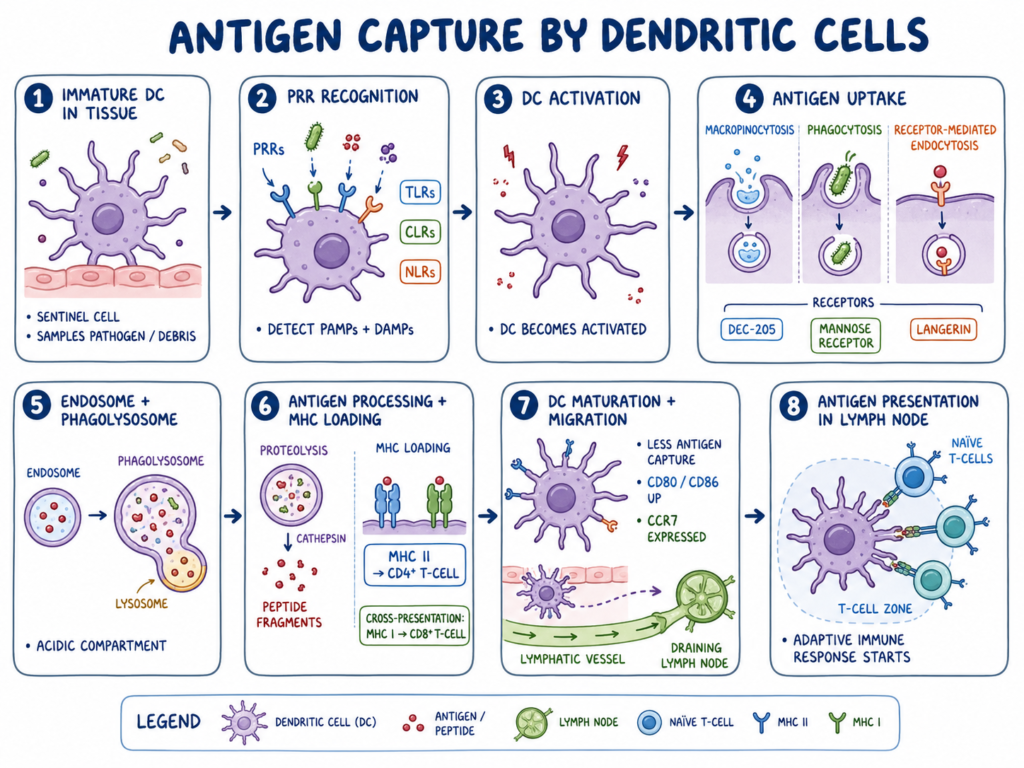
The following are the step by step process of antigen capture by dendritic cells–
- Step 1- In immature stage, dendritic cells (DCs) act as sentinel cells. They move in tissue and continuously check the surrounding area. They take sample of foreign substance, pathogen and dead cell debris.
- Step 2- When any harmful substance is present, DCs recognize it by special receptors. These receptors are called pattern recognition receptors (PRRs). The important PRRs are TLRs, CLRs and NLRs.
- Step 3- These receptors detect PAMPs and DAMPs. PAMPs are pathogen associated molecular patterns. DAMPs are danger associated molecular patterns. After this detection, DC become activated.
- Step 4- After recognition, antigen is taken inside the dendritic cell. This uptake occur by different methods. These are macropinocytosis, phagocytosis and receptor mediated endocytosis.
- Step 5- In macropinocytosis, DC takes large amount of extracellular fluid. It is a non-specific process. Soluble antigens enter into the cell by this method.
- Step 6- In phagocytosis, DC engulf large solid particles. Such as bacteria, virus and dead cells. This process is helped by Fc receptors, integrins and other surface receptors.
- Step 7- In receptor mediated endocytosis, antigen is captured by specific receptor. It is more specific and efficient. Receptors like DEC-205, mannose receptor and Langerin take part in this process.
- Step 8- After entry, antigen is enclosed inside endosome. The endosome then fuse with lysosome. This forms acidic compartment called phagolysosome.
- Step 9- Inside the phagolysosome, antigen protein is broken into small peptide fragments. This breakdown is done by proteolytic enzymes. Important enzyme is cathepsin.
- Step 10- These peptide fragments are then loaded on MHC molecules. Exogenous antigens are mostly loaded on MHC class II. This is later shown to CD4+ helper T-cells.
- Step 11- Some exogenous antigens may also loaded on MHC class I. This special process is called cross presentation. By this, antigen is shown to CD8+ cytotoxic T-cells.
- Step 12- After antigen capture and danger signal detection, immature DC become mature. It reduces its antigen capturing activity. It increase CD80, CD86 and other co-stimulatory molecules.
- Step 13- Mature DC also express CCR7 receptor. This receptor helps the cell to move through lymphatic vessel. Then DC migrate toward draining lymph node.
- Step 14- In lymph node, mature dendritic cell reach the T-cell zone. It presents MHC-antigen complex on its surface to naïve T-cells. This starts adaptive immune response.
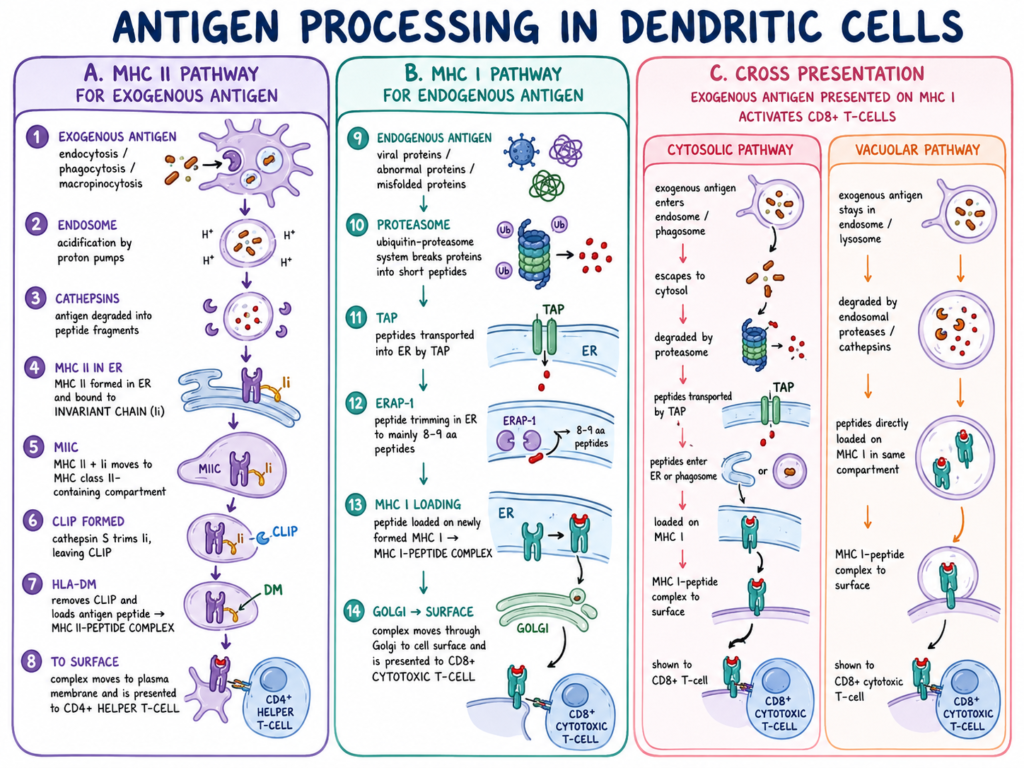
Antigen Processing in Dendritic Cells
The following are the step by step process of antigen processing in dendritic cells–
A. MHC class II pathway for exogenous antigen
- Step 1- Dendritic cells (DCs) first take antigen from outside the cell. These antigens are called exogenous antigens. They enter by endocytosis, phagocytosis or macropinocytosis.
- Step 2- After entry, antigen is enclosed inside endosome. The endosome slowly become acidic. This acidification is done by proton pumps.
- Step 3- In acidic condition, proteolytic enzymes become active. These enzymes are mainly cathepsins. They break large antigen proteins into small peptide fragments.
- Step 4- At the same time, MHC class II molecules are formed in endoplasmic reticulum (ER). These molecules bind with invariant chain (Ii). This chain protect the antigen binding groove.
- Step 5- The MHC class II with invariant chain move to special late endosomal compartment. This compartment is called MHC class II-containing compartment (MIIC).
- Step 6- In MIIC, cathepsin S breaks the invariant chain. Only small part remain in the groove. This small part is called CLIP.
- Step 7- HLA-DM remove the CLIP from MHC class II. Then antigenic peptide is loaded in its place. This forms MHC II-peptide complex.
- Step 8- The loaded MHC class II-peptide complex moves to plasma membrane. Then it is shown to CD4+ helper T-cells.
B. MHC class I pathway for endogenous antigen
- Step 9- Endogenous antigens are formed inside the cell. These may be viral proteins, abnormal proteins or misfolded proteins.
- Step 10- These proteins are broken in cytosol by ubiquitin-proteasome system. It forms short peptide fragments.
- Step 11- The peptides are transported into endoplasmic reticulum (ER). This transport is done by TAP. TAP means transporter associated with antigen processing.
- Step 12- In ER, long peptides are trimmed by ERAP-1. It forms mainly 8 or 9 amino acid long peptides.
- Step 13- These peptides are loaded on newly formed MHC class I molecules. This forms MHC I-peptide complex.
- Step 14- The MHC class I-peptide complex moves through Golgi apparatus. Then it reaches cell surface. It is presented to CD8+ cytotoxic T-cells.
C. Cross presentation pathway
Cross presentation is a special process of dendritic cells. In this process, exogenous antigen is presented on MHC class I. It activates CD8+ cytotoxic T-cells.
It occur by two main pathways-
- Cytosolic pathway- In this pathway, exogenous antigen first enter into endosome or phagosome.
- The antigen escape from endosome or phagosome into cytosol.
- In cytosol, antigen is broken by proteasome.
- The peptide fragments are transported by TAP.
- These peptides enter into ER or again enter into phagosome.
- Then peptides are loaded on MHC class I molecule.
- The MHC I-peptide complex move to cell surface.
- It is presented to CD8+ T-cells.
- Vacuolar pathway- In this pathway, exogenous antigen does not enter into cytosol.
- Antigen remain inside endosome or lysosome.
- It is degraded inside same compartment.
- The degradation is done by endosomal proteases like cathepsins.
- The peptide fragments are directly loaded on MHC class I molecule present in that compartment.
- The MHC I-peptide complex come to surface of dendritic cell.
- It is then shown to CD8+ cytotoxic T-cells.
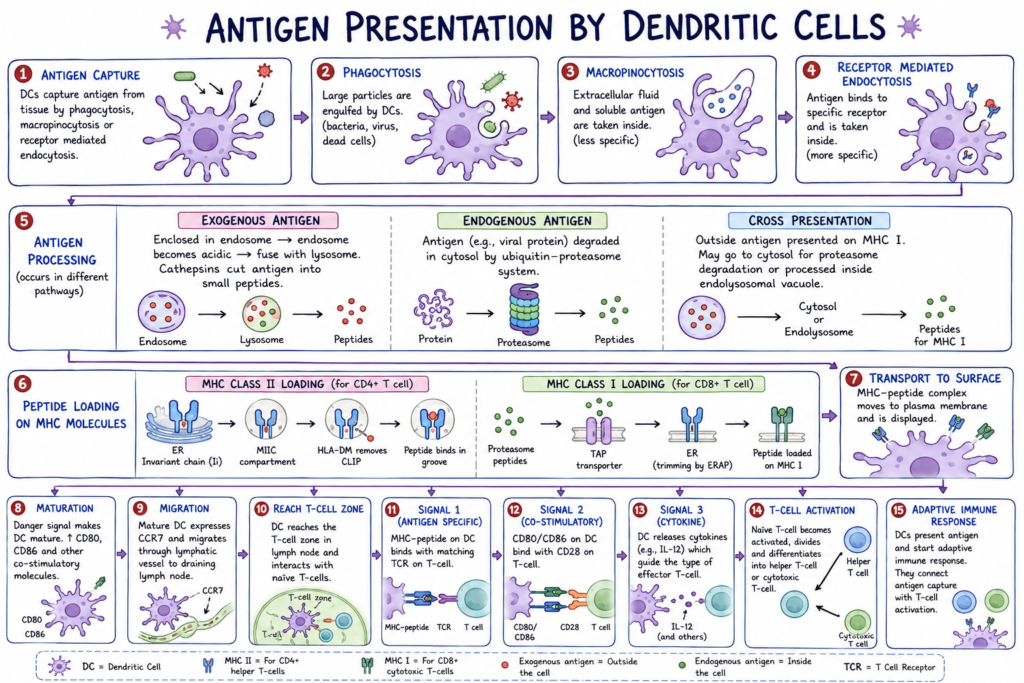
Antigen Presentation by Dendritic Cells
The following are the step by step process of antigen presentation by dendritic cells–
- Step 1- Dendritic cells (DCs) first capture antigen from surrounding tissue. The antigen may be protein, pathogen particle or dead cell material. This occur by phagocytosis, macropinocytosis or receptor mediated endocytosis.
- Step 2- In phagocytosis, large particles are engulfed by DCs. Such as bacteria, virus and dead cells.
- Step 3- In macropinocytosis, extracellular fluid and soluble antigen are taken inside the cell. It is less specific process.
- Step 4- In receptor mediated endocytosis, antigen bind with specific receptor on DC surface. Then it is taken inside the cell. This is more specific process.
- Step 5- After entry, antigen is processed inside the cell. This processing occur in different pathway according to antigen type.
- Exogenous antigen- It is antigen taken from outside the cell. It is enclosed in endosome. Then endosome become acidic and fuse with lysosome. Enzymes like cathepsins cut antigen into small peptides.
- Endogenous antigen- It is antigen formed inside the cell. Such as viral protein in infected cell. It is degraded in cytosol by ubiquitin-proteasome system.
- Cross presentation- In this process, outside antigen is presented on MHC class I. It may go to cytosol for proteasome degradation. Or it may be processed inside endolysosomal vacuole.
- Step 6- The peptide fragments are loaded on MHC molecules. This is important step for showing antigen to T-cells.
- MHC class II loading- MHC class II molecule move from endoplasmic reticulum (ER) to MIIC compartment. In this place HLA-DM remove CLIP from MHC class II. Then antigenic peptide bind in its groove.
- MHC class I loading- Cytosolic peptides are transported into ER by TAP transporter. In ER, peptides are trimmed and loaded on MHC class I molecule.
- Step 7- After loading, MHC-peptide complex move to plasma membrane. It is displayed on the surface of dendritic cell.
- Step 8- At the same time, danger signal make DC mature. The mature DC increase CD80, CD86 and other co-stimulatory molecules. It also become more able to activate T-cells.
- Step 9- Mature DC express CCR7. This receptor help the cell to migrate through lymphatic vessel. Then it goes to draining lymph node.
- Step 10- In lymph node, mature dendritic cell reach the T-cell zone. Here it interact with naïve T-cells.
- Step 11- Signal 1 is antigen specific signal. MHC-peptide complex on DC bind with matching T-cell receptor (TCR) on T-cell.
- Step 12- Signal 2 is co-stimulatory signal. CD80 and CD86 on DC bind with CD28 on T-cell. This signal is needed for survival and multiplication of T-cell.
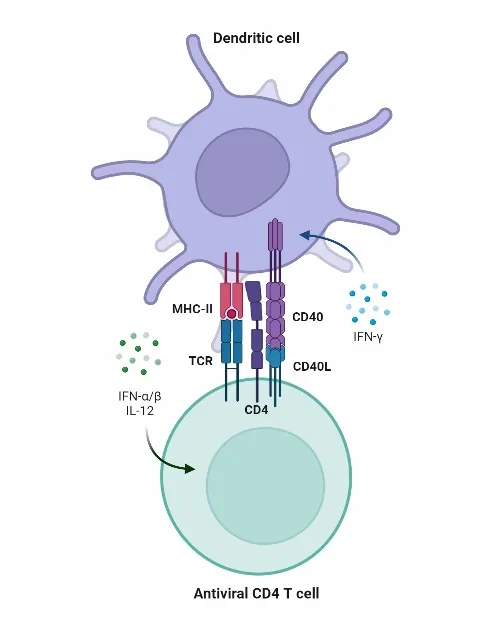
- Step 13- Signal 3 is cytokine signal. Dendritic cell release cytokines like IL-12. These cytokines decide what type of effector T-cell will be formed.
- Step 14- After receiving these three signals, naïve T-cell become activated. It divide and form clone. Then it change into helper T-cell or cytotoxic T-cell according to antigen and cytokine signal.
- Step 15- Thus, dendritic cells present antigen and start adaptive immune response. They connect antigen capture with T-cell activation.
Maturation and Activation of Dendritic Cells
The following are the step by step process of maturation and activation of dendritic cells–
- Danger sensing- Immature dendritic cells (DCs) first detect danger signals. These signals may be PAMPs, DAMPs or inflammatory mediators. Such as TNF, IL-1 and IL-6.
- PRR role- These danger signals are detected by pattern recognition receptors (PRRs). PRRs are present on the surface and inside the DCs. After this detection, immature DC start to become active.
- Functional change- After activation signal, DCs show functional change. They reduce antigen capturing activity. So endocytosis and phagocytosis become less.
- Receptor decrease- Endocytic and phagocytic receptors are downregulated. Due to this, mature DCs do not take new antigen much. They now prepare mainly for antigen presentation.
- Gene change- Inside the cell, many gene transcription changes occur. Metabolic change also occur. This helps the cell to shift from antigen capturing cell to antigen presenting cell.
- MHC increase- The maturing DCs increase MHC class II molecules on their surface. This helps in presenting processed antigen to CD4+ T-cells.
- Co-stimulatory markers- They also increase co-stimulatory molecules. These include CD40, CD54, CD58, CD80, CD83 and CD86. These molecules are needed for proper T-cell activation.
- Cytokine secretion- Activated DCs start to release cytokines. Important cytokines are IL-12, IL-10 and TNF-α. These cytokines help to control and direct immune response.
- T-cell direction- Cytokines released by DCs decide the type of T-cell response. They help in polarization of T-cells. So correct effector cell is formed according to antigen.
- Shape change- During maturation, DCs change their morphology. Immature DCs are more round and smooth. Mature DCs become rough and develop many long dendrites.
- Cytoskeleton change- The cytoskeleton of DCs is reorganized. Adhesive structures are reduced. Due to this, the cell becomes more motile.
- CCR7 expression- Mature DCs increase CCR7 receptor. This receptor helps the cell to move toward lymphoid organs. It guides DCs to draining lymph node.
- Fascin-1 increase- Mature DCs also increase fascin-1. It is an actin bundling protein. It helps in cell movement and migration.
- Migration- Fully mature DCs leave the inflamed peripheral tissue. They move through lymphatic vessels. Then they reach draining secondary lymphoid tissues.
- T-cell zone- In lymph node, mature DCs enter the T-cell zone. Here they display loaded antigen on MHC molecules.
- Final activation- Mature DCs present antigen to naïve T-cells. With MHC-antigen complex, co-stimulatory molecules and cytokines, they activate T-cells. This starts adaptive immune response.
Cytokines Produced by Dendritic Cells
The following are the important cytokines and chemokines produced by dendritic cells–
A. Interferons
- IFN-α and IFN-β- Type I interferons are mainly produced by plasmacytoid dendritic cells (pDCs). They are produced in large amount during viral infection. cDC1 can also produce them.
- IFN-λ- Type III interferon is produced mainly by cDC1 subset. It helps in mucosal antiviral defence. It also help in immune polarization.
- IFN-γ- IFN-γ is produced by some special DC subsets. It may be produced by cDC1 and IL-15 stimulated monocyte derived DCs (moDCs).
B. Pro-inflammatory and T-cell polarizing cytokines
- IL-12- Interleukin-12 (IL-12) is an important cytokine of dendritic cells. It is mainly produced by classical DCs, especially cDC1 and also by moDCs. It helps naïve T-cells to become Th1 cells and activate CD8+ T-cells.
- TNF-α- Tumor necrosis factor-alpha (TNF-α) is produced by cDCs, pDCs and moDCs. It increases local inflammation. It also support immune response.
- IL-1- IL-1α and IL-1β are produced by cDC2 and moDCs. They help in inflammatory response. They also help in formation of Th17 cells.
- IL-6- Interleukin-6 (IL-6) is produced by cDC2, pDCs and moDCs. It works with TGF-β. It helps in Th17 cell polarization.
- IL-23- Interleukin-23 (IL-23) is mainly produced by cDC2 and moDCs. It maintains Th17 cells. It also increase Th17 response.
- IL-15- Interleukin-15 (IL-15) is produced by Langerhans cells (LCs). It helps in local cytotoxic T-cell response. mregDCs can also produce IL-15.
- IL-18- Interleukin-18 (IL-18) is produced by some moDCs. Such as IFN-DCs. It helps in more inflammation.
- Activin A- Activin A is produced by cDC2 subset. It helps in controlling helper T-cell response.
C. Anti-inflammatory and regulatory cytokines
- IL-10- Interleukin-10 (IL-10) is produced by cDC2, moDCs and tolerogenic DCs (tolDCs). It suppress immune response. It also maintain immune tolerance.
- TGF-β- Transforming growth factor-beta (TGF-β) is produced by tolDCs, cDC2 and Langerhans cells. It helps in formation of regulatory T-cells (Tregs). It also maintain tissue balance.
D. Chemokines
- CXCL9 and CXCL10- CXCL9 and CXCL10 are mainly produced by cDC1. These chemokines attract NK cells and effector T-cells. They are important in infection and tumour area.
- CXCL8- CXCL8 is also called IL-8. It is produced by cDC2 subsets such as BDCA-1+ DCs. It acts as chemoattractant.
- CCL17, CCL19 and CCL22- These are produced by mregDCs. They help in local immune regulation. They also attract regulatory T-cells in tumour microenvironment.
- CCL2, CCL3, CCL4 and CCL5- These chemokines are produced by different DC subsets. They help in movement of immune cells into inflamed tissue. They are important for immune cell trafficking.
Functions of Dendritic Cells
The following are the important functions of dendritic cells–
- Sentinel function and antigen capture- Dendritic cells (DCs) act as main sentinel cells of immune system. They are present in tissues which are exposed to outside environment. They continuously check and capture foreign pathogen, self antigen and cell debris by phagocytosis, receptor mediated endocytosis and macropinocytosis.
- Antigen processing and presentation- After antigen capture, DCs break large protein antigen into small peptide fragments. These peptides are then displayed on cell surface with MHC class I or MHC class II molecules. This make antigen visible to T-cells.
- T-cell activation and polarization- Mature DCs move to secondary lymphoid organs like lymph nodes. Here they interact with naïve T-cells. They give antigen signal, co-stimulatory signal by CD80 and CD86, and cytokine signal. This helps T-cells to become Th1, Th2, Th17 or cytotoxic T-cells.
- Cross presentation- Dendritic cells can take outside antigen and present it on MHC class I molecule. This is called cross presentation. It is important for activation of naïve CD8+ T-cells into cytotoxic T lymphocytes against tumour cells and intracellular infection.
- Regulation of innate immunity- DCs also control innate immune response. They secrete IL-12, IL-15, type I interferons and chemokines. These substances recruit and activate NK cells and NKT cells and increase their cytotoxic activity.
- B-cell response- Dendritic cells help in antibody mediated immunity. They promote formation of T follicular helper cells (Tfh). These Tfh cells then help B-cells for proliferation, affinity maturation and formation of plasma cells and memory B-cells.
- Immune tolerance- In normal healthy condition, DCs maintain immune tolerance. They present self antigen or harmless antigen without danger signal. They also release IL-10 and TGF-β. This suppress autoreactive T-cells and induce regulatory T-cells (Tregs).
- Cytokine and chemokine secretion- Dendritic cells produce many cytokines and chemokines according to pathogen type. Plasmacytoid DCs produce large amount of type I interferons during viral infection. Other DC subsets release pro-inflammatory or regulatory cytokines to shape the immune environment.
Clinical Significance of Dendritic Cells
The following are the clinical significance of dendritic cells–
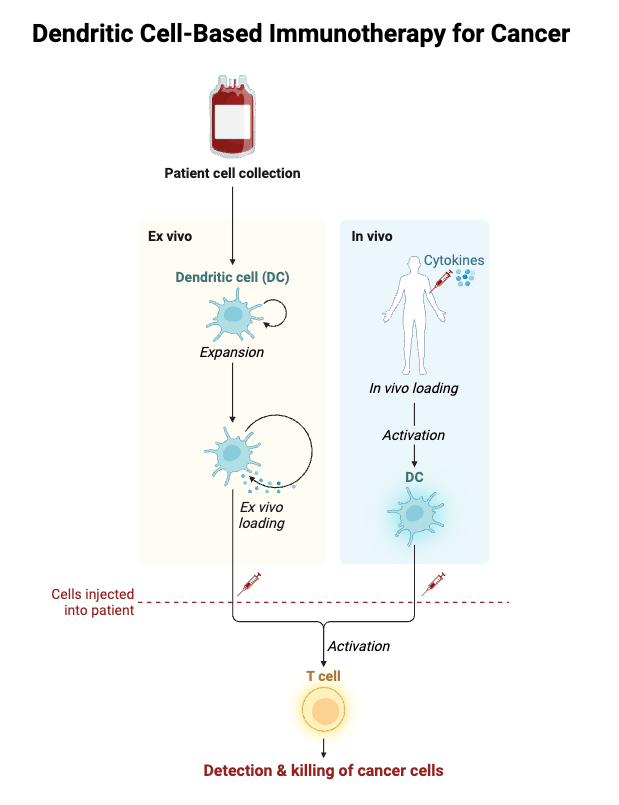
- Cancer vaccine- Dendritic cells (DCs) are used in cancer vaccine. They activate T-cells strongly. DCs or their precursor cells are taken from patient, loaded with tumour antigen ex vivo, and again injected into patient. This helps to attack tumour cells by cytotoxic immune response.
- Provenge- Sipuleucel-T (Provenge) is first FDA approved DC based cancer vaccine. It is used in advanced prostate cancer. It stimulate immune system against cancer antigen.
- Tumour escape and prognosis- Tumour can suppress maturation and function of DCs in tumour microenvironment. So tumour antigen is not presented properly. But presence of functional cDC1 in tumour is related with better prognosis and survival.
- Tolerogenic DC therapy- Tolerogenic dendritic cells (tolDCs) suppress immune response. These cells are used in study for Type 1 diabetes, rheumatoid arthritis and multiple sclerosis. They are also important in organ transplantation for preventing graft rejection.
- Autoimmune disease- Breakdown of DC tolerance can cause autoimmune disease. Overactive plasmacytoid DCs (pDCs) detect self nucleic acid and produce high interferon. This is important in systemic lupus erythematosus (SLE). moDCs also cause inflammatory tissue damage in rheumatoid arthritis and inflammatory bowel disease.
- Infectious disease- Dendritic cells are first line defence against pathogen. DC targeted vaccines are studied in chronic viral infection like HIV, Hepatitis C (HCV) and COVID-19. But some virus also use DCs for spreading. HIV bind with DC-SIGN receptor and reach lymph node to infect CD4+ T-cells.
- Metabolic and cardiovascular disease- DCs take part in chronic low grade inflammation. In Type 2 diabetes, it is related with insulin resistance and beta cell dysfunction. In atherosclerosis, DCs secrete inflammatory cytokines in vessel wall and increase plaque inflammation.
- Neurodegenerative disease and neoplasm- Altered DC function is seen in Alzheimer’s disease and Parkinson’s disease. In Alzheimer’s disease, aged DCs cannot clear amyloid-beta properly. In Parkinson’s disease, DCs present misfolded proteins to T-cells and increase neuroinflammation. Malignant change of DCs causes rare diseases like blastic plasmacytoid dendritic cell neoplasm (BPDCN) and Langerhans cell histiocytosis (LCH).
References
- Azeem, W. A. W., Bakke, R. M. R., Appel, S. A., Øyan, A. M., & Kalland, K.-H. (2020). Dual Pro- and Anti-Inflammatory Features of Monocyte-Derived Dendritic Cells. Frontiers in Immunology, 11, Article 438. https://doi.org/10.3389/fimmu.2020.00438
- Cechim, G., & Chies, J. A. B. (2019). In vitro generation of human monocyte-derived dendritic cells methodological aspects in a comprehensive review. Anais da Academia Brasileira de Ciências, 91(4), Article e20190310. https://doi.org/10.1590/0001-3765201920190310
- Deckers, J. D., Hammad, H. H., & Hoste, E. H. (2018). Langerhans Cells: Sensing the Environment in Health and Disease. Frontiers in Immunology, 9, Article 93. https://doi.org/10.3389/fimmu.2018.00093
- Dendritic Cell Organization and Function in Innate and Adaptive Immune Defense Within Lymph Nodes – PMC. (n.d.). PubMed Central (PMC).
- Dendritic Cells: Ontogeny, Structural Complexity, Spatial Heterogeneity, and Orchestration of Immunological Fate. (n.d.).
- Dendritic Cells: Orchestrators of Immune Responsiveness and … (n.d.). PubMed Central (PMC).
- Dendritic Cells – PMC – NIH. (n.d.). PubMed Central (PMC).
- Dendritic Cells in Tolerance and Immunity against Pathogens – PMC – NIH. (n.d.). PubMed Central (PMC).
- Dendritic cells: understanding ontogeny, subsets, functions, and their clinical applications. (n.d.). PubMed Central (PMC).
- Exploring dendritic cell subtypes in cancer immunotherapy: unraveling the role of mature … – PMC. (n.d.). PubMed Central (PMC).
- Extensive Phenotype of Human Inflammatory Monocyte-Derived … (n.d.). PubMed Central (PMC).
- Fan, Y., & Moon, J. J. (2015). Nanoparticle Drug Delivery Systems Designed to Improve Cancer Vaccines and Immunotherapy. Vaccines, 3(3), 662-685. https://doi.org/10.3390/vaccines3030662
- Helft, J., Ginhoux, F., Bogunovic, M., & Merad, M. (2010). Origin and functional heterogeneity of non-lymphoid tissue dendritic cells in mice. Immunological Reviews, 234(1), 55-75.
- Human dendritic cell subsets: An updated view of their ontogeny … (n.d.). PubMed Central (PMC).
- Jin, F., Xie, L., Zhang, H., Fan, X., Tian, J., Liu, W., Xiao, Y., & Fan, X. (2025). Dendritic Cells: Origin, Classification, Development, Biological Functions, and Therapeutic Potential. MedComm, 6(11), Article e70455. https://doi.org/10.1002/mco2.70455
- Junker, F. J., Gordon, J. G., & Qureshi, O. Q. (2020). Fc Gamma Receptors and Their Role in Antigen Uptake, Presentation, and T Cell Activation. Frontiers in Immunology, 11, Article 1393. https://doi.org/10.3389/fimmu.2020.01393
- Khan, S., Ruutu, M., Thomas, R., & Bhardwaj, N. (n.d.). Dendritic Cells. In Musculoskeletal Key.
- Konietzny, A., Bär, J., & Mikhaylova, M. (2017). Dendritic Actin Cytoskeleton: Structure, Functions, and Regulations. Frontiers in Cellular Neuroscience, 11, Article 147. https://doi.org/10.3389/fncel.2017.00147
- Kuhn, S. K., Yang, J. Y., & Ronchese, F. R. (2015). Monocyte-Derived Dendritic Cells Are Essential for CD8+ T Cell Activation and Antitumor Responses After Local Immunotherapy. Frontiers in Immunology, 6, Article 584. https://doi.org/10.3389/fimmu.2015.00584
- Langerhans cells and more: langerin-expressing dendritic cell subsets in the skin – PMC. (n.d.). PubMed Central (PMC).
- Mature dendritic cells enriched in immunoregulatory molecules (mregDCs): A novel population in the tumour microenvironment and immunotherapy target – ResearchGate. (n.d.).
- Mature dendritic cells enriched in immunoregulatory molecules … (n.d.). PubMed Central (PMC).
- Mature dendritic cells enriched in regulatory molecules may control regulatory T cells and the prognosis of head and neck cancer – PMC. (n.d.). PubMed Central (PMC).
- Miltenyi Biotec. (n.d.). Dendritic cells (mouse).
- Once upon a prime: DCs shape cancer immunity – PMC. (n.d.). PubMed Central (PMC).
- Ontogeny and function of epidermal murine Langerhans cells – PMC. (n.d.). PubMed Central (PMC).
- Overview of dendritic cells subsets and their involvement in immune-related pathological disease – PMC. (n.d.). PubMed Central (PMC).
- Roghanian, A. (n.d.). Dendritic Cells. British Society for Immunology.
- Thepaut, M., Valladeau, J., Nurisso, A., Kahn, R., Arnou, B., Vives, C., Saeland, S., Ebel, C., Monnier, C., Dezutter-Dambuyant, C., Imberty, A., & Fieschi, F. (2009). Structural Studies of Langerin and Birbeck Granule: A Macromolecular Organization Model. Biochemistry, 48(12), 2684–2698. https://doi.org/10.1021/bi802151w
- The development and function of dendritic cell populations and their regulation by miRNAs. (n.d.). PubMed Central (PMC).
- Thermo Fisher Scientific. (n.d.). Dendritic Cell Overview.
- van Montfoort, N., van der Aa, E., & Woltman, A. M. (2014). Understanding MHC Class I Presentation of Viral Antigens by Human Dendritic Cells as a Basis for Rational Design of Therapeutic Vaccines. Frontiers in Immunology, 5, Article 182. https://doi.org/10.3389/fimmu.2014.00182
- Wculek, S. K., Cueto, F. J., Mujal, A. M., Melero, I., Krummel, M. F., & Sancho, D. (2019). Dendritic cells in cancer immunology and immunotherapy. Nature Reviews Immunology.
- Whitman College. (n.d.). The role of the cytoskeleton in dendritic development.
- Wikipedia contributors. (2026, May 21). Dendritic cell. In Wikipedia, The Free Encyclopedia.