

Eosinophils are granulocytic white blood cells formed in the bone marrow, then released into blood and tissues. They are identified by bilobed nuclei and eosin-staining granules containing toxic proteins and cytokines, and they participate in immune regulation, tissue repair, and development.
The content also outlines eosinophil development, receptors, migration, activation, and degranulation. It emphasizes their roles in defense against parasites and in allergic, inflammatory, gastrointestinal, respiratory, skin, cardiac, and systemic diseases, along with clinical markers, testing methods, and targeted therapies.
Eosinophil is a granulocytic white blood cell which contains eosin loving red granules and usually bilobed nucleus. It is mainly involved in defense against helminth parasites, allergic reaction and tissue immune response.
Eosinophil is a type of white blood cell (WBC) and it is included under granulocyte. It has many cytoplasmic granules which take acidic dye eosin and become pink or red in colour. It was first discovered by Paul Ehrlich in 1879.
These cells are formed in the bone marrow. After formation, they remain for short time in the blood and then migrate into different tissues of the body. They are mainly present in gastrointestinal tract, lungs, thymus and adipose tissue.
Eosinophils are mainly known for protection against parasitic worm infection. They also take part in allergic reactions and diseases like asthma. In these conditions, eosinophils become active and release different granule substances.
The granules of eosinophil contain strong basic proteins and different signalling molecules called cytokines. These substances help to kill parasites and also communicate with other immune cells. But in allergy, the same substances may cause inflammation and tissue damage.
Eosinophils also help in other functions of body. They take part in tissue repair, tissue homeostasis, immune regulation and development of some organs. So, eosinophil is not only a parasite killing cell, but also a regulatory immune cell.
Origin and Development of Eosinophils (Eosinophilopoiesis)
Eosinophilopoiesis is the process of formation of eosinophils. It occurs in the bone marrow. The cell is formed from hematopoietic stem cell (HSC) and then passes through different myeloid stages.
The first cell is multipotent hematopoietic stem cell (HSC). It gives rise to CD34⁺ pluripotent myeloid progenitor. This is an early stem cell stage and it can form different blood cells.
The CD34⁺ myeloid progenitor then gives rise to common myeloid progenitor (CMP). The CMP forms granulocyte-monocyte progenitor (GMP). This is the stage from where granulocyte forming line starts.
The GMP changes into myeloblast. This myeloblast is now committed for eosinophil formation. This commitment is done by transcription factors like PU.1, C/EBP-alpha, GATA-1, GATA-2 and ICSBP.
After this stage, early eosinophil progenitor cells multiply. This multiplication is helped by Interleukin-3 (IL-3) and Granulocyte-Macrophage Colony-Stimulating Factor (GM-CSF). These are cytokines and helps in early growth of progenitor cells.
The final maturation is mainly by Interleukin-5 (IL-5). IL-5 acts on eosinophil progenitor and makes mature eosinophil. XBP-1 and Id2 also takes part in this process.
During maturation, eosinophil forms its granules. These granules contain toxic basic proteins. One important protein is Major Basic Protein (MBP).
After about 7 days, mature eosinophils are formed in the bone marrow. They lose CD34 marker from surface. Then they come out from bone marrow and enter into blood.
In blood they remain for short time. Then they move into tissues by the action of chemical signals called eotaxins.
The sequence is as follows-
HSC
↓
CD34⁺ myeloid progenitor
↓
CMP
↓
GMP
↓
Myeloblast committed to eosinophil line
↓
Eosinophil progenitor
↓
Mature eosinophil
↓
Blood
↓
Tissues
Characteristics of Eosinophils
The following are the important characteristics of eosinophils.
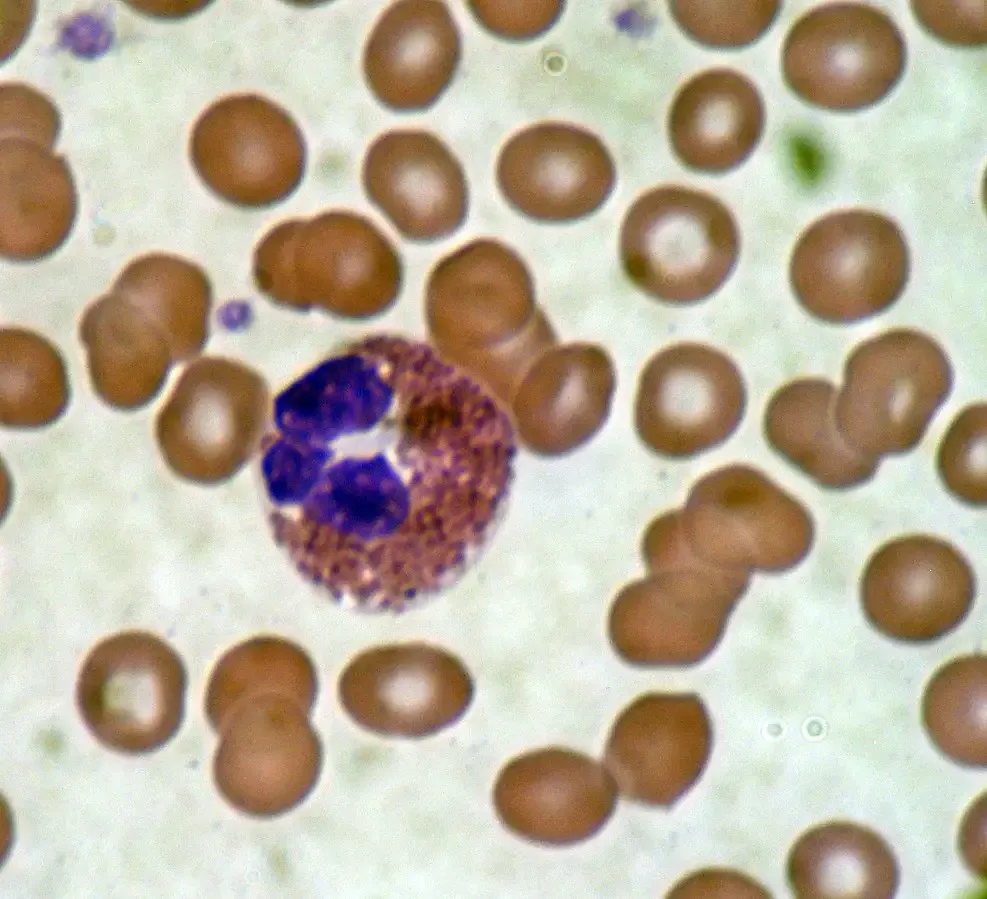
- Physical appearance- Eosinophils are granulocyte cells. The size is about 8 µm in diameter. The nucleus is commonly bilobed, means two lobed nucleus is present. This is a usual identifying character of eosinophil.
- Staining property- The granules of eosinophils are eosin loving. They take acidic dye eosin very strongly. Due to this, the granules become dark pink or red in colour. This staining property is important for identification in blood smear.
- Origin and development- Eosinophils develop in the bone marrow. They arise from multipotent hematopoietic stem cells. Their final differentiation and maturation is mainly controlled by Interleukin-5 (IL-5). IL-5 also helps in release of mature eosinophils into blood.
- Lifespan- In blood, eosinophils remain for short period only. Their circulating half life is about 8 to 18 hours. But after entering into tissue, their life becomes longer. They may survive for several days and sometimes for weeks.
- Tissue residency- Eosinophils are normally present in different tissues of healthy body. They are found in gastrointestinal lamina propria, thymus, uterus, mammary glands, adipose tissue and skeletal muscle. In these tissues they help in normal tissue balance and metabolism.
- Granular content- The main character of eosinophils is the presence of many specific crystalloid granules. About 200 granules are present in mature cell. These granules contain basic toxic proteins such as Major Basic Protein (MBP), Eosinophil Peroxidase (EPO), Eosinophil Cationic Protein (ECP) and Eosinophil-Derived Neurotoxin (EDN). Preformed cytokines and chemokines are also stored in these granules.
- Immunomodulatory nature- Eosinophils are not only killing cells. They regulate immune response also. They act against helminth parasites, bacteria and viruses. They can present antigen to T-cells and help in shaping of immune response.
- Role in disease- When eosinophils are increased or activated for long time, they cause tissue damage. They are important in Type 2 (Th2) inflammation. Their toxic proteins and tissue remodeling cytokines are related with asthma, allergic rhinitis, atopic dermatitis and eosinophilic gastrointestinal disorders (EGIDs).
Structure and Morphology of Eosinophils
The following are the structure and morphology of eosinophils–
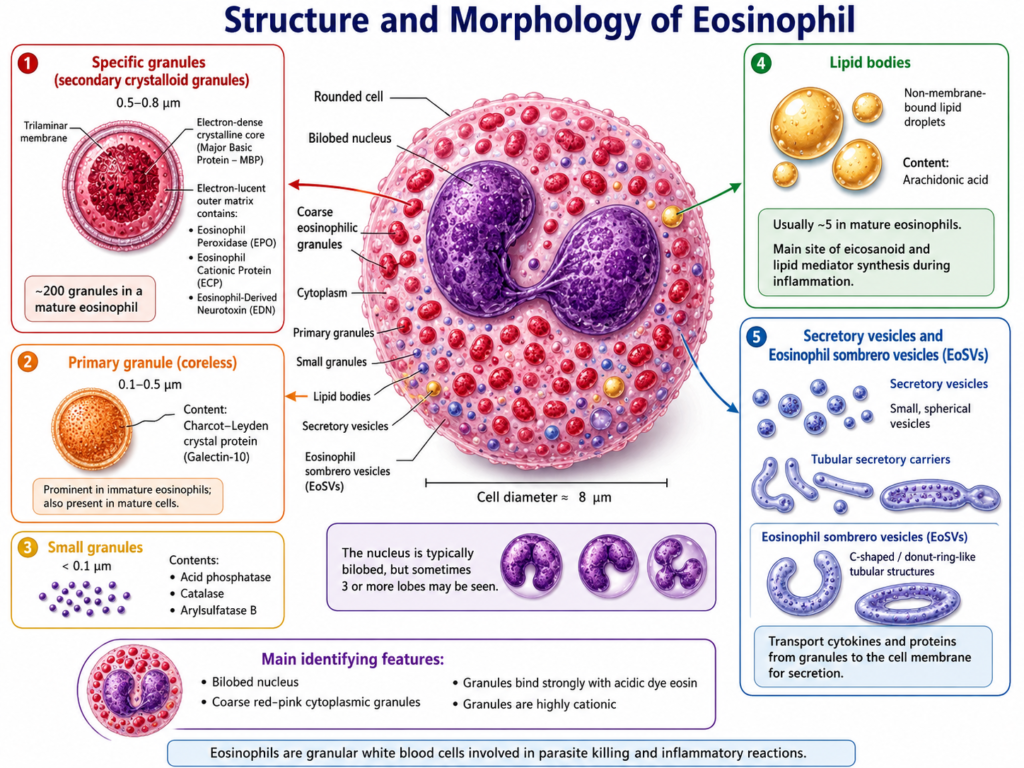
- Eosinophils are granular white blood cells and their size is about 8 µm in diameter. The cell is generally rounded and cytoplasm contains many coarse granules.
- The nucleus of eosinophil is characteristically bilobed, means it has two lobes. Sometimes three or more lobes may also be seen.
- The cytoplasm is filled with large eosinophilic granules. These granules take acidic dye eosin very strongly and become dark pink or red in colour. Due to this property the cell is called eosinophil.
- A mature eosinophil contains about 200 specific granules. These granules are also known as secondary crystalloid granules and their size is about 0.5-0.8 µm in diameter.
- The specific granules are surrounded by trilaminar membrane. They have electron dense crystalline core and electron lucent outer matrix. The core contains Major Basic Protein (MBP).
- The outer matrix of these granules contains toxic proteins like Eosinophil Peroxidase (EPO), Eosinophil Cationic Protein (ECP) and Eosinophil Derived Neurotoxin (EDN). These proteins are important for killing parasites and also take part in inflammatory reaction.
- Primary granules are coreless organelles and their size is about 0.1-0.5 µm in diameter. They are mainly prominent in immature eosinophils but also found in mature cells.
- The primary granules contain Charcot-Leyden crystal protein. It is also called Galectin-10.
- Small granules are also present in eosinophil cytoplasm. Their size is less than 0.1 µm and they do not have crystalline core.
- These small granules contain enzymes like acid phosphatase, catalase and arylsulfatase B. They are small intracellular granules and take part in cellular activity.
- Mature eosinophils generally contain about five lipid bodies. These are non-membrane bound structures and contain arachidonic acid.
- The lipid bodies are the main site for synthesis of eicosanoids and other lipid mediators. These mediators are formed during inflammation.
- The cytoplasm also contains many secretory vesicles. These vesicles may be small spherical vesicles or elongated tubular carriers.
- Some tubular carriers show curved C-shaped or donut ring like appearance. These are known as eosinophil sombrero vesicles (EoSVs).
- The EoSVs help in transport of cytokines and proteins from granules to the cell membrane. After this, these substances are released outside the cell.
- The main identifying character of eosinophil is bilobed nucleus and coarse red-pink granules in the cytoplasm. These granules are highly cationic and therefore bind strongly with acidic dye eosin.
Life Cycle of Eosinophils
Eosinophils are granulocytic white blood cells whose life cycle starts from the bone marrow and finally ends in the tissues after degranulation and death. The life cycle includes formation, maturation, circulation, tissue migration, tissue survival and cell death.
1. Bone marrow development
The first stage of eosinophil life cycle takes place in the bone marrow. Here the multipotent hematopoietic stem cells (HSCs) give rise to common myeloid progenitor cells, which further develop into committed eosinophil progenitor cells.
This process is known as eosinophilopoiesis. It takes about 7 days for complete development of eosinophils in the bone marrow. The process is regulated by some transcription factors such as GATA-1, PU.1 and C/EBP-α.
The early proliferation of eosinophil progenitor cells is stimulated by Interleukin-3 (IL-3) and GM-CSF. But Interleukin-5 (IL-5) is the chief cytokine required for final maturation, terminal differentiation and release of mature eosinophils from the bone marrow.
2. Blood circulation
After maturation, the eosinophils are released into the peripheral blood. The blood mainly acts as a transport route for eosinophils and not as their permanent residence.
They remain in the blood for only short period. The circulating half life of eosinophils is about 8 to 18 hours. After this period they migrate from blood into different tissues.
3. Tissue migration
In this stage the eosinophils leave the blood circulation and enter into the tissues. This movement is done by the help of chemical gradients present in the tissue area.
The important chemokines for eosinophil migration are eotaxins. These include CCL11, CCL24 and CCL26. These chemokines bind with CCR3 receptor present on the surface of eosinophils.
After binding, the eosinophils move towards the target tissue. In healthy condition, eosinophils are normally present in gastrointestinal tract, thymus, uterus, mammary glands and adipose tissue.
4. Tissue residence and adaptation
After entering into tissue, the eosinophils remain in the tissue parenchyma. Here they undergo some phenotypic changes according to the tissue environment.
In this stage, IL-5 receptors are downregulated and adhesion molecules like CD11b and CD49d are increased. These adhesion molecules help the eosinophils to attach with the extracellular matrix.
The life span of eosinophils becomes more in the tissues. They can survive for 6 to 7 days and sometimes for several weeks. During this time eosinophils take part in tissue repair, metabolic regulation and local immune responses.
5. Degranulation and cell death
In the final phase, the eosinophils release their stored granule materials. These materials include toxic proteins and cytokines. This release of granules is called degranulation.
Degranulation occurs during immune reaction, parasitic infection and severe inflammation. The released substances help in killing of parasites and also produce inflammatory reaction in the tissue.
Finally, eosinophils die by a special active and non-apoptotic process. This process is called cytolysis or EETosis (Eosinophil Extracellular Trap cell death).
During EETosis, the nuclear membrane and plasma membrane are disintegrated. Then mitochondrial DNA and nuclear DNA are released outside the cell and form trap like structures.
These extracellular DNA traps help to catch pathogens. The intact membrane-bound granules also come outside in the extracellular space and they may continue to release inflammatory mediators even after the eosinophil has died.
Distribution of Eosinophils in the Body
Eosinophils are not distributed only in blood. They are mainly tissue resident cells. Blood acts mostly as a transport route for them. The normal distribution of eosinophils is found in blood, mucosal tissues, some lymphoid organs, fat tissue, muscle tissue and also in inflammatory sites.
1. Peripheral blood
In the peripheral blood, eosinophils are present in small number.
They usually form less than 5% of the total circulating white blood cells. Blood is not the permanent site of eosinophils. It is mainly used for transport from bone marrow to different tissues.
2. Gastrointestinal tract
The gastrointestinal tract contains the largest number of resident eosinophils in the body.
They are mainly present in the lamina propria of the intestine. The upper part of the small intestine has more eosinophils than many other tissues.
These eosinophils take part in mucosal immunity and local tissue balance.
3. Respiratory system
Eosinophils are also present in the respiratory system.
They are found in the lung parenchyma in normal condition. Their number may increase in allergic conditions like asthma and other inflammatory diseases of lung.
4. Thymus
In the thymus, eosinophils are found regularly.
They are mainly present in the cortico-medullary junction of thymus. They are present in this region throughout life.
5. Reproductive and mammary tissues
Eosinophils are also distributed in some reproductive organs.
They are found in the genitourinary tract and endometrium of the uterus. In mammary gland, they are present near the developing terminal end buds.
This distribution is related with tissue growth and local immune regulation.
6. Adipose tissue
Eosinophils are present in the visceral adipose tissue.
They are found in the interstitial space of fat tissue. In this tissue they help in regulation of metabolism and also maintain local immune condition.
7. Skeletal muscle
In skeletal muscle, eosinophils are found in the interstitial spaces.
They remain between muscle fibres and connective tissue area. Their presence is related with tissue repair and local immune activity.
8. Serous cavities
Eosinophils are also present in serous cavities of the body.
They are found in pleural cavity, peritoneal cavity and pericardial cavity. These are fluid filled spaces around lung, abdominal organs and heart.
9. Sites of inflammation
During inflammation, the number of eosinophils increases very quickly.
They are recruited in large number at the site of allergic reaction, parasitic infection and active tissue repair. In these sites, they release cytokines and granule proteins and take part in inflammatory response.
Granules of Eosinophils
The following are the granules and related organelles present in eosinophils.
- Specific granules- These are also called secondary crystalloid granules. They are the most important and characteristic granules of mature eosinophils. Each eosinophil contains about 200 such granules and their size is about 0.5 to 0.8 µm.
- Core- It is also called internum. It is electron dense crystalline central part. It mainly contains Major Basic Protein (MBP), which is highly toxic to parasites and also injures tissue cells.
- Matrix- It is also called externum. It is the electron lucent outer part around the core. It contains Eosinophil Peroxidase (EPO), Eosinophil Cationic Protein (ECP) and Eosinophil-Derived Neurotoxin (EDN).
- Storage role- These granules also store preformed cytokines and chemokines. So they act as large storage granules of eosinophils.
- Primary granules- These are smaller coreless granules. Their size is about 0.1 to 0.5 µm. They are more prominent in immature eosinophils and act as early precursor organelles. They are also present in mature cells. These granules are rich in Charcot-Leyden crystal protein, also called Galectin-10.
- Small granules- These are very small coreless granules. Their size is less than 0.1 µm. They do not mainly contain toxic cationic proteins. They contain enzymes like acid phosphatase, arylsulfatase B, catalase and cytochrome β558.
- Lipid bodies- These are non-membrane bound lipid areas present in mature eosinophils. Usually one mature eosinophil contains about five lipid bodies. Their number increases during inflammation. They contain arachidonic acid and enzymes like cyclooxygenase and lipoxygenase. So these are the main sites for formation of eicosanoids and other lipid mediators.
- Secretory vesicles- These are small transport vesicles present in the cytoplasm of eosinophils. They may be spherical or elongated tubular vesicles. The curved tubular vesicles are called eosinophil sombrero vesicles (EoSVs). These vesicles bud off from specific granules and carry cytokines and toxic proteins to the outer cell membrane for release.
Major Proteins Present in Eosinophil Granules
The following are the major proteins present in eosinophil granules.
- Major Basic Protein (MBP)- Major Basic Protein is also called MBP-1. It is highly basic and arginine rich protein. It forms most part of the electron dense crystalline core of specific granules. It is toxic for helminth parasites, bacteria and mammalian tissue cells. It damages the cell membrane and makes the membrane permeable.
- Eosinophil Peroxidase (EPO)- Eosinophil Peroxidase is present in the electron lucent matrix of specific granules. It is a haloperoxidase enzyme. It uses hydrogen peroxide (H₂O₂) and oxidizes halides, mainly bromide. The reaction produces hypohalous acids and reactive oxygen species (ROS). These substances kill microorganisms and also may produce tissue injury.
- Eosinophil Cationic Protein (ECP)- Eosinophil Cationic Protein is also known as RNase-3. It is a basic protein present in the matrix of specific granules. It has ribonuclease activity. It is cytotoxic to pathogens and host cells. It acts mainly by making pore or channel like damage in the target cell membrane. It also affects mast cell degranulation.
- Eosinophil-Derived Neurotoxin (EDN)- Eosinophil-Derived Neurotoxin is also called RNase-2. It is also present in the matrix of specific granules. It has similarity with ECP, but its ribonuclease activity is much higher. It acts as endogenous alarmin. It also shows antiviral action, mainly against single-stranded RNA viruses.
- Charcot-Leyden Crystal Protein (CLC)- Charcot-Leyden Crystal protein is also called Galectin-10. It is mainly found in coreless primary granules of immature eosinophils. In mature eosinophils, it is mostly present in peripheral cytoplasm. During cytolysis, this protein is released outside and forms Charcot-Leyden crystals. These crystals act as physical alarmins and stimulate mucosal immune reaction.
Surface Receptors of Eosinophils
The following are the important surface receptors present on eosinophils.
- Cytokine and chemokine receptors- These receptors help in development, survival and movement of eosinophils.
- IL-5Rα (CD125)- It is the receptor for Interleukin-5 (IL-5). It is important for development, survival and priming of eosinophils. This receptor becomes reduced when eosinophils leave blood and enter into tissues.
- CCR3- It is a G-protein-coupled receptor. It binds with eotaxin chemokines such as CCL11. It helps in migration and recruitment of eosinophils into target tissue.
- CRTH2 (CD294)- It is a chemoattractant receptor. It responds to prostaglandin D2 (PGD2) released from mast cells. It causes chemotaxis, change in cell shape and degranulation of eosinophils.
- Adhesion molecules- These are mainly integrins. They help eosinophils to attach with tissue and extracellular matrix.
- Mac-1 (CD11b/CD18)- It is increased when eosinophils enter into tissue. It helps in firm adhesion with extracellular matrix. It also recognizes fungal molecules and activates eosinophil functions like degranulation.
- VLA-4 (CD49d/CD29)- It is also called Very Late Antigen-4. It is increased after tissue entry and helps in attachment of eosinophils with extracellular matrix.
- L-selectin (CD62L)- It is a surface marker. It is used to differentiate resident eosinophils and inflammatory eosinophils.
- Inhibitory and regulatory receptors- These receptors control eosinophil activity and prevent excess tissue damage.
- Siglec-8 / Siglec-F- Siglec-8 is found in human eosinophils and Siglec-F (CD170) is found in mouse eosinophils. It is a selective inhibitory receptor present on eosinophils, mast cells and basophils. When it is cross-linked, it causes apoptosis of activated tissue eosinophils.
- CD172a (SIRPα)- It is an inhibitory surface receptor. It suppresses the harmful tissue-remodelling activity of gastrointestinal eosinophils.
- Immunoglobulin receptors- These receptors bind with antibodies and help in immune reaction of eosinophils.
- FcαR- It binds with IgA, mainly secretory IgA in mucosal tissue. It is one of the strong triggers for eosinophil degranulation and respiratory burst.
- FcγRII (CD32)- It is the main IgG receptor on human eosinophils. Human eosinophils do not contain FcγRI (CD64) and FcγRIII (CD16).
- FcεRII (CD23) and Galectin-3- These are low affinity receptors and binding proteins for IgE. The FcεRI α-chain is mostly stored inside resting eosinophils and not mainly present on surface.
- Damage sensing and pattern recognition receptors- These receptors help eosinophils to recognize microbial products, tissue injury and allergen derived enzymes.
- Toll-like receptors (TLRs)- Eosinophils express many TLRs such as TLR1, TLR2, TLR3, TLR4, TLR5, TLR6, TLR7, TLR9 and TLR10. These receptors recognize viral, bacterial and microbial patterns. CD14 is also present with TLR4 and helps in binding of lipopolysaccharide (LPS).
- Histamine receptors- HR1, HR2 and HR4 are present on eosinophils. They act as damage sensing receptors. They help eosinophils to detect epithelial injury and release tissue repair factors.
- Protease-activated receptors (PARs)- Eosinophils express PAR2 and PAR3. These receptors recognize proteolytic enzymes produced by microbes and environmental allergens such as house dust mites and fungi. They also help in degranulation.
- Other markers- CD15, CD66b and CD101 are other surface markers of human eosinophils. These markers are used to characterize eosinophil populations and to identify non-classical activation states.
Activation of Eosinophils
The activation of eosinophils occurs in step by step process. It includes priming, tissue homing, adhesion, receptor stimulation and finally release of toxic products.
- Priming- In the first step, eosinophils are exposed to different stimulating substances in blood or tissue. These substances include chemotactic lipids, complement components and cytokines like Interleukin-3 (IL-3), Interleukin-5 (IL-5) and GM-CSF. This step makes the eosinophil more ready for activation. It lowers the signaling threshold of the cell. So later small stimulus can also activate the eosinophil easily.
- Tissue homing and adhesion- After priming, eosinophils migrate into the target tissue by following chemokine gradient. The important chemokines are eotaxins. During this process, surface receptors of eosinophils are changed. IL-5 receptor becomes reduced and adhesion molecules are increased. The important adhesion molecules are Mac-1 (CD11b) and VLA-4 (CD49d). These molecules help the eosinophils to attach firmly with the extracellular matrix (ECM).
- Integrin mediated signaling- After attachment with ECM, the integrins start signaling inside the eosinophil. This is called inside-out signaling. Firm adhesion again reduces the activation threshold of eosinophils. It also helps in synthesis and release of new cytokines. So the cell becomes more active in tissue site.
- Stimulus recognition- In this step, the primed and attached eosinophil detects the external stimulus present in the tissue. Different surface receptors are used for this recognition. Toll-like receptors (TLRs) recognize viral, bacterial and microbial motifs. Protease-Activated Receptors (PARs) recognize proteolytic enzymes from fungi, dust mites and other allergens. Fc receptors bind with host immunoglobulins like secretory IgA (sIgA) and IgG. After this recognition, strong activation signal is produced.
- Effector function- After receptor stimulation, eosinophils perform their main immune functions. It kills microbes and also produce inflammatory reaction in the tissue. The two important processes are as follows-
- Respiratory burst- In this process, NADPH oxidase complex is formed on the cell membrane. It produces toxic reactive oxygen species (ROS) like superoxide and hydrogen peroxide. These substances help in killing of microbes.
- Degranulation- In this process, eosinophil releases its stored cytokines and toxic cationic proteins from the granules. The important granule protein is Major Basic Protein (MBP). Degranulation may occur by piecemeal degranulation (PMD), classical exocytosis or by cytolytic cell death called EETosis.
Chemotaxis and Migration of Eosinophils
The chemotaxis and migration of eosinophils is a step wise process. In this process the chemical substances are released from tissue and eosinophils move towards that site. This movement occurs by the help of chemokines, receptors and adhesion molecules.
- Chemoattractant release- In the first step, different tissue cells release chemical attracting substances. These cells include stromal cells, fibroblasts, epithelial cells and mast cells. These substances are released during normal tissue need, allergen exposure or pathogen entry. The major chemoattractants are eotaxin chemokines such as CCL11, CCL24 and CCL26. Mast cells also release prostaglandin D2 (PGD2), which strongly attracts eosinophils.
- Chemical gradient formation- The released chemokines form a chemical gradient in the tissue. This gradient is formed across the extracellular matrix, fibroblasts and endothelial cells of nearby blood vessels. It acts as a directional path. By this path eosinophils can know the direction of movement from blood to tissue.
- Receptor binding- Circulating eosinophils detect this chemical gradient by their surface receptors. The main receptor for eotaxins is CCR3, which is a G-protein-coupled receptor. CRTH2 (CD294) is another receptor, which detects PGD2 released from mast cells. After binding of chemoattractants with these receptors, eosinophils become ready for migration.
- Firm adhesion and tissue entry- After chemotactic stimulation and cytokine effect, mainly IL-5, eosinophils show phenotypic changes. IL-5 receptors are reduced and adhesion molecules are increased. The important adhesion molecules are Mac-1 (CD11b) and VLA-4 (CD49d). These integrins help eosinophils to attach strongly with blood vessel wall and extracellular matrix. Then eosinophils pass out from blood vessel and enter into tissue parenchyma.
- Directed migration- In this step, eosinophils move towards the higher concentration of chemokines. This type of movement is called chemotaxis. They also show active movement or chemokinesis. This movement brings eosinophils to their target site. The target site may be normal tissue site like gastrointestinal tract, adipose tissue, thymus and uterus. It may also be inflammatory site like asthmatic lung and allergic tissue.
- Regulation and feedback- After reaching the tissue, eosinophil migration and activation are controlled. The receptor CCR3 may start a negative feedback response. This reduces further response of eosinophils to inflammatory signals. Some chemokines like CXCL9 can also help in this regulatory effect. So excess migration and tissue injury are partly controlled by this mechanism.
Mechanisms of Pathogen Killing by Eosinophils
The following are the steps involved in killing of pathogens by eosinophils.
- Pathogen recognition and adhesion- In the first step, eosinophils recognize the invading pathogen. It may be bacteria, fungi or large helminth parasite. Recognition is done by different surface receptors such as Toll-like receptors (TLRs) and immunoglobulin receptors. After recognition, eosinophils attach firmly with the pathogen. This attachment is more important in case of large opsonized parasites.
- Respiratory burst- After attachment, eosinophils start oxidative attack. In this process, NADPH oxidase complex is assembled mainly on the outer cell membrane. This complex produces large amount of reactive oxygen species (ROS).
- ROS formation- The main ROS are superoxide and hydrogen peroxide. These are highly toxic substances and kill microbes by oxidative damage.
- Strong oxidative ability- Eosinophils can produce very high amount of superoxide. It may be up to ten times more than some other defensive cells like neutrophils.
- Degranulation- In this step, eosinophils release toxic granule proteins from their crystalloid granules. These proteins are released directly on the pathogen or near the pathogen. The main proteins are Major Basic Protein (MBP), Eosinophil Cationic Protein (ECP) and Eosinophil Peroxidase (EPO).
- Membrane disruption- MBP and ECP bind with the pathogen surface. They damage the lipid bilayer membrane and make it permeable. Pore like changes are formed and the pathogen undergoes lysis and death.
- Chemical oxidation- EPO acts with hydrogen peroxide formed during respiratory burst. It oxidizes halides, mainly bromide. This reaction forms toxic hypohalous acids such as hypobromous acid. These acids are bactericidal and parasiticidal.
- Formation of eosinophil extracellular traps- In this step, eosinophils form extracellular traps. These traps are made of DNA and toxic proteins. They trap the pathogen and kill it locally.
- Mitochondrial DNA release- Living eosinophils can rapidly release mitochondrial DNA outside the cell. This DNA comes with toxic granule proteins and forms extracellular nets. These nets bind bacteria and kill them, while eosinophil may remain alive.
- EETosis- It is also called Eosinophil Extracellular Trap cell death. It is an active non-apoptotic death of eosinophils. In this process, nuclear membrane and plasma membrane are broken. Then nuclear DNA comes out with intact toxic granules.
- Final killing- The extracellular DNA traps hold the pathogens in one place. The toxic granule proteins like MBP, ECP and EPO remain concentrated around them. So the pathogen is damaged by membrane injury, oxidative substances and trapped toxic granules. This causes death of the pathogen even after the eosinophil cell has died.
Interaction Between Eosinophils and IgE Antibodies
The interaction between eosinophils and IgE antibodies occurs by direct binding and also by indirect allergic pathway. But IgE is not the strongest direct activator of eosinophils.
- Low affinity IgE binding- Eosinophils can bind with IgE by using low affinity surface molecules. The main molecules are FcεRII (CD23) and Galectin-3. Galectin-3 is also called Mac-2 / ε binding protein.
- Apparent high affinity binding- Earlier eosinophils were thought to show strong IgE binding. This may be due to the presence of CD23 and Galectin-3 on their surface. These molecules bind IgE, but they are low affinity type.
- FcεRI receptor- The true high affinity IgE receptor is FcεRI. Its presence on human eosinophils is controversial. The alpha subunit of FcεRI is mainly stored inside resting eosinophils. It is not mainly present on the outer cell membrane.
- Mobilization during activation- When eosinophils are activated, the intracellular FcεRI α-chain may come to the surface. It may also be released from the cell. Human FcεRI on eosinophils lacks the beta subunit, which is present in murine model.
- Weak direct activation- Although eosinophils bind IgE, cross-linking of IgE receptors is weak in causing eosinophil activation. It is not a strong direct trigger for degranulation or respiratory burst.
- Comparison with other antibodies- IgE has weaker effect than secretory IgA (sIgA), IgA and IgG in activating eosinophils. These antibodies are more effective in causing release of granule proteins such as Eosinophil-Derived Neurotoxin (EDN).
- Indirect activation through mast cells- The most important role of IgE in eosinophil response is indirect. In allergic reaction, IgE binds strongly with high affinity receptors on mast cells and basophils.
- Allergen cross-linking- When allergen binds and cross-links mast cell bound IgE, the mast cells undergo degranulation. This is a major event in Type I hypersensitivity reaction.
- Release of mediators- Activated mast cells release Interleukin-5 (IL-5), leukotrienes and prostaglandin D2 (PGD2). These mediators attract and activate eosinophils.
- Final eosinophil response- Due to these secondary signals, eosinophils are recruited in large number to allergic tissue. Then they become activated and release toxic granule proteins. This produces allergic inflammation and tissue injury.
Cytokines and Mediators Produced by Eosinophils
The following are the cytokines, chemokines and other mediators produced by eosinophils.
- Cytokines-
- Interleukins- IL-1α, IL-1β, IL-2, IL-3, IL-4, IL-5, IL-6, IL-9, IL-10, IL-11, IL-12, IL-13, IL-16 and IL-1 receptor antagonist (IL-1Rα).
- Other cytokines- Granulocyte-Macrophage Colony-Stimulating Factor (GM-CSF), Tumor Necrosis Factor-alpha (TNF-α), Interferon-gamma (IFN-γ), Leukemia Inhibitory Factor (LIF) and APRIL (a proliferation-inducing ligand).
- Chemokines- RANTES (CCL5), Eotaxin (CCL11), Interleukin-8 (CXCL8), Macrophage Inflammatory Protein-1 alpha (MIP-1α), Monocyte Chemoattractant Proteins (MCP-1, MCP-3, MCP-4) and ENA-78 (CXCL5).
- Growth factors and tissue remodeling proteins-
- Transforming growth factors- TGF-α, TGF-β and TGF-β1.
- Other growth factors- Vascular Endothelial Growth Factor (VEGF), Platelet-Derived Growth Factor (PDGF and PDGF-B), Epidermal Growth Factor (EGF), Heparin-binding EGF-like binding protein, Fibroblast Growth Factor (FGF) and Stem Cell Factor (SCF).
- Tissue remodeling protein- Matrix Metalloproteinase-9 (MMP9).
- Lipid mediators-
- Leukotrienes- Leukotriene C4 (LTC4) is produced in large amount.
- Prostaglandins- PGE1 and PGE2.
- Thromboxanes- Thromboxane B2.
- Lipoxins- LXA4.
- Platelet-activating factor- Platelet-Activating Factor (PAF).
- Neuromediators- Nerve Growth Factor (NGF) and Neurotrophins, such as NT-3.
- Other mediators and molecules-
- Reactive oxygen species- Superoxide, hydrogen peroxide and highly toxic hypohalous acids.
- Metabolic and regulatory molecules- Retinoic acid and Indoleamine 2,3-dioxygenase (IDO).
Functions of Eosinophils
The following are the important functions of eosinophils.
- Host defense and immunity-
- Pathogen clearance- Eosinophils are used in defense against helminth parasites, bacteria and viruses. They release toxic granule proteins like Major Basic Protein (MBP) and Eosinophil Peroxidase (EPO). These proteins act on the surface of pathogen and damage it. They also release extracellular DNA webs which trap the microbes and help in killing.
- Antigen presentation- Eosinophils may act as antigen presenting cells. They present antigen to T-cells. This helps in activation and proliferation of T-cells.
- Lymphocyte regulation- Eosinophils support survival of plasma B-cells in the bone marrow. They also help in production of secretory IgA antibodies in the gastrointestinal tract. They induce formation of regulatory T-cells (Tregs).
- Shaping immune response- Eosinophils interact with dendritic cells. This interaction helps in Type 2 (Th2) inflammatory response. It also suppress Th17 and Th1 immune response.
- Tissue homeostasis and metabolism-
- Adipose tissue regulation- In visceral fat, eosinophils secrete IL-4 and IL-13. These cytokines maintain alternatively activated M2 macrophages. This helps in formation of beige fat, thermogenesis, glucose tolerance and insulin sensitivity.
- Gastrointestinal maintenance- In gut, eosinophils maintain the mucosal barrier. They stimulate mucus secretion from goblet cells. They also support development of Peyer’s patches and regulate the intestinal microbiota.
- Thymic function- In thymus, eosinophils clear apoptotic cells during negative selection of T-cells. They also help in cellular regeneration after injury such as sublethal radiation.
- Development and tissue repair-
- Organ morphogenesis- Eosinophils naturally enter into developing tissues. They help in ductal morphogenesis of mammary glands. They also help in cyclical tissue remodeling in the uterus.
- Wound healing and regeneration- Eosinophils secrete growth factors like TGF-β, EGF and FGF. These factors help in vascular repair and cellular proliferation. They are also required for regeneration of hepatocytes after partial hepatectomy or toxin induced injury.
- Skeletal muscle repair- After acute muscle damage, eosinophils are recruited at the site of injury. They secrete Th2 cytokines like IL-4. This helps in myogenic cell proliferation and timely muscle regeneration.
- Pathological roles-
- Allergic diseases- Eosinophils are important effector cells in allergic diseases like asthma, eosinophilic esophagitis and allergic rhinitis. Their toxic granule proteins damage epithelial cells. They also cause airway smooth muscle contraction and mucus hypersecretion.
- Fibrosis and tissue remodeling- Chronic activation of eosinophils causes pathological tissue remodeling. It forms fibrotic scarring. This is seen in severe asthma and Duchenne Muscular Dystrophy.
- Neurological hypersensitivity- Eosinophils secrete neurotrophins and Nerve Growth Factor (NGF). These factors increase neuron branching. This may cause neurological hypersensitivity, hyperreactivity and somatosensory changes in severe allergic diseases.
Disorders Associated with Eosinophils
The following are the important disorders associated with eosinophils.
- Allergic and respiratory disorders-
- Asthma- Eosinophils are important effector cells in asthma. They cause airway inflammation and bronchial hyperreactivity. In severe case they produce tissue damage.
- Allergic rhinitis and chronic rhinosinusitis- These are related with eosinophilic inflammation in the nasal passage. Nasal polyps may also develop in this condition.
- Bronchitis and COPD- In bronchitis and COPD, eosinophils are related with tissue remodeling. Charcot-Leyden crystals may also be found.
- Eosinophilic pneumonia- In this disease, large number of eosinophils are collected in lung tissue. This causes injury of lung tissue.
- Gastrointestinal disorders-
- Eosinophilic gastrointestinal diseases (EGIDs)- It is a group of diseases in which eosinophils are increased in the gastrointestinal tract. It includes eosinophilic esophagitis (EoE), eosinophilic gastritis (EG) and eosinophilic gastroenteritis (EGE).
- Inflammatory bowel disease (IBD)- In IBD, eosinophils show piecemeal degranulation and cytolysis in the mucosa. This produces mucosal inflammation and damage.
- Celiac disease- In celiac disease, toxic Major Basic Protein (MBP) is deposited locally in the digestive tract.
- Dermatological disorders-
- Atopic dermatitis- It is also called eczema. In this condition, eosinophils show cytolytic degeneration. Toxic granule proteins are deposited in the dermis.
- Chronic urticaria- It is also called hives. It is related with local release of eosinophil components in skin lesions.
- Other skin diseases- Eosinophils are also involved in eosinophilic cellulitis and bullous pemphigoid.
- Musculoskeletal disorders-
- Muscular dystrophies- In muscular dystrophies, eosinophils enter into muscle tissue. They release toxic proteins which lyse myofibers and cause fibrosis. It is seen in Duchenne Muscular Dystrophy (DMD), Becker Muscular Dystrophy (BMD) and Limb-girdle muscular dystrophies.
- Eosinophilic myositis- It is a condition where focal eosinophilic inflammation occurs in skeletal muscle. Muscle tenderness is also present.
- Cardiovascular and systemic vascular conditions-
- Eosinophilic endomyocardial disease- It is also called Loeffler Endocarditis. In this disease, eosinophils infiltrate the heart. It causes necrotic and thrombotic lesions.
- Eosinophilic granulomatosis with polyangiitis- It is also called Churg-Strauss Syndrome. It is a systemic vascular disorder associated with tissue eosinophilia.
- Thrombotic microangiopathy of kidneys- In this condition, eosinophil granule proteins like MBP and EPO act as platelet agonists. This causes hypercoagulable state.
- Hypereosinophilic syndromes (HES)-
- Primary hypereosinophilia- It is also called clonal hypereosinophilia. It occurs due to uncontrolled eosinophil formation in bone marrow. It is caused by genetic mutation or chromosomal rearrangement.
- Secondary hypereosinophilia- It is also called reactive hypereosinophilia. It occurs due to excess cytokine stimulation in allergy, drug reaction or malignancy.
- Idiopathic hypereosinophilia- In this condition, eosinophil count remains high and causes tissue damage. But the exact secondary cause is not found.
- Infectious, metabolic and other systemic diseases-
- Parasitic infections- Eosinophils are increased in parasitic infections. It is seen in parasitic pneumonia, ascariasis, hookworm infection and infection by Entamoeba histolytica.
- Metabolic and age related diseases- Abnormal eosinophil number or function is linked with sarcopenia, type 2 diabetes (T2D) and obesity.
- Other chronic conditions- Eosinophils and their toxic mediators are also involved in autoimmune diseases, coronary atherosclerotic heart disease, solid tumors and Alzheimer’s disease.
Clinical Significance of Eosinophils
The following are the clinical significance of eosinophils.
- Diagnostic cut-off- In healthy person, the absolute eosinophil count (AEC) is less than 450 to 500 cells/µL. The count 450–500 cells/µL or more is called eosinophilia. The count more than 1500 cells/µL is called blood hypereosinophilia. Hypereosinophilic Syndrome (HES) is counted when eosinophil count is more than 1500 cells/µL and end organ damage is present.
- Clinical biomarkers- In tissue, eosinophils may show cytolysis and degranulation. So the intact cells may not be seen in biopsy. In this condition the products of eosinophils are used as marker. These are Major Basic Protein (MBP), MBP2 and Charcot-Leyden crystals. Charcot-Leyden crystals are formed from Galectin-10. These markers are useful in inflammation of skin, gut and lungs.
- Asthma and airway hyperreactivity- Eosinophils are important in severe asthma and chronic rhinosinusitis with nasal polyps. In asthma, MBP is released from eosinophils. This MBP acts on inhibitory M2 muscarinic receptors present in vagal nerves. As a result bronchospasm and airway hyperreactivity occurs.
- Eosinophilic gastrointestinal disorders- Eosinophilic Gastrointestinal Disorders (EGIDs) are diseases in which eosinophils are increased and activated in gastrointestinal tissue. It includes Eosinophilic Esophagitis (EoE), Eosinophilic Gastritis (EG) and Eosinophilic Gastroenteritis (EGE). In these conditions eosinophils may act with mast cells. The severity of disease is related with deposition of MBP in tissue.
- Cardiovascular and organ damage- In severe hypereosinophilic condition, eosinophil granule proteins act as strong platelet agonists. This produces hypercoagulable state. It may cause thrombotic microangiopathy of kidney. It may also cause Loeffler endocarditis or eosinophilic endomyocardial disease. In this disease eosinophils produce necrotic and thrombotic lesions in heart.
- Dermatological pathology- Eosinophils are important in some skin diseases. Toxic MBP is deposited in dermis. It is seen in atopic dermatitis, chronic urticaria, eosinophilic cellulitis and bullous pemphigoid. These proteins damage skin tissue and inflammation is produced.
- Metabolism and aging- Eosinophil count and function changes with age and metabolic condition. In old patients with Type 2 Diabetes (T2D), high eosinophil count is related with sarcopenia. In some studies eosinophils are protective against obesity and T2D. In some other clinical observations they are related with metabolic syndrome.
- Biologic therapy target- Eosinophils are used as important target in eosinophil associated diseases. Anti IL-5 drugs such as mepolizumab and reslizumab reduce eosinophil count. Benralizumab acts on IL-5 receptor and depletes eosinophils. These drugs reduce asthma attacks and use of oral corticosteroids. Lirentelimab (AK002) acts on Siglec-8 receptor. It causes apoptosis of tissue eosinophils and also inhibits mast cells.
Laboratory Identification and Measurement of Eosinophils
The following are the laboratory methods for identification and measurement of eosinophils.
- Microscopic staining-
- Hematoxylin and Eosin (H&E)- Eosinophils are easily identified in H&E stain. Their granules strongly take acidic dye eosin. So the granules become dark pink or red in colour.
- May-Grunwald Giemsa- This stain is used for morphology of eosinophils. The cell shows bilobed nucleus. The cytoplasm contains distinct coarse granules.
- Electron microscopy- Electron microscope shows the special granules of eosinophils. These are specific or secondary crystalloid granules. The granule has electron dense crystalline core and electron lucent matrix around it.
- Flow cytometry and surface markers-
- Flow cytometry- This method identifies eosinophils by surface marker pattern. The cells are also separated by high side scatter due to many granules.
- Human markers- Human eosinophils are CD45+ viable cells with high side scatter (SSChi). They are CD24+ and CD16-. They express Siglec-8, CCR3, CD11b, IL-5Rα (CD125), CD62L, CD101, CD15 and CD66b.
- Mouse markers- Mouse eosinophils show Siglec-F, CCR3 and CD11b. They are negative for Ly6G.
- Diagnostic blood count-
- Normal baseline- In healthy person, absolute eosinophil count (AEC) is less than 450 to 500 cells/µL.
- Eosinophilia- Eosinophilia is counted when blood eosinophil count reaches 450 to 500 cells/µL or more.
- Blood hypereosinophilia- Blood hypereosinophilia is counted when eosinophil count is more than 1500 cells/µL.
- Tissue biomarkers and immunofluorescence-
- Need of biomarkers- In tissue, activated eosinophils may degranulate or undergo cytolysis. So intact cells may be absent in biopsy section. In this case released products are detected.
- MBP staining- Major Basic Protein (MBP) deposition is detected by indirect immunofluorescence. It is used in tissues such as skin and esophagus. This shows eosinophil involvement and degranulation.
- Charcot-Leyden crystals- These crystals are microscopic, hexagonal and bipyramidal. They are made from Galectin-10 protein. They may be present in tissue, sputum or feces. In trichrome stain, they appear purplish red. This indicates eosinophil driven inflammation or proliferation.
Limitations of Eosinophils
The following are the important limitations of eosinophils.
- Collateral tissue damage- Eosinophils release highly toxic proteins like Major Basic Protein (MBP) and Eosinophil Peroxidase (EPO). These proteins are used for killing of pathogens. But sometimes they also act on normal host cells. They damage lipid bilayer of healthy cells and severe tissue injury is produced.
- Airway spasm in asthma- In asthma, MBP released from eosinophils acts on inhibitory M2 muscarinic receptors of vagal nerves. It blocks normal acetylcholine feedback control. As a result severe bronchospasm and airway hyperreactivity occurs.
- Pathological fibrosis- Long time activation of eosinophils causes release of TGF-β, IL-4 and IL-13. These factors stimulate fibroblasts more than normal. This causes fibrotic tissue remodeling. It is seen in lungs, heart and skeletal muscles. In heart it may produce endomyocardial fibrosis.
- Thrombosis- Eosinophil granule proteins like MBP and EPO act as strong platelet agonists. In hypereosinophilic condition, this produces hypercoagulable state. So blood clot formation may occur and thrombotic complications are developed.
- Viral infection worsening- Eosinophils normally have antiviral action. But in some viral infections, they may have opposite effect. In human rhinovirus infection, eosinophils can increase viral load. It happens by suppressing antiviral interferon production from epithelial cells.
- Neurological hypersensitivity and itch- Eosinophils secrete Nerve Growth Factor (NGF) and neurotrophins like NT-3. These substances increase nerve branching. This causes severe itching in eczema. It also causes neuropathic pain and hypersensitivity in allergic and gastrointestinal diseases.
- Delay in wound healing- Normal eosinophils help in tissue repair. But excessive eosinophils produce continuous inflammation. This delays wound closure. It also affects extracellular matrix synthesis and repair becomes slow.
- Muscle degeneration- In muscular dystrophies like Duchenne Muscular Dystrophy (DMD), eosinophils enter into muscle tissue. They release toxic proteins and these proteins lyse muscle fibres. So muscle pathology becomes more severe. In old persons with Type 2 Diabetes (T2D), high eosinophil count is also related with progression of sarcopenia.
- Inflammatory crystal formation- During EETosis, eosinophils release large amount of Galectin-10. This protein forms Charcot-Leyden crystals. These crystals act as alarmins. They can cause necroptosis in bronchial tissue and produce more airway remodeling and severe inflammation.
Advantages of Eosinophils
The following are the advantages of eosinophils.
- Defense against pathogens- Eosinophils are useful for defense against parasitic helminths. These cells release toxic granule proteins on the parasite surface. The proteins injure the parasite. They also act against bacteria. In this case granule proteins are released and bacteria are trapped in extracellular DNA webs. Eosinophils also show antiviral activity against viruses like HIV and Respiratory Syncytial Virus (RSV).
- Immune regulation- Eosinophils may work as antigen presenting cells. They present antigen and stimulate T-cell proliferation. They support survival of plasma B-cells in bone marrow. In gastrointestinal tract, they help in production of secretory IgA antibodies. They also help in formation of regulatory T-cells (Tregs). Pathogenic Th17 and Th1 responses are also suppressed by them.
- Metabolic health- In visceral fat, eosinophils secrete IL-4 and IL-13. These cytokines maintain alternatively activated M2 macrophages. This helps in formation of beige fat. Heat production or thermogenesis is increased. Glucose tolerance and insulin sensitivity are also improved. So, eosinophils may give protective effect against obesity and type 2 diabetes.
- Tissue repair and regeneration- Eosinophils help in wound healing and tissue repair. They produce growth factors such as TGF-β, EGF, FGF and VEGF. These factors are used for cell growth, vascular repair and tissue regeneration. They are needed in skeletal muscle regeneration after acute injury. They also help in hepatocyte regeneration after toxic liver damage. In thymus, they help in cellular recovery after radiation injury.
- Organ morphogenesis and maintenance- Eosinophils normally move into developing tissues. They help in ductal morphogenesis of mammary glands. They also take part in cyclical tissue remodeling of uterus. In thymus, they clear apoptotic double positive (DP) thymocytes during negative selection of T-cells.
References
- (PDF) Eosinophil crystalloid granules: Structure, function, and beyond – ResearchGate. (n.d.).
- (PDF) Eosinophilic depletion with Benralizumab, Mepolizumab, and Depemokimab: A modeling study – ResearchGate. (n.d.).
- Anti-IL-5 biologicals targeting severe late onset eosinophilic asthma – PMC. (n.d.).
- Anti-IL-5 pathway agents in eosinophilic-associated disorders across the lifespan – PMC. (n.d.).
- Wikipedia contributors. (2025). Charcot–Leyden crystals. In Wikipedia, The Free Encyclopedia. https://en.wikipedia.org/w/index.php?title=Charcot%E2%80%93Leyden_crystals&oldid=1325311012
- Cytolysis and piecemeal degranulation as distinct modes of activation of airway mucosal eosinophils – PubMed. (n.d.).
- Spencer, L. A., Bonjour, K., Melo, R. C. N., & Weller, P. F. (2014). Eosinophil secretion of granule-derived cytokines. Frontiers in Immunology, 5, 496. https://doi.org/10.3389/fimmu.2014.00496
- Eosinophil crystalloid granules: structure, function, and beyond – PMC – NIH. (n.d.).
- Eosinophil functions in tissue homeostasis and repair. In organs of… – ResearchGate. (n.d.).
- Eosinophil granule proteins: form and function – PubMed. (n.d.).
- Eosinophil overview: structure, biological properties, and key functions – PubMed. (n.d.).
- Eosinophils from physiology to disease: A comprehensive review … (n.d.).
- Eosinophils: Pathological mechanisms and novel targeted therapeutic strategies across multiple disease spectrums – PubMed. (n.d.).
- Eosinophils: structure and functions – PubMed. (n.d.).
- Functional extracellular eosinophil granules: novel implications in eosinophil immunobiology – PMC. (n.d.).
- Galectin-10 as a potential biomarker for eosinophilic diseases – PMC. (n.d.).
- Galectin-10, the protein that forms Charcot-Leyden crystals, is not … (n.d.).
- Homeostatic eosinophils: Characteristics and functions – PMC. (n.d.).
- Intestinal eosinophils, homeostasis and response to bacterial … (n.d.).
- Mechanisms of eosinophil cytokine release – PMC – NIH. (n.d.).
- Day, K. S., Rempel, L., Rossi, F. M. V., & Theret, M. (2024). Origins and functions of eosinophils in two non-mucosal tissues. Frontiers in Immunology, 15, 1368142. https://doi.org/10.3389/fimmu.2024.1368142
- Mussad, S., Dourra, M., & Thandra, K. C. (2023). Physiology, major basic protein. In StatPearls. StatPearls Publishing. https://www.ncbi.nlm.nih.gov/books/NBK563124/
- Piecemeal degranulation in human eosinophils: a distinct secretion mechanism underlying inflammatory responses – PMC. (n.d.).
- Youngblood, B. A., Brock, E. C., Leung, J., Falahati, R., Bochner, B. S., Rasmussen, H. S., Peterson, K., Bebbington, C., & Tomasevic, N. (2019). Siglec-8 antibody reduces eosinophils and mast cells in a transgenic mouse model of eosinophilic gastroenteritis. JCI Insight, 4(19), e126219. https://doi.org/10.1172/jci.insight.126219
- Siglec-8 in eosinophilic disorders: receptor expression and targeting using chimeric antibodies – PMC. (n.d.).
- Siglec-8 is an activating receptor mediating β2 integrin-dependent function in human eosinophils – PMC. (n.d.).
- Siglec-8 on human eosinophils and mast cells, and Siglec-F on murine eosinophils, are functionally related inhibitory receptors – PMC. (n.d.).
- Ghassemian, A., Park, J. J., Tsoulis, M. W., & Kim, H. (2021). Targeting the IL-5 pathway in eosinophilic asthma: a comparison of mepolizumab to benralizumab in the reduction of peripheral eosinophil counts. Allergy, Asthma & Clinical Immunology, 17(1), Article 3. https://doi.org/10.1186/s13223-020-00507-0
- The biology, pathology, and therapeutic targeting of the human eosinophil: An in-depth molecular and clinical review. (n.d.).
- The cellular functions of eosinophils – Collegium International … (n.d.).
- Niemiec-Górska, A., Branicka, O., Olszewska, P., Mielcarska, S., Glück, J., Rymarczyk, B., & Gawlik, R. (2025). The comparative effectiveness of mepolizumab and benralizumab in the treatment of eosinophilic asthma. Advances in Respiratory Medicine, 93(4), 21. https://doi.org/10.3390/arm93040021
- The enigma of eosinophil degranulation – PMC. (n.d.).
- Lacy, P., Adamko, D. J., & Moqbel, R. (2016). The human eosinophil. Oncohema Key.
- Wen, T., & Rothenberg, M. E. (2016). The regulatory function of eosinophils. Microbiology Spectrum, 4(5). https://doi.org/10.1128/microbiolspec.mchd-0020-2015