

Neutrophils are the most abundant white blood cells and a key part of innate immunity. They are produced in bone marrow, circulate briefly, and rapidly move to infection or injury sites to fight bacteria and fungi through phagocytosis, degranulation, respiratory burst, and NET formation.
The content also covers neutrophil development, structure, surface markers, migration, interactions with other immune cells, clinical disorders, laboratory identification, and the effects of abnormal neutrophil activity in infection, autoimmunity, thrombosis, cancer, and tissue damage.
Neutrophil is a type of white blood cell. It is most abundant leukocyte in human blood. About 40-70% leukocytes are neutrophils.
It is formed in bone marrow. It develops from hematopoietic stem cell. Large number of neutrophils are produced every day.
Neutrophil is short lived cell. It moves very fast in blood. When infection, injury or inflammation occur, it reach that place first.
It is an important cell of innate immune system. It mainly works against bacteria and fungi. So it is called first line cellular defence.
Neutrophil is a granulocyte. Because its cytoplasm has many granules. These granules contain antimicrobial enzymes and proteins.
The nucleus is not round. It is multi lobed nucleus. Usually 3-5 lobes are present and joined by thin chromatin thread.
This lobed nucleus help neutrophil to change its shape. So it can pass through narrow blood capillary wall and enter infected tissue.
The important actions of neutrophil are phagocytosis, degranulation and formation of NETs.
In phagocytosis, neutrophil engulf bacteria or fungi. Then it kill them inside the cell by reactive oxygen species (ROS) and enzymes.
In degranulation, granules are opened and antimicrobial substances are released outside. These substances damage the microbes present near the cell.
NETs means Neutrophil Extracellular Traps. During NETosis, neutrophil releases web like material. It is made by its own DNA (chromatin) and antimicrobial proteins.
This web traps the microbes. Then microbes are stopped, damaged and killed. So neutrophil acts very quickly in acute infection.
Neutrophil is a type of white blood cell. It is the most abundant leukocyte in human blood. It acts as first line defence cell and mainly kill bacteria and fungi by phagocytosis, degranulation and NET formation.
Origin and Development of Neutrophils (Granulopoiesis)
The origin and development of neutrophils is called granulopoiesis. It takes place in the bone marrow. This process takes more than 10 days to complete.
The following are the steps of granulopoiesis-
Step 1- Pluripotent Hematopoietic Stem Cell (HSC)
Granulopoiesis starts from pluripotent hematopoietic stem cell. It is present in the bone marrow. This cell can self renew and can form different blood cells.
Step 2- Multipotent Progenitor (MPP)
In this step, HSC changes into multipotent progenitor cell. It is non self-renewing cell. It can further form different progenitor cells.
Step 3- Lymphoid-Primed Multipotent Progenitor (LMPP)
Then MPP changes into lymphoid-primed multipotent progenitor. This is an early progenitor stage. It is still not fully neutrophil cell.
Step 4- Granulocyte-Monocyte Progenitor (GMP)
In this step, LMPP enters into myeloid lineage. It forms granulocyte-monocyte progenitor (GMP). This cell can give rise to granulocytes and monocytes.
Step 5- Myeloblast and Promyelocyte
GMP then commit toward neutrophil line. This change is controlled by G-CSF and transcription factors like C/EBPα. The cell first becomes myeloblast and then promyelocyte.
In this stage primary granules are formed. These are also called azurophilic granules. They contain enzymes like myeloperoxidase and neutrophil elastase.
Step 6- Myelocyte and Metamyelocyte
After this, the cell changes into myelocyte and then metamyelocyte. In this stage secondary granules are formed. These granules are also called specific granules.
The secondary granules contain antimicrobial substances like lactoferrin and lysozyme. These are later used for killing microbes.
Step 7- Band Cell
The developing neutrophil then becomes band cell. The nucleus becomes curved or band shaped. In this stage tertiary granules are formed.
These tertiary granules are also called gelatinase granules. They help the neutrophil to move through tissues.
Step 8- Mature Segmented Neutrophil
In the final stage, the cell becomes mature segmented neutrophil. Secretory vesicles are formed in this stage. These vesicles help in quick response during infection.
The nucleus also changes its shape. It changes from round nucleus to multi lobed segmented nucleus. Usually 3-5 lobes are present. This helps the neutrophil to squeeze through small tissue spaces.
Step 9- Release into Bloodstream
During development, immature neutrophils remain attached with bone marrow stroma. This attachment is done by adhesion molecules and receptors like CXCR4 and VLA4 (α4β1).
When neutrophil becomes mature, these retention receptors are reduced. At the same time, mobilizing receptors like CXCR2 and TLR4 are increased. So the mature neutrophil breaks from stromal attachment and enters into blood.
The formation of different granules at different stages is called targeting-by-timing model. In normal condition, human bone marrow produces about 50-100 billion neutrophils every day. During severe infection or inflammation, this production can increase many times.
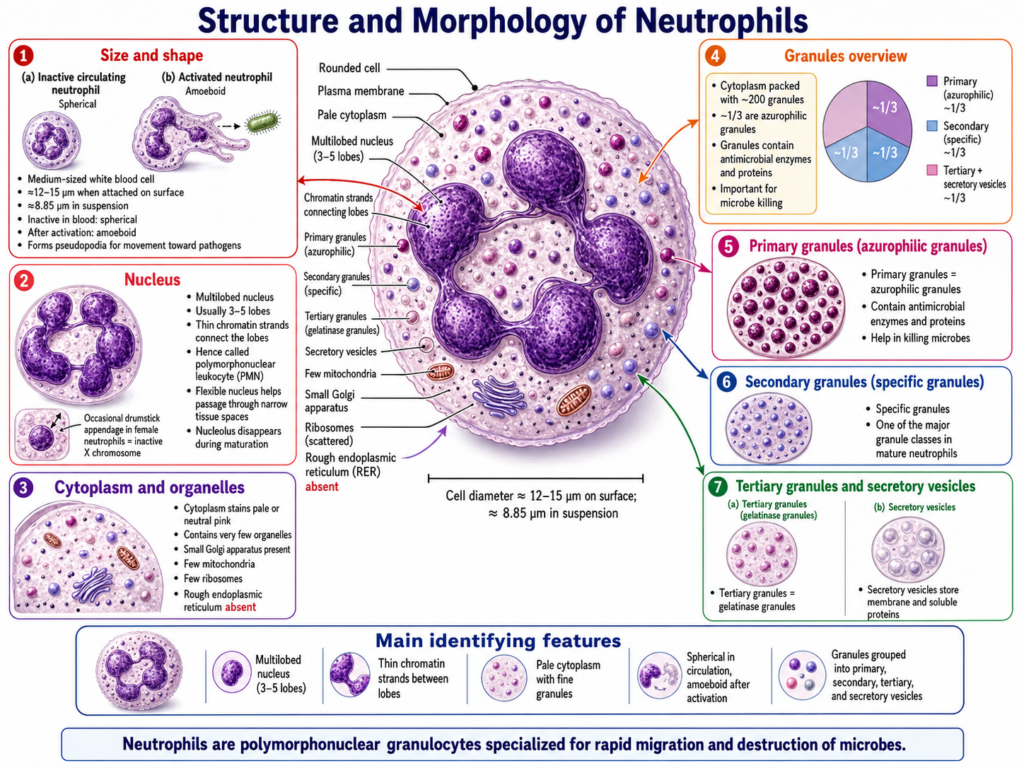
Structure and Morphology of Neutrophils
- Size and shape- Neutrophils are medium sized white blood cells. Its diameter is about 12-15 µm when attached on surface and about 8.85 µm in suspension. In blood circulation inactive neutrophil is spherical. After activation it becomes amoeboid and forms pseudopodia for movement toward pathogens.
- Nucleus- The nucleus of neutrophil is multi-lobed. Usually 3-5 lobes are present and these are joined by thin chromatin strands. Due to this type nucleus, neutrophils are called polymorphonuclear leukocytes (PMNs). The lobed nucleus is flexible, so the cell can deform and pass through narrow tissue spaces. The nucleolus disappears during maturation. In female, some neutrophils show drumstick shaped appendage which contains inactive X-chromosome.
- Cytoplasm and organelles- The cytoplasm is pale or neutral pink in colour with ordinary stain. It contains very few organelles. Small Golgi apparatus, few mitochondria and few ribosomes are present. Rough endoplasmic reticulum (RER) is absent.
- Granules- The cytoplasm is packed with about 200 granules. About one third granules are azurophilic granules. These granules contain antimicrobial enzymes and proteins and help in killing microbes. The granules are mainly four types, primary granules or azurophilic granules, secondary granules or specific granules, tertiary granules or gelatinase granules and secretory vesicles.
Life Cycle of Neutrophils
- Neutrophils are produced in large number inside the bone marrow. They are formed from hematopoietic stem cells. This process is called granulopoiesis. It takes more than 10 days to form mature segmented neutrophil.
- During development, neutrophil passes through different stages. These stages finally form mature segmented neutrophil. In normal condition, human body produces about 50-100 billion neutrophils every day.
- After full maturation, neutrophils are released from bone marrow into blood. The retention receptors are decreased and mobilizing receptors are increased. So the attachment with bone marrow stroma is broken and neutrophils enter into circulation.
- In blood, neutrophils remain for very short time. The half-life of circulating neutrophil is about 6-8 hours. They move in blood and remain ready for infection or injury response.
- When infection or tissue injury occur, neutrophils move out from blood vessels. They enter into the affected tissue. This movement is rapid and it is one of the first cellular response of innate immunity.
- In infected tissue, neutrophils become activated. They attack mainly bacteria and fungi. During active infection, survival signals are produced and these signals prevent early death of neutrophils. So they can live for several days in tissue.
- At the end of life, neutrophils undergo apoptosis. It is a programmed cell death. This death is controlled process and it prevents release of toxic granule contents into healthy tissue.
- Dead or dying neutrophils are removed by macrophages. This process is called efferocytosis. It mainly occurs in tissues and organs like bone marrow, spleen and liver. It helps to reduce inflammation and restore normal tissue condition.
Distribution of Neutrophils in the Body
- Overall distribution- Neutrophils are distributed mainly in bone marrow, blood and connective tissues. Their approximate distribution ratio is 28:1:25. So large number of neutrophils are present outside the circulating blood also.
- Bone marrow- Bone marrow is the main site of neutrophil production. It also acts as a storage pool. A large reserve of neutrophils are kept in bone marrow before they are released according to the body need.
- Bloodstream- After release from bone marrow, neutrophils enter into the blood. In healthy person, they are the most abundant white blood cells. They form about 40-80% of total circulating leukocytes.
- Marginated pool- Many neutrophils do not freely circulate in blood. They remain attached with the inner wall of blood vessels. This is called margination. The largest marginated pool of neutrophils is present in the lungs.
- Spleen and liver- Old or senescent neutrophils are also present as marginated pool in spleen and liver. These organs help in removing aged neutrophils from the body.
- Connective tissue- Neutrophils are highly mobile cells. During infection or inflammation, they quickly leave the blood vessels and enter into connective tissue or interstitial tissue spaces. Here they fight against pathogens.
- Tissue survival- In tissues, neutrophils usually survive for about 1-2 days. During this time they kill microbes by phagocytosis, degranulation and other antimicrobial actions.
Granules of Neutrophils
- Primary granules- Primary granules are also called azurophilic granules. These are formed early during myeloblast and promyelocyte stages. These granules contain strong antimicrobial enzymes and proteins like myeloperoxidase (MPO), neutrophil elastase (NE), proteinase 3 (PR3), cathepsin G, defensins and bactericidal/permeability-increasing protein (BPI). They are mainly used for killing of microbes inside the phagosome.
- Secondary granules- Secondary granules are also called specific granules. These are formed during myelocyte and metamyelocyte stages. They contain antimicrobial components such as lactoferrin, lysozyme, cathelicidin, histaminase and collagenase. Their membrane also has adhesion molecules and cytochrome b558 part of NADPH oxidase complex.
- Tertiary granules- Tertiary granules are also called gelatinase granules. These are formed during band cell stage. They mainly contain tissue degrading enzymes like gelatinase (MMP-9), collagenase and cathepsin. These enzymes help neutrophil to pass through extracellular matrix and move toward infected tissue. Some granules also contain ficolin-1, which help in activation of lectin complement pathway.
- Secretory vesicles- Secretory vesicles are formed in final mature segmented neutrophil stage. They contain plasma derived albumin and different cytokines during immune activation. Their membrane acts as a storage site for surface molecules like integrins, TNF receptors and fMLP receptors. After stimulation, these molecules quickly come to the cell surface and help neutrophil response.
Surface Markers and Receptors of Neutrophils
- Integrins-Integrins are adhesion receptors. They help in attachment of neutrophils with vessel wall and movement into tissues.
- LFA-1 (αLβ2, CD11a/CD18) and Mac-1 (αMβ2, CD11b/CD18) are important for firm adhesion of neutrophils with vascular endothelium. They also help in crawling of neutrophils into tissues.
- VLA-4 (α4β1, CD49d/CD29) helps to anchor immature neutrophils with bone marrow stroma. It also helps in recruitment of mature leukocytes.
- Chemokine receptors- These receptors detect chemokines and guide movement of neutrophils.
- CXCR1 and CXCR2 detect chemoattractants like IL-8. They help in mobilization from bone marrow, extravasation and respiratory burst.
- CXCR4 acts opposite to CXCR2. It retains immature neutrophils in bone marrow and guide aged neutrophils back to bone marrow or liver for clearance.
- CCR1, CCR2, CCR3, CCR5, CCR6 and CCR7 are low in normal condition. They increase during activation, aging or entry into tumour microenvironment.
- CCRL2 is an atypical receptor. It works with CXCR2 and regulates its surface expression and function.
- Selectins and glycosylated ligands- These molecules help in rolling and early attachment of neutrophils with blood vessel wall.
- L-selectin (CD62L) regulates rolling velocity along blood vessel wall. Its level also help to identify immature, mature and aged neutrophils.
- PSGL-1, CD44 and E-selectin ligand interact with endothelial selectins. They start weak tethering and rolling phase during inflammation.
- Toll-like receptors-TLRs are pattern recognition receptors of neutrophils.
- TLR2, TLR4 and TLR5 detect bacterial components. They can activate integrins, reactive oxygen species (ROS) production and NETosis.
- Other markers and receptors- These are used for maturity, identification and inflammatory response of neutrophils.
- CD16 (FcγRIII) is an Fc receptor. It indicates neutrophil maturity. Immature band cells are CD16 dim and mature segmented cells are CD16 bright.
- CD15, CD66b, CD10, CD33 and CD101 are lineage and maturation markers. They are used in flow cytometry to identify and track human neutrophil development.
- fMLP receptors and TNF receptors are mainly stored in secretory vesicles. They rapidly come to surface and detect bacterial formylated peptides and inflammatory cytokines.
- CD177 is a surface glycoprotein present on a subpopulation of neutrophils. It interacts with endothelial cells and help in transendothelial migration.
Activation of Neutrophils Step by Step Process
- Detection- Neutrophils first detect danger signals near the site of infection or injury. They roll along the blood vessel wall and scan the area. They detect chemokines like IL-8, complement proteins and bacterial peptides by receptors like GPCRs and Toll-like receptors (TLRs).
- Inside-out signaling- After binding of danger signal with receptor, signal is passed inside the neutrophil. In this step, calcium is released inside the cell. Enzymes like PI3K and small regulatory proteins such as Rac and Rap1 are activated.
- Integrin activation- The inside signal changes the shape of β2 integrins present on neutrophil surface. Mainly LFA-1 and Mac-1 are activated. These integrins change from low affinity state to high affinity state. So neutrophil attaches firmly with the blood vessel wall.
- Firm adhesion- After activation of integrins, neutrophil stops rolling. It firmly bind with vascular endothelium. This attachment is important before leaving the blood vessel.
- Transmigration- The adhered neutrophil then crawls on the endothelial surface. It finds a gap between endothelial cells. Then it squeezes through this gap and enters into the inflamed tissue. This process is called diapedesis.
- Respiratory burst- After reaching the infected site, neutrophil engulfs the pathogen. Then p47phox protein is phosphorylated and moves to the membrane. It helps in formation of active NADPH oxidase 2 (NOX2) complex. This complex produces large amount of reactive oxygen species (ROS).
- Killing of pathogen- ROS are toxic molecules. They damage the pathogen inside the phagosome. This is one of the important killing mechanism of activated neutrophil.
- Degranulation- Increased intracellular calcium also causes movement of granules. Granules fuse with phagosome or cell membrane by fusion proteins like SNARE proteins. Then antimicrobial enzymes such as elastase and myeloperoxidase (MPO) are released.
- NETosis- If the pathogen is large or difficult to engulf, neutrophil forms Neutrophil Extracellular Traps (NETs). In this process, chromatin becomes loose and released outside. The released DNA with toxic granule proteins forms web like trap. It traps and kills microbes.
Chemotaxis of Neutrophils Step by Step Process
- Margination- In normal blood flow, heavy red blood cells remain in the center of blood vessel. Due to this, neutrophils are pushed toward the side of vessel. So they come close to the inner wall of blood vessel.
- Tethering and rolling- At the site of infection or injury, local cells like macrophages detect danger signal. They release inflammatory cytokines and activate nearby endothelium. Activated endothelial cells express E-selectin and P-selectin. These selectins bind weakly with neutrophil ligands like PSGL-1 and Sialyl-Lewis X. This weak binding slows the neutrophil and it starts rolling on vessel wall.
- Chemokine detection- During rolling, neutrophil detects chemical attractants present on endothelial surface. These attractants include IL-8, C5a, LTB4 and bacterial products. They bind with G protein-coupled receptors (GPCRs) present on neutrophil surface. After binding, inside signal is started.
- Inside-out signaling- The signal from chemokine receptor passes into the neutrophil. This is called inside-out signaling. It activates surface integrins of neutrophil. Mainly LFA-1 and Mac-1 are changed from low affinity form to high affinity form.
- Firm adhesion- Activated LFA-1 and Mac-1 bind strongly with endothelial adhesion molecules like ICAM-1 and VCAM-1. So rolling neutrophil become stopped. This firm attachment is called arrest of neutrophil.
- Crawling- After firm adhesion, neutrophil crawls on endothelial surface. It moves against or across the blood flow by using its integrins. It searches for proper exit point, mainly at junction between endothelial cells.
- Diapedesis- Neutrophil then passes through endothelial barrier. This process is called transendothelial migration or diapedesis. Mostly it passes between endothelial cells, called paracellular migration. Molecules like PECAM-1 (CD31), CD99 and JAMs help in this process. Sometimes it may pass through endothelial cell body, called transcellular migration.
- Basement membrane crossing- After crossing endothelium, neutrophil must pass the basement membrane. It releases enzymes like gelatinase. These enzymes digest the matrix and make path for neutrophil movement.
- Interstitial migration- In tissue, neutrophil moves through extracellular matrix toward the infection site. It forms polarity. Rac1 forms the leading edge and RhoA helps in retraction of back side. Finally neutrophil follows chemical gradient and reaches the pathogen or injured area.
Migration of Neutrophils to Sites of Infection
- Margination- During inflammation, neutrophils come close to the inner wall of blood vessel. In normal blood flow, cells move with blood stream. But at inflamed site, neutrophils are redistributed toward the endothelial surface.
- Tethering and rolling- Neutrophils first make weak and temporary attachment with endothelial cells. This causes the neutrophil to slow down and roll on vessel wall. This step is mainly mediated by E-selectin and P-selectin present on endothelium, which bind with neutrophil ligands like Sialyl-Lewis X and PSGL-1.
- Chemokine activation- During rolling, neutrophils are exposed to chemokines and attractants present on endothelial surface. These include IL-8, C5a and LTB4. These substances bind with receptors of neutrophil and start inside signal. This signal changes neutrophil integrins from low affinity form to high affinity form.
- Firm adhesion- Activated integrins of neutrophil bind strongly with adhesion molecules on endothelial cells. LFA-1, Mac-1 and VLA-4 bind with ICAM-1 and VCAM-1. This firm binding stops the moving neutrophil completely on vessel wall.
- Intravascular crawling- After stopping, neutrophil starts crawling on the inner surface of blood vessel. It uses its integrins for this movement. It searches the proper exit site, mainly the junction between two endothelial cells.
- Diapedesis- Neutrophil then crosses the blood vessel wall. This process is called transendothelial migration or diapedesis. Mostly it passes between endothelial cells, called paracellular migration. Molecules like PECAM-1, CD99 and Junctional Adhesion Molecules (JAMs) help in opening and crossing the junction. Sometimes neutrophil passes through the body of endothelial cell, called transcellular migration.
- Interstitial migration- After crossing the vessel wall, neutrophil moves through extracellular matrix. It follows chemical gradient toward the exact site of infection. Bacterial products and inflammatory signals guide this movement. Neutrophil also releases proteases which break tissue barriers and help the cell to reach the pathogen.
Mechanism of Phagocytosis by Neutrophils
- Opsonization and recognition- The pathogen is first coated by opsonins. It may be antibody or other opsonic molecule. This coating is called opsonization. By this coating the pathogen become easy to identify. Neutrophil bind with it by specific surface receptors.
- Engulfment- After binding, neutrophil send its cell membrane around the pathogen. Small pseudopod like extension are formed. Then the pathogen is taken inside the cell. It becomes enclosed in a membrane bound sac called phagosome.
- Phagolysosome formation- The phagosome moves inside the neutrophil. Then specific granules and azurophilic granules come near it and fuse with it. Enzymes like myeloperoxidase (MPO) and other hydrolytic enzymes are released into it. After this fusion it is called phagolysosome.
- Respiratory burst- In this step neutrophil uses large amount of oxygen. This is called respiratory burst. NADPH oxidase 2 (NOX2) complex is formed on the phagosomal membrane. It produces superoxide anion inside the phagosome.
- Toxic oxygen formation- The superoxide anion is changed into hydrogen peroxide (H₂O₂). Then MPO uses chloride ion (Cl⁻) and changes hydrogen peroxide into hypochlorous acid (HOCl). This HOCl is very toxic for microbes.
- Killing- The pathogen is killed inside the phagolysosome. ROS, HOCl and digestive enzymes act on it. They damage the microbial wall, protein and other parts. Finally the engulfed pathogen is destroyed.
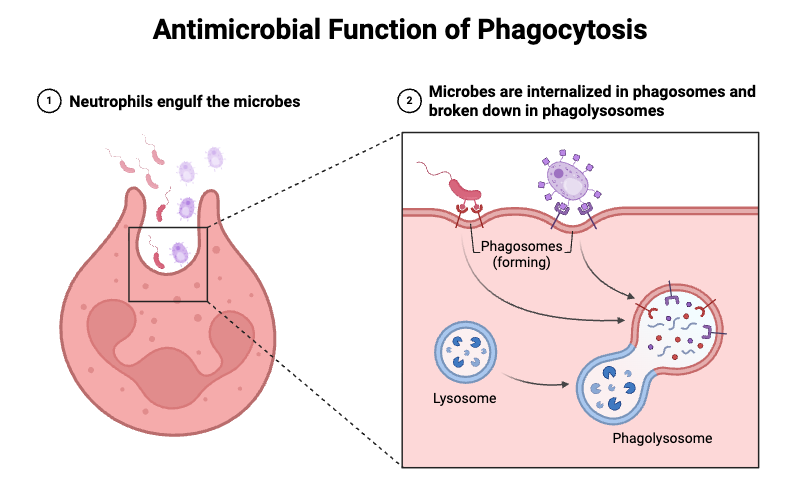
Intracellular Killing of Pathogens by Neutrophils
- NOX2 assembly- After the pathogen is taken inside the phagosome, different cytosolic proteins move toward the phagosomal membrane. These are p47phox, p67phox, p40phox and Rac. They join with membrane part cytochrome b558, which is made by gp91phox and p22phox. Thus active NADPH oxidase 2 (NOX2) complex is formed.
- Respiratory burst- The active NOX2 uses NADPH from cytoplasm. It transfers electron to oxygen present inside the phagosome. Due to this, large amount of superoxide anion (O₂⁻) is formed. This sudden use of oxygen is called respiratory burst.
- Hydrogen peroxide formation- The superoxide anion is not stable. It is rapidly changed into hydrogen peroxide (H₂O₂). This change may occur spontaneously or by enzyme superoxide dismutase (SOD).
- Granule fusion- At the same time, primary granules or azurophilic granules fuse with the phagosome. Then phagosome becomes phagolysosome. These granules release antimicrobial enzymes like myeloperoxidase (MPO), neutrophil elastase, proteinase 3 and cathepsin G directly on the pathogen.
- HOCl production- Inside the phagolysosome, MPO acts on hydrogen peroxide. It uses chloride ion (Cl⁻) and converts hydrogen peroxide into hypochlorous acid (HOCl). This is very strong toxic substance.
- Pathogen damage- HOCl, ROS, hydroxyl radicals, singlet oxygen and granular enzymes act together. They attack the pathogen wall, proteins, lipids and nucleic acids. The microbe becomes damaged from many side.
- Final killing- Finally the engulfed pathogen is destroyed inside the phagolysosome. The dead material is then digested by neutrophil enzymes. This is the main intracellular killing process of neutrophils.
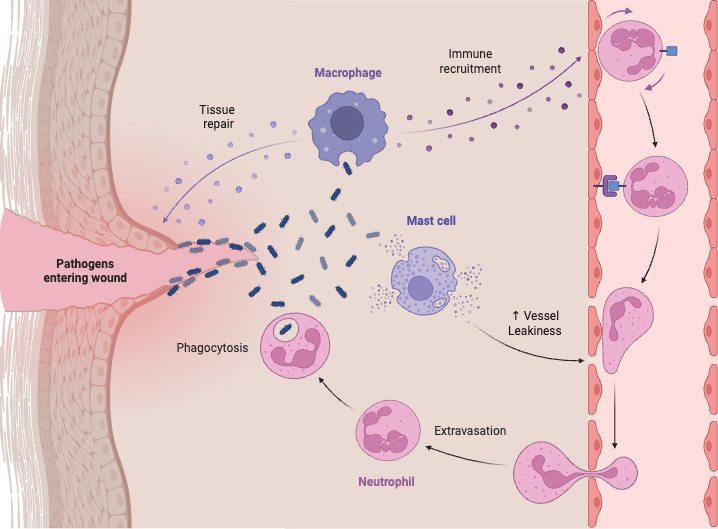
Neutrophil Recruitment Pathway
- Margination- During inflammation, neutrophils move from central blood flow toward the vessel wall. Blood flow and inflammatory condition push them near the inner surface of blood vessel. This is the first step before attachment.
- Tethering and rolling- Neutrophils make weak and temporary attachment with activated endothelium. This attachment slow down the cell and neutrophil starts rolling on the vessel wall. This is done by E-selectin and P-selectin of endothelium with neutrophil ligands like Sialyl-Lewis X and PSGL-1.
- Chemokine activation- During rolling, neutrophil detects chemokines and chemoattractants present on endothelial surface. These signals start inside-out signaling inside the neutrophil. Due to this, neutrophil integrins change their shape from low affinity state to high affinity state.
- Firm adhesion- Activated integrins bind strongly with endothelial adhesion molecules. Mainly LFA-1 and Mac-1 bind with ICAM-1 and VCAM-1. This makes the rolling neutrophil stop completely. This step is also called arrest.
- Intravascular crawling- After firm adhesion, neutrophil crawls on the inner surface of blood vessel. It uses its integrins for this movement. It searches the best exit point, mostly at the junction between endothelial cells.
- Diapedesis- Neutrophil then passes through blood vessel wall. This process is called transendothelial migration or diapedesis. Mostly it passes between endothelial cells, called paracellular migration. Molecules like PECAM-1 (CD31) and JAMs help in this step. Sometimes it may pass through the body of endothelial cell, called transcellular migration.
- Interstitial migration- After crossing the vessel wall, neutrophil enters the tissue. It releases enzymes like gelatinase to digest basement membrane and tissue matrix. Then it moves through extracellular matrix by following chemical gradient. Finally it reaches the pathogen or injured tissue site.
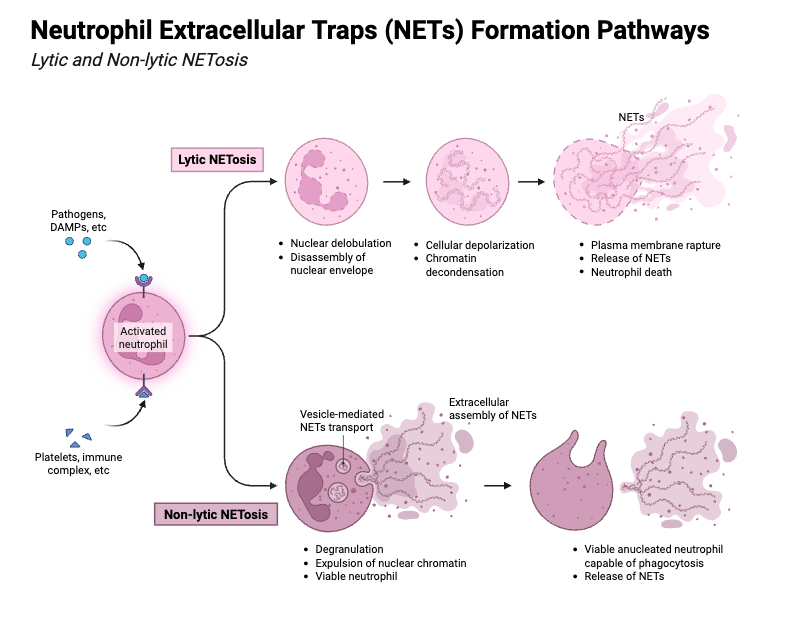
Neutrophil Extracellular Traps (NETs) Formation Pathways
- Suicidal NETosis- It is the classical or canonical pathway of NET formation.
- Trigger- It is started by IL-8, PMA, TLR ligands, complement receptor and Fc receptor stimulation.
- ROS dependency- This pathway need reactive oxygen species (ROS). NADPH oxidase 2 (NOX2) becomes active and produce ROS.
- Mechanism- ROS break nuclear envelope and granules. Granule enzymes like neutrophil elastase (NE) and myeloperoxidase (MPO) move into nucleus. They cleave histones and loosen the chromatin. PAD4 also help by citrullination of histones.
- Outcome- Loose chromatin mix with cytoplasmic and granule proteins. Then plasma membrane rupture and NETs are released outside. Neutrophil dies in this process. It is slow process and takes several hours.
- Vital NETosis- It is non-lytic pathway. In this pathway neutrophil release NETs without dying.
- Trigger- It starts rapidly within minutes. It may occur by Staphylococcus aureus, Candida albicans, TLR2 and TLR4 agonists.
- ROS dependency- It does not need NADPH oxidase. It is ROS independent pathway.
- Mechanism- Receptor activation causes calcium entry into neutrophil. Calcium activates PAD4. PAD4 causes hypercitrullination of histones and fast chromatin decondensation. Then decondensed chromatin is packed into vesicles from nuclear envelope.
- Outcome- These vesicles fuse with plasma membrane and release NETs outside. Plasma membrane remain intact. Neutrophil survive as anuclear cytoplast and can still move and phagocytose pathogens.
- Mitochondrial NETosis- In this pathway NETs are formed from mitochondrial DNA.
- Trigger- It occur when neutrophils are primed by G-CSF or GM-CSF. Then they are stimulated by C5a, LPS or immune complexes.
- Mechanism- ROS are produced from mitochondrial respiratory chain. It is not mainly from NOX2. Mitochondria move toward cell surface and release oxidized mitochondrial DNA (mtDNA).
- Outcome- mtDNA is released outside and forms trap like structure. Cell lysis does not occur. So neutrophil viability is maintained.
- Non-canonical NETosis- It is another suicidal type pathway. It is generally related with intracellular infection.
- Trigger- It is triggered by intracellular infection. Gram negative bacteria and LPS are important stimulus.
- Mechanism- This process is ROS independent. Inflammasome activates caspase-4/11. Then gasdermin D (GSDMD) is cleaved and forms pores in neutrophil membrane.
- Outcome- GSDMD pores make the cell membrane permeable. Caspase-11 enter into nucleus and degrade histones. Chromatin become relaxed. Finally cell rupture and NETs are released.
Interaction of Neutrophils with Other Immune Cells
- Macrophages-Neutrophils and macrophages interact mainly during inflammation and after pathogen killing.
- Neutrophils reach first at the site of infection. Then they release signals which attract macrophages to that place.
- Neutrophil Extracellular Traps (NETs) can increase the bacteria killing activity of macrophages.
- At the end of neutrophil life, apoptotic neutrophils are engulfed by tissue macrophages. This process is called efferocytosis.
- This clearance decrease inflammation. It suppress the release of pro-inflammatory cytokines like IL-23 and help in tissue recovery.
- Macrophages also remove NETs by engulfing extracellular DNA fragments.
- T cells-Neutrophils can regulate T lymphocytes in both activating and suppressing way.
- They recruit T cells at inflammatory site by releasing chemokines like CXCL9, CXCL10 and CXCL11.
- Some activated neutrophils express CCR7 and CXCR4. These cells can move to lymph node and act as antigen presenting cells (APCs) to T cells.
- NETs can activate T cells and induce release of interferons like IFN-α and IFN-γ.
- Some mature hypersegmented neutrophils suppress T cell proliferation. In cancer, N2 neutrophils suppress cytotoxic T cells and recruit Tregs by chemokines like CCL17.
- N1 neutrophils act opposite in tumour condition. They activate CD8+ cytotoxic T cells and help in tumour killing.
- NK cells-Neutrophils also interact with natural killer cells mainly in tumour microenvironment.
- N1 neutrophils release pro-inflammatory cytokines. These cytokines recruit and activate NK cells and help in suppression of tumour growth.
- N2 neutrophils release inhibitory mediators like IL-10 and TGF-β. These substances inhibit NK cell activity.
- During NETosis, web like NETs may form around tumour cells. This barrier can block NK cells and cytotoxic T cells from reaching cancer cells.
- B cells-Neutrophils can help in recruitment of B lymphocytes.
- They produce CXCL13, which is a B-cell attracting chemokine.
- By this chemokine, B cells are collected in specific immune area during response.
- Dendritic cells-Neutrophils interact with dendritic cells mainly through NETs.
- NETs contain DNA-histone complexes and granular proteins. These components strongly stimulate dendritic cells.
- After stimulation, dendritic cells release pro-inflammatory cytokines like IL-1β and IFN-α.
- This type interaction is important in autoimmune tissue injury, such as Systemic Lupus Erythematosus (SLE).
- Platelets-Platelets are mainly clotting cells, but they also work with neutrophils in innate immune response.
- Platelets can bind with neutrophils and form platelet-neutrophil aggregates.
- This interaction increases neutrophil surface molecules like Mac-1 and some chemokine receptors.
- Bacterial TLR4 activated platelets can stimulate neutrophils to release NETs.
- These NETs trap bacteria in blood stream and help in microbial clearance
Functions of Neutrophils
- Phagocytosis- Neutrophils engulf bacteria, foreign particles and cell debris. These materials are taken inside the cell. It is enclosed by membrane and forms phagosome. This is one of the main defence function of neutrophil.
- Degranulation- The granules of neutrophil open and release their contents. These contents are antimicrobial proteins, enzymes and toxic substances. They act outside the cell also. By this process microbes present around the neutrophil are damaged.
- Respiratory burst- In this process neutrophil uses large amount of oxygen. NADPH oxidase complex is formed. It produces reactive oxygen species (ROS) like superoxide. Then hypochlorous acid (HOCl) is formed. These substances kill microbes inside phagosome.
- NET formation- Neutrophils form Neutrophil Extracellular Traps (NETs). This process is called NETosis. In this process neutrophil releases its own DNA (chromatin) outside. The DNA is mixed with antimicrobial granule proteins and histones. It forms web like trap. It traps bacteria, fungi and viruses and kill them.
- Inflammatory signaling- Neutrophils release cytokines and chemokines. These chemicals increase local inflammation. They also call other immune cells like macrophages and lymphocytes at the infection site.
- Antigen presentation- Some activated neutrophils can go to lymph nodes. There they may act as antigen presenting cells (APCs). They present antigen to immune cells and help in adaptive immune response.
- Tissue remodeling- Neutrophils also help in tissue repair. They release enzymes like matrix metalloproteinase-9 (MMP-9). They also release vascular endothelial growth factor (VEGF). It helps in formation of new blood vessels.
- Immunomodulation- Neutrophils regulate other immune cells. Some hypersegmented neutrophils suppress T-cell proliferation. So they can increase or decrease immune reaction according to condition.
- Tumor regulation- In tumour area neutrophils act in two way. N1 neutrophils help in anti-tumour immunity. N2 neutrophils support tumour growth, angiogenesis and immunosuppression.
Disorders Associated with Neutrophils
- Production or maturation defects-
- Severe Congenital Neutropenia (SCN) is a rare inherited neutrophil disorder. In this condition maturation of neutrophil stop in bone marrow. So neutrophil count become very low. It include Kostmann syndrome. Patient get severe bacterial infection from early life. Risk of myelodysplasia and leukemia also increase.
- Cyclic Neutropenia is a disorder of cyclic fall of neutrophil number. The cycle is usually about 21 days. At low point of cycle fever, mouth sore and bacterial infection occur. Then neutrophil number again increase.
- Functional or migration defects-
- Leukocyte Adhesion Deficiency (LAD) is a genetic defect of neutrophil adhesion. Neutrophil cannot attach properly with blood vessel wall. So it cannot enter infected tissue. Blood neutrophil count may be high but pus formation is very less or absent. Recurrent severe infection occur.
- Chediak-Higashi Syndrome is an autosomal recessive disorder. It is due to defect in lysosomal trafficking. Neutrophils contain giant abnormal granules. These granules cannot fuse properly with phagosome. So killing of engulfed pathogen become defective. Partial albinism, bleeding tendency and neurological decline are also seen.
- Chronic Granulomatous Disease (CGD) occur due to defect in NADPH oxidase 2 (NOX2) complex. Defect may be in p47phox or gp91phox. Neutrophil cannot make proper respiratory burst. So ROS are not formed properly and bacteria and fungi are not killed.
- Dysregulated neutrophil activity-
- Autoimmune diseases occur when neutrophil activity become abnormal. Excess NETosis and poor NET clearance expose nuclear DNA and toxic internal proteins. This cause inflammation and autoantibody production. It is seen in Systemic Lupus Erythematosus (SLE), Rheumatoid Arthritis and ANCA-associated vasculitis.
- Thrombosis and cardiovascular disease are related with excess NET formation. NETs form web like structure. It traps RBCs and platelets. It activates clotting factors and damages endothelium. So it may cause deep vein thrombosis, arterial thrombosis and ischemic stroke.
- Severe acute infection and lung damage occur when neutrophils are activated too much. It is seen in sepsis, ARDS and severe COVID-19. Excess NETs and granule toxic substances damage host tissue. In lung it causes alveolar damage and small vessel blockage.
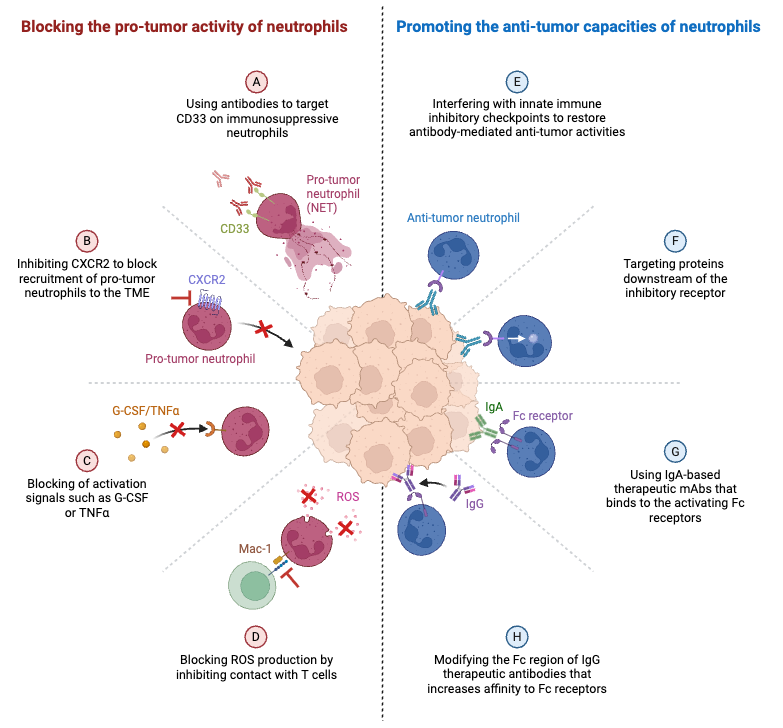
- Cancer is also associated with neutrophils. In tumour area neutrophils may become N2 phenotype. These are called Tumor-Associated Neutrophils (TANs). They support tumour growth, angiogenesis, matrix breakdown and metastasis. They also suppress anti-tumour immune cells.
Clinical Significance of Neutrophils
- CBC indicator- Neutrophil count is commonly checked in Complete Blood Count (CBC). It gives idea about infection and immune condition of patient. Absolute Neutrophil Count (ANC) is important value for checking immune status.
- Neutrophilia- High neutrophil count is called neutrophilia. It is seen in acute inflammation, bacterial infection and severe physiological stress. Sometimes left shift is seen. It means immature neutrophils are released from bone marrow into blood.
- Neutropenia- Low neutrophil count is called neutropenia. In this condition patient become prone to severe bacterial and fungal infections. ANC below 1500 cells/mm³ indicate neutropenia. ANC below 500 cells/mm³ is severe neutropenia. It may be inherited or caused by chemotherapy, viral infection and autoimmune disease.
- Infarction timing- In pathology, neutrophil infiltration is used to detect and time tissue death. In ischemic stroke, neutrophils start entering brain tissue after about 6-8 hours. In myocardial infarction, neutrophils enter heart tissue after about 12-24 hours.
- Tissue damage- Neutrophils are important for defence, but excess activity damage host tissue. In alpha-1-antitrypsin deficiency, uncontrolled neutrophil elastase damages lung tissue and causes emphysema. In ARDS and severe COVID-19, excess neutrophil activation also causes lung injury.
- Immunodeficiency- Genetic defects of neutrophil cause severe infection. In Leukocyte Adhesion Deficiency (LAD), neutrophils cannot leave blood and reach infected tissue. So severe infection occur with very less pus formation and high neutrophil count. In Chronic Granulomatous Disease (CGD), neutrophils cannot make proper ROS, so engulfed pathogens are not killed properly.
- Thrombosis- Excess Neutrophil Extracellular Traps (NETs) help in clot formation. NETs act like scaffold for thrombus. It can cause deep vein thrombosis, microvascular blockage and worse condition in acute coronary syndrome.
- Cancer- Tumor-associated neutrophils (TANs) are clinically important in cancer. Tumour can change neutrophils into N2 phenotype. These neutrophils release factors which promote tumour growth, angiogenesis and metastasis. They also reduce anti-tumour immune response.
Laboratory Identification and Measurement of Neutrophils
- CBC with differential- Complete Blood Count (CBC) is the common blood test. It measures total white blood cells. When differential count is done, it shows percentage of each WBC type. From this, neutrophil percentage is known. It shows whether neutrophil is increased or decreased.
- ANC- Absolute Neutrophil Count (ANC) is the main value for checking neutrophil status. It is used for finding severity of neutropenia. It is calculated from total WBC count and percentage of neutrophils. Normal value is about 2.5-7.5 × 10⁹/L. ANC below 1500 cells/mm³ is neutropenia and below 500 cells/mm³ is severe neutropenia.
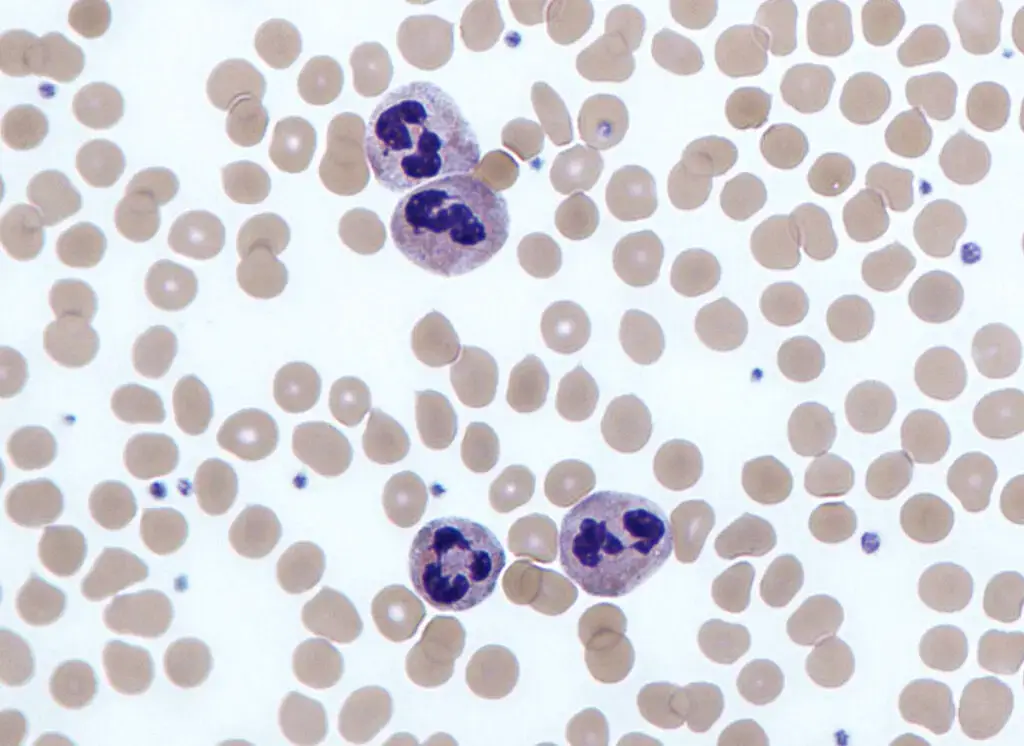
- Peripheral smear- In this test, blood is spread on glass slide. Then it is stained and seen under microscope. It is useful to see neutrophil shape, number and abnormal cells. It is used in neutropenia, leukemia and lymphoma like conditions.
- H&E staining- Neutrophils are named by their neutral staining nature. In Hematoxylin and Eosin (H&E) stain, basophils stain dark blue and eosinophils stain red. Neutrophils take neutral pale pink colour.
- Giemsa and Leishman stain- Giemsa and Leishman stains are commonly used for blood smear. These stains colour the cell and granules. Neutrophil cytoplasm becomes pale pink due to specific granules.
- Light microscopy- Under light microscope, neutrophil is identified by its multi-lobed nucleus. Usually 3-5 lobes are present and joined by thin chromatin strands. Size is about 12-15 µm when attached on slide. If nucleus has 5 or more lobes, it is called hypersegmentation. It may be seen in vitamin B12 deficiency.
- Electron microscopy- Electron microscopy is used to see ultrastructure of neutrophil. It shows different granules more clearly. Specific granules are smaller, rounded, more numerous and less electron dense than azurophilic granules.
Limitations of Neutrophil
- Short lifespan- Neutrophils are short lived cells. In blood their half-life is only about 6-8 hours. So one neutrophil can work for short time only. Its antimicrobial action is limited by its life span.
- Incomplete clearance- Neutrophils cannot remove all infections alone. Some pathogens are difficult to digest. Some are not killed properly inside the cell. So other immune cells are required for complete immune response.
- Pathogen evasion- Many pathogens escape from neutrophil action. Some bacteria produce virulence factors. Staphylococcus aureus, Streptococcus pneumoniae and Vibrio cholerae produce nucleases. These nucleases digest Neutrophil Extracellular Traps (NETs). So microbes escape from the web like trap.
- Pathogen parasitization- Some intracellular pathogens infect neutrophils itself. They use neutrophil as a hiding place from other immune defence. Mycobacterium tuberculosis, Leishmania major and Chlamydia pneumoniae are examples. By this they survive inside body for longer time.
- Tissue damage- Neutrophil killing substances are toxic and non-specific. Reactive oxygen species (ROS), neutrophil elastase, degradative enzymes and NETs may damage normal host tissue also. This occur when inflammation is excessive or prolonged. It is seen in emphysema and acute respiratory distress syndrome (ARDS).
- Receptor desensitization- In severe infection like polymicrobial sepsis, neutrophils are exposed to bacterial danger signals for long time. So important migration receptors like CXCR2 may decrease. Then neutrophil does not respond properly to chemotactic signals. It may fail to reach the actual infection site.
- Autoimmunity and thrombosis- Dead neutrophils and released NETs must be cleared properly by macrophages and DNases. If not cleared, exposed DNA and toxic proteins may trigger autoimmune reaction. It is related with Systemic Lupus Erythematosus (SLE) and vasculitis. NETs also form scaffold for platelets and clotting factors. So abnormal clotting and thrombosis may occur.
- Tumour manipulation- In tumour microenvironment, cancer cells can change neutrophils into pro-tumour N2 phenotype. These neutrophils release factors which support tumour growth. They promote angiogenesis, suppress anti-tumour immune cells and help in metastasis.
Advantages of Neutrophil
- Rapid response- Neutrophils are highly motile cells. They reach the site of infection or tissue injury within few minutes. So they act as first cellular defence of body.
- High number- Neutrophils are most abundant white blood cells in human blood. They form about 60-70% of circulating leukocytes. Bone marrow produce large number every day, about upto 100 billion cells.
- Emergency production- During severe infection, production of neutrophil can increase many times. This is useful when body need more cells for fighting infection. It is called emergency type response.
- Pre-formed weapons- Neutrophils already store antimicrobial enzymes and proteins in their granules. So they do not need to wait for new protein synthesis. They can attack microbes very quickly.
- Flexible body- Mature neutrophil has multi-lobed nucleus. It is not rigid like round nucleus. This helps the neutrophil to change its shape and pass through narrow endothelial gap and tissue spaces.
- Different killing methods- Neutrophils kill pathogens by many ways. These are phagocytosis, degranulation and formation of Neutrophil Extracellular Traps (NETs). So they can act on different type of microbes.
- Respiratory burst- Neutrophils produce large amount of reactive oxygen species (ROS) during respiratory burst. Hypochlorous acid (HOCl) is also formed. These toxic substances damage microbial protein, lipid and nucleic acid.
- NET formation- When pathogen is large and cannot be engulfed, neutrophil releases NETs. These are web like structures made of DNA and granule proteins. It trap microbes and prevent their spreading in body.
- Immune coordination- Neutrophils release cytokines and chemokines. These substances attract other immune cells like macrophages to the infected site. So neutrophil also control inflammatory response.
- Anti-tumour action- Some neutrophils act against tumour cells. N1 neutrophils release immune stimulating cytokines. They help in activation of CD8+ T cells and Natural Killer (NK) cells. By this tumour growth may be suppressed.
References
- Effect of neutrophil–platelet interactions on cytokine-modulated expression of neutrophil CD11b/CD18 (Mac-1) integrin complex and CCR5 chemokine receptor in stable coronary artery disease: A sub-study of SMARTool H2020 European project. (n.d.). ResearchGate.
- 21.2: Cellular defenses – granulocytes. (n.d.). Biology LibreTexts.
- A review of neutrophil extracellular traps (NETs) in disease: Potential anti-NETs therapeutics. (n.d.). PubMed Central (PMC).
- A subset of neutrophils in human systemic inflammation inhibits T cell responses through Mac-1. (n.d.). PubMed Central (PMC).
- Activation of the neutrophil respiratory burst oxidase. (n.d.). PubMed.
- Akt phosphorylates p47phox and mediates respiratory burst activity in human neutrophils. (n.d.). PubMed.
- Liu, L. (2022). Chediak-Higashi syndrome. Medbullets Step 1.
- Wu, B., & Oakley, A. (2016). Chediak-Higashi syndrome. DermNet.
- Cyclic neutropenia. (n.d.). Boston Children’s Hospital.
- Cleveland Clinic. (2026). Cyclic neutropenia: Symptoms, causes & treatment. Cleveland Clinic Health Library.
- Sheshachalam, A. S., Srivastava, N. S., Mitchell, T. M., Lacy, P. L., & Eitzen, G. E. (2014). Granule protein processing and regulated secretion in neutrophils. Frontiers in Immunology, 5, 448. https://doi.org/10.3389/fimmu.2014.00448
- Granule protein processing and regulated secretion in neutrophils. (n.d.). PubMed Central (PMC).
- Tigner, A., Ibrahim, S. A., & Murray, I. V. (2026). Histology, white blood cell. In StatPearls. StatPearls Publishing.
- How long does a neutrophil live?—The effect of 24 h whole blood storage on neutrophil functions in pigs. (n.d.). PubMed Central (PMC).
- Kubes Laboratory. (n.d.). Inflammation. Kubes Laboratory.
- Leukocyte adhesion deficiency. (n.d.). Immunodeficiency Search.
- Justiz Vaillant, A. A., & Ahmad, F. (2023). Leukocyte adhesion deficiency. In StatPearls. StatPearls Publishing.
- Medbullets Team. (2018). Leukocyte extravasation. Medbullets Step 1.
- Immune Deficiency Foundation. (2019). Leukocyte adhesion deficiency (LAD). Immune Deficiency Foundation.
- Mitroulis, I., Alexaki, V. I., Kourtzelis, I., Ziogas, A., Hajishengallis, G., & Chavakis, T. (2015). Leukocyte integrins: Role in leukocyte recruitment and as therapeutic targets in inflammatory disease. Pharmacology & Therapeutics, 147, 123-135. https://doi.org/10.1016/j.pharmthera.2014.11.008
- Maturation, trafficking, and effector mechanisms of polymorphonuclear neutrophils in physiological homeostasis and pathological states. (n.d.).
- Mechanisms and immune crosstalk of neutrophil extracellular traps. (n.d.). PubMed Central (PMC).
- Lacy, P. (2006). Mechanisms of degranulation in neutrophils. Allergy, Asthma & Clinical Immunology, 2(3), 98-108. https://doi.org/10.1186/1710-1492-2-3-98
- Choi, E. Y., Santoso, S., & Chavakis, T. (2009). Mechanisms of neutrophil transendothelial migration. Frontiers in Bioscience, 14, 1596-1605. https://doi.org/10.2741/3327
- Modulating N1 and N2 neutrophils in breast cancer: Potential therapeutic approaches. (n.d.). PubMed Central (PMC).
- Demkow, U. (2023). Molecular mechanisms of neutrophil extracellular trap (NETs) degradation. International Journal of Molecular Sciences, 24(5), 4896. https://doi.org/10.3390/ijms24054896
- Molecular mechanisms regulating secretory organelles and endosomes in neutrophils and their implications for inflammation. (n.d.). PubMed Central (PMC).
- Capucetti, A., Albano, F., & Bonecchi, R. (2020). Multiple roles for chemokines in neutrophil biology. Frontiers in Immunology, 11, 1259. https://doi.org/10.3389/fimmu.2020.01259
- N2 neutrophils and tumor progression in breast cancer: Molecular pathways and implications. (n.d.). PubMed Central (PMC).
- Neutropenia. (n.d.). Children’s Hospital of Philadelphia.
- Wikipedia. (2026). Neutrophil. Wikipedia, The Free Encyclopedia.
- Neutrophil homeostasis and emergency granulopoiesis: The example of systemic juvenile idiopathic arthritis. (n.d.). PubMed Central (PMC).
- Neutrophil kinetics in health and disease. (n.d.). PubMed Central (PMC).
- Neutrophil: A cell with many roles in inflammation or several cell types? (n.d.). PubMed Central (PMC).
- Yang, H., Biermann, M. H., Brauner, J. M., Liu, Y., Zhao, Y., & Herrmann, M. (2016). New insights into neutrophil extracellular traps: Mechanisms of formation and role in inflammation. Frontiers in Immunology, 7, 302. https://doi.org/10.3389/fimmu.2016.00302
- Priming of the neutrophil NADPH oxidase activation: Role of p47phox phosphorylation and NOX2 mobilization to the plasma membrane. (n.d.). PubMed.
- Regulation of human neutrophil apoptosis and lifespan in health and disease. (n.d.). PubMed Central (PMC).
- Regulation of human neutrophil chemokine receptor expression and function by activation of Toll-like receptors 2 and 4. (n.d.). PubMed Central (PMC).
- Regulation of tissue infiltration by neutrophils: Role of integrin α3β1 and other factors. (n.d.). PubMed Central (PMC).
- Aguilera, M. (2024). Researchers uncover mechanisms behind enigmatic shapes of nuclei. UC San Diego Today.
- Role of neutrophils in homeostasis and diseases. (n.d.). PubMed Central (PMC).
- Roles of neutrophil granule proteins in orchestrating inflammation and immunity. (n.d.). PubMed Central (PMC).
- Severe congenital neutropenia (SCN) and cyclic neutropenia. (n.d.). Cincinnati Children’s Hospital.
- Severe congenital neutropenia. (2022). MedlinePlus Genetics.
- Nuffield Department of Orthopaedics, Rheumatology and Musculoskeletal Sciences. (2025). Shaping immunity – the secrets behind the shape of neutrophils. Kennedy Institute of Rheumatology.
- TLR2 signaling downregulates chemokine receptor CXCR2 and impairs neutrophil migration in severe polymicrobial sepsis. (n.d.). PubMed Central (PMC).
- Understanding the multifaceted role of neutrophils in cancer and autoimmune diseases. (n.d.). PubMed Central (PMC).
- Guillotin, F., Fortier, M., Portes, M., Demattei, C., Mousty, E., Nouvellon, E., Mercier, E., Chea, M., Letouzey, V., Gris, J. C., & Bouvier, S. (2023). Vital NETosis vs. suicidal NETosis during normal pregnancy and preeclampsia. Frontiers in Cell and Developmental Biology, 10, 1099038. https://doi.org/10.3389/fcell.2022.1099038
- p47phox, the phagocyte NADPH oxidase/NOX2 organizer: Structure, phosphorylation and implication in diseases. (n.d.). ResearchGate.
- p47phox: A central regulator of NADPH oxidase function and a promising therapeutic target in redox-related diseases. (n.d.). PubMed Central (PMC).