

B cells or B lymphocytes are a type of lymphocyte present in blood and lymphoid organs. It is one of the important cell of adaptive immune system. These cells mainly take part in humoral immunity, where antibody is the main defensive substance.
The origin of B lymphocytes is from stem cells of bone marrow. In mammals, maturation of these cells also occur in bone marrow. After maturation, they move to blood, spleen, lymph node and other lymphoid tissues.
The main work of B cell is to produce antibody. Antibody is also called immunoglobulin. It is a protein molecule which can combine with specific antigen. Antigen may be present on bacteria, virus, toxin or other foreign substance.
When a particular B lymphocyte meets its own antigen, it becomes stimulated. This stimulation is followed by multiplication of the cell. Many similar B cells are formed from one cell, and this is referred to as clonal expansion.
Some of these activated cells are changed into plasma cells. Plasma cells are large antibody secreting cells. They produce large amount of antibody in short time and release it into blood and lymph.
Some other activated cells remain as memory B cells. These cells do not secrete antibody actively at first. They remain for long period in the body. During second infection by same antigen, they become active very quickly.
B cells also act as antigen presenting cells (APC). They take antigen, process it and present it to T lymphocytes. In this way it helps in activation of other immune cells.
They also release some chemical substances called cytokines. These cytokines help in controlling the immune reaction. The activity of B cell is therefore related with antibody production, antigen presentation and immune regulation.
Properties of B cells or B lymphocytes
- Origin– B cells are developed from hematopoietic stem cells. In postnatal life, it develops mainly in bone marrow. During prenatal life, it is formed in fetal liver.
- Immunity– B lymphocytes are white blood cells. It is related with adaptive immune system. They mainly take part in humoral immunity.
- Antibody– The main function of B cells is production of antibodies. Antibodies are also called immunoglobulins. Important antibodies are IgG, IgA, IgM and IgE.
- BCR– Mature B cells have B cell receptor (BCR) on their surface. This receptor helps in recognition of specific antigen. It binds with the antigen and starts immune response.
- Forms– After activation, B lymphocytes changes into plasma cells and memory B cells. Plasma cells produce large amount of antibody. Memory B cells remain for long time in the body.
- APC– B cells also work as antigen presenting cells (APC). They take antigen inside and process it. Then the antigen is presented to T lymphocytes.
- Cytokines– Activated B cells secrete cytokines and chemokines. Some of them are IL-2, IL-4, IL-6, IFN-gamma and TNF-alpha. These help in regulation of immune response.
- Activation– B cells are activated by two ways. One is T cell dependent activation. Another is T cell independent activation, where some bacterial polysaccharides can directly activate B cells.
- Subsets– B cells are present in different functional groups. Follicular B cells are common in blood and lymphoid tissues. Marginal zone B cells are present in spleen. B1 cells are another type.
- Markers– B lymphocytes show some surface markers. Important markers are CD19 and CD20. These are present in most B cells, but not usually in mature plasma cells.
Origin and Development Process of B cells or B lymphocytes
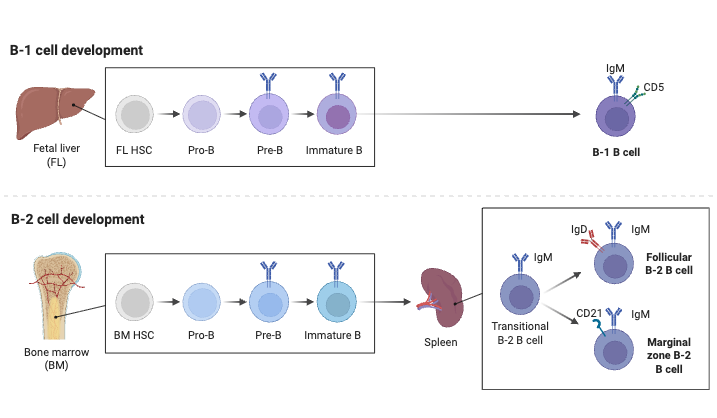
- B cells are originated from hematopoietic stem cells (HSCs). During prenatal life, it starts in fetal liver. After birth, the formation mainly takes place in bone marrow.
- Stem cell becomes committed for B cell line. It enters into Pro-B cell stage. In this stage, rearrangement of heavy chain gene starts by V(D)J recombination.
- In Pro-B cell stage, heavy chain gene segments are joined. This process helps to form different types of B cell receptors. It gives antigen specificity to future B cell.
- After successful heavy chain formation, the cell enters into Pre-B cell stage. Heavy chain joins with temporary surrogate light chain. This forms pre-B cell receptor (pre-BCR).
- Pre-BCR gives survival signal to the developing cell. The cell multiplies rapidly for short time. Then cell division stops and actual light chain gene rearrangement begins.
- After formation of functional light chain, complete receptor appears on the cell surface. This receptor is mainly IgM. Now the cell is called immature B cell.
- Immature B cells are checked inside the bone marrow. If the receptor strongly reacts with self antigen, then the cell is not allowed to survive. It may change its receptor or destroyed by apoptosis.
- The immature B cells which survive selection leave the bone marrow. They enter into blood as transitional B cells. These are mainly T1 and T2 cells.
- Transitional B cells migrate to secondary lymphoid organs. These include spleen and lymph nodes. In these organs, further maturation of B cell occurs.
- In spleen or lymph node, B cells become mature naive B cells. They show both IgM and IgD on their surface. They are called naive because they have not contacted with their specific antigen.
- Mature B cells may form different groups. Some become Follicular B cells which circulate in blood and lymphoid tissues. Some become Marginal zone B cells which mainly remain in spleen.
- When mature naive B cell comes in contact with its specific antigen, it becomes activated. In most cases, help from helper T cell is also needed. This helps in complete activation of the B cell.
- Activated B cells move into germinal center of lymphoid follicle. Here the cells divide very fast. The cell also undergoes changes in antibody genes.
- In germinal center, somatic hypermutation occurs. Small mutation takes place in antibody gene. It helps in increasing binding power of antibody with antigen.
- Class switching also occurs in this stage. IgM may change into IgG, IgA or IgE. The antigen binding specificity remains same, but antibody function becomes different.
- Finally, activated B cells are changed into plasma cells or memory B cells. Plasma cells secrete large amount of antibodies. Memory B cells remain in body for long time and act during second exposure of same antigen.
Maturation process of B Cells in Bone Marrow
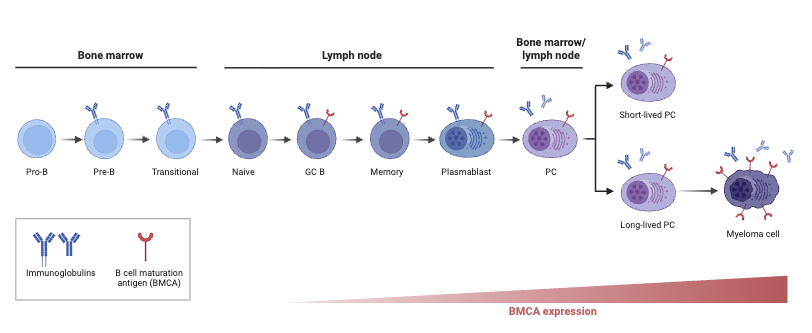
- The maturation of B cells starts in the bone marrow. Here hematopoietic stem cells (HSCs) give rise to lymphoid progenitor cells. These cells receive signal from bone marrow stromal cells, mainly interleukin-7 (IL-7).
- The lymphoid progenitor cell then becomes committed towards B cell lineage. After this, it enters into Pro-B cell stage. In this stage, the cell does not have complete antigen receptor.
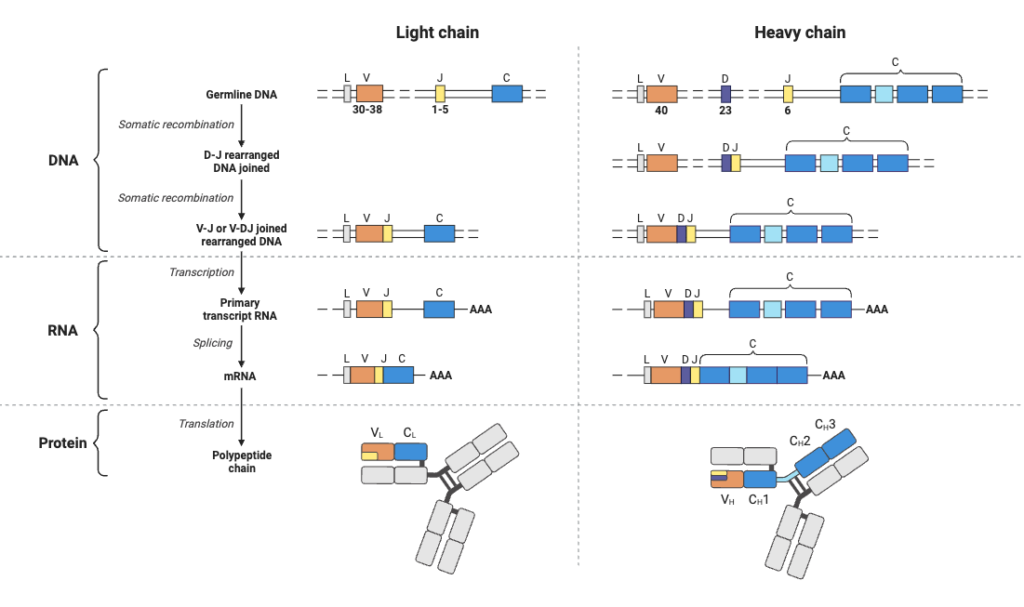
- In early Pro-B cell stage, rearrangement of heavy chain gene starts. First D segment joins with J segment. This is the first genetic change for formation of B cell receptor.
- In late Pro-B cell stage, V segment joins with already formed DJ segment. This process is called V(D)J recombination. By this, heavy chain gene becomes arranged.
- After successful heavy chain formation, the cell becomes large Pre-B cell. The heavy chain combines with temporary surrogate light chain. This forms pre-B cell receptor (pre-BCR) on the surface of the cell.
- Pre-BCR gives signal to the cell. It stops further rearrangement of heavy chain gene. The cell also starts rapid multiplication in this stage.
- After multiplication, the cell becomes small Pre-B cell. Now the cell stops dividing. It begins rearrangement of light chain gene.
- In small Pre-B cell, V and J gene segments of light chain are joined. This helps in formation of proper light chain. The light chain may be kappa (κ) or lambda (λ) type.
- After light chain is formed, it joins with heavy chain. A complete IgM receptor is produced on the cell membrane. Now the cell is called immature B cell.
- The immature B cell is tested in the bone marrow. This is called negative selection or tolerance check. Here the cell is checked against self antigens.
- If the IgM receptor binds strongly with self antigen, the cell is harmful. Such cell may again change its receptor by receptor editing. If it cannot be corrected, it is destroyed by apoptosis.
- The B cells which do not react strongly with self antigen are allowed to survive. These cells leave the bone marrow. They enter into blood as transitional B cells.
- These transitional B cells go to secondary lymphoid organs like spleen. There they complete further maturation. Then they become mature naive B lymphocytes.
Structure and Morphology of B Cells
- B cells are small to medium sized lymphocytes. Resting B lymphocytes are about 6-15 μm in diameter under light microscope. They are slightly larger than RBC.
- The cell is generally round in shape. It has a large round nucleus. The nucleus occupies most of the cell body.
- The cytoplasm is very less in resting B cell. It is seen as a thin rim around the nucleus. The cytoplasm is faint blue or basophilic in stained preparation.
- The nucleus of resting B lymphocyte is deep bluish or dark purple. The chromatin is dense and clumped. Nucleolus is usually not clear.
- The outer surface of B cell is not completely smooth. Under electron microscope, many small finger like projections are present. These projections are called microvilli.
- The plasma membrane contains many B cell receptors (BCRs). These receptors are membrane bound immunoglobulins. It helps the cell to recognize specific antigen.
- BCR complex is made up of membrane bound antibody with two heavy chains and two light chains. It is also associated with Igα and Igβ molecules. These molecules help in signal transfer inside the cell.
- Resting or naive B cells are small cells. They have large compact nucleus and very little cytoplasm. These cells are not yet contacted with specific antigen.
- After activation, B cells become larger in size. The nucleus becomes less compact. Cytoplasm also increases because the cell is preparing for division and antibody formation.
- In germinal center, activated B cells may form centroblasts. These cells are large dividing cells. They have abundant cytoplasm, open chromatin and one to three nucleoli.
- In light zone of germinal center, some cells become centrocytes. These are small to medium sized cells. Their nucleus may be irregular, cleaved, twisted or angulated.
- Plasma cells are final antibody secreting form of B lymphocyte. These cells are larger than resting B cells. They have abundant cytoplasm due to well developed rough endoplasmic reticulum (RER).
- The nucleus of plasma cell is placed to one side. This is called eccentric nucleus. The chromatin is arranged in cartwheel or clock-face pattern.
- Near the nucleus of plasma cell, a clear area is seen. This is the Golgi zone. It is involved in processing and secretion of antibodies.
- In TEM, B cell shows normal eukaryotic cell organelles. The nucleus contains electron dense heterochromatin. In non-dividing cells, chromatin remains more compact.
B Cell Receptor (BCR)
- B cell receptor (BCR) is a membrane bound antibody present on the surface of B lymphocyte. It works as antigen recognizing structure. It detects specific foreign antigen and starts activation of B cell.
- BCR is not a single simple molecule. It is a receptor complex. It has one antigen binding part and one signal carrying part.
- The antigen binding part is membrane immunoglobulin (mIg). It is attached with the plasma membrane of B cell. It binds with specific antigen present on bacteria, virus, toxin or other foreign particle.
- Membrane immunoglobulin is generally Y-shaped. It is made up of two identical heavy chains and two identical light chains. The tip region of this molecule forms antigen binding site.
- The antigen binding site is different in different B cells. This diversity is produced by V(D)J recombination. Due to this, different B cells can recognize different antigens.
- The signaling part of BCR is made up of Igα (CD79A) and Igβ (CD79B). These two molecules remain attached with membrane immunoglobulin. They carry the signal inside the cell.
- The membrane immunoglobulin has very short cytoplasmic tail. So it cannot send signal alone. For this reason Igα and Igβ are required.
- Igα and Igβ contain special signaling region called ITAMs. The full form is Immunoreceptor Tyrosine-based Activation Motifs. These regions are important for starting intracellular signal.
- Each mature B cell carries only one type of BCR. All receptors on one B cell are almost same in specificity. So one B cell recognizes only one particular antigen.
- A single B lymphocyte may contain about 100,000 BCRs on its surface. These receptors remain ready for binding with matching antigen.
- When antigen binds with BCR, many receptors come together. This is called cross-linking. It helps to make the activation signal stronger.
- After antigen binding, the BCR complex moves into special membrane region called lipid rafts. In this region, signaling proteins are present in concentrated form.
- Src family kinase, mainly Lyn, phosphorylates the ITAMs of Igα and Igβ. This forms binding site for other signaling enzymes.
- Syk or spleen tyrosine kinase binds with phosphorylated ITAMs. It becomes active and starts next signaling reactions inside the B cell.
- Btk or Bruton’s tyrosine kinase also takes part in this signaling pathway. It helps in passing signal from membrane to cytoplasm and then towards nucleus.
- The signal activates different pathways like PI3K/Akt, NF-κB and MAPK. These pathways change gene expression inside the nucleus.
- Due to BCR signaling, B cell becomes activated. It may divide, survive and later change into plasma cell or memory B cell. Antibody production also starts after proper activation.
B Cell Receptors (Light and Heavy Chains)
- Overall architecture: B cell receptor (BCR) contains membrane bound immunoglobulin. It is Y-shaped molecule. It has four polypeptide chains. Two are identical heavy chains (H chains). Two are identical light chains (L chains).
- Chain linkage: The four chains are joined together. Disulfide bonds are present. Non-covalent bonds are also present. Two same halves are formed.
- Heavy chains:
- Size: Heavy chain is larger chain. Each chain has about 440 amino acids.
- Domains: One variable domain (VH) is present at N-terminal end. Three or four constant domains (CH) are present at C-terminal end. The number depends on antibody class.
- Classes: Five types of heavy chains are present in mammals. These are α, δ, ε, γ and μ. They determine the isotype of antibody. These form IgA, IgD, IgE, IgG and IgM.
- Genetics: Heavy chain variable part is made by V-D-J recombination. Here V is Variable segment. D is Diversity segment. J is Joining segment.
- Light chains:
- Size: Light chain is smaller chain. Each chain has about 220 amino acids.
- Domains: One variable domain (VL) is present. One constant domain (CL) is present. VL lies at N-terminal end. CL lies at C-terminal end.
- Types: Light chain is two types. Kappa (κ) and lambda (λ). One receptor has only one type. Either κ or λ. Not both together.
- Genetics: Light chain variable part is made by V-J recombination. Only V and J segments are used. D segment is absent.
- Immunoglobulin domains: Both heavy chain and light chain have repeated Ig domains. Each Ig domain is about 110 amino acids. These domains fold separately.
- Ig fold: Each Ig domain forms immunoglobulin fold. It has two β sheets. These sheets are held by intrachain disulfide bond.
- Antigen-binding sites:
- Formation: Antigen binding site is at the tip of Y-shaped receptor. It is formed by VH and VL together.
- Hypervariable loops: Each variable domain has three hypervariable loops. These loops make the binding shape. Antigen specificity depends on these loops.
- Framework regions: The remaining part is framework region. It is more constant region. It supports the hypervariable loops.
BCR Downstream Signaling
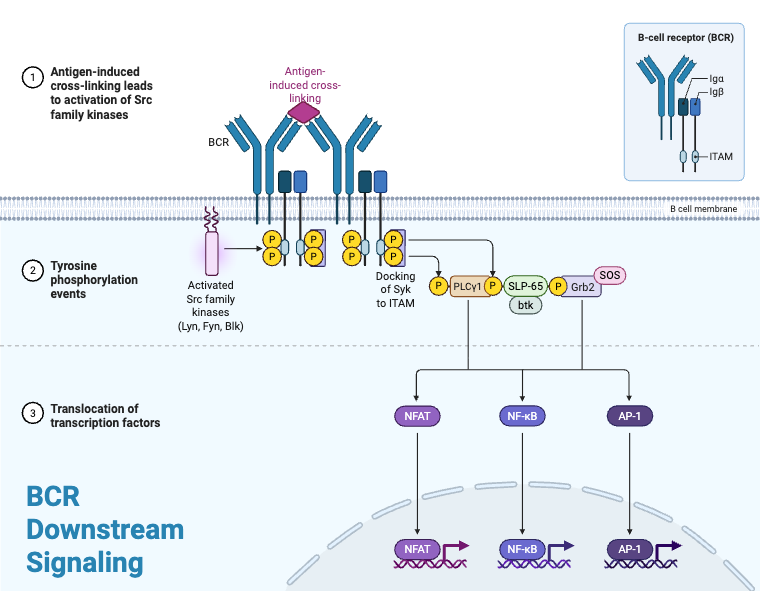
- Step 1: Antigen binding and receptor clustering– The process starts when antigen binds with membrane immunoglobulin (mIg) of B cell receptor (BCR). After binding, many BCRs come together. This is called cross-linking. The receptors then move into lipid rafts of B cell membrane.
- Step 2: ITAM phosphorylation– In lipid rafts, Src family tyrosine kinases become active. Mainly Lyn, Fyn and Blk are involved. These kinases phosphorylate ITAMs present on Igα (CD79A) and Igβ (CD79B). These two are signal carrying part of BCR.
- Step 3: Syk recruitment and activation– Phosphorylated ITAMs now form binding site. Spleen tyrosine kinase (Syk) comes and binds by SH2 domains. After binding, Syk undergoes auto-phosphorylation. Then it becomes active.
- Step 4: Signalosome assembly– Active Syk phosphorylates adaptor proteins like BLNK and CIN85. BLNK is B cell linker protein. These proteins work as scaffold. Btk, PLC-γ2 and Vav are collected there. A multiprotein complex is formed, called signalosome.
- Step 5: PI3K pathway engagement– At same time, CD19 and BCAP become phosphorylated. These recruit PI3K. PI3K changes membrane PIP2 into PIP3. PIP3 then helps to bring Akt and Btk to the membrane.
- Step 6: Second messenger formation– In the signalosome, Btk activates PLC-γ2. Then PLC-γ2 breaks membrane PIP2. From this reaction, two second messengers are formed. These are IP3 and DAG.
- Step 7: Calcium release and NFAT activation– IP3 binds with receptor on endoplasmic reticulum (ER). Ca2+ is released into cytoplasm. Increased calcium activates calcineurin. Calcineurin dephosphorylates NFAT. Then NFAT enters into nucleus.
- Step 8: NF-κB pathway activation– DAG remains attached with inner membrane. It activates Protein kinase C-β (PKC-β). Then Bcl-10, CARMA1 and MALT1 complex becomes active. This activates IKK complex. IκB is degraded and NF-κB moves into nucleus.
- Step 9: MAPK pathway activation– DAG also helps in activation of Ras. Then MAPK pathway starts. This pathway finally activates AP1 transcription factor.
- Step 10: Cellular response– NFAT, NF-κB and AP1 reach nucleus. They change gene expression. The B cell becomes metabolically active. Cytoskeleton also changes. Finally cell survival, proliferation and differentiation starts.
Surface Markers of B Cells
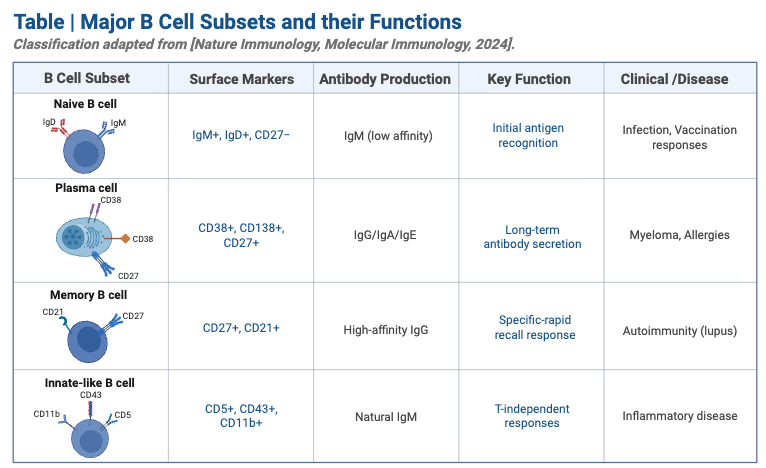
- Pan-B markers– These markers are generally used for identification of B cell lineage.
- CD19 is present from early Pro-B cell stage to mature B cell stage. It is lost when the cell becomes fully differentiated plasma cell.
- CD20 appears from Pre-B cell stage and found on most B lymphocytes. It is absent on early Pro-B cells and terminal plasma cells.
- CD45R (B220) is a common B lineage marker. It is mostly used for identifying B cells in mice.
- BCR complex– These markers form the antigen recognizing and signal giving part of B cell.
- Membrane immunoglobulin (mIg) is the antigen binding part. Mature naive B cells mainly show surface IgM and IgD.
- CD79A (Igα) and CD79B (Igβ) remain attached with membrane immunoglobulin. They carry activation signal inside the cell.
- Co-receptors– These molecules help to increase the signal after antigen binding.
- CD21 is Complement receptor 2 (CR2). It forms complex with CD19, CD81 and CD225 and increases B cell activation signal.
- CD81 and CD225 are accessory co-receptor molecules. They support the activity of CD19-CD21 complex.
- T cell help markers– These markers are used during interaction of B cells with helper T cells.
- CD40 is a co-stimulatory receptor of B cell. It binds with CD40 ligand (CD154) of helper T cell and helps in activation, proliferation and class switching.
- MHC class II presents processed antigen to helper T lymphocytes. It is present on most B cell stages, except early Pro-B cells.
- Development markers– These markers are related with particular stage of B cell development.
- CD10 is present on early developing B cells in bone marrow, mainly Pro-B and Pre-B cells. It is also found on activated B cells in germinal center.
- CD38 is high on early progenitor cells. It is again high on plasmablasts and plasma cells, so it changes according to stage.
- Memory and plasma markers– These markers are seen after antigen contact and final differentiation.
- CD27 is a marker of memory B cells and plasma cells. It indicates that the cell has already met antigen.
- CD138 (Syndecan-1) is a marker of terminal plasma cells. It is found on antibody secreting cells.
- Subset markers– These markers help to separate different functional groups of B cells.
- CD5 is the marker of B-1 cells. These are innate like B cells and produce low affinity antibodies against common bacterial antigens.
- CD23 is highly expressed on Follicular B cells. It is low or absent on Marginal zone B cells and B-1 cells.
- CD1c in humans and CD1d in mice are strongly related with Marginal zone B cells. These cells respond early to blood borne antigens.
Classification of B Cells
- B-1 cells– B-1 cells are innate like B cells which mainly originate during fetal development. These cells are self-renewing type and produce natural antibodies, mostly low affinity IgM. They give early protection against common bacterial pathogens and usually work without help of T cells.
- B-2 cells– B-2 cells are conventional B cells and are the main B cell lineage in adult body. They develop after birth in the bone marrow. These cells need antigen stimulation for their division and further activity.
- Follicular B cells– Follicular B cells (FO B cells) are the most abundant type of B-2 cells. They are found in blood and follicles of secondary lymphoid organs. These cells mainly take part in T cell dependent immune response and produce high affinity antibodies during infection.
- Marginal zone B cells– Marginal zone B cells (MZ B cells) are mainly present in marginal zone of spleen. In human, some are also found in blood. They act as rapid first line defence against blood borne pathogens and usually give T cell independent antibody response.
- Transitional B cells– Transitional B cells are recently formed immature B cells which have come out from the bone marrow. These cells enter blood and migrate to secondary lymphoid organs like spleen. They are mainly T1 and T2 cells and later develop into Follicular B cells or Marginal zone B cells.
- Naive B cells– Naive B cells are mature B cells which have not yet contacted with their specific antigen. They express both IgM and IgD on the surface. They remain in resting condition until antigen stimulation occurs.
- Germinal center B cells– Germinal center B cells are activated B cells present in germinal center of lymphoid follicle. These cells are formed after antigen contact and help from T cells. Here they divide rapidly and undergo somatic hypermutation and class switching. Dividing cells are called centroblasts and selected cells are called centrocytes.
- Plasmablasts– Plasmablasts are immediate short lived precursor of plasma cells. These cells can secrete antibodies. They can still divide and also present antigen to some extent.
- Plasma cells– Plasma cells are terminally differentiated effector B cells. These are antibody producing cells. Short lived plasma cells help in immediate infection, while long lived plasma cells remain in bone marrow and secrete protective antibodies for months or years.
- Memory B cells– Memory B cells are long lived and resting B cells. These cells are formed after germinal center selection. They remain in the body and give rapid high affinity antibody response when same pathogen enters again.
- Regulatory B cells– Regulatory B cells (Bregs) are special anti-inflammatory B cells. These cells regulate and suppress excess immune response. They mainly secrete IL-10, which helps to prevent autoimmunity and tissue damage.
Antigen Recognition by B Cells
- B cell receptor (BCR) is present on surface of B lymphocyte. It first binds with the specific foreign antigen. The binding is done by membrane immunoglobulin (mIg) part.
- One B cell generally carries one type of receptor. So it recognizes one particular antigen only. This gives specificity to the B cell response.
- After antigen binding, many BCR come close on cell surface. This is called cross linking. The receptor becomes clustered.
- The clustered receptors move into lipid rafts. These are special areas of plasma membrane. Many signaling molecules are present there.
- In this region Src family tyrosine kinases are activated. Mainly Lyn is involved. Fyn and Blk may also take part.
- Lyn phosphorylates ITAMs of Igα (CD79A) and Igβ (CD79B). These are signal transmitting part of BCR. Without these molecules mIg cannot send signal properly.
- Phosphorylated ITAMs now act as binding site. Spleen tyrosine kinase (Syk) comes and binds here. Then Syk becomes active.
- Active Syk phosphorylates BLNK. It is B cell linker protein. It works like a platform for other signaling proteins.
- Btk and PLC-γ2 are then collected near BLNK. Together they form a signaling complex. This complex is called signalosome.
- PLC-γ2 acts on membrane lipid. It forms DAG and IP3. These are second messenger molecules.
- IP3 releases Ca2+ from inside store of cell. Calcium level increases in cytoplasm. This calcium change is important for activation.
- DAG activates Protein kinase C-β (PKC-β). After this many internal signaling pathways starts.
- The important pathways are NFAT, NF-κB and MAPK. These signals go towards nucleus. Gene activity of the cell is changed.
- The B cell now becomes metabolically active. It prepares for survival and division. Cytoskeleton also changes during this process.
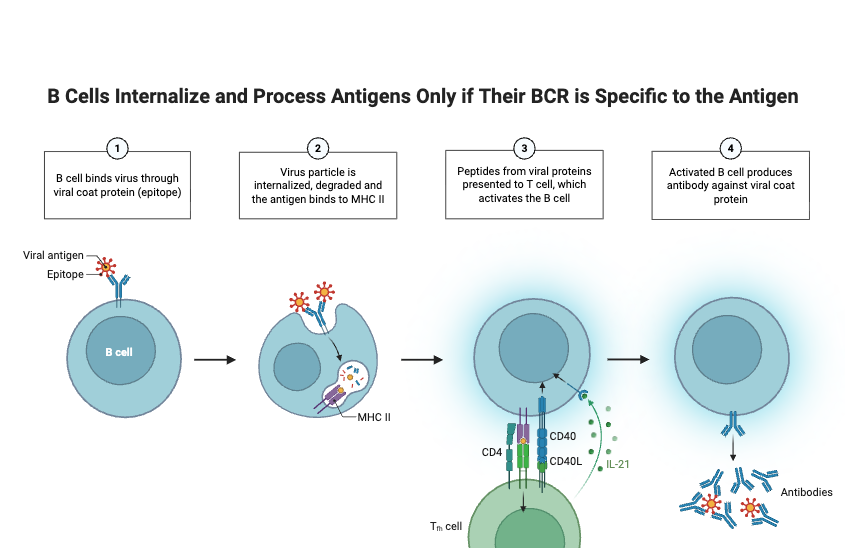
- In T cell dependent antigen, the bound antigen is taken inside the B cell. The antigen is broken into small peptide pieces. This is antigen processing.
- These peptide fragments are shown on MHC class II. Then CD4+ helper T cell recognizes it. The helper T cell gives extra signal by CD40 ligand and cytokines.
- After proper signal, B lymphocyte becomes activated. It divides and later forms plasma cells or memory B cells.
Activation of B Cells
Initial Antigen Encounter
- The activation process starts when B cell receptor (BCR) of B lymphocyte binds with specific foreign antigen. The membrane immunoglobulin (mIg) part of BCR directly recognizes the antigen.
- Many BCRs bind with the antigen and come close together on the cell surface. This is called cross-linking. It gives first activation signal into the B cell.
From here, the activation process occurs by two different pathways according to the type of antigen.
Pathway 1: T-Cell-Dependent Activation
- This pathway mostly occurs for protein antigens. After binding, the B cell takes the BCR-antigen complex inside the cell.
- The antigen is processed into small peptide fragments. These fragments are attached with MHC class II molecules and shown on the surface of B cell.
- A specific helper T cell recognizes the antigen-MHC class II complex. Then it binds with the B cell.
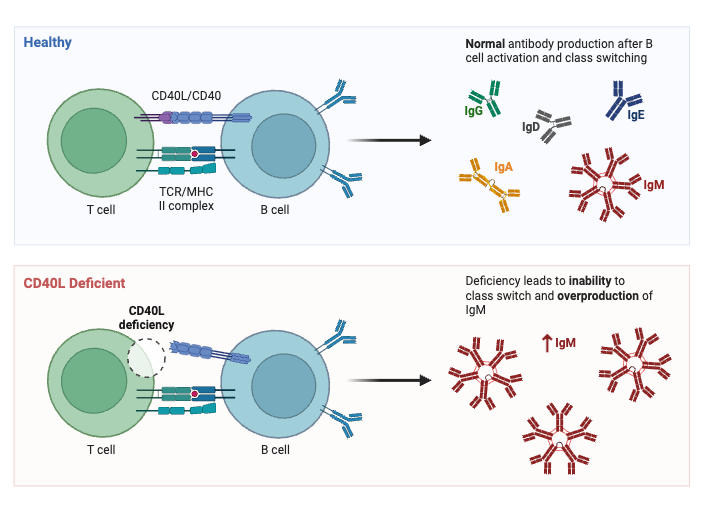
- The CD40 ligand (CD40L) of helper T cell binds with CD40 receptor present on B cell. This gives second activation signal. This signal is very important for complete activation.
- The helper T cell secretes cytokines like IL-4 and IL-21. These cytokines act on B cell and help it to become fully activated.
- The activated B cell divides rapidly. It may enter into germinal center. Then it changes into plasma cells or memory B cells, and antibodies like IgG, IgA or IgE may be produced.
Pathway 2: T-Cell-Independent Activation
- This pathway mostly occurs for repeated non-protein antigens like bacterial polysaccharides or lipopolysaccharides (LPS). These antigens bind many BCRs at same time and produce strong cross-linking.
- Some pathogen associated molecules bind with other receptors of B cell. Mainly Toll-like receptors (TLRs) are involved. This gives another activation signal directly.
- Strong BCR clustering and TLR signal together activate the B cell. In this process, helper T cell is not needed.
- The activated B cell quickly changes into plasma cells. These plasma cells mainly secrete IgM antibodies. This response is early and fast, but long term memory is usually not formed properly.
Clonal Selection and Clonal Expansion of B Cells
- Before contact with any foreign antigen, large number of different B cells are formed in the bone marrow. Each B cell has its own specific B cell receptor (BCR) on the surface.
- These receptors are already formed before antigen exposure. Different B cells carry different BCRs. So body has many ready made B cell clones for different possible antigens.
- Mature naive B cells move through blood, lymph and secondary lymphoid organs. They are present in lymph nodes, spleen and other lymphoid tissues. They remain in waiting condition for their specific antigen.
- When a foreign antigen enters the body, it comes in contact with many lymphocytes. But it binds only with that B cell which has matching receptor. Other B cells are not selected.
- The antigen acts as selecting agent. It selects only the B cell clone having complementary BCR. This is called clonal selection.
- The selected B cell binds with antigen through its BCR. This binding gives first signal to the cell. The B cell is now ready for activation.
- In most cases, help from helper T cell is also required. The helper T cell gives second signal by CD40 ligand and cytokines. After this, selected B cell becomes fully activated.
- The activated B cell starts rapid cell division. Many daughter cells are produced from one selected B cell. This multiplication of same clone is called clonal expansion.
- All newly formed cells have same antigen specificity as the original parent B cell. They carry same type of receptor. So they can respond to same antigen.
- The rapid division mostly occurs in germinal center, especially in dark zone. Here large number of identical B cells are produced in short time.
- After clonal expansion, the multiplied B cells change into functional forms. Some become plasma cells. Some become memory B cells.
- Plasma cells are antibody secreting cells. They produce large amount of specific antibodies against the same antigen. These antibodies help to remove the present infection.
- Memory B cells remain in the body for long period. They do not secrete large antibody at first. When same antigen enters again, they give faster and stronger response.
Differentiation Process of B Cells
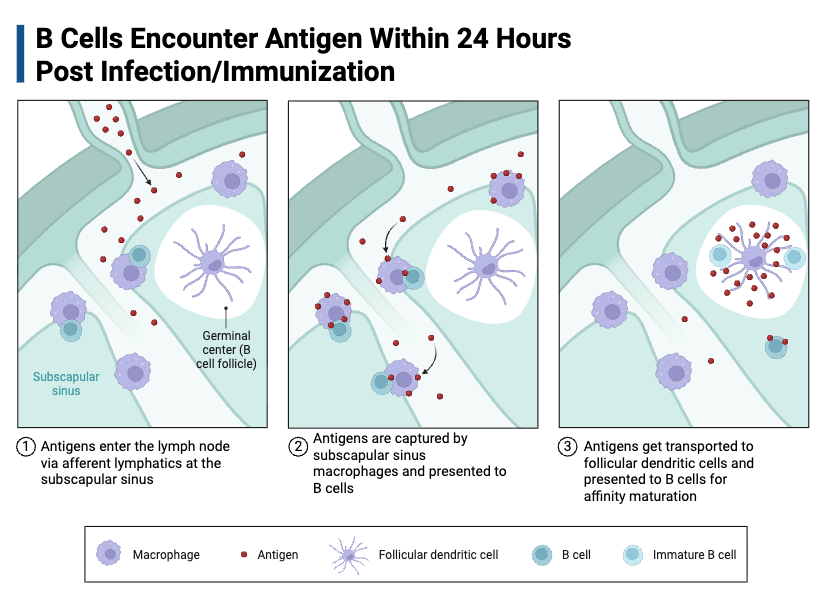
- The process starts when mature naive B cell meets its specific antigen in secondary lymphoid organ. It may occur in lymph node or spleen. In most cases help of T cell is required.
- After antigen stimulation, the B cell becomes activated. The cell starts preparation for division and change. This is the first step of differentiation.
- In T cell dependent response, activated B cells move into lymphoid follicles. Here special region is formed. This region is called germinal center.
- Inside germinal center, the activated B cells first enter into dark zone. In this zone, the cells divide rapidly. These dividing B cells are called centroblasts.
- During division in dark zone, somatic hypermutation occurs. Small random mutations are introduced in antibody genes. By this process, some B cells get better antigen binding capacity.
- After dark zone stage, the cells stop active division and move into light zone. Now these cells are called centrocytes. Here the cells are tested for antigen binding.
- In light zone, follicular dendritic cells hold antigen on their surface. Centrocytes try to bind with this antigen. Cells having better affinity get survival signal.
- The B cells which bind antigen weakly do not survive properly. They are removed by cell death. This is selection of useful B cell clone.
- Selected B cells may undergo class switch recombination (CSR). Here antibody class is changed from IgM or IgD to IgG, IgA or IgE. The antigen specificity remains same.
- After selection and class switching, the B cells take final fate. Some cells become plasma cells. Some cells become memory B cells.
- In plasma cell formation, transcription factors like IRF4 and BLIMP1 are involved. The cell becomes large secretory cell. It is mainly made for antibody production.
- Plasma cells secrete large amount of high affinity antibodies. Some are short lived and work during present infection. Some become long lived plasma cells and migrate to bone marrow.
- In memory cell formation, other factors like BACH2 are involved. These cells do not actively secrete antibody at first. They remain in body for long time.
- Memory B cells circulate in the body in resting condition. When same pathogen enters again, they become active very fast. The secondary response becomes stronger than first response.
- In T cell independent differentiation, repeated non-protein antigen can activate B cell without T cell help. Example is bacterial polysaccharide. In this case germinal center reaction is usually bypassed.
- The B cell rapidly changes into short lived plasma cell. It mainly secretes lower affinity IgM antibodies. This gives early defence against infection.
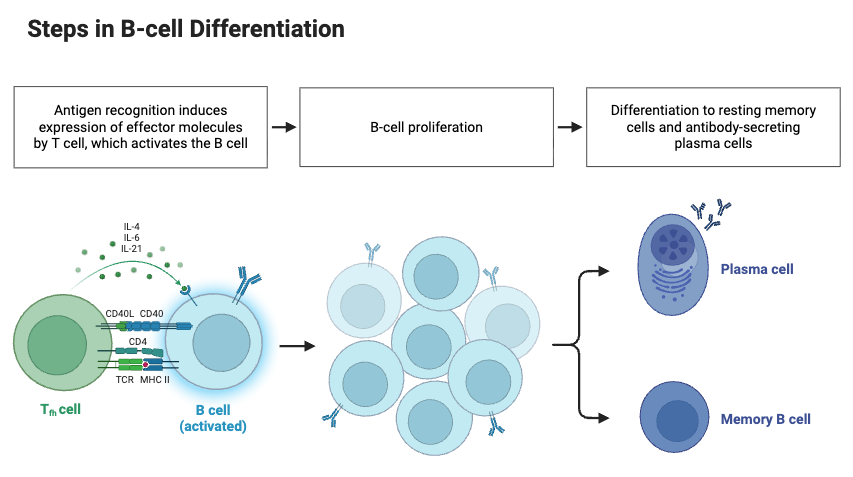
Antibody Production by B Cells
- The process starts when B cell recognizes a specific foreign antigen. The antigen may be part of bacteria, virus or toxin. It binds with B cell receptor (BCR) present on the surface.
- The BCR is specific for one antigen. When antigen fits with the receptor, first signal is produced. This makes the B lymphocyte ready for activation.
- The B cell may be activated by two ways. In T-cell-independent activation, repeated antigen directly stimulates the B cell. In T-cell-dependent activation, help from helper T cell is required.
- In T-cell-dependent activation, the B cell takes antigen inside. It processes the antigen and presents it with MHC class II. Then helper T cell gives signal through CD40L-CD40 interaction and cytokines.
- After proper activation, the selected B cell starts rapid division. Many same type of B cells are formed from one parent cell. This is called clonal expansion.
- The multiplied B cells often move into germinal center of lymph node or spleen. Here the cells divide more and antibody gene changes takes place.
- In germinal center, somatic hypermutation occurs. Small mutations are formed in antibody gene. Some antibodies become more strongly binding with antigen.
- The B cells with better antigen binding are selected. Weak binding cells are not selected. This process makes antibody more effective and this is called affinity maturation.
- The selected B cells also undergo class switch recombination. In this process, antibody class changes from IgM to IgG, IgA or IgE. The antigen binding part remains same.
- After these changes, some B cells become plasma cells. Plasma cells are final antibody producing cells. They do not mainly work as antigen presenting cells.
- Plasma cells have large amount of rough endoplasmic reticulum (RER). They also have clear Golgi zone. These structures are needed for making and secreting antibody.
- The antibody is first synthesized inside the plasma cell as protein molecule. Then it is processed and packed by Golgi apparatus. After this, antibody is released outside the cell.
- Plasma cells secrete soluble antibodies into blood, lymph and tissue fluid. These antibodies bind with the same antigen which activated the original B cell.
- A plasma cell can produce very large number of antibody molecules. In active condition, it may secrete nearly 2000 antibody molecules per second. These antibodies help in neutralization and removal of antigen.
Cytokines Produced by B Cells
- Interleukin-2 (IL-2)– It is produced by effector B cells. It helps in immune cell activation and growth.
- Interleukin-4 (IL-4)– It is secreted by effector B cells. It is related with B cell response and antibody class change.
- Interleukin-6 (IL-6)– It is produced by activated B cells. It helps in inflammatory response and also supports formation of antibody producing cells.
- Interleukin-10 (IL-10)– It is mainly produced by regulatory B cells (Bregs). It is an anti-inflammatory cytokine. It suppresses excess immune reaction.
- Interleukin-12 (IL-12)– It is produced by some effector B cells, mainly B effector 1 cells. It helps in cell mediated type immune response.
- Interleukin-35 (IL-35)– It is produced by regulatory type B cells. It has suppressive function. It helps to reduce unwanted immune response.
- Interferon-gamma (IFN-γ)– It is produced by effector B cells. It is a pro-inflammatory cytokine. It helps in activation of immune response against infection.
- Tumor necrosis factor-alpha (TNF-α)– It is secreted by effector B cells. It takes part in inflammation. It also helps in activation of other immune cells.
- Transforming growth factor-beta 1 (TGF-β1)– It is produced by regulatory B cells. It has immune suppressive nature. It helps to control inflammation and tissue damage.
- GM-CSF– Granulocyte-macrophage colony-stimulating factor (GM-CSF) is also produced by some B cells. It helps in growth and activation of myeloid cells like macrophages and granulocytes.
- CCL17 and CCL22– These are chemokines secreted by activated B cells. They help in recruitment of T helper 2 (Th2) cells. These are involved in directing immune cells to the site of response.
Tolerance and Regulation of B Cells
Central Tolerance
- Clonal deletion– It occurs in the bone marrow. During development, immature B cells are tested against self antigens. If the BCR binds strongly with multivalent self antigen, the cell is destroyed by apoptosis.
- Negative selection– This process removes harmful self reactive B cells. It prevents these cells from coming into blood. So autoimmune reaction is controlled at early stage.
- Receptor editing– Some self reactive B cells do not die at first. They again start gene rearrangement. Mainly light chain gene is changed, so that new receptor does not bind with self antigen.
Peripheral Tolerance
- Transitional checkpoint– Immature B cells which leave bone marrow enter into spleen. Here they pass another selection step. Their survival depends on proper tonic signal and survival factor like BAFF.
- Clonal anergy– If B cell binds with soluble self antigen, but does not get danger signal, it becomes inactive. This condition is called anergy. The cell is alive, but it does not respond properly.
- Anergic cell– These cells show weak internal signaling. Their life span is also short. They remain silent even after antigen contact.
- Lack of T cell help– Most B cells need help from helper T cells for full activation. The signal is given by CD40-CD40L interaction and cytokines. Self reactive B cells generally do not get this help, so they cannot become plasma cells.
- Inhibitory receptors– Some surface receptors keep B cell activation under control. Important receptors are FcγRIIB and CD22. These receptors reduce internal signal and keep activation threshold high.
- Germinal center selection– In germinal center, mutation may sometimes form self reactive BCR. Such B cells do not get survival signal from T cells and follicular dendritic cells. Then they undergo apoptosis.
Active Immune Regulation
- Regulatory B cells– Some B cells suppress immune response instead of increasing it. These cells are called Regulatory B cells (Bregs). They help in maintaining immune balance.
- IL-10 production– Bregs mainly produce interleukin-10 (IL-10). It is anti-inflammatory cytokine. It reduces excess T cell mediated inflammation.
- Treg support– Regulatory B cells also help regulatory T cells (Tregs). This helps to control tissue damage. It is important for preventing unwanted immune reaction.
Functions of B Cells
- Antibody production– B cells are the only cells which produce antibodies or immunoglobulins. After activation, they form plasma cells. These plasma cells secrete antibody against bacteria, virus, toxins and other foreign antigens.
- Neutralization– Antibodies produced by B cells bind with antigen. They block the activity of virus, bacterial toxin and other harmful molecules. In this way antigen becomes inactive.
- Pathogen removal– B cell antibodies also help other immune mechanisms. They help in opsonization, activation of complement system and destruction of pathogen by white blood cells.
- Antigen presentation– B lymphocytes also act as antigen presenting cells (APC). They take antigen inside, process it and present peptide fragments with MHC class II. Then T lymphocytes can recognize it.
- T cell activation– By antigen presentation, B cells help in activation of helper T cells. This makes immune response more coordinated. It also helps B cell itself to get proper T cell help.
- Immunological memory– Some activated B cells become memory B cells. These cells remain in body for long time. During second entry of same antigen, they respond more fast and strong.
- Cytokine secretion– Activated B cells secrete different cytokines and chemokines. Some of them are IL-2, IL-4, IL-6, IL-10, IFN-gamma and TNF-alpha. These substances control activity of other immune cells.
- Immune regulation– Some B cells work to suppress excess immune reaction. These are called regulatory B cells (Bregs). They mainly secrete IL-10 and help in reducing inflammation.
- Homeostasis– B cells help to maintain balance of immune system. They prevent over reaction of immune cells and protect tissues from damage. This is important during chronic inflammation and autoimmune condition.
- Other roles– B cells also take part in lymphoid tissue development, wound healing and transplanted tissue rejection. These functions are not direct antibody function, but related with immune regulation.
Disorders Associated with B Cells
Primary Immunodeficiencies
- X-linked agammaglobulinemia (XLA)– It is a genetic disorder of B cell maturation. It occurs due to mutation in BTK gene. Mature B cells and antibodies are absent or very low, so recurrent bacterial and viral infections occur.
- Autosomal recessive agammaglobulinemia (ARA)– It is similar to XLA in clinical condition. Here also B cells and antibodies are lacking. It occurs due to mutation in other genes, such as genes of BCR components or BLNK.
- Selective IgA deficiency– It is common antibody deficiency. Total B cell number may be normal. But proper class switching to IgA does not occur, so mucosal immunity becomes weak.
- Hyper-IgM syndrome– In this disorder, B cells cannot properly interact with T cells. It may occur due to defect of CD40 ligand. IgM remains normal or high, but IgG, IgA and IgE are low.
Autoimmune Diseases
- Systemic lupus erythematosus (SLE)– In this disease, B cells lose tolerance against self antigen. They produce autoantibodies against body tissues. Inflammation and tissue damage occur.
- Rheumatoid arthritis– Abnormal B cells take part in autoantibody production. They also produce inflammatory cytokines. Joint inflammation and damage are seen.
- Multiple sclerosis– B cells help in autoimmune reaction against nervous tissue. They may act as antigen presenting cells and also produce inflammatory mediators.
- Type 1 diabetes– In this condition, B cells take part in destruction of pancreatic beta cells. They present antigen and also produce islet autoantibodies. Insulin production becomes reduced.
B Cell Malignancies
- B-cell lymphoma– It is cancer caused by abnormal and uncontrolled growth of B lymphocytes. Important types are Chronic lymphocytic leukemia (CLL), Diffuse large B-cell lymphoma (DLBCL), Mantle cell lymphoma (MCL) and Follicular lymphoma.
- Burkitt’s lymphoma– It is a highly aggressive B cell cancer. It is often related with Epstein-Barr virus (EBV). Genetic translocation causes abnormal activation of myc oncogene.
- Multiple myeloma– It is cancer of plasma cells. These abnormal plasma cells produce monoclonal antibody in excess. It may cause bone damage, kidney damage and reduced normal immunity.
Allergic Disorders
- Allergy– In allergy, B cells produce IgE antibodies against harmless environmental antigens. These IgE bind with mast cells. After re-exposure, histamine is released and symptoms appear.
- Asthma, hay fever and hives– These conditions may occur due to IgE mediated hypersensitivity. Hyperactive B cells produce IgE against pollen, dust, food or other allergens.
Chronic Inflammatory Conditions
- Atherosclerosis– Some B cells may increase inflammation in blood vessels. They secrete pro-inflammatory cytokines. This helps in plaque formation in artery.
- Type 2 diabetes– B cells may increase inflammation in metabolic tissues. Their cytokines can contribute to insulin resistance. It is related with chronic low grade inflammation.
- X-linked lymphoproliferative syndrome (XLP)– It is a genetic immunodeficiency. In this condition, EBV infected B cells cause uncontrolled lymphocyte proliferation. It may lead to severe infectious mononucleosis, liver failure or lymphoma.
Applications of B Cells
- Monoclonal antibody production– B cells have ability to produce specific antibodies. This property is used for production of monoclonal antibodies. These antibodies are used in diagnosis, treatment and research work.
- Hybridoma technology– In this method, antibody producing B cell is fused with myeloma cell. The hybrid cell can divide continuously. It produces one type of specific antibody.
- Antibody drug discovery– Natural diversity of B cell receptor (BCR) is used to find useful antibody. Methods like phage display, hybridoma technology and transgenic animals are used. High affinity antibody candidates are selected.
- Targeted therapy– Some surface markers of B cells are used as therapeutic target. Important markers are CD19 and CD20. These markers help to remove abnormal B cells in disease.
- Cancer treatment– B cell malignancies like lymphoma and leukemia can be treated by targeting B cells. Rituximab is anti-CD20 antibody. It destroys CD20 positive B cells.
- Autoimmune disease treatment– In autoimmune diseases, harmful B cells produce autoantibodies. B cell depletion therapy is used in diseases like rheumatoid arthritis and multiple sclerosis. It reduces abnormal immune reaction.
- Signaling inhibitors– Internal enzymes of B cells are also drug targets. Important targets are BTK, PI3K and Syk. Ibrutinib is a BTK inhibitor used in B cell related disorders.
- CAR T-cell therapy– CD19 present on B cells is used as target in CAR T-cell therapy. Engineered T cells recognize and kill CD19 positive malignant B cells. It is used in relapsed or refractory B cell cancers.
- Vaccine design– Study of B cell activation is useful in vaccine preparation. Vaccines are made to stimulate B cells and produce long lasting antibody. Formation of memory B cells is an important aim.
- Glycoconjugate vaccine– Some bacterial polysaccharide antigens give weak response in infants. When these antigens are joined with protein, better B cell response occurs. This gives better memory and antibody production.
- Antibody engineering– Knowledge of V(D)J recombination is used for making synthetic and semi-synthetic antibody library. B cell antibody gene sequences are studied. Then antibody can be modified for better use.
- Humanized antibodies– Animal antibodies may produce immune reaction in human. So antibody sequence is changed into more human type. This is called humanization of antibody.
- Tumor tracking– Many B cell tumors are monoclonal in origin. They come from one abnormal B cell. The unique BCR gene sequence is used to identify tumor cells and follow treatment response.
- Diagnostic immunoassays– Antibodies produced from B cells are used as reagent in diagnostic tests. Examples are ELISA and flow cytometry. These tests detect biomarkers, cytokines and immunoglobulins in patient samples.
References
- 23.5: B cell activation – Biology LibreTexts. (n.d.).
- Alberts, B., Johnson, A., Lewis, J., Raff, M., Roberts, K., & Walter, P. (2002). B cells and antibodies. In Molecular biology of the cell (4th ed.). Garland Science.
- Alberts, B., Johnson, A., Lewis, J., Raff, M., Roberts, K., & Walter, P. (2002). Lymphocytes and the cellular basis of adaptive immunity. In Molecular biology of the cell (4th ed.). Garland Science.
- Althwaiqeb, S. A., Fakoya, A. O., & Bordoni, B. (2024, October 13). Histology, B-cell lymphocyte. In StatPearls. StatPearls Publishing.
- Analysis of subsets of B cells, Breg, CD4Treg and CD8Treg cells in adult patients with primary selective IgM deficiency – PMC. (n.d.).
- B cells, memory B cells and plasma cells: B cell activation, development and the B cell receptor | Technology Networks. (n.d.).
- B cell targeted therapies in autoimmune disease – PMC – NIH. (n.d.).
- B-cell receptor signaling as a driver of lymphoma development and evolution – PMC – NIH. (n.d.).
- BD Biosciences. (n.d.). B cell research.
- Biointron. (2025, July 9). V(D)J recombination: Molecular basis of antibody diversity and its relevance to therapeutic antibody development.
- BOC Sciences. (n.d.). B cell receptor signaling pathway.
- Brumwell, N., Dela Pena, J., & Cook, M. (2026, January 11). BTK inhibitors with CAR T-cell therapy. Pharmacy Times.
- Carter, D. (2023, March 20). How BTK inhibitors treat mantle cell lymphoma. MD Anderson Cancer Center.
- Cell Signaling Technology. (2014). B cell receptor signaling.
- Characterization of definitive regulatory B cell subsets by cell … (n.d.).
- Cleveland Clinic. (2023, May 7). X-Linked agammaglobulinemia: Causes, symptoms & treatment.
- Creative BioMart. (n.d.). Thymus-independent B cell activation.
- Decker, J. M. (n.d.). B cell development. NAU.
- Dorward, D., McManus, H., & McMahon, G. (2017). The germinal centre. Pathologia – The University of Edinburgh.
- Fernandez, J. (2026, April). X-linked agammaglobulinemia. Merck Manual Professional Edition.
- Follicular B cell. (2025, March 26). In Wikipedia.
- Germinal center organization and cellular dynamics – PMC. (n.d.).
- Germinal center. (2026, April 9). In Wikipedia.
- Gopallawa, I. (2024, July 10). Understanding how biologics trigger immune responses: T-cell-dependent vs T-cell-independent pathways. Bioanalysis Zone.
- Graff, J. (2024, March 25). B cell developmental stages when different genetic processes occur. Life and Biology.
- Immune Deficiency Foundation. (2019). Agammaglobulinemia: X-linked (XLA) and autosomal recessive (ARA).
- Immunodeficiency Search. (n.d.). X-linked agammaglobulinemia.
- Immunodeficiency UK. (2019, July). X-linked agammaglobulinemia (XLA).
- Marginal zone B-cell populations and their regulatory potential in the context of HIV and other chronic inflammatory conditions – PMC. (n.d.).
- Marsman, C., Verhoeven, D., Koers, J., Rispens, T., ten Brinke, A., van Ham, S. M., & Kuijpers, T. W. (2022). Optimized protocols for in-vitro T-cell-dependent and T-cell-independent activation for B-cell differentiation studies using limited cells. Frontiers in Immunology, 13.
- Ontogeny, receptor dynamics, and therapeutic targeting of the B-cell lineage: A clinical and molecular review. (n.d.).
- R&D Systems. (n.d.). Marginal zone B cell markers.
- Song, S., & Matthias, P. D. (2018). The transcriptional regulation of germinal center formation. Frontiers in Immunology, 9.
- SurvivorNet Connect. (2026, April 28). Choosing between a BTK inhibitor & car T-cell therapy.
- Syk and pTyr’d: Signaling through the B cell antigen receptor – PMC. (n.d.).
- T independent antigen (TI). (2025, March 5). In Wikipedia.
- Tedla, M. G., & Felton, J. L. (2026). Type I interferons as contextual regulators of B-cell tolerance in type 1 diabetes. Biomolecules, 16(4), 563.
- The continuing story of T-cell independent antibodies – PMC. (n.d.).
- Thermo Fisher Scientific. (n.d.). B cells overview.
- Thermo Fisher Scientific. (n.d.). B-cell development pathway.
- Understanding thymus-independent antigen-induced reduction of thymus-dependent immune responses – PMC. (n.d.).
- V(D)J recombination. (2025, November 2). In Wikipedia.
- Wang, J., Cui, R., Qi, Y., Mu, J., Li, X., Li, Q., & Deng, Q. (2026). Predictors and responses to varying durations of BTK inhibitor bridging therapy before anti-CD19 CAR-T cell therapy in patients with relapsed/refractory DLBCL. Frontiers in Immunology, 17.
- Wu, P., You, W., Liu, W., Luo, N., & Xu, J. (2025). Fatal X-linked agammaglobulinemia complicated by septic shock: a case report and comprehensive review of novel BTK mutations. Frontiers in Immunology, 16.