

Body lines of defense are the protective system of human body. It protect the body from foreign harmful agents like virus, bacteria and fungi. These harmful agents are called pathogens.
The body has three main lines of defense. These are first line of defense, second line of defense and third line of defense. They work one after another to stop the entry and growth of pathogens.
First line of defense is the outer barrier of the body. It is present to prevent the entry of pathogens inside the body. It includes skin, mucous membrane, nasal hairs, tears, saliva, sweat and acidic gastric juice. These structures trap the microbes or destroy them before entering into the body.
Second line of defense is non-specific defense. It starts when pathogen crosses the first line of defense. In this response macrophages and neutrophils engulf the pathogens. This process is called phagocytosis. Inflammation and fever are also produced in this defense.
Third line of defense is specific immune defense. It acts against particular pathogen. It takes more time to start than the second line of defense. T cells and B cells are the main cells of this defense. B cells produce antibodies and T cells destroy infected cells.
In third line of defense memory cells are formed. These cells remember the same pathogen. So, during second entry of same pathogen, immune response become faster and stronger.
Types of Body Lines of Defense
The following are the main types of body lines of defense–
1. First line of defense
First line of defense is the outermost defense of the body. It is innate type defense. It prevents the entry and colonization of pathogens in body tissues.
It includes physical barriers, chemical barriers and biological barriers. Skin, mucous membrane, nasal hair, cilia, flow of urine and blinking are physical and mechanical barriers. Tears, saliva, stomach acid, lysozyme and sebum act as chemical barrier. Normal flora or microbiome also prevent harmful microbes by competition.
2. Second line of defense
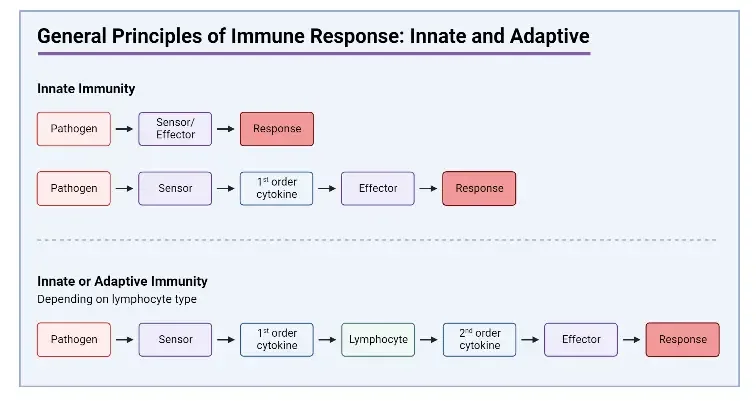
Second line of defense is the non-specific innate immune response. It works when pathogens cross the first line of defense. It acts fast and does not act against one particular pathogen only.
In this defense macrophages and neutrophils engulf and digest the invading microbes. This is called phagocytosis. Natural Killer cells (NK cells) destroy virus infected cells and cancer like abnormal cells. Inflammation, fever and complement proteins are also included in this defense.
3. Third line of defense
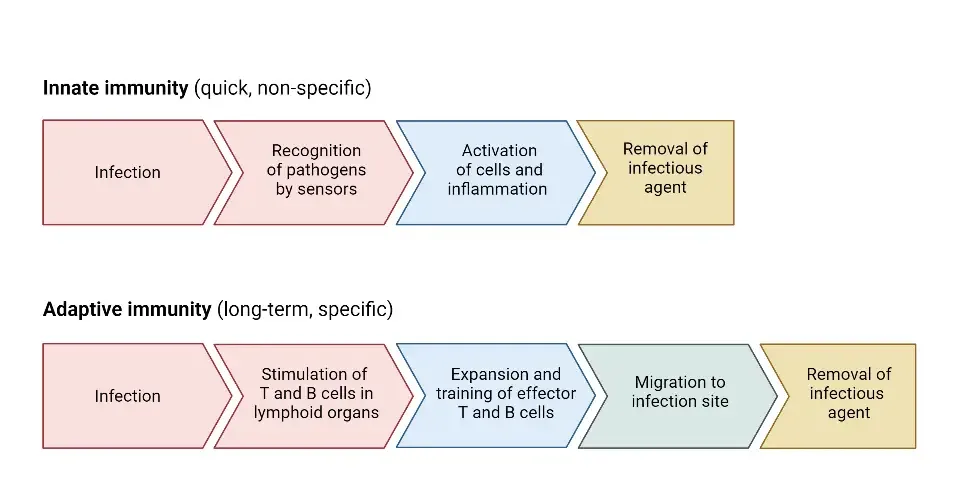
Third line of defense is the specific adaptive immune response. It starts when first and second line are not enough to remove the infection. It takes more time to develop but it acts on the particular pathogen.
This defense is mainly done by B cells and T cells. B cells produce antibodies which neutralize pathogens or mark them for destruction. T cells destroy infected body cells and also help other immune cells by chemical signals. In this line memory cells are also formed. These cells remain in the body and give faster response when same pathogen enters again.
First Line of Defense (Physical, Chemical and Biological Barriers)
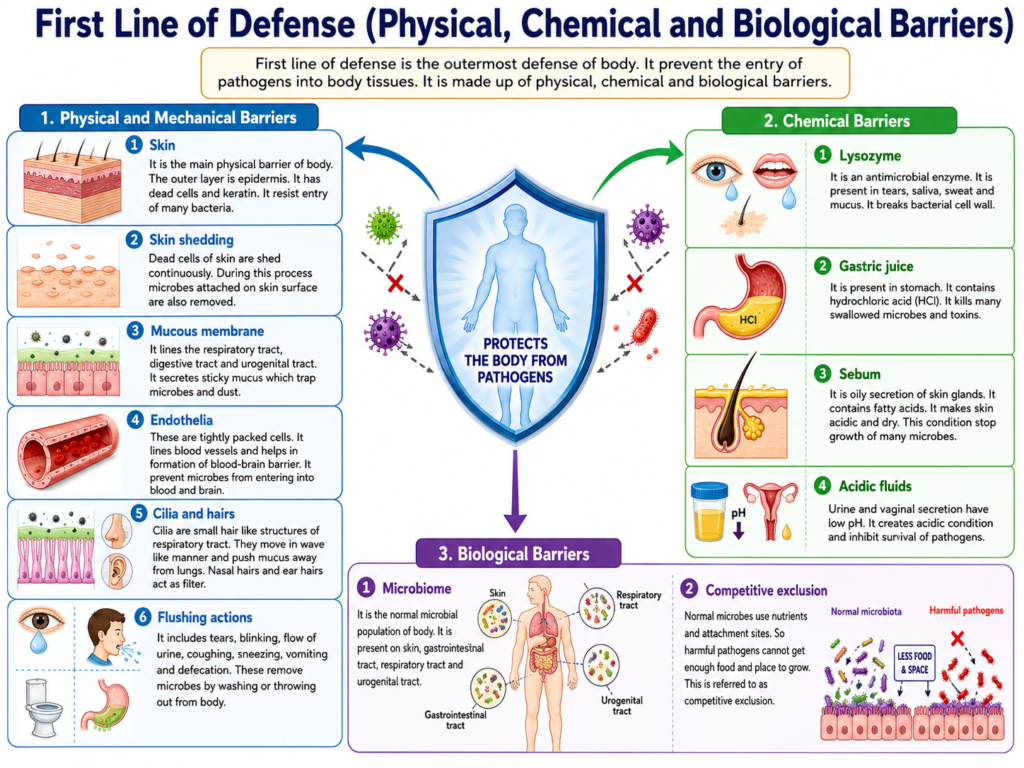
First line of defense is the outermost defense of body. It prevent the entry of pathogens into body tissues. It is made up of physical, chemical and biological barriers.
- Physical and Mechanical Barriers–
- Skin– It is the main physical barrier of body. The outer layer is epidermis. It has dead cells and keratin. It resist entry of many bacteria.
- Skin shedding– Dead cells of skin are shed continuously. During this process microbes attached on skin surface are also removed.
- Mucous membrane– It lines the respiratory tract, digestive tract and urogenital tract. It secretes sticky mucus which trap microbes and dust.
- Endothelia– These are tightly packed cells. It lines blood vessels and helps in formation of blood-brain barrier. It prevent microbes from entering into blood and brain.
- Cilia and hairs– Cilia are small hair like structures of respiratory tract. They move in wave like manner and push mucus away from lungs. Nasal hairs and ear hairs act as filter.
- Flushing actions– It includes tears, blinking, flow of urine, coughing, sneezing, vomiting and defecation. These remove microbes by washing or throwing out from body.
- Chemical Barriers–
- Lysozyme– It is an antimicrobial enzyme. It is present in tears, saliva, sweat and mucus. It breaks bacterial cell wall.
- Gastric juice– It is present in stomach. It contains hydrochloric acid (HCl). It kills many swallowed microbes and toxins.
- Sebum– It is oily secretion of skin glands. It contains fatty acids. It makes skin acidic and dry. This condition stop growth of many microbes.
- Acidic fluids– Urine and vaginal secretion have low pH. It creates acidic condition and inhibit survival of pathogens.
- Biological Barriers–
- Microbiome– It is the normal microbial population of body. It is present on skin, gastrointestinal tract, respiratory tract and urogenital tract.
- Competitive exclusion– Normal microbes use nutrients and attachment sites. So harmful pathogens cannot get enough food and place to grow. This is referred to as competitive exclusion.
Second Line of Defense (Nonspecific Innate Immune Response)
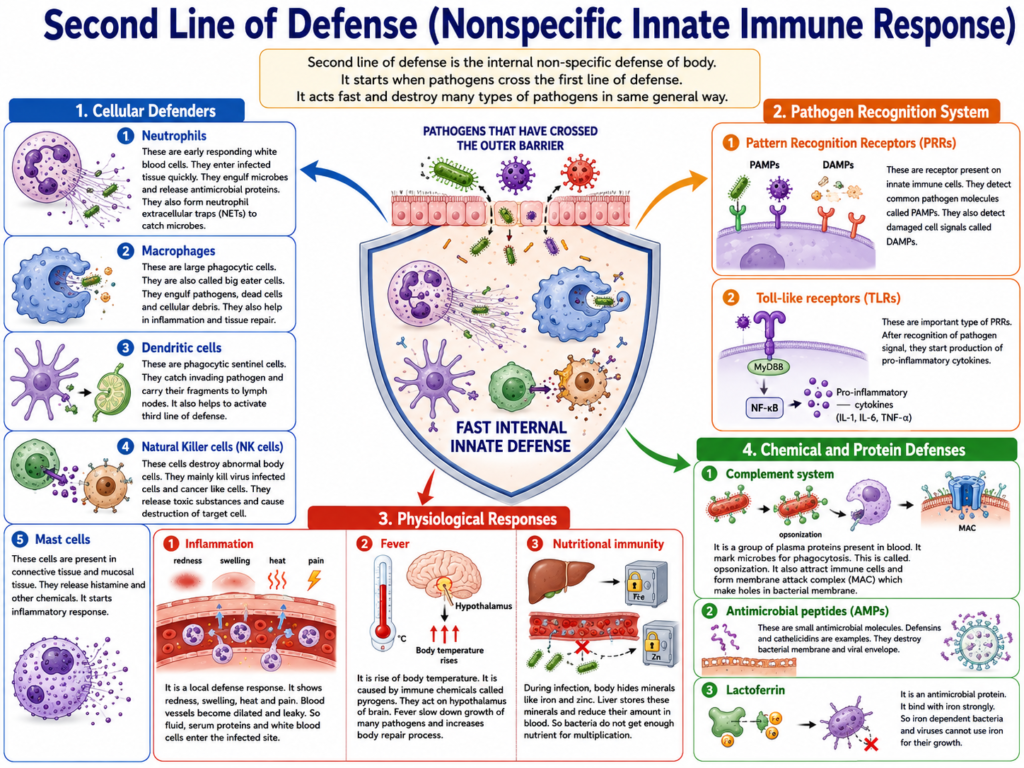
Second line of defense is the internal non-specific defense of body. It starts when pathogens cross the first line of defense. It acts fast and destroy many types of pathogens in same general way.
- Cellular Defenders–
- Neutrophils– These are early responding white blood cells. They enter infected tissue quickly. They engulf microbes and release antimicrobial proteins. They also form neutrophil extracellular traps (NETs) to catch microbes.
- Macrophages– These are large phagocytic cells. They are also called big eater cells. They engulf pathogens, dead cells and cellular debris. They also help in inflammation and tissue repair.
- Dendritic cells– These are phagocytic sentinel cells. They catch invading pathogen and carry their fragments to lymph nodes. It also helps to activate third line of defense.
- Natural Killer cells (NK cells)– These cells destroy abnormal body cells. They mainly kill virus infected cells and cancer like cells. They release toxic substances and cause destruction of target cell.
- Mast cells– These cells are present in connective tissue and mucosal tissue. They release histamine and other chemicals. It starts inflammatory response.
- Pathogen Recognition System–
- Pattern Recognition Receptors (PRRs)– These are receptor present on innate immune cells. They detect common pathogen molecules called PAMPs. They also detect damaged cell signals called DAMPs.
- Toll-like receptors (TLRs)– These are important type of PRRs. After recognition of pathogen signal, they start production of pro-inflammatory cytokines.
- Physiological Responses–
- Inflammation– It is a local defense response. It shows redness, swelling, heat and pain. Blood vessels become dilated and leaky. So fluid, serum proteins and white blood cells enter the infected site.
- Fever– It is rise of body temperature. It is caused by immune chemicals called pyrogens. They act on hypothalamus of brain. Fever slow down growth of many pathogens and increases body repair process.
- Nutritional immunity– During infection, body hides minerals like iron and zinc. Liver stores these minerals and reduce their amount in blood. So bacteria do not get enough nutrient for multiplication.
- Chemical and Protein Defenses–
- Complement system– It is a group of plasma proteins present in blood. It mark microbes for phagocytosis. This is called opsonization. It also attract immune cells and form membrane attack complex (MAC) which make holes in bacterial membrane.
- Antimicrobial peptides (AMPs)– These are small antimicrobial molecules. Defensins and cathelicidins are examples. They destroy bacterial membrane and viral envelope.
- Lactoferrin– It is an antimicrobial protein. It bind with iron strongly. So iron dependent bacteria and viruses cannot use iron for their growth.
Third Line of Defense (Specific Adaptive Immune Response)
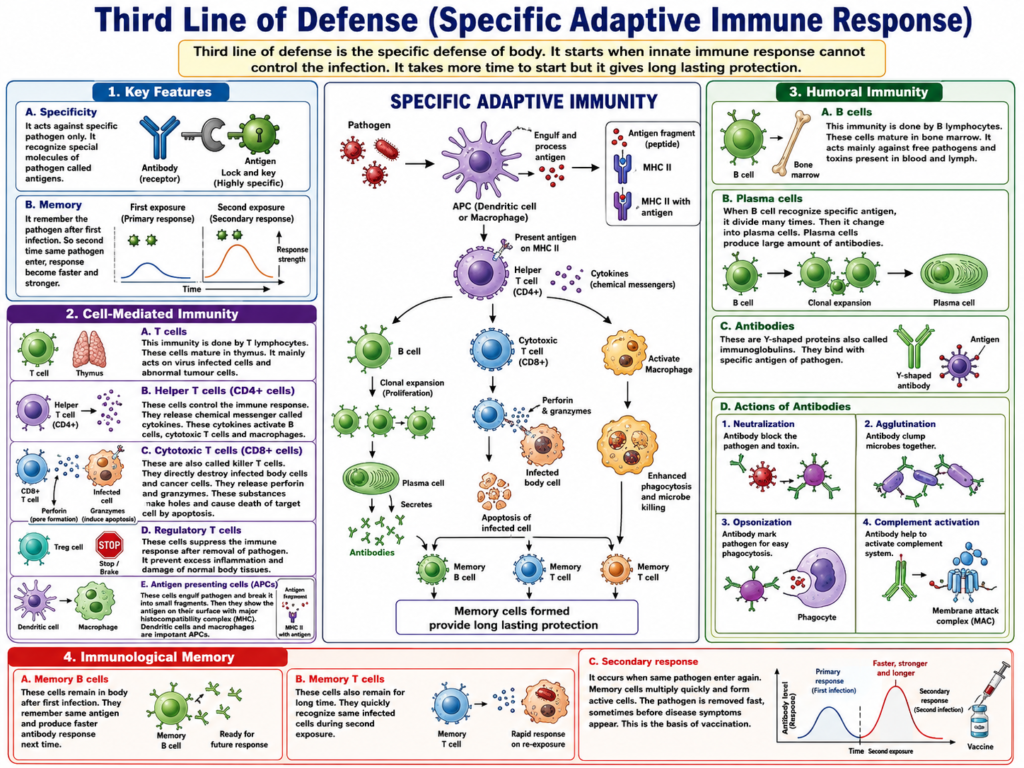
Third line of defense is the specific defense of body. It starts when innate immune response cannot control the infection. It takes more time to start but it gives long lasting protection.
Specificity– It acts against specific pathogen only. It recognize special molecules of pathogen called antigens.
Memory– It remember the pathogen after first infection. So second time same pathogen enter, response become faster and stronger.
- Cell-Mediated Immunity–
- T cells– This immunity is done by T lymphocytes. These cells mature in thymus. It mainly acts on virus infected cells and abnormal tumour cells.
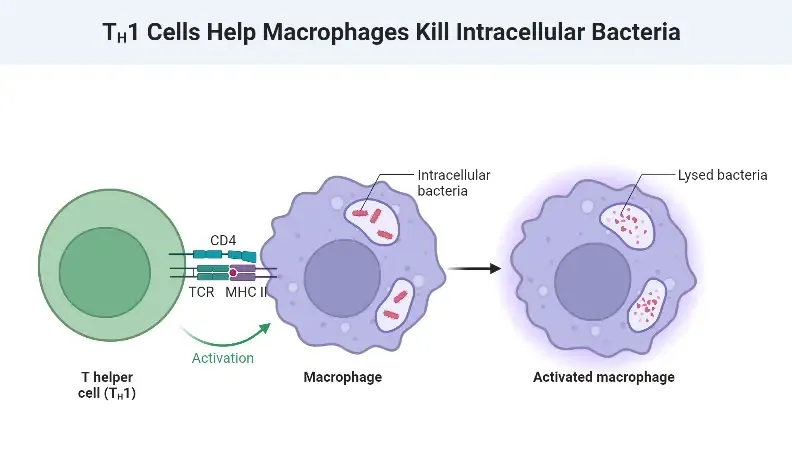
- Helper T cells (CD4⁺ cells)– These cells control the immune response. They release chemical messenger called cytokines. These cytokines activate B cells, cytotoxic T cells and macrophages.
- Cytotoxic T cells (CD8⁺ cells)– These are also called killer T cells. They directly destroy infected body cells and cancer cells. They release perforin and granzymes. These substances make holes and cause death of target cell by apoptosis.
- Regulatory T cells– These cells suppress the immune response after removal of pathogen. It prevent excess inflammation and damage of normal body tissues.
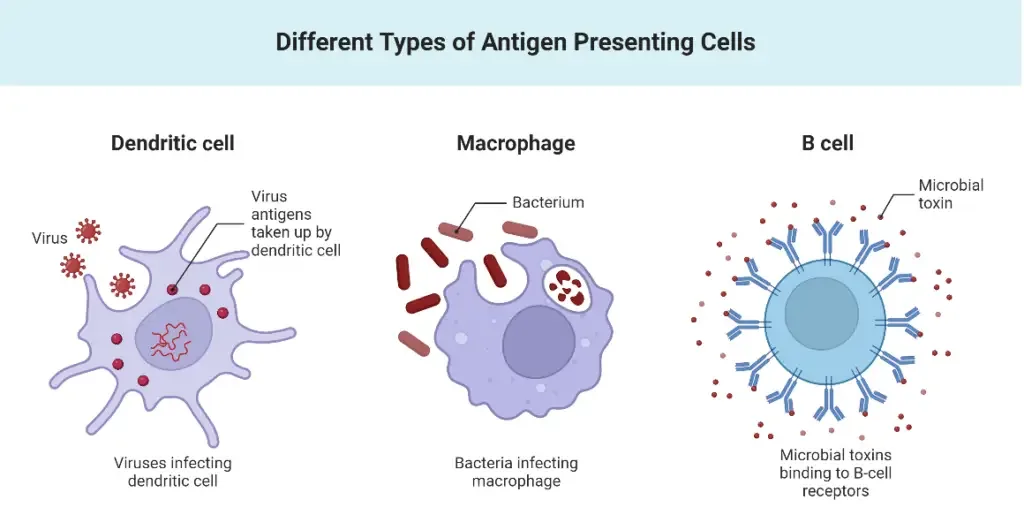
- Antigen presenting cells (APCs)– These cells engulf pathogen and break it into small fragments. Then they show the antigen on their surface with major histocompatibility complex (MHC). Dendritic cells and macrophages are important APCs.
- Humoral Immunity–
- B cells– This immunity is done by B lymphocytes. These cells mature in bone marrow. It acts mainly against free pathogens and toxins present in blood and lymph.
- Plasma cells– When B cell recognize specific antigen, it divide many times. Then it change into plasma cells. Plasma cells produce large amount of antibodies.
- Antibodies– These are Y-shaped proteins also called immunoglobulins. They bind with specific antigen of pathogen.
- Neutralization– Antibody block the pathogen and toxin.
- Agglutination– Antibody clump microbes together.
- Opsonization– Antibody mark pathogen for easy phagocytosis.
- Complement activation– Antibody help to activate complement system.
- Immunological Memory–
- Memory B cells– These cells remain in body after first infection. They remember same antigen and produce faster antibody response next time.
- Memory T cells– These cells also remain for long time. They quickly recognize same infected cells during second exposure.
- Secondary response– It occurs when same pathogen enter again. Memory cells multiply quickly and form active cells. The pathogen is removed fast, sometimes before disease symptoms appear. This is the basis of vaccination.
Mechanisms of Protection by the First Line of Defense
First line of defense protect the body by stopping the entry of pathogens. It works on body surface and body openings. It mainly acts by blocking, trapping, removing, killing and competition.
- Physical Blocking and Trapping–
- Tough barrier– Skin has tightly packed cells. These cells contain tough protein called keratin. It makes the skin hard and resistant to entry of bacteria and other microbes.
- Trapping of microbes– Mucous membrane secretes sticky mucus. This mucus traps microbes, dust and other foreign particles before they go into deeper tissues.
- Filtering– Nasal hairs and ear hairs act as filter. They catch dust, pollutants and many pathogens at the entry point.
- Mechanical Removal and Flushing–
- Skin shedding– Outer dead cells of skin are shed continuously. Microbes attached with these dead cells are also removed from the body surface.
- Ciliary movement– Cilia are small hair like structures in respiratory tract. They beat in wave like manner. It push mucus with trapped microbes away from lungs.
- Liquid flushing– Tears wash the eye surface during blinking. Flow of urine wash out temporary microbes from urinary tract.
- Muscular expulsion– Peristalsis, vomiting and defecation push out mucus, food waste and pathogens from digestive tract.
- Chemical Destruction and Inhibition–
- Hostile environment– Fatty acids and salts on skin make dry and acidic condition. This condition inhibit the growth of many microbes.
- Acidic degradation– Gastric juice of stomach is highly acidic. It contains hydrochloric acid (HCl). It kills many swallowed pathogens and denature their proteins.
- Enzymatic breakdown– Tears, saliva and mucus contain lysozyme. This enzyme breaks bacterial cell wall and destroy bacteria.
- Biological Competition–
- Microbiome– Normal harmless microbes live on skin and inside body tracts. They are called normal flora or microbiome.
- Competitive exclusion– Normal flora use the nutrients and attachment places. So harmful pathogens do not get enough food and space to attach. This prevents their growth and multiplication.
Phagocytosis as a Defense Mechanism
Phagocytosis is a defensive process by which phagocytes engulf the foreign particles. It is mainly done by macrophages and neutrophils. This process is included under second line of defense.
The following are the steps of phagocytosis–
- Recognition and binding– The foreign pathogen is first recognized by the phagocytic cell. Then the phagocyte becomes attached with the pathogen surface. This attachment becomes more easy when the pathogen is coated by antibodies or complement proteins. This is referred to as opsonization.
- Engulfment– The membrane of the phagocyte starts to extend around the pathogen. The pathogen is surrounded by the cell membrane. Then it is taken inside the cytoplasm.
- Phagosome formation– The engulfed pathogen is enclosed within a small vesicle. This vesicle is called phagosome. It contains the pathogen inside the phagocytic cell.
- Fusion with lysosome– The phagosome fuses with the lysosome. Lysosome contains digestive enzymes. After fusion, phagolysosome is formed.
- Digestion of pathogen– The pathogen is destroyed inside the phagolysosome. Digestive enzymes break down the pathogen into small fragments. In this step the harmful microbe is killed.
- Removal of waste– The undigested waste materials are removed from the phagocyte. This removal is done by exocytosis.
- Antigen presentation– In macrophages and dendritic cells, some pathogen fragments are present on the cell surface. These fragments are shown with major histocompatibility complex (MHC) molecules. It helps in activation of T cells.
Inflammatory Response
Inflammatory response is a protective response of body against tissue injury or infection. It is a part of second line of defense. It helps to destroy pathogens, remove damaged cells and start tissue repair.
The following are the steps of inflammatory response–
- Initiation– When tissue is injured by trauma, toxin or infection, the resident immune cells detect the damage. Mast cells, macrophages and dendritic cells are mainly involved in this step. The damaged cells and activated immune cells release chemical signals like histamine, cytokines, bradykinin and prostaglandins.
- Vascular changes– The released chemicals act on nearby blood vessels. Blood vessels become dilated and blood flow increases at the infected area. Due to this redness and heat are produced. The capillary wall also becomes more permeable. Fluid, serum proteins and clotting factors come out into the tissue. This causes swelling and pain.
- Cellular infiltration– The chemical signals attract white blood cells towards the infected or injured site. Neutrophils come first as early responder cells. They move along the blood vessel wall and pass through the leaky capillary wall into the tissue. After this monocytes come and become macrophages in the tissue.
- Destruction of pathogens– Neutrophils and macrophages engulf the invading microbes. They also remove damaged host cells and cellular debris. This process is called phagocytosis. In this step the harmful agents are destroyed.
- Termination– When infection or injury is controlled, anti-inflammatory substances are released. These stop more immune cells from entering the site. So the inflammatory response slowly decreases.
- Resolution and repair– Macrophages clean the remaining debris, dead cells and dead immune cells. Sometimes these dead cells and debris form pus. After cleaning, tissue healing and repair starts.
Fever and Its Role in Host Defense
Fever is rise of body temperature during infection. It is a part of second line of defense. It is produced when the body detect pathogens and start immune response.
- Initiation of Fever–
- Chemical signals– When immune cells detect the pathogen, they release fever producing chemicals. These chemicals are called pyrogenic cytokines. The important cytokines are Interleukin-1 (IL-1), Interleukin-6 (IL-6) and TNF-alpha.
- Brain activation– These cytokines move through blood and reach the hypothalamus of brain. Mainly it acts on the preoptic area. Here they stimulate formation of prostaglandins.
- Raising of set point– Prostaglandins increase the normal temperature set point of body. Then body starts to produce and save heat. Shivering produces heat and blood vessels become narrow to reduce heat loss. This results in fever.
- Role in Host Defense–
- Inhibition of pathogen growth– High body temperature makes unfavourable condition for many bacteria and viruses. Their growth and multiplication become slow. Some temperature sensitive pathogens cannot replicate properly.
- Nutritional immunity– During fever, liver stores some minerals like iron and zinc. These minerals become less available in blood. So many pathogens do not get required nutrients for multiplication.
- Fast immune activity– Increased temperature increases metabolic activity of body. It helps white blood cells to move faster at infected site. Phagocytosis become more active and tissue repair also starts more quickly.
Humoral Immune Response
Humoral immune response is a part of specific adaptive immune response. It is included under third line of defense. This response mainly acts against free pathogens and toxins present in blood and lymph.
The main cells of this response are B lymphocytes or B cells. These cells are formed and mature in bone marrow. They recognize specific foreign antigen and produce antibodies.
Steps of Humoral Immune Response
- Recognition– The naive B cell first recognize the specific antigen. It is done by surface receptor called B cell receptor (BCR). The receptor binds with intact antigen present on pathogen surface.
- Activation– After binding with antigen, the B cell becomes activated. Usually helper T cells give chemical signals for full activation. These signals help the B cell to start immune response.
- Clonal selection– The activated B cell divides many times. It forms many identical cells. These cells are specific for the same antigen. This is called clonal selection.
- Differentiation– The cloned B cells change into two main types of cells.
- Plasma cells– These are effector B cells. They produce large amount of specific antibodies and release them into blood.
- Memory B cells– These cells remain in body for long time. They remember the same antigen and give faster response during next infection.
Actions of Antibodies
Antibodies are also called immunoglobulins. These are Y-shaped proteins secreted by plasma cells. They bind with specific antigen and help in destruction of pathogen.
- Neutralization– Antibodies bind on the surface of virus or toxin. It blocks their attachment with healthy host cells. So infection cannot occur easily.
- Opsonization– Antibodies coat the pathogen surface. This coating works as tag. So macrophages and neutrophils can recognize and engulf the pathogen more easily.
- Agglutination– Antibodies bind many pathogens together. It forms clumps. These clumped microbes are removed easily by phagocytic cells.
- Complement activation– Bound antibodies activate the complement system. It attracts more immune cells, increases phagocytosis and forms pores in pathogen membrane.
- ADCC– Antibody-dependent cell-mediated cytotoxicity (ADCC) occurs when pathogen or target cell is coated with antibodies. Then Natural Killer cells (NK cells) bind with it and release toxic substances. The target cell is destroyed.
Cell-Mediated Immune Response
Cell-mediated immune response is a type of specific adaptive immune response. It is included under third line of defense. It acts mainly against intracellular pathogens, virus infected cells and tumour cells.
The main cells of this response are T lymphocytes or T cells. These cells mature in thymus. They do not produce antibody. They act by direct killing or by activating other immune cells.
Steps of Cell-Mediated Immune Response
- Antigen processing and presentation– Antigen presenting cells (APCs) first engulf the pathogen. Dendritic cells and macrophages are important APCs. The pathogen is digested inside the cell. Then small antigen fragments are displayed on cell surface with major histocompatibility complex (MHC) molecules.
- Recognition– The naive T cell recognizes the antigen shown by APC. This is done by T cell receptor (TCR). The TCR binds with specific antigen-MHC complex.
- Activation– After binding, the T cell becomes activated. For complete activation, co-stimulatory signal is also needed. Without this signal proper immune response does not start.
- Clonal expansion– The activated T cell divides many times. It forms many identical T cells. These cells are specific for same antigen.
- Effector response– The cloned T cells now act against infected cells. Some cells release cytokines. Some cells directly kill the infected or abnormal body cells.
Important T Cells
- Helper T cells (CD4⁺ cells)– These cells bind with antigen presented by MHC II molecules. They release cytokines. These cytokines activate macrophages, B cells and cytotoxic T cells. So they coordinate the immune response.
- Cytotoxic T cells (CD8⁺ cells)– These cells bind with antigen presented by MHC I molecules. They are also called killer T cells. They kill virus infected cells and tumour cells. They release perforin and granzymes. Perforin makes pores and granzymes cause apoptosis of target cell.
- Regulatory T cells– These cells suppress the immune response after pathogen removal. They stop excess activity of T cells and B cells. It prevents damage of normal healthy tissues.
- Memory T cells– Some activated T cells become memory cells. These cells remain in blood and lymph for long time. During second entry of same pathogen, they give faster and stronger response.
Comparison of the Three Lines of Defense
| Basis | First Line of Defense | Second Line of Defense | Third Line of Defense |
|---|---|---|---|
| Type | Innate immunity. It is non-specific. | Innate immunity. It is also non-specific. | Adaptive immunity. It is specific type. |
| Target | It blocks all types of pathogens generally. | It attacks common pathogen patterns like PAMPs. | It acts against specific antigen of a particular pathogen. |
| Main role | It prevents entry of pathogens into body. | It destroys pathogens which cross the first line. | It gives specific attack and long lasting protection. |
| Speed | Immediate. It is always active. | Fast. It acts within minutes to hours. | Slow at first. It takes days to weeks. |
| Memory | No memory is present. | Generally no memory. Sometimes short non-specific trained immunity may occur. | Memory is present. Memory cells are formed. |
| Main components | Skin, mucous membrane, tears, urine flow, stomach acid, lysozyme, microbiome. | Macrophages, neutrophils, NK cells, inflammation, fever, complement proteins. | T cells, B cells, antibodies and memory cells. |
| Nature of response | Barrier type response. It stop entry before infection. | Internal general response. It engulf and destroy invaders. | Targeted immune response. It recognize exact pathogen. |
| Example | Skin stops entry of bacteria. Stomach acid kills swallowed microbes. | Neutrophils engulf bacteria. Fever slows pathogen growth. | B cells form antibodies. Cytotoxic T cells kill infected cells. |
Disorders Affecting the Body’s Defense Mechanisms
Disorders of defense mechanism are the conditions in which body defense does not work normally. In some condition immunity becomes weak. In some other condition immune system attacks own body cells. It may affect first line, second line or third line of defense.
The following are the important disorders-
- Barrier defects– These disorders affect the first line of defense. Damage of skin and mucous membrane allows easy entry of pathogens. Burns, wounds and ulcers are common examples. In these condition bacteria and fungi enter easily into body tissues.
- Immunodeficiency disorders– In these disorders immune system becomes weak. So body cannot fight infection properly. The person suffer from repeated infection.
- Primary immunodeficiency– It is present from birth. It occurs due to defect in immune cells or immune proteins.
- Secondary immunodeficiency– It is acquired later in life. It may occur due to HIV infection, malnutrition, cancer treatment or some drugs.
- Phagocytic cell defects– In these disorders macrophages and neutrophils do not work properly. So phagocytosis becomes weak. The pathogens are not engulfed and destroyed properly. Repeated bacterial and fungal infections may occur.
- Complement disorders– These are due to defect in complement proteins. Complement system helps in opsonization, inflammation and killing of microbes. When complement is defective, bacterial infection becomes more common.
- Autoimmune disorders– In these disorders immune system attacks own body cells. It cannot differentiate self and non-self properly. Rheumatoid arthritis, type 1 diabetes mellitus and systemic lupus erythematosus (SLE) are examples.
- Hypersensitivity disorders– These are over reaction of immune system against harmless substance. The substance may be pollen, dust, food or drug. Allergy, asthma and anaphylaxis are included in this group.
- Chronic inflammatory disorders– In these conditions inflammation remain for long time. It causes tissue damage instead of protection. Long term inflammation may damage organs and also disturb normal healing.
- Lymphocyte disorders– These disorders affect B cells and T cells. If B cells are defective, antibody production becomes low. If T cells are defective, cell-mediated immunity becomes weak. So both humoral and cellular defense are affected.
- Cancer of immune cells– Some cancers affect immune cells directly. Leukemia and lymphoma are important examples. In these conditions abnormal white blood cells are formed and normal defense mechanism becomes disturbed.
Clinical Significance of Body Lines of Defense
Body lines of defense have important clinical significance. It helps to understand infection, inflammation, vaccination and immune disorders. Defect in any line of defense may cause repeated infection or abnormal immune reaction.
The following are the clinical significance of body lines of defense–
- Compromised barrier– Damage of first line of defense allows easy entry of opportunistic pathogens. Skin wound, burn and ulcer break the protective barrier. So microbes can enter into tissue and cause infection.
- Rose gardener’s disease– It may occur when thorn injury breaks the skin barrier. The fungus Sporothrix schenckii enters through wound and causes sporotrichosis.
- Ciliary damage– Damage of respiratory cilia increases lung infection. It is seen in smoking and cystic fibrosis. The mucus and microbes are not removed properly from respiratory tract.
- Microbiome disturbance– Long use of antibiotics may destroy normal gut flora. Then harmful bacteria like Clostridioides difficile may grow. It causes severe intestinal infection and diarrhoea.
- Diagnostic biomarkers– The second line of defense produces many inflammatory markers. These markers are measured in blood test.
- C-reactive protein (CRP) shows active inflammation or infection.
- Erythrocyte sedimentation rate (ESR) increases in many inflammatory conditions.
- Procalcitonin is useful in bacterial infection and sepsis.
- Excess inflammation– Inflammation is protective in normal condition. But excessive inflammation may become harmful. It can cause septic shock, tissue damage and organ failure.
- Cytokine storm– Overproduction of cytokines causes severe inflammatory reaction. It may damage lungs and cause acute respiratory distress syndrome (ARDS). This type of reaction was important in severe COVID-19 infection.
- Chronic inflammation– When inflammation remains for long time, it causes chronic disease. It is related with atherosclerosis, type 2 diabetes mellitus, Alzheimer’s disease and some cancers.
- Vaccination– Third line of defense is important for vaccination. Vaccine gives safe antigen to the body. It forms memory B cells and memory T cells. So during real infection, immune response becomes faster and stronger.
- Trained immunity– Some innate immune cells may show short term non-specific memory. This is called trained immunity. BCG vaccine can produce this type response and give protection against some unrelated infections. It is also used in treatment of bladder cancer.
- Immune system disorders– Disease occurs when defense system becomes abnormal.
- Autoimmune disease– Immune system attacks own body tissue. Type 1 diabetes mellitus is an example.
- Hypersensitivity– Immune system overreacts against harmless substance. It causes allergy and asthma.
- Transplant rejection– T cells and natural killer cells (NK cells) attack transplanted organ when it is not compatible.
References
- A.D.A.M. Medical Encyclopedia. (2026, January 20). Immune response. MedlinePlus. https://medlineplus.gov/ency/article/000821.htm
- AMBOSS: Medical Knowledge Distilled. (n.d.). Innate and adaptive immunity: Types of immune responses (Short version) [Video]. YouTube.
- Biology: Cell – mediated immunity. (n.d.). Jack Westin.
- Brief review: Innate immune memory and the host response to infection. (n.d.). PubMed Central (PMC).
- Cascade of immune mechanism and consequences of inflammatory disorders. (n.d.). PubMed Central (PMC).
- Cavanagh, M., & Findlay, E. G. (2022). T-cell activation. British Society for Immunology.
- Children’s Hospital of Philadelphia. (2023, May 12). Parts of the immune system. https://www.chop.edu/vaccine-education-center/human-immune-system/parts-immune-system
- Clark, M. A., Douglas, M., & Choi, J. (2018, March 28). 42.2 Adaptive immune response. In Biology 2e. OpenStax. https://openstax.org/books/biology-2e/pages/42-2-adaptive-immune-response
- Cleveland Clinic. (2023, January 17). T cells: Types and function. https://my.clevelandclinic.org/health/body/24630-t-cells
- Cutaneous immune defenses against Staphylococcus aureus infections. (n.d.). PubMed Central (PMC).
- Dagenais, A., Villalba-Guerrero, C., & Olivier, M. (2023). Trained immunity: A “new” weapon in the fight against infectious diseases. Frontiers in Immunology, 14, 1147476. https://doi.org/10.3389/fimmu.2023.1147476
- De novo origin and evolution of an antimicrobial protein function. (n.d.). bioRxiv.
- Defensins and other antimicrobial peptides and proteins. (n.d.). PubMed Central (PMC).
- Dutta, S. S. (2021, March 11). What are the three lines of defense?. News-Medical.Net. https://www.news-medical.net/health/What-are-the-Three-Lines-of-Defense.aspx
- Focken, J., & Schittek, B. (2024). Crosstalk between keratinocytes and neutrophils shapes skin immunity against S. aureus infection. Frontiers in Immunology, 15, 1275153. https://doi.org/10.3389/fimmu.2024.1275153
- Fowler, S., Roush, R., & Wise, J. (2013, April 25). 17.2 Innate immunity. In Concepts of biology. OpenStax. https://openstax.org/books/concepts-biology/pages/17-2-innate-immunity
- Hannoodee, S., & Nasuruddin, D. N. (2024, June 8). Acute inflammatory response. In StatPearls. StatPearls Publishing. https://www.ncbi.nlm.nih.gov/books/NBK556083/
- Immunological memory is no longer a unique trait of adaptive immune cells. (n.d.). Bio-Rad.
- Inflammation and inflammatory diseases, markers, and mediators: Role of CRP in some … (n.d.). PubMed Central (PMC).
- Inflammatory responses and inflammation-associated diseases in organs. (n.d.). PubMed Central (PMC).
- Innate and adaptive immune responses against Staphylococcus … (n.d.). PubMed Central (PMC).
- Janeway, C. A., Jr., Travers, P., Walport, M., & Shlomchik, M. J. (2001). Principles of innate and adaptive immunity. In Immunobiology: The immune system in health and disease (5th ed.). Garland Science. https://www.ncbi.nlm.nih.gov/books/NBK27090/
- Kato, Y., & Kumanogoh, A. (2025). The immune memory of innate immune systems. International Immunology, 37(4), 195–202. https://doi.org/10.1093/intimm/dxae067
- Kell, D. B., Heyden, E. L., & Pretorius, E. (2020). The biology of lactoferrin, an iron-binding protein that can help defend against viruses and bacteria. Frontiers in Immunology, 11, 1221. https://doi.org/10.3389/fimmu.2020.01221
- Khan Academy. (n.d.). Adaptive immunity | Immune response (article). https://www.khanacademy.org/test-prep/mcat/organ-systems/the-immune-system/a/adaptive-immunity
- Kirby, E. D., Glenn, M. J., Sandstrom, N. J., & Williams, C. L. (2024, November 13). 17.1 Cells and messengers of the immune system. In Introduction to behavioral neuroscience. OpenStax. https://openstax.org/books/introduction-behavioral-neuroscience/pages/17-1-cells-and-messengers-of-the-immune-system
- Li, D. (2017, May 20). Innate vs. adaptive immunity. Medbullets Step 1.
- Modes of the initiation of T cell-mediated immune responses. (n.d.). PubMed Central (PMC).
- Netea, M. G., Joosten, L. A. B., Latz, E., Mills, K. H. G., Natoli, G., Stunnenberg, H. G., O’Neill, L. A. J., & Xavier, R. J. (2016). Trained immunity: A program of innate immune memory in health and disease. Science, 352(6284), aaf1098. https://doi.org/10.1126/science.aaf1098
- Parker, N., Schneegurt, M., Tu, A.-H. T., Lister, P., & Forster, B. M. (2016a, November 1). 17.1 Physical defenses. In Microbiology. OpenStax. https://openstax.org/books/microbiology/pages/17-1-physical-defenses
- Parker, N., Schneegurt, M., Tu, A.-H. T., Lister, P., & Forster, B. M. (2016b, November 1). 18.1 Overview of specific adaptive immunity. In Microbiology. OpenStax. https://openstax.org/books/microbiology/pages/18-1-overview-of-specific-adaptive-immunity
- Parker, N., Schneegurt, M., Tu, A.-H. T., Lister, P., & Forster, B. M. (2016c, November 1). Ch. 18 Summary. In Microbiology. OpenStax. https://openstax.org/books/microbiology/pages/18-summary
- Pérez-Vázquez, D., Contreras-Castillo, E., & Licona-Limón, P. (2018). Innate immune memory, the missing piece of the immunological response. TIP Revista Especializada en Ciencias Químico-Biológicas, 21(Supl. 1), 112–123. https://doi.org/10.22201/fesz.23958723e.2018.0.151
- Rao, P. N. S. (n.d.). Activation of T lymphocytes and cell mediated immunity. Microrao.
- Riaz, Z. (2024, March 28). Innate immune systemc explained: Step-by-step process & key concepts. Assay Genie.
- Stellar Biotics. (n.d.). What are the immune system lines of defense?.
- The multifaceted functions of lactoferrin in antimicrobial defense and inflammation. (n.d.). PubMed Central (PMC).
- The multi-tiered architecture of human host defense: An exhaustive treatise on physical, innate, and adaptive immunological systems. (n.d.). [Unpublished manuscript].
- The widening spectrum of immunological memory. (n.d.). PubMed Central (PMC).
- Trained innate immunity and its implications for mucosal immunity and inflammation. (n.d.). PubMed Central (PMC).
- UF Medical Physiology Online. (n.d.). How does the immune system work? Exploring the 3 lines of defense. https://distance.physiology.med.ufl.edu/about/articles/how-does-the-immune-system-work-3-key-strategies/
- UF Medical Physiology Online. (n.d.). How does the immune system work? Exploring the 3 lines of defense | UF Medical Physiology Online.
- Zedalis, J., & Eggebrecht, J. (2018a, March 8). 33.1 Innate immune response. In Biology for AP® Courses. OpenStax. https://openstax.org/books/biology-ap-courses/pages/33-1-innate-immune-response
- Zedalis, J., & Eggebrecht, J. (2018b, March 8). 33.2 Adaptive immune response. In Biology for AP® Courses. OpenStax. https://openstax.org/books/biology-ap-courses/pages/33-2-adaptive-immune-response
- Zedalis, J., & Eggebrecht, J. (2018c, March 8). Ch. 33 Chapter summary. In Biology for AP® Courses. OpenStax. https://openstax.org/books/biology-ap-courses/pages/33-chapter-summary
- Zedalis, J., & Eggebrecht, J. (2018d, March 8). Ch. 33 Review questions. In Biology for AP® Courses. OpenStax. https://openstax.org/books/biology-ap-courses/pages/33-review-questions
- Zubair, M., & Burns, B. (2024, August 11). Pathology, inflammation. In StatPearls. StatPearls Publishing. https://www.ncbi.nlm.nih.gov/books/NBK534820/