

Transplantation is a medical process in which living cells, tissues or organs are transferred from one site to another site. It is done to replace damaged, failed or absent body part.
Transplantation is a process in which living cell, tissue or organ is transferred from one site to another site.
It is done for replacing the organ which is damaged or not working. It may be absent or failed due to disease or injury. The healthy part is taken from a donor and transferred into a recipient.
The main purpose of transplantation is to restore the function of damaged tissue or organ. It is a life saving method in many severe conditions.
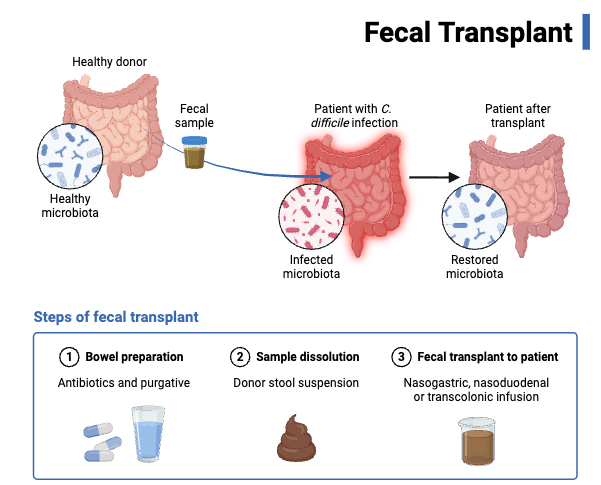
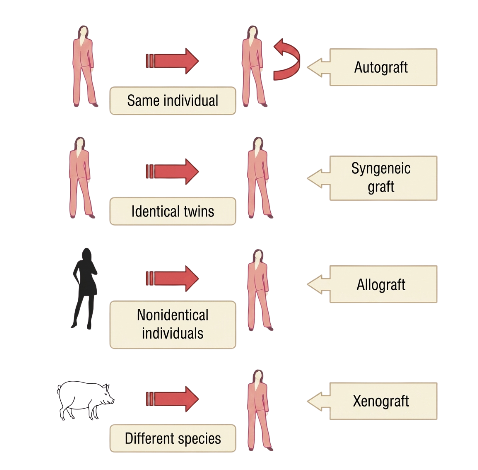
On the basis of source of graft, transplantation may be of different types. Autograft is transfer of graft from one part of same individual to another part. Isograft is done between genetically identical twins. Allograft is transfer between two different individuals of same species. Xenograft is transfer between different species such as pig to human.
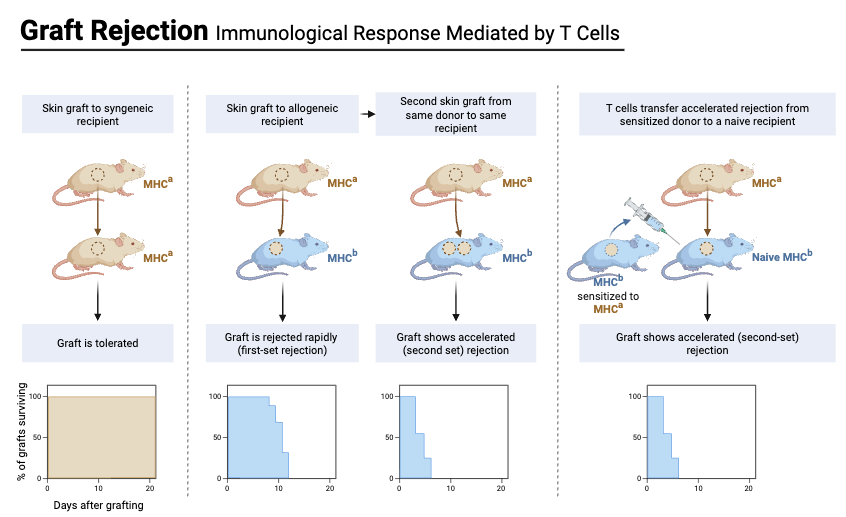
In transplantation, the immune system of recipient may react against the graft. Because the graft is recognized as foreign cellular material. This reaction may destroy the transplanted organ and this is called graft rejection.
So, proper matching of donor and recipient is required before transplantation. Immunosuppressive drugs are also used to inhibit the immune reaction and to protect the transplanted graft.
Basic Principles of Transplantation
Transplantation is based on the ability of immune system to recognize self and non-self cells.
The body can identify its own tissue and foreign tissue. This recognition is mainly controlled by surface proteins present on cells. These proteins are called Human Leukocyte Antigens (HLA).
For successful transplantation, matching between donor and recipient is needed. HLA typing is done to compare the tissue type of donor and recipient. ABO blood group matching is also important.
If the HLA markers of transplanted tissue are different, the recipient immune system can identify the graft as foreign. Then immune cells attack the transplanted tissue. This leads to transplant rejection.
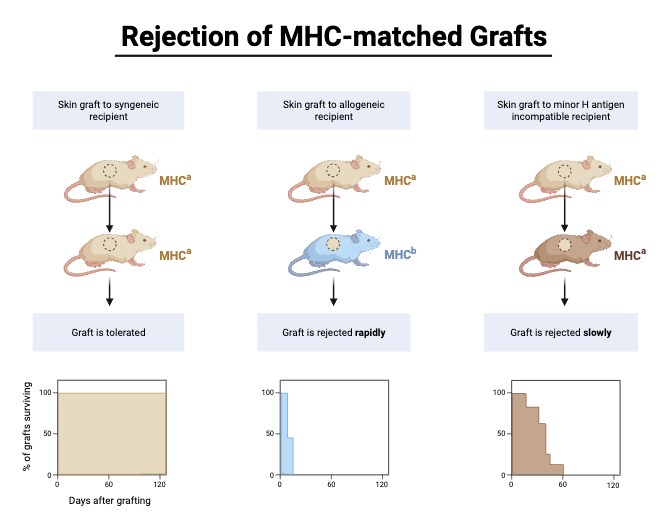
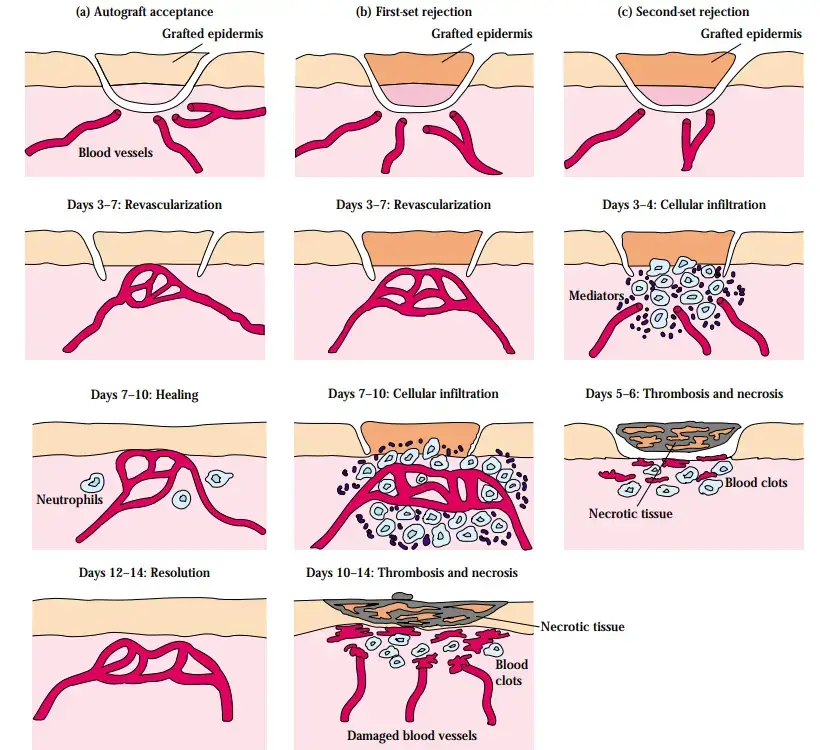
Rejection may occur very fast or slowly. Hyperacute rejection occurs within minutes. Acute rejection occurs within few months. Chronic rejection occurs slowly and may take many years.
Before transplantation, crossmatch test is done. It is used to detect whether recipient has already formed antibodies against the donor tissue. If such antibodies are present, the graft may be rejected immediately.
A perfect matching is very rare except in identical twins. So most transplanted patients need immunosuppressive drugs. These drugs suppress the immune reaction and help the graft to survive.
But continuous suppression of immunity also has risk. The patient becomes more sensitive to infections and some other diseases. Therefore regular medical monitoring is required for long time.
Types of Transplantation
The following are the types of transplantation.
- Autograft – It is the transfer of tissue from one part of the body to another part of same individual. In this type donor and recipient is same person, so rejection does not occur. Example, skin graft.
- Isograft or Syngeneic transplant – It is the transplantation of tissue or organ between genetically identical individuals. It is mainly done between identical twins. The graft is not rejected because genetic characters are same.
- Allograft or Allogeneic transplant – It is the transfer of cells, tissues or organs between two genetically different individuals of same species. It is most common type of clinical transplantation. Rejection may occur, so immunosuppressive drugs are required.
- Xenograft or Heterograft – It is the transplantation of living cells, tissues or organs between two different species. Example, genetically modified pig organ to human. It has high chance of strong immune rejection.
Types of Organs and Tissues Used in Transplantation
The following are the types of organs and tissues used in transplantation.
1. Solid organs
- Kidney – It is used in kidney failure.
- Liver – It is used when liver is damaged or failed.
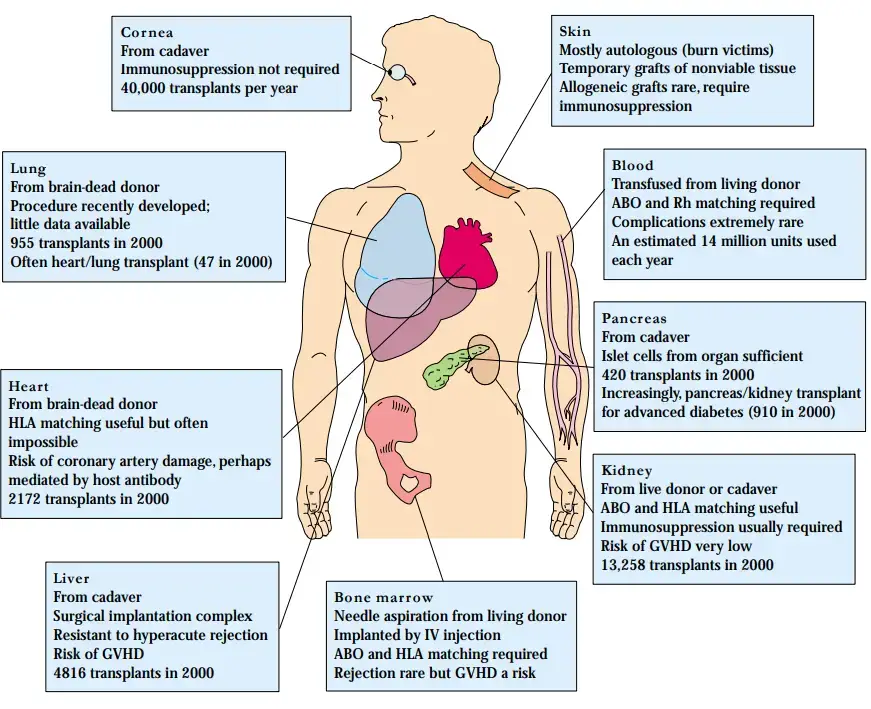
- Heart – It is transplanted in severe heart failure.
- Lungs – It is used when lungs cannot perform normal function.
- Pancreas – It is transplanted mainly in severe diabetic condition.
- Intestine – It is used when intestinal function is lost.
2. Tissues
- Skin – It is used in burn, wound and reconstructive surgery.
- Bone – It is used for replacing or repairing damaged bone.
- Cornea – It is used to restore vision when cornea is damaged.
- Veins and Blood vessels – These are used as vascular graft. Example, leg vein in coronary bypass surgery.
- Heart valves – These are used to replace damaged heart valves.
- Connective tissue – It is used for repair and reconstruction of body parts.
- Middle ear – It is used for repair of hearing related structures.
3. Cells
- Bone marrow – It is used as blood forming tissue in transplantation.
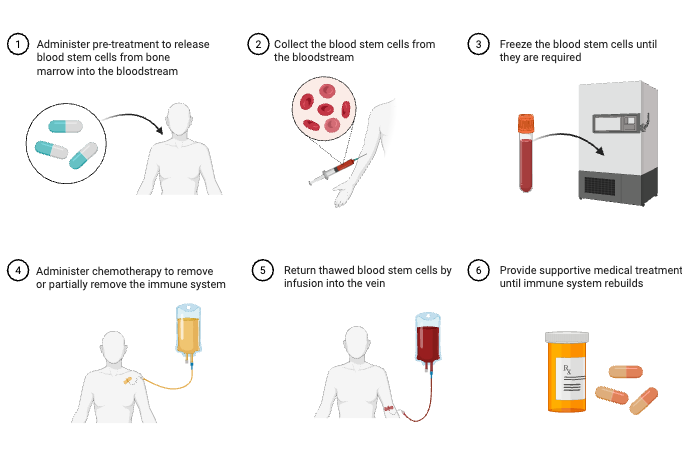
- Hematopoietic stem cells – These are blood forming stem cells. They are collected from bone marrow, peripheral blood or umbilical cord blood.
- Blood and Platelets – These are used to replace blood loss and low platelet number.
- Pancreatic islet cells – These cells are used for insulin production in diabetic patient.
- Fetal nervous tissue – It is used in some nervous tissue transplantation.
4. Vascularized composite allografts
- Face transplant – It includes skin, muscle, blood vessels, nerves and bone parts.
- Hand transplant – It includes skin, bone, muscles, blood vessels and nerves.
- Digit transplant – It is transplantation of finger or toe like part with many tissue components.
Terminology Used in Transplantation
The following are the important terms used in transplantation.
- Graft – It is the living cell, tissue or organ which is transferred from one place to another place. It is used to replace the missing, damaged or failed body part.
- Donor – It is the individual or source from which healthy graft is taken. The donor may provide cells, tissue or organ for transplantation.
- Recipient or Host – It is the person who receives the donated cell, tissue or organ in the body. The transplantation procedure is done in the recipient.
- Engraftment – It is the process in which donated cells or tissues survive and start functioning in the recipient body. In this process, graft becomes established and may produce new healthy cells.
Donor Selection and Tissue Matching for Transplantation
The following are the main components of donor selection and tissue matching.
- Blood group compatibility – It is the first step in donor selection. The ABO blood group of donor and recipient should be compatible. Blood group O act as universal donor in many condition.
- Tissue typing or HLA typing – It is done to identify Human Leukocyte Antigens (HLA) on the surface of cells. It helps to check histocompatibility between donor and recipient.
- The important HLA loci matched are HLA-A, HLA-B and HLA-DR.
- Levels of HLA matching – It shows how much HLA markers are matched between donor and recipient.
- Full match – Donor and recipient share all required HLA markers. It gives best result and is mostly seen in siblings.
- Haploidentical match – Donor and recipient share half of the HLA markers. It is common between parents and children.
- Partial match – Most of the HLA markers are matched but not all.
- Crossmatch testing – It is done before transplantation surgery. It detects whether recipient has pre-existing antibodies against donor tissue.
- Physical crossmatch – Recipient serum is mixed with donor white blood cells. Negative crossmatch means no reaction. Positive crossmatch means antibody reaction occurs.
- Virtual crossmatch (vXM) – Recipient antibody profile is compared with donor HLA antigens digitally. It helps in faster organ allocation.
- Donor selection categories – Donor is selected according to genetic relation and availability.
- Living related donor – Close family members. They have more chance of good HLA matching.
- Living unrelated donor – Donor is not genetically related to recipient.
- Deceased donor – Organ is taken after death through donor registry or organ allocation system.
Step by Step Mechanism of Graft Rejection
The following are the steps of graft rejection.
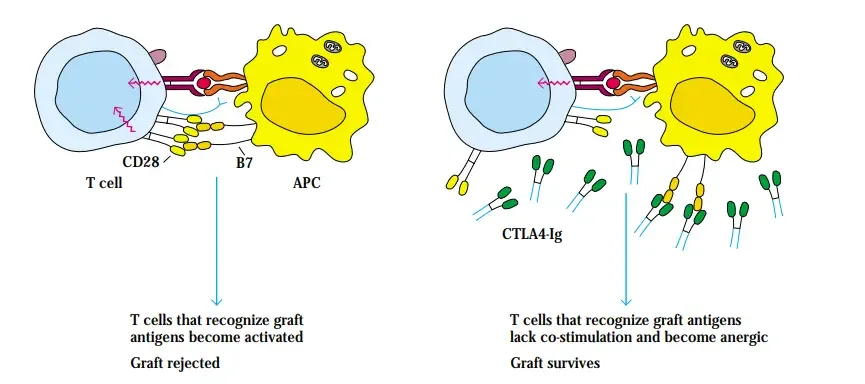
- Antigen presentation – In this step dendritic cells and other antigen presenting cells (APCs) from donor graft move to the lymph node of recipient. They show foreign HLA antigen to the recipient T-cells.
- Activation of T-cell – The recipient CD4⁺ T-cells identify donor antigen as foreign. Then the T-cells become activated.
- Clonal expansion – The activated T-cells divide again and again. So large number of same type T-cells are produced. Some cells form Th1 and Th2 lymphocytes.
- Release of cytokines – The activated helper T-cells release cytokines. These cytokines include interleukin-2 (IL-2) and interferon-gamma (IFN-γ). These acts as signals for other immune cells.
- Recruitment of immune cells – The cytokines call many immune cells to the graft site. These are macrophages, NK cells, CD8⁺ cytotoxic T-cells and B-cells.
- Cellular rejection – The CD8⁺ cytotoxic T-cells reach the transplanted graft. They attach with donor cells and destroy them. This destruction is done by perforin-granzyme and Fas-Fas ligand pathway.
- Humoral rejection – The Th2 cells stimulate B-cells. Then B-cells become plasma cells and produce donor specific antibodies.
- Binding of antibody – These antibodies bind with the donor antigen present in graft blood vessels. This damages the vessels of graft.
- Complement activation – The antibody binding activates the complement system. It causes inflammation and more tissue injury.
- Final graft damage – At last the graft is damaged by T-cell attack and antibody attack. The blood supply also become affected. So the transplanted graft fails and this is called graft rejection.
Types of Graft Rejection
The following are the types of graft rejection.
- Hyperacute rejection – It is a very rapid type of rejection. It occurs within minutes to few hours after transplantation. It is caused by pre-existing antibodies present in recipient blood against donor ABO blood group or HLA antigens. These antibodies attack the graft blood vessels. So the graft is damaged very fast and it may need immediate removal.
- Acute rejection – It is the most common type of graft rejection. It usually occurs from first week to three months after transplantation. It occurs due to immune reaction of recipient against the graft. It can be treated by immunosuppressive drugs in many cases.
- Acute cellular rejection – In this type recipient T-cells identify graft cells as foreign. Then T-cells multiply and directly attack the transplanted cells.
- Acute humoral rejection or antibody mediated rejection – In this type recipient B-cells produce new antibodies against donor antigens. These antibodies attack mainly graft blood vessels and cause inflammation.
- Chronic rejection – It is a slow and progressive type of rejection. It occurs after many months or years. In this type low grade immune reaction continues for long time. It causes scarring and narrowing of graft blood vessels. This is called transplant vasculopathy. Finally graft function is lost slowly.
Cell-Mediated and Antibody-Mediated Rejection
The following are two main mechanism of transplant rejection.
- Cell-mediated rejection or Acute cellular rejection – It is mainly due to T-lymphocytes. The main cells are CD4⁺ helper T-cells and CD8⁺ cytotoxic T-cells.
- Activation – The recipient T-cells recognize the foreign donor antigen. The antigen is shown by donor dendritic cells.
- Th1 response – The activated CD4⁺ T-cells form Th1 cells. These cells release interleukin-2 (IL-2) and interferon-gamma (IFN-γ).
- Cell recruitment – These cytokines call other immune cells. Such as macrophages, NK cells and CD8⁺ T-cells.
- Direct attack – The CD8⁺ T-cells go to the graft and attach with donor cells. Then it destroys the cells by perforin-granzyme and Fas-Fas ligand pathway.
- Antibody-mediated rejection or Acute humoral rejection – It is mainly due to B-cells and antibodies. It mainly damages the graft blood vessels.
- Th2 response – The activated CD4⁺ T-cells form Th2 cells. They release IL-4, IL-5 and IL-6.
- B-cell activation – These cytokines stimulate B-lymphocytes. Then the B-cells become plasma cells.
- Antibody formation – The plasma cells form donor specific antibodies (DSAs) against donor HLA.
- Vessel binding – The antibodies bind with graft blood vessel lining cells. These cells are called vascular endothelium.
- Complement activation – The bound antibodies activate complement system. It causes inflammation, swelling of vessels and C4d deposition. At last the blood supply of graft is damaged.
Graft Versus Host Disease (GVHD)
Graft versus host disease (GVHD) is a serious condition in which donor immune cells attack the recipient body.
The following are the important points of GVHD.
- GVHD is a systemic and life threatening condition. In this condition, immunocompetent donor T-cells present in the graft recognize the recipient tissue as foreign and attack the host tissue.
- It mainly occurs after allogeneic hematopoietic stem cell transplantation. Example, bone marrow transplant and stem cell transplant. It is seen in treatment of blood cancer and bone marrow diseases.
- Acute GVHD (aGVHD) usually occurs within first 100 days after transplantation. It mainly affects skin, gastrointestinal tract and liver. In skin, sunburn like itchy rash occur. In gastrointestinal tract, severe diarrhoea, nausea and abdominal cramp occur. In liver, jaundice and increased liver enzymes are seen.
- Chronic GVHD (cGVHD) usually occurs after 100 days of transplantation. It may continue for long time. It is similar to autoimmune disorder. It can affect many parts of body. Symptoms are skin tightness, dry eyes, mouth sore, joint contracture and progressive lung damage.
- Overlap syndrome is the condition where features of both acute GVHD and chronic GVHD are present at same time.
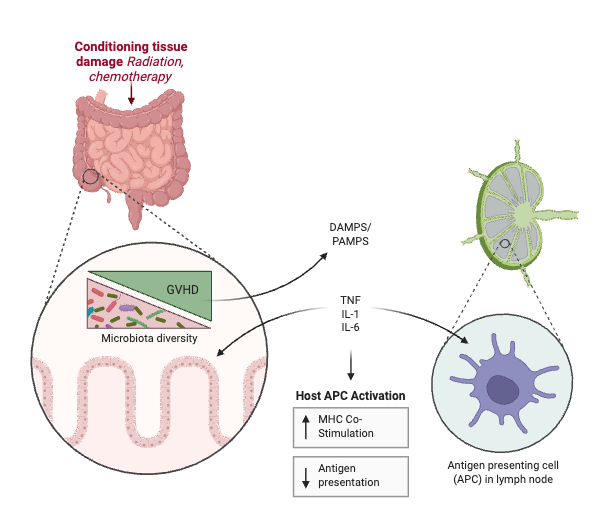
- The most important risk factor is high Human Leukocyte Antigen (HLA) mismatch between donor and recipient. Other factors are unrelated donor, unmatched donor, sex difference such as female donor to male recipient, older age of donor or recipient and strong radiation or chemotherapy before transplantation.
- Acute GVHD occurs in three phases. First, radiation and chemotherapy damage the host tissue and inflammatory signals are released. Then host cells present these signals to donor T-cells and donor T-cells become activated. Finally activated donor cells and cytokines move to target organs and destroy host cells by apoptosis.
- GVHD is prevented by giving prophylactic immunosuppressive drugs. Common drugs are cyclosporine and methotrexate. These drugs reduce the chance of donor cell attack.
- If GVHD develops, corticosteroids such as prednisone are used as first line treatment. If steroid does not work, other drugs, targeted biological therapy or photopheresis may be used.
- In graft versus tumor effect, donor immune cells also destroy remaining cancer cells in recipient body. So mild GVHD may reduce cancer relapse. But severe GVHD is dangerous and life threatening.
Prevention of Transplant Rejection
The following are the important methods used for prevention of transplant rejection.
- Blood group and tissue matching is the first important step. The ABO blood group of donor and recipient should be compatible. HLA markers are also matched. More close matching gives less chance of immune attack.
- Pre-transplant crossmatch testing is done before surgery. It is done to check whether recipient has already formed antibodies against donor tissue. Negative crossmatch means antibodies are not present. It helps to prevent hyperacute rejection.
- Induction immunosuppression therapy is given at the time of transplantation. In this method high dose immunosuppressive drugs are given. These drugs block or reduce recipient T-cells. So initial attack on graft is prevented.
- Maintenance immunosuppressive therapy is needed for long time. In most cases it is needed lifelong. It keeps the immune system suppressed and prevents slow immune attack on graft.
- The common drugs used are corticosteroids, calcineurin inhibitors and antimetabolites. These drugs should be taken regularly. If drug is stopped, rejection may occur.
- In xenotransplantation, genetic engineering is used. Animal organ is modified before transplantation. CRISPR-Cas9 may be used to remove animal genes which produce strong immune rejection.
- Some human immune regulating genes may also be added in animal organ. It makes the organ more compatible with human body and reduces immediate rejection.
Immunosuppressive Drugs Used in Transplantation
The following are the important immunosuppressive drugs used in transplantation.
- Corticosteroids or Glucocorticoids – It includes prednisone, methylprednisolone, prednisolone and budesonide. These drugs decrease inflammatory cytokines. Macrophage activation is suppressed. T-cell apoptosis also occur.
- Calcineurin inhibitors – It includes cyclosporine and tacrolimus. These drugs inhibit calcineurin enzyme. So interleukin-2 (IL-2) formation is stopped. Due to this T-cell maturation and proliferation does not occur properly.
- Antimetabolites or Nucleotide synthesis inhibitors – It includes mycophenolate mofetil, azathioprine and leflunomide. These drugs block purine synthesis. So T-cells and B-cells cannot divide rapidly.
- mTOR inhibitors – It includes sirolimus, everolimus and zotarolimus. These drugs block mTORC1 pathway. Due to this growth factor induced T-cell proliferation is inhibited.
- Monoclonal antibodies – These are specific biological drugs. It includes alemtuzumab, basiliximab, daclizumab, rituximab and muromonab-CD3. These are used mainly in induction therapy and severe rejection.
- Alemtuzumab acts on CD52 and cell lysis occur.
- Basiliximab and daclizumab block IL-2 receptor.
- Rituximab depletes B-cells.
- Muromonab-CD3 blocks T-cell activation.
- Polyclonal antibodies – It includes antithymocyte globulin (ATG) and antilymphocyte globulin (ALG). These drugs are obtained from animal serum. They bind with T-lymphocytes and destroy them. So broad immunosuppression occur.
- Janus kinase inhibitors or JAK inhibitors – It includes tofacitinib. These drugs inhibit JAK pathway. So immune cell signaling is reduced.
Applications of Transplantation
The following are the important applications of transplantation.
- Treatment of end-stage organ failure – It is used to replace the failed or severely damaged organs. Such as kidney, liver, heart, lungs and pancreas.
- Treatment of blood and bone marrow diseases – Bone marrow transplantation and hematopoietic stem cell transplantation are used in blood cancers. Such as leukemia and lymphoma. It is also used in bone marrow failure disease like aplastic anemia.
- Treatment of severe lung diseases – Lung transplantation is used in fatal lung conditions. Such as chronic airway disease, cystic fibrosis and other life threatening respiratory diseases.
- Reconstructive and plastic surgery – Skin graft is used in severe burn cases. Skin may also be transferred from one part of body to another part for facial reconstruction.
- Coronary bypass surgery – Autograft is used in coronary bypass surgery. Healthy vein from leg is transferred to heart region to bypass blocked artery in coronary artery disease.
- Reattachment or replacement of severed digits – Transplantation is used to replace or repair cut digits. Example, severed thumb may be replaced by big toe.
- Regeneration of brain tissue – Fetal nervous tissue graft may be used in brain. It is an experimental treatment for slowing some neurological disease like Alzheimer’s disease.
Ethical Issues in Transplantation
The following are the important ethical issues in transplantation.
- Organ shortage and allocation – Donor organs are very less than the number of patients waiting for transplantation. So selection of patient become difficult. The organ should be given in fair way and to the patient where success chance is more.
- Payment and organ trafficking – Buying and selling of human organs is not ethical. It may exploit poor people and helpless donor. Illegal organ trade is a serious problem in many places.
- Brain death – Brain death must be properly defined before organ removal. It means permanent loss of brain function. Organs should be taken only after death is confirmed medically and legally.
- Living donor safety – Living donor gives organ by own wish. But donor health should be protected. Surgery risk, future health and mental condition of donor should be checked properly.
- Xenotransplantation – It is animal to human transplantation. Example, pig organ to human. It creates ethical question about use of animal organ, safety of patient and transfer of animal infection to human.
- Use of fetal tissue – Fetal nervous tissue may be used experimentally for brain disease. But its use creates ethical problem because it is related with human fetal material.
- Religious and moral acceptance – Transplantation involves transfer of body parts from one person to another. So it may have religious and moral questions. Different religion and society may accept it in different way.
Limitations of Transplantation
The following are the important limitations of transplantation.
- Severe organ shortage – Donor organs are very less than the number of patients. So waiting list become very long. Many patients may die before getting suitable organ.
- Difficulty in genetic matching – Proper matching of Human Leukocyte Antigen (HLA) is difficult. Because HLA genes are highly variable. Perfect match from unrelated donor is very rare.
- Risk of immune rejection – The recipient immune system may identify the graft as foreign. Then it attacks the transplanted organ. This may cause graft failure.
- Chronic rejection – It is a major problem in transplantation. It causes slow and irreversible damage of graft. It does not respond properly to common medicines. Sometimes re-transplantation is the only option.
- Lifelong immunosuppression – Most transplanted patients need immunosuppressive drugs for whole life. These drugs must be taken regularly. If drugs are stopped, rejection may occur.
- Increased infection risk – Due to continuous immune suppression, patient become more prone to infections. Bacterial, viral and fungal infections may occur easily.
- Risk of cancer – Long term immunosuppression also increase chance of some cancers. Such as post-transplant lymphoproliferative disease and skin cancer.
- Drug toxicity – Immunosuppressive drugs may produce toxic side effects. It may cause kidney damage, neurological problems, hypertension and post-transplant diabetes.
- Graft-versus-host disease (GVHD) – It mainly occur in bone marrow and stem cell transplantation. Donor immune cells attack recipient tissues. It may become systemic and life threatening.
- Patient sensitization – Some patients already have antibodies against foreign HLA. This may occur due to previous blood transfusion, pregnancy or previous transplantation. Such patients have less chance of finding compatible donor and more chance of hyperacute rejection.
Advantages of Transplantation
The following are the important advantages of transplantation.
- Transplantation is used in terminal organ failure. It is the important treatment when kidney, liver, heart, lungs or pancreas fail completely.
- It is a life saving method in many fatal diseases. It is used in severe anemia, cancer and leukemia like condition.
- Kidney transplantation is an alternative to lifelong dialysis. In end-stage renal disease, patient can live without continuous dialysis after successful transplant.
- It is used in reconstructive and plastic surgery. Skin graft and other grafts are used in severe burns, facial injury and maiming accidents.
- It helps to replace tissue which cannot regenerate properly. Example, fetal nervous tissue may be used for brain tissue regeneration in Alzheimer’s disease like condition.
- Bone marrow transplantation helps to establish healthy stem cell line. In leukemia, it can stop abnormal production of malignant white blood cells and produce healthy blood cells.
- It gives graft-versus-tumor effect in some stem cell transplantation. Donor immune cells may destroy remaining cancer cells in recipient body. So chance of cancer relapse may become low.
Examples of Transplantation
The following are the examples of transplantation.
- Kidney transplantation – In this, healthy kidney is transferred from living donor or deceased donor. It is used in end-stage renal failure. Gene-edited pig kidney may also be used experimentally as xenotransplantation.
- Liver transplantation – In this, failed liver is replaced by healthy donor liver. Gene-edited pig liver is also used in some experimental trial.
- Heart transplantation – In this, failed heart is replaced by healthy donor heart. Gene-edited pig heart may also be used experimentally.
- Bone marrow and stem cell transplantation – In this, hematopoietic stem cells are transferred. It is used in leukemia, other blood cancers and aplastic anemia.
- Skin grafting – In this, skin is transferred from one part of body to another part. Example, abdomen skin to face for reconstruction. Donor skin may also be used in severe burn patient.
- Cornea transplantation – In this, damaged cornea is replaced by healthy cornea. It is less rejected because cornea has no blood supply.
- Vein autograft – In this, healthy vein is taken from leg and grafted into heart region. It is used in coronary bypass surgery to bypass blocked artery.
- Heart valve replacement – In this, defective heart valve is replaced. Animal tissue such as pig heart valve may be used.
- Vascularized composite allograft – It is complex type graft. It includes skin, bone, muscle, blood vessels and nerves. Example, hand transplant and face transplant.
- Digit replacement – In this, severed digit is replaced by another body part. Example, severed thumb replaced with big toe from same patient.
- Fetal nervous tissue graft – In this, fetal nervous tissue is grafted into brain. It is experimental method for neurodegenerative disease like Alzheimer’s disease.
- Blood transfusion – It is transfer of blood from matched donor to recipient. It is also considered as routine form of tissue transplantation.
- Other solid organ transplantation – It includes lung, pancreas and intestine transplantation. These are done when these organs fail or become severely damaged.
References
- Justiz Vaillant, A. A., Misra, S., & Fitzgerald, B. M. (2024, May 1). Acute transplantation rejection. StatPearls; NCBI Bookshelf.
- Dixon, E. (2024, September 24). Acute and chronic GvHD: An overview. GvHD Hub.
- Anadolu staff. (2026, June 9). China performs world’s 1st-ever transplant of pig liver, kidneys into human. Anadolu Ajansı.
- Choktaweesak, N., Jayavesa, P., Phiancharoen, S., Na-thalang, O., Sroyson, S., & Dhitavat, V. (2023). Comparison between complement-dependent cytotoxicity and flow cytometry crossmatches in deceased donor kidney transplantation. J Hematol Transfus Med, 33, 179-187.
- Phelan, P. (2024, February 9). Cross match. Edren.org; Edinburgh Renal Unit.
- Thermo Fisher Scientific. (n.d.). Crossmatch testing education.
- Effector mechanisms of rejection. (n.d.). PubMed Central (PMC).
- NYU Langone Health. (2025, November 5). First gene-edited pig kidney transplant clinical trial begins at NYU Langone Health.
- Cleveland Clinic. (2023, February 21). Graft vs. host disease (GvHD).
- Justiz Vaillant, A. A., Modi, P., & Mohammadi, O. (2024, June 7). Graft-versus-host disease. StatPearls; NCBI Bookshelf.
- Incyte. (n.d.). Graft-versus-host disease mechanism of disease. Incyte Medical Information.
- Hollar, D. W., Jr. (2023). Grafts and grafting. Health and Medicine Research Starters. EBSCO.
- Testing.com. (2021, November 9). HLA test: What it measures and how it works.
- UC Davis Health. (n.d.). HLA typing/matching. Transplant Center.
- Brown University Health. (n.d.). Human leukocyte antigen (HLA) crossmatch tests.
- Giorgi, A. (2023, December 15). Immunosuppressant drugs: A complete overview. (Z. R. Cochrane, Rev.). Healthline.
- Immunosuppressive drug therapy. (n.d.). PubMed Central (PMC).
- Immunosuppressive drugs. (n.d.). PubMed Central (PMC).
- Immunosuppressive drug. (2026, May 29). In Wikipedia.
- Schaaf, T. (2020, January 8). In MedTech history: Kidney transplant. MyStrategist.
- Joseph E. Murray. (2026, May 29). In Wikipedia.
- Nobel Prize Outreach. (2026). Joseph E. Murray – Facts. NobelPrize.org.
- Joseph Murray (1919–2012): First transplant surgeon. (n.d.). PubMed Central (PMC).
- Joseph Murray: Pioneering plastic surgeon and father of the first organ transplant. (n.d.). PubMed.
- Milestones in acute GVHD pathophysiology. (n.d.). PubMed Central (PMC).
- Zieliński, M., et al. (2013). Modified flow cytometry crossmatch detecting alloantibody-related cytotoxicity as a way to distinguish lytic antibodies from harmless in allosensitised kidney recipients. Transplantation Proceedings. (Reprinted by STEMCELL Technologies).
- OpenStax. (n.d.). Organ transplantation and rejection. Microbiology. Lumen Learning.
- Ghimire, S., Weber, D., Mavin, E., Wang, X., Dickinson, A. M., & Holler, E. (2017). Pathophysiology of GvHD and other HSCT-related major complications. Frontiers in Immunology, 8, Article 79. https://doi.org/10.3389/fimmu.2017.00079
- Pathophysiology of GvHD and other HSCT-related major complications. (n.d.). PubMed Central (PMC).
- Greinix, H. T. (2014). Pathophysiology of chronic graft-versus-host disease. Hematology Education, 8, 367-374. European Hematology Association (EHA) Library.
- Perforin/granzyme-dependent and independent mechanisms are both important for the development of graft-versus-host disease after murine bone marrow transplantation. (n.d.). PubMed Central (PMC).
- Yartsev, A. (2025, October 13). Pharmacology of immunosuppressants. Deranged Physiology.
- National Kidney Foundation. (2026, April 9). Pig kidney transplants in humans: Xenotransplantation explained by experts.
- Recent progress in pig-to-human kidney xenotransplantation. (n.d.). PubMed Central (PMC).
- The CDC crossmatch in the era of flow cytometric cross-match and single antigen beads. (n.d.). PubMed Central (PMC).
- The immunology and clinical science of transplantation: Classification, rejection mechanisms, and modern therapeutic horizons. (n.d.).
- Deathridge, J. (n.d.). Transplant immunology. British Society for Immunology.
- Duquesnoy, R. J. (2020, April 17). Introduction to transplantation immunology. Transplant Pathology Internet Services (TPIS).
- Transplant outcomes in positive complement-dependent cytotoxicity- versus flow cytometry-crossmatch kidney transplant recipients after successful desensitization: a retrospective study. (n.d.). PubMed.
- DeMuro, J. (2025, April 1). Transplant rejection. MedlinePlus Medical Encyclopedia.
- Transplantation. (n.d.). Clinical Gate.
- National Marrow Donor Program. (2026). What is HLA? HLA basics, typing & matching overview.