Biotechnology is the application of biological systems, organisms, or derivatives to develop or modify products and processes for specific use.It integrates disciplines such as biology, chemistry, physics, engineering, and computer science to address challenges in sectors like healthcare, agriculture, industry, and environmental management.
The term ‘biotechnology’ was first introduced in 1919 by Hungarian engineer Károly Ereky, who envisioned it as a means to produce products from raw materials using living organisms.However, the practice of biotechnology dates back thousands of years.
Ancient civilizations utilized fermentation processes to produce bread, beer, and wine, marking early examples of biotechnology.Selective breeding of plants and animals was also practiced to enhance desirable traits.
In the 19th century, Gregor Mendel’s work on pea plants laid the foundation for genetics, a cornerstone of modern biotechnology.Louis Pasteur’s research on microbial fermentation and disease prevention further advanced the field.
The 20th century witnessed significant milestones:
1953: Discovery of the DNA double helix structure by James Watson and Francis Crick.
1973: Development of recombinant DNA technology by Stanley Cohen and Herbert Boyer.
1978: Production of synthetic human insulin using genetically engineered bacteria.
1980s-1990s: Emergence of genetically modified crops and advancements in gene therapy.
Biotechnology is categorized into several branches:
Red Biotechnology: Focuses on medical applications, including drug development, gene therapy, and diagnostics.
Green Biotechnology: Pertains to agricultural processes, such as developing pest-resistant or nutrient-enhanced crops.
White Biotechnology: Involves industrial processes, like producing biofuels and biodegradable plastics.
Blue Biotechnology: Deals with marine and aquatic applications, including the development of new pharmaceuticals from sea organisms.
The importance of biotechnology is evident in its wide-ranging applications:
Healthcare: Development of vaccines, monoclonal antibodies, and personalized medicine.
Agriculture: Creation of genetically modified crops with improved yield, resistance to pests, and enhanced nutritional content.
Environment: Bioremediation techniques to clean up pollutants and waste management solutions.
Industry: Production of enzymes for detergents, biofuels, and biodegradable materials.
In India, biotechnology has seen substantial growth, with the sector valued at $80 billion as of 2022 and projected to reach $150 billion by 2025.The establishment of the Department of Biotechnology in 1986 marked a significant step in promoting research and development in this field.Initiatives like the Bio-RIDE scheme aim to further bolster the bioeconomy by focusing on research, entrepreneurship, and industrial development.
The early detection of diseases is crucial for effective treatment, and molecular diagnostics serves as a pivotal tool in this regard. This term encompasses a range of diagnostic techniques that assess an individual’s health at a molecular level. Specifically, molecular diagnostics focuses on the identification and quantification of genetic sequences—often referred to as biomarkers—found in … Read more
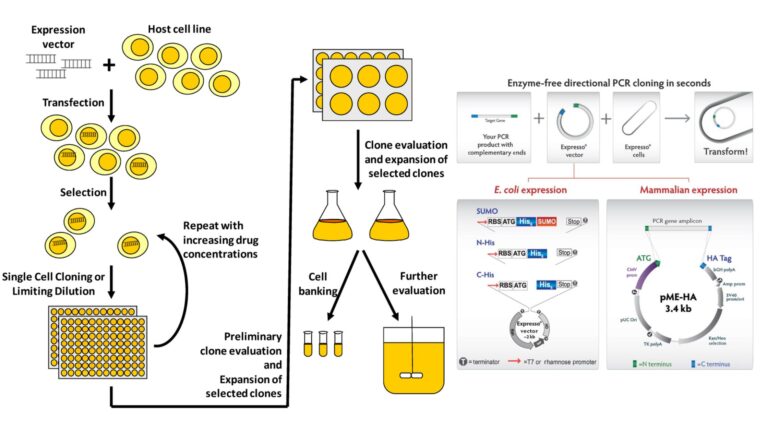
Animal cells are ideal for recombinant protein production because they possess the ability to carry out post-translational modifications, a process that is often lacking in bacterial cells. This capability makes animal cells essential for the commercial synthesis of various biological products, including antibodies, hormones, growth factors, cytokines, and viral coat proteins, which are used in … Read more
Principles Of Biotechnology Biotechnology has grown and changed a lot over the years. The old way of doing it was to use microbes to make products that people could use. Now, the new way is to use genes to make vaccines. So, the European Federation of Biotechnology (EFB) has come up with a new definition … Read more