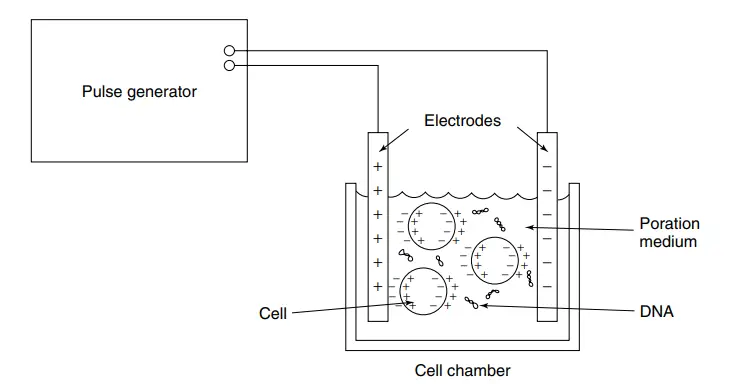
Electroporator is a specialized electronic pulse generator that is used to deliver controlled high-voltage electrical pulses to biological cells. It is used in electroporation process for temporary opening of the cell membrane. It acts on the lipid bilayer membrane of the cell and makes small aqueous pores for short time. Through these pores, different macromolecules
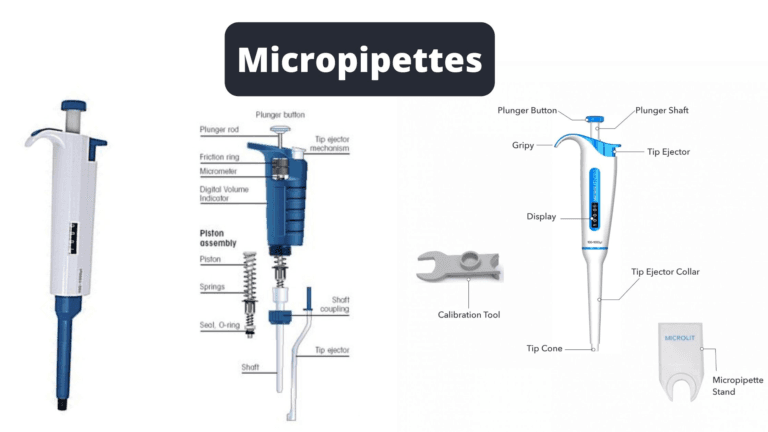
Micropipette is a laboratory instrument that is used to measure and transfer very small volume of liquid in microliter range. It is highly accurate instrument and commonly used in molecular biology, chemistry and clinical diagnostic laboratory. It works by a piston mechanism which creates suction and draws liquid into a disposable plastic tip. The volume
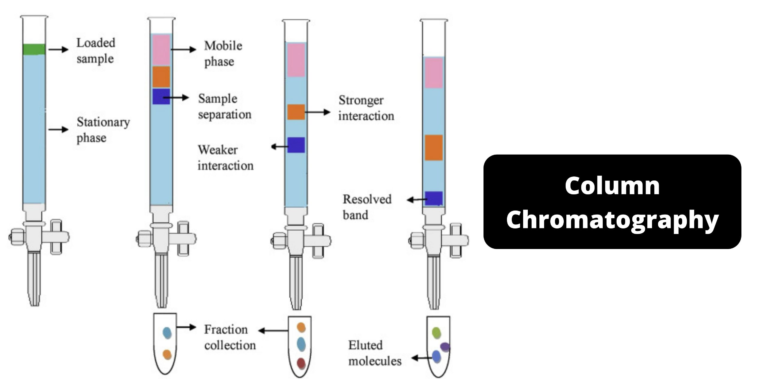
Chromatography is a laboratory analytical technique which is used to separate a chemical mixture into its individual components. It is used for identification, purification and estimation of different substances present in a mixture. It separates the components according to their different movement through two phases. In this technique, the mixture is distributed between a mobile
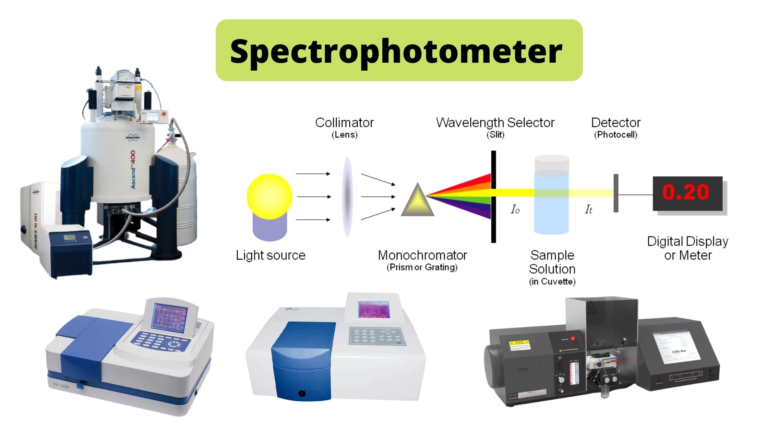
Spectrophotometer is an analytical instrument which is used to measure the light absorbed, transmitted or reflected by a substance at particular wavelength. It has a light source, sample holder and detector. The liquid sample is kept in a cuvette. Then the beam of light is passed through the sample. The detector detects the light which
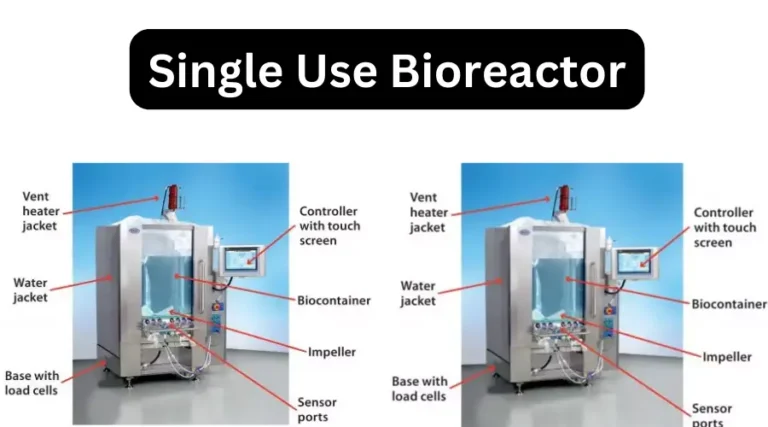
Single Use Bioreactor is a cell cultivation system where the reusable glass or stainless steel vessel is replaced by a disposable plastic bag. It is also known as Disposable Bioreactor. The bag is pre-sterilized and used only for one batch. This flexible polymeric bag acts as the sterile place for the growth of cells. It
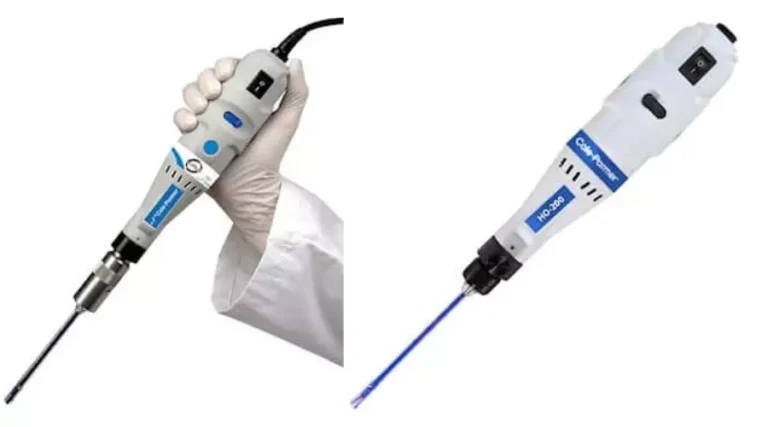
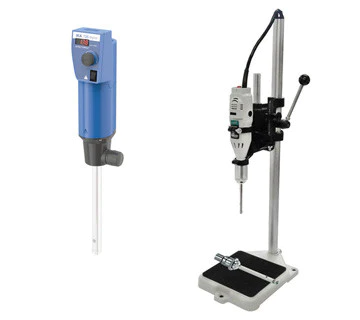
Tissue Homogenizer is a laboratory device that is used to break biological tissues into small and uniform particles. It physically disrupts the tissue structure by rupturing the cell wall and cell membrane. During this process, intracellular components like proteins, nucleic acids (DNA and RNA) and microorganisms are released from the tissue matrix. The uniform mixture
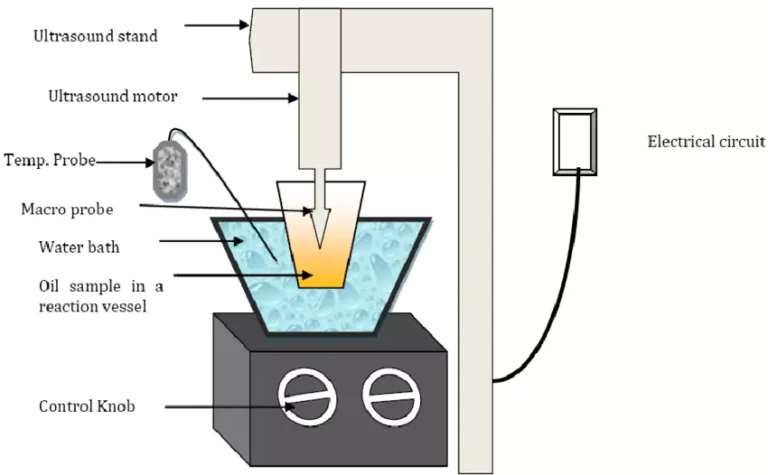
Ultrasonic Homogenizer is a scientific device used to disrupt, mix and homogenize liquid materials. It is also called sonicator or ultrasonic processor. It is used to make uniform dispersion and emulsion in liquid sample. It mainly consists of three parts, such as generator, piezoelectric transducer and metal probe. The metal probe is also called horn
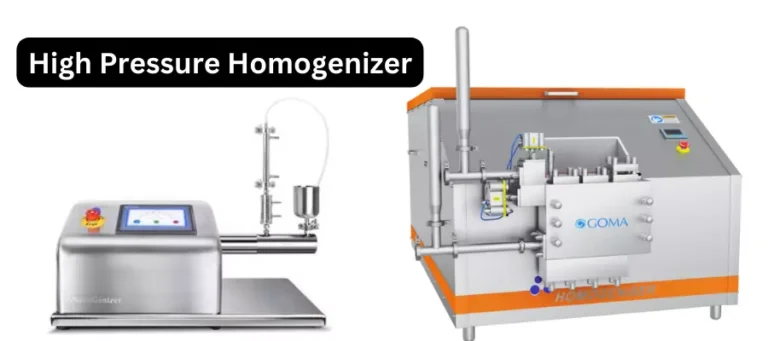
Homogenizer is a mechanical device used to make a uniform and stable mixture of two substances which normally do not mix well. It is used in food, dairy, pharmaceutical and cosmetic industries. It forces a liquid or semi-fluid product through a narrow gap called homogenizing valve under very high pressure. In this process, the liquid
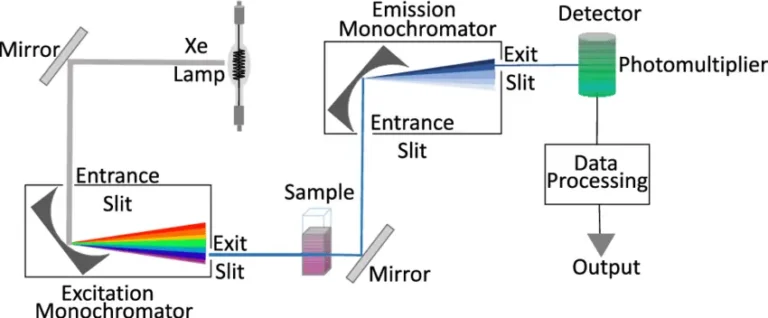
Fluorescence spectrometry is an analytical technique that is used to measure the light emitted by a substance after absorption of electromagnetic radiation. It is also known as fluorimetry. It is a very sensitive method for detecting small amount of substance. In this method, the sample is first exposed with a particular wavelength of high energy
Rotor Stator Homogenizer is a mechanical homogenizer used for mixing, emulsification and particle size reduction. It consists of two main parts, the rotor and the stator. The rotor is the rotating part and the stator is the fixed outer part. The rotor rotates at high speed inside the stator. Due to this rotation, the liquid