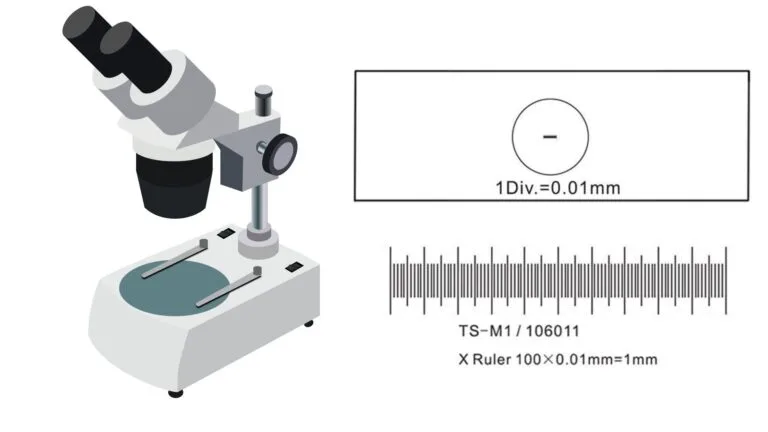
Stage micrometer is a special type of microscopic glass slide which is used for calibration and measurement of microscopic objects. It acts like a small ruler on the microscope stage. It has a fine scale marked or engraved on its surface. The scale of stage micrometer has a known measurement. Generally, the total scale is
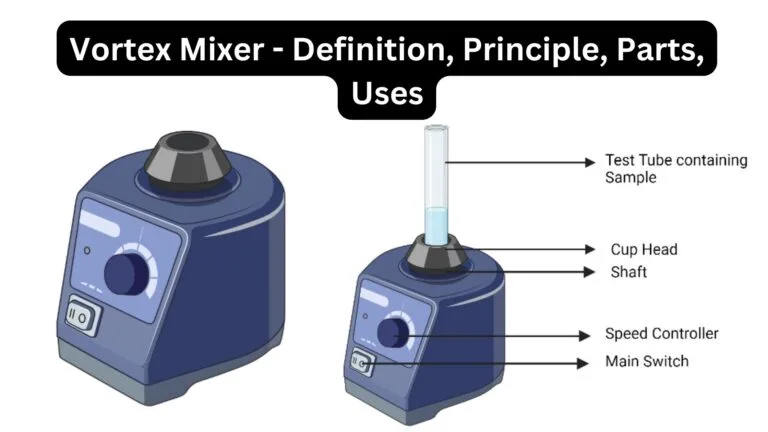
Vortex mixer is a laboratory instrument that is used to mix small amount of liquid samples rapidly. It is commonly used for mixing liquids in test tubes, vials, and well plates. It produces a swirling movement in the liquid sample, and this movement is called a vortex. It is made up of an electric motor
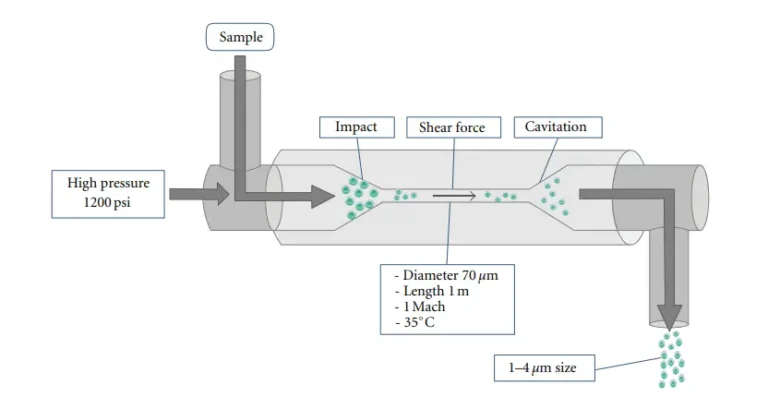
Homogenizer is a mechanical instrument used in laboratory and industry. It is used for mixing, dispersing and breaking down materials. It makes the mixture uniform and homogeneous. Homogenizer works by applying strong mechanical force. These forces include shear, cavitation and turbulence. By these forces, particles or droplets become smaller in size. It is used for
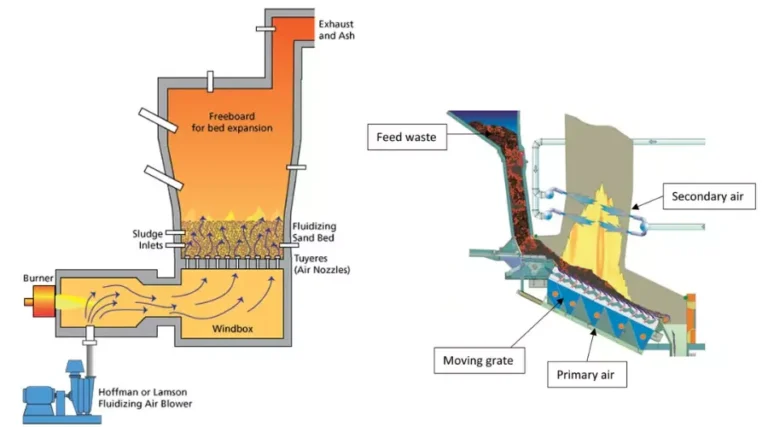
Incinerator is a special type of furnace used for burning waste materials. It is used for hazardous and non-hazardous wastes. The burning is done in a controlled combustion chamber at very high temperature. The process is called incineration. In this process, different wastes like solid garbage, soil, sludge, liquids and gases are burned. After burning,
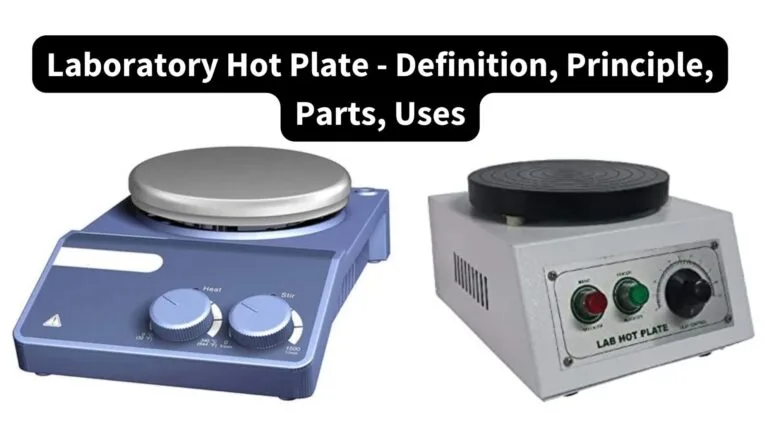
Laboratory hot plate is a portable table top instrument used for heating samples, chemicals and reagents. It gives heat slowly and safely. It is used instead of open flame. It has a flat heating surface. The surface may be made up of ceramic, aluminium, polypropylene or stainless steel. A heating element is present below the
Laboratory refrigerators and freezers are special cooling instruments used in research, medical and scientific laboratories. They are used for storing temperature sensitive materials. Biological samples, vaccines, chemicals and reagents are preserved in them. They are different from normal household refrigerators. Laboratory refrigerators and freezers are made for accurate and stable cooling. They have uniform cooling,
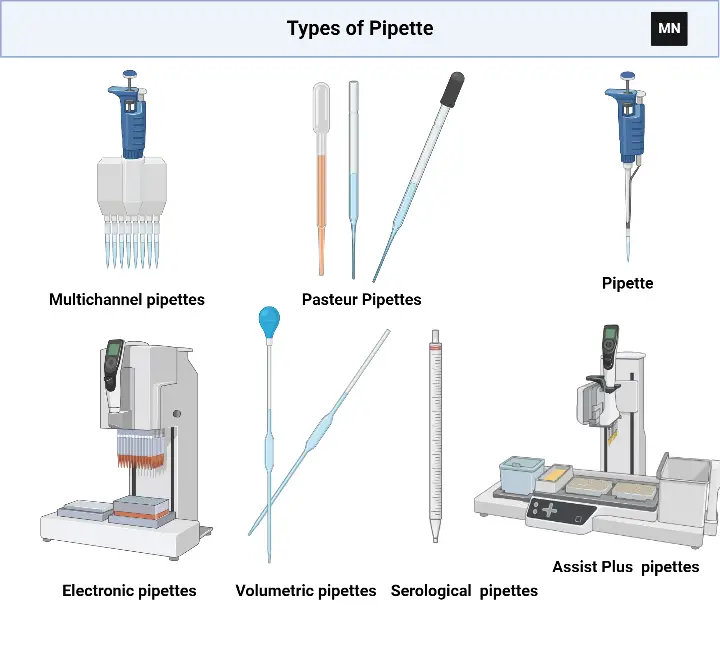
Pipette is a precision laboratory instrument used for measuring, transferring and dispensing small amount of liquid. The word pipette is taken from French word, which means little pipe. It is commonly used in chemistry, biology and medical research work. Pipette is used for measuring liquid in millilitre or microlitre range. It helps to take accurate
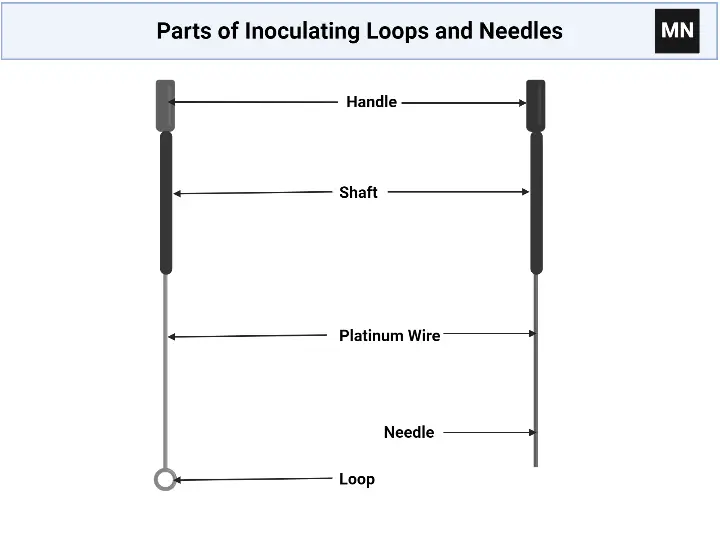
Inoculating loops and needles are hand held laboratory instruments used in microbiology. These are used to pick and transfer small amount of microorganisms from one culture medium to another. The small amount of microorganism which is transferred is called inoculum. These instruments are also called smear loops, inoculation wands or microstreakers. They have a handle,
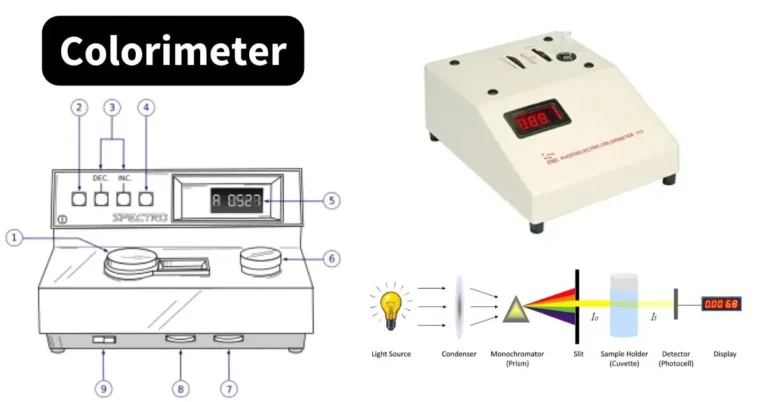
Colorimeter is a light sensitive analytical instrument used to measure absorbance and transmittance of light. It measures selected wavelength of light when it passes through a coloured solution. It is mainly used for finding the concentration of coloured solution. The working of colorimeter is based on Beer-Lambert law. According to this law, the amount of
Hot air oven is a specialized laboratory and industrial equipment used for dry heat sterilization, drying and thermal processing. It is an electrical device having thermostatically controlled insulated chamber, where hot air is circulated. The normal temperature range is about 50°C to 300°C. It is mainly used for sterilization of materials which are heat-resistant but