

Euglena is a unicellular microscopic organism belonging to the kingdom Protista. It is generally found in freshwater ponds, lakes, streams and water having organic matter. Some species are also found in brackish water, salt water and moist soil.
Euglena shows both plant and animal characters. It has chloroplast with chlorophyll, so in presence of sunlight it can prepare its own food by photosynthesis. But in dark condition, it absorbs organic matter from the surrounding like animal forms.
The body of Euglena has no rigid cellulose cell wall. Instead of this, it is covered by a tough and flexible protein layer called pellicle, which gives shape to the body and also allows temporary change in body shape. This type of creeping or squirming movement is called metaboly or euglenoid movement.
For locomotion, Euglena has a long whip like flagellum. It helps in swimming through water. A red coloured eyespot or stigma is also present near the anterior region, which helps to detect light along with photoreceptor and guides the organism toward light.
The reserve food material is paramylon, which is a starch like carbohydrate. Reproduction takes place asexually by longitudinal binary fission, where the cell divides lengthwise from anterior end to posterior end and forms two daughter cells.
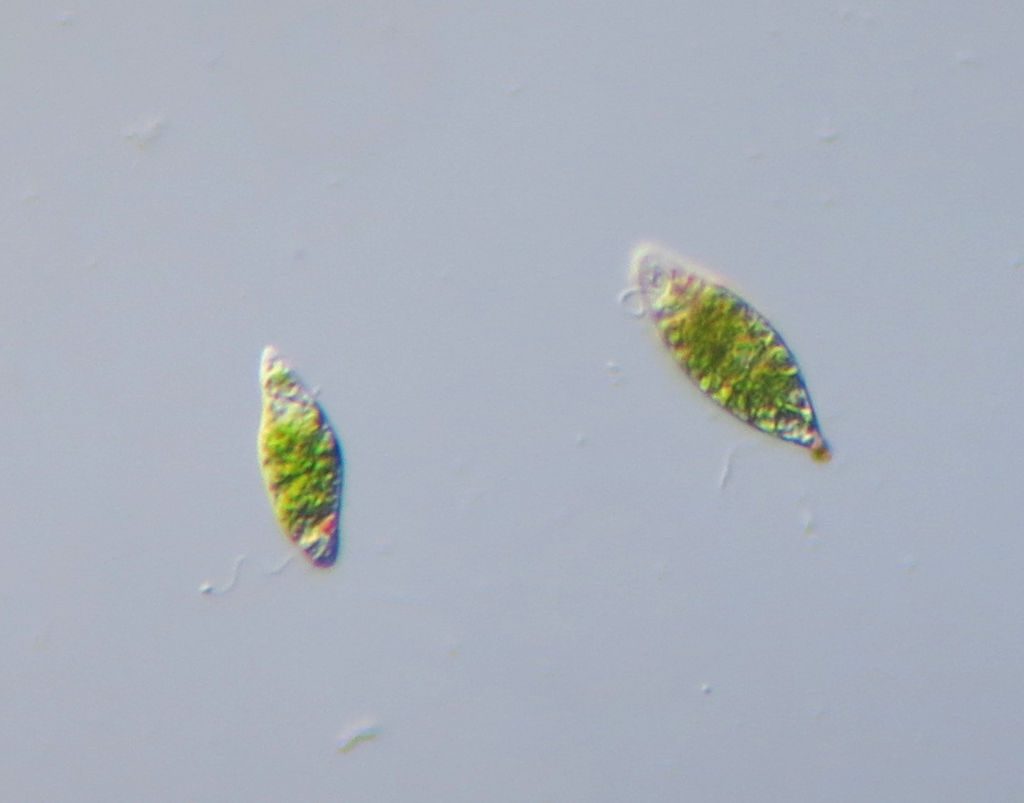
Definition of Euglena
Euglena is a genus of single-celled microorganisms found in water, capable of photosynthesis and movement.
General Characteristics of Euglena
- Euglena is unicellular microscopic eukaryotic organism and comes under kingdom Protista.
- It is mostly freshwater form, found in ponds, ditches, lakes and slow moving water rich in organic matter. Some species are also present in brackish water, salt water and moist soil.
- The organism shows both plant and animal character. Plant character is due to presence of chloroplast and chlorophyll, while animal character is due to absence of cell wall and free movement.
- Nutrition is mixotrophic type. In light, it prepares food by photosynthesis, and in dark condition organic food materials are absorbed from surrounding medium.
- The chloroplast contains chlorophyll a and chlorophyll b. These pigments help in trapping light energy and carbohydrate food is formed.
- Cell wall is absent. Instead of cell wall, a flexible proteinaceous covering called pellicle is present outside the body, which maintains body shape but allows change in shape.
- Locomotion is performed by flagellum. It is long whip like structure arising from anterior end and helps the organism to swim in water.
- Due to flexible pellicle, the body undergoes contraction and expansion. This peculiar movement is called metaboly or euglenoid movement.
- A red coloured eyespot or stigma is present near the anterior region. It is associated with photoreceptor and helps in detecting light. Movement toward light is called phototaxis.
- Reserve food material is paramylon. It is starch like carbohydrate but not true starch and stored as granules inside cytoplasm.
- Reproduction takes place by longitudinal binary fission. The cell divides lengthwise from anterior end to posterior end and two daughter individuals are formed.
- During unfavourable condition, thick walled cyst is formed. In this condition, the organism remains inactive until favourable condition returns.
Habitat of Euglena
- Euglena is mainly freshwater organism. It is found in ponds, lakes, puddles, ditches, marshy places and slow moving streams.
- It grows well in stagnant water. Water having decaying organic matter, nitrogenous waste and animal waste is suitable for its growth.
- Euglena is commonly seen in polluted water also. So its presence may indicate organic pollution of water and sometimes industrial waste water.
- Some species are found in brackish water and marine water. These forms can live in estuary, coastal water and salt containing water.
- Some benthic forms live near the bottom region, where water and sediment meet together. In some condition, they may form green patches on wet marine sand during low tide.
- Apart from water, some Euglena are also found in damp soil and mud. They may also occur in moist tree bark and snow in some places.
- Few species can survive in extreme habitat. They are found in hot springs, acidic pools and water polluted with heavy metals.
- Euglena can tolerate different water condition. It may grow from slightly acidic to slightly alkaline water, therefore it is distributed in many places of the world.
Food and Nutrition of Euglena
- Euglena shows mixotrophic nutrition. It means the organism can obtain food by both plant like and animal like method.
- In presence of light, Euglena prepares its own food. The green chloroplasts contain chlorophyll and by using sunlight, carbon dioxide and water, carbohydrate food is formed.
- This plant like nutrition is called autotrophic nutrition. During this process, photosynthesis takes place as in green plants.
- In dark condition, photosynthesis does not occur properly. Then Euglena absorbs dissolved organic substances from the surrounding water. This type of nutrition is called saprozoic nutrition.
- Sometimes the organism may lose green colour when kept in dark for long time. In this condition, chlorophyll is reduced and it depends more on organic food present in water.
- Some colourless species of Euglena or forms without chloroplast show animal like feeding. They may engulf small organisms such as bacteria, small algae and other protists. This process is called phagocytosis.
- The excess carbohydrate food is not stored as true starch. It is stored in the form of paramylon granules inside the cytoplasm.
- Paramylon is a starch like reserve food. It is used by the organism when light is absent or food supply is less.
- In low oxygen condition, stored paramylon may be broken down by wax ester fermentation. By this process some energy is produced and the organism can remain alive in unfavourable condition.
- Although Euglena can prepare food by photosynthesis, still it requires some vitamins from outside. Vitamin B1 or thiamine and vitamin B12 are important for its growth and these are generally obtained from bacteria present in the surrounding medium.
External Structure and Shape of Euglena
- Euglena is generally elongated and spindle shaped organism. The anterior end is blunt, middle part is broader and posterior end becomes narrow and pointed.
- The body is not fixed like rigid plant cell. It can bend, twist and change its shape for short time. This peculiar worm like movement is called metaboly or euglenoid movement.
- The size of Euglena varies in different species. Some forms are about 10 µm long, while some large species may reach more than 500 µm in length.
- Cell wall is absent in Euglena. Instead of cellulose wall, the body is covered by pellicle, which is tough, elastic and proteinaceous covering present below the plasma membrane.
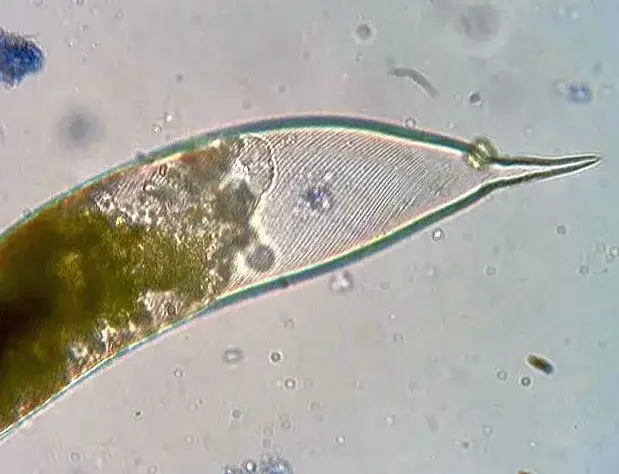
- Pellicle is made up of many interlocking protein strips. These strips are generally S-shaped and arranged spirally from anterior to posterior end, giving striated appearance to the body surface.
- At the anterior end, a permanent flask shaped depression is present. It includes cytostome, cytopharynx and an internal rounded reservoir.
- Cytostome is the external cell mouth like opening. From this opening a short tubular cytopharynx or cell gullet passes inward and opens into the reservoir.
- The reservoir is present inside the anterior region. It is a rounded chamber and the flagella arise from this part.
- Euglena has two flagella, but generally one flagellum is seen outside. It is long, whip like and helps in pulling the organism through water.
- The second flagellum is very short. It remains inside the reservoir and usually not projected outside the body.
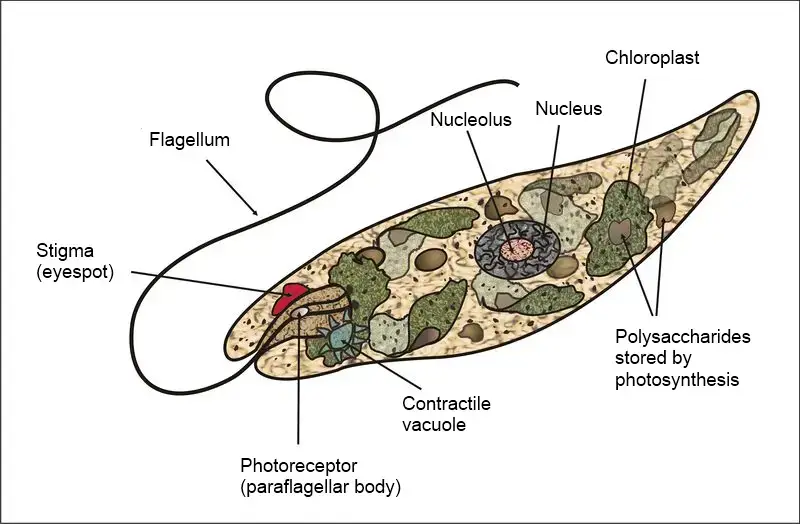
Locomotory and Sensory Structures of Euglena
- Euglena has flagella as the main locomotory organ. These flagella arise from the anterior reservoir and are attached with basal bodies.
- Generally two flagella are present. One flagellum is long and comes out from the body. It is whip like and by its beating, the organism is pulled forward in water.
- The second flagellum is very short. It remains inside the reservoir and does not come out externally in most of the forms.
- The long flagellum bears many minute hair like structures on its surface. These are called mastigonemes. They help in swimming and also increase the propelling action of flagellum.
- The body covering of Euglena is pellicle. It is not rigid like cell wall. It is made up of flexible protein strips, which are arranged around the body.
- The strips of pellicle can slide over one another. Due to this, the body changes its shape and shows slow crawling or wriggling movement. This movement is called metaboly or euglenoid movement.
- Below the pellicle, microtubules and contractile fibrils are present. These fibrils are called myonemes. They help in contraction and expansion of the body during metaboly.
- The main sensory structure is eyespot or stigma. It is red coloured and cup shaped body present near the reservoir. It contains carotenoid pigment granules.
- The eyespot itself does not receive light directly. It works as a screen or light shield, by which light falling on photoreceptor is controlled.
- The actual light sensitive structure is photoreceptor or paraflagellar body. It is present near the base of long flagellum and receives light stimulus.
- During swimming, Euglena rotates on its own axis. At this time, the red eyespot comes between light and photoreceptor again and again. So a light and shadow effect is produced.
- By this process, the organism detects the direction and intensity of light. Then the flagellum changes its beating and Euglena moves toward light. This movement toward light is called phototaxis.
Internal Organisation of Euglena
- Cytoplasm – The body of Euglena is filled with cytoplasm. It is divided into outer clear and dense ectoplasm and inner granular fluid like endoplasm, where nucleus, chloroplasts and other organelles are present.
- Nucleus – A single large nucleus is present near the centre or slightly towards posterior region. It is generally spherical or oval, surrounded by double nuclear membrane having pores and a distinct central nucleolus or endosome is present inside it.
- Reservoir and cytopharynx – The anterior end has a flask shaped pocket. It consists of external cell mouth called cytostome, a short tubular cytopharynx or gullet and a rounded internal chamber called reservoir.
- Contractile vacuole – A large contractile vacuole is present close to the reservoir. It collects excess water and metabolic wastes from cytoplasm and then empties them into reservoir, from where they are thrown outside the body.
- Chloroplasts – Chloroplasts are green coloured photosynthetic bodies. They contain chlorophyll a and chlorophyll b. In different species these may be star shaped, shield shaped, plate like or ribbon like.
- Pyrenoids – Pyrenoids are protein rich bodies present inside or attached with chloroplasts. They help in concentration of carbon during photosynthesis and generally surrounded by paramylon granules.
- Paramylon granules – The reserve food material of Euglena is paramylon. It is not true plant starch and occurs as water insoluble granules, scattered in the cytoplasm or present around the pyrenoids.
- Eyespot and photoreceptor – A red coloured eyespot or stigma is present near the reservoir. It contains pigment granules and works with photoreceptor or paraflagellar body, which is light sensitive swelling present at the base of flagellum.
- Other organelles – The endoplasm also contains Golgi bodies, endoplasmic reticulum, ribosomes and mitochondria. The mitochondria of Euglena have special discoidal or paddle shaped cristae inside them.
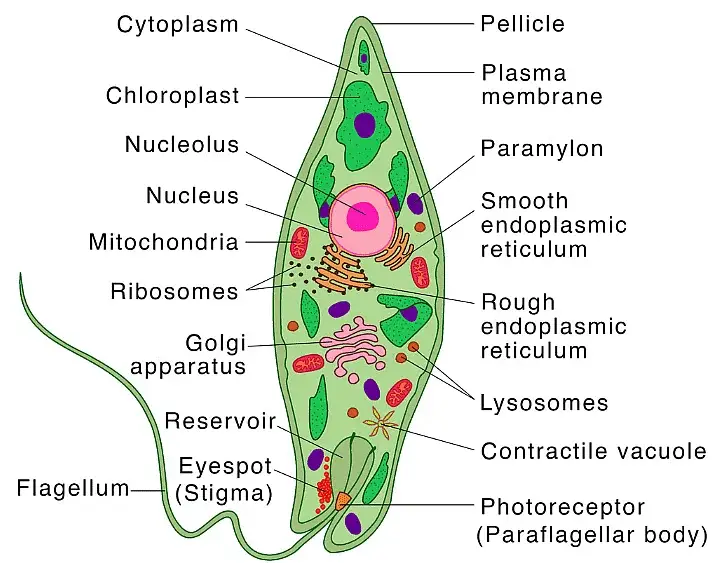
Internal Structure and Components of Euglena – Euglena Cell Anatomy
- Cytoplasm – The body of Euglena is filled with cytoplasm. It is differentiated into outer clear and dense ectoplasm and inner granular endoplasm, where different cell organelles remain embedded.
- Nucleus – A single large nucleus is present in the cell. It is spherical or oval and surrounded by double layered nuclear membrane with pores. Inside the nucleus, condensed chromosomes and a distinct central nucleolus or endosome is present.
- Reservoir and cell gullet – At the anterior end, there is a permanent flask shaped pocket. It consists of external cytostome or cell mouth, a short tubular cytopharynx or gullet and an internal chamber called reservoir.
- Contractile vacuole – Contractile vacuole is present near the reservoir. It acts as osmoregulatory organ and removes excess water from the cell. Small accessory vacuoles collect water and waste materials, then pour them into the main vacuole and finally into reservoir.
- Chloroplasts – Chloroplasts are green photosynthetic bodies of Euglena. They contain chlorophyll a and chlorophyll b and are covered by three membranes. Their shape may be star shaped, shield shaped, lobed or plate like in different species.
- Pyrenoids – Pyrenoids are proteinaceous bodies present inside the chloroplast. They act as carbon concentrating centre and help in photosynthesis by supplying more inorganic carbon to Rubisco enzyme.
- Paramylon granules – The reserve food of Euglena is paramylon. It is not ordinary plant starch. It is a water insoluble β-1,3-glucose polymer and present as crystalline granules in cytoplasm or as caps around pyrenoids.
- Eyespot – Eyespot or stigma is bright red and cup shaped structure present near the reservoir. It contains lipid droplets with carotenoid pigments. It does not actually see light, but works as light filter or shield.
- Photoreceptor – Photoreceptor or paraflagellar body is the actual light sensitive part. It is present at the base of long flagellum inside the reservoir and works along with eyespot for detecting direction of light.
- Flagella and basal bodies – Two flagella arise from small anchoring bodies called basal bodies, kinetosomes or blepharoplasts at the base of reservoir. Usually one flagellum is long, whip like and comes out for swimming, while the second one is short and remains hidden inside reservoir.
- Mitochondria – Mitochondria are energy forming organelles present in the endoplasm. In Euglena, the cristae are discoidal or paddle shaped. They may also form large interconnected reticulated network inside the cell.
- Other organelles – The endoplasm also contains Golgi bodies, endoplasmic reticulum and ribosomes. These organelles help in normal cellular activities like protein formation, secretion and intracellular transport.
Classification of Euglena
- Domain: Eukaryota
- Supergroup / Clade: Excavata (specifically the clade Discoba)
- Kingdom: Protista
- Phylum: Euglenozoa (though historically sometimes classified under Protozoa or Euglenophyta)
- Class: Euglenoidea (also classified as Euglenida or Phytomastigophorea in varying systems)
- Order: Euglenales (or Euglenida)
- Family: Euglenaceae
- Genus: Euglena
- Species: There are over 1,000 described species within the genus, with Euglena gracilis and Euglena viridis being the most commonly studied and cited examples.
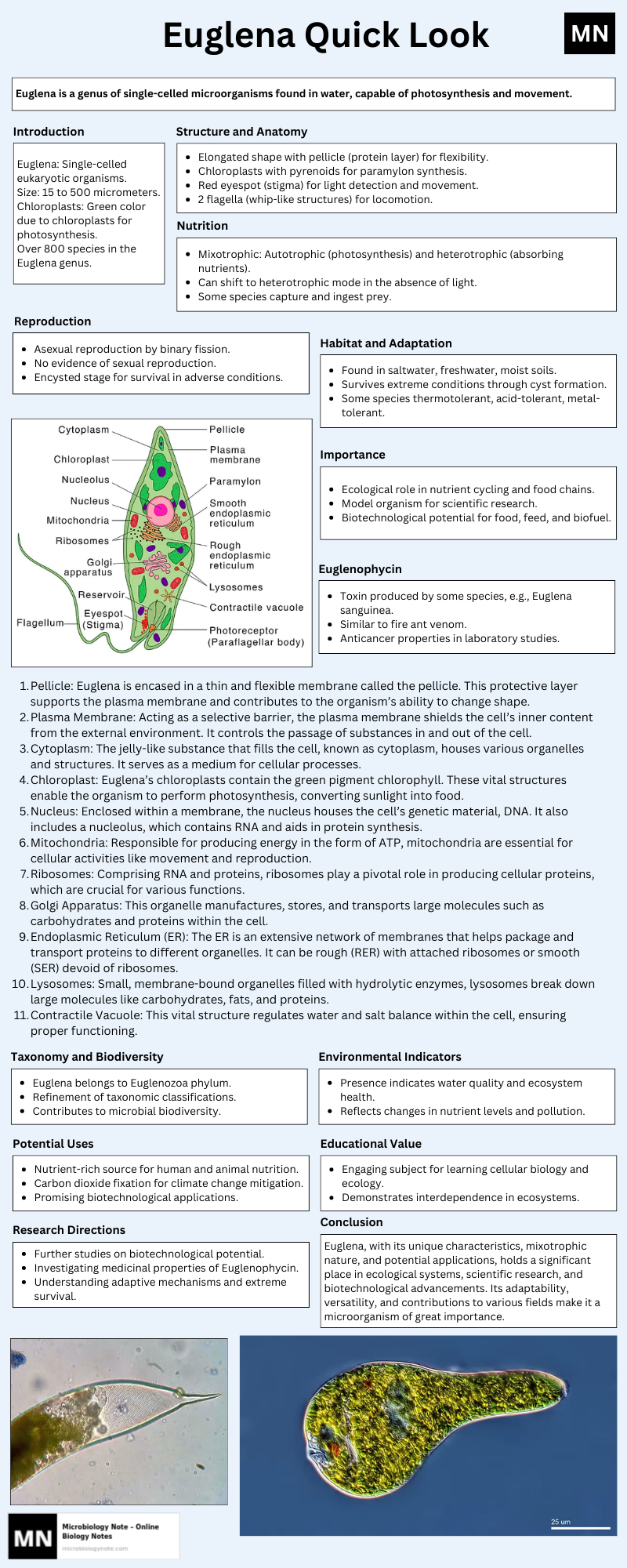
Euglena’s Dual Nature
Euglena shows both plant and animal characters. For this reason it is considered as connecting link between plant and animal kingdom. This mixed nature is called dual nature.
Plant like characters
Euglena has chloroplasts. These contain chlorophyll and in presence of light, photosynthesis takes place. Food is prepared by using carbon dioxide and water.
The reserve food is paramylon. It is starch like substance, but not true starch. It remains stored in the cytoplasm.
Animal like characters
Cell wall is absent in Euglena. Body is covered by flexible proteinaceous pellicle. So the body can change its shape and this movement is called metaboly.
It moves freely by flagellum. In absence of light, it absorbs organic matter from surrounding water. So it also shows heterotrophic mode of nutrition.
Mixotrophic nature
Due to both autotrophic and heterotrophic nutrition, Euglena is called mixotrophic organism. In light it behaves like plant and in dark it behaves like animal form.
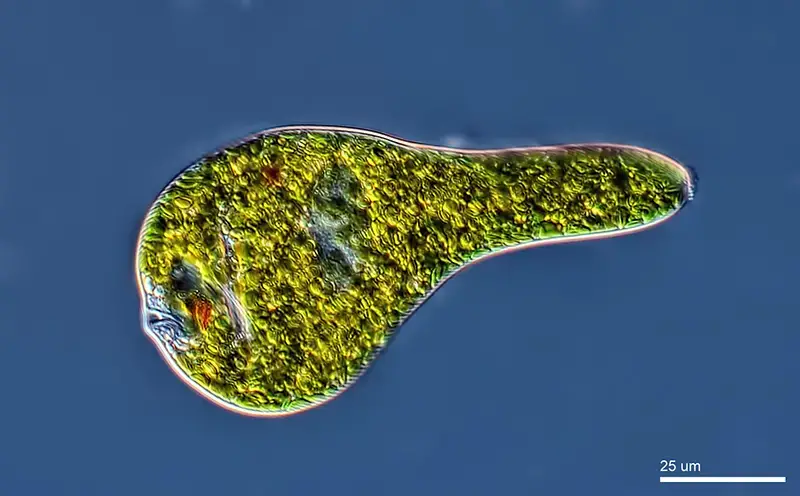
Locomotion of Euglena
- Flagellar swimming – Euglena swims in water by the help of long flagellum. The flagellum is whip like and shows spiral twisting movement like propeller. During this movement water is pushed backward and the cell moves forward.
- Rotation and gyration – The beating of flagellum is oblique. For this reason, Euglena does not move in simple straight line only. It rotates on its long axis and also moves in a wider circular path.
- Metaboly – Euglena also shows euglenoid movement called metaboly. It is slow worm like wriggling movement. This occurs due to flexible pellicle, where interlocking protein strips slide on each other and contraction wave passes from anterior end to posterior end.
- Confined crawling – When free swimming is restricted in narrow or crowded space, Euglena moves by crawling. In this condition, metaboly becomes useful and the body presses against surrounding surface, and then slowly forces itself through small gaps.
- Phototaxis – Locomotion of Euglena is also controlled by light. The eyespot and photoreceptor detect light direction and then flagellar beating is changed. Due to this, it moves toward favourable light and may also change direction suddenly when light condition is changed.
Locomotion Process / Steps of Euglena
A. Flagellar swimming process
- Beating – In this process, the long emergent flagellum starts beating. It acts like propeller and produces spiral undulations. The beating may occur about 12 times per second.
- Propulsion – The wave of flagellar beating passes from base to tip of the flagellum. Due to this, water is driven backward and the body of Euglena is pushed forward through water.
- Rotation and gyration – The flagellum does not beat in straight position. It beats obliquely, so the cell rotates on its long axis and also moves in a wider circular path. Thus the movement becomes spiral and gyrating type.
B. Euglenoid movement or metaboly process
- Contraction initiation – In this step, contraction and expansion begins in the body. Myonemes and microtubules present below the pellicle help in producing this movement.
- Pellicle sliding – The flexible pellicle is made up of interlocking protein strips. These strips bend and slide over each other. Muciferous bodies present below the pellicle may help by secretion and make the sliding easier.
- Wave propagation – The contraction wave passes from anterior end to posterior end. During this process, some region becomes short and broad, and other region becomes narrow. So the body shows slow wriggling movement and moves forward.
C. Confined crawling process
- Environmental trigger – When Euglena enters narrow, crowded or confined space, normal flagellar swimming becomes difficult. Then the organism changes to crawling type movement by using metaboly.
- Bulge formation – In this condition, a large body bulge is formed. This bulge passes along the body, usually from posterior side to anterior side in tight space.
- Traction and propulsion – The bulged part presses against the surrounding wall. By this pressure, friction and resistance of surrounding fluid, the cell pulls or pushes itself forward through narrow gap.
D. Light guided movement or phototaxis process
- Periodic shading – During swimming, Euglena rotates on its own axis. The red coloured eyespot or stigma comes between light and photoreceptor again and again, producing alternate light and shadow effect.
- Detection of light shift – The actual light sensitive body is paraflagellar body. It detects the change in light direction by this repeated shading. If light suddenly changes, a small shock reaction is produced.
- Course correction – After the shock reaction, the beating of flagellum is changed. The cell may slow down, bend or turn its anterior end toward favourable light source, and then again moves in that direction.
Reproduction of Euglena
- Asexual reproduction – Euglena reproduces only by asexual method. Sexual reproduction is not clearly observed in it. The common method is longitudinal binary fission.
- Longitudinal binary fission – Under favourable condition, free swimming Euglena divides lengthwise. The division starts from anterior end and passes towards posterior end. It generally takes place during night and the long flagellum may be shed before division.
- Karyokinesis – The nucleus divides by closed mitosis. In this type, nuclear membrane remains intact during division. The chromosomes divide into chromatids and the nucleolus elongates, then divides into two daughter nucleoli.
- Organelle duplication – Before cell division, the internal organelles are duplicated. Chloroplasts, reservoir, basal bodies and eyespot are formed in double number, so that each daughter cell gets one complete set of organelles.
- Pellicle formation – The number of pellicle strips also becomes doubled before division. This helps in formation of proper covering in both daughter individuals after separation.
- Cytokinesis – The cytoplasm divides by a longitudinal furrow. The furrow begins at anterior end and gradually deepens backward. At first the body looks two headed, then the cleavage extends posteriorly and two daughter Euglena are formed.
- Multiple fission – During unfavourable condition, such as drought or lack of food, Euglena may form a thick walled resting cyst. Inside the cyst, nucleus divides repeatedly and many small daughter cells are formed, usually 16 to 32.
- Palmelloid stage – In adverse condition, many Euglena lose their flagella and become rounded. They remain enclosed in a gelatinous mucilaginous mass and continue division by binary fission inside it.
- Return of free form – When favourable condition returns, the young cells develop flagella. They come out from the mucilaginous mass and again become free swimming adult forms.
Respiration in Euglena viridis
A. Aerobic respiration
- Diffusion – Euglena generally respires aerobically. Free oxygen dissolved in surrounding water enters into the body by diffusion through pellicle.
- Internal oxygen use – In daytime, oxygen produced during photosynthesis may also be used for respiration. So the cell can use both external oxygen and internally formed oxygen.
- Energy production – The food material is oxidised inside mitochondria by respiratory enzymes. During this process, energy is released and stored in the form of ATP.
- By-products – The by-products of aerobic respiration are carbon dioxide and water. In light, carbon dioxide may be again used in photosynthesis, but in dark it diffuses out into water.
B. Anaerobic respiration
- Wax ester fermentation – In low oxygen or absence of oxygen, Euglena survives by anaerobic respiration. This process is called wax ester fermentation.
- Paramylon breakdown – Stored food paramylon is broken down for energy production. By this process, small amount of ATP is formed and organism remains alive in unfavourable condition.
- Mitochondrial synthesis – This anaerobic energy formation is related with mitochondria. Here normal fatty acid synthesis becomes reversed and wax ester formation takes place.
- End products – The end product is not lactic acid or ethanol. Euglena forms water insoluble wax esters, mainly myristic acid and myristyl alcohol, which are accumulated inside the cell.
Behavior of Euglena
- Phototaxis – Euglena is very sensitive to light. It moves towards moderate light for photosynthesis. But it avoids complete darkness and also very strong direct sunlight.
- Shock reaction – When direction or intensity of light changes suddenly, Euglena shows shock reaction. In this condition, flagellar beating is changed, the body may stop or slow down and then turns towards new suitable light source.
- Avoiding reaction – When Euglena comes in contact with harmful mechanical, heat or chemical stimulus, it shows avoiding reaction. It may stop, move backward, turn strongly and again swim away in another spiral path.
- Response to confinement – In open water, Euglena swims freely by flagellum. But in narrow or crowded place, flagellar swimming becomes difficult, so it uses metaboly. By worm like contraction and expansion of body, it squeezes through small spaces.
- Feeding behaviour – Euglena changes its nutrition according to environment. In presence of sunlight, it behaves like plant and prepares food by photosynthesis. In darkness or organic rich water, it behaves like animal form and absorbs dissolved organic nutrients.
- Encystment – During unfavourable condition such as drought, lack of food or high temperature, Euglena stops movement. It sheds the flagellum, becomes rounded and forms thick protective cyst wall. In this dormant stage it remains inactive until favourable condition returns.
Encystment of Euglena
- Euglena undergoes encystment during unfavourable environmental condition. It takes place in drought, excessive heat, lack of food, lack of oxygen and polluted water.
- Before encystment, free swimming Euglena stops its movement. The flagellum is shed off and the body becomes rounded. Paramylon granules also increase inside the body.
- The organism secretes a thick protective wall around itself. This wall is gelatinous and made up of carbohydrate or polysaccharide mucilage. It is generally yellowish brown and consists of two or three concentric layers.
- The resting cyst is usually small and spherical. In different species, it may be thick walled, thin walled, operculated or sometimes attached with a stalk.
- In this encysted condition, Euglena remains dormant. It helps the organism to survive dry and harmful condition and also helps in dispersal from one place to another.
- Some cysts behave as reproductive cysts. Inside the cyst, repeated division takes place by multiple fission and about 16 to 32 minute daughter cells are formed.
- During some adverse condition, many Euglena lose their flagella and become rounded. They remain enclosed in a common mucilaginous mass. This condition is called palmelloid stage and green scum may be formed on pond surface.
- When favourable condition returns, the cyst wall dissolves or bursts. The Euglena or newly formed daughter cells develop flagella and come out again as active free swimming forms.
Osmoregulation and Excretion in Euglena
- Osmoregulation is the process by which Euglena removes excess water from the body. As it lives in freshwater, water continuously enters into the cell by endosmosis.
- The osmoregulatory organ is contractile vacuole. It is a large vacuole present near the reservoir and surrounded by many small accessory vacuoles.
- Excess water from the cytoplasm is first collected into the small accessory vacuoles. These vacuoles then pour their water into the main contractile vacuole.
- The contractile vacuole shows rhythmic filling and emptying movement. Filling of vacuole with water is called diastole and contraction or emptying of vacuole is called systole.
- During systole, the collected water is discharged into the anterior reservoir. From the reservoir, water passes outside through the gullet or cytopharynx.
- Excretion in Euglena is also partly performed by contractile vacuole. Water soluble metabolic wastes are collected from surrounding cytoplasm and removed along with excess water into the reservoir.
- The main nitrogenous waste is ammonia. It is not stored inside the body. It diffuses directly out through the general body surface into the surrounding water.
Economic Importance of Euglena
- Euglena is used in biofuel production. It accumulates lipid and wax ester in anaerobic condition, mainly myristic acid, and these are used for making biodiesel and aviation fuel.
- It is used as food supplement. The cell wall is absent, so the body is easily digestible. It contains protein, essential amino acids, omega-3 fatty acid, antioxidant and vitamins A, C and E.
- Paramylon of Euglena has medicinal value. It is a special carbohydrate and shows immunostimulatory, anti-inflammatory and cholesterol lowering effect. Euglenophycin from some species is studied for anticancer activity.
- The biomass is used as animal and fish feed. It is protein rich and may be used instead of common agricultural feed crops.
- Euglena grows in waste water also. It absorbs excess nitrogen, phosphorus and organic carbon from water, and also helps in removal of heavy metals.
- It is useful in bioremediation because it can tolerate polluted and acidic water. So it is used for cleaning agricultural, industrial and municipal waste water.
- The carbohydrate paramylon is used for making sustainable materials. It is studied for bioplastics, petroleum free resin and adhesive materials.
- Euglena is also studied for space life support system. It can use carbon dioxide, produce oxygen and give nutritional biomass in microgravity condition.
- Some species have harmful economic effect also. Euglena sanguinea forms red bloom and produces euglenophycin, which kills fishes and causes loss in aquaculture.
Ecological Importance of Euglena
- Euglena acts as primary producer in water. Photosynthetic forms contain chlorophyll and trap sunlight, by which carbohydrate food is formed and oxygen is released in aquatic ecosystem.
- It is an important food source for small aquatic animals. Many organisms like copepods, Daphnia and other microscopic animals feed on Euglena, so it forms part of aquatic food chain.
- Some Euglena absorb dissolved organic matter from dead and decaying substances. In this way, it helps in decomposition and recycling of nutrients in water habitat.
- Some euglenoid forms act as microbial predators. They may engulf bacteria, diatoms and small green algae. So they help in controlling microbial population in water and sediment.
- Euglena is used as bioindicator of water pollution. It grows well in stagnant water having decaying organic waste, nitrogen and polluted matter. Heavy growth of Euglena indicates organic pollution in water.
- It helps in natural cleaning of polluted water. Some species tolerate acidic water and heavy metal containing water. They absorb excess nitrogen, phosphorus and some toxic metals, therefore helps in bioremediation.
- In favourable condition with more nutrient and high temperature, some species multiply very fast. This forms green scum or red bloom on water surface and disturbs normal aquatic condition.
- Euglena sanguinea may produce euglenophycin, which is toxic to fishes. During heavy bloom, this toxin causes fish death and affects the balance of aquatic ecosystem.
Examples of Euglena
- Euglena gracilis – It is one of the common studied species. It is used in laboratory as model organism and also used for biofuel, food supplement and paramylon production.
- Euglena viridis – It is green coloured species. It occurs in freshwater pond and ditch. Sometimes it forms green bloom on the surface of water.
- Euglena sanguinea – It has red pigment astaxanthin. During bloom, the water becomes red coloured. It also produces euglenophycin, which is toxic to fishes.
- Euglena mutabilis – It has non-emergent flagella. The flagella remain inside the reservoir and are not seen outside the body.
- Euglena minuta – It is one of the smallest species. The body may be about 10 µm long.
- Euglena oxyuris – It is one of the largest species. The body may become more than 500 µm in length.
- Euglena rustica – It is a marine form. It is found in intertidal region and moves through marine sand according to day and tide.
- Euglena obtusa – It is large worm like marine benthic species. It has many pellicle strips, up to about 120.
- Euglena cantabrica – It has clear pellicle pores. The pores are arranged in rows and two strips remain between the rows.
- Euglena terricola – It has many pellicle pores. Generally four strips are present between the pore rows.
- Euglena myxocylindracea – It has special reduction of pellicle strips near posterior end. The pore rows are separated by eight strips.
Euglena Under Microscope Video
Red Euglena sp.
Euglena mutabilis, showing metaboly, paramylon bodies and chloroplasts
Euglena sanguinea
Euglena, moving by metaboly and swimming
References
- Leedale, G. F. (1959). Amitosis in three species of Euglena. SciSpace.
- PCR identification of toxic euglenid species Euglena sanguinea. (n.d.). ResearchGate.
- Nakazawa, M., Ando, H., Nishimoto, A., Ohta, T., Sakamoto, K., Ishikawa, T., Ueda, M., Sakamoto, T., Nakano, Y., Miyatake, K., & Inui, H. (2018). Anaerobic respiration coupled with mitochondrial fatty acid synthesis in wax ester fermentation by Euglena gracilis. FEBS Letters, 592(24), 4020–4027. https://doi.org/10.1002/1873-3468.13276
- Kato, S., Ozasa, K., Maeda, M., Tanno, Y., Tamaki, S., et al. (2020). Carotenoids in the eyespot apparatus are required for triggering phototaxis in Euglena gracilis. The Plant Journal, 101, 1091–1102.
- Leander, B. S., & Farmer, M. A. (2000). Comparative morphology of the euglenid pellicle. I. Patterns of strips and pores. Journal of Eukaryotic Microbiology, 47(5), 469–479.
- Padermshoke, A., Ogawa, T., Nishio, K., Nakazawa, M., Nakamoto, M., Okazawa, A., Kanaya, S., Arita, M., & Ohta, D. (2016). Critical involvement of environmental carbon dioxide fixation to drive wax ester fermentation in Euglena. PLoS One, 11(9), e0162827. https://doi.org/10.1371/journal.pone.0162827
- Azhar, W. S. W., Aripin, T., Zaini, A. S. M., Amirudin, N. A. S., Kamaruddin, S. A., Rahim, N. S., Nasir, N. A. H. A., Roslani, M. A., Aziz, K. N. A., Shuhaime, N., Hamid, H. A., Nazir, E. N. M., & Fauzi, S. S. M. (2025). Euglena sp. – A comprehensive review on the habitats, characteristics, nutritional values, commercialization opportunities and conservation status. Journal of Information System and Technology Management, 10(39), 238-251. https://doi.org/10.35631/JISTM.1039016
- Enhanced biomass, paramylon, and lipids production by non-axenic cultivation of Euglena gracilis in anaerobically digested livestock wastewater. (n.d.). PubMed Central.
- Euglena. (n.d.).
- Euglena. (n.d.). ResearchGate.
- Wikipedia contributors. (2026). Euglena. Wikipedia, The Free Encyclopedia.
- Euglena Ehrenberg, 1830. (n.d.). Global Biodiversity Information Facility (GBIF).
- Ebenezer, T. E., Low, R. S., O’Neill, E. C., Huang, I., DeSimone, A., Farrow, S. C., Field, R. A., Ginger, M. L., Guerrero, S. A., Hammond, M., et al. (2022). Euglena International Network (EIN): Driving euglenoid biotechnology for the benefit of a challenged world. Biology Open, 11, bio059561. https://doi.org/10.1242/BIO.059561
- Euglena structure and classification. (n.d.). BYJU’S.
- Euglena divides by longitudinal fission. (n.d.). Allen.in.
- Zoltner, M., & Field, M. C. (2022). Euglena gracilis: Photogenic, flexible and hardy. Microbiology. https://doi.org/10.1099/mic.0.001241
- Euglena satelles. 2, 3 Anterior end in oblique section. 4, 5… (n.d.). ResearchGate.
- Euglena satelles. 7 Chloroplasts (CHL) with large pyrenoids (PY) and… (n.d.). ResearchGate.
- Neupane, L. (2025). Euglena viridis– An overview. Microbe Notes.
- Euglena. (2023). Botany | Research Starters. EBSCO.
- Curran, B., & Arrington, D. (n.d.). Euglena | Characteristics, structure & life cycles. Study.com.
- Häder, D.-P., & Hemmersbach, R. (2022). Euglena, a gravitactic flagellate of multiple usages. Life, 12(10), 1522.
- Briggs, G. M. (2021). Euglena: A unicellular algae. Inanimate Life. Milne Publishing.
- Leander, B. S., Lax, G., Karnkowska, A., & Simpson, A. G. B. (2017). Euglenida. In J. M. Archibald et al. (Eds.), Handbook of the Protists (pp. 1-41). Springer International Publishing AG. https://doi.org/10.1007/978-3-319-32669-6_13-1
- Euglenoid. (2026). GeeksforGeeks.
- Euglenoid pellicle complex microtubule patterns. (n.d.). ResearchGate.
- Zimba, P. V., Huang, I.-S., Gutierrez, D. B., Shin, W., Bennett, M. S., & Triemer, R. E. (2017). Euglenophycin is produced in at least six species of euglenoid algae and six of seven strains of Euglena sanguinea. Harmful Algae, 63, 79-84.
- Zimba, P. V., Huang, I.-S., Gutierrez, D. B., Shin, W., Bennett, M. S., & Triemer, R. E. (2017). Euglenophycin is produced in at least six species of euglenoid algae and six of seven strains of Euglena sanguinea. Harmful Algae, 63, 79-84. TAMU-CC Repository.
- Wikipedia contributors. (2026). Eyespot apparatus. Wikipedia, The Free Encyclopedia.
- Eyespot apparatus. (n.d.). Bionity.com. LUMITOS AG.
- Boll, P. K. (2016). Friday Fellow: Red Euglene. Earthling Nature.
- Berdan, R. (n.d.). Introduction to Euglenids (Euglenoids) exhibiting both plant and animal properties. The Canadian Nature Photographer.
- Khatiwada, B., Sunna, A., & Nevalainen, H. (2020). Molecular tools and applications of Euglena gracilis: From biorefineries to bioremediation. Biotechnology and Bioengineering, 117(12), 3952-3967. https://doi.org/10.1002/bit.27516
- PCR identification of toxic euglenid species Euglena sanguinea. (n.d.). PubMed Central – NIH.
- Wikipedia contributors. (2025). Paramylon. Wikipedia, The Free Encyclopedia.
- Bicudo, C. E. de M., & Menezes, M. (2016). Phylogeny and classification of Euglenophyceae: A brief review. Frontiers in Ecology and Evolution, 4, 17. https://doi.org/10.3389/fevo.2016.00017
- Arroyo, M., Heltai, L., Millán, D., & DeSimone, A. (2012). Reverse engineering the euglenoid movement. Proceedings of the National Academy of Sciences USA, 109, 17874-17879.
- Wavefunction, P. (2009). Sunday protist – Diplonemids: Metaboly without a pellicle and the dawn of kDNA? Skeptic Wonder.
- Jhouhanggir, D. I. P., Pertiwiningrum, A., Fitriyanto, N. A., & Suyono, E. A. (2025). Sustainable cultivation of microalgae Euglena sp. IDN 22 using anaerobic digested manure wastewater: Integrating circular bioeconomy principles in agroindustry. Journal of Ecological Engineering, 26(8), 238–248. https://doi.org/10.12911/22998993/203982
- Noselli, G., Beran, A., Arroyo, M., & DeSimone, A. (2019). Swimming Euglena respond to confinement with a behavioral change enabling effective crawling. Nature Physics, 15(5), 496-502. https://doi.org/10.1038/s41567-019-0425-8
- Systematics, cytoskeletal mechanics, and bioenergetic plasticity of the genus Euglena. (n.d.).
- The ultrastructure of cell division in Euglena gracilis. (n.d.). PubMed.
- The ultrastructure of cell division in Euglena gracilis. (n.d.). ResearchGate.
- Konupková, A., Peña-Diaz, P., & Hampl, V. (2025). Visualisation of Euglena gracilis organelles and cytoskeleton using expansion microscopy. Life Science Alliance.
- Konupková, A., Peña-Diaz, P., & Hampl, V. (2025). Visualisation of Euglena gracilis organelles and cytoskeleton using expansion microscopy. Life Science Alliance, 8(4), e202403110. https://doi.org/10.26508/lsa.202403110
- Inui, H., Ishikawa, T., & Tamoi, M. (2017). Wax ester fermentation and its application for biofuel production. Advances in Experimental Medicine and Biology, 979, 269-283. https://doi.org/10.1007/978-3-319-54910-1_13
- Wax ester fermentation in E. gracilis. Under anaerobic conditions… (n.d.). ResearchGate.
- Shinde, L. (n.d.). Euglena. JES College Jalna.