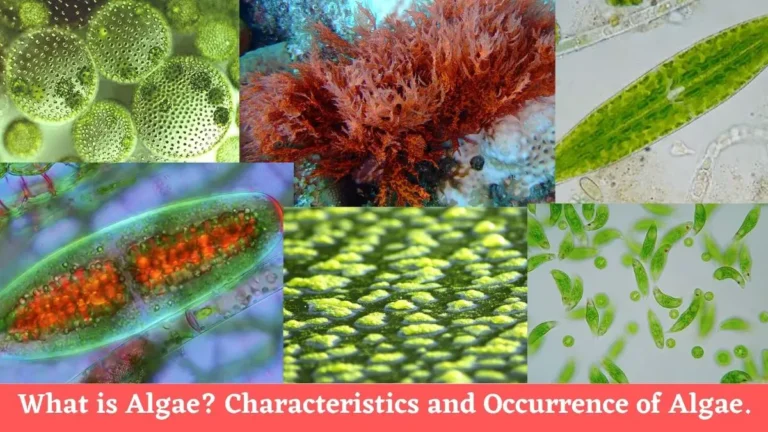
Algae are simple, mostly aquatic and photosynthetic organisms. They are different from land plants because true root, stem and leaves are absent. Vascular tissues are also absent. The plant body of algae is simple. It is not differentiated into different plant parts. This type of body is called thallus. Algae show great variation in size
Algae are simple, mostly aquatic and photosynthetic organisms. They contain chlorophyll and prepare their own food. During photosynthesis oxygen is released by them. The plant body of algae is simple. It is not divided into true root, stem and leaves. Flowers are also absent. Such simple body is called thallus. Algae show much variation in
Algae are simple, chlorophyll bearing and photosynthetic organisms. They may be microscopic unicellular forms or large multicellular seaweeds. Phytoplankton are small algal forms and kelp is large seaweed form. The plant body of algae is not differentiated into true root, stem and leaves. Vascular tissues are also absent. The body is simple and thalloid. This
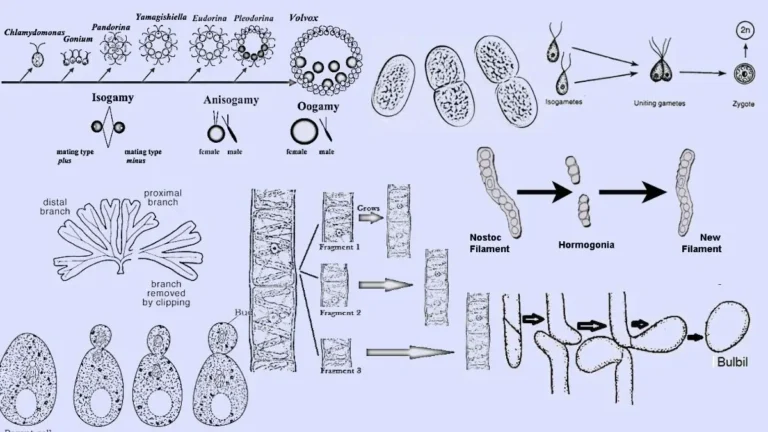
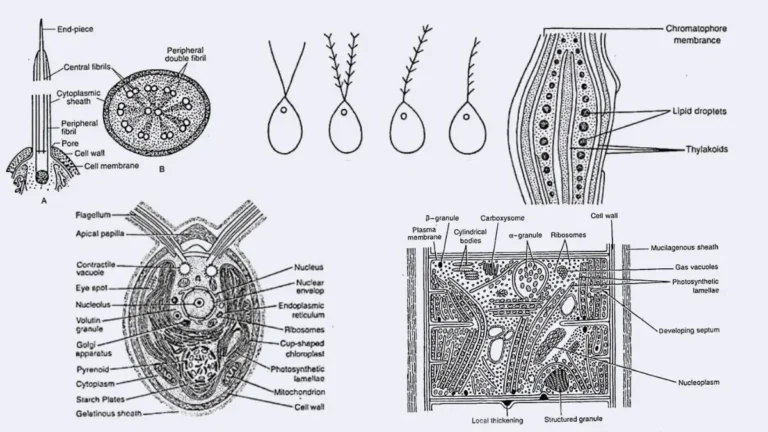
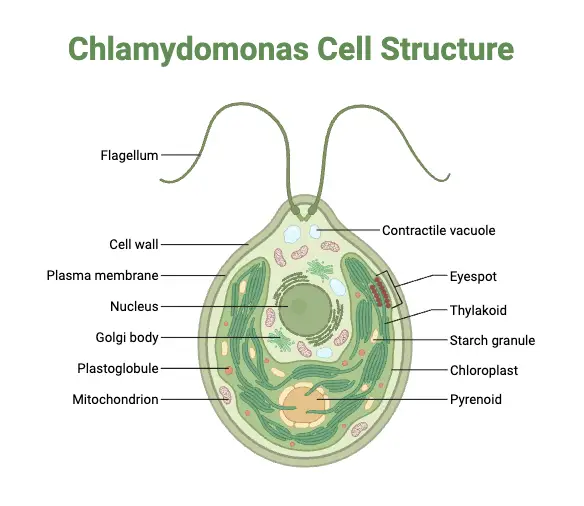
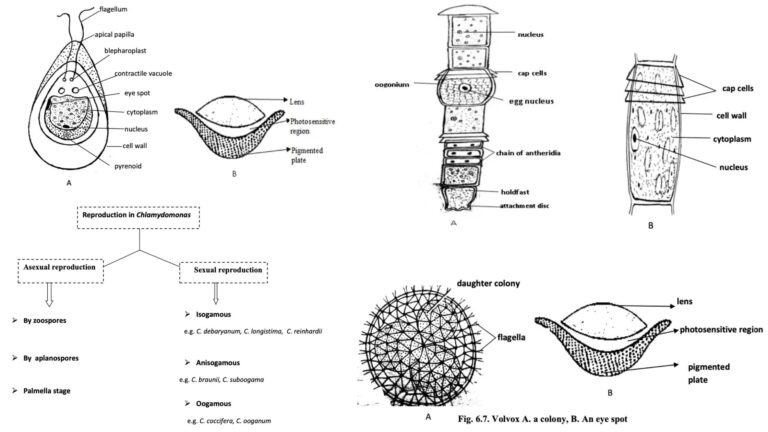
Chlamydomonas is a unicellular green algae, which belongs to the class Chlorophyceae. It is microscopic and mostly found in fresh water, stagnant pools, moist soil, sea water and snow also. Some species are present in mountain snow and they give red colour to snow, which is called watermelon snow. It is a simple motile algae.
Phycology is the study of algae. It is also known as algology. It is a branch of biology and deals with different algal forms. In phycology, the structure, classification, physiology, ecology and distribution of algae are studied. It includes both small algae and large seaweeds. Cyanobacteria, microalgae, macroalgae and seaweeds are included in this study.
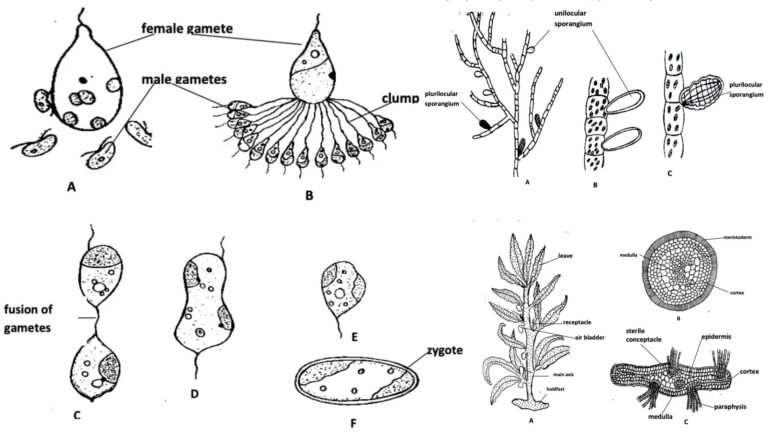
Phaeophyta are commonly known as brown algae. They are mostly marine forms. The members are multicellular and they occur mainly in cold and temperate coastal water. Very few members are freshwater forms. The colour of the plant body is brown or olive green. This is due to excess amount of fucoxanthin pigment. The chief pigments
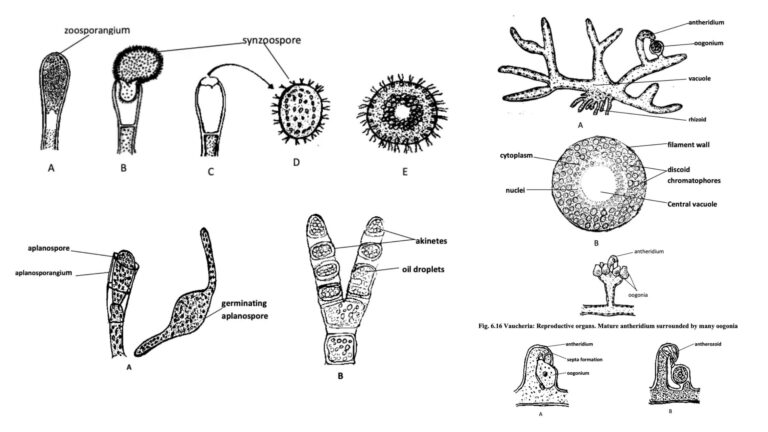
Xanthophyta are commonly called yellow-green algae. They are a group of photosynthetic algae. Most of the members are freshwater forms, but some are also found in marine water, damp soil and on tree trunks. The plant body of Xanthophyta shows much variation. It may be unicellular, colonial, filamentous or coenocytic type. In some forms, the
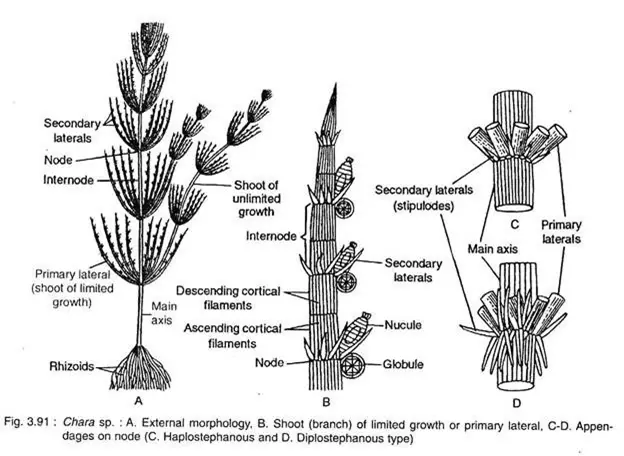
Charophyta is a division of green algae which are commonly known as charophytes. They are mostly found in freshwater habitat. These algae are multicellular and show some plant like characters. The body of charophytes is more complex than many other algae. It has branching system with main axis like stem and small structures like leaves.
Chlorophyta are commonly known as green algae. It is one of the major group of algae. They are mostly aquatic and found in freshwater as well as marine water. Some members are also found in damp soil. Some forms can grow in extreme places like arctic snow. So the habitat of Chlorophyta is not only