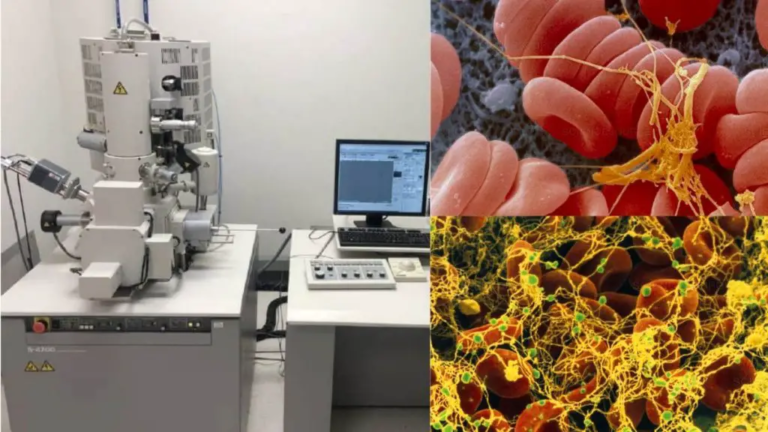
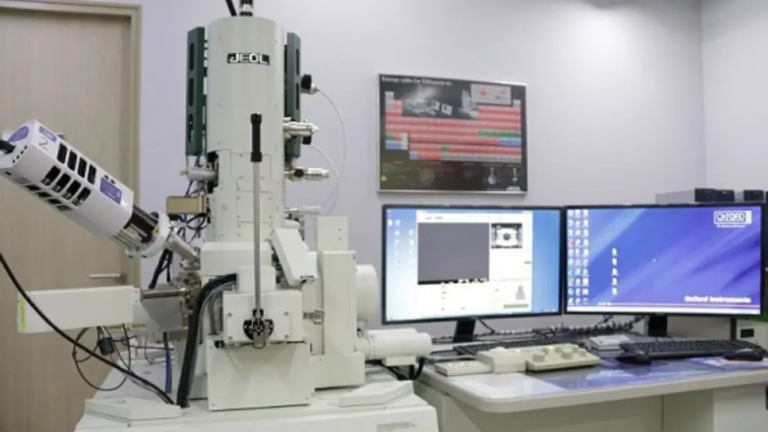
Scanning Electron Microscope (SEM) is an advanced magnifying instrument that is used to observe the surface of a sample by using focused beam of accelerated electrons. It does not use visible light for image formation. It uses electron beam because electrons have much shorter wavelength than light photons. So, SEM can produce image with very
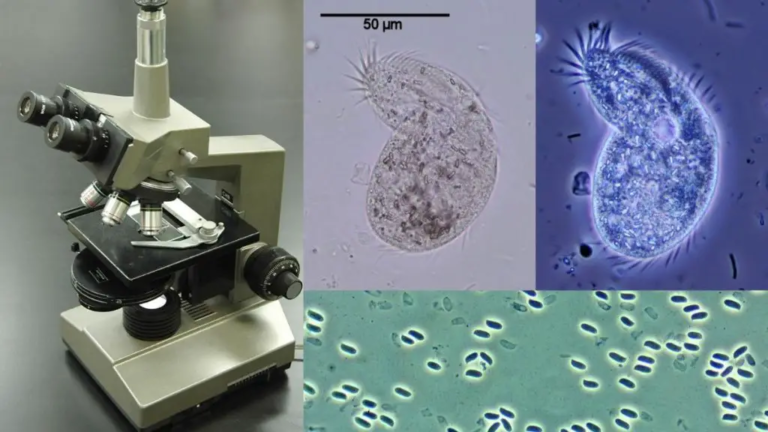
Phase contrast microscope is an optical microscope that is used to observe transparent and unstained living cells. It converts small phase changes of light into visible contrast. These phase changes are produced when light passes through the different parts of the specimen. It was developed by Frits Zernike in 1930s. This microscope is very useful
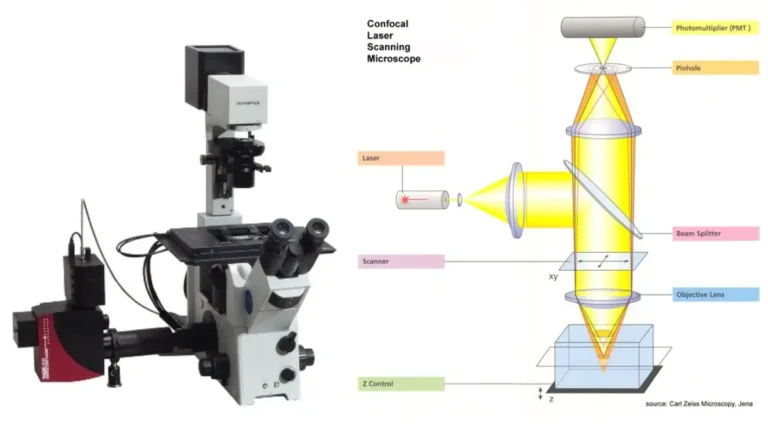
Confocal Microscope is an advanced optical microscope that is used to produce clear and sharp image by removing the out-of-focus light. It uses laser light to focus on a single point of the specimen. It gives better resolution and contrast than the ordinary light microscope. In confocal microscope, the light is not passed through the
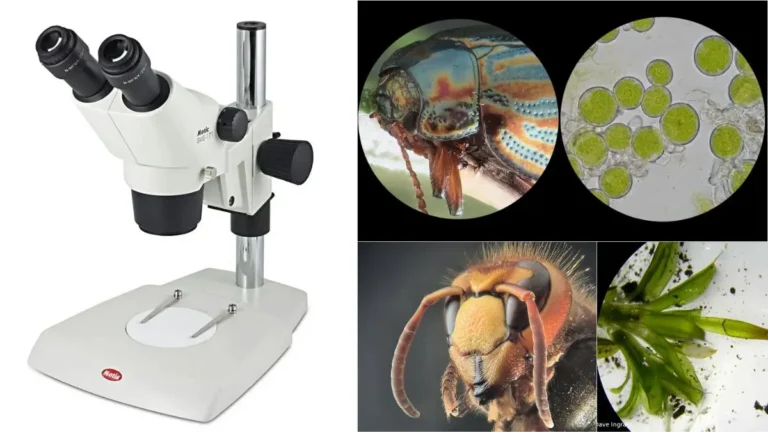
Stereo microscope is an optical microscope that is used to observe large, three dimensional and opaque specimens at low magnification. It is also called dissecting microscope. It gives a magnified image of the surface of the object by using reflected light. It is different from compound microscope because compound microscope uses transmitted light through thin
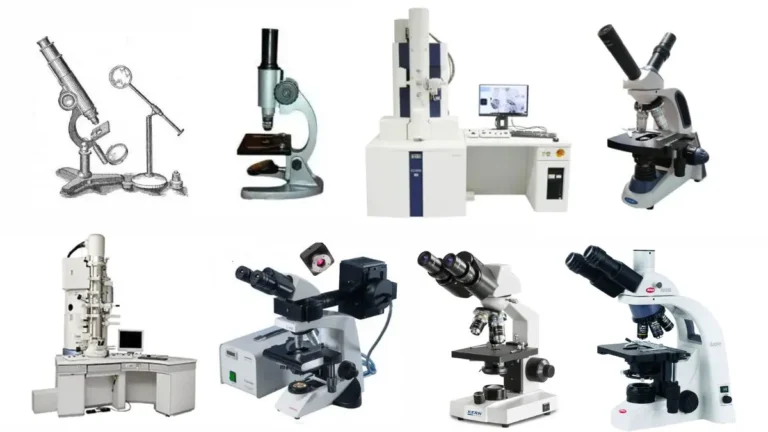
Microscope is an instrument that is used in science laboratories to visualize very minute objects, such as cells and microorganisms. It gives a contrasting image that is magnified, so the structures can be observed. The term microscope is derived from Greek words “mikrós” meaning “small” and “skópéō” meaning “look at”. Microscopes are made up of
Electron microscope is a high power microscope that uses a beam of accelerated electrons instead of visible light for illumination and image formation. Due to very short wavelength of electrons, it can overcome the diffraction limit of light microscope lenses. Hence, it gives very high resolving power and very high magnification as compared to compound
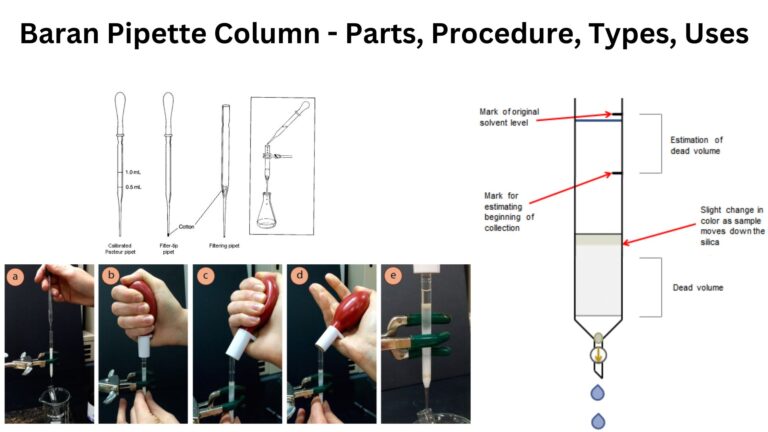
Baran pipette column is a microscale variation of flash chromatography which is used for rapid purification of small reaction mixtures. It is mainly used when the amount of sample is low, generally 10 to 500 mg. This method was designed by Baran laboratory for making purification faster and more efficient. It is based on the
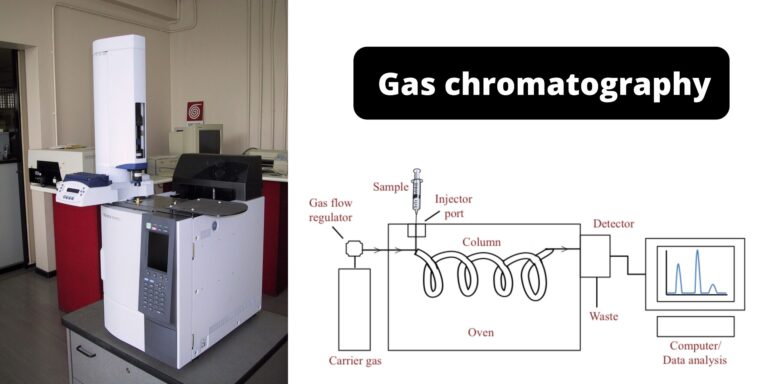
Gas chromatography is a chromatographic technique which is used for separation and analysis of volatile substances. It is mainly used for the compounds which can be vaporized without decomposition. In this technique, the sample is injected into a heated chamber. The sample is converted into vapour and carried by an inert gas through a column.
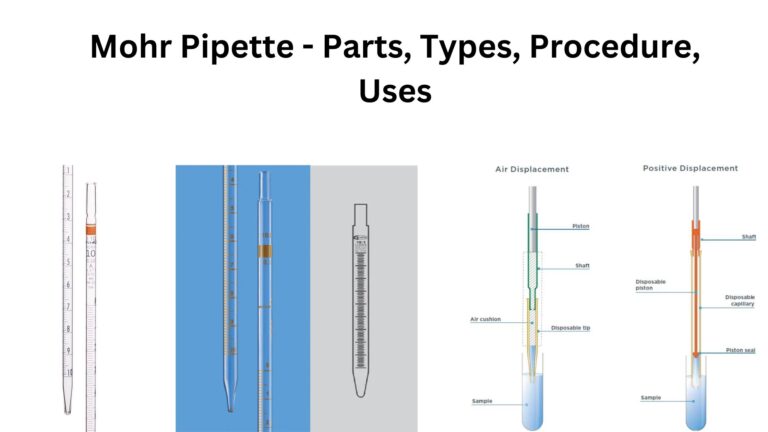
Mohr pipette (graduated pipette) is a type of graduated laboratory pipette used to measure and transfer variable volumes of liquid accurately. It is a glass (or sometimes plastic) straight tube with graduation marks along the length. It is different from volumetric pipette because it can deliver different volumes as per the required marking. It is
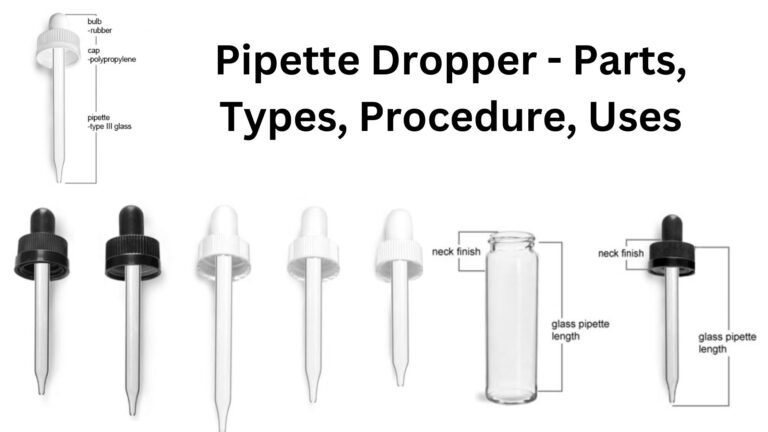
Pipette dropper is a simple laboratory device used to measure and transfer small volume of liquid in the form of drops. It is also called as Pasteur pipette or eye dropper. It is used when controlled amount of liquid is required, without using a graduated pipette. It is made up of a narrow glass or